
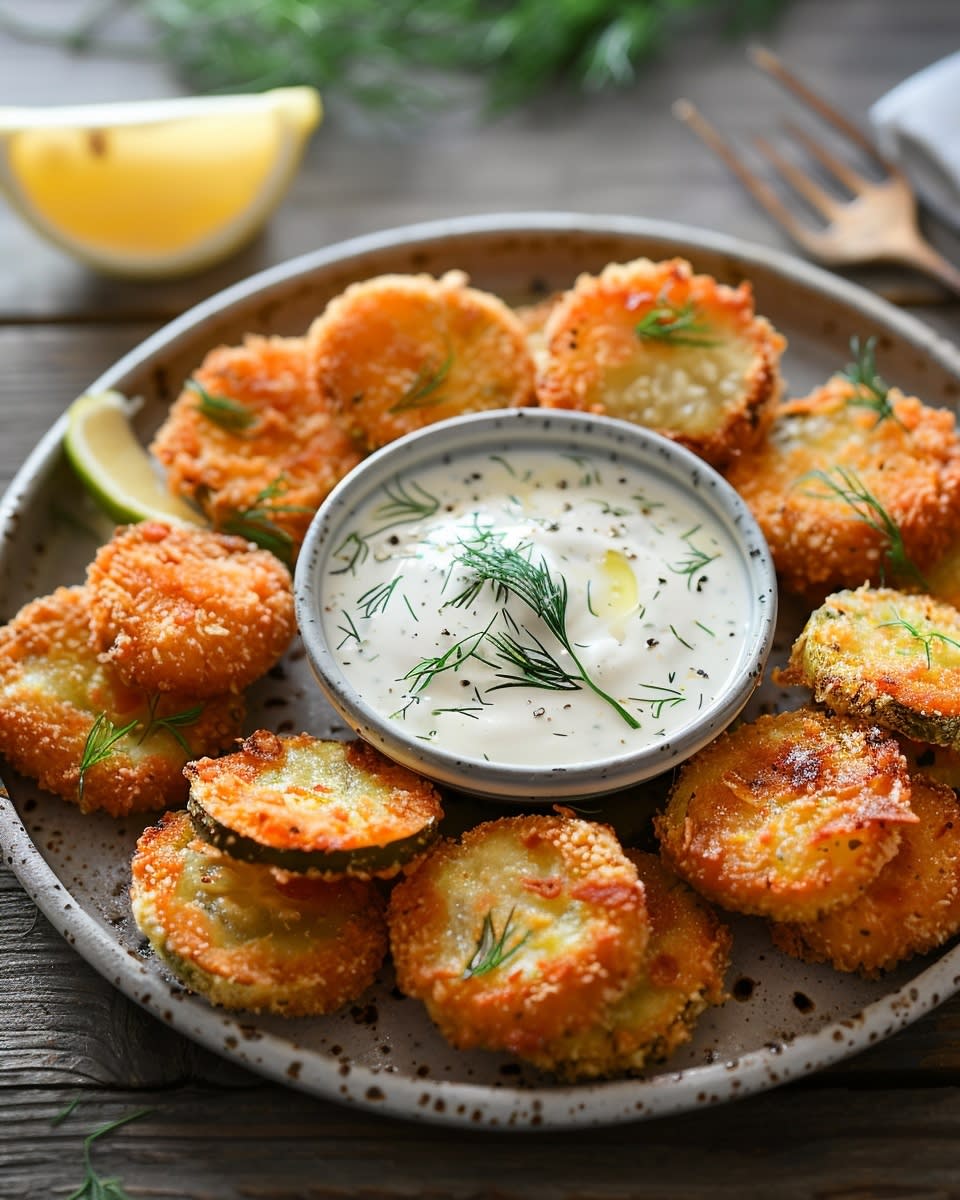
Last summer, I brought a platter of golden, crunchy fried pickles to a backyard cookout. Within minutes, they were gone. My friend Sarah looked at me with wide eyes and said, “These are dangerous.” She was right. There’s something about that perfect crunch, the tangy pickle flavor, and that cool ranch dip that makes people lose all self-control. I’ve been making crispy fried pickles with ranch dip ever since, and they disappear faster than anything else I put on the table.
Fried pickles have become a total obsession across the USA. You’ll find them at bars, restaurants, county fairs, and backyard parties from Texas to New York. The combination of hot, crispy coating and cold, tangy pickle creates a flavor explosion that keeps people coming back for more. Add a creamy ranch dip into the mix, and you’ve got yourself a winning appetizer that nobody can resist.
What I love most about this recipe is how simple it really is. You don’t need fancy equipment or hard-to-find ingredients. The whole process takes less than 30 minutes from start to finish. Whether you’re hosting game day, need a quick snack for movie night, or want to impress guests at a party, these fried pickles fit the bill perfectly. They’re casual enough for a Tuesday afternoon but special enough to make any gathering feel more fun.
The versatility factor is another huge plus. You can adjust the seasoning to your taste, switch up the dipping sauce, or even change the type of pickles you use. Some people like them spicy, others prefer them mild. Kids love them just as much as adults do. I’ve served these at family gatherings where three generations fought over the last few pieces.
Ingredients You’ll Need
Getting your ingredients together is the first step to fried pickle success. I always lay everything out before I start cooking. It makes the whole process smoother and less stressful.
For the Crispy Fried Pickles:
- 1 jar (32 ounces) of dill pickle slices or spears, drained well
- 1 cup all-purpose flour
- 2 large eggs
- 1/4 cup buttermilk
- 1 1/2 cups panko bread crumbs
- 1/2 cup regular bread crumbs
- 1 teaspoon garlic powder
- 1 teaspoon onion powder
- 1 teaspoon paprika
- 1/2 teaspoon cayenne pepper (optional for heat)
- Salt and black pepper to taste
- Vegetable oil for frying (about 4 cups)
For the Ranch Dip:
- 1 cup sour cream
- 1/2 cup mayonnaise
- 1/4 cup buttermilk
- 2 tablespoons fresh dill, chopped (or 1 tablespoon dried)
- 1 tablespoon fresh chives, chopped
- 1 teaspoon garlic powder
- 1 teaspoon onion powder
- 1/2 teaspoon salt
- 1/4 teaspoon black pepper
- 1 teaspoon lemon juice
The beauty of this recipe is that you can make substitutions based on what you have or what you prefer. Don’t have buttermilk? Mix regular milk with a splash of vinegar and let it sit for five minutes. Want to skip making ranch from scratch? Store-bought ranch works fine, though homemade tastes so much better.
Some people prefer different dipping sauces with their fried pickles. I’ve served these with spicy mayo, chipotle aioli, blue cheese dressing, and even honey mustard. Each option brings its own personality to the dish. My brother swears by thousand island dressing with his fried pickles. My sister-in-law mixes sriracha into her ranch for extra kick.
Quality matters when you’re working with just a few ingredients. Fresh spices make a real difference in the coating. If your paprika has been sitting in your cabinet since 2019, it’s time for a new one. The same goes for your oil. Use clean, fresh vegetable oil or peanut oil for the best flavor and crispiest results.
I always buy extra pickles because I’ve learned the hard way that running out mid-batch is frustrating. Having backup ingredients means you can make a second round when the first batch disappears in record time. Trust me, it happens more often than you’d think.
How to Choose the Right Pickles for Frying
Not all pickles are created equal when it comes to frying. I learned this lesson after a disappointing batch made with the wrong type. The pickles turned out mushy and the coating slid right off. Since then, I’ve tested every type I could find.
Dill pickles are my go-to choice for frying. They have that classic tangy, salty flavor that pairs perfectly with the crispy coating and ranch dip. The acidity cuts through the richness of the fried coating in the best possible way. Dill pickles come in different forms: slices, spears, or chips. I prefer using chips or slices because they’re easier to eat and coat more evenly.
Look for pickles that are firm and crunchy straight from the jar. If they’re already soft, frying won’t improve the texture. Claussen pickles are my favorite brand because they stay crisp even after frying. They’re usually in the refrigerated section rather than on the shelf with other pickles.
Bread-and-butter pickles offer a sweeter option that some people absolutely love. These pickles have a milder flavor with hints of sweetness from sugar and spices. They work great if you’re serving fried pickles to people who aren’t huge fans of sour foods. Kids especially seem to prefer bread-and-butter pickles over dill.
The texture of bread-and-butter pickles is usually slightly softer than dill pickles. They can still work for frying, but you need to be extra careful not to overcook them. The sweet flavor creates an interesting contrast with savory ranch dip that surprises people in a good way.
Kosher dill pickles are another excellent choice. They’re similar to regular dill pickles but often have more garlic flavor and a firmer texture. If you like bold flavors, kosher dills might become your new favorite for this recipe.
Whatever type you choose, make sure to drain them really well. I spread my pickle slices on paper towels and pat them dry before coating. Excess moisture is the enemy of crispy coating. Sometimes I even let them sit for 10 minutes to get as much liquid off as possible.
You can find good pickles at any grocery store. Check the refrigerated section first for the crunchiest options. Farmers markets sometimes have amazing homemade pickles that work beautifully for frying. If you make your own pickles at home, wait until they’ve had time to fully pickle before frying them. Fresh cucumbers won’t give you the same tangy flavor.
I’ve even used pickle spears cut lengthwise for a fun presentation. They look like pickle fries and are easier to dip. Just remember that thicker pieces need slightly longer cooking time to heat all the way through.
Avoid pickles that are packed with too much sugar or unusual flavors like bread-and-butter jalapeno or sweet gherkins. These can burn easily during frying because of the sugar content. Stick with straightforward dill or bread-and-butter varieties for the best results.


Preparation and Cooking Steps
Once you’ve got your pickles picked out and dried properly, it’s time to get cooking. This is where the magic happens, and honestly, it’s way easier than most people think. I remember the first time I made fried pickles, I was so nervous about messing them up. Turns out, the process is pretty forgiving as long as you follow a few basic rules.
The setup is everything. I always arrange three shallow bowls or plates in a row on my counter. This is your coating station, and having it organized makes the whole process flow smoothly. The first bowl gets your flour mixed with a pinch of salt and pepper. The middle bowl is for your eggs beaten together with buttermilk until everything’s combined. The third bowl holds your breadcrumb mixture, and this is where things get interesting.
Here’s the thing about breadcrumbs: panko makes the crispiest coating, hands down. Those Japanese-style breadcrumbs have a flakier, lighter texture than regular breadcrumbs. I mix panko with regular breadcrumbs in my recipe because I found that combination gives you both crunch and coverage. Pure panko can sometimes leave tiny gaps in the coating, while regular breadcrumbs alone don’t give enough texture. The blend of both creates that restaurant-quality crunch everyone raves about.
Some people swear by crushed crackers instead of breadcrumbs. I’ve tried this with Ritz crackers and saltines, and I’ll admit the flavor is fantastic. The crackers add a buttery richness that regular breadcrumbs don’t have. If you want to go this route, just pulse your crackers in a food processor until they’re finely crushed but not powder. Mix them with some panko for extra crispiness. It’s similar to how I approach garlic parmesan potato wedges where the coating texture makes all the difference.
Now add your seasonings to that breadcrumb mixture. The garlic powder, onion powder, paprika, and cayenne all go into the third bowl. Mix everything together with a fork so the spices distribute evenly. I sometimes add a little dried dill to the breading too, just to echo the pickle flavor. My neighbor adds a tablespoon of grated parmesan cheese to her breading, which sounds amazing but I haven’t tried it yet.
Take a pickle slice and drop it in the flour. Coat both sides, then shake off the excess. Too much flour creates a gummy layer between the pickle and the breading. Next, dip it in the egg mixture. Let the extra drip off for a second. Finally, press it into the breadcrumb mixture, making sure to coat both sides completely. Press down gently so the crumbs really stick. I use one hand for dry ingredients and one hand for wet ingredients to avoid getting my fingers coated in breading. This little trick keeps things cleaner.
Place each coated pickle on a clean plate or baking sheet. Don’t stack them or they’ll stick together. I coat all my pickles before I start frying because stopping mid-fry to bread more pickles means your oil temperature drops and you lose that perfect crispiness. If you’re making a big batch, you can even bread them an hour ahead and keep them in the fridge until you’re ready to fry.
While you’re breading, get your oil heating. Pour about three inches of vegetable oil into a heavy pot or Dutch oven. I use a deep, heavy pot because it holds heat better than thin pans. Clip a thermometer to the side if you have one. You want the oil to reach 375 degrees Fahrenheit. This temperature is crucial. Too cool and your pickles absorb oil and turn greasy. Too hot and the coating burns before the pickle heats through.
When the oil hits temperature, carefully lower 5 or 6 pickle slices into the hot oil using a slotted spoon or tongs. Don’t overcrowd the pot. Adding too many at once drops the oil temperature and makes everything soggy. Fry them for about 2 to 3 minutes, flipping them halfway through. You’re looking for a deep golden brown color. They should be bubbling actively in the oil.
Remove them with your slotted spoon and place them on a wire rack set over a baking sheet. This is my secret weapon for keeping fried foods crispy. Paper towels are okay, but they trap steam underneath, which softens the coating. A wire rack lets air circulate all around the pickles so they stay crunchy. I learned this technique years ago and use it for everything fried, from these pickles to bang bang chicken bites that also need that perfect crispy exterior.
Let the oil come back up to temperature before frying your next batch. This usually takes about a minute. Keep checking that thermometer. Consistent temperature is what separates good fried pickles from great ones. Work in batches until all your pickles are fried. The whole frying process usually takes me about 15 minutes for a full jar of pickles.
How to Make the Perfect Ranch Dip
While your pickles are draining on that wire rack, let’s talk about the ranch dip. Store-bought ranch is convenient, sure, but homemade ranch is on a completely different level. It takes maybe five minutes to make and tastes so much fresher and brighter than anything from a bottle.
Grab a medium bowl and combine your sour cream, mayonnaise, and buttermilk. The proportions I listed earlier create a thick but pourable consistency that’s perfect for dipping. If you like your ranch thinner, add more buttermilk. If you want it thicker for spreading, reduce the buttermilk or skip it entirely and just use sour cream and mayo.
Stir in your chopped fresh dill and chives. Fresh herbs make such a huge difference here. Dried herbs work in a pinch, but fresh herbs give you little bursts of flavor in every bite. I grow both dill and chives in pots on my kitchen windowsill just so I always have them on hand. If you don’t have chives, green onions work great too. Just use the green parts and chop them finely.
Add the garlic powder, onion powder, salt, pepper, and lemon juice. Whisk everything together until it’s smooth and all the herbs are distributed evenly. Taste it and adjust the seasonings if you need to. Maybe you want more garlic or a little extra lemon juice. Make it your own.
The ranch needs at least 15 minutes in the fridge before serving. This resting time lets all the flavors blend together and develop. If you can make it a few hours ahead or even the night before, even better. The flavors just keep getting better as it sits. I usually make a double batch because I end up using leftover ranch on salads, as a sandwich spread, or for dipping vegetables.
Want to spice things up? Add a teaspoon of hot sauce or a pinch of cayenne pepper to your ranch. Some people mix in a tablespoon of sriracha for a spicy kick that pairs beautifully with the tangy pickles. My cousin adds crumbled bacon to her ranch, which sounds incredible and I need to try that soon. That would pair perfectly with other appetizers like loaded cheese fries with bacon for a full spread of crowd-pleasers.
If ranch isn’t your thing, don’t worry. Blue cheese dressing is a classic alternative that works wonderfully with fried pickles. The strong, tangy flavor of blue cheese stands up to the bold pickle taste. Mix crumbled blue cheese with sour cream, a little mayo, lemon juice, and black pepper for a quick version.
Spicy mayo is another winner. Just mix mayonnaise with sriracha, a squeeze of lime juice, and a tiny bit of honey. The sweetness balances the heat and complements the salty pickles. I also love a good comeback sauce, which is basically a mix of mayo, chili sauce, hot sauce, Worcestershire, and garlic. It’s tangy, spicy, and perfect for these pickles.
Funny enough, some people prefer honey mustard with their fried pickles. The sweet and tangy combo hits different but works surprisingly well. Chipotle aioli brings a smoky heat that’s sophisticated and delicious. Really, any creamy dip with some acidity or heat will complement fried pickles beautifully. It’s just like choosing dips for creamy spinach artichoke dip where personal preference plays a huge role.
Tips for Achieving the Perfect Crisp
Let me share the tricks I’ve learned through trial and error to guarantee crispy fried pickles every single time. Oil temperature control is absolutely the most important factor. I cannot stress this enough. When I first started making these, I didn’t use a thermometer and just guessed when the oil was ready. Big mistake. Half my batches turned out either pale and greasy or burnt and bitter.
Invest in a cheap thermometer if you don’t have one. You can find them for under ten dollars at any kitchen store. Clip it to the side of your pot and watch it carefully. The oil temperature will drop when you add cold pickles, so starting at 375 degrees means it’ll settle around 365 during frying, which is still in the perfect range.
Another critical tip: never skip the draining step. Those pickles need to be as dry as possible before coating. I spread mine on paper towels in a single layer and sometimes even press another layer of paper towels on top. Any moisture that stays on the pickles will create steam during frying, which makes the coating soggy and prevents it from adhering properly.
The double-dip method is something my aunt taught me. After your pickles are coated once, dip them back in the egg mixture and then the breadcrumbs one more time. This creates an extra-thick coating that stays crunchy longer. It uses more ingredients and takes more time, but the results are worth it if you’re making these for a party where they might sit out for a bit.
Keep your finished pickles warm in the oven if you’re frying multiple batches. Set your oven to 200 degrees and place the wire rack with fried pickles inside. They’ll stay hot and crispy while you finish the rest. Just don’t leave them in there too long or they can dry out.
Finally, serve these immediately. Fried pickles are best eaten hot and fresh. The contrast between the hot crispy coating and the cold tangy pickle inside is what makes them so addictive. Once they cool down completely, they lose some of that magic. If you do have leftovers, you can reheat them in a 400-degree oven for about 5 minutes to crisp them back up. Don’t use the microwave unless you want sad, soggy pickles.


Serving Suggestions and Variations
The best part about crispy fried pickles is how versatile they are for any occasion. Sure, they’re a killer appetizer on their own, but I’ve found so many creative ways to serve them that go beyond just passing around a plate at a party.
Game day is probably the most obvious time to break out the fried pickles. I arrange them on a big platter with the ranch dip in the center, surrounded by other finger foods. They hold up well next to wings, chips, and cheese dip. People can grab them easily without needing plates or utensils. The tangy flavor cuts through all the rich, heavy game day foods and gives your taste buds a little wake-up call.
Here’s something I discovered by accident: fried pickles make an incredible burger topping. Instead of putting raw pickle slices on your burger, add a few fried ones. The crunch and warmth take a regular burger to another level entirely. I did this at a summer cookout last year and people went absolutely crazy for it. The warm pickle against the hot burger patty and melted cheese creates this amazing texture contrast. It’s become my signature move when I’m in charge of burgers now.
They also work surprisingly well as a side dish. I know that sounds weird, but think about it. We eat french fries as a side all the time, and fried pickles aren’t that different. Serve them alongside grilled chicken, steak, or fish. The acidity complements rich proteins beautifully. My dad requests them specifically when I’m making ribs because he says they help balance out all that heavy barbecue flavor.
Want to get really creative? Use fried pickles as a salad topper. Chop them into smaller pieces and scatter them over a fresh green salad with ranch dressing. It sounds unusual, but it’s basically a deconstructed version of the appetizer. The warm, crunchy pieces mixed with cold, crisp lettuce create an interesting temperature and texture combo that works.
I’ve even made fried pickle sandwiches. Toast some good bread, spread it with spicy mayo or ranch, add lettuce, tomato, and a generous layer of fried pickles. It’s tangy, crunchy, and ridiculously satisfying. My vegetarian friends love this option because it gives them something more interesting than the usual veggie sandwich.
For parties, I sometimes set up a fried pickle bar with multiple dipping sauces. Ranch is always there, but I also put out spicy mayo, honey mustard, blue cheese, and comeback sauce. People can try different combinations and figure out their favorite. It becomes interactive and fun, plus it takes the pressure off you to guess what dips people might want.
The variations you can try with this recipe are practically endless. I’ve made spicy fried pickles by adding extra cayenne pepper and red pepper flakes to the breading. My brother-in-law can’t get enough of those. For a milder version that kids love, I skip the cayenne entirely and add a little extra paprika for color.
Cheese-crusted fried pickles are something I experimented with recently. Mix grated parmesan cheese into your breadcrumb mixture, about half a cup. The cheese creates this savory, crispy shell that’s absolutely incredible. Just watch them carefully because the cheese can brown faster than regular breadcrumbs.
Buffalo-style fried pickles happened one night when I had leftover buffalo sauce. After frying the pickles, I tossed them in buffalo sauce just like you would with wings. Serve them with blue cheese dressing and celery sticks. They’re spicy, tangy, and completely addictive. Fair warning though: they’re messy to eat.
You can also try different coatings entirely. Cornmeal creates a Southern-style crust that’s slightly grittier and more rustic. Mix cornmeal with your regular breadcrumbs for a texture that reminds me of fried catfish. Crushed pretzels make another interesting coating that adds extra salt and crunch.
For a lighter version, you can bake these instead of frying. Spray the breaded pickles with cooking spray and bake them at 425 degrees for about 15 minutes, flipping halfway through. They won’t be quite as crispy as fried, and the fat content will be lower, but they’re still really good if you’re trying to cut calories. I make the baked version for myself during the week when I want a snack without all the guilt.
Air fryer fried pickles have become my go-to method on busy weeknights. Spray them with oil and cook at 400 degrees for about 8 to 10 minutes, shaking the basket halfway through. They come out almost as crispy as deep-fried ones with way less oil and mess. The air fryer method is perfect when you’re just making a small batch for yourself or one other person.
Pickle spears instead of chips create a totally different eating experience. They look like pickle fries and are fun to dip. Just cut them in half lengthwise if they’re too thick, and increase your cooking time by about a minute. Kids especially love these because they can hold them easily.
Sweet and spicy fried pickles combine the tangy pickle with a kick of heat and a touch of sweetness. Add brown sugar and extra cayenne to your breading, then serve with a honey-sriracha dipping sauce. The sweet-salty-spicy-tangy combination hits every taste bud and keeps people guessing what they’re tasting.
Funny enough, I once served these with breakfast foods. Fried pickles alongside scrambled eggs, bacon, and toast sounds odd, but they worked. The tangy, salty pickles woke up my taste buds first thing in the morning. I’m not saying you should make this a regular thing, but it’s worth trying if you’re adventurous.
How to Store and Reheat Leftovers
Let’s be real: leftovers are rare with this recipe. But if you somehow have the willpower not to eat them all, or you made a massive batch for meal prep, here’s how to keep them as good as possible.
Once the fried pickles have cooled completely, transfer them to an airtight container. Don’t stack them while they’re still warm because the steam will make them soggy. Wait until they’re room temperature. Line the bottom of your container with paper towels to absorb any excess moisture. Place the pickles in a single layer if possible, or put paper towels between layers if you need to stack them.
Store them in the refrigerator for up to three days. I won’t lie to you, they’re never quite as good as fresh. The coating loses some of its crispiness no matter what you do. But properly stored and reheated, they’re still pretty tasty.
Reheating in the oven is your best bet for maintaining crispiness. Preheat your oven to 400 degrees and place the pickles on a wire rack set over a baking sheet. Heat them for about 5 to 7 minutes until they’re hot and the coating crisps up again. The wire rack is key here because it lets air circulate all around them. If you just put them on a baking sheet, the bottoms will stay soft.
The air fryer works great for reheating too. Set it to 375 degrees and heat the pickles for about 3 to 5 minutes. They come out almost as crispy as when they were fresh. This is my preferred reheating method because it’s fast and gives good results.
Whatever you do, don’t use the microwave unless you’re desperate. Microwaving will make them soggy and sad. The coating will turn rubbery and lose all its crunch. I made this mistake once when I was in a hurry and immediately regretted it.
The ranch dip stores much better than the pickles. Keep it in an airtight container in the fridge for up to a week. The flavors actually continue to develop and improve over time. I often make the ranch a day or two ahead of when I plan to fry the pickles so it has time to really meld together.
If you want to prep ahead for a party, you can bread the pickles a few hours in advance and keep them in the refrigerator on a baking sheet. Don’t fry them until just before serving. This saves you time during the party and ensures they’re fresh and hot when your guests arrive.
Can you freeze fried pickles? Technically yes, but I don’t recommend it. The texture suffers significantly after freezing and thawing. The coating tends to separate from the pickle and becomes soggy. If you’re determined to try it, freeze them on a baking sheet first until solid, then transfer to a freezer bag. Reheat from frozen in a 400-degree oven for about 10 minutes.
Freezing the breaded but not-yet-fried pickles works better. Bread them completely, freeze them on a baking sheet, then store in a freezer bag. You can fry them straight from frozen, just add an extra minute or so to the cooking time. This is actually a smart way to have fried pickles ready to go whenever you want them.
The homemade ranch dip doesn’t freeze well at all. The dairy separates and becomes watery when thawed. Just make it fresh or a day ahead at most. Store-bought ranch has stabilizers that might survive freezing better, but homemade is meant to be enjoyed fresh.
By the way, if you’re looking for more appetizer ideas that store and reheat well for parties, check out the full collection of appetizers and snacks that work great for entertaining or meal prepping throughout the week.
FAQ
What are the best pickles to use for frying?
Dill pickle chips or slices work best for frying because they have a firm texture and tangy flavor that holds up to high heat. Look for refrigerated pickles like Claussen brand, which stay crunchier than shelf-stable varieties. Kosher dill pickles are also excellent because they’re usually firmer and have more garlic flavor. Avoid sweet pickles with high sugar content as they can burn easily during frying.
Can I use a different type of dip instead of ranch?
Absolutely! While ranch is classic, blue cheese dressing, spicy mayo, chipotle aioli, comeback sauce, and honey mustard all work beautifully with fried pickles. Each brings its own personality to the dish. You can even try remoulade sauce, thousand island dressing, or a simple mixture of sour cream with hot sauce. The key is choosing something creamy with either tang or heat to complement the pickles.
How do I keep the pickles from getting soggy?
The secret is drying your pickles thoroughly before breading them and maintaining proper oil temperature at 375 degrees Fahrenheit. Pat the pickles completely dry with paper towels and let them sit for a few minutes before coating. After frying, place them on a wire rack instead of paper towels so air can circulate around them. Don’t overcrowd the pot when frying, and make sure the oil comes back to temperature between batches.
Are there any health benefits to eating pickles?
Pickles themselves are low in calories and contain beneficial probiotics if they’re fermented naturally. They also provide small amounts of vitamin K and antioxidants. However, frying them adds significant calories and fat from the oil and breading. The high sodium content in pickles can be a concern for people watching their salt intake. If you’re looking for a healthier version, try baking or air frying them instead of deep frying.
Is this recipe suitable for vegetarians?
Yes, this recipe is completely vegetarian-friendly. It contains no meat products, just pickles, flour, eggs, breadcrumbs, and dairy-based ranch dip. If you want to make it vegan, you’d need to swap the eggs for a flax egg or aquafaba, use plant-based milk instead of buttermilk, and make the ranch dip with vegan mayo and sour cream. The results won’t be exactly the same but will still be delicious.
Can I make these ahead of time for a party?
You can bread the pickles up to 4 hours ahead and keep them refrigerated until you’re ready to fry. However, I don’t recommend frying them more than 30 minutes before serving because they’re best enjoyed hot and fresh. If you need to fry them earlier, keep them warm in a 200-degree oven on a wire rack. The ranch dip actually benefits from being made ahead, even the night before, as the flavors develop over time.
What’s the best oil for frying pickles?
Vegetable oil, canola oil, or peanut oil work best for frying pickles because they have high smoke points and neutral flavors. Peanut oil gives the crispiest results but avoid it if anyone has allergies. Don’t use olive oil as it has a low smoke point and strong flavor that doesn’t complement pickles well. Make sure your oil is fresh and clean for the best taste and texture.
How many pickles does this recipe make?
A 32-ounce jar of pickle chips typically yields about 40 to 50 fried pickles, depending on the size of your pickles. This serves about 6 to 8 people as an appetizer, or 4 people if they’re really hungry. If you’re serving them at a party with other appetizers, plan on 4 to 6 fried pickles per person. I always make extra because they disappear faster than you’d expect.
Why is my coating falling off the pickles?
The coating falls off for a few reasons: the pickles weren’t dried properly before breading, the oil temperature was too low, or you didn’t press the breadcrumbs firmly enough onto the pickles. Make sure to pat pickles completely dry and press the breading on well at each stage. Let the breaded pickles rest for a few minutes before frying so the coating can set. Also check that your oil is at the right temperature before adding the pickles.
Can I use pickle juice for anything?
Don’t throw away that pickle juice! You can use it to marinate chicken, add tang to potato salad or coleslaw, or even mix it into your ranch dip for extra pickle flavor. Some people drink it straight as a post-workout recovery drink because of the electrolytes. You can also use it to brine vegetables or add a splash to bloody marys and cocktails. It’s way too useful to waste down the drain.
Next time you’re looking for an appetizer that’ll have everyone asking for the recipe, give these crispy fried pickles a try. The combination of that crunchy coating, tangy pickle, and cool ranch dip creates something seriously special that brings people together. Don’t be surprised when they become your most requested dish.
Ingredients
Equipment
Method
- Préparez un poste de panure avec trois bols peu profonds: un avec la farine, un avec les œufs battus et le lait caillé, et un avec le mélange de panko et de chapelure assaisonné.
- Assurez-vous que les cornichons sont bien séchés sur des serviettes en papier.
- Plongez chaque tranche de cornichon dans la farine, en les enrobant bien des deux côtés, puis secouez l'excédent.
- Plongez dans le mélange d'œufs et laissez le surplus égoutter.
- Appuyez sur le mélange de chapelure, en vous assurant d'une couverture complète.
- Disposez les cornichons enrobés sur une assiette propre ou une plaque de cuisson sans les empiler.
- Chauffez de l'huile végétale dans une grande casserole ou faitout à 190°C.
- Ajoutez soigneusement 5-6 cornichons à l'huile chaude et faites frémir pendant 2-3 minutes, en retournant à mi-chemin.
- Retirez les cornichons frits à l'aide d'une cuillère à trous et placez-les sur une grille posée sur une plaque de cuisson.
- Laissez l'huile revenir à température avant de faire frire le lot suivant.
- Pendant que les cornichons refroidissent, préparez la sauce ranch en mélangeant la crème sure, la mayonnaise, le lait caillé, l'aneth, les ciboules, la poudre d'ail, la poudre d'oignon, le sel, le poivre et le jus de citron dans un bol.
- Laissez reposer la sauce ranch au réfrigérateur pendant au moins 15 minutes avant de servir.