
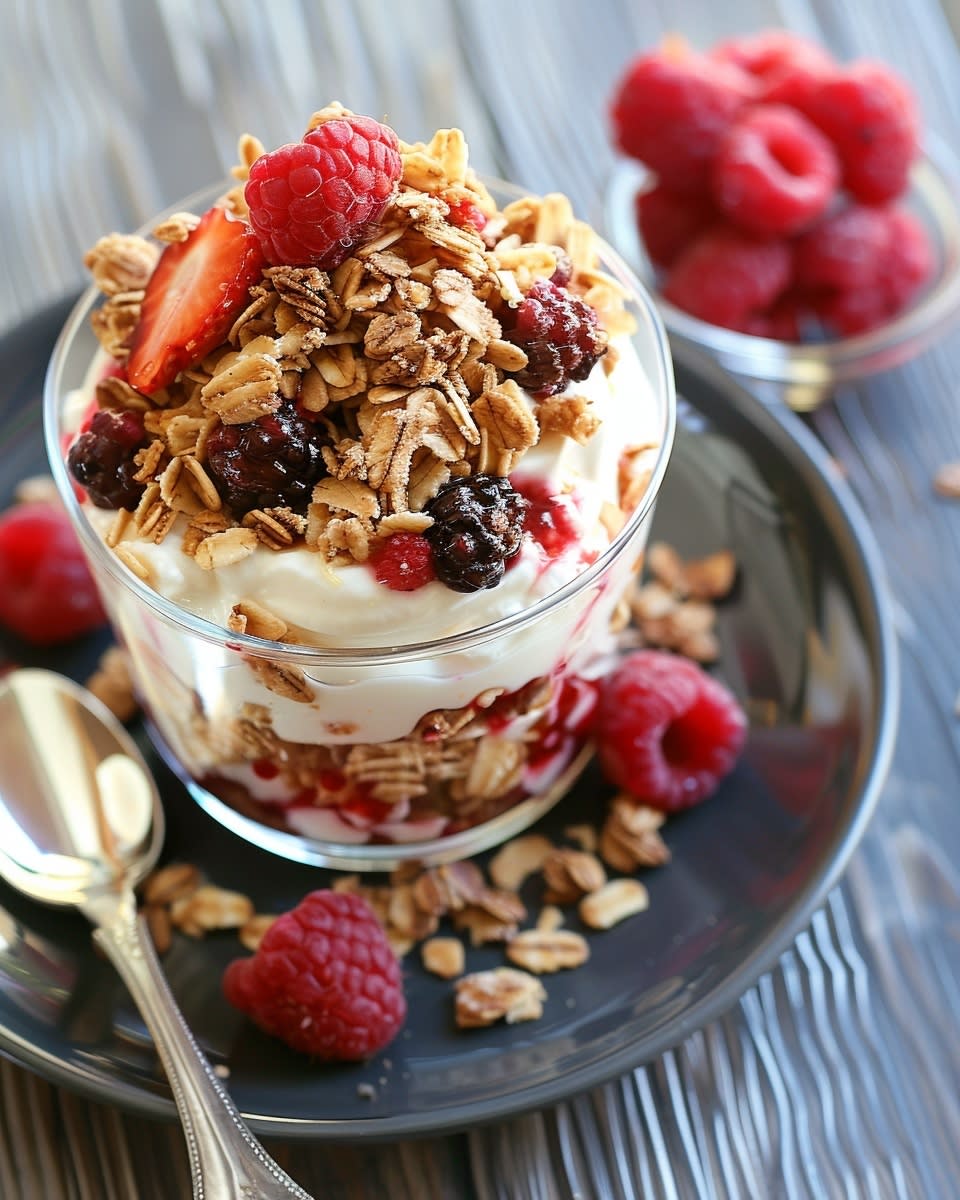
I’ll never forget the morning I stumbled into my kitchen, desperate for something quick but filling before a long day ahead. My stomach was growling, but I had zero time for a complicated breakfast. That’s when I spotted a container of Greek yogurt in my fridge, some berries about to go bad, and a jar of honey. Five minutes later, I was eating what would become my go-to breakfast for years: a Greek yogurt berry parfait. It was creamy, sweet, and somehow kept me full until lunch. I felt like I’d discovered a secret that everyone should know about.
A Greek yogurt berry parfait is one of those rare foods that checks every box. It tastes amazing, takes almost no time to make, and actually fuels your body with good stuff. Whether you’re trying to lose weight, manage diabetes, or just want something better than a drive-through breakfast sandwich, this parfait fits the bill. The best part? You can make it exactly how you want it. Add more berries for sweetness, throw in some nuts for crunch, or keep it simple with just yogurt and fruit.
The magic happens when you combine Greek yogurt with fresh berries. Greek yogurt brings protein and probiotics to the table, while berries pack in antioxidants and vitamins. Together, they create a balanced snack or meal that satisfies your sweet tooth without the sugar crash that comes from eating a donut or pastry. Your body gets what it needs, and your taste buds get a treat. That’s a win-win in my book.
What is a Greek Yogurt Berry Parfait?
A Greek yogurt berry parfait is a layered dish that combines creamy Greek yogurt with fresh or frozen berries. Think of it like building a delicious tower in a glass or bowl. You start with a layer of yogurt, add some berries, maybe sprinkle on some granola or nuts, then repeat until you reach the top. The word “parfait” comes from French and means “perfect,” which makes sense when you taste how well these simple ingredients work together.
The basic components are straightforward. Greek yogurt serves as your base—it’s thicker and creamier than regular yogurt, with way more protein. Berries add natural sweetness and color. Strawberries, blueberries, raspberries, and blackberries all work great. You can use fresh berries when they’re in season or frozen ones year-round. Beyond these essentials, everything else is optional. Some people add granola for crunch, drizzle honey for extra sweetness, or toss in chia seeds for more nutrition.
What I love most about a greek yogurt berry parfait recipe is how forgiving it is. There’s no wrong way to make one. Feeling fancy? Layer it carefully in a tall glass. Running late? Just dump everything in a bowl and mix it up. Both versions taste equally good. You can prep several parfaits on Sunday night and grab one each morning during the week. Or you can make one fresh whenever the craving hits. It works for breakfast, as an afternoon snack, or even as a healthier dessert option.
The flexibility extends to dietary needs too. If you’re watching carbs, skip the granola and honey. Dairy-free? Use a plant-based Greek-style yogurt instead. Need more calories for an active lifestyle? Add nuts, seeds, and a generous drizzle of nut butter. The recipe adapts to you, not the other way around. This makes it perfect for families where everyone has different tastes or requirements. Everyone can customize their own parfait exactly how they like it.
Greek Yogurt Berry Parfait Ingredients
Let me walk you through the greek yogurt berry parfait ingredients you’ll need for a classic version. Don’t stress if you don’t have everything on this list. Remember, this recipe is flexible, and you can work with what you have.
Essential Ingredients:
- Greek yogurt – About 1 to 1.5 cups per serving. I prefer plain, unsweetened Greek yogurt because it gives you control over the sweetness level. Full-fat, low-fat, or non-fat all work fine. Full-fat keeps you fuller longer, while non-fat saves calories.
- Mixed berries – Around 1/2 to 1 cup per serving. Use any combination you like. Fresh berries have amazing texture, but frozen berries work great too. Just let frozen ones thaw for a few minutes first, or they’ll turn your yogurt icy cold.
- Granola – About 1/4 cup per serving. This adds crunch and makes the parfait more filling. Look for granola with less added sugar, or make your own if you’re feeling motivated.
- Honey or maple syrup – 1 to 2 teaspoons if you want extra sweetness. I usually taste my berries first. If they’re super sweet, I skip this entirely.
Optional Add-Ins:
- Chia seeds or flax seeds for omega-3 fatty acids
- Sliced almonds, walnuts, or pecans for healthy fats and crunch
- A sprinkle of cinnamon or vanilla extract for extra flavor
- Coconut flakes if you’re into that tropical vibe
- A dollop of nut butter for more protein and richness
When shopping for these greek yogurt parfait ingredients, quality matters. For yogurt, check the label and make sure it lists milk and live active cultures as the main ingredients. Avoid yogurts loaded with added sugars, artificial flavors, or weird ingredients you can’t pronounce. The protein content should be high—look for at least 15 grams per serving.
For berries, fresh and local is best when they’re in season. Summer berries taste like candy compared to the sad, flavorless ones you get in winter. But don’t let that stop you from making parfaits year-round. Frozen berries are picked at peak ripeness and flash-frozen, so they often have more nutrients than fresh berries that traveled thousands of miles to reach your grocery store. I keep a big bag of mixed frozen berries in my freezer at all times.
Granola is tricky because many brands pack in tons of sugar and turn what should be a healthy addition into basically dessert. Read labels carefully. The best granolas have whole grains listed first, minimal added sugar (under 6 grams per serving), and recognizable ingredients. Or better yet, make a big batch of homemade granola. It takes about 30 minutes and lasts for weeks in an airtight container.
One tip I learned the hard way: prep your ingredients before you start layering. Wash and dry your berries. Measure out your yogurt. Have your toppings ready to go. This makes assembly quick and mess-free, which is crucial on busy mornings when you’re still half asleep.


How to Make a Greek Yogurt Berry Parfait
Now that you’ve got your ingredients lined up, let’s get into the fun part—actually building this thing. The yogurt berry parfait recipe I’m about to share takes maybe five minutes, tops. I’ve made this literally hundreds of times, and it never gets old.
Start by grabbing your favorite glass or bowl. Clear glasses make these look fancy because you can see the colorful layers, but honestly, any container works. I’ve eaten plenty of these out of a coffee mug on rushed mornings. Spoon about a third of your Greek yogurt into the bottom. Spread it out a bit so you have an even layer to build on. Then add a handful of berries on top of that yogurt layer. I like mixing different berries because each one brings something different—strawberries add sweetness, blueberries give you that pop of juice, raspberries bring a slight tartness.
Next comes your crunch layer. Sprinkle some granola over those berries. Not too much, or you’ll end up with more granola than yogurt. Just enough to add texture. Here’s where you can get creative with your yogurt berry parfait recipe. Maybe toss in some chopped almonds or a sprinkle of chia seeds. Then repeat the whole process—another layer of yogurt, more berries, another hit of granola. Keep going until you reach the top of your container or run out of ingredients, whichever comes first.
The final touch is where your personal style comes in. I usually drizzle a tiny bit of honey over the top and maybe add a mint leaf if I’m feeling fancy. Some mornings when I need extra fuel, I’ll add a spoonful of almond butter right in the middle layer. It melts into the yogurt slightly and creates this amazing creamy texture. You could also try a sprinkle of dark chocolate chips if you want it to feel more like dessert.
Here’s the thing about variations—they’re endless. If you’re dairy-free, coconut yogurt works surprisingly well in this recipe. The texture is different, sure, but it still tastes great. For a tropical twist, swap the berries for diced mango and pineapple, then top with coconut flakes and macadamia nuts. I made that version for a friend who was tired of regular breakfast food, and she started making it three times a week. Sometimes when I want something more indulgent, similar to my chocolate chip protein waffles, I’ll add a layer of sugar-free chocolate protein powder mixed into the yogurt.
For those watching their carbs, skip the granola entirely and double up on nuts and seeds instead. Crushed pecans, sunflower seeds, and hemp hearts give you that crunch without the extra carbs. Add some cinnamon for warmth and flavor. The beauty of this recipe is that it adapts to whatever eating style you follow. It’s just as customizable as a breakfast quesadilla with eggs and cheese, where you can swap ingredients based on what you have or what you’re craving.
One trick I learned from a friend who’s a food photographer: if you’re making this for someone special or just want it to look Instagram-worthy, press a few berries against the side of the glass as you layer. They stick there and create this beautiful mosaic effect. Also, save your prettiest berries for the top layer where everyone can see them. Sounds silly, but presentation matters, even when you’re just making breakfast for yourself. It makes you feel like you’re treating yourself well.
The make-ahead version works differently. Instead of layering everything together, keep components separate. Pack yogurt in one container, berries in another, and granola in a small baggie or jar. When you’re ready to eat, assemble everything. This keeps the granola crunchy instead of soggy. I prep five servings every Sunday night, and it makes weekday mornings so much easier. Though honestly, on days when I have more time, I still prefer the experience of assembling one fresh, kind of like how I enjoy putting together an apple cinnamon baked oatmeal on weekend mornings when I’m not rushing.
Benefits of Greek Yogurt and Berries
Let’s talk about why this combination is so good for you, because the greek yogurt and berries benefits go way beyond just tasting great. Greek yogurt is basically a protein powerhouse. One cup typically packs around 15-20 grams of protein, which is about the same as eating three eggs. That protein keeps you full for hours and helps your body maintain muscle mass. I noticed when I started eating these parfaits regularly, I stopped getting that mid-morning hunger that used to send me hunting for snacks.
The probiotics in Greek yogurt deserve their own spotlight. These are live bacteria that sound gross but actually do amazing things for your gut. They help balance your digestive system, improve nutrient absorption, and even support your immune system. My digestion improved noticeably after I started eating Greek yogurt daily. Less bloating, more regularity—those things matter even if they’re not glamorous to talk about.
Berries bring their own set of superpowers to this partnership. They’re loaded with antioxidants, which fight inflammation in your body. Blueberries especially are known for supporting brain health and memory. Strawberries give you a day’s worth of vitamin C in just a handful. Raspberries pack in fiber that helps control blood sugar. Blackberries have some of the highest antioxidant levels of any fruit. Together, these berries create this nutritional dream team that protects your cells from damage.
Funny enough, people always ask me, “Are Greek yogurt parfaits healthy?” The answer is yes, but with a caveat. A parfait made with plain Greek yogurt, fresh berries, and minimal added sugar is incredibly healthy. It gives you protein, probiotics, fiber, vitamins, antioxidants, and calcium all in one bowl. But parfaits from some restaurants or coffee shops? Those can be sugar bombs disguised as health food. They’ll use sweetened yogurt, add sugary granola, drizzle on honey or chocolate sauce, and suddenly you’re eating the equivalent of a milkshake. Making your own means you control what goes in.
The calcium content is worth mentioning too. Greek yogurt delivers a solid dose of calcium, which your bones need. This matters at every age, but especially as you get older. Pair that calcium with the vitamin K in berries, and you’ve got a combination that supports bone health. My mom started making these after her doctor told her to increase her calcium intake, and she likes them way more than taking supplements.
Energy-wise, this parfait gives you steady fuel without the crash. The protein and fat from yogurt slow down how quickly the natural sugars from berries enter your bloodstream. You get sustained energy instead of that spike-and-crash cycle you get from eating something like a muffin or pastry. This makes it perfect before a workout or as a mid-afternoon pick-me-up when you need something that actually works. It’s that same kind of balanced energy you get from something like a strawberry banana smoothie bowl, where the nutrients work together to keep you going.
Greek Yogurt Parfait for Weight Loss
If you’re trying to lose weight, a greek yogurt parfait for weight loss strategy actually makes a lot of sense. The high protein content is the secret weapon here. Protein requires more energy to digest than carbs or fat, meaning your body burns more calories just processing it. Plus, protein signals to your brain that you’re full and satisfied. I’ve found that when I eat one of these for breakfast, I’m not thinking about food again until lunchtime.
The yogurt berry parfait calories depend entirely on how you build it, which gives you control. A basic parfait with one cup of non-fat Greek yogurt, a cup of mixed berries, and a small amount of granola comes in around 250-300 calories. That’s a filling breakfast or substantial snack for very reasonable calories. Compare that to a bagel with cream cheese at 400+ calories, or a fast-food breakfast sandwich at 500+ calories, and you can see why this works for weight management.
What makes this different from other low-calorie options is that it doesn’t leave you feeling deprived. The natural sweetness from berries satisfies sugar cravings. The creaminess of Greek yogurt feels indulgent. The crunch from granola or nuts gives you that satisfying texture. You’re not choking down something bland because it’s “diet food.” You’re genuinely enjoying what you’re eating, which makes it sustainable long-term.
The nutrient density is another huge factor for weight loss. Every calorie in this parfait brings vitamins, minerals, protein, or beneficial compounds with it. These are “empty” calories from soda or chips that give you energy but nothing else. Your body gets what it needs, which reduces cravings for other foods. I used to struggle with constant snacking, but when I started eating more nutrient-dense foods like these parfaits, those cravings disappeared.
For maximum weight loss benefits, I’d suggest using non-fat or low-fat Greek yogurt to save calories, piling on the berries since they’re low in calories but high in fiber, and going easy on the granola and honey. Even better, skip the granola and add crushed almonds instead—you get crunch and healthy fats that keep you full, without the extra carbs. This combo has helped me maintain my weight for years without feeling like I’m constantly dieting or restricting myself, which is honestly the best part.


Greek Yogurt Berry Parfait for Diabetics
My uncle was diagnosed with type 2 diabetes a few years back, and suddenly every meal became this complicated math problem. He’d stare at food labels like he was decoding secret messages. When I suggested he try a greek yogurt berry parfait, he looked at me like I’d lost my mind. “That’s got fruit and yogurt—isn’t that all sugar?” he asked. This is where a lot of confusion happens, so let me clear things up.
A greek yogurt parfait for diabetics can absolutely work, but you need to be smart about how you build it. The key is understanding that not all carbs affect blood sugar the same way. Greek yogurt has very little natural sugar compared to regular yogurt, and the high protein content actually helps slow down sugar absorption. Berries are among the best fruits for diabetics because they’re lower in sugar than things like bananas or grapes, plus they’re packed with fiber that further slows sugar absorption.
So, is parfait good for diabetic patients? Yes, with some modifications. First off, always use plain, unsweetened Greek yogurt. Those flavored varieties are loaded with added sugars that will spike blood glucose fast. Read the nutrition label—you want something with minimal carbs and maximum protein. The protein-to-carb ratio should be at least 2:1 if possible. Second, measure your berries. I know that sounds tedious, but portion control matters here. Stick to about half a cup of berries per serving. Berries that work particularly well for diabetes management include strawberries, raspberries, and blackberries because they’re lower on the glycemic index.
Now, what can I add to Greek yogurt for diabetics beyond just berries? This is where you can get creative. Cinnamon is a game-changer—it not only adds flavor without any carbs or calories, but studies suggest it might even help improve insulin sensitivity. I sprinkle it generously on almost every parfait I make. Nuts are another excellent addition. Almonds, walnuts, and pecans provide healthy fats and protein with minimal carbs. They add crunch without the blood sugar spike you’d get from granola.
Seeds deserve a mention too. Chia seeds, flax seeds, and hemp hearts are all diabetes-friendly and pack in omega-3s, fiber, and protein. They don’t add much flavor, but they boost the nutritional profile significantly. If you really want some crunch but need to avoid traditional granola, try making a low-carb version with nuts, seeds, coconut flakes, and a sugar-free sweetener. Toast everything together with a bit of coconut oil, and you get that satisfying crunch without the carb load.
Here’s what I told my uncle: skip the honey entirely or use just a tiny drizzle of sugar-free syrup if you really need it. Better yet, let the natural sweetness of the berries do the work. If that’s not sweet enough, add a few drops of vanilla extract or almond extract. These add tons of flavor without affecting blood sugar at all. He started adding unsweetened cocoa powder to his yogurt sometimes, which made it taste like chocolate pudding. Zero sugar, lots of flavor, and the antioxidants in cocoa are actually good for you.
Timing matters too. Eating a greek yogurt berry parfait as part of a balanced meal works better than eating it alone as a snack. The other foods in your meal can help moderate the overall glycemic response. My uncle usually has his parfait alongside some eggs or as a dessert after a meal with protein and vegetables. This approach helps keep his blood sugar stable. Managing blood sugar through food choices connects to broader strategies for healthy weight management, since maintaining a healthy weight often improves diabetes control.
One more thing about diabetes-friendly parfaits: test your blood sugar and see how your body responds. Everyone’s different. My uncle can handle a full cup of berries without issues, while his friend notices a bigger spike with that amount. Keep a food journal for a week or two, note what you ate and what your blood sugar did afterward, and adjust accordingly. It’s not fun, but it gives you the information you need to customize the recipe perfectly for your body.
Greek Yogurt Parfait Calories
Let’s get into the numbers because understanding yogurt berry parfait calories helps you make informed choices. A basic parfait breaks down like this: one cup of non-fat plain Greek yogurt runs about 130 calories, one cup of mixed berries adds roughly 60-80 calories, and a quarter cup of granola tacks on another 100-120 calories. Add a teaspoon of honey at 20 calories, and you’re looking at approximately 310-350 calories total. That’s actually pretty reasonable for a complete breakfast or substantial snack.
But here’s where things get interesting. Those numbers can swing wildly depending on your choices. Use full-fat Greek yogurt instead of non-fat, and you’re adding about 90 more calories. Double the granola because it tastes good, and suddenly you’re at 450+ calories. Drizzle on two tablespoons of honey or nut butter, and you might hit 550-600 calories. None of these numbers are “bad” necessarily—it just depends on your goals and what else you’re eating that day.
If you’re trying to keep the calorie count low without sacrificing satisfaction, I’ve got some tricks. First, the yogurt choice matters less than you’d think for satisfaction. I’ve tried every fat level, and honestly, the non-fat Greek yogurt with some nuts added feels just as satisfying as the full-fat version. You’re getting the fat from the nuts anyway, which gives you that full feeling, but you’re saving about 90 calories by choosing non-fat yogurt. That’s a pretty good trade-off in my opinion.
The granola is usually where people accidentally pile on calories. A quarter cup doesn’t look like much in a bowl, so it’s easy to eyeball it and actually pour out half a cup or more. Get yourself a measuring cup and actually measure it for a week. You’ll be shocked at how much you’ve been eating. Or better yet, skip traditional granola entirely and use what I call “crunch alternatives.” Crushed almonds give you 80 calories per quarter cup instead of 120. Pumpkin seeds clock in at about 75 calories for the same amount. You save calories and actually get more nutrients.
Berry amounts don’t matter as much for calories since they’re pretty low-calorie to begin with. You could honestly eat two cups of strawberries and only add 100 calories, while getting a ton of fiber and vitamins. This is where you can be generous. Load up on berries if you want a bigger, more filling parfait without adding much to your calorie count. I sometimes make these huge parfaits with two cups of berries and one cup of yogurt when I’m really hungry, and it still stays under 300 calories if I’m careful with the toppings.
Funny enough, the sweetener choice barely impacts calories if you’re reasonable with it. One teaspoon of honey is 20 calories. One teaspoon of maple syrup is about the same. Even a teaspoon of regular sugar is only 16 calories. The problem happens when people use a heavy hand and pour on three or four teaspoons. Stick to one teaspoon maximum, or train your taste buds to appreciate the natural sweetness of the berries without any added sweetener. I stopped using sweeteners altogether after a few weeks, and now they actually taste too sweet to me.
Here’s a calorie comparison table to make this clearer:
| Ingredient | Amount | Calories |
|---|---|---|
| Non-fat Greek yogurt | 1 cup | 130 |
| Low-fat Greek yogurt | 1 cup | 150 |
| Full-fat Greek yogurt | 1 cup | 220 |
| Mixed berries | 1 cup | 70 |
| Granola | 1/4 cup | 120 |
| Sliced almonds | 1/4 cup | 80 |
| Chia seeds | 1 tablespoon | 60 |
| Honey | 1 teaspoon | 20 |
| Almond butter | 1 tablespoon | 100 |
The most important thing about calories, though, isn’t the number itself—it’s how that food fits into your whole day. A 350-calorie breakfast that keeps you full until lunch and prevents you from snacking is way more valuable than a 200-calorie breakfast that leaves you hungry an hour later, leading you to eat 400 calories worth of snacks before noon. I learned this the hard way after trying to eat tiny breakfasts to “save calories.” I’d end up eating way more overall because I was constantly hungry and thinking about food.
Balance is key. If you eat a greek yogurt berry parfait for breakfast, make sure your lunch and dinner include plenty of vegetables, lean proteins, and healthy fats. Don’t try to eat three high-calorie meals plus high-calorie snacks—that’s when weight creeps up on you. But also don’t eat three tiny meals and walk around hungry and miserable all day. Find that middle ground where you’re satisfied, energized, and not obsessing over every bite of food. If you’re looking for more balanced breakfast ideas that satisfy without overdoing it, check out other breakfast and brunch recipes that use similar principles of balancing protein, healthy fats, and natural sweetness.
So as you head into your kitchen to make your first or hundredth greek yogurt berry parfait, remember that you’re not just throwing together a quick meal. You’re creating something that genuinely nourishes your body while tasting amazing. That’s rare in our world of fast food and processed everything. Start with the basic recipe I’ve shared, then let your creativity run wild. Maybe you’ll discover a combination that becomes your signature version, the one you make over and over because it just hits the spot perfectly. And if you find yourself standing at your fridge at seven in the morning, still half asleep but putting together colorful layers of yogurt and berries, you’ll know exactly what I meant when I said this simple recipe changed my breakfast game forever.
Frequently Asked Questions
What berries go well with Greek yogurt?
Pretty much any berry you can think of works beautifully with Greek yogurt. Strawberries are probably the most popular because they’re sweet and available year-round. Blueberries add a nice pop of color and that burst of juice when you bite into them. Raspberries bring a slightly tart flavor that balances the creaminess of yogurt perfectly. Blackberries work great too, though they’re a bit harder to find sometimes. I usually buy whatever’s on sale or in season, and I’ve never met a berry that didn’t taste good in a parfait. Mixed berries give you the best variety of flavors and colors in one bowl.
Are Greek yogurt parfaits healthy?
Yes, when you make them yourself with quality ingredients. A homemade greek yogurt berry parfait gives you protein, probiotics, fiber, antioxidants, and vitamins all in one dish. The key is using plain Greek yogurt without added sugars, fresh or frozen berries, and going easy on high-sugar toppings. The problem happens when you buy parfaits from restaurants or coffee shops that use sweetened yogurt, candy-like granola, and heavy drizzles of sugary syrups. Those versions can have as much sugar as a milkshake. Making your own means you control exactly what goes in, which makes all the difference in keeping it healthy.
What can I add to Greek yogurt for diabetics?
Focus on additions that add flavor and nutrition without spiking blood sugar. Cinnamon is perfect because it adds warmth and may even help with blood sugar control. Nuts like almonds, walnuts, and pecans provide healthy fats and protein with minimal carbs. Seeds such as chia, flax, and hemp add omega-3s and fiber. Unsweetened cocoa powder makes it taste like chocolate pudding without any sugar. Vanilla or almond extract gives tons of flavor with zero carbs or calories. Sugar-free sweeteners work if you really need sweetness, but many people find that fresh berries provide enough natural sweetness on their own once your taste buds adjust.
Is parfait good for diabetic patients?
A carefully constructed parfait can definitely work for diabetics. The key is using plain Greek yogurt for its high protein and low sugar content, choosing berries that are lower on the glycemic index like strawberries and raspberries, and watching portions. Skip or minimize high-carb toppings like granola and honey. The protein in Greek yogurt helps slow down sugar absorption, and the fiber in berries does the same thing. Many diabetics successfully include these parfaits in their meal plans. That said, everyone’s body responds differently, so it’s smart to test your blood sugar after eating one to see how you personally react, then adjust the recipe accordingly.
How long can I store a Greek yogurt berry parfait?
If you’ve already assembled everything together, it’s best eaten within a day, maybe two at most. The granola gets soggy, and the berries start releasing juice that makes everything watery. The better approach for meal prep is storing components separately. Keep the yogurt in one container, berries in another, and granola or toppings in a small jar or bag. Everything stays fresh for about 4-5 days this way. When you’re ready to eat, just layer it all together. I prep five servings every Sunday night using this method, and Friday’s parfait tastes just as good as Monday’s. The separate storage trick really makes a difference.
Can I use frozen berries instead of fresh?
Absolutely, and frozen berries often have more nutrients than fresh ones that have traveled long distances. They’re picked at peak ripeness and flash-frozen immediately. I keep frozen berries stocked year-round because they’re cheaper and never go bad. You can use them straight from frozen if you don’t mind a really cold parfait, but I prefer letting them thaw for about 10-15 minutes first. They’ll release some juice as they thaw, which actually creates this natural berry syrup that mixes into the yogurt beautifully. In winter when fresh berries are expensive and flavorless, frozen berries are definitely the way to go.
What’s the best type of granola for a parfait?
Look for granola with whole grains listed as the first ingredient and less than 6 grams of sugar per serving. Most store-bought granolas are loaded with sugar and might as well be candy. Read those labels carefully. Brands that use honey or maple syrup as sweeteners tend to be better than those using corn syrup or refined sugar. Even better, make your own granola at home where you control exactly what goes in it. You can adjust the sweetness, add the nuts and seeds you prefer, and make a big batch that lasts for weeks. Homemade granola takes about 30 minutes of actual work and tastes way better than anything from a box.
Can I make Greek yogurt berry parfaits ahead for the week?
You can definitely prep the components ahead, but don’t assemble complete parfaits more than a day in advance. The granola gets disgustingly soggy sitting in yogurt for days, and nobody wants that. Instead, portion out your yogurt into containers, prep your berries in another container, and keep your granola or toppings separate in small bags or jars. In the morning, it takes maybe 60 seconds to layer everything together. I do this every Sunday for the whole week, and it’s honestly one of the best time-saving habits I’ve developed. Having breakfast ready to go means I actually eat breakfast instead of skipping it and being starving by 10 a.m.
How much protein is in a Greek yogurt berry parfait?
It depends on how much yogurt you use and what else you add, but a typical parfait made with one cup of Greek yogurt gives you about 15-20 grams of protein. That’s roughly the same as eating three eggs or a small chicken breast. If you add nuts, seeds, or a spoonful of nut butter, you’ll boost the protein even higher. This high protein content is why these parfaits keep you full for so long compared to something like cereal or toast. The protein also helps your body maintain muscle mass and supports a healthy metabolism. For a breakfast option, it’s hard to beat that protein-to-calorie ratio.
Can kids eat Greek yogurt berry parfaits?
Kids usually love these, especially if you let them help build their own. The layering part is fun for them, and they can choose which berries and toppings to add. My niece calls them “rainbow cups” and asks for them constantly. For picky eaters, the natural sweetness of berries and a small drizzle of honey makes it taste like a treat rather than health food. The protein keeps them full and focused at school, which parents definitely appreciate. You might need to adjust the portions for younger kids—maybe half a cup of yogurt instead of a full cup. Let them add fun toppings like a few mini chocolate chips or colorful sprinkles occasionally to make it feel special.
Ingredients
Equipment
Method
- Choisissez un verre ou un bol préféré pour les couches.
- Déposez environ un tiers du yaourt grec au fond.
- Étalez le yaourt pour une couche uniforme.
- Ajoutez une poignée de baies mélangées sur le yaourt.
- Parsemez une couche de granola sur les baies.
- Répétez les couches de yaourt, de baies et de granola jusqu'à atteindre le haut du contenant ou jusqu'à ce que vous n'ayez plus d'ingrédients.
- Arrosez de miel ou ajoutez des garnitures comme des noix ou une feuille de menthe, si désiré.