
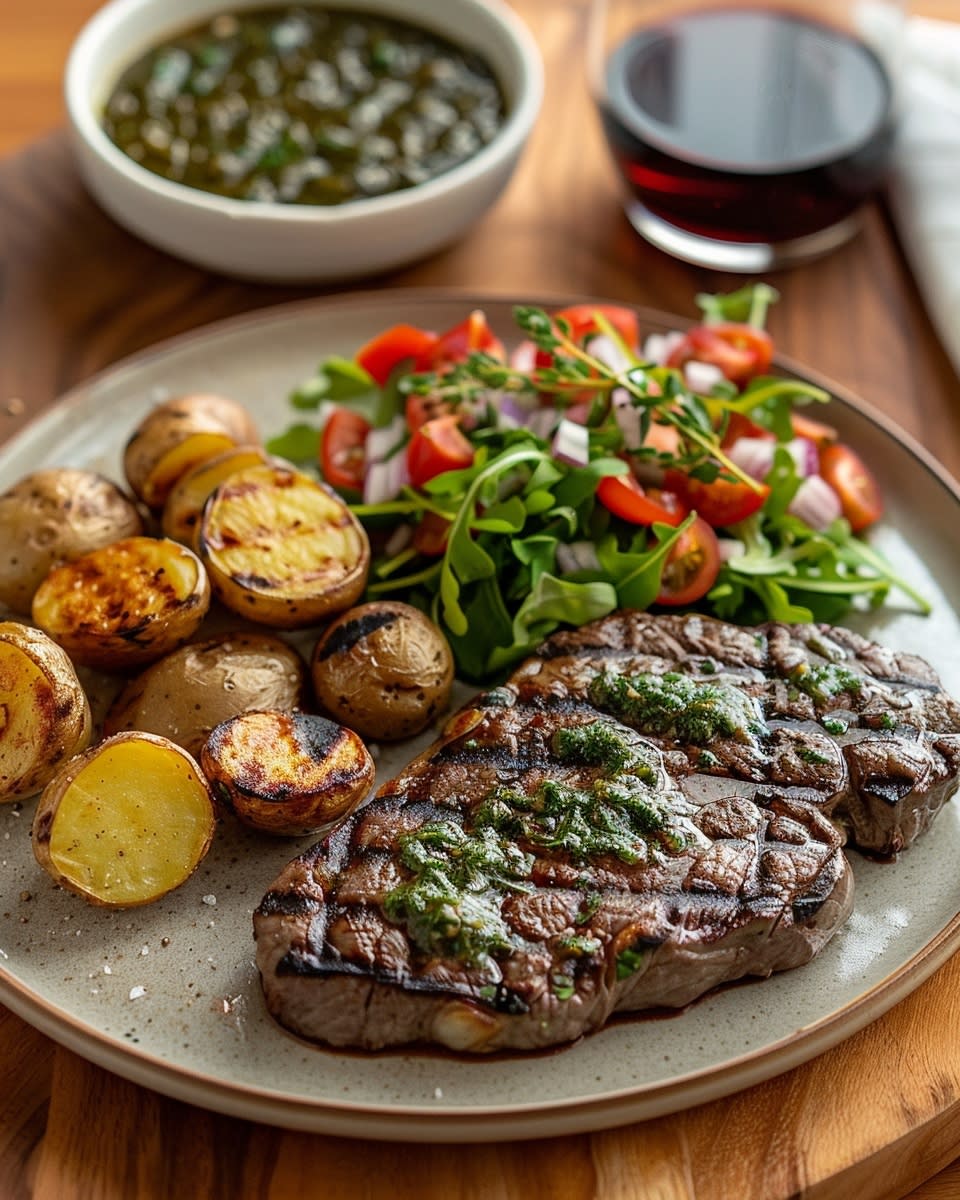
Grilled Steak with Chimichurri Sauce: A Recipe You’ll Make Again and Again
Last summer, I fired up my grill for a family dinner and served grilled steak with chimichurri sauce for the first time. The moment everyone took their first bite, the table went quiet. Not awkward quiet, but that rare kind of silence that means the food is really good. My brother-in-law actually asked for the recipe before he finished eating. That’s when I knew I had a winner on my hands.
Welcome to my complete guide on creating this amazing dish! I’m excited to share everything I’ve learned about making perfectly grilled steak paired with bright, herbaceous chimichurri. This isn’t just another recipe. It’s a collection of tested tips and real-world advice that will help you nail this dish every single time.
Whether you’re a beginner at the grill or you’ve been cooking for years, I’ll walk you through the entire process. From picking the right cut of meat to blending up that iconic green sauce for steak, you’ll learn exactly what works. Get ready to create a meal that will have your family and friends asking when you’re cooking again.
Why Grilled Steak with Chimichurri Sauce Works Every Time
There’s a reason you see this dish on restaurant menus across the USA. Grilled steak is already a crowd favorite, but adding chimichurri takes it to another level. The sauce originated in Argentina, where gauchos would prepare it to complement their beef. Now it’s become a staple at American dinner tables and backyard cookouts.
The magic happens when you combine a smoky, charred steak with the fresh punch of parsley chimichurri. The herbs, garlic, and vinegar cut through the richness of the beef perfectly. It’s like they were meant to be together. You get that satisfying protein-packed main course with a sauce that adds brightness without weighing things down.
I love this dish because it feels special enough for celebrations but easy enough for a Tuesday night dinner. When I make flank steak with chimichurri, I’m not stuck in the kitchen for hours. The actual cooking takes maybe 15 minutes. The rest is just simple prep work that anyone can handle.
The flavors work for almost any occasion too. Serve it at a summer barbecue with grilled vegetables on the side. Make it for date night at home with a glass of red wine. Pack leftovers for lunch the next day in a salad or wrap. The dish adapts to whatever you need it to be.
Another huge plus is that steak and chimichurri aren’t seasonal. You can grill outdoors when the weather’s nice or use a grill pan indoors during winter. The ingredients for the sauce are available year-round at any grocery store. This means you can satisfy that craving whenever it hits.
Choosing the Right Cut of Steak for Grilling
Not all steaks are created equal, and picking the right cut makes a real difference. I’ve experimented with different options, and some definitely work better than others for this recipe. The good news is you don’t need to buy the most expensive cut to get amazing results.
Flank steak is my go-to choice for this dish. It’s a lean cut from the cow’s lower chest area with long muscle fibers. When you slice it correctly (against the grain), you get tender, flavorful pieces that soak up chimichurri beautifully. Flank steak cooks quickly over high heat, which is perfect for grilling. The price point is usually reasonable too.
Skirt steak is another excellent option that many chefs prefer. It’s similar to flank but has even more beefy flavor and a slightly looser texture. If you’ve seen videos of skirt steak chimichurri gordon ramsay style, you know this cut can handle bold flavors. Skirt steak is thinner than flank, so it cooks even faster. Just watch it carefully so it doesn’t overcook.
Here’s a quick comparison to help you decide:
- Flank Steak: Thicker cut, slightly milder flavor, great for beginners, easier to find
- Skirt Steak: Thinner cut, more intense beef flavor, cooks very fast, sometimes harder to locate
- Sirloin: Tender and mild, good marbling, works well but less traditional
- Ribeye: Very flavorful with lots of fat, delicious but pricey, can overpower the chimichurri
How to Select Quality Meat at the Store
When I’m at the butcher counter or browsing the meat section, I look for specific things that signal freshness and quality. These details matter because great ingredients lead to great meals.
First, check the color. Good beef should be bright red or deep burgundy. Avoid anything that looks brown or gray, which means it’s been sitting around too long. The meat should look moist but not sitting in a pool of liquid.
Marbling refers to those thin white lines of fat running through the muscle. This intramuscular fat melts during cooking and keeps your steak juicy and flavorful. While flank and skirt steaks are naturally leaner than cuts like ribeye, you still want to see some marbling. More marbling usually equals more flavor and tenderness.
Feel the package if you’re buying pre-wrapped meat. It should feel cold and firm, not soft or warm. Check the sell-by date and pick the freshest option available. I always try to cook steak within a day or two of buying it for the best results.
Don’t be shy about asking the butcher for help. These folks know their stuff. Tell them you’re making bobby flay chimichurri steak or grilled steak with chimichurri, and ask what they recommend. They can often cut meat to your preferred thickness or suggest alternatives if your first choice isn’t available.
Thickness matters too. For flank steak, I look for pieces that are about one to one and a half inches thick. This gives you enough meat to develop a nice crust on the outside while keeping the inside medium-rare. Skirt steak is naturally thinner, usually around half an inch to three-quarters of an inch.
If you have access to grass-fed beef, give it a try. The flavor is more complex and slightly different from grain-fed beef. Some people swear by it for recipes like this. I’ve used both types successfully, so choose based on your budget and preference.
One last tip: if you’re buying from a grocery store, check if they have a butcher counter in addition to pre-packaged options. The butcher counter often has fresher cuts and better selection. You might pay a bit more per pound, but the quality difference is worth it for a special meal.
Now that you know how to make chimichurri sauce choices and select the perfect steak, you’re already ahead of the game. The foundation of any great dish starts with quality ingredients, and you’ve got that covered. Trust me, your taste buds will thank you when you bite into that perfectly grilled steak topped with vibrant garlic chimichurri.


Preparing the Perfect Chimichurri Sauce
Once you’ve got your steak sorted, it’s time to talk about the real star of the show: the chimichurri. I remember the first time I made this sauce thinking it would be complicated. Turns out, it’s probably one of the easiest things you’ll ever make in your kitchen. You literally throw everything in a bowl, mix it up, and you’re done. No cooking required.
Traditional chimichurri starts with fresh parsley. And I mean fresh, not the dried stuff from your spice rack. You’ll need about one cup of packed fresh flat-leaf parsley. That’s roughly one large bunch from the grocery store. Strip the leaves off the stems because those woody stems can be bitter and tough to chop.
Next up is garlic. This is where you can really make the recipe your own. I use four to five cloves for a good punch of flavor, but my cousin who’s obsessed with garlic throws in seven or eight. If you’re making garlic chimichurri that really lives up to the name, don’t be shy. Just know that raw garlic gets stronger as it sits, so start with less if you’re not sure.
Here’s what you need for a basic parsley chimichurri that serves about six people:
Fresh parsley: 1 cup packed (about 1 large bunch)
Garlic cloves: 4 to 6, depending on size and your preference
Red wine vinegar: 3 tablespoons
Extra virgin olive oil: Half cup
Dried oregano: 2 teaspoons (or 1 tablespoon fresh)
Red pepper flakes: Half teaspoon to 1 teaspoon
Salt: 1 teaspoon
Black pepper: Half teaspoon
The process is super straightforward. Finely chop your parsley and garlic. You can do this by hand with a sharp knife, which gives you more control over texture. Or toss everything in a food processor and pulse it a few times. Just don’t over-process or you’ll end up with parsley soup instead of a chunky sauce. I learned this the hard way when I got lazy and left the processor running too long.
Transfer your chopped herbs and garlic to a bowl. Add the vinegar, olive oil, oregano, red pepper flakes, salt, and pepper. Stir everything together and taste it. This is important because you might want more vinegar for tang, more salt for punch, or more red pepper if you like heat. When I’m preparing dishes like spicy sriracha deviled eggs for parties, I always taste and adjust, and the same rule applies here.
Here’s the thing about chimichurri: it gets better as it sits. The flavors marry together and mellow out. If you can make it an hour or two before you plan to eat, that’s ideal. I’ve even made it the night before for dinner parties. Just cover it and stick it in the fridge. Bring it back to room temperature before serving because cold olive oil doesn’t taste as good and the flavors are muted.
Now let’s talk variations because this is where things get fun. The bobby flay chimichurri steak approach often includes fresh cilantro mixed with the parsley. Some people can’t stand cilantro (it tastes like soap to them, which is actually a genetic thing), but if you love it, try using half parsley and half cilantro. The flavor becomes brighter and more complex.
Want to go the route of skirt steak chimichurri gordon ramsay style? Ramsay often amps up the acidity with extra vinegar and sometimes adds a squeeze of fresh lemon juice. He also tends to chop his herbs more finely than traditional Argentine versions. I’ve tried it both ways, and honestly, the chunkier texture feels more rustic and appealing to me.
You can also experiment with the type of vinegar. Red wine vinegar is classic, but sherry vinegar adds a sophisticated note. Apple cider vinegar works in a pinch and adds a subtle sweetness. I once used balsamic when I ran out of everything else, and while it wasn’t traditional, it was still delicious.
Some people add fresh mint or basil to their chimichurri for an unexpected twist. A tablespoon of chopped fresh thyme works beautifully too. The gaucho grill restaurant chimichurri recipe versions you’ll find at authentic Argentine steakhouses sometimes include a bit of cumin for earthiness. Don’t be afraid to make this sauce your own.
Marinating and Preparing the Steak
Funny enough, I used to think marinating was absolutely necessary for every steak. Turns out, it depends on what you’re going for. For cuts like flank or skirt steak, marinating definitely adds flavor and can help tenderize the meat a bit. But it’s not mandatory if you’re short on time.
The main benefit of marinating is that it allows flavors to penetrate the surface of the meat. Since we’re already using chimichurri sauce, you might wonder if a marinade is overkill. I don’t think so. A simple marinade before grilling, followed by chimichurri after cooking, creates layers of flavor that make each bite interesting.
Here’s my go-to marinade that complements chimichurri without competing with it. Mix together a quarter cup of olive oil, three tablespoons of lime juice, two minced garlic cloves, one teaspoon of cumin, one teaspoon of smoked paprika, and salt and pepper to taste. This creates enough for about one and a half to two pounds of steak.
Place your steak in a large zip-top bag or a shallow dish. Pour the marinade over it, making sure the meat is completely coated. Seal the bag or cover the dish with plastic wrap. Now comes the waiting game. For flank or skirt steak, I recommend marinating for at least two hours, but you can go up to eight hours for maximum flavor.
By the way, don’t marinate longer than 24 hours. The acid in the lime juice will start to break down the meat too much, and you’ll end up with mushy texture. I made this mistake once when I got busy and forgot about the steak in my fridge for two days. It wasn’t pretty.
If you’re really pressed for time, even 30 minutes of marinating is better than nothing. The meat will pick up some flavor from the surface contact. Just like when I’m rushing to make loaded nachos with ground beef for unexpected guests, sometimes you work with the time you have.
While your steak is marinating, this is a great time to prep your other components. Make your chimichurri sauce. Get your side dishes ready. Maybe whip up some crispy onion blossom bites as an appetizer while everyone’s waiting for dinner.
Here’s something crucial that many people skip: take your steak out of the refrigerator about 30 to 40 minutes before you plan to grill it. This allows it to come to room temperature, which is super important for even cooking. If you throw a cold steak on a hot grill, the outside will char before the inside has a chance to cook properly.
I leave my marinated steak on the counter in its bag or dish, still covered. Room temperature steak cooks more evenly and develops a better crust. The center won’t be cold when you slice into it either. This same principle applies when I’m making BBQ honey chicken drumsticks on the grill.
Right before grilling, remove the steak from the marinade and pat it dry with paper towels. This might seem counterintuitive after all that marinating, but excess liquid on the surface will steam the meat instead of searing it. You want a nice crust, and that only happens when the surface is relatively dry.
Season the steak again with a little extra salt and pepper just before it hits the grill. Some of the seasoning from the marinade will have dripped off, so this ensures every bite is properly seasoned. Don’t be heavy-handed though. You don’t want to oversalt, especially since the chimichurri sauce also contains salt.
One more tip about prep: have everything ready before you start grilling. Your chimichurri should be made, your sides should be nearly done, and your plates should be out. Once that steak hits the grill, things move fast. You don’t want to be scrambling around the kitchen while your perfectly cooked meat is getting cold on the cutting board.
If you’ve followed these preparation steps, you’re now standing at the starting line with everything you need for success. Your steak is at room temperature, properly seasoned, and ready to meet the heat. Your green sauce for steak is sitting pretty on the counter, waiting to crown your masterpiece. The hardest part is behind you, and now comes the fun part: actually grilling this beautiful piece of meat.


Grilling Techniques for the Perfect Steak
Alright, this is where the magic happens. I’m not going to lie, the first time I grilled steak, I was nervous. I kept opening the lid to check it, poking it with a fork, basically doing everything wrong. The result was a gray, overcooked piece of leather. But after years of trial and error, I’ve figured out exactly what works. And honestly, once you understand a few key principles, grilling steak becomes way less intimidating.
The absolute first step is preheating your grill properly. I cannot stress this enough. You need a screaming hot grill to get that beautiful crust on your flank steak with chimichurri. I preheat mine for at least 15 minutes on high heat with the lid closed. This allows the grates to get thoroughly heated, which is what creates those gorgeous sear marks and prevents sticking.
For gas grills, turn all burners to high and close the lid. You’re aiming for a temperature around 450 to 500 degrees Fahrenheit. If you’re using charcoal, pile the coals on one side to create two zones: a hot direct heat zone and a cooler indirect heat zone. This setup gives you control and flexibility during cooking. I actually prefer charcoal for the smoky flavor it adds, but gas works perfectly fine too.
Once your grill is properly heated, clean those grates with a good wire brush. Then take a paper towel, fold it up, dip it in some vegetable oil, and use tongs to rub it across the grates. This creates a non-stick surface that helps with those perfect grill marks. My dad taught me this trick years ago, and it’s never failed me.
Now place your steak on the hottest part of the grill. You should hear an immediate sizzle. If you don’t, your grill wasn’t hot enough. Here’s something crucial: don’t touch it. Don’t move it. Don’t flip it yet. Let it sit there for about four to five minutes for a steak that’s one inch thick. This allows the surface to caramelize and develop that crust we’re after.
After those first few minutes, lift the edge of the steak with your tongs to check the bottom. You’re looking for a deep brown color with nice grill marks. Once you see that, flip it over. Only flip once. I used to flip my steaks multiple times thinking it would cook more evenly, but that just prevents proper crust formation. One flip is all you need for cuts like flank or skirt steak.
Here’s where a meat thermometer becomes your best friend. I resisted using one for years because I thought I could just tell by touch or timing. But thermometers take all the guesswork out. Insert it into the thickest part of the steak, making sure not to hit any fat pockets which can give false readings.
Different levels of doneness require different internal temperatures. Here’s what you’re aiming for:
- Rare: 125°F (cool red center)
- Medium-rare: 135°F (warm red center) – this is my sweet spot
- Medium: 145°F (warm pink center)
- Medium-well: 150°F (slightly pink center)
- Well-done: 160°F (no pink, fully cooked)
For flank steak with chimichurri, I strongly recommend medium-rare to medium. These leaner cuts can get tough if you cook them past that point. The muscle fibers tighten up too much and you lose that tender texture. My brother insists on well-done steak, and I love him, but I cry a little inside every time.
Something important to remember is that your steak will continue cooking after you take it off the grill. This is called carryover cooking, and the internal temperature can rise another five to ten degrees. So if you want medium-rare at 135°F, pull your steak at around 130°F. This took me a while to figure out, and I overcooked a few steaks before I got the timing right.
Once your steak reaches the right temperature, transfer it to a cutting board. And here’s a step that separates okay grilled steak from absolutely incredible grilled steak: let it rest. I know it smells amazing and you want to cut into it immediately. Resist that urge. Resting allows the juices that have been driven to the center of the meat by the heat to redistribute throughout the entire steak.
I rest my steaks for about 10 minutes, loosely tented with aluminum foil. If you skip this step and cut into the steak right away, all those beautiful juices will run out onto your cutting board instead of staying in the meat where they belong. I learned this the hard way when I served a steak that looked perfect but ended up dry because I got impatient.
During this resting time, the temperature evens out and the muscle fibers relax. When you finally slice into it, you’ll get tender, juicy meat instead of a puddle of liquid and a dry steak. This same principle applies whether I’m making tri-tip roast and potatoes in Dutch oven or grilling steaks outside.
One more thing about technique: managing flare-ups. Fat dripping onto hot coals or burners can cause flames to shoot up. If this happens, don’t panic. Just move your steak to a cooler part of the grill temporarily until the flames die down. Closing the lid can also help by cutting off oxygen to the fire. I keep a spray bottle of water nearby for serious flare-ups, though with lean cuts like flank or skirt steak, you usually won’t have major issues.
Serving and Enjoying Your Grilled Steak with Chimichurri Sauce
After all that work preparing and grilling, presentation and serving matter more than you might think. The way you slice your steak can literally make the difference between tender bites and chewy disappointment. For flank and skirt steak, you absolutely must slice against the grain. Look at the meat and you’ll see lines running in one direction. Those are the muscle fibers. Cut perpendicular to those lines in thin slices, maybe a quarter to half inch thick.
Slicing against the grain shortens those muscle fibers, making each bite much more tender. If you cut with the grain, you’ll be chewing through long, tough fibers that make even perfectly cooked steak seem overcooked. I demonstrate this to my kids every time I make steak because it’s such a game-changer.
Now let’s talk about serving that gorgeous green sauce for steak. You’ve got a few options here. Some people like to spoon the chimichurri directly over the whole steak before slicing. Others prefer to slice first and then drizzle the sauce over the sliced meat. I usually do it the second way because I think the sauce gets into all those nooks and crannies better, coating each piece individually.
Don’t be shy with the chimichurri. This isn’t a dish where you want just a tiny drizzle. Be generous. The bright, acidic flavors of the parsley chimichurri are meant to stand up to the rich beef. I usually put extra sauce in a small bowl on the table so people can add more if they want. And trust me, they always want more.
Side dishes make a huge difference in rounding out the meal. You want things that complement the steak without competing with it. Grilled vegetables are a natural choice since you already have the grill going. I love throwing on some zucchini, bell peppers, asparagus, and red onions brushed with olive oil and seasoned with salt and pepper. The char from the grill ties everything together beautifully.
A simple green salad with a light vinaigrette works perfectly too. The freshness cuts through the richness of the meat. I make mine with mixed greens, cherry tomatoes, thinly sliced red onion, and a dressing of olive oil, lemon juice, and Dijon mustard. Sometimes I throw in some avocado slices if I have them on hand.
Roasted or grilled potatoes are always a hit. I like to do baby potatoes tossed with olive oil, garlic, and rosemary, either in a grill basket or on a sheet pan in the oven. They’re crispy on the outside, fluffy on the inside, and they soak up any extra chimichurri sauce that ends up on the plate. Funny enough, my kids will eat almost any vegetable if there’s garlic chimichurri involved for dipping.
If you’re looking for something a bit different, consider serving the steak with chimichurri over a bed of rice or quinoa. The grains absorb the sauce and the meat juices, creating this incredible flavor base. I’ve also served skirt steak chimichurri gordon ramsay style with a side of creamed spinach for a steakhouse-at-home vibe that really impresses guests.
Bread is another great addition. A crusty baguette or some warm dinner rolls let you soak up every last drop of chimichurri and meat juices from your plate. Waste not, want not, right? Plus, it makes the meal feel more complete and satisfying.
Here’s something I love doing for summer cookouts: I make this a build-your-own situation. Grill some extra vegetables, maybe some corn on the cob, set out the sliced steak with plenty of chimichurri, and let people create their own plates. Some folks load up on meat, others go heavy on veggies. Everyone’s happy because they get exactly what they want.
For drinks, a bold red wine like Malbec or Cabernet Sauvignon pairs beautifully with this dish. The tannins in the wine complement the richness of the beef, while the fruit notes don’t fight with the herbaceous chimichurri. If wine isn’t your thing, a cold beer works great too. I’m partial to an amber ale or a Mexican lager with a squeeze of lime.
Don’t forget about leftovers because they’re almost as good as the original meal. Sliced flank steak with chimichurri makes incredible sandwiches the next day. Pile it on a toasted ciabatta roll with some arugula and maybe a smear of mayo. Or chop it up and throw it into a burrito bowl with rice, black beans, cheese, and extra chimichurri. I’ve even used leftover steak in breakfast scrambles with eggs and peppers.
The beauty of this dish is that it encourages experimentation. Once you’ve mastered the basic bobby flay chimichurri steak approach, start playing around. Try different herbs in your chimichurri. Swap out red wine vinegar for lime juice. Add some diced jalapeño for extra heat. Cook your steak on a cast iron grill pan if the weather’s bad. Make it your own.
When it comes to ethical food choices, consider seeking out grass-fed beef or supporting local farms when possible, as these decisions impact both quality and sustainability. The better your ingredients, the better your final dish will taste. That’s just a fact.
I’ve made this meal for birthday dinners, casual weeknight suppers, and everything in between. Every single time, it’s a hit. There’s something about perfectly grilled meat with that fresh, punchy sauce that just works. It feels impressive without being fussy. It’s the kind of meal that makes people think you’re a better cook than you actually are. Not that you’re not a good cook! You know what I mean.
The best part about making grilled steak with chimichurri sauce is sharing it with people you care about. Food has this amazing ability to bring people together, and a meal this good creates memories. Whether you’re exploring more grilling recipes or perfecting this one dish, the time spent around the table with family and friends is what really matters.
So fire up that grill, gather your ingredients, and give this recipe a shot. Start with the basics I’ve laid out here, then make it your own as you get comfortable. Take notes on what works for your particular grill and your family’s taste preferences. Before you know it, you’ll be the go-to person in your circle for perfectly grilled steak. And that’s a pretty good reputation to have.
Remember, cooking is as much about the journey as the destination. Don’t stress if your first attempt isn’t perfect. Mine sure wasn’t. But each time you make this dish, you’ll learn something new and get a little better. That’s the fun of it. Now get out there and make something delicious. Your taste buds are waiting.
Frequently Asked Questions
How to make chimichurri sauce?
Making chimichurri is incredibly simple and requires no cooking. Finely chop one cup of fresh flat-leaf parsley and four to six garlic cloves. Mix them in a bowl with half a cup of olive oil, three tablespoons of red wine vinegar, two teaspoons of dried oregano, salt, pepper, and red pepper flakes to taste. Stir everything together and let it sit for at least 30 minutes before serving so the flavors can blend. The sauce keeps in the fridge for up to a week in an airtight container.
What is the best cut of steak for chimichurri?
Flank steak and skirt steak are the two best cuts for serving with chimichurri sauce. Both are lean, flavorful cuts that cook quickly over high heat and absorb the sauce beautifully when sliced. Flank steak is slightly thicker and easier to find at most grocery stores, while skirt steak has a more intense beefy flavor and looser texture. Either cut works wonderfully as long as you slice against the grain after cooking. Sirloin also works well if you prefer a more tender, less chewy texture.
Can I use chimichurri sauce on other meats?
Absolutely! Chimichurri is incredibly versatile and tastes amazing on chicken, pork, lamb, and even fish. I’ve used it on grilled chicken thighs, pork chops, and lamb chops with fantastic results. It also works as a marinade before cooking or as a finishing sauce after. Some people even use it on roasted vegetables or as a dip for bread. Once you make a batch, you’ll find yourself wanting to put it on everything because it adds such bright, fresh flavor to whatever you’re cooking.
How long should I marinate the steak?
For flank or skirt steak, marinate for at least two hours but no longer than 24 hours. The ideal time is somewhere between four and eight hours, which allows the flavors to penetrate the meat without the acid breaking down the texture too much. If you only have 30 minutes, that’s still better than nothing and will add some flavor to the surface. Just remember that longer isn’t always better when it comes to marinades with acidic ingredients like lime juice or vinegar.
What are some good side dishes for grilled steak with chimichurri?
Grilled vegetables like zucchini, bell peppers, and asparagus are perfect because you can cook them alongside the steak. A simple green salad with vinaigrette provides freshness that balances the rich meat. Roasted or grilled potatoes work wonderfully for soaking up the extra chimichurri sauce. Rice, quinoa, or crusty bread are also excellent choices. I also love serving corn on the cob brushed with butter or a side of black beans for a complete, satisfying meal.
Can I make chimichurri ahead of time?
Yes, chimichurri actually tastes better when made ahead because the flavors have time to meld together. You can make it up to three days in advance and store it in an airtight container in the refrigerator. Just bring it back to room temperature before serving since cold olive oil doesn’t taste as vibrant. Some people even freeze chimichurri in ice cube trays for longer storage. The fresh herbs may darken slightly over time, but the flavor remains excellent.
Do I need to flip the steak multiple times while grilling?
No, you should only flip your steak once during grilling. Flipping multiple times prevents proper crust formation and makes it harder to develop those beautiful grill marks. Let the steak sit undisturbed for four to five minutes on the first side until a good crust forms. Then flip it once and cook the other side to your desired doneness. Resist the urge to keep checking or moving it around. Patience is key to getting that perfect sear everyone loves.
What internal temperature should I cook my steak to?
For medium-rare, which is ideal for flank and skirt steak, aim for an internal temperature of 130-135°F. Medium is 140-145°F, and medium-well is around 150°F. Remember that the steak will continue cooking after you remove it from the grill, rising another five to ten degrees. Use a meat thermometer inserted into the thickest part of the steak for accurate readings. Avoid cooking lean cuts like flank and skirt past medium because they can become tough and chewy.
Why do I need to let the steak rest after grilling?
Resting allows the juices that have been driven to the center of the meat by heat to redistribute throughout the entire steak. If you cut into it immediately, those juices will run out onto the cutting board instead of staying in the meat. Let your steak rest for about 10 minutes loosely tented with foil. This results in a much juicier, more flavorful steak with even doneness throughout. It’s one of the most important steps that many home cooks skip.
Can I cook this steak indoors if I don’t have a grill?
Definitely! A cast iron grill pan or regular skillet works great for cooking steak indoors. Heat your pan over high heat until it’s smoking hot, then cook the steak the same way you would on an outdoor grill. You won’t get quite the same smoky flavor, but the results are still delicious. Make sure your kitchen is well-ventilated because it will get smoky. You can also broil the steak in your oven, placing it on the top rack close to the heating element for similar results.
Ingredients
Equipment
Method
- Choisissez un steak de flanc ou de côtes et assurez-vous qu'il mesure environ 1 à 1,5 pouces d'épaisseur.
- Préparez la marinade en mélangeant l'huile d'olive, le jus de lime, l'ail haché, le cumin, le paprika fumé, le sel et le poivre.
- Placez le steak dans un sac à fermeture éclair ou un plat peu profond et versez la marinade dessus, en veillant à ce qu'il soit bien enrobé.
- Scellez le sac ou couvrez le plat et faites mariner pendant au moins 2 heures, jusqu'à 8 heures.
- Préparez la chimichurri en hachant finement le persil et l'ail, puis en mélangeant avec le vinaigre, l'huile d'olive, l'origan, les flocons de piment rouge, le sel et le poivre.
- Faites reposer la chimichurri pendant au moins 30 minutes pour mélanger les saveurs.
- Retirez le steak de la marinade et laissez-le reposer à température ambiante pendant 30-40 minutes avant de le griller.
- Préchauffez le gril à haute température (450-500°F) pendant environ 15 minutes.
- Nettoyez les grilles du gril et huilez-les avec un essuie-tout imbibé d'huile végétale.
- Placez le steak sur le gril et laissez-le cuire sans le retourner pendant 4-5 minutes.
- Retournez le steak une fois et utilisez un thermomètre à viande pour vérifier la température : retirez-le à 130°F pour une cuisson à point.
- Laissez le steak reposer pendant environ 10 minutes sous du papier d'aluminium avant de le trancher.
- Tranchez le steak contre le grain et servez avec la sauce chimichurri généreusement arrosée dessus.