
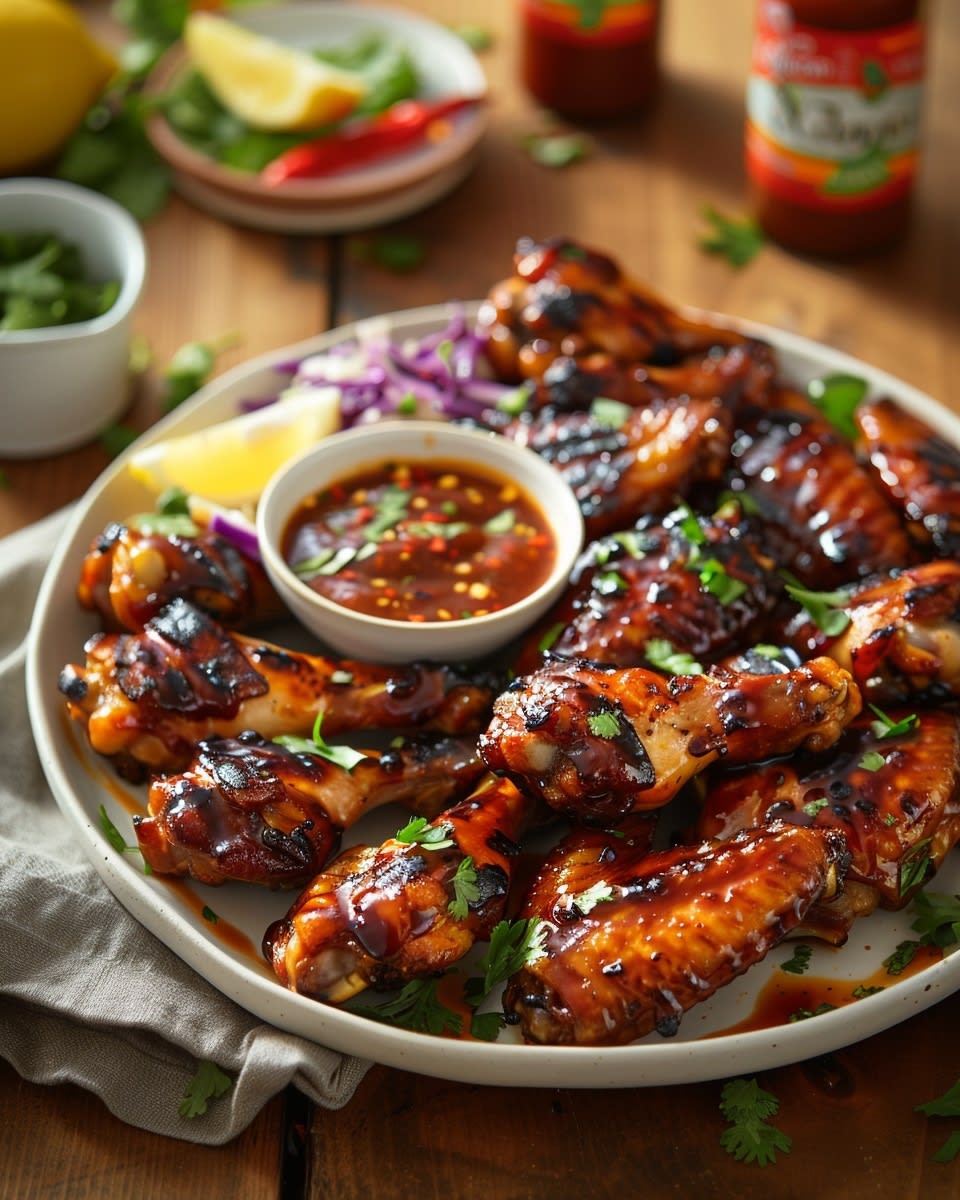
Introduction: Why My Honey Sriracha Grilled Chicken Wings Will Change Your BBQ Game
Last summer, I made a huge mistake at my sister’s birthday party. I showed up with plain grilled chicken wings. They were fine, but they just sat there on the table while everyone huddled around someone else’s spicy glazed wings. That moment taught me something important: people want wings with personality. That’s when I started working on my Honey Sriracha Grilled Chicken Wings, and trust me, they’ve never been ignored at a party since.
These wings have become my secret weapon for any gathering. Last month, my neighbor asked for the recipe after trying them at our block party. The week before, my kids requested them for dinner three nights in a row. There’s something about that sweet and spicy glaze that makes people come back for more.
What makes these wings special isn’t just the flavor. It’s how easy they are to make. You don’t need fancy ingredients or complicated techniques. Just good chicken wings, a few simple ingredients, and about 30 minutes on the grill. I’ll walk you through every step, share the mistakes I made so you don’t have to, and give you tips that took me years to figure out.
The best part about this recipe is how flexible it is. Want more heat? Add extra sriracha. Prefer it sweeter? Bump up the honey. I’ve made these wings probably a hundred times now, and I tweak them based on who’s coming over. My mom likes them mild and sweet. My college buddy wants them so spicy his eyes water. This recipe works for both.
Why Honey and Sriracha Create the Perfect Wing Sauce
Let me tell you about the magic that happens when honey meets sriracha. These two ingredients seem like opposites, but that’s exactly why they work so well together. The honey brings natural sweetness that wraps around your taste buds like a warm hug. Then the sriracha kicks in with its spicy punch, waking everything up.
I remember the first time I tried this combination. I was standing in my kitchen with leftover honey from making tea and a bottle of sriracha I used on my eggs. I mixed them together on a whim, tasted it, and immediately knew I had found something special. That balance between sweet and spicy creates what chefs call a “flavor profile” – but I just call it delicious.
The sweetness doesn’t just taste good. It actually helps tame the heat from the sriracha. This means even people who usually avoid spicy food can enjoy these wings. My mother-in-law claims she doesn’t like anything spicy, but she ate six of these wings at Thanksgiving. The honey makes the heat approachable instead of aggressive.
Here’s what happens when you combine these ingredients:
- The honey caramelizes on the grill, creating a sticky glaze
- The sriracha adds depth with its garlic and chili flavor
- Together they create a coating that sticks to every inch of the wing
- The sweet notes hit your tongue first, followed by the spicy finish
I’ve tried other sweet and spicy combinations over the years. Brown sugar and hot sauce. Maple syrup and cayenne. Agave and jalapeños. None of them match what honey and sriracha do together. There’s something about honey’s floral notes that complements the fermented chili flavor in sriracha.
The Health Benefits You Didn’t Expect
Now, I’m not going to pretend these wings are health food. But compared to deep-fried wings covered in butter sauce, they’re actually a smarter choice. Let me break down why.
Honey is a natural sweetener that’s been used for thousands of years. Unlike white sugar or corn syrup, honey contains trace amounts of vitamins and minerals. It has antioxidants that can help your body fight inflammation. My grandmother always kept honey in her kitchen and swore by its healing properties. Science has actually backed up some of what she believed.
When you use honey instead of refined sugar in your wing sauce, you’re making a better choice. Honey is sweeter than sugar, so you actually need less of it. This means fewer empty calories in your glaze. It also has a lower glycemic index than regular sugar, which means it won’t spike your blood sugar as quickly.
The sriracha brings its own benefits to the table. Chili peppers contain capsaicin, the compound that makes them spicy. Capsaicin can boost your metabolism slightly and may help with pain relief. Some studies suggest it can even improve heart health. Plus, spicy food makes you eat slower, which gives your brain time to register that you’re full.
Grilling instead of frying makes a massive difference too. When you grill chicken wings, the fat drips away from the meat. You end up with crispy skin without needing to submerge the wings in oil. I’ve measured this before – grilled wings have about 30% fewer calories than fried wings.
Here’s a quick comparison of what you’re getting:
| Cooking Method | Calories per Wing | Fat Content |
|---|---|---|
| Deep Fried | 90-100 | High |
| Grilled | 60-70 | Moderate |
Don’t get me wrong – these wings are still an indulgence. But they’re an indulgence you can feel slightly better about. I eat them regularly during football season, and I don’t feel guilty about it. The protein from the chicken keeps you satisfied, and the spice might even give your metabolism a tiny boost.
The key is using real honey and quality sriracha. Check your honey label and make sure it actually says “honey” and not “honey blend” or “honey product.” Real honey has those beneficial properties I mentioned. The cheap stuff is often cut with corn syrup and loses most of its benefits.
My doctor once told me that enjoying your food is part of being healthy. Stress from constant restriction can be worse than occasionally eating something indulgent. These Honey Sriracha Grilled Chicken Wings let me enjoy amazing flavors while still making reasonably smart choices. That balance works for me and my family.


How to Prepare Honey Sriracha Grilled Chicken Wings
Now that you know why these wings are worth making, let’s actually make them. I’m going to walk you through everything from picking out the right wings at the store to pulling them off the grill at exactly the right moment.
Selecting and Prepping Your Chicken Wings
Here’s something I learned the hard way: not all chicken wings are created equal. The first time I made these, I grabbed whatever wings were cheapest at the grocery store. They were frozen in a huge bag, and honestly, they tasted like it. The texture was mushy, and they never got that crispy skin I was after.
Fresh wings make a world of difference. I look for wings that are plump with smooth, unblemished skin. If you’re buying them from the butcher counter, that’s even better. You can ask them to separate the drumettes and flats for you, which saves time at home. Some people have strong opinions about which part is better – I’m a flat wing person myself because I love getting to that tender meat between the two bones.
When you get the wings home, don’t skip the prep work. I know it’s tempting to just throw them straight into the marinade, but trust me on this one. First, rinse them under cold water. Then pat them completely dry with paper towels. This step is crucial. Wet wings won’t crisp up properly on the grill, and the marinade won’t stick as well either.
I usually spread the wings out on a baking sheet lined with paper towels and let them sit in the fridge uncovered for about an hour. My wife thinks I’m crazy when I do this, but it dries out the skin even more, which leads to that perfect crispy texture we’re after. Professional chefs do this with steaks and duck, so why not wings?
One more thing about buying wings – you’ll typically need about five to six wings per person if they’re an appetizer. If wings are the main event, bump that up to eight or ten. I learned this at my son’s graduation party when I made way too few and watched grown adults nearly fight over the last few pieces.
Making the Marinade That Makes Everything Work
The marinade is where the magic starts. I keep mine simple because I’ve found that too many ingredients just muddy the flavors. You want that honey and sriracha to shine through.
For about three pounds of wings, I mix together half a cup of honey with a third cup of sriracha. Then I add three tablespoons of soy sauce, two tablespoons of lime juice, and three cloves of minced garlic. The soy sauce adds a savory depth that rounds out the sweet and spicy. The lime juice brings brightness and helps tenderize the chicken slightly. And garlic? Well, garlic makes everything better.
Funny enough, I discovered the lime juice addition by accident. I was making these wings for a summer cookout and had just made margaritas. There was half a lime sitting on the counter, and I squeezed it into the marinade on a whim. Everyone raved about those wings, asking what I did differently. Sometimes happy accidents lead to the best recipes.
Mix everything in a bowl big enough to really work with. I use a whisk to combine it all thoroughly. The honey can be stubborn and wants to stay clumped together, so give it a good minute of whisking. You’ll know it’s ready when the mixture looks smooth and the honey is completely incorporated.
Now, about variations. If you want to kick up the heat, add a teaspoon of red pepper flakes or a splash of hot sauce on top of the sriracha. My buddy Dave likes them nuclear, so I sometimes add a chopped habanero to his portion. Want it sweeter? Add an extra tablespoon of honey or even a tablespoon of brown sugar. I’ve also tried adding a teaspoon of ginger paste, which gives it an Asian-inspired twist that pairs beautifully with grilled tacos or other summer grilling favorites.
Pour about three-quarters of the marinade over the wings in a large zip-top bag or covered container. Save the remaining quarter for basting later – but keep it in a separate container since it hasn’t touched raw chicken. I made the mistake once of using all the marinade on the raw wings and then having nothing clean to brush on at the end. Not my finest moment.
Let the wings marinate for at least two hours, but four to six hours is even better. I usually prep them in the morning if I’m serving them for dinner. You can marinate them overnight too, though I wouldn’t go much longer than twelve hours because the lime juice can start to break down the meat too much.
Grilling Techniques for Perfect Wings Every Time
This is where people usually mess up, and I should know because I messed up plenty of times myself. Grilling wings isn’t hard, but there are a few tricks that separate okay wings from incredible ones.
First thing – get your grill set up for two-zone cooking. This means you want high heat on one side and medium or no heat on the other. On a gas grill, I turn half the burners to high and leave the other half on low. For charcoal, I pile the coals on one side. This setup lets you sear the wings over high heat to get them crispy, then move them to the cooler side to cook through without burning.
Take the wings out of the fridge about twenty minutes before grilling. Cold wings hitting a hot grill can result in uneven cooking. While they’re coming to temperature, fire up your grill. You want it hot – around 400 to 450 degrees on the hot side.
Here’s the thing about grilled chicken wings – they have a tendency to stick to the grates, especially with a sugary marinade like this one. Oil your grill grates well. I mean really well. I use tongs to hold a paper towel dipped in vegetable oil and run it across the grates several times. Some people think this is overkill, but I’d rather spend thirty seconds oiling the grill than spend ten minutes scraping stuck wing skin off my grates.
Place the wings on the hot side of the grill. You should hear that satisfying sizzle immediately. Don’t move them for at least three to four minutes. This is hard, I know. We all want to fiddle with our food. But moving them too soon means the skin will tear and stick. After four minutes, flip them. They should release easily if they’re ready. If they’re sticking, give them another minute.
Similar to techniques I use for grilling seafood, patience during this initial sear is everything. Once both sides have gotten some color and those grill marks we all love, move the wings to the cooler side of the grill. Close the lid and let them cook for another fifteen to twenty minutes, flipping once halfway through.
During this time, I brush them with that reserved marinade every five minutes or so. Each layer of glaze adds more flavor and creates that sticky coating that makes these wings irresistible. Just make sure you’re only using the marinade that never touched raw chicken. Food safety matters, folks.
By the way, if you’re worried about flare-ups from the honey dripping, that’s what the two-zone setup prevents. Any drips fall on the cooler side where there’s less direct flame. I used to grill everything over direct high heat, and my wings would look like they’d been through a war – charred outside, raw inside. Not good.
The wings are done when they reach an internal temperature of 165 degrees. I use an instant-read thermometer and check the thickest part of a few different pieces. The meat should pull away from the bone easily, and the juices should run clear. The skin should be golden brown and crispy, with darker caramelized spots from the honey.
Serving These Wings Like You Mean It
Once the wings come off the grill, I give them one final brush with the reserved marinade. Then I let them rest for about five minutes. Yes, wings need to rest too, just like a steak. This lets the juices redistribute through the meat instead of running all over your serving platter.
I like to pile them high on a big white platter. The contrast makes the glossy glaze really pop. Sprinkle some chopped green onions and sesame seeds over the top for a restaurant-quality presentation. A few lime wedges on the side give people the option to add extra brightness if they want it.
These wings pair amazingly well with cool, crunchy sides. I usually serve them with celery sticks and a homemade ranch or blue cheese dressing. The cool, creamy dressing balances the heat from the sriracha perfectly. Sometimes I’ll make coleslaw or a simple cucumber salad on the side. They also work great as part of a larger barbecue spread alongside dishes like smoky brisket sandwiches or even chicken quesadillas.
One tip I learned from watching my guests: have plenty of napkins available. These wings are gloriously messy. The sticky glaze gets everywhere, and honestly, that’s part of the fun. I’ve stopped trying to eat them politely. Just dive in with your hands and enjoy.
If you somehow have leftovers – which rarely happens in my house – they keep in the fridge for up to three days. Reheat them in a 375-degree oven for about ten minutes. They won’t be quite as crispy as fresh off the grill, but they’ll still be delicious. My kids actually prefer them cold straight from the fridge for lunch the next day.


Making Your Honey Sriracha Grilled Chicken Wings the Star of the Table
Here’s where things get really fun. You’ve grilled these beautiful wings, they’re glistening with that gorgeous honey sriracha glaze, and now you need to think about what goes around them. I’ve learned through trial and error that the right sides and drinks can turn a plate of wings into a complete experience that people talk about for weeks.
The secret is balance. These wings are sweet, spicy, sticky, and rich. You want sides that either complement those flavors or provide contrast. I remember throwing a Super Bowl party where I served these wings with all heavy, rich sides – mac and cheese, loaded potato skins, fried onion rings. By halftime, everyone was uncomfortably full and nobody wanted seconds of anything. The next year, I completely changed my approach and focused on lighter, refreshing sides. People ate twice as many wings and kept asking when I’d make them again.
Side Dishes That Actually Make Sense
Let me start with my go-to sides that never disappoint. First up is a simple Asian cucumber salad. I slice cucumbers thin, toss them with rice vinegar, a tiny bit of sugar, sesame oil, and red pepper flakes. It takes maybe ten minutes to throw together, and the cool, crunchy, tangy taste cuts through the richness of the wings perfectly. My daughter, who normally hates vegetables, will actually eat this salad because it’s so refreshing.
Coleslaw is another winner, but skip the heavy mayo-based version. I make mine with a lime and cilantro dressing instead. Shredded cabbage, carrots, a bit of red onion, lime juice, olive oil, and fresh cilantro. That’s it. The acidity from the lime plays beautifully with the sweet honey glaze on the wings. Plus, the crunch factor is satisfying in a way that makes you want to keep eating.
For something more substantial, I love serving grilled corn on the cob. Char it on the same grill while the wings are finishing up on the cool side. Brush the corn with butter, sprinkle with chili powder and cotija cheese. The smokiness from the grill ties everything together, and you’re already standing at the grill anyway, so why not use that space?
Rice dishes work surprisingly well too. A simple coconut rice brings a subtle sweetness that doesn’t compete with the honey in the wings. I cook jasmine rice in coconut milk instead of water, add a pinch of salt, and that’s it. Sometimes I’ll throw in some chopped cilantro at the end. It’s filling enough to make the meal more substantial if wings are your main course, but light enough that it doesn’t weigh you down.
Watermelon wedges might sound weird, but trust me on this one. The cold, sweet fruit provides an amazing contrast to the spicy heat. I cut watermelon into thick wedges and serve them ice cold straight from the fridge. When someone takes a bite of spicy wing followed by cold watermelon, their face lights up. It’s become such a hit that people specifically request it now when I make these wings.
Drinks That Complement the Sweet Heat
Choosing the right drinks matters more than you might think. The honey sriracha combo creates a unique flavor profile that can be enhanced or ruined by what you’re sipping alongside it.
Beer is the obvious choice, and it works great. But not just any beer. I’ve found that lighter beers like pilsners or wheat beers work better than heavy IPAs. The bitterness in an IPA can clash with the sweetness of the honey. A crisp pilsner or a citrusy wheat beer refreshes your palate between bites. My personal favorite is a Mexican lager with a lime wedge squeezed in. The combination transports me straight to a beach somewhere, even if I’m just standing in my backyard.
For wine drinkers – and yes, wine works with wings – go with something slightly sweet. A Riesling or Gewürztraminer handles the spice beautifully. The sweetness in the wine matches the honey, and the acidity cuts through the richness. I served these wings at my book club once (we don’t really read the books anymore, let’s be honest), and paired them with a semi-sweet Riesling. The ladies who usually stick to wine were shocked at how well it worked.
Non-alcoholic options matter too. Iced tea is my go-to, specifically a slightly sweet green tea with fresh mint. The mint cools down the heat, and the tea provides a clean backdrop that doesn’t compete with the wing flavors. I also make what I call “Thai-style lemonade” – regular lemonade with fresh basil and a tiny pinch of salt. Sounds odd, but the basil adds an herbal note that pairs incredibly well with the Asian-inspired flavors in the sriracha.
Last summer, I experimented with a pineapple and ginger mocktail that became an instant hit. Fresh pineapple juice, ginger beer, lime juice, and a sprig of mint. The pineapple’s tropical sweetness echoes the honey, while the ginger provides its own subtle heat that complements the sriracha.
Presentation Ideas That Wow Without Extra Work
The way you present food changes how people perceive it. I learned this from my aunt who could make a simple sandwich look like it came from a fancy restaurant. You don’t need complicated plating techniques, just a few simple tricks.
For casual gatherings, I line a large wooden board or baking sheet with parchment paper and pile the wings in the center. Then I scatter the sides around the edges – small bowls of dipping sauce, vegetable sticks, lime wedges, fresh herbs. Everything is within reach, and it creates this abundant, generous feeling that makes people comfortable digging in.
If you’re going a bit more formal – say, for a dinner party – individual portions work better. I put four or five wings on each plate with a small mound of slaw and a few cucumber slices. A sprinkle of sesame seeds and sliced green onions on top makes it look professional. Drizzle a tiny bit of extra glaze on the plate itself in a swoosh pattern. Takes an extra thirty seconds but looks like you spent an hour on presentation.
For game day or parties where people are standing and mingling, I set up a wing station. Big platter of wings in the center, surrounded by various dipping sauces in small bowls, napkins stacked high, and wet wipes because things will get messy. I label each sauce with a little card so people know what they’re grabbing. Sounds fancy, but the cards are literally just folded index cards with marker writing. People appreciate knowing whether they’re about to dip into ranch or blue cheese before committing.
Dipping Sauces and Garnishes That Elevate Everything
Even though these wings are already glazed and flavorful, offering dipping sauces gives people options and makes the experience more interactive. Here are my standard offerings that have become non-negotiable at my house.
A simple ranch dressing is mandatory. I make mine from scratch with buttermilk, mayo, sour cream, garlic powder, onion powder, fresh dill, and chives. It takes five minutes and tastes a thousand times better than bottled. The cool, creamy tang provides perfect relief from the heat.
Blue cheese dressing is the other classic, and I won’t judge you if you’re in the blue cheese camp instead of ranch. I crumble actual blue cheese into sour cream and mayo, add a splash of white vinegar, some garlic, and black pepper. The funky, sharp flavor of blue cheese stands up to the bold wing flavors in a way that’s really satisfying.
Here’s one that surprises people: a cilantro lime yogurt sauce. Greek yogurt, tons of fresh cilantro, lime juice, garlic, and a pinch of cumin. It’s lighter than ranch or blue cheese, and if you’re thinking about meal prep or trying to keep things a bit healthier, this sauce cuts calories while adding bright, fresh flavor. My gym-obsessed cousin actually requests this specific sauce every time.
For people who want even more heat, I put out a small bowl of extra sriracha mixed with a little mayo. It’s like spicy mayo you’d get at a sushi restaurant. The mayo mellows it just enough that you can actually taste the sriracha instead of just burning your mouth.
Garnishes might seem unnecessary, but they add color and flavor without much effort. I always have these on hand:
- Sliced green onions – they add a mild onion flavor and bright green color
- Sesame seeds – white or black, both look great and add a subtle nutty taste
- Fresh cilantro – some people hate it, but for those who love it, it’s perfect
- Lime wedges – essential for people who want extra acidity
- Thinly sliced red chilies – mostly for looks and for the truly brave
I arrange all these in small bowls and let people customize their experience. It’s interactive, it’s fun, and it makes people feel like they’re getting a restaurant-quality meal at home.
Adapting This Recipe for Different Occasions
These wings are versatile enough to fit almost any situation if you adjust the presentation and sides accordingly. For a kids’ birthday party, I tone down the sriracha significantly and serve them with fries and fruit. Kids still get to eat with their hands and make a mess, which they love.
For a romantic dinner at home, I make a smaller batch – maybe eight wings total – and serve them as an appetizer before the main course. Pair them with a nice wine, dim the lights, and suddenly chicken wings feel kind of fancy.
Game day is where these wings really shine. I triple the recipe, set up that wing station I mentioned earlier, and let people graze for hours. The wings hold up well sitting out for a while because the glaze keeps them from drying out. Though honestly, they’ve never lasted long enough at my place to really test that theory.
For outdoor summer gatherings, I grill extra vegetables alongside the wings – zucchini, bell peppers, onions – and turn it into a whole grilled feast. Everything comes together at once, and you’re not stuck in the kitchen missing the party. These wings fit right into a larger spread of barbecue and grilling recipes that make summer entertaining so much easier.
Potlucks can be tricky because you need food that travels well. I grill the wings at home, pack them in a foil pan covered tightly with more foil, and transport them warm. When I arrive, I can reheat them quickly in someone’s oven if needed, or they’re good at room temperature too. The glaze keeps them moist and flavorful even after traveling.
One thing I’ve started doing for larger groups is setting up a “wing bar” where I grill plain wings and offer multiple sauce options, including this honey sriracha glaze. People can choose their own adventure. It’s more work, but it guarantees everyone finds something they love. Plus it’s kind of fun watching people try to decide between flavors.
Whatever the occasion, these Honey Sriracha Grilled Chicken Wings adapt beautifully. They’re fancy enough to impress but casual enough that nobody feels intimidated. That balance is hard to find in a recipe, which is probably why I keep coming back to this one over and over.
Next time you’re planning any kind of gathering, whether it’s just family dinner on a Tuesday or a full-blown celebration, give these wings a try. Pay attention to the sides and drinks you pair with them, take a minute to make the presentation nice, and watch how people respond. Food has this amazing ability to bring people together, and in my experience, sticky, spicy, sweet chicken wings do that job better than just about anything else.
Frequently Asked Questions About Honey Sriracha Grilled Chicken Wings
What is the best way to store leftover Honey Sriracha Grilled Chicken Wings?
Store any leftover wings in an airtight container in the refrigerator for up to three days. Make sure they’ve cooled to room temperature before sealing the container to prevent condensation, which can make the skin soggy. When you’re ready to eat them again, reheat in a 375-degree oven for about ten minutes to crisp up the skin, or you can use an air fryer at 400 degrees for five to seven minutes. Personally, I don’t recommend microwaving them because it turns the crispy skin rubbery. If you want to freeze them, they’ll keep for up to two months in a freezer-safe container, though the texture won’t be quite as good after thawing.
Can I use other types of hot sauce instead of sriracha?
Absolutely, though the flavor will change depending on what you use. Sriracha has a specific garlic-forward, slightly sweet chili flavor that defines these wings. If you use regular hot sauce like Tabasco or Frank’s RedHot, you’ll get more vinegar tang and less garlic depth. Gochujang, a Korean chili paste, makes an excellent substitute and adds a fermented complexity that I really love. Sambal oelek gives you pure chili heat without the sweetness. Whatever you choose, start with less than the recipe calls for and adjust to taste since different hot sauces have varying heat levels. I’ve tried probably ten different options, and while sriracha remains my favorite, experimentation is half the fun.
How do I make the wings less spicy for those who can’t handle too much heat?
The easiest way is to simply reduce the amount of sriracha in the marinade by half or even two-thirds. You can also increase the honey slightly to balance out whatever sriracha you do use. Another trick is to remove the seeds from fresh chilies if you’re adding any, since that’s where most of the heat lives. I’ve made a kid-friendly version where I use just two tablespoons of sriracha for three pounds of wings, and even my spice-averse relatives enjoyed them. You can also serve extra honey on the side for people to drizzle over their wings if they want more sweetness to counter any lingering heat. The beauty of this recipe is how easy it is to dial the spice level up or down.
Is there a way to bake these wings instead of grilling them?
Yes, baking works great if you don’t have a grill or it’s too cold outside. Preheat your oven to 425 degrees and line a baking sheet with foil, then place a wire rack on top. Arrange the marinated wings on the rack so air can circulate around them, which helps them get crispy. Bake for about forty to forty-five minutes, flipping halfway through. During the last ten minutes, brush them with the reserved marinade every few minutes to build up that glaze. They won’t have the smoky char from the grill, but they’ll still be delicious and the skin gets surprisingly crispy. I actually prefer baking them in winter when standing outside at the grill sounds miserable.
What are some good side dishes to go with these wings?
Light, refreshing sides work best to balance the rich, sticky wings. I love serving Asian cucumber salad, coleslaw with a citrus dressing, grilled corn with chili and lime, or simple coconut rice. Fresh vegetables like celery and carrot sticks are classic for a reason – the crunch and coolness provide perfect contrast. Watermelon wedges might sound unusual but they’re incredibly refreshing after spicy bites. For something more filling, try roasted sweet potato wedges or a simple green salad with sesame ginger dressing. The key is avoiding heavy, creamy sides that compete with the wings rather than complementing them. Think about texture and temperature contrast when planning your menu.
How long should I marinate the chicken wings?
I recommend marinating for at least two hours, but four to six hours is ideal for maximum flavor. You can marinate them overnight if that’s more convenient for your schedule, though I wouldn’t go much beyond twelve hours because the acid from the lime juice can start breaking down the meat texture too much. If you’re really short on time, even thirty minutes is better than nothing – the wings will still be tasty, just not quite as flavorful. I usually prep mine in the morning for an evening cookout, which gives them about six to eight hours. Remember to marinate them in the refrigerator, not on the counter, to keep them food-safe.
Can I prepare the marinade ahead of time?
Definitely, and I actually do this all the time. The marinade keeps well in the refrigerator for up to a week in an airtight container. Just give it a good stir or shake before using since the honey might settle at the bottom. Making it ahead means you can marinate your wings immediately when you get home from the store without any extra prep work. I sometimes double or triple the marinade recipe and keep extra in the fridge so I can make these wings on a whim. You could even freeze the marinade in ice cube trays and thaw just what you need, though I’ve never actually needed to since it keeps so well in the fridge and I use it pretty frequently.
Are there any substitutes for honey if I don’t have it?
Maple syrup is probably the closest substitute and works really well, though it adds a different kind of sweetness with those distinctive maple notes. Agave nectar is another option that’s fairly neutral in flavor. Brown sugar mixed with a little water can work in a pinch, though you lose some of honey’s complexity. I’ve even used regular white sugar mixed with a bit of water when I was completely out of everything else, and while it wasn’t quite the same, the wings were still good. Whatever you use, you might need to adjust the quantity slightly since different sweeteners have different levels of sweetness. Start with the same amount the recipe calls for and taste the marinade, then adjust from there.
Can I make these wings in an air fryer?
Air fryers work beautifully for these wings and might actually give you the crispiest skin of any cooking method. Preheat your air fryer to 400 degrees and arrange the marinated wings in a single layer – you’ll probably need to cook them in batches unless you have a large air fryer. Cook for about twenty to twenty-five minutes, flipping them halfway through and brushing with the reserved marinade during the last five minutes. The circulating hot air crisps the skin incredibly well while keeping the meat juicy. Just watch them closely during the last few minutes because the honey can burn quickly in the intense heat. I’ve converted several people to the air fryer method because cleanup is easier and you don’t have to heat up the whole kitchen.
What can I do if my glaze is burning on the grill?
Burning glaze usually means your grill is too hot or you’re keeping the wings over direct heat too long. Move them immediately to the cooler side of your grill and close the lid to finish cooking with indirect heat. If you haven’t set up two-zone cooking, lower your temperature right away. For future batches, apply the glaze during the last ten minutes of cooking rather than throughout the entire process – this gives the honey time to caramelize without burning. You can also thin out the marinade with a tablespoon or two of water if it’s too thick and burning easily. I learned this lesson the hard way with a batch of completely blackened wings that looked like charcoal. Now I’m much more careful about heat management and glaze timing.
Ingredients
Equipment
Method
- Rincez les ailes de poulet à l'eau froide et séchez-les avec des essuie-tout.
- Pour plus de croustillant, éparpillez les ailes sur une plaque de cuisson recouverte de papier essuie-tout et réfrigérez pendant environ une heure.
- Dans un bol, fouettez ensemble le miel, la sriracha, la sauce soja, le jus de limette et l'ail émincé jusqu'à obtenir un mélange homogène.
- Versez trois quarts de la marinade sur les ailes dans un sac en plastique ou un récipient couvert et laissez mariner pendant au moins 2 heures (jusqu'à une nuit).
- Préchauffez le gril à 400-450°F pour une cuisson à deux zones (haute température d'un côté, moyenne/faible de l'autre).
- Huilez les grilles du gril pour éviter que les aliments n'adhèrent.
- Retirez les ailes du réfrigérateur 20 minutes avant la cuisson pour les amener à température ambiante.
- Placez les ailes du côté chaud du gril et saisissez pendant 3-4 minutes sans les déplacer.
- Retournez les ailes et saisissez l'autre côté pendant encore 3-4 minutes.
- Déplacez les ailes du côté le plus frais du gril, couvrez et faites cuire pendant 15-20 minutes, en retournant à mi-chemin et en brossant avec la marinade réservée toutes les 5 minutes.
- Vérifiez la cuisson (la température interne doit atteindre 165°F) et laissez reposer les ailes pendant 5 minutes avant de servir.