
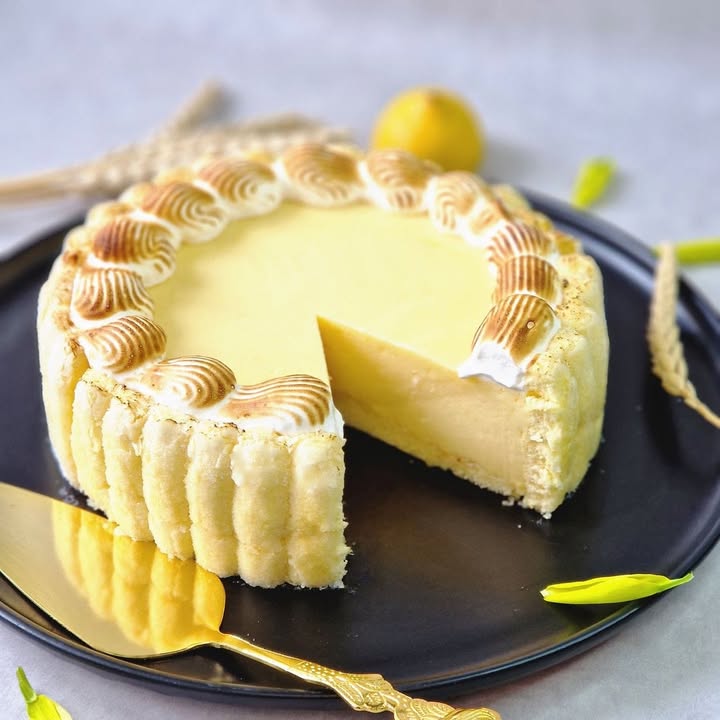
Charlotte with Lemon Meringue: A Zesty Cloud of Joy
There’s a certain magic in a dessert that feels both elegantly impressive and warmly homemade. That first spoonful of this charlotte—where crisp, sugary biscuit gives way to sharp, creamy lemon mousse, all topped with a billowy, toasted meringue—is pure sunshine on a plate. I made this for my book club last spring, and the silence that fell over the room, broken only by the gentle tap of spoons, was the best compliment I’ve ever received. It’s now my go-to for “I want to wow them” moments.
A Dessert Fit for Royalty (and Your Family)
The charlotte has a storied past, often credited to the famous French chef Carême in the 19th century. Traditionally, it involved lining a mold with bread or ladyfingers and filling it with fruit. Our version is a modern twist on that classic, swapping bread for a light, homemade cookie spoon and the fruit for a spectacular lemon meringue filling. It’s a beautiful marriage of French patisserie technique and the universally loved flavors of a lemon meringue pie, but in a stunning molded form that’s sure to turn heads.
Why You’ll Fall in Love with This Lemon Charlotte
This recipe is a love letter to texture and contrast. You get the light crunch of the cookie, the smooth, tangy punch of the lemon mousse, and the soft, sweet marshmallow-like meringue. While it looks like it came from a fancy bakery, each component is surprisingly simple to master. The most special part? You build it yourself, which makes presenting the final creation incredibly satisfying.
Perfect Occasions for This Showstopper
This charlotte isn’t an everyday dessert—it’s an event! It’s perfect for:
- Spring celebrations: Easter, Mother’s Day, or a garden party.
- Dinner parties: where you want to end the meal on a high note.
- Special birthdays: It feels much more personal than a store-bought cake.
- Any time you need a guaranteed conversation starter that’s also delicious.
Gathering Your Ingredients
For the Cookie Spoon:
- 4 large eggs
- 100 g granulated sugar
- 100 g all-purpose flour
- Icing sugar (for dusting)
For the Lemon Mousse:
- 230 g fresh lemon juice (about 4-5 lemons)
- 4 large eggs
- 140 g granulated sugar
- 5 g powdered gelatin (about 1 ½ teaspoons)
- 250 g cold heavy whipping cream
For the Italian Meringue:
- 75 g + 20 g granulated sugar (separated)
- 40 g water
- 50 g egg whites (from about 1-2 large eggs)
Smart Substitution Options
Out of something? Don’t panic.
- Cookie Flour: A 1:1 gluten-free flour blend can work for the biscuit.
- Gelatin: For a vegetarian option, you can use agar-agar, but follow package instructions for setting power as it differs.
- Lemon Juice: Fresh is best, but bottled pure lemon juice can work in a pinch.
- Cream: Ensure it’s full-fat for whipping. There’s no direct substitute for the texture.
Creating Your Lemon Meringue Masterpiece
Step 1: Baking the Cookie Spoon Cradle
Preheat your oven to 170°C (340°F). Separate your eggs, placing the whites in a very clean, grease-free bowl. Start beating the whites until they become foamy. Gradually add the 100g of sugar in two batches, continuing to whip until you have beautiful, glossy, stiff peaks that hold their shape. Gently fold in the egg yolks, trying not to deflate the air you just worked in. Finally, sift the flour over the mixture and fold it in carefully with a spatula until just combined. Pro tip: This cookie batter is like a sponge cake batter—gentle folding is key to keeping it light. Spoon the batter into a piping bag and pipe two long strips (35cm x 6cm) and one 18cm disc onto a parchment-lined baking sheet. Dust generously with icing sugar for a lovely crackled top. Bake for about 10 minutes until just set and lightly golden. Let them cool completely—they will be soft but will firm up.
Step 2: Crafting the Tangy Lemon Mousse
First, soak your gelatin in a small bowl of cold water. In a medium saucepan, whisk the whole eggs lightly. Add the 140g of sugar and all the fresh lemon juice, whisking until smooth. Cook this mixture over medium heat, stirring constantly with a spatula. You’re making a lemon curd. It will thicken enough to coat the back of a spoon. Remove from heat, squeeze out the excess water from your gelatin, and stir it into the hot lemon curd until it dissolves completely. Let this cool to room temperature; you can speed this up by placing the bowl in an ice bath. Meanwhile, whip your cold cream to soft peaks—it should be billowy but not buttery. Gently fold the whipped cream into the cooled lemon curd. Chef’s tip: Make sure the curd is cool, or it will melt the cream and make your mousse runny. Now, line a 20cm springform pan or a cake ring with your cooled cookie strips and bottom. Pour the lemon mousse inside and gently tap to level. Chill for at least 2 hours, or until firmly set.
Step 3: Mastering the Italian Meringue Topping
This meringue is less sweet and more stable than a regular one. Place the 75g of sugar and 40g of water in a small pot. Heat it over medium until it reaches 118°C (244°F) on a candy thermometer. While the syrup heats, start whipping the egg whites in a stand mixer. When they get foamy, add the remaining 20g of sugar. Once the syrup is at temperature, with the mixer running on medium speed, slowly and carefully pour the hot syrup in a thin stream down the side of the bowl into the whipping whites. Increase the speed to high and whip until the mixing bowl feels cool to the touch and the meringue is thick, glossy, and holds stiff peaks. Pipe or spread this gorgeous meringue over your set charlotte. The final, fun step? Use a kitchen blowtorch to toast the meringue until it’s beautifully golden and speckled.
Your Timeline to Success
- Prep Time: 45 minutes
- Cooking/Baking Time:
- Chilling Time: 2 hours (minimum)
- Total Time: About 3 hours 5 minutes (mostly hands-off chilling)
Chef’s Secret: The Sugar Sprinkle
Don’t skip dusting the cookie strips with icing sugar before baking. This isn’t just for looks. As it bakes, the sugar melts and forms a delicate, crisp crust on top of the soft cookie. This extra bit of texture and slight caramelized flavor makes all the difference against the soft mousse.
A Sweet Bit of Extra Info
The name “charlotte” is believed to be inspired by Queen Charlotte, wife of King George III of England, who was a patron of apple growers. The original “Charlotte Russe” was named after the Russian Czar Alexander I’s chef, Marie-Antoine Carême. So, you’re essentially making a dessert with royal and culinary genius heritage!
Necessary Equipment
- Stand mixer or hand mixer
- Candy thermometer
- Piping bags and tips (optional, but helpful)
- 20cm springform pan or cake ring
- Baking sheets and parchment paper
- Saucepan and spatula
- Blowtorch (for that perfect toast)
Storing Your Lemon Meringue Charlotte
Once assembled with the meringue, this dessert is best enjoyed the same day. The meringue can start to weep or soften the cookie after several hours. If you need to prepare ahead, you can store the components separately.
Make the cookie strips and disc up to two days in advance. Keep them in an airtight container at room temperature. The lemon mousse, once set in the mold with the cookie, can be covered and refrigerated for up to 24 hours before topping with meringue.
For any leftovers, cover lightly with a dome or in a cake carrier and refrigerate for up to one more day. The cookie will soften into the mousse, creating a different but still utterly delicious texture.
Tips and Advice for Flawless Results
- Room temperature eggs separate more cleanly and whip to a greater volume.
- When making the Italian meringue, pour the hot syrup between the whisk and the side of the bowl to avoid cooking the egg whites into clumps.
- If you don’t have a blowtorch, you can carefully brown the meringue under a broiler for 60-90 seconds, but watch it like a hawk!
Presentation to Impress Your Guests
- Serve on a plain, white plate to let the toasted meringue shine.
- Garnish the plate with a few fresh raspberries or a twist of lemon zest.
- Slice with a sharp, thin-bladed knife dipped in hot water for clean cuts.
- For a family-style treat, place the whole charlotte in the middle of the table and let everyone admire it before you slice.
Delicious Variations to Try
- Raspberry Swirl Charlotte: Swirl a few spoonfuls of raspberry coulis into the lemon mousse before chilling for a marbled effect.
- Lime & Coconut Charlotte: Substitute lime juice for lemon and add a tablespoon of coconut extract to the mousse. Toast shredded coconut with the meringue.
- Orange Blossom Charlotte: Use a mix of orange and lemon juice, and add a teaspoon of orange blossom water to the mousse for a floral note.
- Chocolate-Dipped Cookie Charlotte: Dip the top edges of your baked cookie strips in melted dark chocolate before assembling for a decadent touch.
- Berry-Filled Charlotte: Before adding the mousse, place a single layer of fresh blueberries or sliced strawberries on the cookie base.
- Ginger Snap Charlotte: Add 1 teaspoon of ground ginger to the cookie flour and use a gingersnap crust crumble on top of the mousse before the meringue.
Common Mistakes to Avoid
Mistake 1: Deflating the Cookie Batter
This happens when you mix the flour into the egg whites too vigorously or for too long. You’ve worked hard to get air into those whites, and aggressive mixing pushes it all out. The result is a dense, flat cookie instead of a light, spoonable one. Always use a spatula and a gentle, folding motion from the bottom up. Stop as soon as you no longer see streaks of flour.
Mistake 2: Adding Warm Lemon Curd to the Cream
Impatience is the culprit here. If your lemon curd is even slightly warm when you fold in the whipped cream, it will melt the cream. This turns your fluffy mousse into a runny pool that won’t set properly. Let the curd cool until it’s truly at room temperature. You can spread it on a plate or set the bowl in an ice bath to speed it up safely.
Mistake 3: Over-Whipping the Cream for the Mousse
We want soft, pillowy peaks for the mousse, not stiff butter. Over-whipped cream is grainy and difficult to fold in smoothly. It can also make your final mousse feel heavy. Whip the cream just until it holds a soft shape when you lift the whisk. It should still look silky. Remember, you’ll be folding it, which incorporates it further.
Mistake 4: Pouring Syrup Directly onto the Whisk for Meringue
When making the Italian meringue, aiming the hot sugar syrup onto the moving whisk can cause it to splatter and form hard sugar threads on the side of the bowl. More importantly, it might not incorporate properly. Instead, pour the syrup in a slow, steady stream down the inner side of the mixing bowl while the whisk is running. This allows it to be caught and emulsified perfectly into the egg whites.
Your Lemon Charlotte Questions, Answered
Can I make this dessert a full day ahead?
You can prepare the components ahead, but I recommend final assembly the day of serving. Bake the cookie strips and make the lemon mousse up to a day in advance. Assemble the mousse in the cookie mold and chill. Then, make the Italian meringue and torch it just a few hours before your guests arrive. This keeps the cookie from getting too soft and the meringue at its peak texture.
What if I don’t have a kitchen blowtorch?
No problem! You can use your oven’s broiler. Set your finished charlotte on a baking sheet and place it under a preheated broiler. Watch it constantly—it only takes 60 to 90 seconds to brown. Rotate the pan if needed for even color. The key is vigilance, as it can go from golden to burnt in a flash. The flavor will still be wonderful.
My lemon mousse didn’t set firmly. What went wrong?
There are a couple of common reasons. First, the gelatin may not have fully dissolved in the hot lemon curd. Make sure you stir it thoroughly. Second, the curd may have been too warm when mixed with the cream, melting it and preventing a good set. Finally, ensure you measured the gelatin correctly. It’s a small amount but crucial for structure. Always chill for the full 2 hours, or even longer if your fridge is packed.
Can I use store-bought ladyfingers instead of the cookie spoon?
Yes, you absolutely can for a shortcut version! Use soft ladyfingers (the kind for tiramisu). Line your mold with them, standing upright. You may need to trim them. The dessert will be different—more like a classic charlotte—but still delicious. You’ll miss that lovely homemade cookie texture, but you’ll save time.
Is it safe to eat the lemon mousse with raw eggs?
The eggs in the lemon mousse are cooked. You heat the mixture of eggs, sugar, and lemon juice to a temperature that pasteurizes the eggs and thickens the curd. That’s a key safety step. For the Italian meringue, the hot sugar syrup cooks the egg whites as you pour it in. So, both components are safe from raw egg concerns.
My cookie strips broke when I tried to line the mold. Help!
This can happen if they are over-baked and too crisp or if they cool completely and become brittle. The trick is to shape them while they are still slightly warm and flexible. As soon as they are cool enough to handle, gently lift them with a spatula and curve them into your mold. If they do break, don’t worry! You can piece them together like a puzzle in the mold—the mousse will act as “glue” and hold it all together once set.
Can I freeze the lemon mousse charlotte?
I do not recommend freezing the assembled dessert. The meringue will not survive freezing and thawing well, becoming soggy and weepy. The mousse can be frozen, but the texture may change slightly upon thawing, becoming a bit more grainy. For best quality, enjoy fresh or refrigerated.
What’s the difference between this and a lemon meringue pie?
The main differences are the form and the texture of the filling. A pie has a pastry crust and a firm, stovetop-set curd filling. This charlotte has a soft cookie enclosure and a light, airy mousse filling made by folding whipped cream into the curd. The meringue is also an Italian meringue (more stable and less sweet) versus a simpler French meringue often used on pies.
My meringue started to deflate. Why?
Italian meringue is very stable, but it can deflate if the sugar syrup wasn’t hot enough (it must reach 118°C/244°F to properly “cook” the whites) or if it was added too quickly. Also, ensure your mixing bowl and whisk are completely clean and grease-free, as any fat can prevent egg whites from whipping up properly.
Can I flavor the meringue?
Yes, lightly! Once the meringue is fully whipped and cooled, you can fold in a small amount of flavoring. A half teaspoon of vanilla extract or the seeds from a vanilla bean is lovely. For a citrus twist, you could add a bit of finely grated lemon or orange zest. Add any extracts very gently at the very end.
The Final Sweet Slice
This Lemon Meringue Charlotte is more than a recipe—it’s a project filled with love and a guaranteed showstopper. Yes, it has a few steps, but each one is simple and teaches you classic techniques. The moment you unveil it and see the delight on your friends’ and family’s faces makes every minute worth it. So put on some music, gather your ingredients, and get ready to create a little cloud of lemony, toasted joy. You’ve got this!
Roasted Turmeric Cauliflower
Ingredients
Equipment
Method
- Preheat your oven to 170°C (340°F).
- Separate the eggs, placing the whites in a clean bowl, and beat until foamy.
- Gradually add 100g sugar in two batches and whip to stiff peaks.
- Gently fold in the egg yolks, then sift in the flour and carefully fold again.
- Pipe two long strips (35cm x 6cm) and one 18cm disc onto a parchment-lined baking sheet, dusting generously with icing sugar.
- Bake for about 10 minutes until just set and lightly golden; let cool completely.
- Soak gelatin in cold water; whisk whole eggs, 140g sugar, and lemon juice in a saucepan.
- Cook until thick enough to coat the back of a spoon, remove from heat, and stir in gelatin until dissolved.
- Let the lemon curd cool to room temperature; whip the cream to soft peaks.
- Gently fold the whipped cream into the cooled lemon curd, then line a 20cm springform pan or a cake ring with cookie strips.
- Pour the lemon mousse inside and chill for at least 2 hours.
- For meringue, heat 75g sugar and 40g water until it reaches 118°C (244°F).
- Whip egg whites until foamy, add remaining 20g sugar; stream the hot syrup into the mixing bowl while beating until thick and glossy.
- Pipe or spread meringue over the chilled mousse and toast with a kitchen blowtorch.