
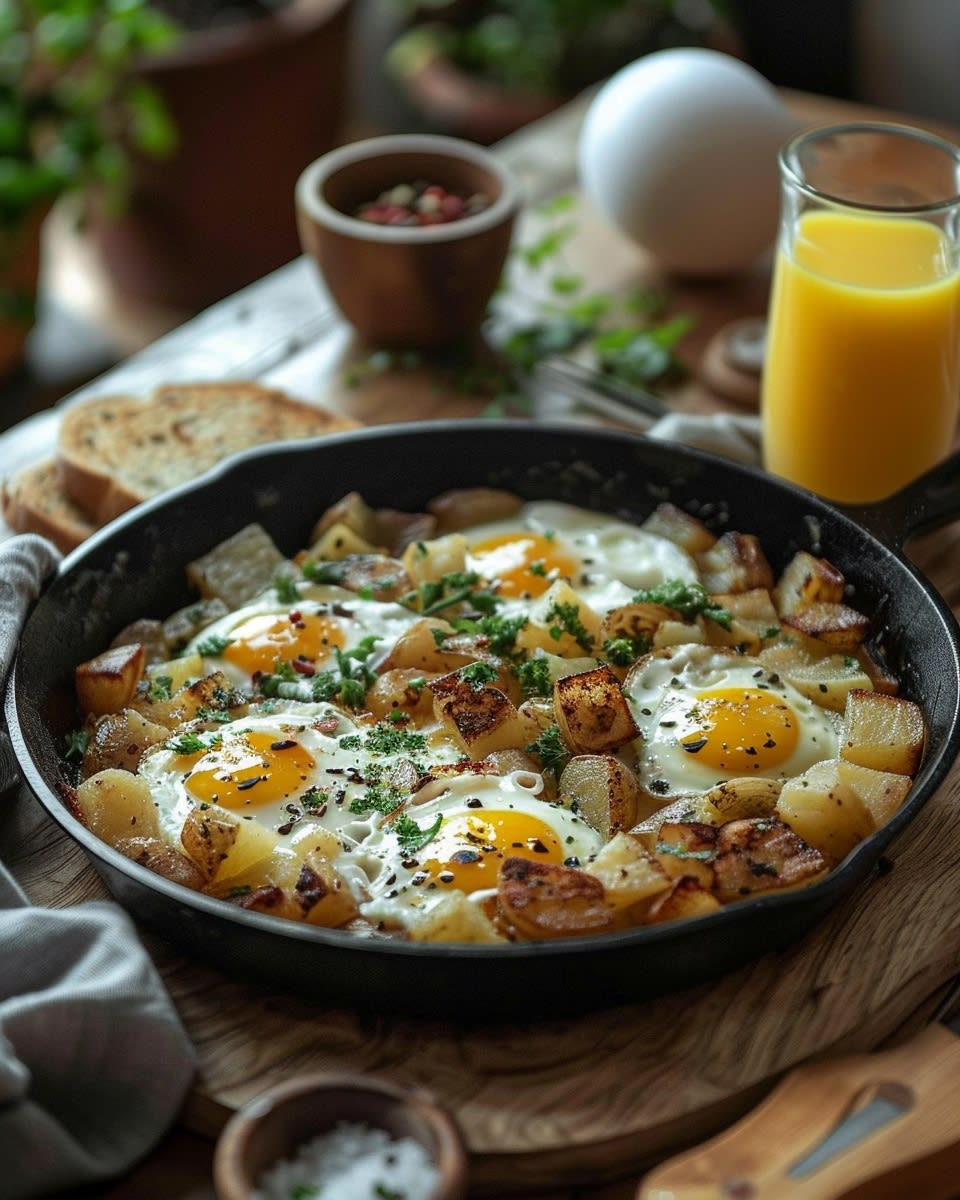
Why Your Morning Needs This Savory Breakfast Egg and Potato Skillet
I’ll never forget the first time I ate breakfast at my grandmother’s farmhouse. She stood at her old cast-iron skillet, tossing crispy potatoes with fresh eggs from her backyard chickens. The smell filled the entire kitchen. That morning, I learned something important: breakfast doesn’t have to be sweet to be amazing.
A savory breakfast egg and potato skillet brings everything you need in one simple pan. It’s warm, filling, and gives you real energy that lasts past lunch. Unlike sugary cereals or pastries that leave you hungry an hour later, this meal sticks with you.
Think about your typical morning. You’re rushing around, trying to get ready, and breakfast becomes an afterthought. Maybe you grab a granola bar or skip eating entirely. But what if breakfast could be just as quick and actually keep you full? That’s exactly what this skillet does.
The combination of eggs and potatoes creates a protein and carb balance that your body loves. Eggs pack about 6 grams of protein each, along with vitamins D, B12, and minerals like selenium. Potatoes get a bad reputation sometimes, but they’re actually packed with vitamin C, potassium, and fiber when you keep the skins on. Together, these two ingredients create a nutritional powerhouse that fuels your morning.
I started making this skillet on busy weekday mornings when I needed something fast but satisfying. Now it’s become my go-to breakfast, especially on cold mornings when I want something warm and comforting. The best part? My kids actually eat it without complaining.
Why Choose a Savory Breakfast Egg and Potato Skillet?
Sweet breakfasts have dominated American mornings for too long. Pancakes, waffles, muffins, and sugary cereals are everywhere. But starting your day with sugar sets you up for an energy crash before lunch even arrives.
A savory breakfast changes this pattern completely. When you eat protein and complex carbs first thing in the morning, your blood sugar stays steady. You feel alert and focused instead of jittery and tired. I noticed this difference within days of switching from my usual toast and jam to a hearty skillet breakfast.
The savory breakfast egg and potato skillet satisfies in a way sweet foods never can. It’s substantial and filling without making you feel weighed down. You get real energy from real food, not artificial highs from processed sugar.
Another reason I love this meal is how it keeps me full for hours. When I used to eat cereal or oatmeal, I’d be starving by 10 a.m. Now I can easily make it to lunch without snacking. That alone has saved me money and helped me avoid the vending machine at work.
The Skillet Method Makes Everything Easier
Cooking this breakfast in one skillet isn’t just traditional. It’s actually the smartest way to prepare this meal. Everything cooks together, which means flavors blend and you’re not juggling multiple pots and pans.
A good skillet distributes heat evenly across the entire surface. This means your potatoes get crispy on the outside while staying tender inside. Your eggs cook perfectly without burning. When ingredients share the same cooking space, they also share flavors, making every bite better.
Cleanup is another huge advantage. I don’t know about you, but I hate spending my morning washing a sink full of dishes. With this method, you use one pan, one spatula, and you’re done. On rushed mornings, this simplicity matters.
Cast-iron skillets work best for this recipe, but any heavy-bottomed pan will do the job. The key is using something that holds heat well and won’t have hot spots that burn your food.
Customize Your Skillet to Match Your Taste
This is where the savory breakfast egg and potato skillet really shines. The basic recipe is just the starting point. You can add almost anything and make it work.
Some mornings I throw in leftover vegetables from dinner. Bell peppers, onions, and mushrooms are my favorites. Other times I add cheese, bacon, or sausage for extra protein and flavor. During summer, fresh tomatoes and herbs from my garden make the skillet taste incredible.
My vegetarian friends love this meal too. They skip the meat and load up on veggies instead. Some add black beans or chickpeas for extra protein. The dish adapts to whatever eating style you follow.
Here are some popular additions that work great:
- Diced bell peppers in red, yellow, or green
- Sliced mushrooms for an earthy flavor
- Chopped onions or shallots for sweetness
- Fresh spinach or kale for added nutrients
- Crumbled bacon or sausage for meat lovers
- Shredded cheese like cheddar or pepper jack
- Hot sauce or salsa for a spicy kick
- Fresh herbs like parsley, chives, or cilantro
The flexibility means you’ll never get bored. I’ve been making this breakfast for two years, and I still find new combinations to try. Last week I added sweet potatoes instead of regular potatoes and topped everything with avocado. It was delicious.
You can also adjust the cooking style. Some people like their eggs scrambled into the potatoes. Others prefer them fried on top with runny yolks. I’ve done it both ways, and both versions taste amazing.
The portion size adjusts easily too. Cooking for one person? Use a small skillet. Feeding a family? Break out your largest pan and double or triple the ingredients. I’ve made this for just myself and for groups of eight people. It scales perfectly either way.
This breakfast also works for any meal, not just morning. I’ve eaten it for lunch and dinner plenty of times. Sometimes I’ll make a big batch on Sunday and reheat portions throughout the week. It holds up well in the fridge for about three days.
The versatility extends to dietary needs too. Need gluten-free? This naturally fits that requirement. Want dairy-free? Skip the cheese or use a plant-based alternative. Trying to eat more whole foods? This meal checks that box easily.
Whether you’re feeding picky kids, impressing weekend guests, or just treating yourself to a proper breakfast, this skillet delivers every time. It’s become my answer to the question “what should I make for breakfast?” because it works in almost any situation.


Getting Your Ingredients Ready for the Perfect Savory Breakfast Egg and Potato Skillet
Now that you’re convinced this skillet belongs in your breakfast rotation, let’s talk about what actually goes into making one. The ingredient list is refreshingly short, which is part of why I love this meal so much.
For a basic savory breakfast egg and potato skillet that serves two people, you’ll need about four medium potatoes, four eggs, one medium onion, one bell pepper, three tablespoons of olive oil or butter, and salt and pepper for seasoning. That’s it for the foundation. Everything else is optional.
Here’s the thing about ingredients: quality matters way more than quantity. I learned this the hard way after making a bland skillet with old, sprouted potatoes from the back of my pantry. Fresh ingredients transform this simple dish into something memorable.
When picking potatoes at the store, I look for ones that feel firm with smooth skin. Avoid any with green spots, sprouts, or soft patches. Yukon Gold potatoes are my personal favorite because they get beautifully crispy on the outside while staying creamy inside. Red potatoes work great too, especially if you like a waxier texture. Russet potatoes are fine, but they can sometimes fall apart if you’re not careful with your stirring.
For eggs, fresher is always better. If you can get farm-fresh eggs, do it. The yolks are brighter, the flavor is richer, and they just cook better. I buy mine from a neighbor who keeps chickens, and the difference compared to store-bought eggs is night and day. But honestly, regular grocery store eggs work perfectly fine. Just check the expiration date and make sure none are cracked.
Bell peppers add sweetness and color. I usually grab whatever looks freshest, whether that’s red, yellow, orange, or green. Red peppers are sweeter, while green ones have a slightly bitter edge that I actually like in savory dishes. Sometimes I mix colors just because it makes the skillet look prettier.
Onions bring depth and a bit of sharpness that balances everything else. Yellow onions are my standard choice, but sweet onions like Vidalia work beautifully if you want something milder. Funny enough, I’ve even used shallots when that’s all I had, and it turned out fantastic.
The oil or butter you choose affects the final flavor more than you might think. Butter gives you that rich, slightly nutty taste that screams comfort food. Olive oil keeps things lighter and adds its own fruity notes. I switch between them depending on my mood. On days when I want something hearty, butter wins. When I’m feeling health-conscious, olive oil it is.
Step-by-Step: Making Your Savory Breakfast Egg and Potato Skillet
The preparation starts with your potatoes. Wash them thoroughly, especially if you’re keeping the skins on, which I recommend for both nutrition and texture. Then dice them into half-inch cubes. Try to keep the pieces roughly the same size so they cook evenly. I used to cut mine all different sizes, and I’d end up with some burnt pieces and some that were still hard. Not ideal.
Next, dice your onion and bell pepper. I cut the onion into slightly smaller pieces than the potato because it cooks faster. The bell pepper can match the potato size. Some people like really fine diced vegetables, but I prefer chunkier pieces that you can actually taste as individual components.
If you’re adding any extras like mushrooms, bacon, or sausage, prep those now too. Get everything ready before you start cooking because once that skillet heats up, things move quickly. This is what chefs call mise en place, which is just a fancy way of saying “get your stuff together first.”
Heat your skillet over medium heat. This is important: don’t crank it to high thinking you’ll speed things up. You’ll just burn the outside of your potatoes while leaving the inside raw. Medium heat gives you control. Add your oil or butter and let it heat until it shimmers but doesn’t smoke.
Toss in the diced potatoes first. They need the most cooking time. Spread them in a single layer as much as possible. Now comes the hard part: leave them alone. Seriously. I know you want to stir them constantly, but resist that urge for at least three to four minutes. Let them develop that golden-brown crust on one side before flipping. This is how you get crispy potatoes instead of mushy ones.
After about four minutes, give them a stir and let them cook undisturbed for another few minutes. Season with salt and pepper at this point. The total cooking time for potatoes is usually around fifteen to twenty minutes, depending on how small you cut them and how crispy you like them.
When the potatoes are about halfway done, add your onions. They need less time than potatoes but more than peppers. Stir everything together and let it all cook for another five minutes or so.
Add the bell peppers next. They only need about three to five minutes to soften while keeping a slight crunch. If you like them really soft, add them earlier with the onions. If you prefer them with more bite, wait until the very end.
Now for the eggs, which is where people have strong preferences. Some folks crack the eggs directly onto the potato mixture, cover the pan, and let them cook until the whites set but the yolks stay runny. Others scramble the eggs separately and fold them into the skillet at the end. I’ve done both, and they’re equally delicious but give you different textures.
For fried eggs on top, make small wells in the potato mixture, crack an egg into each well, season with salt and pepper, and cover the pan. Let them cook for about three to five minutes until the whites are set. If you’re scrambling, just pour beaten eggs over everything, let them sit for a moment, then gently stir until they’re cooked to your liking.
Variations That Keep Things Interesting
By the way, this is where you can really make the recipe your own. Sweet potatoes instead of regular potatoes create an entirely different flavor profile that’s slightly sweeter and even more nutritious. They take about the same cooking time, maybe a few minutes longer.
Cheese makes everything better, right? Shredded cheddar is classic, but I’ve tried pepper jack for spice, feta for tanginess, and even goat cheese for something fancy. Add cheese right at the end so it melts over everything without burning. Sometimes when I’m looking for a lighter breakfast option, I’ll skip the cheese entirely and still enjoy the dish, though if I want something more indulgent, I might pair it mentally with the richness you’d get from something like chocolate chip protein waffles on a weekend morning.
Adding meat changes the protein content significantly. Crispy bacon crumbled on top is probably the most popular choice. Chorizo adds a spicy, smoky kick that I absolutely love. Italian sausage works too, especially if you remove it from the casing and crumble it as it cooks.
For vegetarians, I’ve added black beans, which boost protein and add a slightly earthy flavor. Chickpeas work similarly. Diced tomatoes toward the end add juiciness and acidity that brightens everything up.
Unlike sweeter morning meals such as apple cinnamon baked oatmeal, this skillet leans fully into savory territory, though you could experiment with sweet and savory combinations if you’re adventurous.
Cooking Techniques That Make All the Difference
Let’s talk about getting technical for a minute because small technique adjustments create massive results. Preheating your pan properly is non-negotiable. A cold pan equals soggy food. Wait until the pan is hot before adding oil, then wait until the oil is hot before adding ingredients.
The amount of oil matters too. Too little and everything sticks and burns. Too much and your breakfast becomes greasy. Three tablespoons for a medium skillet is my sweet spot. You want just enough to coat the bottom of the pan with a thin layer.
Getting potatoes crispy requires patience and the right technique. Pat them dry after washing and cutting. Excess moisture is the enemy of crispiness. Don’t overcrowd the pan either. If your skillet is too small for all your ingredients, cook in batches or use a larger pan.
For the eggs, temperature control is everything. If your pan is too hot when you add eggs, they’ll turn rubbery and brown too quickly. Medium-low heat for the egg portion gives you tender, creamy results. If you’ve been cooking the potatoes on medium-high, turn it down before adding eggs.
One trick I picked up from a diner cook: add a tablespoon of water to the pan and cover it immediately after cracking your eggs on top. The steam helps cook the tops of the eggs without flipping them. This technique gives you perfect over-easy style eggs without the risk of breaking the yolks during flipping.
Seasoning Your Savory Breakfast Egg and Potato Skillet
Here’s something most recipes don’t emphasize enough: seasoning needs to happen in layers, not just at the end. I season the potatoes when they first go in the pan. Then I adjust seasoning after adding onions. Finally, I taste and add more if needed right before serving.
Salt and pepper are essential, but don’t stop there. Garlic powder adds a savory depth. Paprika brings a subtle sweetness and beautiful color. I keep smoked paprika in my cabinet specifically for this skillet because it adds complexity without extra effort.
Fresh herbs at the end make everything taste brighter and more restaurant-quality. Chopped parsley, chives, or cilantro scattered over the finished dish elevate it significantly. Even dried herbs work if that’s what you have. Dried thyme or oregano mixed into the potatoes while they cook adds wonderful flavor.
Hot sauce is my secret weapon. A few shakes of your favorite hot sauce in the pan while cooking distributes heat throughout instead of making it an afterthought. Or keep the hot sauce on the side so everyone can customize their spice level.
Balancing flavors means thinking about salt, fat, acid, and heat. The eggs and oil provide fat. Salt is obvious. Acid comes from additions like tomatoes, salsa, or even a squeeze of lemon juice at the end. Heat comes from peppers or hot sauce. When all four elements are present, your food tastes complete and satisfying.
The beauty of this savory breakfast egg and potato skillet is that unlike more rigid breakfast options like a breakfast quesadilla with eggs and cheese, you can taste as you go and adjust everything to match your preferences. Some mornings I want it salty and peppery. Other days I load it with vegetables and keep the seasoning lighter. Both versions work because the technique stays the same even when the flavors change.
If you’re trying to balance your morning meals throughout the week, rotating between hearty skillets and lighter options like a Greek yogurt berry parfait gives you variety while keeping breakfast interesting. But on days when you need real stick-to-your-ribs food, this skillet delivers every single time.


How to Serve Your Savory Breakfast Egg and Potato Skillet Like a Pro
After you’ve mastered cooking this skillet, the next question becomes: what goes with it? I’ve served this dish dozens of different ways, and honestly, it’s hard to go wrong. The skillet is hearty enough to stand alone, but pairing it with the right sides transforms it from everyday breakfast into something special.
Toast is my most frequent companion. Something about crispy bread alongside this meal just works. I usually go for sourdough because the tangy flavor complements the richness of the eggs and potatoes. Whole wheat toast adds extra fiber and a nutty taste that I love. Sometimes I’ll spread a thin layer of butter or avocado on the toast, and it becomes the perfect vehicle for scooping up runny egg yolks mixed with potato bits.
Fresh fruit provides a bright contrast to the savory flavors. A handful of berries or sliced melon on the side adds sweetness and freshness that balances the meal. During summer months, I’ll slice up whatever’s in season. Peaches, plums, or even watermelon work beautifully. The juicy, sweet fruit acts as a palate cleanser between bites of the rich skillet.
Here’s something I didn’t expect to love but absolutely do: a simple green salad with breakfast. I know it sounds weird at first. Who eats salad in the morning? But trust me on this one. A handful of arugula or mixed greens with a light lemon vinaigrette adds a peppery, acidic element that cuts through the heaviness of eggs and potatoes. It makes the whole meal feel lighter and more balanced. Plus, you’re getting vegetables first thing in the morning, which always feels like a win.
If you’re feeding a crowd or just want to make breakfast feel more substantial, add some protein on the side. Bacon is the obvious choice, and for good reason. The salty, crispy texture provides contrast to the soft eggs and tender potatoes. I cook my bacon in the oven on a sheet pan at 400 degrees for about fifteen minutes. It comes out perfectly crispy with way less mess than stovetop cooking.
Sausage links or patties work just as well. Pork sausage, turkey sausage, or even plant-based sausages all complement the skillet nicely. I’ve served this meal with spicy Italian sausage that added a kick everyone loved. The key is choosing sausages with strong flavors that hold their own alongside the well-seasoned skillet.
Smoothies make surprisingly good breakfast companions too. When I want something refreshing to drink with my skillet, I’ll blend up frozen berries, a banana, some yogurt, and a splash of milk. The cold, fruity smoothie balances the warm, savory food perfectly. It’s also an easy way to sneak more fruits and vegetables into your morning if you throw in some spinach or kale that you won’t even taste.
Making This Skillet the Star of Special Occasions
While this dish works great for everyday mornings, it absolutely shines during special occasions. I’ve served it at weekend brunches, holiday breakfasts, and lazy Sunday mornings when family visits. There’s something about a big skillet in the center of the table that makes people feel welcomed and cared for.
Weekend brunch is where this recipe really gets to show off. Set up a toppings bar and let everyone customize their portion. I’ll put out bowls of shredded cheese, sour cream, salsa, hot sauce, chopped herbs, and sliced avocado. People love building their perfect plate, and it takes pressure off you as the cook. You just make the base skillet, and everyone else does the rest.
During holidays, this dish solves the problem of feeding different people with different preferences. My aunt is vegetarian, my brother eats low-carb, and my nephew won’t eat anything green. Somehow this skillet manages to satisfy all of them. The vegetarian version is just as good as the meat-loaded one, the eggs and veggies work for low-carb folks who go easy on the potatoes, and picky eaters can pick around anything they don’t like while still getting a good meal.
I made this for Christmas morning last year, and it became the new tradition. Everyone was tired of the usual cinnamon rolls and coffee cake. The skillet felt special but not overly complicated. I could spend time with family instead of being stuck in the kitchen all morning. By the way, making two or three skillets at once works fine if you have the burner space or can use the oven.
For overnight guests, this breakfast is perfect because you can prep everything the night before. Dice your potatoes and vegetables, store them in containers in the fridge, and in the morning you just need to cook. Your guests wake up to the smell of breakfast cooking, and within thirty minutes everyone’s eating together. It feels homey and impressive at the same time.
The Real Health Benefits Behind This Breakfast
Let’s talk about why this meal is actually good for you, beyond just tasting great. I’m not a nutritionist, but I’ve done enough research to understand what makes this breakfast work from a health perspective.
Eggs are nutritional powerhouses. Each egg contains about six grams of high-quality protein with all nine essential amino acids your body needs. They’re loaded with vitamins B12, D, and A, plus minerals like selenium and choline. Choline is especially important for brain health and memory, something I definitely need help with on Monday mornings. The protein in eggs keeps you satisfied for hours, which is why you’re not hungry again twenty minutes after eating.
Potatoes get unfairly criticized in diet culture, but they’re actually incredibly nutritious when prepared properly. A medium potato with skin provides about four grams of fiber, which aids digestion and helps you feel full. They’re packed with vitamin C, even more than some citrus fruits. They also contain potassium, which is crucial for heart health and blood pressure regulation. The key is cooking them in reasonable amounts of healthy fat rather than deep-frying them.
The vegetables you add increase the nutritional value even more. Bell peppers provide vitamin C and antioxidants. Onions contain compounds that may help reduce inflammation. Leafy greens like spinach add iron and calcium. Each vegetable brings its own set of benefits, which is why loading up your skillet with colorful produce is such a smart move. For those interested in making more mindful food choices, the USDA offers helpful resources on sustainable eating practices that support both personal health and environmental well-being.
Eating a balanced breakfast like this sets the tone for your entire day. Studies show that people who eat protein-rich breakfasts tend to make better food choices throughout the day. You’re less likely to grab junk food mid-morning or overeat at lunch. Your blood sugar stays stable, which means your energy and focus remain consistent instead of spiking and crashing.
I noticed real differences in my own life after making this a regular breakfast. My mid-morning brain fog disappeared. I stopped needing that second or third cup of coffee just to function. My afternoon energy slumps became less severe. These might seem like small things, but they add up to feeling significantly better overall.
The healthy fats from olive oil or butter help your body absorb the fat-soluble vitamins in the vegetables and eggs. Fat isn’t the enemy that diet culture made it out to be. Your brain needs healthy fats to function properly. Your body uses fat for hormone production and cell health. The key is choosing quality fats in reasonable amounts, which is exactly what this recipe does.
Making this meal a regular part of your routine doesn’t mean eating it every single day. I rotate through different breakfasts to keep things interesting, but this skillet appears at least twice a week in my house. It’s become one of those reliable meals I know I can count on to make me feel good physically and satisfy me mentally. If you’re looking for more delicious ways to start your day, you might enjoy exploring other breakfast and brunch recipes that bring the same level of satisfaction and nourishment to your morning routine.
Why This Recipe Deserves a Permanent Spot in Your Kitchen
After making this countless times and serving it to family, friends, and even skeptical in-laws, I can confidently say this dish deserves to become part of your regular cooking rotation. It checks every box: quick enough for weekday mornings, impressive enough for weekend guests, flexible enough to accommodate any dietary preference, and delicious enough that even picky eaters ask for seconds.
The beauty lies in its simplicity combined with endless possibilities. You’re never locked into one version. Each time you make it can be a new experience based on what’s in your fridge, what’s in season, or what sounds good that particular morning. This kind of flexibility makes cooking feel creative rather than like a chore.
So grab your skillet, gather some potatoes and eggs, and give this a try. Start with the basic version to get the technique down, then branch out into your own variations. Maybe you’ll discover a combination I’ve never tried. If you do, I’d honestly love to hear about it because that’s the fun of cooking. We’re all learning from each other, sharing ideas, and making meals that bring people together.
Thank you for sticking with me through this entire guide. I hope you feel ready and excited to make your first or your next savory breakfast egg and potato skillet. Here’s to better breakfasts, fuller mornings, and the simple joy of good food cooked well.
Frequently Asked Questions
What are some common mistakes to avoid when making a savory breakfast egg and potato skillet?
The biggest mistake is cutting potato pieces in uneven sizes, which leads to some being burnt while others stay raw. Another common error is overcrowding the pan, preventing proper browning and creating steam instead of crisp texture. People also tend to stir the potatoes too frequently, which stops them from developing that golden crust. Using high heat is tempting but usually results in burnt exteriors with undercooked centers. Finally, adding eggs when the pan is still too hot makes them rubbery and overcooked.
Can I make this dish ahead of time, and if so, how do I reheat it?
Yes, you can make this ahead, though the texture is always best fresh. Cook everything except the eggs, let it cool completely, then store in an airtight container in the fridge for up to three days. When ready to eat, reheat the potato mixture in a skillet over medium heat and cook fresh eggs on top. If you’ve already cooked the eggs, reheat gently in a covered pan with a splash of water to prevent drying out. The microwave works in a pinch but makes everything a bit rubbery. Oven reheating at 350 degrees for about ten minutes gives better results.
Are there any vegetarian or vegan alternatives to this recipe?
The basic recipe is already vegetarian since it’s just eggs, potatoes, and vegetables. For vegan versions, replace the eggs with scrambled tofu seasoned with turmeric, nutritional yeast, and black salt for an eggy flavor. Another option is using chickpea flour mixed with water to create a batter you pour over the cooked potatoes, which sets up similarly to eggs. Add extra vegetables like mushrooms, tomatoes, and spinach to boost the protein and nutrients. Use olive oil instead of butter, and you’ve got a completely plant-based meal that’s just as satisfying.
How can I make this dish spicier or milder depending on my taste preferences?
For more heat, add diced jalapeños or serrano peppers along with the bell peppers. Red pepper flakes mixed into the potatoes while cooking distribute spice throughout the dish. Hot sauce or sriracha drizzled on top adds heat without changing the cooking process. For a smoky, spicy kick, use chipotle powder or cayenne pepper in your seasoning. To make it milder, skip all peppers entirely or use only sweet bell peppers. Leave out black pepper if you’re cooking for very sensitive palates. You can always add heat at the table with hot sauce so each person controls their spice level.
Is it possible to use other types of potatoes, and what are the differences in taste and texture?
Absolutely, and each type creates a different experience. Yukon Golds have a buttery flavor and creamy texture that crisps beautifully. Red potatoes hold their shape well and have a slightly waxy, firm texture that some people prefer. Russets are starchier and fluffier but can fall apart if stirred too much. Sweet potatoes add natural sweetness and extra nutrients but take slightly longer to cook. Fingerling potatoes are fun and cook quickly due to their small size. Purple potatoes add visual interest and contain extra antioxidants, though the color fades somewhat during cooking.
What are some creative toppings or additions to enhance the flavor of the skillet?
Fresh avocado slices or guacamole add creaminess and healthy fats that complement the eggs perfectly. Crumbled feta or goat cheese brings tangy, salty notes that elevate the dish. Salsa verde or pico de gallo adds brightness and acidity. A dollop of sour cream or Greek yogurt provides cooling richness. Fresh herbs like cilantro, chives, or parsley make everything taste fresher. For crunch, add toasted pepitas or sunflower seeds. Hot honey drizzled on top creates an addictive sweet-spicy combination that might sound weird but tastes incredible.
How many servings does this recipe typically make, and can it be scaled up for a larger group?
The basic recipe with four potatoes and four eggs serves two hungry people or three with lighter appetites. Scaling up is easy: just double or triple all ingredients and use a larger skillet or multiple pans. I’ve made this for groups of eight by using two large skillets simultaneously. For really big crowds, you can cook the potato mixture in batches, keep it warm in a low oven, then cook eggs to order as people arrive. The recipe scales down just as easily for solo meals using a small skillet with one potato and one or two eggs.
What are some good beverages to pair with a savory breakfast egg and potato skillet?
Coffee is the classic choice, and a good cup of dark roast complements the savory flavors beautifully. Fresh orange juice provides acidity and sweetness that balance the rich eggs and potatoes. Green tea offers a lighter, more refreshing option without overwhelming the food. Sparkling water with lemon feels clean and palate-cleansing between bites. For something more substantial, a fruit smoothie adds nutrition and creates textural contrast. On weekends, a mimosa or Bloody Mary turns this breakfast into a proper brunch experience that feels celebratory.
Can I use frozen potatoes instead of fresh ones?
You can use frozen diced potatoes or hash browns in a pinch, though the texture won’t be quite as good as fresh. Frozen potatoes often release more water during cooking, making it harder to achieve that crispy exterior. If using frozen, don’t thaw them first. Cook them straight from frozen over slightly higher heat to drive off excess moisture. They’ll take less time to cook than fresh potatoes since they’re usually partially cooked before freezing. Season more aggressively because frozen vegetables tend to taste blander than fresh.
What’s the best way to store leftovers and how long will they keep?
Let the skillet cool to room temperature, then transfer to an airtight container and refrigerate within two hours of cooking. Properly stored leftovers last three to four days in the fridge. The eggs will lose some texture but still taste good reheated. For longer storage, freeze portions in individual containers for up to two months, though the potato texture becomes a bit mushier after freezing. Thaw overnight in the fridge before reheating. I actually like using cold leftovers in breakfast burritos or adding them to salads for extra protein and substance.
Ingredients
Equipment
Method
- Lavez et coupez les pommes de terre en dés de 1,5 cm, en gardant la peau pour plus de nutriments.
- Coupez l'oignon et le poivron en morceaux de taille similaire aux pommes de terre.
- Chauffez la poêle à feu moyen, ajoutez l'huile ou le beurre et laissez chauffer jusqu'à ce que ça brille.
- Ajoutez les pommes de terre dans la poêle en une seule couche, évitez de surcharger.
- Permettez aux pommes de terre de cuire sans remuer pendant 3-4 minutes pour développer une croûte dorée.
- Remuez les pommes de terre et assaisonnez avec du sel et du poivre, puis laissez cuire encore 10-15 minutes.
- Lorsque les pommes de terre sont à mi-cuisson, ajoutez les oignons en dés et mélangez.
- Après 5 minutes, ajoutez les poivrons et faites cuire encore 3-5 minutes.
- Créez de petits puits dans le mélange de pommes de terre et cassez un œuf dans chaque puits, ou brouillez les œufs séparément et intégrez-les.
- Couvrez la poêle et laissez cuire les œufs jusqu'à ce que les blancs soient cuits (environ 3-5 minutes pour les œufs au plat).
- Ajustez l'assaisonnement si nécessaire et servez chaud.