
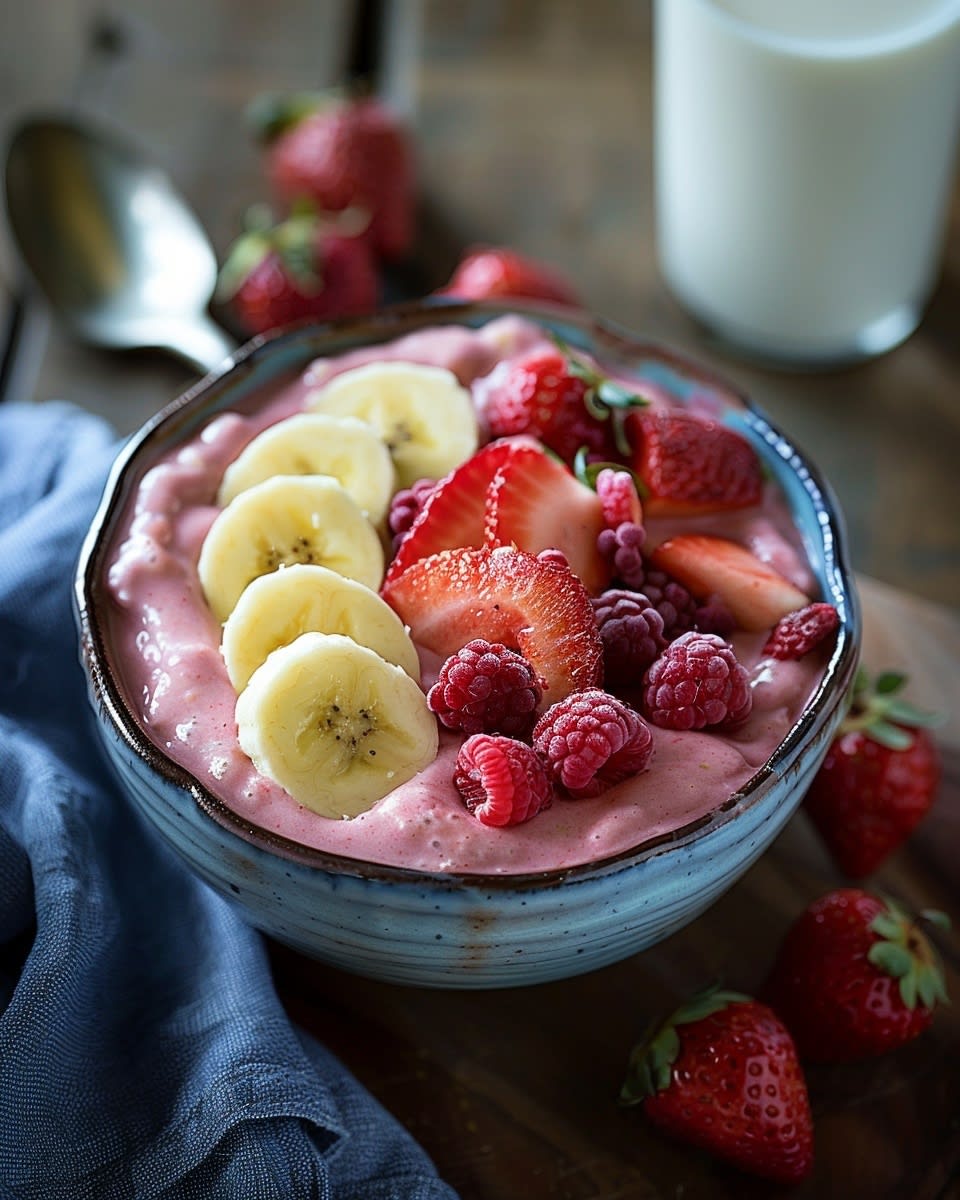
Why a Strawberry Banana Smoothie Bowl Should Be Your New Favorite Breakfast
Last Tuesday morning, I woke up late and almost grabbed a granola bar as I rushed out the door. Then I remembered the frozen strawberries and ripe bananas sitting in my kitchen. Five minutes later, I was eating the most satisfying strawberry banana smoothie bowl I’d ever made. I wasn’t hungry until lunch, and I actually felt energized instead of sluggish.
That moment reminded me why I fell in love with smoothie bowls in the first place. They’re quick to make, taste like dessert, and actually fuel your body the right way. If you’ve never tried one, you’re missing out on something special.
A strawberry banana smoothie bowl isn’t just another breakfast trend. It’s a real solution for busy mornings when you want something healthy but don’t have time to cook. The thick, creamy texture makes it more satisfying than drinking a regular smoothie. You can customize it with your favorite toppings and make it work for almost any dietary need.
I think everyone should give this recipe a try at least once. Whether you’re vegan, watching calories, or just want to eat more fruit, this bowl works. It’s become my go-to breakfast at least three times a week, and I never get tired of it.
Why Choose a Strawberry Banana Smoothie Bowl?
The combination of strawberries and bananas creates something magical. These two fruits complement each other perfectly, and they bring serious health benefits to your breakfast table.
Strawberries pack a powerful nutritional punch. One cup gives you more vitamin C than an orange. They’re loaded with antioxidants that fight inflammation and protect your cells. The fiber content helps with digestion and keeps you feeling full longer. I used to get hungry an hour after breakfast, but not anymore.
Strawberries also contain compounds that may help regulate blood sugar. This matters if you’re worried about energy crashes mid-morning. The natural sweetness satisfies cravings without adding refined sugar to your diet.
Bananas bring their own set of benefits. They’re rich in potassium, which supports heart health and helps prevent muscle cramps. The natural sugars in bananas provide quick energy without the jitters from caffeine. Bananas also contain vitamin B6, which your body needs for brain development and immune function.
The texture of bananas is what really makes a smoothie bowl work. They create that thick, ice cream-like consistency that you can’t get from other fruits. Frozen bananas especially transform the whole experience.
When you blend these two fruits together, you get a complete nutritional package. The combination provides natural energy, supports your immune system, and tastes amazing. What more could you want from breakfast?
The Versatility That Makes This Bowl Stand Out
One of my favorite things about this recipe is how easily it adapts to different needs. I’ve made versions for my vegan friends, my calorie-counting sister, and my neighbor who’s managing diabetes. Everyone can enjoy it with small tweaks.
For a banana smoothie bowl vegan option, skip the yogurt and use plant-based milk instead. Almond milk, oat milk, or coconut milk all work beautifully. The result is just as creamy and satisfying. I actually prefer my strawberry banana smoothie vegan version most days because it feels lighter.
If you’re looking for a low calorie smoothie bowl, the base recipe already works well. Strawberries and bananas are naturally low in calories but high in volume. You can reduce the portion size or use more ice to increase the volume without adding calories. Skip high-calorie toppings like chocolate chips and stick with fresh fruit instead.
Some people prefer a strawberry smoothie bowl no banana because of allergies or taste preferences. That works too. You can substitute mango, pineapple, or extra berries. Add a tablespoon of nut butter or avocado for creaminess. The bowl still turns out delicious.
Want to add more nutrition? A smoothie bowl with oats increases the fiber content and makes the meal more filling. I add a quarter cup of rolled oats when I know I won’t have time for a snack later. The oats blend right in and give the bowl a subtle, pleasant texture.
The yogurt smoothie bowl version is my choice when I want extra protein. Greek yogurt adds tanginess and makes the bowl incredibly creamy. This option works great for post-workout meals or when I need something more substantial.
You can also experiment with different flavor combinations. A chocolate smoothie bowl happens when you add a tablespoon of cocoa powder. A mango smoothie bowl brings tropical vibes to your morning. The basic technique stays the same regardless of which fruits you choose.
How to Make Banana and Strawberry Smoothie Bowl
The process is simple enough for anyone to master. You don’t need special equipment or culinary skills. A regular blender works fine, though a high-powered one makes the texture even smoother.
Start with frozen fruit for the best texture. I always keep sliced bananas in my freezer for this exact purpose. Fresh fruit creates a thin, watery consistency that doesn’t satisfy the same way. If you only have fresh fruit, add more ice cubes to compensate.
The basic ratio I follow is two frozen bananas and one cup of frozen strawberries. This makes enough for one generous bowl or two smaller ones. Add just a splash of liquid to help the blender move. Too much liquid turns your bowl into a regular smoothie.
Blend on high until everything is smooth and thick. Stop and scrape down the sides as needed. The mixture should be thick enough that a spoon stands up in it. This is the key difference between a smoothie bowl and a drinkable smoothie.
Pour the mixture into a bowl and add your toppings right away. The bowl will start to melt if you wait too long. I learned this the hard way after trying to take photos of my breakfast.
Special Considerations for Different Health Needs
Many people ask me about smoothie bowls and specific health conditions. I’m not a doctor, but I can share what I’ve learned and researched.
What smoothie is good for anemia? Adding spinach to your strawberry banana smoothie bowl increases iron content. Pair it with the vitamin C from strawberries, which helps your body absorb iron better. You can also add pumpkin seeds as a topping for extra iron. The taste doesn’t change much when you add a handful of spinach.
Are smoothies safe for people with diabetes? Yes, but portion control matters. The natural sugars in fruit still affect blood sugar levels. A strawberry banana oat smoothie bowl with added protein and healthy fats helps slow sugar absorption. Greek yogurt, chia seeds, or nut butter make good additions. Always check with your doctor about how smoothie bowls fit into your meal plan.
What kind of smoothie is good for IBS? This depends on your individual triggers. Bananas are usually well-tolerated and can help with digestive issues. Start with small portions to see how your body reacts. Avoid adding high-FODMAP toppings like honey or dried fruit if those bother you. A simple banana smoothie bowl vegan with oat milk might be your best bet.
The beauty of making your own smoothie bowl is complete control over ingredients. You know exactly what goes into your breakfast. No hidden sugars, preservatives, or ingredients you can’t pronounce.
I’ve found that smoothie bowls work for most people when customized correctly. My friend with lactose intolerance loves the vegan version. My cousin who’s counting macros adds protein powder. My mom who’s watching her weight makes a smaller portion with extra toppings for volume.
This flexibility is why how to make a strawberry bowl has become such a popular search. People want healthy options that fit their lifestyle. They want breakfast that tastes good and makes them feel good. A well-made smoothie bowl delivers on both fronts.


Getting Your Ingredients Ready for the Perfect Strawberry Banana Smoothie Bowl
Now that you understand why this bowl works so well, let’s get into the practical stuff. I’m going to walk you through exactly what you need and how to put it all together.
The ingredient list is refreshingly short. You probably have most of these items in your kitchen already. For one generous serving, gather two frozen bananas (sliced before freezing makes life easier), one cup of frozen strawberries, a quarter cup of your preferred milk, and optional additions like a tablespoon of honey or maple syrup if you like things sweeter. That’s it for the basics.
Here’s the thing about frozen fruit. It’s not just convenient, it’s actually better for smoothie bowls than fresh. The frozen pieces create that thick, spoonable texture we’re after. I slice my bananas when they get spotty and toss them in a freezer bag. Takes two minutes, and future me is always grateful.
For the liquid component, I switch it up depending on my mood. Almond milk keeps things light and nutty. Coconut milk adds richness. Regular dairy milk works if you’re not avoiding it. Orange juice creates a totally different flavor profile that I love on weekends. The key is using just enough to get the blender moving without turning everything soupy.
Some people add Greek yogurt right into the base. A half cup makes the bowl incredibly creamy and adds protein that keeps you full longer. This turns it into more of a yogurt smoothie bowl situation. I do this version after my morning workouts because the protein helps with recovery. On lighter days, I skip it entirely.
Toppings are where your personality comes through. I keep a rotation going so I don’t get bored. Granola adds crunch. Fresh berries bring color. Sliced almonds, chia seeds, coconut flakes, sliced kiwi, a drizzle of almond butter. Sometimes I go simple with just banana slices and a sprinkle of cinnamon. Other times I pile on six different things because it looks pretty.
Step-by-Step: Making Your Smoothie Bowl
The actual blending process takes maybe three minutes. Preparation matters more than technique here.
Take your frozen fruit out of the freezer and let it sit for about two minutes. Rock-hard frozen bananas can strain some blenders. This short rest makes everything blend smoother without losing that thick texture we want.
Add the frozen strawberries to your blender first, then the banana slices on top. Pour in your liquid of choice, starting with just a quarter cup. This seems like barely any liquid, and that’s intentional. You can always add more, but you can’t take it out once it’s too thin.
Blend on low speed initially to break up the frozen chunks. My blender makes an angry grinding sound at first, which is normal. After about ten seconds, increase to high speed. Use your blender’s tamper if it has one, or stop and scrape down the sides every twenty seconds. The mixture should start looking like soft-serve ice cream.
The whole process takes one to two minutes of actual blending. If the mixture isn’t moving at all, add another tablespoon of liquid. If it’s too thin, throw in a few ice cubes or more frozen fruit and blend again.
You’ll know it’s ready when the texture is thick and creamy, similar to frozen yogurt. A spoon should stand upright in the middle without falling over. That’s my test every time.
Pour it into your favorite bowl. I use wide, shallow bowls because they give more surface area for toppings. Arrange your toppings quickly before the bowl starts melting. I learned this after countless melted smoothie bowls while trying to get the perfect photo for my friends.
Variations That Keep Things Interesting
After making the same breakfast dozens of times, you’ll want to mix things up. These variations have saved me from breakfast boredom more than once.
The smoothie bowl with oats is my go-to when I need serious staying power. Add a quarter cup of rolled oats directly into the blender with everything else. The oats blend completely smooth, and you’d never know they’re there by taste alone. The texture becomes slightly thicker, almost pudding-like. This version keeps me full until well past lunch, which matters on days when I have back-to-back meetings. Actually, if you’re someone who loves hearty breakfasts, you might also enjoy fluffy buttermilk pancakes on days when you have more time.
Want something that tastes like dessert? The chocolate smoothie bowl satisfies every craving. Add two tablespoons of unsweetened cocoa powder to your base recipe. The bitterness of cocoa balances perfectly with the sweet fruit. Top it with cacao nibs, dark chocolate chips, and sliced strawberries. It tastes like you’re eating chocolate ice cream for breakfast, but you’re actually getting antioxidants and vitamins.
My husband requests the strawberry banana oat smoothie bowl version almost every Saturday. He adds both oats and a scoop of vanilla protein powder. Sometimes he throws in a tablespoon of peanut butter too. It’s basically a complete meal in a bowl, and he swears it tastes better than any restaurant breakfast. For those mornings when he wants something savory instead, he’ll make breakfast burritos with scrambled eggs and sausage.
Funny enough, the mango smoothie bowl happened by accident. I ran out of strawberries one morning and substituted frozen mango chunks. The tropical flavor was so good that now I make it intentionally. Use two frozen bananas and one cup of frozen mango. Add a splash of coconut milk and top with fresh mango, coconut flakes, and lime zest. It tastes like vacation.
For IBS-friendly versions, stick with simpler combinations. Bananas are generally well-tolerated, and keeping the ingredient list short helps identify triggers. Skip high-FODMAP toppings like honey, dates, or too much fruit at once. A basic banana base with a small amount of strawberries and oat milk usually works. If you need more protein options that are gentle on digestion, spinach and feta egg muffins are another breakfast worth trying.
Nutritional Breakdown: What You’re Actually Eating
Let’s talk numbers for a minute. Understanding what’s in your breakfast helps you make better choices throughout the day.
A basic strawberry banana smoothie bowl with no toppings contains roughly 250 calories. Two bananas contribute about 210 calories, mostly from natural sugars and carbohydrates. One cup of strawberries adds only 50 calories. The quarter cup of almond milk brings maybe 15 more calories. That’s a substantial breakfast for relatively few calories.
The fiber content is impressive. You’re getting about 7-8 grams from the fruit alone. Fiber helps with digestion, keeps blood sugar stable, and makes you feel satisfied. Adding oats increases fiber to around 10-12 grams per bowl.
Protein is lower in the basic version, around 3-4 grams. This is where customization becomes important. If you need more protein, Greek yogurt adds 15-20 grams per half cup. Protein powder adds 20-25 grams. Nut butter adds 4-8 grams depending on how generous you are with the scoop.
The vitamin content is what really impresses me though. One bowl gives you more than 100% of your daily vitamin C needs. You’ll get about 20% of your daily potassium, which most people don’t get enough of. B vitamins, folate, and manganese all show up in decent amounts too.
By the way, the antioxidant levels in this bowl are off the charts. Strawberries contain anthocyanins and ellagic acid. These compounds fight inflammation and may help prevent chronic diseases. I’m not saying this bowl will cure anything, but eating antioxidant-rich foods consistently matters for long-term health.
Making Your Smoothie Bowl Work for Specific Health Needs
People often ask me how to modify this recipe for particular health conditions. I’ve done quite a bit of research on this, and I’ve experimented with different versions.
For anemia, iron content becomes crucial. Strawberries and bananas contain some iron, but not huge amounts. The real strategy is adding iron-rich ingredients and pairing them with vitamin C for better absorption. Blend in a large handful of spinach. I promise you won’t taste it. The strawberries completely mask any green flavor. Add pumpkin seeds or hemp hearts as toppings. These bring substantial iron plus other minerals. The vitamin C from strawberries helps your body absorb the iron much more effectively than it would alone.
Managing diabetes requires careful attention to portion sizes and carbohydrate content. The natural sugars in fruit still affect blood sugar, even though they come with fiber and nutrients. A smaller portion works better, maybe one banana and a half cup of strawberries instead. Adding protein and healthy fats slows down sugar absorption significantly. Greek yogurt, chia seeds, or almond butter all help. The strawberry banana oat smoothie bowl with added protein powder creates a more balanced meal that won’t spike blood sugar as dramatically. Always monitor your individual response and work with your healthcare provider on portion sizes.
For weight management, this bowl works beautifully as a low calorie smoothie bowl option. The base recipe is already reasonable at 250 calories. Watch your toppings though, because they add up quickly. Granola can add 150 calories per quarter cup. Nut butter adds 100 calories per tablespoon. Choose fresh fruit, unsweetened coconut, and small amounts of nuts instead. You can bulk up the volume by adding more ice or frozen cauliflower rice. I know that sounds weird, but frozen cauliflower blends in completely and adds virtually no calories while making the bowl bigger and more satisfying.
Making it even healthier is mostly about strategic additions. Ground flax seeds add omega-3 fatty acids. Chia seeds bring protein and fiber. A handful of kale or spinach increases vitamin and mineral content without changing the taste. Turmeric adds anti-inflammatory compounds. Cinnamon may help regulate blood sugar. These tiny additions accumulate into significant nutritional upgrades over time. Speaking of nutritious breakfasts, avocado toast with poached egg is another option when you want healthy fats and protein.
The beauty of making your own breakfast is complete control. You decide what goes in, how much, and when. No mystery ingredients or hidden sugars. Just real food that tastes good and makes you feel good.


Creative Ways to Customize Your Strawberry Banana Smoothie Bowl
Here’s where things get really fun. Once you’ve mastered the basic recipe, the world opens up with possibilities. I’ve spent months experimenting with different combinations, and I still discover new favorites.
The milk you choose changes everything about the final flavor. I’ve tried them all. Coconut milk brings a tropical richness that pairs beautifully with the berries. Oat milk creates this naturally sweet, creamy base that needs no added sweetener. Cashew milk is incredibly smooth and neutral, letting the fruit shine through. Soy milk adds extra protein without much flavor impact. Even regular cow’s milk works perfectly if that’s what you have.
One morning I grabbed orange juice instead of milk by mistake. Sounds weird, right? But it transformed the bowl into something bright and refreshing. The citrus complemented the strawberries in this unexpected way. Now I intentionally make that version on hot summer mornings when I want something lighter.
Adding other fruits is probably my favorite way to change things up. The mango smoothie bowl I mentioned earlier became a regular rotation item. But I’ve also done mixed berry versions with raspberries and blueberries thrown in. Pineapple creates this sweet-tart combination that wakes up your taste buds. Frozen peaches in late summer bring a subtle floral note that I absolutely love.
Last month I tried adding half an avocado to the base. Sounds strange with fruit, I know. But it made the bowl incredibly creamy and added healthy fats that kept me satisfied for hours. You can’t taste the avocado at all, just this luxurious texture. Plus the fats help your body absorb all those vitamins better.
Funny enough, my most creative discovery came from desperation. I had guests coming for brunch and wanted to make something special. I blended in a quarter cup of cooked quinoa that I had leftover. It added this subtle nutty flavor and extra protein without changing the texture much. Nobody could figure out what made it taste so good.
Spices transform the whole experience too. A pinch of cinnamon adds warmth. Vanilla extract makes everything taste more dessert-like. Cardamom brings an exotic element. I even tried a tiny bit of black pepper once after reading it helps with nutrient absorption. Couldn’t really taste it, but I felt sophisticated making my fancy pepper smoothie bowl.
Topping Combinations That Actually Work
Toppings aren’t just decoration. They add texture, nutrients, and flavor contrasts that make each bite interesting. I’ve learned which combinations work well together and which ones just look pretty but don’t taste great.
My everyday basic setup includes granola, fresh strawberry slices, banana coins, and a drizzle of almond butter. This gives you crunch, creaminess, and different textures in every spoonful. Takes maybe thirty seconds to arrange, and it looks presentable enough if someone walks into the kitchen while I’m eating.
For a tropical theme, I go with fresh mango chunks, toasted coconut flakes, macadamia nuts, and a squeeze of lime. The lime is the secret ingredient that makes everything pop. It brightens all the other flavors and adds this zing that wakes you up better than coffee.
The protein-packed version gets Greek yogurt mixed into the base, then topped with hemp hearts, sliced almonds, chia seeds, and fresh berries. This bowl has probably 25 grams of protein and keeps me full until mid-afternoon. If you’re looking for even more ideas about protein-rich foods to incorporate into your breakfast routine, that’s worth exploring for balanced nutrition.
My chocolate indulgence bowl uses the cocoa powder base I mentioned before, then gets topped with dark chocolate chips, cacao nibs, fresh raspberries, and a sprinkle of sea salt. The salt against the sweet fruit is chef’s kiss. It tastes like you’re cheating on your diet, but you’re actually eating mostly fruit.
Here’s a weird one that works. Savory toppings. I tried this after seeing it on social media and thought it was ridiculous. But a banana smoothie bowl vegan base topped with a tiny bit of tahini, pumpkin seeds, a sprinkle of sea salt, and bee pollen is actually incredible. The savory-sweet contrast is surprisingly sophisticated. Not for every day, but worth trying once.
For kids or when I want something simple, I stick with fresh fruit only. Strawberries, blueberries, kiwi slices arranged in sections. No added sugars or complicated ingredients. It looks beautiful, and kids actually eat it because fruit is fun to pick up with a spoon.
Nut butters deserve their own category. Almond butter is my default. Peanut butter makes it taste like a PB&J. Cashew butter is mild and creamy. Sunflower seed butter works if you have nut allergies. I drizzle it on top in stripes for visual appeal, but honestly I’d just dollop it in the middle if I wasn’t taking pictures.
My Personal Favorite Combinations and Why They Work
After making hundreds of these bowls, certain combinations have become my regulars. Each one serves a different purpose in my week.
Monday mornings get the energizer version. Basic strawberry banana smoothie bowl with added spinach, topped with granola, hemp hearts, fresh berries, and a drizzle of honey. The carbs give me energy for the week ahead, the greens make me feel virtuous, and it’s substantial enough that I’m not hungry before lunch.
Wednesday is my chocolate day. The chocolate smoothie bowl version with frozen cherries added to the base, topped with dark chocolate, almonds, and coconut. This happens mid-week when I need something that feels special but isn’t actually unhealthy. It’s dessert for breakfast without the guilt.
Friday gets the tropical celebration bowl. Mango smoothie bowl base with frozen pineapple added in, topped with fresh mango, kiwi, coconut flakes, and macadamia nuts. This signals the weekend is coming. The bright colors and tropical flavors put me in a good mood.
Post-workout gets the protein powerhouse. Strawberry banana oat smoothie bowl with protein powder blended in, topped with Greek yogurt, nut butter, chia seeds, and banana. This refuels my muscles and tastes way better than a protein shake.
Lazy Sunday mornings get whatever’s in the fridge. This is when I experiment. Last Sunday I had frozen blueberries, a sad-looking peach, and some coconut milk. Blended it all together, topped with whatever nuts I found in the pantry. It was delicious, and I’ll probably never make that exact combination again. That’s the beauty of it.
The combinations work because they balance textures and flavors. Creamy base, crunchy toppings. Sweet fruit, slightly bitter or savory elements. Cold smoothie, room temperature toppings. Your mouth stays interested with every bite instead of getting bored halfway through.
Finding Your Own Perfect Blend
The best advice I can give you is to stop following recipes exactly. Use them as starting points, sure, but trust your own taste buds. You know what you like better than anyone else.
Start simple with the basic strawberry banana smoothie bowl recipe. Make it exactly as written a few times. Then change one thing. Try different milk. Add a new fruit. Switch up one topping. Notice what you like and what you don’t.
Keep frozen fruit on hand always. I have like six different types in my freezer right now. Bananas, strawberries, mangoes, mixed berries, pineapple, and cherries. This lets me mix and match based on my mood without requiring grocery store trips.
Take photos of combinations you love. I know this sounds silly, but I forget what I made three days ago. When I have pictures, I can recreate the ones I really enjoyed. Plus it helps when someone asks for recommendations.
Don’t be afraid to fail. Some combinations won’t work. I once tried adding beets because I read they were healthy. The bowl turned brown and tasted like dirt. Learned that lesson. But I’ve also discovered amazing combinations by accident.
Think about what your body needs. Hungry all morning? Add more protein and healthy fats. Feeling sluggish? Maybe you need more carbs for energy. Digestive issues? Keep it simple with easily tolerated ingredients. Your smoothie bowl can be functional, not just delicious.
For those dealing with IBS, this is especially important. What works for me might not work for you. Start with the strawberry smoothie bowl no banana version if bananas trigger symptoms. Or make a plain banana smoothie bowl vegan with nothing else if you’re having a sensitive stomach day. Rice milk tends to be the gentlest option. Skip high-FODMAP toppings like honey, dried fruit, and too many nuts. Small portions help you gauge tolerance without overwhelming your system.
The journey of finding your perfect smoothie bowl is actually part of the fun. Each morning becomes a little experiment. Some days you’ll crave something different than others. Listen to your body and adjust accordingly.
Making Smoothie Bowls Part of Your Lifestyle
Beyond just the recipe itself, integrating smoothie bowls into your routine makes healthy eating easier. I prep on Sundays now, which changed everything.
I slice four bananas and freeze them in individual bags. I portion out cups of strawberries into containers. I prep any mix-ins like overnight oats or chia seed pudding. This means weekday mornings take three minutes instead of ten. Future me is always grateful to past me for this effort.
Buying frozen fruit in bulk saves money. Fresh strawberries cost twice as much and go bad quickly. Frozen are picked at peak ripeness and actually contain more nutrients sometimes because they’re frozen immediately. No guilt about wasting food either.
Having a dedicated smoothie bowl station in your kitchen helps too. I keep my blender on the counter with all my toppings in one cabinet above it. Grabbing what I need takes seconds because everything lives in the same spot.
By the way, smoothie bowls work for meal prep if you’re strategic. You can’t make them ahead completely because they melt. But you can prep smoothie packs. Put your fruits and any add-ins in freezer bags. In the morning, dump the bag into the blender with liquid and blend. Even faster than my usual method.
One thing I’ve noticed is that smoothie bowls make me more consistent with healthy eating. When breakfast is this easy and tastes this good, I’m not tempted by drive-through breakfast sandwiches. I’m not skipping breakfast because I’m rushed. I actually look forward to it. If you’re exploring more ways to build balanced morning meals, check out more inspiration at our breakfast and brunch recipes section for ideas that fit different schedules and preferences.
The ripple effect matters too. Starting the day with a nutritious, intentional meal sets the tone. I make better choices at lunch. I have more energy for exercise. Small changes compound over time into significant improvements in how I feel.
Your strawberry banana smoothie bowl doesn’t need to be Instagram-perfect. It just needs to nourish you and taste good. Some mornings mine looks gorgeous. Other mornings it’s just purple mush with some granola thrown on top. Both versions work fine.
The real win is finding a breakfast that supports your health goals while actually enjoying what you eat. Life’s too short for bland, boring food. Give yourself permission to experiment, make mistakes, and discover what works for your unique body and taste preferences. That’s when healthy eating becomes sustainable instead of just another diet you abandon after three weeks.
So grab some frozen fruit and start blending. Your perfect smoothie bowl combination is waiting to be discovered, and the only way to find it is by trying. Each morning is a new opportunity to nourish yourself well, and honestly, that’s a pretty great way to start any day.
FAQ: Everything You Need to Know About Strawberry Banana Smoothie Bowls
How to make banana and strawberry smoothie bowl?
Blend two frozen bananas and one cup of frozen strawberries with a quarter cup of milk until thick and creamy. The key is using frozen fruit and minimal liquid to achieve that spoonable, ice cream-like consistency. Stop and scrape down the sides of your blender as needed. Pour into a bowl and add your favorite toppings immediately before it starts to melt. The whole process takes about three to five minutes from start to finish.
What smoothie is good for anemia?
A smoothie bowl with spinach, strawberries, and pumpkin seeds works well for anemia because it combines iron-rich ingredients with vitamin C for better absorption. Add a large handful of spinach to your base recipe, which you won’t taste alongside the fruit. Top with pumpkin seeds or hemp hearts for additional iron and minerals. The vitamin C in strawberries helps your body absorb plant-based iron much more effectively. Always work with your healthcare provider to address anemia properly alongside dietary changes.
Are smoothies safe for people with diabetes?
Yes, smoothie bowls can be safe for people with diabetes when made thoughtfully and portioned correctly. Use smaller amounts of fruit, add protein and healthy fats to slow sugar absorption, and include fiber-rich ingredients like oats or chia seeds. Monitor your blood sugar response to find what works for your body specifically. Greek yogurt, nut butter, or protein powder help balance the natural sugars from fruit. Always consult with your doctor or dietitian about how smoothie bowls fit into your individual meal plan.
What kind of smoothie is good for IBS?
A simple banana-based smoothie bowl with low-FODMAP ingredients works best for IBS. Start with just bananas and a gentle milk like rice milk or lactose-free options. Avoid high-FODMAP toppings like honey, dried fruits, or large amounts of nuts. Keep portions small initially to test your tolerance. Add ingredients one at a time so you can identify any triggers. Many people with IBS tolerate bananas, strawberries in moderation, and oats well, but individual responses vary significantly.
Can I make smoothie bowls ahead of time?
Not really, because they start melting within minutes of blending. However, you can prep smoothie packs by portioning fruits and add-ins into freezer bags. In the morning, dump the contents into your blender with liquid and blend fresh. This cuts your morning prep time significantly while still giving you that perfect frozen texture. The prep work takes maybe twenty minutes on a Sunday and sets you up for the whole week.
Why is my smoothie bowl too runny?
You probably added too much liquid or didn’t use enough frozen fruit. The solution is adding more frozen fruit or ice cubes and blending again. Start with just a quarter cup of liquid next time, adding more only if the blender won’t move. Make sure your fruit is completely frozen, not partially thawed. A high-powered blender helps achieve better texture with less liquid. The mixture should be thick enough that a spoon stands upright in it.
How many calories are in a strawberry banana smoothie bowl?
The basic bowl with two bananas, one cup of strawberries, and a quarter cup of almond milk contains roughly 250-280 calories. Toppings add significantly more, anywhere from 100 to 400 additional calories depending on what you choose. Granola, nut butters, and nuts are calorie-dense, while fresh fruit adds minimal calories. Greek yogurt mixed into the base adds about 80-100 calories plus protein. Track your specific ingredients if you’re counting calories carefully.
Can kids eat smoothie bowls?
Absolutely, and most kids love them because they’re colorful and fun to eat. Let them help choose toppings and arrange them on the bowl for more engagement. Keep it simple with fruits they recognize and maybe some granola for crunch. Smoothie bowls are an excellent way to get more fruit into picky eaters. Just watch portion sizes for younger children and avoid choking hazards like whole nuts for toddlers.
Do I need a special blender for smoothie bowls?
No, a regular blender works fine, though high-powered blenders like Vitamix or Blendtec make the process easier. You might need to stop and scrape down the sides more often with a standard blender. A tamper tool helps push ingredients toward the blades without adding extra liquid. If your blender struggles, let the frozen fruit sit out for two to three minutes before blending. Even an inexpensive blender can make decent smoothie bowls with a little patience.
How do I make my smoothie bowl thicker?
Use less liquid, more frozen fruit, and add ice cubes or frozen cauliflower rice for volume without flavor changes. Frozen bananas are essential for achieving that thick, creamy texture. Adding a tablespoon of chia seeds or a quarter cup of oats also thickens the mixture. Blend on the lowest speed that works to avoid incorporating too much air. Remember you can always thin it out later, but you can’t remove liquid once it’s too thin.
Try making your own version this week and see how it fits into your morning routine. You might just discover your new favorite way to start the day.
Ingredients
Equipment
Method
- Retirez les fruits congelés du congélateur et laissez-les reposer pendant environ 2 minutes pour les ramollir légèrement.
- Ajoutez les fraises congelées au mélangeur en premier, suivies des tranches de banane par-dessus.
- Versez votre liquide de choix, en commençant par 1/4 de tasse.
- Mélangez à basse vitesse pour briser les morceaux congelés, puis augmentez à haute vitesse.
- Mélangez jusqu'à ce que le mélange soit épais et crémeux, en raclant les côtés si nécessaire; le mélange doit être suffisamment épais pour qu'une cuillère tienne debout.
- Versez le smoothie dans un bol et ajoutez vos garnitures préférées immédiatement avant qu'il ne fonde.