
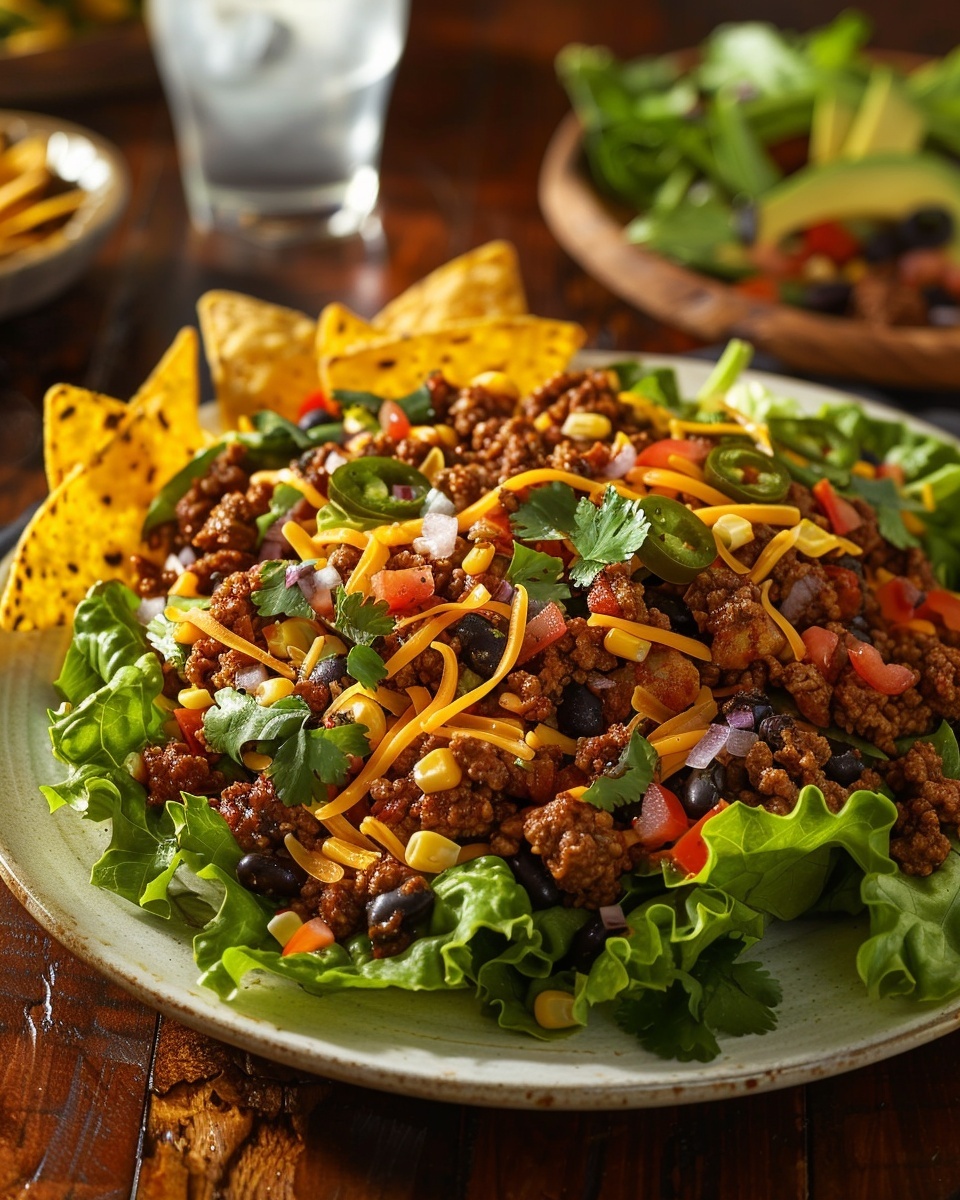
Welcome to Taco Salad Heaven
Last Tuesday night, I stood in my kitchen staring at leftover taco ingredients and a wilted head of lettuce, wondering what to make for dinner. That’s when it hit me—why not throw it all together into a taco salad? Twenty minutes later, my family was practically licking their plates clean. The best part? Everyone got to customize their bowl exactly how they wanted it.
Welcome to my kitchen! I’m thrilled to share everything I know about making the perfect taco salad. This dish has saved me countless times when I needed something quick but didn’t want to sacrifice flavor. Whether you’re feeding picky kids on a busy weeknight or hosting a backyard party, taco salad delivers every single time.
The beauty of this recipe is its flexibility. You can keep it simple with just a few ingredients, or you can go all out with a layered masterpiece that looks as good as it tastes. I’ve made versions with Doritos that add an irresistible crunch, and I’ve created lighter options when I’m watching what I eat. Both are equally delicious in their own way.
In this article, I’ll walk you through everything you need to know. We’ll cover the basic ingredients, explore fun variations, and I’ll share my secrets for making this dish work for any occasion. You’ll learn how to make a taco salad for a crowd, discover the best dressing options, and get tips for keeping your ingredients fresh and crispy.
What Are the Ingredients in a Taco Salad?
Let me break down the essentials you’ll need to create an amazing taco salad. The traditional version starts with a foundation of fresh ingredients that work together to create that perfect Tex-Mex flavor we all love.
First, you’ll need ground beef as your protein base. I usually use 80/20 ground beef because it has enough fat to stay juicy without being greasy. Season it with taco seasoning, and you’ve got the heart of your salad ready to go.
Next comes the lettuce. I prefer iceberg or romaine because they stay crisp longer and can handle wet ingredients without getting soggy. Chop it into bite-sized pieces so every forkful is easy to eat.
Cheese is non-negotiable in my book. Shredded cheddar works great, but a Mexican blend adds extra flavor. I usually add about a cup for a family-sized salad, but honestly, I never measure. Just sprinkle until it looks right.
Fresh tomatoes add juiciness and color. Dice them into small cubes and drain off excess liquid before adding them to your salad. This simple step prevents everything from getting watery.
The taco salad dressing ties everything together. You can use store-bought Catalina, ranch, or salsa. My personal favorite is a mix of sour cream and salsa with a squeeze of lime juice. It’s creamy, tangy, and takes just two minutes to whisk together.
Now let’s talk about upgrades. These additions can transform a basic taco salad into something special:
- Black beans add protein and fiber while keeping the dish filling
- Avocado brings healthy fats and creamy texture
- Corn adds sweetness and a pop of color
- Red onion gives a sharp bite that cuts through the richness
- Jalapeños bring the heat if you like things spicy
- Olives add a salty, briny element
- Cilantro provides fresh, bright flavor
For a healthy taco salad recipe, I swap some ingredients without losing flavor. Use ground turkey or chicken instead of beef. Add more vegetables like bell peppers and cucumber. Skip the chips or use baked tortilla strips instead. Greek yogurt works perfectly in place of sour cream.
When it comes to taco salad toppings, the options are endless. Crushed tortilla chips add crunch. Sour cream makes everything creamy. Fresh salsa brings moisture and spice. A sprinkle of green onions adds color and mild onion flavor.
The Classic Ground Beef Taco Salad
Let me walk you through making the classic version that started my taco salad obsession. This recipe serves four people and takes about 30 minutes from start to finish.
Start by browning one pound of ground beef in a large skillet over medium-high heat. Break it up with a wooden spoon as it cooks. I learned the hard way that letting chunks stay too big makes them harder to eat in salad form. Once the meat is no longer pink, drain off the excess fat.
Add your taco seasoning to the cooked beef. You can use a store-bought packet or make your own with chili powder, cumin, paprika, garlic powder, and onion powder. Pour in about a quarter cup of water and let everything simmer for five minutes. This helps the spices stick to the meat and creates a nice coating.
While the meat cools slightly, prepare your vegetables. Chop a full head of lettuce into bite-sized pieces. Dice two large tomatoes. Shred about a cup of cheddar cheese. If you’re adding extras like black beans or corn, drain and rinse them well.
Now comes the fun part—assembly. There are two main approaches. You can toss everything together in a big bowl for a casual family dinner, or you can create a layered taco salad that looks stunning when you serve it in a clear glass bowl.
For the tossed version, combine your lettuce in a large bowl. Add the seasoned beef while it’s still slightly warm. The warmth helps release the cheese’s flavor and makes everything smell amazing. Top with tomatoes, cheese, and any other ingredients you’re using. Pour your dressing over everything right before serving and toss gently.
The layered version requires a bit more planning. Start with lettuce at the bottom of a large clear bowl. Add a layer of meat, then beans, then cheese, then tomatoes. Continue layering all your ingredients. This presentation style works great for parties because people can see all the colorful layers.
What is the best meat for taco salad? Ground beef is traditional and my go-to choice. The fat content keeps it juicy and flavorful. But I’ve also had great success with ground turkey for a leaner option. Shredded chicken works beautifully if you have leftovers from a rotisserie chicken. Ground pork seasoned with taco spices creates a different but equally delicious flavor profile.
One trick I learned from my neighbor changed everything. She lets her seasoned meat cool for about ten minutes before adding it to the salad. This prevents the lettuce from wilting but keeps the meat warm enough to be enjoyable. It’s a small detail that makes a big difference.
The classic version is endlessly customizable. Sometimes I add crushed tortilla chips right before serving for extra crunch. Other times I serve the chips on the side so people can add their own. Both methods work perfectly.


Variations of Taco Salad
Once you’ve mastered the classic, it’s time to get creative and explore some seriously fun twists on the original.
Here’s the thing about taco salad—it’s like a blank canvas that welcomes experimentation. Over the years, I’ve tried combinations that sounded weird but turned out amazing, and I’ve discovered shortcuts that actually make the dish better. The two variations I’m about to share represent opposite ends of the spectrum. One is pure indulgent fun that my kids request at least twice a month, while the other keeps my health goals on track without making me feel like I’m eating “diet food.”
What I love most about these variations is how they prove that taco salad isn’t just one thing. It adapts to whatever you need it to be. Having friends over for game night? Go bold with the Doritos version. Trying to add more vegetables to your weekly rotation? The healthy approach works wonders. Both versions have earned permanent spots in my recipe rotation.
Taco Salad with Doritos
Let me tell you about the day my sister brought a taco salad with Doritos to a family picnic. I thought she’d lost her mind mixing chips into a salad. Then I tasted it. The combination of cool lettuce, seasoned meat, and those crunchy, cheesy chips created something magical. I went back for seconds, then thirds, and I’m not even embarrassed about it.
The genius of this version lies in the Doritos themselves. They serve as both a crunchy element and additional seasoning. The cheese powder coating on the chips melts slightly when it touches the warm meat, creating this incredible flavor that no amount of shredded cheese can replicate. Plus, let’s be honest—everyone loves Doritos. Adding them to salad feels a bit rebellious in the best possible way.
Making an allrecipes dorito taco salad style version starts with choosing your chip flavor. I’ve tested them all, and here’s what I found. Nacho Cheese Doritos are the classic choice that never disappoints. Cool Ranch adds a tangy twist that pairs surprisingly well with salsa-based dressings. Spicy Nacho brings extra heat if you’re into that. My personal favorite? The original Nacho Cheese. Sometimes classic really is best.
Timing matters more with this version than you might think. I learned this the hard way after assembling everything an hour before dinner. By the time we ate, the chips had turned into soggy orange mush. Not appetizing. Now I crush the Doritos and keep them separate until the absolute last minute before serving. Problem solved.
Here’s how I make it work. Brown your ground beef just like the classic version—one pound feeds about four hungry people. Season it well with taco seasoning, let it cool slightly, then set it aside. Prepare all your other ingredients: chopped lettuce, diced tomatoes, shredded cheese, whatever extras you’re feeling. Mix those together in your serving bowl.
The Doritos need special handling. Take about half a regular-sized bag and crush them up. I just keep them in the bag and smash it with my hands until the chips break into bite-sized pieces. Don’t pulverize them into dust—you want chunks that still have texture. Some people use a rolling pin for this, but honestly, the hand method works great and my kids think it’s hilarious.
Assembly happens in stages. Layer your lettuce mixture at the bottom. Add the seasoned beef while it’s still slightly warm. Sprinkle on your cheese, tomatoes, and other toppings. Then—and this is crucial—wait to add the Doritos until everyone’s ready to eat. Toss them in at the last second, give everything a quick mix, and serve immediately.
The dressing for a taco salad recipe with doritos needs to be bold enough to stand up to all those flavors. Catalina dressing is the traditional choice that you’ll find in most versions. The sweet and tangy profile complements the salty chips perfectly. I make a simple version by mixing equal parts salsa and ranch dressing, which creates this addictive pink sauce that clings to everything beautifully.
Funny enough, this variation works better for immediate serving rather than meal prep. The chips just don’t hold up over time. But if you’re making a taco salad for a crowd, you can set up a toppings bar with crushed Doritos in a separate bowl. Let people add their own right before eating. This approach keeps everything fresh and gives guests control over their crunch level.
One trick I picked up from a potluck—layer the crushed Doritos at the very bottom of individual serving bowls, then pile the salad on top. When you dig your fork down, you get pockets of chips that stayed crunchy because they weren’t exposed to the wet ingredients. It’s like a fun surprise in every bite, similar to how a well-composed beet and goat cheese salad balances different textures throughout.
Healthy Taco Salad Recipe
Now let’s swing to the opposite direction. When I’m trying to eat better but still want something satisfying, this healthy taco salad recipe saves the day. I’ve made it so many times that I don’t even need to think about measurements anymore.
The foundation starts with swapping ground beef for ground turkey. I know, I know—turkey can be boring. But here’s my secret: I add an extra tablespoon of olive oil to the pan before cooking the turkey. This compensates for turkey’s lower fat content and keeps everything moist. Season it aggressively with taco seasoning, cumin, and a pinch of smoked paprika. Nobody will miss the beef, I promise.
For the greens, I go beyond basic lettuce. A mix of chopped romaine and baby spinach adds more nutrients without changing the flavor much. Sometimes I throw in some kale, finely chopped so it’s not too tough. The variety of greens makes it more interesting nutritionally, kind of like how a kale quinoa salad packs in those beneficial leafy vegetables.
Vegetables become the star in this version. I dice up bell peppers in three different colors because they add sweetness and crunch. Cucumber brings refreshing coolness. Cherry tomatoes cut in half release less liquid than regular tomatoes, keeping everything crisp. Red cabbage adds purple color and a satisfying bite. The more vegetables you pile in, the better you feel about eating it.
Black beans and corn both make the cut in my taco salad healthy version. They add substance and fiber that keeps you full for hours. I drain and rinse canned black beans thoroughly to get rid of that metallic taste. For corn, frozen works better than canned—just thaw it and pat it dry. Fresh corn cut off the cob is even better when it’s in season.
The taco salad dressing needs to be lighter but still flavorful. My go-to combines plain Greek yogurt with fresh lime juice, a bit of cumin, garlic powder, and a handful of chopped cilantro. Blend it smooth in a small food processor or just whisk it together. The tanginess from the yogurt and lime cuts through everything else without adding tons of calories.
Here’s where I differ from most healthy salad recipes—I still add cheese, just less of it. About a quarter cup of sharp cheddar goes a long way because the strong flavor means you don’t need as much. Crumbled cotija or queso fresco work great too and feel more authentic.
Avocado becomes non-negotiable in the healthy version. The healthy fats keep you satisfied and add that creamy element you might miss from sour cream. One whole avocado diced up and distributed throughout the salad makes every bite feel indulgent. Just wait to add it until right before serving so it doesn’t brown.
Instead of Doritos or regular tortilla chips, I make my own baked tortilla strips. Cut corn tortillas into thin strips, spread them on a baking sheet, spray with cooking oil, and bake at 375 degrees for about ten minutes until crispy. Season them with salt and a tiny bit of chili powder while they’re still hot. They’re crunchy, satisfying, and way better for you than fried chips.
The assembly for the healthy version can be beautiful. I like building it in a large shallow bowl where you can see all the colorful ingredients. Start with your greens, arrange the turkey in the center, then create sections around it with different vegetables. It ends up looking like a composed salad you’d get at a fancy restaurant, with the same visual appeal you might find in a thoughtfully arranged spinach strawberry salad.
One modification I make sometimes involves adding quinoa. Cook about half a cup of quinoa according to package directions, let it cool, and mix it into the salad. This adds protein and makes the whole thing even more filling. It transforms the salad from a side dish into a complete meal that keeps me satisfied through a busy afternoon.
For meal prep purposes, this healthy version actually works better than the classic. Store the cooked turkey, prepared vegetables, and dressing in separate containers. When you’re ready to eat, assemble individual portions. The ingredients stay fresh for about three days this way. It’s nothing like preparing a simple egg salad that you can just scoop and eat, but the extra effort pays off with variety throughout the week.
The best part about both these variations? They prove that taco salad adapts to whatever your needs are on any given day. Craving comfort food? Go with the Doritos version. Want to feel good about lunch? Make the healthy option. Either way, you’re getting that perfect Tex-Mex flavor combination that makes taco salad so addictive in the first place.


Making Taco Salad for a Crowd
Last summer, I volunteered to bring food for my daughter’s soccer team party. Twenty-five hungry teenagers plus their parents. I’ll admit I panicked a little at first, but then I remembered taco salad scales up beautifully. That party taught me everything I know about making this dish work for large groups.
The secret to a successful taco salad for a crowd is organization. You can’t just multiply a regular recipe by ten and hope for the best. Trust me, I tried that once and ended up with a soggy mess because I assembled everything too early. Now I’ve got a system that works every single time.
Start by figuring out your quantities. For every ten people, I plan on about three pounds of ground meat, two large heads of lettuce, two cups of shredded cheese, and about three cups total of other toppings like tomatoes, beans, and corn. It sounds like a lot, but people eat more than you’d expect when everything looks this good.
Cooking meat in large quantities requires a different approach. Instead of browning everything in one pot where it steams instead of browns, I split the meat between two large skillets. This lets everything cook properly and develop that nice caramelized flavor. Season each batch separately to make sure the spices distribute evenly. Once cooked, I combine everything in a large roasting pan and keep it warm in a low oven set to about 200 degrees.
Here’s something nobody tells you about feeding crowds—presentation matters almost as much as taste. People eat with their eyes first. A beautifully arranged spread makes everyone excited to dig in, while a sloppy pile of ingredients just looks sad. I learned this from my aunt who catered events for years.
The toppings bar approach works phenomenally well for large groups. Set up a long table with everything arranged in separate bowls. This setup has multiple advantages. First, people can customize their salads exactly how they want them. My nephew hates tomatoes but loves extra cheese. My friend Sarah is vegetarian and can skip the meat entirely. Second, ingredients stay fresh because they’re not all mixed together getting soggy. Third, it looks impressive and gets people talking.
For the toppings bar, I arrange everything in a logical order. Put plates or bowls at the beginning of the line, followed by lettuce, then warm meat, then cold toppings like cheese, tomatoes, beans, corn, and onions. End with dressings, sour cream, and chips. This flow makes sense and prevents people from having to backtrack.
Keep cold things cold and warm things warm. It sounds obvious, but temperature matters for both safety and taste. I set out cold toppings in bowls nested inside larger bowls filled with ice. For the meat, a slow cooker set on warm works perfectly. The meat stays at the right temperature for hours without drying out or overcooking.
Timing your prep makes or breaks the whole event. I prep vegetables the night before—wash and chop lettuce, dice tomatoes, shred cheese, and store everything in separate containers in the fridge. The morning of the party, I cook the meat and prepare any warm elements. About thirty minutes before guests arrive, I set everything out. This schedule prevents that frantic last-minute rush.
One trick for keeping lettuce crisp when serving crowds involves spinning it really well after washing. Excess water is the enemy of crispy lettuce. I use a salad spinner, then spread the lettuce on clean kitchen towels to absorb any remaining moisture. It’s a small step that makes a noticeable difference, especially important when you’re thinking about basic nutrition basics and keeping those fresh vegetables as appealing and nutritious as possible.
For parties, I usually prepare about twenty percent more food than I think I’ll need. Running out of food is my worst nightmare as a host. Leftover taco salad ingredients are never a problem because you can use them throughout the week for other meals. Extra cooked meat makes great quesadillas. Leftover toppings work in burritos or nachos.
Transportation can be tricky if you’re bringing a taco salad for a crowd to a potluck. Never mix everything together beforehand unless you want soggy sadness. Instead, transport all ingredients separately in containers with tight-fitting lids. Bring your serving bowls and utensils, and assemble everything once you arrive. Yes, it’s a bit more work, but the results are worth it.
Layered Taco Salad and Toppings
Now let’s talk about the showstopper presentation that makes people pull out their phones to take pictures. A properly executed layered taco salad isn’t just food—it’s a centerpiece.
The vessel matters tremendously. You need a large clear glass bowl, preferably straight-sided or slightly flared. I have a trifle bowl that I use exclusively for layered salads. The clear sides let everyone see the colorful layers, which is the whole point. If you don’t have a glass bowl, a clear plastic salad bowl from any home goods store works fine.
Layer order isn’t random—there’s actual strategy involved. You want sturdy, less delicate ingredients at the bottom and lighter, more fragile items on top. Here’s the order I use every time, and it’s never failed me.
Start with shredded lettuce as your foundation. Press it down gently but don’t pack it too tight. You want about two inches of lettuce creating a green base that everyone can see through the glass. Iceberg works best here because it holds up under the weight of other ingredients.
Next comes the seasoned ground beef. Let it cool to room temperature first so it doesn’t wilt the lettuce underneath. Spread it evenly across the entire surface, creating a nice brown layer. This is usually the darkest layer, so having it early creates good visual contrast.
Black beans go next. Drain them thoroughly and pat them dry with paper towels. Nobody wants bean juice running down and making everything mussy. The dark beans create another distinct color band that looks great against the beef.
Corn adds a pop of yellow. Whether you use canned, frozen, or fresh, make sure it’s well-drained. This bright layer really makes the salad look cheerful and appetizing. Sometimes I mix in some diced red bell pepper at this level for extra color variation.
Diced tomatoes come next, but here’s my controversial opinion—use them sparingly in a layered salad. Tomatoes release liquid over time, and that can make everything below them soggy. I use cherry tomatoes halved, which release less juice, or I seed my regular tomatoes first. Just a thin layer is enough for color and flavor.
Shredded cheese gets a thick layer. Don’t be shy here. The cheese creates a beautiful orange or yellow band depending on what type you use. Mexican blend with its mix of white and orange cheeses creates visual interest within the layer itself.
Green onions sliced thin add little green flecks that break up the solid cheese layer. I love how they look like confetti scattered across the top. Plus they add a mild onion flavor that doesn’t overpower everything else.
The final touches go on right before serving. Dollops of sour cream, sliced black olives, fresh cilantro leaves, diced avocado, and pickled jalapeño slices all make beautiful garnishes. I arrange them in sections across the top so you can see all the different colors and textures. It ends up looking almost too pretty to eat. Almost.
Here’s where the layered taco salad gets interesting for serving. You have two options. Some people like to take a large spoon and dig straight down when serving, getting all the layers in each portion. This works great and ensures everyone gets a bit of everything. Other people prefer to toss the whole thing right before serving, mixing all those beautiful layers together into one big colorful salad. Both methods taste identical, so it’s really about whether you want to preserve the visual effect or embrace the mix.
The taco salad dressing situation changes slightly for a layered presentation. Instead of pouring dressing over the top, which would ruin the careful arrangement, I serve it on the side. Put out two or three different dressing options in small pitchers or bowls with ladles. Let people add their own after they’ve served themselves. This keeps the presentation intact and accommodates different taste preferences.
Speaking of dressings, let me share my favorite combinations. Catalina remains the classic choice—sweet, tangy, and that distinctive red color that makes everything look appetizing. Ranch dressing mixed with taco seasoning creates a spicy, creamy option that kids usually love. Salsa verde thinned with a bit of lime juice and olive oil makes a lighter, brighter dressing. And my personal creation—equal parts sour cream and salsa blended smooth with fresh cilantro and lime—hits every flavor note you want.
By the way, if you’re really into experimenting with different salad presentations and combinations, you might enjoy exploring more creative salad recipes that use similar layering techniques with different flavor profiles.
Taco salad toppings deserve their own discussion because they can completely transform the dish. Beyond the basics I’ve mentioned, here are some creative additions that surprised me with how well they worked.
Crushed tortilla chips remain essential, but the variety matters. Regular salted chips add crunch. Lime-flavored chips bring extra tang. Chile-lime chips add heat and citrus. Fritos corn chips create a different texture that some people prefer. I usually put out two different chip options and let people choose.
Pickled red onions bring acidity and beautiful pink color. They’re super easy to make—just slice red onions thin, pack them in a jar, and cover with a mixture of vinegar, water, sugar, and salt. Let them sit for at least an hour. They keep in the fridge for weeks and add a gourmet touch to any taco salad.
Radishes sliced paper-thin add a peppery crunch that wakes up your mouth. Not everyone loves them, but the people who do really love them. Plus they’re gorgeous—bright pink and white circles scattered across the top look amazing.
Cotija cheese crumbled on top adds salty, crumbly texture that’s different from regular shredded cheese. It doesn’t melt, so it maintains its texture even with warm ingredients nearby. Very authentic Mexican touch that feels special.
Lime wedges seem like a small thing, but they’re crucial. A squeeze of fresh lime juice over the top right before eating brightens everything. It cuts through the richness and makes all the flavors pop. I always put out a small bowl of lime wedges at my toppings bar.
Hot sauce variety lets people control their heat level. I set out at least three options—mild, medium, and hot. Some people want zero spice, while others douse everything in ghost pepper sauce. Providing options makes everyone happy.
The beauty of the toppings approach is flexibility. Someone eating low-carb can skip the chips and beans. Someone vegetarian can skip the meat and load up on beans and vegetables. Someone dairy-free can skip the cheese and sour cream. The basic concept adapts to almost any dietary need without requiring you to make multiple versions of the entire dish.
Whether you’re making taco salad for your family on a Tuesday night or presenting a stunning layered version for fifty people at a party, the fundamentals stay the same. Fresh ingredients, bold seasonings, and smart assembly create something everyone genuinely enjoys eating. The versatility is what keeps me coming back to this dish again and again—it never gets boring because you can always try something new.
Frequently Asked Questions
What are the layers of taco salad?
The traditional layered taco salad starts with lettuce at the bottom, followed by seasoned ground meat, then black beans, corn, diced tomatoes, and shredded cheese. The top layer usually features green onions, sour cream, olives, and cilantro as garnish. The order matters because you want heavier, sturdier ingredients at the bottom and lighter, more delicate items on top. This arrangement not only looks beautiful in a clear glass bowl but also prevents ingredients from getting crushed. When serving, you can either scoop straight down to get all layers in one portion, or toss everything together right before serving.
What salad do you use for tacos?
For taco salad, iceberg lettuce is the classic choice because it stays crisp and crunchy even under heavier ingredients. Romaine lettuce works great too and adds more nutritional value with a slightly different texture. I often mix both for the best of both worlds—iceberg for crunch and romaine for nutrition. Baby spinach can be added for extra nutrients without changing the flavor much. The key is chopping the lettuce into bite-sized pieces so every forkful is easy to eat. Whatever lettuce you choose, make sure to wash it thoroughly and dry it completely to prevent sogginess.
What is the best meat for taco salad?
Ground beef with 80/20 fat content is the traditional and most flavorful choice for taco salad. The fat keeps the meat juicy and helps the taco seasoning stick beautifully. Ground turkey makes an excellent lighter alternative if you add a bit of olive oil while cooking to prevent dryness. Shredded rotisserie chicken works wonderfully when you want to save time. Ground pork seasoned with taco spices creates a different but equally delicious flavor profile. For vegetarian versions, seasoned black beans or crumbled tofu can replace meat entirely while still providing protein and substance.
Can you make taco salad ahead of time?
You can definitely prep taco salad components ahead of time, but don’t assemble everything until you’re ready to serve. Cook and season your meat, then store it in the fridge for up to three days. Chop vegetables and store them in separate airtight containers. Shred cheese and keep it refrigerated. Make your dressing and store it separately. When it’s time to eat, simply warm the meat and assemble everything fresh. This approach keeps ingredients crisp and prevents the lettuce from wilting. For the Doritos version, never add chips until the very last minute before serving.
How do you keep taco salad from getting soggy?
Preventing sogginess requires a few simple tricks I’ve learned over the years. First, thoroughly dry your lettuce after washing it—use a salad spinner and pat it with towels. Second, let cooked meat cool to room temperature before adding it to the salad. Third, drain and pat dry any canned ingredients like beans and corn. Fourth, remove seeds from tomatoes before dicing them since seeds hold lots of liquid. Fifth, serve dressing on the side rather than pouring it over everything. Finally, if you’re using chips, add them only at the last possible moment before serving.
What dressing goes best with taco salad?
Catalina dressing is the classic choice with its sweet and tangy flavor that complements all the Tex-Mex ingredients perfectly. Ranch dressing mixed with a bit of taco seasoning creates a creamy, spicy option many people love. My personal favorite combines equal parts sour cream and salsa, blended smooth with lime juice and fresh cilantro. Salsa verde thinned with lime juice and olive oil makes a lighter, brighter option. For a healthier version, Greek yogurt mixed with lime, cumin, and garlic powder tastes amazing. Honestly, you can’t go wrong with any of these options.
Is taco salad healthy?
Taco salad can absolutely be healthy depending on how you make it. The base of lettuce and vegetables provides vitamins, fiber, and nutrients. Using lean ground turkey instead of beef reduces fat content significantly. Loading up on beans, corn, tomatoes, and peppers adds nutrition while keeping you full. Greek yogurt instead of sour cream, baked tortilla strips instead of fried chips, and going light on cheese all make it healthier. Portion control matters too—it’s easy to overdo it with toppings. A well-balanced taco salad with lots of vegetables and reasonable portions of protein and cheese makes a nutritious, satisfying meal.
How much taco salad per person for a party?
For a party where taco salad is the main dish, plan on about half a pound of meat per person, which seems like a lot but accounts for all the other ingredients too. You’ll need roughly one cup of lettuce per person, and about two to three cups total of other toppings for every four people. If taco salad is one of several dishes at a potluck, you can cut these amounts in half. I always make about twenty percent more than I think I’ll need because running out of food is worse than having leftovers. Individual ingredients keep well and can be used for other meals throughout the week.
Can you freeze taco salad?
Freezing fully assembled taco salad doesn’t work at all because lettuce and most vegetables turn to mush when frozen and thawed. However, you can freeze the cooked, seasoned meat for up to three months, which is super helpful for meal prep. Let it cool completely, portion it into freezer bags, squeeze out air, and freeze flat for easy storage. Thaw overnight in the fridge and reheat before using. Shredded cheese also freezes well. Unfortunately, lettuce, tomatoes, sour cream, and avocado don’t freeze successfully. Beans freeze fine if they’re plain, but not after they’ve been mixed with other salad ingredients.
What can I serve with taco salad?
Taco salad is pretty much a complete meal on its own, but a few sides complement it nicely. Warm cornbread or corn muffins add a slightly sweet element that balances the spicy, savory salad. Tortilla chips with guacamole or queso dip give people something to munch on while you’re assembling everything. Mexican rice or cilantro-lime rice makes it more filling if you’re feeding teenage boys or very hungry adults. Fresh fruit like watermelon or pineapple provides a refreshing contrast to all the rich flavors. For drinks, margaritas for adults or agua fresca for everyone round out the Tex-Mex theme perfectly.
Taco Salad
Ingredients
Equipment
Method
- Brown ground beef in a large skillet over medium-high heat, breaking it up as it cooks until no longer pink.
- Drain excess fat from the cooked meat.
- Add taco seasoning and water to the beef; simmer for 5 minutes.
- While the meat cools slightly, chop lettuce, dice tomatoes, and shred cheese.
- Assemble the salad by either mixing all ingredients in a large bowl or layering them in a clear glass bowl.
- For a tossed version, combine lettuce, warm seasoned beef, tomatoes, cheese, and desired toppings; drizzle dressing and toss just before serving.
- For a layered version, start with lettuce, then add meat, beans, cheese, tomatoes, and finish with toppings. Serve the dressing on the side.