
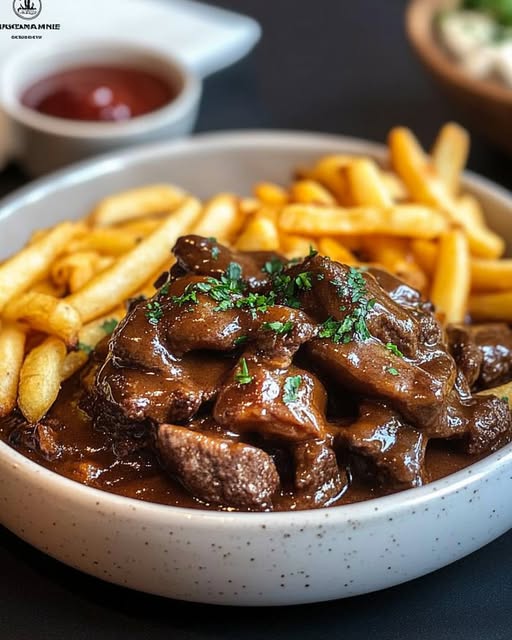
Belgian Beef Stew: A Cozy Hug in a Pot
There’s something magical about a dish that fills your kitchen with the warm scent of caramelized onion and rich, dark beer. This Belgian Beef Stew, or Carbonade Flamande, is my ultimate go-to for chilly evenings. It’s the kind of meal where everyone gathers around the table, eager to dive into that tender meat and soak up the incredible sauce with crispy fries. Trust me, after one bite, you’ll feel like you’ve been wrapped in the coziest blanket!
The Story Behind This Belgian Beef Stew
This isn’t just any stew; it’s a piece of Belgian history on a plate. For generations, families in Flanders have been simmering beef in local dark beer. The trick? That slice of pain d’épices (spiced gingerbread) soaked right into the sauce. It sounds odd, but it’s the secret weapon! It thickens the stew and adds a whisper of sweet spice you just can’t get any other way. It connects us to old traditions while making a perfectly satisfying meal today.
Why You’ll Adore This Classic Belgian Stew
If you love meals that practically cook themselves, this is for you. The long, slow simmer means you get to relax while your Dutch oven does all the hard work. The result is fall-apart-tender beef in a sauce that’s deeply savory, slightly sweet, and totally irresistible. Plus, it’s naturally dairy-free (hello, beer as the liquid!) and makes fantastic leftovers. It’s a one-pot wonder that feels fancy but is wonderfully simple.
Perfect Occasions for Carbonade Flamande
This stew is your secret for hosting without stress. It’s perfect for a cozy family Sunday dinner, a casual get-together with friends, or even a hearty holiday alternative. I love making it on a lazy weekend afternoon. The longer it sits, the better it tastes. Serve it up with those golden frites, and you’ve got a meal that feels like a warm, delicious celebration.
Ingredients for Your Belgian Beef Stew
- 1 kg beef chuck, cut into chunks
- 3 onions, thinly sliced
- 2 tbsp old-fashioned mustard
- 50 g butter
- 1 tbsp oil
- 30 g brown sugar
- 500 ml Belgian dark beer
- 2 slices of gingerbread (pain d’épices)
- 2 bay leaves
- 3 sprigs fresh thyme
- 1 tbsp vinegar (red wine or balsamic)
- Salt and black pepper
- Homemade or frozen fries, to serve
Handy Ingredient Substitutions
No Belgian beer? A good stout or porter works beautifully. If you can’t find gingerbread, spread the mustard on a slice of dark rye or pumpernickel bread with a tiny pinch of cinnamon. For a lighter version, you can use leaner beef, but a cut with some marbling will give you the most tender result. Don’t skip browning the meat—it’s where all the flavor starts!
How to Make Carbonade Flamande avec Frites
Step 1: Sear the Beef to Perfection
Heat the butter and oil in a large Dutch oven over medium-high heat. Pat your beef chunks very dry with paper towels—this is key for a good sear. Add the beef in a single layer, without crowding the pan. Let it develop a deep, brown crust on all sides. That beautiful color equals mega flavor for your stew. Remove the beef and set it aside on a plate. Pro tip: Do this in batches to avoid steaming the meat.
Step 2: Caramelize the Onions
In that same glorious pot, add all your sliced onions. They’ll sizzle in the leftover beef drippings. Cook them, stirring now and then, until they’re soft and golden. This takes about 10 minutes. Now, sprinkle in the brown sugar. Let it melt and coat the onions, turning them into a sticky, sweet, and fragrant base. Your kitchen will smell amazing already!
Step 3: Build Your Flavor Foundation
Return the seared beef to the pot with the onions. Stir in the mustard, vinegar, dark beer, bay leaves, and thyme. Give everything a good stir, scraping up any browned bits from the bottom of the pot. Those bits are pure gold! The beer will foam up and then settle into a dark, aromatic broth. Bring it just to a simmer before moving to the next step.
Step 4: The Magic Gingerbread Trick
Here’s the special touch! Spread a little extra mustard on each slice of gingerbread. Place them right on top of the stew, mustard-side down. They’ll float like little rafts. Don’t stir them in! As the stew cooks, the bread will dissolve, thickening the sauce and adding a unique, spiced sweetness that is the soul of this dish.
Step 5: The Patient Simmer
Cover your pot and reduce the heat to low. Let it bubble gently for 2.5 to 3 hours. The beef should become fork-tender. Peek and give it a gentle stir every hour or so. If the sauce looks too thin at the end, you can remove the lid and let it simmer uncovered for 15 minutes to thicken. The waiting is the hardest part!
Step 6: Crisp Up Those Frites
While the stew finishes, cook your fries. Whether you’re making homemade double-fried wonders or baking frozen ones, get them good and crispy. Salt them well while they’re hot. The contrast of the creamy stew and the salty, crunchy fry is what makes this combination legendary.
Step 7: Serve and Savor
Fish out the bay leaves and thyme stems from the stew. Ladle the rich, dark Carbonade into deep bowls. Pile a mountain of hot frites right next to it. Watch everyone’s eyes light up. This is food meant to be shared with lots of laughter and maybe a second helping. Chef’s tip: A little extra mustard on the side is a classic and delicious accompaniment.
Timing Your Belgian Beef Stew
Prep Time: 20 minutes
Cook Time: 3 hours
Total Time: 3 hours 20 minutes
Servings: 4-6 people
Chef’s Secret: The Flavor Booster
Let your stew rest for 15-20 minutes after cooking, still covered. This allows the flavors to meld even more and the meat to reabsorb some of the juices. It also makes it the perfect temperature for eating! Resting is a simple step that makes a noticeable difference in the depth of your sauce.
A Tasty Bit of Trivia
The unique use of beer in this stew comes from Belgium’s incredible brewing tradition. Historically, beer was often safer to drink than water, so it naturally found its way into the cooking pot. Using a quality local beer wasn’t just for flavor; it was a practical part of daily life that created an iconic national dish.
What You’ll Need to Make It
- A large, heavy-bottomed Dutch oven or cocotte
- A sharp chef’s knife and cutting board
- Tongs for turning the beef
- A wooden spoon for stirring
- A pot or fryer for the frites
Storing Your Delicious Leftovers
Let the stew cool completely to room temperature before storing. Transfer it to an airtight container. It will keep in the refrigerator for up to 4 days. The flavors will continue to develop, making the next day’s lunch even more delicious!
This stew freezes beautifully for up to 3 months. Freeze it in portion-sized containers for easy future meals. It’s a lifesaver on busy weeknights. Always label your container with the date so you know what’s what.
To reheat, thaw frozen stew overnight in the fridge. Warm it gently in a pot on the stove over low heat, adding a splash of water or beef broth if the sauce seems too thick. Always ensure reheated food, especially meat-based dishes, is piping hot all the way through for safe food handling.
Tips and Advice for Stew Success
- Choose the right beef: Chuck, shoulder, or brisket are perfect. They have connective tissue that breaks down during slow cooking, making the meat incredibly tender.
- Don’t rush the sear: A proper brown crust on the meat is non-negotiable. It’s called the Maillard reaction, and it’s the source of deep, savory flavor.
- Taste before serving: The sweetness can vary based on your beer and bread. Always do a final taste and adjust the seasoning with salt, pepper, or a tiny drop of vinegar to balance it perfectly.
Presentation Ideas to Impress
- Serve the stew in the classic Dutch oven right at the table for a rustic, family-style feel.
- For individual servings, use shallow, wide bowls and artfully arrange the frites alongside or even on top.
- Garnish with a fresh sprig of thyme or a little chopped parsley for a pop of color.
- Offer small bowls of extra mustard, cornichons (tiny pickles), and a simple green salad on the side.
Common Mistakes to Avoid
Mistake 1: Not Browning the Meat Properly
Adding wet or crowded beef to the pot will steam it instead of searing it. You’ll miss out on those flavorful browned bits. To avoid this, always pat your beef dry with paper towels. Cook in batches if needed, giving each piece space. A proper sear is the foundation of your stew’s flavor.
Mistake 2: Using the Wrong Cut of Beef
Choosing a lean cut like sirloin will result in tough, dry meat after long cooking. Stewing needs a cut with marbling and connective tissue. Chuck roast or beef shoulder are ideal. They become meltingly tender and enrich the sauce as they cook.
Mistake 3: Skipping the Gingerbread
It might seem strange, but the gingerbread is traditional for a reason. It thickens the sauce and adds a complex, spiced sweetness that balances the beer’s bitterness. If you can’t find it, use the dark bread substitute mentioned earlier. Don’t leave it out!
Mistake 4: Boiling the Stew Instead of Simmering
A rolling boil will make your beef tough and your sauce reduce too quickly. After adding the beer, bring it just to the point where small bubbles break the surface. Then immediately reduce the heat to low for a gentle, patient simmer. This slow cooking breaks down the fibers without toughening them.
Healthier & Fun Variations to Try
Love the idea of a rich stew but want to mix it up? Here are six tasty twists on the classic:
- Chicken & Mushroom Stew: Swap beef for chicken thighs and use a blonde ale. It’s lighter but just as comforting.
- Vegetarian “Beef” & Beer Stew: Use large chunks of portobello mushrooms and seitan. They soak up the beer sauce wonderfully.
- Carbonade with Root Vegetables: Add carrots, parsnips, and turnips in the last hour of cooking for a heartier, veggie-packed meal.
- Spicy Flemish Stew: Add a pinch of cayenne pepper or a diced chipotle in adobo to the sauce for a warm, smoky kick.
- Stout & Chocolate Stew: Use a chocolate stout and add a small square of dark chocolate at the end for an incredibly rich, deep flavor.
- Carbonade Meatballs: Make mini meatballs from the stewing beef mix and simmer them in the beer sauce. Serve over mashed potatoes instead of frites.
Looking for other rich, main dish ideas? You might love the creamy elegance of a classic Chicken and Mushroom Vol-au-Vent or the crispy comfort of Lemon Butter Chicken. For a quicker meal with big flavor, our Teriyaki Chicken Noodles are always a hit. And for a simple, decadent brunch, try these Baked Eggs with Goat Cheese.
Your Belgian Stew Questions Answered
Can I make Carbonade Flamande in a slow cooker?
Absolutely! After browning the beef and onions in a skillet (don’t skip this step!), transfer everything to your slow cooker. Add the other ingredients, placing the gingerbread on top. Cook on LOW for 7-8 hours or on HIGH for 4-5 hours. The result will be just as tender and flavorful.
What is the best Belgian beer to use?
Traditional choices include Belgian Dubbels like Chimay Rouge or Brune ales like Leffe Brune. These beers are malty, slightly sweet, and have caramel notes that complement the stew. If you can’t find a Belgian brand, a non-hoppy American brown ale, stout, or porter will work very well as a substitute.
Can I prepare this stew ahead of time?
Yes, and it’s actually recommended! Stews like this Carbonade taste even better the next day after the flavors have had more time to marry. Prepare it completely, let it cool, and store it in the fridge. Gently reheat it on the stovetop, adding a splash of water or broth if needed. It’s perfect for stress-free entertaining.
My stew sauce is too thin. How can I thicken it?
If your sauce hasn’t thickened enough after cooking, remove the beef and onions with a slotted spoon. Turn the heat up to medium and let the sauce simmer uncovered for 10-15 minutes until it reduces to your liking. You can also mix a teaspoon of cornstarch with a tablespoon of cold water and stir it into the simmering sauce until it thickens.
What can I serve instead of fries?
While frites are classic, this stew is also fantastic over buttery mashed potatoes, soft polenta, or wide egg noodles. A chunk of crusty bread for dipping is never a wrong choice either. A simple green salad with a sharp vinaigrette helps cut through the richness of the meal.
Can I use ground beef instead of stew chunks?
I wouldn’t recommend it for this specific recipe. The magic lies in the texture of the slow-cooked, chunky beef that falls apart. Using ground beef would change the dish entirely into more of a sloppy joe mixture. Stick with the stew meat for the authentic experience.
Is there a way to make this recipe gluten-free?
You can! Use a certified gluten-free beer (many are available). Substitute the gingerbread with a slice of gluten-free bread spread with mustard, and use cornstarch instead of flour if you need to thicken the sauce at the end. Ensure your mustard and other condiments are gluten-free.
Why is my beef still tough after 3 hours?
This usually means the stew was cooked at too high a temperature. If it boils rather than simmers, the muscle fibers tighten and become tough. Also, double-check your cut of meat—it needs to be a tough, marbled cut meant for braising. Ensure the heat is as low as possible for just a bare simmer, and give it a little more time.
Can I add other vegetables to the stew?
While not traditional, you can add carrots or mushrooms for more substance. Add carrot chunks at the beginning with the onions. Add sliced mushrooms in the last 30 minutes of cooking so they don’t become mushy. Remember, the focus is on the beef and beer sauce.
How do I know when the stew is done?
The beef is done when you can easily pierce a large chunk with a fork and it offers no resistance, almost falling apart. The sauce should be rich, glossy, and thick enough to coat the back of a spoon. Taste it—the flavors should be deep and balanced between savory, sweet, and slightly tangy.
Ready for a Taste of Belgium?
There you have it—the roadmap to a truly memorable, heartwarming meal. This Belgian Beef Stew is more than just food; it’s an experience. It’s about slowing down, savoring the process, and gathering people you love around a table. So, grab your Dutch oven, pick out a good dark beer, and get ready for the compliments. You’re about to create a classic that will have everyone asking for seconds. Bon appétit!
Belgian Beef Stew
Ingredients
Equipment
Method
- Heat the butter and oil in a large Dutch oven over medium-high heat.
- Pat the beef chunks dry with paper towels and sear them in batches until browned on all sides, then remove from the pot.
- In the same pot, add the sliced onions and cook until soft and golden, about 10 minutes.
- Sprinkle in the brown sugar and allow it to melt and coat the onions.
- Return the seared beef to the pot and stir in the mustard, vinegar, dark beer, bay leaves, and thyme.
- Spread mustard on the slices of gingerbread and place them on top of the stew, mustard-side down.
- Cover the pot and reduce the heat to low, letting it simmer gently for 2.5 to 3 hours.
- Cook the fries according to your preference while the stew simmers.
- Fish out the bay leaves and thyme stems from the stew, then ladle it into deep bowls and serve with fries.