
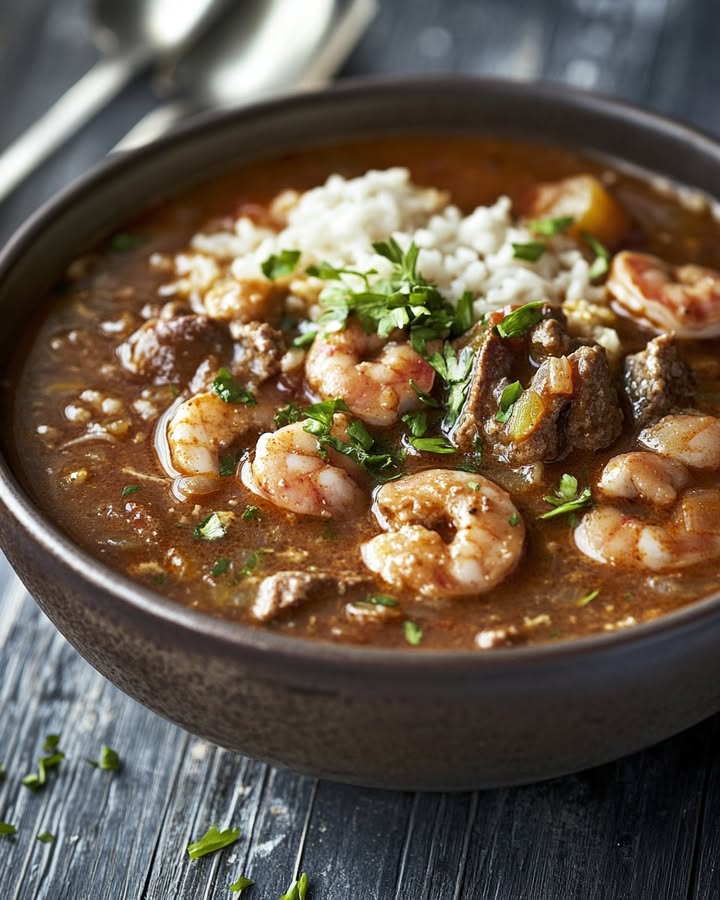
Discover the Rich Flavors of Classic Gumbo Delight
There’s nothing quite like a big bowl of Classic Gumbo Delight to bring warmth and comfort to your table. This Louisiana classic is a melting pot of flavors, blending rich roux, savory meats, and aromatic vegetables into a hearty stew that’s perfect for sharing with family and friends. I first tried this recipe at a friend’s Mardi Gras party, and it was love at first bite! The layers of flavors and textures are simply irresistible.
The History and Heart of Classic Gumbo Delight
Classic Gumbo has its roots in the vibrant culture of Louisiana, where French, Spanish, African, and Native American influences come together in a delicious symphony. Traditional gumbo often includes a combination of seafood, sausage, and chicken, but modern versions can vary widely. The key to a great gumbo lies in the dark, nutty roux, which forms the base and adds depth to the dish. Whether you’re making it for the first time or you’re a seasoned gumbo maker, this recipe will win hearts and stomachs alike.
Why You’ll Love This Classic Gumbo Delight
This Classic Gumbo Delight is a feast for the senses. The rich, smoky flavor of the andouille sausage, the tender chicken, and the plump, juicy shrimp all come together in a broth that’s both comforting and exciting. It’s a one-pot wonder that’s easy to make and even easier to love. Plus, the aroma that fills your kitchen while it simmers is enough to make anyone’s mouth water!
Perfect Occasions to Prepare This Recipe
Classic Gumbo Delight is perfect for any gathering, whether it’s a cozy family dinner, a holiday feast, or a casual get-together with friends. It’s especially popular during Mardi Gras, but it’s also a great dish to serve when you want to impress guests without spending hours in the kitchen. Trust me, it’s a crowd-pleaser!
Ingredients
- 1/2 cup vegetable oil
- 1/2 cup all-purpose flour
- 1 large onion, diced
- 1 bell pepper, diced
- 2 celery stalks, diced
- 3 cloves garlic, minced
- 1 pound andouille sausage, sliced
- 1 pound chicken thighs, diced
- 1 pound shrimp, peeled and deveined
- 4 cups chicken broth
- 1 can (14.5 oz) diced tomatoes
- 2 bay leaves
- 1 tablespoon paprika
- 1 tablespoon dried thyme
- 1 tablespoon dried oregano
- 1 teaspoon cayenne pepper (adjust to taste)
- Salt and black pepper to taste
- 1 cup frozen okra
- 1/2 cup fresh parsley, chopped
- 1 tablespoon fresh lemon juice
- Cooked white rice, for serving
Substitution Options
- If you can’t find andouille sausage, you can use smoked sausage or kielbasa.
- For a vegetarian version, omit the meat and use a variety of mushrooms and extra okra.
- You can use chicken breasts instead of thighs if you prefer leaner meat.
- Fresh tomatoes can be used instead of canned, but they may not have the same depth of flavor.
Preparation Section
Step 1: Prepare the Roux
In a large pot, heat the vegetable oil over medium heat. Gradually whisk in the flour and cook, stirring constantly, until the mixture turns a deep brown color, about 15-20 minutes. This is your roux. Be patient and keep stirring—the roux is the foundation of your gumbo, and a properly cooked roux is key to its rich, nutty flavor.
Step 2: Sauté the Vegetables
Add the onion, bell pepper, celery, and garlic to the roux. Cook until the vegetables are softened and fragrant. The onions should become translucent, and the peppers and celery should be tender. This step infuses the gumbo with a wonderful, earthy aroma that will make your kitchen smell amazing.
Step 3: Cook the Meat
Stir in the andouille sausage and chicken thighs. Cook for about 5 minutes, allowing the meat to brown slightly. The browning adds a layer of flavor and texture to the gumbo. The sausage should start to crisp up, and the chicken should be golden on the outside. This step intensifies the overall flavor profile of the dish.
Step 4: Add Broth and Seasonings
Pour in the chicken broth and diced tomatoes. Add the bay leaves, paprika, thyme, oregano, cayenne pepper, salt, and black pepper. Stir well to combine. The broth and seasonings will meld together to create a rich, flavorful base. The smell of the herbs and spices mingling with the roux and meat is absolutely heavenly.
Step 5: Simmer
Bring the mixture to a boil, then reduce the heat and let it simmer for 45 minutes to 1 hour, until the chicken is tender. The long, slow simmer allows all the flavors to fully develop and blend. The chicken will become fork-tender, and the liquid will thicken slightly. This is the perfect time to relax and enjoy the aromas wafting from your kitchen.
Step 6: Add Shrimp and Okra
Stir in the shrimp and frozen okra. Cook for an additional 5-10 minutes, or until the shrimp are cooked through and the okra is tender. The shrimp will turn a bright pink, and the okra will add a delightful, slightly slimy texture to the gumbo. This step brings the gumbo to its final, delectable state.
Step 7: Finish and Serve
Remove the bay leaves. Stir in the fresh parsley and lemon juice. The parsley adds a burst of freshness, and the lemon juice brightens the flavors. Serve the gumbo over cooked white rice. The rice soaks up the rich, flavorful broth, making each bite a perfect balance of texture and taste.
Timing
Prep time: 20 minutes
Cooking time: 1 hour 15 minutes
Total time: 1 hour 35 minutes
Chef’s Secret
One of my favorite tricks is to use a cast-iron skillet for the roux. Cast iron distributes heat evenly and helps achieve that deep, rich color. Plus, it adds a bit of extra flavor to the roux. Another secret is to taste and adjust the seasoning as you go. The right balance of spices makes all the difference in a great gumbo.
Extra Info
Did you know that gumbo’s name comes from the West African word “gombo,” meaning okra? This ingredient is a staple in traditional gumbo recipes and adds a unique texture and flavor. It’s a fun fact to share with your guests while you savor this delicious dish!
Necessary Equipment
To make this Classic Gumbo Delight, you’ll need:
- A large pot or Dutch oven
- A whisk
- A wooden spoon
- A cutting board and knife
- A measuring cup and spoons
- A ladle
These tools will help you prepare the roux, sauté the vegetables, and simmer the gumbo to perfection.
Storage
Leftover Classic Gumbo Delight can be stored in the refrigerator for up to 5 days. Make sure to cool it completely before transferring it to an airtight container. When reheating, you may need to add a little water or broth to reach the desired consistency. The flavors only get better with time, so feel free to make a big batch and enjoy it throughout the week.
For longer storage, you can freeze the gumbo. Let it cool completely, then transfer it to freezer-safe containers. It will keep well in the freezer for up to 3 months. When you’re ready to eat, thaw it overnight in the refrigerator and reheat gently on the stove. The texture and flavor will remain intact, making it a great option for meal prep.
Pro tip: If you’re freezing the gumbo, consider portioning it out into individual servings. This makes it easy to grab just the right amount for a quick and satisfying meal. Just remember to label the containers with the date and contents to keep track of what you have in your freezer.
Tips and Advice
Make sure to stir the roux constantly to prevent it from burning. A burned roux can ruin the entire dish, so take your time and be patient. Also, don’t be afraid to adjust the seasoning to your taste. Gumbo is all about the balance of flavors, so trust your instincts and make it your own. Lastly, adding a splash of hot sauce or a sprinkle of filé powder can give your gumbo an extra kick and a touch of authenticity.
Presentation Tips
For a beautiful presentation, serve the Classic Gumbo Delight in a large, shallow bowl. Garnish with a sprinkling of fresh parsley and a few slices of green onion. Placing a small scoop of rice in the center of each bowl and ladling the gumbo around it creates an inviting and visually appealing dish. You can also offer a side of cornbread or a simple salad to complement the richness of the gumbo.
Healthier Alternative Recipes
While the classic version is delicious, there are several ways to make a healthier version of Classic Gumbo Delight:
- Vegetarian Gumbo: Swap the meat for a variety of mushrooms, such as shiitake, cremini, and button. Use vegetable broth and add more okra for a hearty, plant-based option.
- Lightened-Up Gumbo: Reduce the oil in the roux by using a non-stick pan and a small amount of olive oil. Use lean chicken breast and reduce the amount of sausage. Add more vegetables like zucchini and bell peppers for extra nutrition.
- Gluten-Free Gumbo: Substitute the all-purpose flour with a gluten-free flour blend. Be sure to use a gluten-free chicken broth and check your other ingredients for any hidden gluten.
- Low-Sodium Gumbo: Use low-sodium chicken broth and reduce the amount of salt in the recipe. Enhance the flavor with herbs and spices, and consider using no-salt-added tomatoes.
- Zesty Seafood Gumbo: Skip the chicken and sausage and load up on a variety of seafood, such as crab, mussels, and clams. Use a seafood stock for a rich, oceanic flavor. Add a squeeze of lime for a zesty twist.
- Herb-Infused Gumbo: Add a generous amount of fresh herbs, such as rosemary, thyme, and basil, to the broth. This not only enhances the flavor but also adds a boost of antioxidants and nutrients.
Common Mistakes to Avoid
Mistake 1: Burning the Roux
The roux is the heart of the gumbo, and burning it can ruin the entire dish. To avoid this, stir the roux constantly and patiently. A good rule of thumb is to cook it on medium-low heat for 15-20 minutes, or until it reaches a deep, rich brown color. If you notice any signs of burning, such as a burnt smell or black specks, start over. Pro tip: Using a cast-iron skillet can help distribute heat evenly and prevent burning.
Mistake 2: Overcooking the Shrimp
Shrimp can easily become tough and rubbery if overcooked. To prevent this, add the shrimp towards the end of the cooking process, and cook them for only 5-10 minutes, or until they turn pink and are just opaque. Overcooking the shrimp can make them tough and unappetizing, so keep an eye on them and be ready to remove the pot from the heat once they’re done.
Mistake 3: Skimping on Seasoning
Gumbo is all about the balance of flavors, and skimping on seasoning can result in a bland and uninteresting dish. Taste and adjust the seasoning as you go, and don’t be afraid to add more salt, pepper, or spices to suit your taste. A well-seasoned gumbo is rich, flavorful, and satisfying. Pro tip: Start with the suggested amounts and add more gradually to find the perfect balance.
Mistake 4: Using Too Much Okra
While okra is a traditional ingredient in gumbo, using too much can make the dish overly slimy and unappealing. Start with a small amount, such as 1 cup, and add more if needed. The okra should add a subtle, creamy texture to the gumbo without overpowering it. Pro tip: If you’re not a fan of the sliminess, try roasting the okra before adding it to the gumbo. This can help reduce the slimy texture while still adding the flavor.
Mistake 5: Not Allowing the Gumbo to Simmer Long Enough
A rushed gumbo can lack depth and richness. Allow the gumbo to simmer for at least 45 minutes to 1 hour, or until the chicken is tender and the flavors have melded together. This slow simmering process is essential for developing the rich, complex flavors that make gumbo so special. Pro tip: If you have the time, let the gumbo simmer for a couple of hours. The longer it simmers, the more flavorful it will become.
FAQ
What is the origin of gumbo?
Gumbo originated in Louisiana, where it is a blend of French, Spanish, African, and Native American culinary traditions. The name “gumbo” comes from the West African word “gombo,” meaning okra, which is a common ingredient in the dish. Over the years, gumbo has evolved into a beloved staple of Southern cuisine, with many regional variations and personal twists.
What is the main ingredient in a classic gumbo?
The main ingredients in a classic gumbo are a dark roux, the “holy trinity” of vegetables (onion, bell pepper, and celery), and a variety of meats and/or seafood. Common meats include andouille sausage, chicken, and shrimp. The roux is the foundation of the gumbo, providing a rich, nutty flavor and thickening the broth.
Can I make gumbo without okra?
Yes, you can make gumbo without okra. While okra is a traditional ingredient that adds a unique texture and flavor, you can substitute it with filé powder (ground sassafras leaves) or simply omit it. Filé powder is added at the end of the cooking process to thicken the gumbo and add a distinctive flavor. If you don’t use okra or filé powder, you can still make a delicious and authentic gumbo.
How do I store leftover gumbo?
Leftover gumbo can be stored in the refrigerator for up to 5 days. Cool it completely, then transfer it to an airtight container. When reheating, you may need to add a little water or broth to reach the desired consistency. For longer storage, you can freeze the gumbo for up to 3 months. Thaw it overnight in the refrigerator and reheat gently on the stove. The flavors often improve after a day or two, so don’t hesitate to make a big batch and enjoy it later.
Is gumbo a healthy dish?
Traditional gumbo can be quite rich and high in calories due to the roux and the use of sausage and other meats. However, you can make a healthier version by reducing the oil in the roux, using lean chicken breast, and adding more vegetables. You can also use low-sodium chicken broth and reduce the amount of salt and sausage. There are many ways to make gumbo a nutritious and balanced meal while still enjoying its rich, comforting flavors.
What is the best rice to serve with gumbo?
Traditionally, long-grain white rice is the best choice for serving with gumbo. It has a neutral flavor that complements the rich, savory broth and a fluffy texture that absorbs the gumbo’s flavors beautifully. However, you can also use brown rice or wild rice for added nutrition and a nuttier flavor. Just make sure to cook the rice separately and serve the gumbo over it.
Can I use other types of meat in gumbo?
Absolutely! While andouille sausage, chicken, and shrimp are the most common meats used in traditional gumbo, you can experiment with other options. Turkey, pork, and various types of seafood like crab, oysters, and mussels can be used. You can also make a vegetarian version by using a variety of mushrooms and extra okra. The beauty of gumbo is its versatility, so feel free to get creative and use your favorite meats and seafood.
How do I make a vegetarian gumbo?
To make a vegetarian gumbo, replace the meats with a variety of mushrooms, such as shiitake, cremini, and button. Use vegetable broth instead of chicken broth and increase the amount of okra for a hearty, plant-based option. You can also add other vegetables like zucchini, carrots, and bell peppers for extra nutrition and flavor. The key is to build a rich, flavorful broth and use a variety of textures to create a satisfying and delicious dish.
What is the difference between a roux and a slurry?
A roux is a mixture of flour and fat (usually butter or oil) that is cooked to a specific color, such as light, medium, or dark, to thicken and add flavor to sauces and stews. A slurry, on the other hand, is a mixture of flour and cold water or another liquid that is added to a hot liquid to thicken it quickly. In gumbo, a roux is used to create a rich, nutty flavor and a thick, velvety texture, while a slurry is typically used for quick thickening without the added flavor development.
How can I make my gumbo less spicy?
If you find your gumbo is too spicy, you can dilute it with a little more broth or water. Adding a dairy product like cream or milk can also help to reduce the spiciness, although it may alter the flavor profile. Another option is to serve the gumbo with a dollop of plain yogurt or sour cream, which can help cool the palate. If you’re making the gumbo from scratch, start with a small amount of cayenne pepper and adjust to your taste, remembering that it’s easier to add more spice than to take it away.
Before you dive into the world of soups, stews, and chili, make sure to check out our other delicious recipes in the Soups, Stews, and Chili category. From the comforting flavors of Sausage Vegetable Stew to the rich and creamy Green Coconut Soup, there’s something for everyone to enjoy.
For more tips on food freshness and quality, visit the FDA website.
In conclusion, Classic Gumbo Delight is a timeless and versatile dish that brings people together. Whether you’re making it for a special occasion or just craving a comforting meal, this recipe is sure to delight your senses and satisfy your soul. So, gather your ingredients, put on your apron, and get ready to create a delicious and memorable gumbo that will have everyone coming back for more. Bon appétit!
Classic Gumbo Delight
Ingredients
Equipment
Method
- In a large pot, heat the vegetable oil over medium heat and whisk in the flour; cook until deep brown, about 15-20 minutes.
- Add the onion, bell pepper, celery, and garlic to the roux; cook until softened.
- Stir in the andouille sausage and chicken thighs; cook for about 5 minutes.
- Pour in the chicken broth and diced tomatoes; add bay leaves, paprika, thyme, oregano, cayenne pepper, salt, and black pepper.
- Bring to a boil, then reduce heat and simmer for 45 minutes to 1 hour.
- Stir in the shrimp and okra; cook for an additional 5-10 minutes until shrimp are pink.
- Remove bay leaves, stir in fresh parsley and lemon juice, and serve over cooked white rice.