
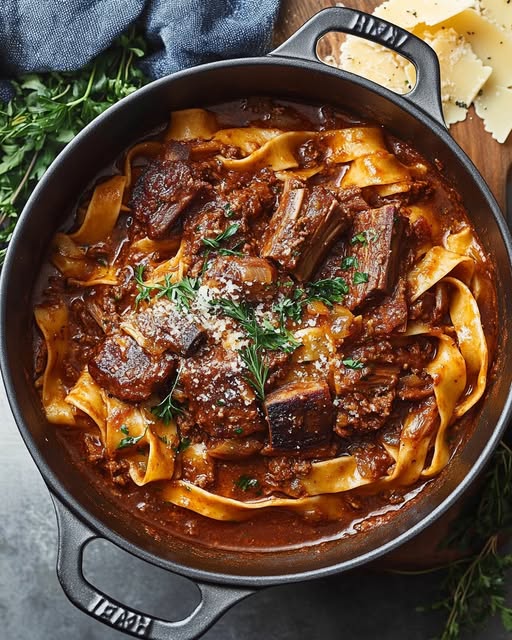
The Ultimate Dutch Oven Short Ribs: A Sunday Supper Dream
There’s something magical about a kitchen filled with the smell of something slowly cooking on a cold day. It wraps around you like a hug. For my family, that smell is these Dutch Oven Short Ribs with creamy pappardelle. This recipe is my love letter to lazy Sundays, turning a humble cut of meat into a rich, fork-tender ragoût that makes everyone gather in the kitchen, wondering “is it ready yet?” Spoiler: it’s worth the wait.
From Rustic Roots to Your Table
This dish is a beautiful blend of rustic, slow-cooked tradition and modern convenience. While short ribs have been a staple in braises and stews for generations across Europe, using a Dutch oven is the modern home cook’s secret weapon. It lets you sear, sauté, and simmer all in one gorgeous, heavy pot, developing layers of flavor you just can’t get from a slow cooker. The final touch of cream and Parmesan stirred into the sauce is my little twist—it turns a great stew into a luxurious, cohesive sauce that clings perfectly to every ribbon of pappardelle.
Why You’ll Fall in Love With This Beef Short Rib Ragu
You’ll adore this recipe because it’s forgiving and intensely rewarding. It’s less about precise timing and more about letting low heat work its magic. The result is a deeply savory, complex sauce with melt-in-your-mouth meat that just falls apart. It feels fancy but is built on simple techniques. Best of all, it makes your house smell incredible for hours, building anticipation for a meal that feels like a warm, comforting celebration.
When to Whip Out This Comfort Food Classic
This is your go-to recipe for any occasion that calls for a memorable, crowd-pleasing meal. It’s perfect for a cozy family Sunday dinner, a romantic date night in (just halve the recipe), or a casual but impressive dinner party with friends. It’s also a fantastic make-ahead dish—the flavors get even better the next day. I love serving it for holiday gatherings when I want to spend time with guests, not stuck doing last-minute cooking.
What You’ll Need for Your Short Rib Pappardelle
- 1.5 to 2 kg (3-4 lbs) boneless beef short ribs, excess fat trimmed
- 1 large onion, diced
- 1 celery stalk, diced
- 1 large carrot, diced
- 2 garlic cloves, crushed
- ¼ cup tomato paste
- 1 tbsp Worcestershire sauce
- 1 can (14 oz / 400g) crushed tomatoes
- 3 cups (750 ml) chicken broth
- ⅓ cup (80 ml) heavy cream
- ½ cup (50g) grated Parmesan cheese
- 10 oz (280g) pappardelle pasta
- Olive oil for cooking
- Salt and black pepper to taste
Handy Ingredient Swaps
No worries if you’re missing something! Beef short ribs can be swapped for beef chuck roast, cut into large chunks. For the chicken broth, beef or vegetable broth works just as well. Out of heavy cream? A splash of full-fat coconut milk or even a couple tablespoons of cream cheese will add similar richness. If you don’t have pappardelle, fettuccine, tagliatelle, or even a sturdy rigatoni are excellent substitutes.
Your Step-by-Step Guide to Perfect Braised Short Ribs
Step 1: Prepare the Short Ribs
Start by patting your short ribs completely dry with paper towels. This is the golden rule for a good sear! Trim off any obvious, large pieces of surface fat. Then, generously season all sides with salt and pepper. Don’t be shy here—this initial seasoning builds the flavor foundation for the entire dish.
Step 2: Sear the Meat to Perfection
Heat a couple tablespoons of olive oil in your Dutch oven over medium-high heat. When the oil shimmers, add the ribs. Work in batches to avoid crowding. Let them sear undisturbed for 4-5 minutes per side until a beautiful, dark brown crust forms. This caramelization, called the Maillard reaction, is where the deep, meaty flavor comes from. Remove the ribs to a plate.
Step 3: Cook Down the Aromatics
Reduce the heat to medium. Now, add your diced onion, celery, and carrot to the pot. You’ll hear a happy sizzle as they hit the flavorful fat. Cook, stirring now and then, for about 15 minutes. You want the vegetables softened and taking on a little golden color at the edges. Your kitchen will start smelling sweet and savory.
Step 4: Build Your Flavor Base
Stir in the crushed garlic, tomato paste, and Worcestershire sauce. The tomato paste will darken a shade as it cooks for that minute. This step cooks out any raw flavor and concentrates the savory, umami punch of these ingredients. It’s a quick but mighty important step for a rich sauce.
Pro tip: Make a little space in the center of the pot to cook the tomato paste directly on the hot surface for 30 seconds before stirring it into the veggies.
Step 5: Add Liquids and Combine
Pour in the crushed tomatoes and chicken broth, scraping up all those delicious browned bits from the bottom of the pot. Those bits are pure flavor! Now, nestle the seared short ribs and any accumulated juices back into the pot. The liquid should come about halfway up the sides of the meat.
Step 6: The Long, Slow Braise
Bring the pot to a lively boil, then immediately reduce the heat to low. Cover it tightly with the lid. Let it simmer gently for 2.5 to 3 hours. You’re looking for the meat to be utterly tender and easily pulled apart with a fork.
Pro tip: After about 40 minutes, check and give it a gentle stir. If the sauce is reducing too quickly, add a splash of water. The goal is a low, steady simmer.
Step 7: Cook the Pappardelle Pasta
When the meat is nearly done, cook your pappardelle in a large pot of well-salted water according to the package directions for al dente. Before you drain it, scoop out about one cup of the starchy pasta water. This liquid gold is key for adjusting your sauce later. Drain the pasta.
Step 8: Finish the Luscious Sauce
Once the short ribs are fall-apart tender, remove them to a cutting board. Skim any excess fat from the surface of the sauce if desired. Stir in the heavy cream and grated Parmesan until the cheese melts and the sauce becomes silky and cohesive. Shred or chop the tender meat and stir it back into the sauce.
Step 9: Bring It All Together
Add the cooked pappardelle directly into the Dutch oven with the sauce. Toss everything together until every strand of pasta is gloriously coated. If the sauce seems too thick, add a splash of your reserved pasta water to loosen it. Let it all mingle over low heat for one final minute.
Chef’s tip: For an incredible depth of flavor, stir in one teaspoon of finely grated lemon zest with the cream and Parmesan. It brightens the whole dish without tasting lemony.
Timing is Everything
This recipe is a lesson in patience, but most of the time is hands-off.
- Prep Time: 30 minutes
- Cook Time: 3 hours
- Total Time: 3 hours 30 minutes
- Servings: 6 people
The Secret to Foolproof Tenderness
The real chef’s secret? Low and slow is non-negotiable. A gentle simmer, not a rolling boil, is what breaks down the tough connective tissue in the short ribs into soft, succulent gelatin. If your sauce is bubbling aggressively, your heat is too high. Adjust it down until you see just a few lazy bubbles breaking the surface. This ensures the meat becomes tender without drying out.
A Little Foodie Background
Pappardelle pasta, with its wide, ribbon-like shape, is the traditional partner for rich, meaty sauces in Tuscany, Italy. Its broad surface is perfect for scooping up every last bit of this hearty ragu. Using it here is a nod to that tradition, creating a dish that feels both Italian-inspired and universally comforting.
Essential Kitchen Tools
- A 5-7 quart Dutch oven (enameled cast iron is ideal)
- Sharp chef’s knife and cutting board
- Tongs for turning the meat
- Wooden spoon for stirring
- Large pot for boiling pasta
- Colander for draining
Storing Your Delicious Leftovers
Let the stew cool completely at room temperature before storing. Do not leave it out for more than two hours.
Transfer it to an airtight container. It will keep beautifully in the refrigerator for 4 to 5 days. The flavors meld and deepen, making leftovers a true treat.
For longer storage, you can freeze it for up to 3 months. Thaw overnight in the fridge before reheating gently on the stovetop with a splash of broth or water to loosen the sauce.
My Best Tips for Success
- Dry Your Meat: Always pat short ribs dry. Wet meat steams instead of searing.
- Don’t Rush the Sear: Get that deep brown crust. It’s flavor you can’t get later.
- Season in Layers: Season the meat well at the start, and taste the sauce again before serving, adjusting salt if needed.
- Use Pasta Water: That starchy water helps the sauce cling to the pasta and fixes a sauce that’s too thick.
Making it Pretty on the Plate
- Twirl the pappardelle high with a fork in the center of a shallow bowl.
- Ladle the saucy short ribs over and around the pasta.
- Finish with a fresh sprinkle of Parmesan, a crack of black pepper, and a tiny drizzle of good olive oil.
- Add a pop of color and freshness with a small side of a simple arugula salad dressed with lemon.
Try These Other Tasty Variations
Love this style of cooking? You have to explore our other main dish recipes for more family-friendly inspiration. Once you master braising, a world of cozy dinners opens up. Here are six twists on this classic:
- Red Wine Braised Short Ribs: Swap half the broth for a full-bodied dry red wine like Cabernet Sauvignon for a deeper, more complex sauce.
- Asian-Inspired Short Ribs: Use soy sauce, ginger, star anise, and a touch of hoisin instead of tomato paste. Serve over rice or noodles.
- Short Rib Chili: Shred the cooked meat and add it back to the pot with chili powder, cumin, beans, and peppers for a hearty twist.
- Short Rib Pot Pie: Use the shredded meat and sauce as a filling, top with puff pastry, and bake until golden for the ultimate comfort food.
- BBQ Short Ribs: After braising in a tomato-based sauce, shred the meat, mix with your favorite BBQ sauce, and serve on buns.
- Mushroom & Herb Short Ribs: Add a mix of wild mushrooms like cremini and shiitake along with fresh rosemary and thyme for an earthy flavor.
If you’re looking for other elegant French-inspired dishes, my Vol-au-Vent with Chicken and Mushrooms is a wonderful party appetizer. For another fantastic braised beef dish, you must try the cozy Carbonade Flamande with Frites. And if short ribs are your new favorite, explore a different take with this French-style Braised Short Ribs recipe.
Common Mistakes to Avoid
Mistake 1: Not Getting a Good Sear
This happens when the pot isn’t hot enough or the meat is crowded. You end up steaming the ribs instead of browning them. That rich, caramelized crust is essential for flavor. To avoid it, make sure your oil is shimmering before adding the meat. Work in batches so each piece has room, and don’t move them for the first few minutes. Let the crust form!
Mistake 2: Boiling Instead of Simmering
Once you add the liquids and cover the pot, it’s tempting to walk away. But if your heat is too high, the sauce will boil rapidly. This toughens the meat fibers, leaving you with dry, stringy ribs even after hours of cooking. Always reduce the heat to the lowest setting once you cover the pot. You should see just occasional small bubbles.
Mistake 3: Skipping the Pasta Water
Draining your pasta and immediately adding it to the sauce is a missed opportunity. That cloudy pasta water is full of starch. It acts as a magical binder, helping the sauce emulsify and stick to every noodle. Always reserve a cup before draining. If your finished sauce seems a bit thick or broken, a splash of pasta water brings it right back together.
Mistake 4: Adding Dairy Too Early
Adding cream and cheese at the beginning of the braise is a recipe for disaster. The long cooking time can cause the dairy to curdle or separate, giving your sauce a grainy texture. Always stir in the cream and Parmesan at the very end, after the meat is cooked and you’ve removed the pot from the direct heat. This ensures a smooth, luxurious finish.
Your Dutch Oven Short Ribs Questions, Answered
Can I use bone-in short ribs instead?
Absolutely! Bone-in short ribs will add even more flavor to your braise. You’ll need about 3 to 3.5 pounds to yield a similar amount of meat. The cooking time will be the same. Just be sure to check that the meat is pulling away from the bone easily as a sign it’s done. You may need to skim a bit more fat from the sauce at the end since bones often have more fat surrounding them.
What if I don’t own a Dutch oven?
No problem! You can use any heavy-bottomed pot with a tight-fitting lid. A cast iron skillet covered with foil followed by a baking sheet can work in a pinch for stovetop cooking. Alternatively, you can sear and sauté everything in a large skillet, then transfer it all to a slow cooker to braise on low for 7-8 hours. The key is a vessel that distributes heat evenly and retains it well.
How can I make this dish ahead of time?
This is actually an ideal make-ahead meal. Simply prepare the entire ragu (through step 8) a day or two in advance. Let it cool and store it in the fridge. The flavors improve over time. When ready to serve, gently reheat the ragu on the stovetop over low heat, adding a splash of broth if it’s too thick. Cook your pappardelle fresh, then combine and finish as directed. It makes entertaining stress-free.
Is there a way to speed up the cooking time?
While the slow braise is what creates the incredible texture, you can use a pressure cooker like an Instant Pot to drastically reduce time. Sear the meat using the sauté function. Cook all ingredients under high pressure for about 45-50 minutes, followed by a natural pressure release. Then proceed with finishing the sauce. For the best food safety and quality, it’s wise to check guidelines from trusted sources like the USDA on safe cooking temperatures for meats when using different methods.
Can I freeze the finished ragoût?
Yes, it freezes wonderfully for up to 3 months. Cool it completely first. I recommend freezing just the meat sauce, not the pasta. Portion it into freezer-safe containers or bags, leaving some room for expansion. Thaw overnight in the refrigerator before reheating. You may need to add a little broth or water when reheating to get the sauce back to the perfect consistency.
What can I serve with this besides pasta?
This rich ragoût is incredibly versatile! Skip the pasta and serve it over creamy polenta, mashed potatoes, or mashed cauliflower for a lower-carb option. It’s also fantastic spooned over a slice of crusty, toasted sourdough bread for an open-faced sandwich. A simple green salad or roasted green beans on the side are perfect for cutting the richness.
My sauce is too thin. How can I thicken it?
If your sauce hasn’t reduced enough, the easiest fix is to remove the meat and let the sauce simmer uncovered for 10-15 minutes. This will evaporate excess liquid. You can also create a quick slurry by mixing one tablespoon of cornstarch with two tablespoons of cold water. Stir this into the simmering sauce and cook for a minute until thickened. The starch from the pasta water will also help thicken it when you combine everything at the end.
Can I use a different type of cheese?
Pecorino Romano is a great salty substitute for Parmesan. For a mellower flavor, try Asiago. If you want a more meltable creaminess, a few tablespoons of mascarpone cheese stirred in at the end is divine. Avoid using pre-grated cheese in a bag, as it often contains anti-caking agents that can make your sauce grainy. Freshly grating your cheese is always best.
What’s the best way to reheat leftovers?
Gentle reheating is key. Use the stovetop over low heat, stirring occasionally. Add a small splash of water, broth, or milk to loosen the sauce as it heats. You can also reheat single portions in the microwave. Use a lower power setting (50%) and stop to stir every 30 seconds to ensure even heating and to prevent the sauce from separating.
Are short ribs a healthy choice?
Short ribs are a richer cut of meat, so they are higher in fat, including saturated fat. However, they are also an excellent source of protein, iron, and B vitamins. The long, slow cooking process allows you to easily skim off excess fat from the sauce before serving. Balancing this indulgent meal with plenty of vegetables on the side and throughout the week is a great approach. Enjoy it as part of a varied diet.
For more hearty, family-approved dinners like this one, be sure to browse our full collection of main dish recipes—your next favorite meal is waiting there!
Ready to Dig In?
And there you have it—my foolproof path to the most comforting Dutch Oven Short Ribs you’ll ever make. This dish proves that the best meals aren’t about fancy techniques, but about patience and a few simple, good ingredients. It’s about creating that warm, welcoming atmosphere where everyone gathers around the table. So grab your Dutch oven, put on some cozy music, and get ready for a meal that earns happy sighs and requests for seconds. Trust me, your future self, enjoying those incredible leftovers, will thank you. Now, go get cooking!
Dutch Oven Short Ribs
Ingredients
Equipment
Method
- Pat short ribs dry and season with salt and pepper.
- Heat olive oil in a Dutch oven over medium-high heat and sear short ribs until browned.
- Remove ribs and cook diced onion, celery, and carrot in the pot for about 15 minutes.
- Stir in crushed garlic, tomato paste, and Worcestershire sauce and cook for 1 minute.
- Add crushed tomatoes and chicken broth, nestling the seared ribs back into the pot.
- Bring to a boil, then reduce heat and cover the pot, simmering for 2.5-3 hours.
- Cook pappardelle in salted water until al dente, reserving 1 cup of pasta water.
- Once ribs are tender, remove and skim excess fat from the sauce, then stir in cream and Parmesan.
- Shred meat and return to sauce. Combine cooked pappardelle with the sauce, adjusting with reserved pasta water if necessary.