
Introduction
I’ll never forget the day I dragged myself home after a brutal workout, starving and exhausted. I opened my fridge and stared at the same boring chicken breast I’d been eating for weeks. That’s when I decided something had to change. I needed a meal that was packed with protein but didn’t taste like cardboard. Enter the high protein chicken and quinoa bowl.
This dish changed everything for me. It’s nutritious, filling, and tastes amazing. The best part? You can make it in under 30 minutes. Whether you’re trying to build muscle, lose weight, or just eat better, this bowl has your back.
Getting enough protein doesn’t have to be boring or complicated. This chicken and quinoa bowl gives your body what it needs while keeping your taste buds happy. I’m going to show you why this meal deserves a spot in your weekly rotation. You’ll learn about the nutrition behind it, how it helps your body, and why it’s become my go-to meal when life gets busy.
Let’s talk about building a meal that actually works for your goals without sacrificing flavor or variety.
Why Choose a High Protein Chicken and Quinoa Bowl?
Protein is the building block your body craves. Every cell in your body needs it to function properly. When you eat protein-rich foods, you’re doing your muscles, bones, and organs a huge favor. Your body uses protein to repair tissue, make enzymes, and keep your immune system strong.
Here’s something most people don’t realize: eating enough protein helps control your appetite. I noticed this myself when I started eating more protein at lunch. I stopped reaching for snacks at 3 PM. Protein keeps you full longer than carbs or fats do. This makes weight management so much easier.
Chicken is one of the best protein sources you can find. A four-ounce serving of chicken breast packs about 26 grams of protein. That’s almost half of what most adults need in a day. Plus, chicken is lean. It gives you all that protein without loading you up with saturated fat.
But chicken alone isn’t enough to make a balanced meal. That’s where quinoa comes in. I used to think quinoa was just another trendy grain, but it’s actually a powerhouse. Unlike rice or pasta, quinoa is a complete protein. This means it contains all nine essential amino acids your body can’t make on its own.
One cup of cooked quinoa gives you 8 grams of protein and 5 grams of fiber. The fiber helps your digestion and keeps your blood sugar stable. Quinoa also has magnesium, iron, and B vitamins. Your body needs these nutrients for energy production and healthy blood cells.
When you combine chicken and quinoa, magic happens. You get a complete protein profile with carbs that actually fuel your body. The chicken provides lean protein for muscle building. The quinoa adds fiber, complex carbs, and extra protein. Together, they create a meal that satisfies your hunger and supports your fitness goals.
Let me break down what makes this combination so effective for healthy eating:
- High protein content: You get 35-40 grams of protein per bowl, depending on portions
- Balanced macros: The right mix of protein, carbs, and healthy fats
- Long-lasting energy: Complex carbs from quinoa release energy slowly
- Muscle recovery: Perfect post-workout meal to repair and build muscle
- Appetite control: Keeps you full for hours, reducing cravings
The benefits of a high protein diet go beyond just building muscle. Research shows that eating more protein can boost your metabolism. Your body burns more calories digesting protein than it does processing carbs or fats. This is called the thermic effect of food.
I started eating this bowl three times a week, and my energy levels shot up. I wasn’t crashing in the afternoon anymore. My workouts improved because I had better fuel. Even my sleep got better, which surprised me.
Protein also helps preserve your muscle mass when you’re trying to lose weight. Most diets make you lose muscle along with fat. But when you eat enough protein, your body holds onto that muscle. This keeps your metabolism running strong.
The nutrition in a chicken and quinoa bowl supports more than just your muscles. The vitamins and minerals work together to keep your whole body healthy. Chicken provides selenium, which supports your thyroid. Quinoa offers manganese for bone health and wound healing.
This meal fits into almost any eating plan. If you’re watching calories, you can control portions easily. If you’re carb cycling, you can adjust the quinoa amount. It works for meal prep because both chicken and quinoa keep well in the fridge.
Here’s what a typical high protein chicken and quinoa bowl brings to your table:
| Nutrient | Amount per Serving | Benefit |
|---|---|---|
| Protein | 35-40g | Muscle building and repair |
| Fiber | 5-7g | Digestive health and fullness |
| Carbohydrates | 40-45g | Sustained energy |
| Healthy Fats | 8-12g | Hormone production and absorption of vitamins |
The versatility of this bowl makes it practical for real life. You can switch up the seasonings, add different vegetables, or change the toppings. The base stays the same, so you always get that protein punch your body needs.
Making this bowl part of your routine doesn’t require fancy cooking skills. You don’t need expensive equipment or hard-to-find ingredients. Just chicken, quinoa, and whatever vegetables you like. Simple food that delivers results.
I’ve recommended this meal to friends who were struggling with their weight management goals. They all said the same thing: they couldn’t believe how full they felt after eating it. No more mid-afternoon energy crashes. No more late-night snacking because dinner didn’t satisfy them.
The truth is, balanced meals like this one make healthy eating sustainable. You’re not depriving yourself. You’re not eating bland, boring food. You’re giving your body what it actually needs in a form that tastes good.


The Ingredients That Make This Bowl Work
Now that you understand why this bowl deserves a spot on your plate, let’s get into what actually goes into it. I’m going to walk you through each ingredient and show you exactly what it brings to the table. This isn’t just about throwing food together—it’s about understanding how each piece contributes to your health.
Here’s what I use for a basic high protein chicken and quinoa bowl that serves two people. I keep these ingredients on hand because they’re versatile enough for multiple meals throughout the week:
For the base: One cup of dry quinoa (any color works, though I prefer tricolor for the visual appeal), two boneless skinless chicken breasts (about eight ounces each), and two cups of low-sodium chicken broth for cooking the quinoa. The broth adds so much more flavor than plain water.
For seasoning: Garlic powder, onion powder, paprika, cumin, salt, and black pepper. I also keep fresh garlic on hand because nothing beats that flavor. Two tablespoons of olive oil for cooking the chicken.
For the toppings: Cherry tomatoes (about one cup, halved), one ripe avocado, fresh spinach or kale (two cups), and a squeeze of fresh lime juice. Sometimes I add crumbled feta cheese, but that’s optional depending on your goals.
The beauty of this meal is its simplicity. You don’t need a long shopping list or fancy ingredients. Most of this stuff probably lives in your kitchen already.
Let me break down the nutritional value of these main players. Chicken breast is basically pure protein. Those eight ounces give you about 52 grams of protein with minimal fat. We’re talking maybe three grams of fat total, and most of that is unsaturated. Chicken also delivers B vitamins, especially niacin and B6, which help your body convert food into energy. The selenium content supports your immune system and thyroid function.
Quinoa brings something special to the party. One cup of cooked quinoa contains all nine essential amino acids. Your body can’t produce these on its own, so you have to get them from food. Most plant foods are missing one or more amino acids, but quinoa has them all. This makes it a complete protein, which is rare in the plant world.
Here’s the thing about quinoa that really impressed me when I started researching it. It’s loaded with minerals that most of us don’t get enough of. Manganese helps your body process cholesterol and carbohydrates, and quinoa gives you nearly half your daily needs in just one cup. The magnesium content (about 30 percent of your daily value) supports over 300 enzyme reactions in your body. I used to get muscle cramps after workouts until I started eating more magnesium-rich foods like quinoa.
The fiber in quinoa deserves its own moment. Five grams per cup might not sound like much, but it’s significant. This fiber slows down digestion, which means your blood sugar stays stable instead of spiking and crashing. I noticed I stopped getting hangry between meals once I added more fiber to my diet.
Funny enough, the toppings are where you can really boost the nutritional value of your bowl. That avocado I mentioned? It’s packed with healthy fats that help your body absorb fat-soluble vitamins like A, D, E, and K. Plus, the monounsaturated fats in avocado support heart health. Half an avocado adds about 115 calories and 10 grams of fat, but it’s the good kind your body needs.
Cherry tomatoes bring lycopene, an antioxidant that’s been linked to reduced risk of heart disease. They also add vitamin C, which helps your body absorb the iron from the quinoa. By the way, that’s a neat trick I learned—pairing iron-rich foods with vitamin C sources makes the iron more bioavailable.
The leafy greens you choose—whether it’s spinach, kale, or mixed greens—contribute vitamin K for bone health, folate for cell division, and even more fiber. I throw in at least two cups because they wilt down to almost nothing when you add warm quinoa and chicken.
Making Your Perfect High Protein Bowl
Alright, let’s get cooking. I’m going to share my exact preparation method that gives me perfectly fluffy quinoa and juicy chicken every single time. This recipe is pretty forgiving, so don’t stress if you’re new to cooking.
Step one: Start with the quinoa. This is my biggest cooking tip—rinse your quinoa thoroughly under cold water for at least 30 seconds. I use a fine-mesh strainer for this. Quinoa has a natural coating called saponin that tastes bitter if you don’t rinse it off. I learned this the hard way when my first batch tasted like soap.
Add your rinsed quinoa to a medium pot with the chicken broth. The ratio is simple: one cup quinoa to two cups liquid. Bring it to a boil over high heat, then immediately reduce to low, cover with a tight-fitting lid, and simmer for 15 minutes. Don’t peek during this time. Seriously, leave the lid on.
After 15 minutes, turn off the heat but leave the pot covered for another five minutes. This steaming time makes the quinoa fluffy instead of mushy. Then fluff it with a fork. If you see little spiral tails on the grains, you nailed it.
Step two: Prepare your chicken while the quinoa cooks. Pat the chicken breasts dry with paper towels. This helps them brown better. If your chicken breasts are really thick (over one inch), I recommend pounding them to an even thickness. You can put them between plastic wrap and use a rolling pin or even a heavy can. This ensures they cook evenly.
Season both sides generously with salt, pepper, garlic powder, onion powder, and paprika. I use about half a teaspoon of each spice per breast. Don’t be shy with the seasoning.
Heat a large skillet over medium-high heat and add the olive oil. Once the oil shimmers (that’s how you know it’s hot enough), add your chicken. Let it cook undisturbed for six to seven minutes on the first side. You want a nice golden-brown crust. Flip and cook another five to six minutes, or until the internal temperature reaches 165 degrees Fahrenheit.
Here’s a cooking tip that changed everything for me: let the chicken rest for five minutes after cooking before you slice it. This lets the juices redistribute. If you cut it immediately, all that moisture runs out onto your cutting board instead of staying in the meat. I slice mine into strips or cubes depending on my mood.
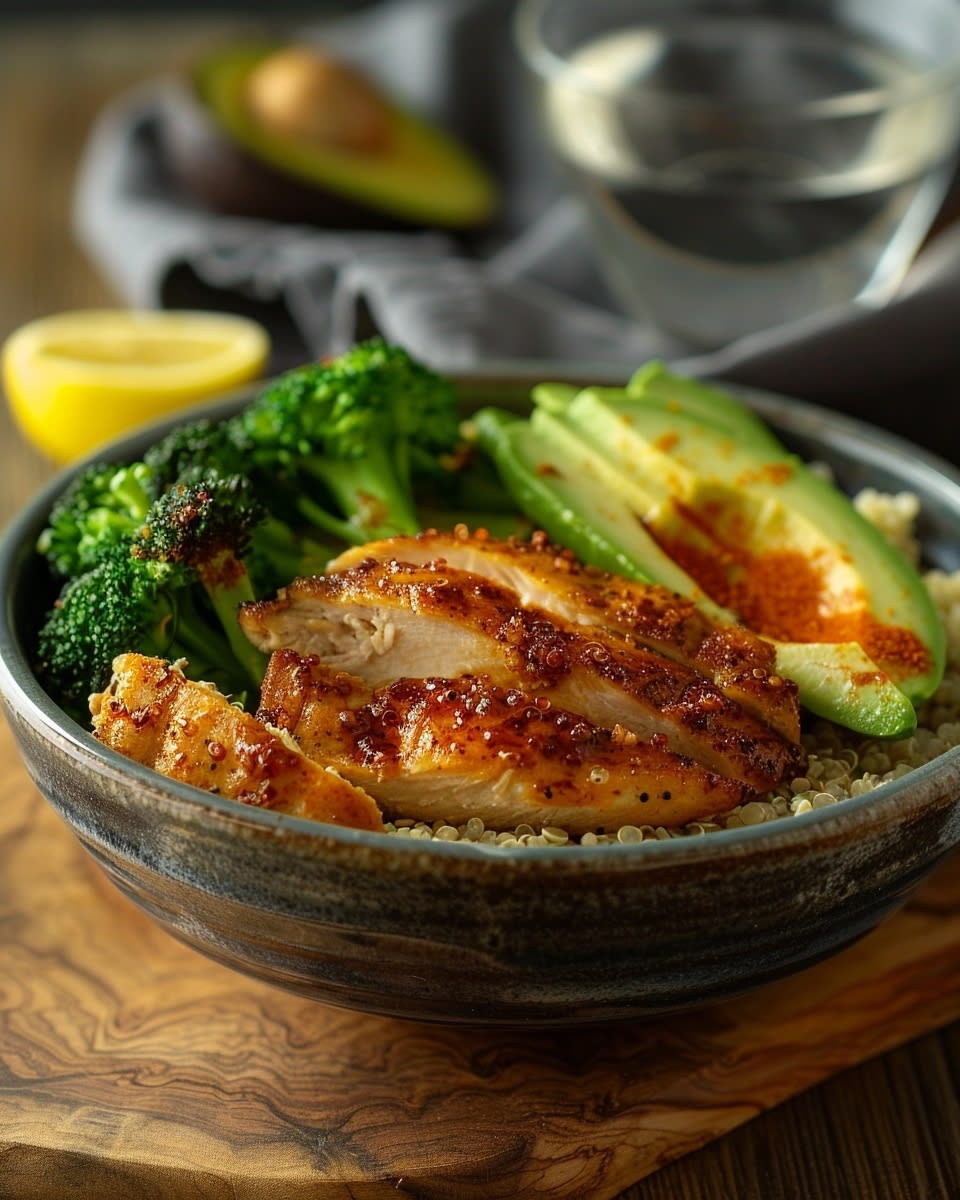
Step three: Assemble your bowl. I start with a base of quinoa (about one cup per bowl), then add the sliced chicken on top. Arrange your cherry tomatoes, greens, and avocado slices around the edges. Squeeze fresh lime juice over everything and add a pinch of salt.
The whole process takes about 30 minutes if you’re doing everything at once. It’s an easy to make meal that looks impressive but requires minimal skill.
Now let’s talk about variations because eating the same thing gets boring fast. If you follow a gluten-free diet, you’re already good—quinoa and chicken are naturally gluten-free. Just make sure your spice blends don’t contain any hidden gluten or wheat fillers.
For my dairy-free friends, skip the feta cheese I sometimes add. You won’t miss it if you add extra avocado or a drizzle of tahini sauce instead. Speaking of sauces, a simple tahini-lemon dressing (tahini, lemon juice, water, garlic, salt) transforms this bowl into something restaurant-worthy.
If you’re not a fan of chicken, swap it for another protein. Grilled salmon works beautifully and adds omega-3 fatty acids. Turkey breast is another lean option. I’ve even used shredded rotisserie chicken when I’m short on time. For plant-based eaters, try baked tofu or tempeh. Season and cook them the same way you would the chicken. You might want to check out this garlic butter steak recipe if you want to switch up your protein game with beef instead.
Don’t like quinoa? Brown rice, farro, or even cauliflower rice work as substitutions. Keep in mind that the protein content will change if you use something other than quinoa. Brown rice has less protein but more carbs. Cauliflower rice has fewer calories and carbs but almost no protein.
Vegetable variations are endless. Roasted sweet potato cubes add sweetness and extra carbohydrates for post-workout recovery. Roasted bell peppers, cucumber, shredded carrots, or steamed broccoli all work. I change mine based on what’s in season or what needs to be used up in my fridge.
By the way, this is perfect for meal prep. I make a big batch on Sunday and portion it into containers. The quinoa and chicken stay fresh in the fridge for four days. I keep the avocado and greens separate and add them fresh when I’m ready to eat. If you’re into meal prep, you might also enjoy this simple monkey bread for weekend breakfast prep.
For those asking if you can make this dish with dietary restrictions—absolutely. The base recipe is already gluten-free and dairy-free if you skip the cheese. It’s naturally nut-free too. For low-carb or keto diets, reduce the quinoa portion and add more non-starchy vegetables and healthy fats. If you need more calories for bulking, add a second chicken breast and drizzle with olive oil or add nuts and seeds.
The flexibility of this bowl is what makes it sustainable. You’re not locked into one flavor profile or one set of ingredients. Once you master the basic technique, you can customize it forever. Sometimes I go Mediterranean with olives, cucumber, and lemon. Other times I go Southwest with black beans, corn, salsa, and cilantro. Your quick meal doesn’t have to be boring just because it’s healthy.
If you’re looking for other quick meal ideas that satisfy without much effort, you might like these no-bake cookie dough bites for a protein-packed snack, or these fruit-filled crumble bars for a healthier dessert option that still feels indulgent.


Pairing Your Bowl with Perfect Sides and Flavors
Here’s where things get really fun. A high protein chicken and quinoa bowl is amazing on its own, but the right side dishes can take it from good to incredible. I’ve spent months experimenting with different combinations, and I’m going to share what actually works.
The truth is, this bowl is already pretty complete. You’ve got protein, carbs, fiber, and healthy fats all in one dish. But sometimes you want a little something extra on the side. Maybe you’re feeding a crowd and need to stretch the meal. Or maybe you just want more variety on your plate.
Let me walk you through my favorite pairings. I like to think about texture and temperature contrast. Since your bowl is warm and has varied textures from the quinoa and chicken, adding something cool and crunchy works perfectly. A simple cucumber salad with red onion, vinegar, and a touch of honey balances everything beautifully. The acidity cuts through the richness of the chicken and avocado.
Roasted vegetables are another winner. I throw whatever I have in the oven with olive oil, salt, and pepper. Brussels sprouts get crispy and caramelized. Carrots become sweet. Even cauliflower transforms into something special when you roast it at high heat. The key is to roast at 425 degrees for 25 to 30 minutes, stirring halfway through.
By the way, if you’re looking for something with more substance, a simple soup makes an excellent companion. I’m talking about broth-based soups, not heavy cream soups. A vegetable soup or even a basic chicken broth with vegetables adds warmth without weighing you down. Last winter, I paired my bowl with homemade vegetable soup and it was perfect for those cold evenings.
Here are my go-to side dishes that complement this bowl without repeating flavors:
- Mixed green salad: Keep it simple with olive oil and lemon juice
- Roasted chickpeas: These add extra protein and a satisfying crunch
- Pickled vegetables: The tanginess cuts through the richness perfectly
- Fresh fruit: Watermelon or berries provide a sweet contrast
- Whole grain crackers: Great for scooping up any leftover quinoa
Now let’s talk about complementary flavors that can transform your bowl depending on your mood. I’m a huge fan of adding different sauces or dressings that change the entire flavor profile without requiring new ingredients. A drizzle of balsamic glaze makes it feel Italian. Sriracha mixed with a bit of Greek yogurt gives you a spicy-creamy situation that’s addictive. Cilantro-lime dressing brings fresh, bright notes that wake up your taste buds.
Funny enough, I discovered that adding pickled red onions on top was a game changer. They’re stupidly easy to make. Just slice a red onion thinly, put it in a jar, cover with equal parts water and vinegar, add a pinch of salt and sugar, and let it sit for at least 30 minutes. These keep in the fridge for weeks and add this tangy crunch that makes every bite more interesting.
Fresh herbs deserve their own mention here. Chopped cilantro, parsley, basil, or mint can completely change the vibe of your bowl. I keep a few herbs growing on my windowsill because they’re so easy to maintain and they make everything taste fresher. A handful of torn basil leaves makes the bowl feel summery. Mint paired with cucumber and tomatoes gives you Mediterranean vibes.
For those who like a bit of heat, try adding jalapeño slices, red pepper flakes, or a spoonful of harissa paste. I wasn’t a spicy food person until I started adding just a little kick to my meals. It actually enhances the other flavors rather than overwhelming them.
Making This Bowl Work for Every Meal
The versatility of this dish is honestly what makes it stick around in my kitchen. I’ve eaten this bowl for lunch, dinner, and even breakfast when I was really dedicated to my fitness goals. Each meal situation calls for slightly different approaches.
For lunch, I keep things lighter. I use about three quarters of a cup of quinoa and four ounces of chicken. This gives me enough energy to power through my afternoon without making me sluggish. I pack it in a container with the dressing on the side so nothing gets soggy. The key to successful lunch meal prep is keeping wet and dry ingredients separate until you’re ready to eat.
At dinner, I go bigger. A full cup of quinoa and six to eight ounces of chicken feels satisfying after a long day. This is when I add more toppings and really make it feel like a complete meal. Sometimes I’ll add a side of roasted vegetables or that soup I mentioned earlier. Dinner is also when I experiment with different flavor combinations because I have more time to enjoy the meal.
Here’s the thing about meal prep with this bowl—it’s basically built for it. I prep on Sunday afternoons and set myself up for the entire week. The strategy that works best is cooking everything separately and assembling when you’re ready to eat. Cook a big batch of quinoa and store it in an airtight container. Grill or bake several chicken breasts at once. Prep your vegetables by washing and chopping them.
I divide everything into individual containers. Each container gets quinoa on the bottom, chicken sliced and placed on top, and a handful of cherry tomatoes. I keep avocado, greens, and any dressing separate. The morning I’m heading to work, I grab a container and add the fresh elements. This keeps everything tasty and prevents that sad, mushy meal prep situation nobody wants.
The flavorful aspect of meal prep is crucial. Nobody wants to eat bland food all week, even if it’s healthy. That’s why I prep multiple sauce options. One jar of tahini dressing, one container of chimichurri, and one batch of simple vinaigrette. This way I can have the same base but different flavors throughout the week. Monday might be Mediterranean. Wednesday goes Southwest. Friday gets Asian-inspired with a sesame-ginger dressing.
If you’re exploring more options for maintaining variety in your meal planning, I’ve found that having a collection of reliable healthy recipes in your rotation prevents burnout and keeps your nutrition goals on track throughout busy weeks.
One trick I learned from my gym buddy—freeze individual portions of cooked quinoa. Hear me out on this. You can scoop quinoa into muffin tins, freeze them, then pop them out into a freezer bag. When you need quinoa, just microwave a couple of these pucks for two minutes. It’s already portioned and ready to go. This saved my life during a particularly crazy work month when I barely had time to breathe, let alone cook.
The chicken freezes well too. I sometimes cook extra chicken breasts, slice them, and freeze them in individual portions. Thaw overnight in the fridge and you’ve got protein ready for assembly. Just reheat gently to avoid drying it out.
Temperature matters more than people think. I prefer my quinoa and chicken warm but my vegetables cold or room temperature. This creates an interesting contrast that makes the bowl more enjoyable. Cold quinoa isn’t bad though. I’ve eaten this bowl cold straight from the fridge on hot summer days, and it was refreshing. The flavors actually become more pronounced when the bowl is cold.
Let’s talk about portion control for different goals. If you’re trying to lose weight, stick to smaller portions of quinoa and add more vegetables. Your bowl should be about 400 to 500 calories. For maintenance, aim for 500 to 650 calories by adjusting your quinoa and chicken amounts. If you’re building muscle or need more calories, load up. Eight ounces of chicken, one and a half cups of quinoa, extra avocado, and some nuts or seeds will push you into the 700 to 800 calorie range.
Understanding food-based nutrition helps you make smarter choices about portion sizes and ingredient quality, especially when you’re planning meals for specific fitness or health goals.
The beauty of this bowl for meal prep is that it scales easily. Making two servings takes almost the same effort as making six. The cook time doesn’t really change. You’re just using a bigger pot and pan. I usually make at least four servings at once because future me always thanks past me for the extra food.
One more thing about versatility—this bowl travels well. I’ve packed it for picnics, taken it to potlucks, and brought it to work countless times. It doesn’t need to be piping hot to taste good. Room temperature works fine. Just make sure you keep it properly chilled if you’re not eating it within a couple hours of assembling it.
For breakfast, and yeah I know this sounds weird, try adding a fried egg on top of your chicken and quinoa bowl. The runny yolk acts as a sauce and adds extra protein. I started doing this on heavy training days when I needed serious fuel. It’s surprisingly delicious and keeps you full until lunch without any problem.
No matter when you eat this bowl, the combination stays tasty and satisfying. That’s what keeps me coming back to it week after week. It’s not a diet food that I force myself to eat. It’s genuinely enjoyable food that happens to be incredibly good for my body.
If you’re just starting your journey toward better nutrition, don’t feel like you need to nail everything perfectly right away. Start with the basic recipe, get comfortable with it, then branch out with different flavors and combinations. That’s exactly how I approached it, and now making these bowls feels as natural as making toast. Your future self will thank you for building these skills and establishing this habit. Give it a try this week and see how it fits into your routine—I think you’ll be surprised at how quickly this becomes one of your favorite go-to meals.
Frequently Asked Questions
What are the health benefits of a high protein diet?
A high protein diet supports muscle growth and repair, which is essential whether you’re working out or just maintaining your body as you age. Protein increases satiety, meaning you feel fuller longer and are less likely to snack on junk food between meals. It also has a higher thermic effect than carbs or fats, so your body burns more calories just digesting it. Beyond muscles, protein supports healthy hair, skin, nails, and immune function. I noticed better recovery after workouts and more stable energy throughout the day once I prioritized protein in my meals.
What are the key nutrients in quinoa?
Quinoa is one of the few plant foods that contains all nine essential amino acids, making it a complete protein source. It’s rich in manganese, magnesium, phosphorus, and folate, which support bone health, energy production, and cell function. The fiber content aids digestion and helps regulate blood sugar levels. Quinoa also provides iron, though it’s non-heme iron which is better absorbed when eaten with vitamin C sources like tomatoes or citrus. The antioxidants in quinoa, particularly quercetin and kaempferol, have anti-inflammatory properties that benefit overall health.
How does chicken contribute to a high protein diet?
Chicken breast is one of the leanest protein sources available, delivering about 26 grams of protein per four-ounce serving with minimal fat. It’s incredibly versatile and takes on whatever flavors you season it with, making it easy to incorporate into various meals. Chicken provides B vitamins, particularly niacin and B6, which help convert food into usable energy. The selenium content supports thyroid function and immune health. Because it’s so lean, chicken allows you to meet your protein goals without consuming excess calories or saturated fat, which is helpful for both weight loss and muscle building.
Can I make this dish if I have dietary restrictions?
Absolutely, this bowl is naturally gluten-free and can easily accommodate most dietary restrictions. For dairy-free diets, simply skip any cheese toppings and stick with the base ingredients. Vegetarians can swap the chicken for chickpeas, tofu, or tempeh while keeping the rest of the recipe the same. If you’re following a low-carb or keto diet, reduce the quinoa portion and increase the non-starchy vegetables and healthy fats. For those with nut allergies, the basic recipe doesn’t include nuts anyway, though you should check any packaged seasonings for allergen warnings. The flexibility of this dish makes it accessible to almost everyone.
What are some good side dishes to serve with a high protein chicken and quinoa bowl?
The bowl is quite complete on its own, but complementary sides can enhance the meal experience. A simple cucumber salad with vinegar dressing adds refreshing crunch and acidity. Roasted vegetables like Brussels sprouts, carrots, or cauliflower provide additional nutrients and fiber. A light broth-based soup works well for cooler weather without adding too many calories. Fresh fruit like watermelon or berries offers a sweet contrast to the savory bowl. For gatherings, hummus with vegetable sticks or whole grain crackers makes a great addition that guests can enjoy while the main dish is being served.
Why should I add this dish to my regular meal plan?
This bowl checks all the boxes for sustainable healthy eating—it’s nutritious, satisfying, affordable, and doesn’t require advanced cooking skills. The high protein content supports your fitness goals whether you’re building muscle, losing weight, or maintaining your current physique. It’s incredibly versatile, so you won’t get bored eating it regularly since you can change the flavors and toppings endlessly. The meal prep friendliness saves time during busy weeks when you might otherwise resort to less healthy options. Most importantly, it actually tastes good, which means you’ll stick with it long-term rather than abandoning it after a few weeks like most restrictive diet foods.
How long does the chicken and quinoa bowl stay fresh in the refrigerator?
Cooked chicken and quinoa stored properly in airtight containers will stay fresh for up to four days in the refrigerator. Keep the components separated from fresh ingredients like avocado and greens to maintain the best texture and flavor. Make sure your fridge is set below 40 degrees Fahrenheit to prevent bacterial growth. If you notice any off smells or slimy texture, discard the food immediately. For longer storage, you can freeze cooked chicken and quinoa separately for up to three months, though the texture of quinoa may change slightly after freezing. I typically make enough for three to four days and prepare a fresh batch mid-week to ensure optimal freshness.
Can I use a different grain instead of quinoa?
Yes, you can substitute quinoa with various other grains depending on your nutritional goals and taste preferences. Brown rice is a popular option that provides complex carbohydrates and fiber, though it has less protein than quinoa. Farro offers a nutty flavor and chewy texture with good protein content. Bulgur wheat cooks quickly and provides fiber, but it’s not gluten-free. Wild rice adds a distinctive flavor and more protein than regular rice. For lower carb options, try cauliflower rice or riced broccoli. Keep in mind that changing the grain will alter the nutritional profile, particularly the protein content, so adjust your portions accordingly to meet your goals.
What’s the best way to reheat the bowl without drying out the chicken?
The key to reheating chicken without drying it out is using lower heat and adding a bit of moisture. In the microwave, I add a tablespoon of water or broth to the container, cover it loosely, and heat in 30-second intervals, stirring between each interval. This usually takes about one and a half to two minutes total. On the stovetop, add your chicken and quinoa to a pan with a splash of broth or water, cover with a lid, and heat over medium-low heat, stirring occasionally. Avoid using high heat, which causes the chicken to become tough and rubbery. If you meal prepped with components separated, you can reheat just the quinoa and chicken while adding fresh cold toppings for better texture contrast.
How can I make this bowl more budget-friendly?
There are several strategies to reduce costs without sacrificing nutrition or taste. Buy chicken in bulk when it’s on sale and freeze individual portions for later use. Purchase quinoa from bulk bins at grocery stores rather than pre-packaged boxes, which often cost twice as much. Use frozen vegetables instead of fresh—they’re just as nutritious and often cheaper, especially when certain items aren’t in season. Skip expensive toppings like avocado or use them sparingly, adding more affordable vegetables like shredded carrots or cabbage for volume. Consider using chicken thighs instead of breasts; they’re usually cheaper and actually more flavorful, though slightly higher in fat. Making your own dressings and sauces from basic ingredients costs pennies compared to store-bought versions.