
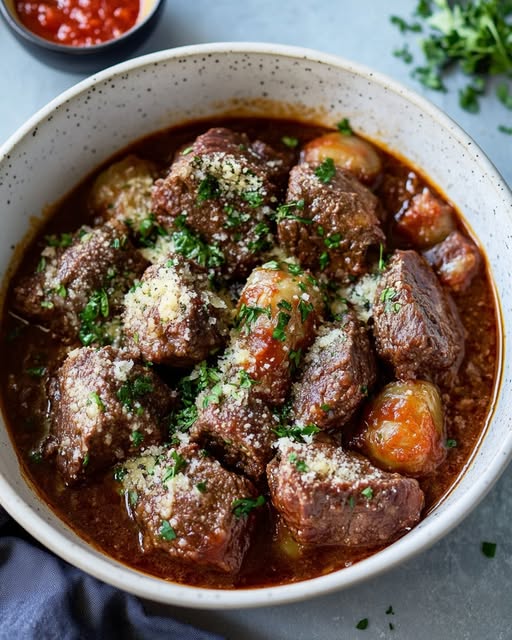
The Unexpected Dinner That Became a Family Favorite
You know that feeling when a recipe just feels like a hug? That’s Beef Braciole Rolls for me. I stumbled upon it years ago, trying to impress my then-boyfriend’s very Italian family. My hands were shaking as I rolled the filling, but the moment that incredible smell of garlic, tomatoes, and beef filled the kitchen, I knew I had something magical. Now, it’s my go-to ‘special occasion’ dish, and I’m thrilled to share every secret with you.
A Little Trip Through Braciole History
While you might know it from iconic movies, braciole (pronounced brah-JOLE) is a love letter from Southern Italy. It started as a thrifty way for home cooks to stretch tougher, less expensive cuts of beef. By pounding it thin, stuffing it with flavorful bits from the pantry, and simmering it low and slow in tomato sauce, they created a masterpiece. Traditionally, every nonna has her version. My recipe is a slightly simplified take on a classic, using everyday ingredients to create that same soul-warming result. It’s the taste of tradition, made achievable for your busy modern kitchen.
Why This Braciole Recipe Will Steal Your Heart
Let’s be honest, some recipes look intimidating. But trust me, this one is all about simple steps leading to a spectacular payoff. You’ll love it because it’s bursting with flavor from the garlic, herbs, and prosciutto. It’s also incredibly versatile—serve it over pasta, creamy polenta, or mashed potatoes. Best of all, it makes you look like a total culinary rockstar with minimal fuss. The long, slow cook means you can relax while your kitchen smells like a dream.
When Should You Make Beef Braciole Rolls?
This dish is perfect for moments that call for a little extra love. Think Sunday family dinners, holiday gatherings (it’s a fantastic Christmas Eve dish!), or when you want to celebrate a promotion or birthday at home. It’s also a wonderful make-ahead meal. Prep everything in the morning, then let it simmer away while you enjoy your guests. Seeing everyone’s eyes light up when you bring that pot to the table? Priceless.
Gathering Your Ingredients
Here’s your shopping list for these beautiful beef rolls. Quality matters, so get the best you can!
- 6 thin slices of top round beef (about 900g), sliced ⅛ to ¼ inch thick.
- 12 garlic cloves: 4 minced, 8 sliced.
- ¾ cup flat-leaf Italian parsley, chopped, plus more for garnish.
- 1 cup grated Parmesan or Romano cheese, plus extra for serving.
- 2 tbsp seasoned dry breadcrumbs.
- Salt and freshly ground black pepper to taste.
- 12 thin slices of prosciutto.
- 2 tbsp olive oil.
- 2 cups beef broth.
- 1 can (800g) crushed tomatoes, preferably Italian.
- 2 tsp dried Italian seasoning.
- 2 tbsp all-purpose flour.
- A pinch of sugar, if needed.
No Worries! Easy Ingredient Substitutions
Don’t panic if you’re missing something. Cooking is about adapting!
- Beef: Can’t find pre-sliced top round? Ask your butcher to slice it for you. Flank steak, pounded thin, also works beautifully.
- Prosciutto: Thinly sliced pancetta or even good-quality ham can stand in.
- Cheese: Pecorino Romano adds a sharper bite, while Asiago is milder.
- Wine: The recipe suggests red wine, but you can use extra beef broth with a teaspoon of balsamic vinegar for depth without the alcohol.
- Breadcrumbs: Panko breadcrumbs, finely crushed, will do the trick.
Crafting Your Perfect Braciole: A Step-by-Step Journey
Step 1: Preheat and Prep Your Beef
First, get your oven warming to a cozy 325°F (160°C). Now, let’s tackle the beef. Lay your slices on a cutting board. If they’re very large, cut each in half to make 12 pieces. Place a piece of plastic wrap over them. Now, the fun part: grab a rolling pin or even a heavy pan and gently pound them until they’re an even ⅛ to ¼ inch thick. Don’t be aggressive; you’re tenderizing, not pulverizing! This step ensures they roll nicely and cook evenly.
Pro tip: If the plastic wrap slides, sprinkle a few drops of water on the board first. The wrap will stick beautifully.
Step 2: Make That Irresistible Filling
In a medium bowl, combine your 4 minced garlic cloves, the chopped parsley, grated cheese, breadcrumbs, a good pinch of salt, and plenty of black pepper. Mix it all together with a fork. The smell alone is incredible—garlicky, cheesy, and herby. The breadcrumbs and cheese will bind everything into a crumbly paste that will melt gloriously inside the beef.
Step 3: Roll, Baby, Roll!
Lay your pounded beef slices flat. On each one, place a slice of that salty, delicate prosciutto. Now, take about 2-3 tablespoons of your filling and spread it evenly over the prosciutto, leaving a small border at the edges. Starting from one short end, roll the beef up tightly, tucking in the sides as you go to create a neat little packet. Secure the seam with 2-3 toothpicks. Repeat until you have a lovely army of 12 rolls ready for browning.
Chef’s tip: Don’t overstuff! Too much filling will make them burst open during cooking. A thin, even layer is key.
Step 4: Sear for Flavor
Heat the olive oil in a large Dutch oven or oven-safe pot over medium-high heat. Working in two batches of six, add your rolls. Listen for that satisfying sizzle. Brown them on all sides until they develop a gorgeous, deep golden crust. This isn’t just for looks; it builds a foundation of incredible flavor for the sauce. As they finish, set them aside on a plate.
Step 5: Build Your Luxurious Sauce
In the same pot, with all those delicious brown bits, add ½ cup of dry red wine (or the broth/vinegar alternative). Let it bubble and boil for 2-3 minutes. Use a wooden spoon to scrape up any browned bits from the bottom of the pot. This is called deglazing, and it’s where the sauce gets its soul. Then, pour in the beef broth, crushed tomatoes, the 8 sliced garlic cloves, and the Italian seasoning. Give it a good stir.
Step 6: The Slow Simmer Magic
Nestle all your browned braciole rolls back into the sauce. Bring the whole pot to a gentle boil. Now, cover it with a damp piece of parchment paper (this helps keep moisture in without making the top rolls soggy), then put the lid on. Carefully transfer it to your preheated oven. Let it braise for 1.5 to 2 hours. Halfway through, gently turn the rolls over so they cook evenly in that amazing sauce.
Step 7: Finish and Thicken
Carefully remove the pot from the oven. Use tongs to transfer the rolls to a platter and cover them with foil to keep warm. Now, let’s perfect that sauce. In a small bowl, whisk the 2 tablespoons of flour with a few spoonfuls of the hot cooking liquid until smooth. Slowly whisk this mixture back into the simmering sauce. Let it cook for another 5-10 minutes until the sauce thickens to a lovely, gravy-like consistency.
Step 8: The Grand Finale
Taste your sauce! This is the moment. Season with more salt and pepper if needed. If the tomatoes are a bit tart, a tiny pinch of sugar will balance it perfectly. Pour the magnificent sauce over your braciole rolls. Garnish with a fresh sprinkle of parsley and more grated cheese. Serve immediately over your favorite base and watch the happy faces around your table.
Your Braciole Timeline
Good things take time, and this dish is proof!
- Prep Time: 30 minutes
- Cooking Time: 2 hours (mostly hands-off)
- Resting Time: 10 minutes
- Total Time: About 2 hours 40 minutes
My Secret Chef’s Trick
The damp parchment paper under the lid is my non-negotiable secret. A regular lid traps condensation that drips back onto the food, sometimes making the top layer watery. The parchment creates a perfect moist seal, letting everything braise evenly without getting soggy. It’s a tiny step with a huge impact!
A Fun Beef Braciole Fact
In some parts of Italy, braciole are called “involtini.” The name comes from the Italian word “involtare,” which means “to wrap up” or “to roll.” So, you’re not just making dinner; you’re making little edible presents!
Tools You’ll Need
- A large, heavy Dutch oven or oven-safe pot with a lid.
- Cutting board and sharp knife.
- Rolling pin or heavy pan for pounding.
- Plastic wrap.
- Toothpicks or kitchen twine.
- Tongs and a wooden spoon.
- Measuring cups and spoons.
Storing Your Delicious Creation
Let the braciole and sauce cool completely before storing. I recommend storing them together in the sauce to keep the meat juicy. Transfer everything to an airtight container.
In the refrigerator, they will keep beautifully for 3 to 4 days. The flavors actually deepen and improve overnight, making fantastic leftovers.
For freezing, place the cooled braciole and sauce in a freezer-safe container or heavy-duty zip-top bag. They can be frozen for up to 2 months. Thaw overnight in the fridge before reheating gently on the stovetop.
My Best Tips for Braciole Success
- Ask your butcher to slice and pound the beef for you. It saves time and ensures even thickness.
- Don’t skip the browning step! It creates flavor you can’t get any other way.
- Use good-quality canned tomatoes. They make a noticeable difference in the sauce.
- If using a slow cooker, brown the rolls first on the stovetop for best results, then cook on low for 7-8 hours.
Making It Look as Good as It Tastes
- Serve the rolls sliced on a bias over a bed of pappardelle pasta, with sauce spooned over the top and a fresh herb garnish.
- For a rustic family-style meal, place the whole pot right in the center of the table with a big serving spoon.
- Accompany with a simple green salad with a sharp vinaigrette to cut the richness.
- Grate extra Parmesan cheese over the top at the table for a beautiful, fresh finish.
Lighter & Different Takes on Braciole
Love the idea but want to mix it up? Try these delicious variations:
- Chicken Braciole: Use thinly pounded chicken breasts or thighs. Fill with a mixture of spinach, sun-dried tomatoes, and low-fat ricotta.
- Turkey and Pork Blend: Substitute the beef with a mix of ground turkey and pork for a different texture. Form into meatballs with the classic filling inside.
- Vegetarian “Braciole”: Use large, sturdy Swiss chard or collard green leaves, blanched. Fill with a mixture of herbed breadcrumbs, pine nuts, and chopped mushrooms.
- Lighter Sauce: Skip the flour thickener at the end. Instead, puree half the sauce with an immersion blender for a thicker, but flour-free, consistency.
- Spicy Kick: Add a pinch of red pepper flakes to the filling and a chopped fresh chili to the sauce.
- Mediterranean Twist: Replace the Italian seasoning with oregano and mint. Use feta cheese in the filling and add a splash of lemon juice to the sauce.
Common Mistakes to Avoid
Mistake 1: Pounding the Beef Too Thick or Thin
This is a common starting point. If the beef is too thick, it won’t roll easily and will take forever to become tender. If it’s pounded paper-thin, it can tear during rolling and overcook quickly. Aim for that sweet spot of ⅛ to ¼ inch. Using plastic wrap and a steady, firm hand with the rolling pin is key. If a piece does tear a little, don’t worry—just overlap it slightly when rolling.
Mistake 2: Overstuffing the Rolls
It’s tempting to pack in as much of that delicious garlic-parsley filling as possible. Resist! Overstuffing makes the rolls hard to secure and almost guarantees they will burst open while cooking, letting all the flavor escape into the sauce. Use a modest 2-3 tablespoons, spread in a thin layer. Remember, the flavors will meld and expand as they cook.
Mistake 3: Skipping the Browning Step
Browning seems like an extra dish-washing step, but it’s essential. This Maillard reaction creates hundreds of new flavor compounds. It gives the braciole a beautiful crust and leaves those tasty brown bits in the pot that form the base of your sauce. If you just add raw rolls to the sauce, you’ll miss that deep, rich, caramelized flavor.
Mistake 4: Cooking on Too High Heat
Braciole is not a fast food. After browning, the cooking must be low and slow. A rapid boil will make the beef tough and chewy, not fall-apart tender. Whether in the oven or on the stovetop, maintain a gentle simmer. You should see just a few small bubbles breaking the surface. Patience is rewarded with meltingly soft meat.
Mistake 5: Not Tasting the Sauce at the End
After hours of cooking, your sauce has transformed. Never serve it without a final taste test. The flavors concentrate, and it often needs a final pinch of salt or pepper. The pinch of sugar is not always needed, but it can balance any sharp acidity from the tomatoes perfectly. Seasoning at the end ensures your dish sings.
Your Braciole Questions, Answered
Can I make beef braciole ahead of time?
Absolutely! This dish is a make-ahead dream. You have two great options. First, you can assemble the rolls (without browning) up to a day in advance. Store them covered in the fridge, then proceed with browning and cooking when you’re ready. Second, you can cook the entire dish completely, let it cool, and store it in the fridge for 3-4 days. The flavors get even better. Reheat gently on the stovetop with a splash of broth or water.
What’s the best cut of beef for braciole?
Top round steak is the classic and most accessible choice. It’s lean, affordable, and easy for butchers to slice thin. Flank steak is another excellent option, though it has a more pronounced grain. You can also use sirloin tip or even thin-sliced chuck steak. The key is a cut that benefits from long, slow, moist cooking to become tender. Always ask your butcher to slice it for you if you’re unsure.
Do I have to use wine in the sauce?
No, you don’t. While red wine adds a wonderful depth and complexity, you can easily make a non-alcoholic version. Simply replace the wine with an equal amount of beef broth and add a teaspoon of good balsamic vinegar. The vinegar mimics the acidity and tang that the wine provides. The result will still be deeply flavorful and family-friendly.
Can I cook braciole in a slow cooker?
Yes, a slow cooker works beautifully for this recipe and is perfect for busy days. The crucial step is to still brown the beef rolls on the stovetop first for maximum flavor. Then, transfer them to your slow cooker. Deglaze the browning pot with the wine or broth to get all the tasty bits, and pour that liquid over the rolls along with the other sauce ingredients. Cook on LOW for 7-8 hours or on HIGH for 3-4 hours.
My sauce is too thin. How can I thicken it?
Don’t worry, this is an easy fix. The recipe already includes a method using a flour slurry. If you missed that step or need it thicker, mix 1 tablespoon of cornstarch with 2 tablespoons of cold water in a small bowl until smooth. Bring your sauce to a simmer on the stovetop and whisk in the cornstarch mixture. Let it cook for 2-3 minutes until thickened. You can also simply simmer the sauce uncovered for longer to reduce and concentrate it.
What can I serve with braciole?
Braciole is incredibly versatile. The most classic pairing is with a broad pasta like pappardelle, tagliatelle, or rigatoni to catch the chunky sauce. Creamy polenta or soft mashed potatoes are also heavenly bases. For a lighter meal, serve it with a side of crusty bread for mopping up the sauce and a simple arugula salad. It’s a complete, satisfying meal on its own.
How do I know when the braciole are done cooking?
The braciole are done when the beef is incredibly tender and you can easily pull a toothpick out without resistance. After about 1.5 hours in the oven, take one roll out and try to cut it with a fork. It should yield easily and almost fall apart. If there’s any chewiness, give it another 15-30 minutes. The long, moist cooking time ensures tenderness.
Can I use something other than toothpicks to secure them?
Yes, if you’re out of toothpicks or prefer a different method, kitchen twine works wonderfully. Simply tie a piece of string around the middle of each roll. Just remember to remove the string before serving! Some people also use silicone food bands. The goal is just to keep the roll intact during the initial sear and braising process.
Can I freeze cooked braciole?
You absolutely can, and it freezes very well. Let the cooked braciole and sauce cool completely. Portion them into airtight containers or heavy-duty freezer bags, making sure the rolls are covered by sauce. They will keep for up to 2 months. Thaw overnight in the refrigerator and reheat gently in a saucepan on the stovetop, adding a little broth or water if the sauce seems too thick.
Is there a way to make this recipe healthier?
There are several easy tweaks. You can use a leaner cut of beef like top round. Reduce the amount of cheese in the filling by a quarter, or use a strong-flavored cheese like Pecorino so you need less. Use low-sodium beef broth and no-salt-added crushed tomatoes to control the salt. Skip the flour slurry at the end and let the sauce reduce naturally for a thicker consistency, or blend half of it for creaminess without added fat.
The Dish That Brings Everyone to the Table
There you have it—my heart and soul on a plate. These Beef Braciole Rolls are more than just a recipe; they’re an experience. They fill your home with an aroma that promises a wonderful meal and gather everyone around the table with anticipation. Don’t be intimidated by the steps. Take your time, enjoy the process, and get ready for the compliments. I can’t wait for you to make this memory in your own kitchen. Now, go roll up some love!
Beef Braciole Rolls
Ingredients
Equipment
Method
- Preheat the oven to 325°F (160°C) and prepare the beef slices.
- Pound the beef to an even ⅛ to ¼ inch thickness using a rolling pin or heavy pan.
- In a medium bowl, combine minced garlic, chopped parsley, grated cheese, breadcrumbs, salt, and pepper to make the filling.
- Lay pounded beef slices flat; place prosciutto on each, then spread filling, leaving borders.
- Roll beef slices tightly, tucking the sides, and secure them with toothpicks.
- Heat olive oil in a large Dutch oven and brown rolls on all sides in batches.
- Deglaze the pot with red wine (or broth/vinegar alternative), scrape up brown bits.
- Add beef broth, crushed tomatoes, sliced garlic, and Italian seasoning; stir.
- Return rolls to pot, cover with parchment paper and lid, and braise in the oven for 1.5 to 2 hours.
- Transfer rolls to a platter and cover to keep warm; thicken sauce with a flour slurry.
- Season sauce to taste and serve over braciole rolls, garnished with parsley and cheese.
Nutrition
Notes
Feel free to adjust the type of beef or cheese according to availability or preference.
Leftovers taste even better the next day; store in the fridge for up to 4 days or freeze for up to 2 months.
Using a damp parchment paper under the lid helps keep the braciole moist and tender during cooking.
Serve with pasta, creamy polenta, or mashed potatoes to complement the rich sauce.