
Introduction
The first time I made Christmas eggnog from scratch, I burned the custard. The kitchen smelled like scorched vanilla and disappointment. My family still brings it up every year at our holiday gathering. But that disaster taught me something important: the best holiday traditions are worth the learning curve. Now, making eggnog marks the official start of my Christmas season, and I wouldn’t have it any other way.
Christmas eggnog has earned its place as a true holiday staple across the USA. You’ll find it at every party, every family dinner, and stocked on grocery store shelves from November through December. Some people wait all year for that first creamy, spiced sip. Others debate whether it tastes better with rum or bourbon. Either way, this rich drink brings people together during the most wonderful time of the year.
In this guide, I’ll walk you through everything you need to know about this festive beverage. You’ll learn how to make a classic eggnog recipe that actually works. I’ll share my favorite variations, from spiced versions to cooked options that eliminate any safety concerns. We’ll explore which spirits pair best with this creamy concoction. And I’ll answer the most common questions I get asked about eggnog every single holiday season.
What is Christmas Eggnog?
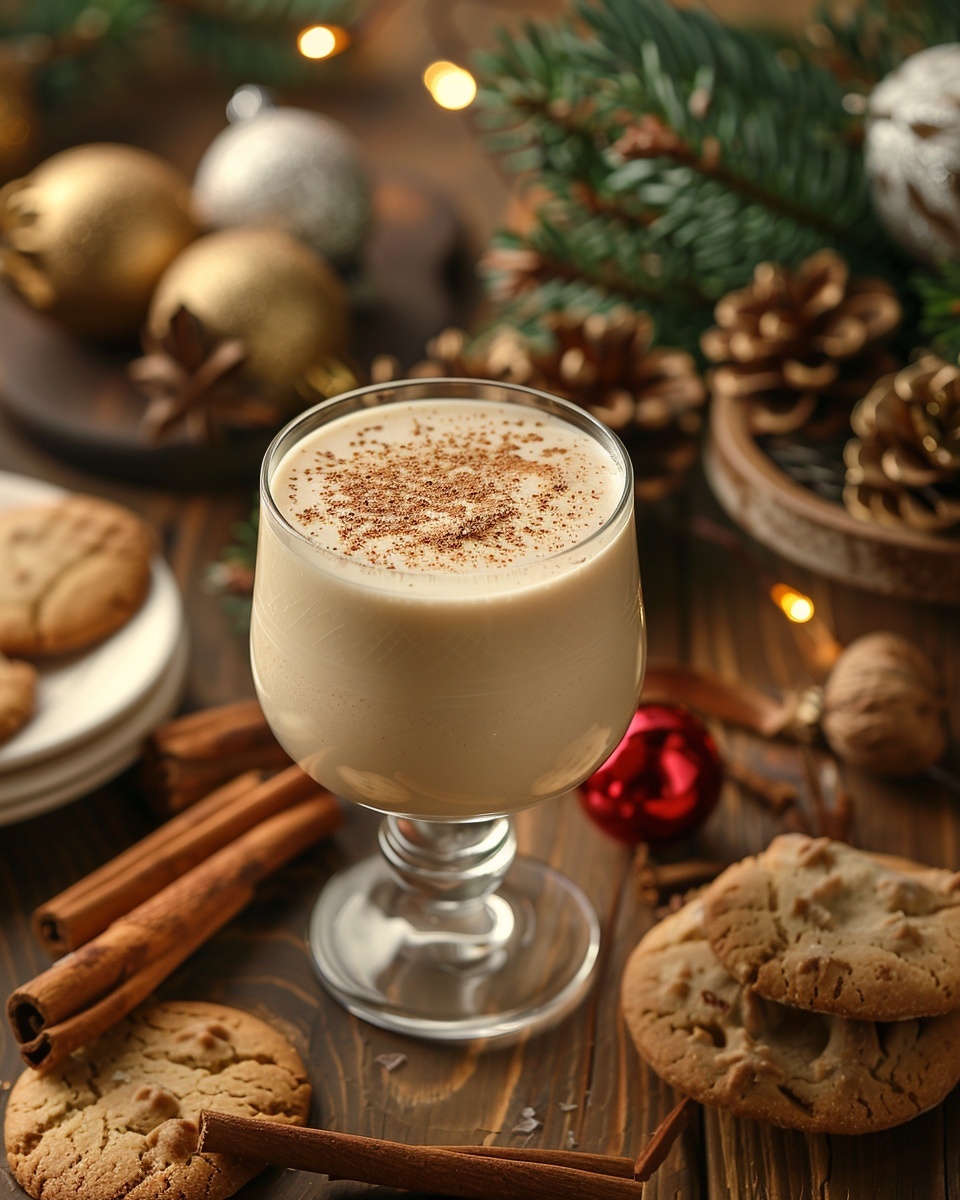
Christmas eggnog is a creamy, sweetened drink made from milk, cream, sugar, and eggs. The mixture gets flavored with nutmeg and vanilla, creating that signature taste we all associate with the holidays. Some recipes include cinnamon or other warm spices. The drink can be served cold or warm, with or without alcohol.
This beverage holds deep cultural significance during the holiday season. Families pass down their traditional eggnog recipe through generations. Some households serve it at Christmas Eve dinner. Others make big batches for New Year’s parties. The drink connects us to centuries of holiday celebrations and brings a sense of nostalgia that few other foods can match.
The origins of eggnog trace back to medieval Europe, where people drank a hot milk and egg punch. Early American colonists adapted the recipe using rum, which was more available than brandy. Over time, the drink evolved into what we now recognize as the Christmas classic. It became linked specifically to winter holidays because eggs and milk were more plentiful during colder months on traditional farms.
So what is a Christmas eggnog exactly? It’s more than just a drink. It’s a symbol of abundance, celebration, and togetherness. The rich ingredients represented prosperity in earlier times. Today, it represents tradition and the joy of gathering with loved ones. Whether your family has been making it for decades or you’re trying it for the first time, eggnog carries the spirit of the season in every glass.
The key ingredients work together to create that signature texture and flavor:
- Eggs: Provide richness and body, creating the custard-like base
- Milk and cream: Add smoothness and adjust the thickness to your preference
- Sugar: Balances the eggy flavor and adds sweetness
- Nutmeg: Gives that warm, spicy note that defines the taste
- Vanilla extract: Rounds out the flavors and adds depth
- Optional alcohol: Adds warmth and complexity to the finished drink
A Classic Christmas Eggnog Recipe
I’m sharing my go-to recipe that never fails. This easy eggnog recipe requires no cooking, making it perfect for beginners. You can whip it up in about 15 minutes, then let it chill while you decorate the tree or wrap presents. The taste beats any store-bought version by miles.
Ingredients:
- 6 large eggs
- 3/4 cup granulated sugar
- 2 cups whole milk
- 1 cup heavy cream
- 1 teaspoon vanilla extract
- 1/2 teaspoon ground nutmeg, plus extra for garnish
- 1/4 teaspoon salt
- Optional: 1/2 to 1 cup of your preferred spirit
Step-by-Step Instructions:
Step 1: Separate the egg whites from the yolks. Place the yolks in a large bowl and the whites in a separate clean bowl. You’ll use both, but they get mixed at different stages.
Step 2: Add the sugar to the egg yolks. Whisk vigorously for about 2 minutes until the mixture becomes pale yellow and slightly thick. This step is important because it dissolves the sugar and creates a smooth base.
Step 3: Pour in the milk, heavy cream, vanilla extract, nutmeg, and salt. Whisk everything together until well combined. The mixture should look uniform with no streaks of egg yolk visible.
Step 4: If you’re adding alcohol, stir it in now. This is when you personalize your batch with rum, bourbon, or brandy. Start with 1/2 cup if you’re unsure, then taste and add more if desired.
Step 5: Beat the egg whites until they form soft peaks. You can use a hand mixer or stand mixer for this step. The whites should look fluffy and hold their shape when you lift the beaters.
Step 6: Gently fold the beaten egg whites into the eggnog mixture. Use a spatula and work slowly to keep the airiness. This creates a lighter, fluffier texture that makes the drink special.
Step 7: Cover and refrigerate for at least 2 hours before serving. The flavors blend together during this time, and the drink gets properly cold. I often make mine the night before a party.
Step 8: Give the eggnog a good stir before serving, as some separation is natural. Pour into cups and sprinkle a little extra nutmeg on top for presentation.
This classic eggnog recipe serves about 6 to 8 people. You can easily double or triple it for larger gatherings. The recipe keeps in the refrigerator for up to 3 days, though it rarely lasts that long in my house.
Tips for Adjusting to Your Taste:
Want it sweeter? Add another 1/4 cup of sugar to the egg yolk mixture. Some people prefer a dessert-like sweetness, while others like it more subtle. Taste before adding the egg whites, and adjust as needed.
Looking for a thicker consistency? Increase the heavy cream to 1.5 cups and reduce the milk to 1.5 cups. This makes an ultra-rich version that coats your glass beautifully. It’s my preference for special occasions.
Prefer it thinner? Swap some of the heavy cream for additional milk. A ratio of 3 cups milk to 1/2 cup cream creates a lighter drink that’s easier to sip throughout an evening.
Want more spice? Add a pinch of cinnamon along with the nutmeg. You can also try a tiny bit of allspice or cloves. Just go easy on these stronger spices, as they can overpower the delicate egg and cream flavors.
This how to make eggnog method gives you complete control over every element. Once you master this basic version, you’ll feel confident experimenting with different flavors and styles. The beauty of homemade eggnog is making it exactly how you like it, not settling for what comes in a carton.


Variations to Try: From Spiced Eggnog to Cooked Eggnog
Once you’ve nailed the basic version, the real fun begins with experimenting. I discovered this after my third year of making eggnog when a friend challenged me to create something different. That’s when I started playing with spices and cooking methods, and honestly, it opened up a whole new world of holiday flavors.
Spiced Eggnog That Warms You From the Inside
The original recipe includes nutmeg, but spiced eggnog takes things several steps further. Think of it as the eggnog equivalent of upgrading from regular coffee to a fancy holiday latte. Last year, I made a batch with extra spices for our neighborhood cookie exchange, and people actually asked if I’d share the recipe before they even tried the cookies.
Cinnamon is your best friend here. Add half a teaspoon of ground cinnamon to your base recipe, and suddenly you’ve got something that tastes like Christmas morning smells. The warm, woody notes complement the creamy base without fighting for attention. I like to add a cinnamon stick to the serving pitcher too, partly for flavor and partly because it looks impressive.
Cloves need a gentler hand. Just a tiny pinch, maybe an eighth of a teaspoon, goes a long way. Too much and your eggnog tastes like you’re drinking a pomander ball. Not the vibe we’re going for. The trick is adding just enough that people notice something special without being able to pinpoint exactly what.
Here’s something I learned from my grandmother: toast your whole spices first. If you’re using whole nutmeg, cinnamon sticks, or cloves, give them a quick toast in a dry pan before grinding or steeping them in your milk. The heat releases oils that make the flavors way more complex. It’s a small step that makes a noticeable difference.
Some people add cardamom, which gives an almost chai-like quality to the drink. I tried this after visiting a friend who grew up in India, and the combination of cardamom with traditional eggnog flavors created something totally unexpected. Just two or three crushed cardamom pods steeped in the warm milk before mixing works perfectly. Much like the unexpected flavor combinations you find in Valentine’s chocolate fondue, sometimes the most interesting results come from breaking traditional boundaries.
Why Cooked Eggnog Might Be Your New Go-To
Let me be straight with you. Some folks get nervous about raw eggs, and that’s completely understandable. My sister wouldn’t touch my eggnog for years until I started making a cooked eggnog recipe specifically for her. Now she requests it every year, and she’s convinced it tastes better anyway.
The cooking process creates a proper custard base, which changes the texture completely. Instead of light and fluffy, you get something silkier and more luxurious. It coats your tongue differently. The flavor also deepens because the gentle heat brings out different notes in the eggs and dairy.
Making cooked eggnog isn’t complicated, but it requires patience. You combine the egg yolks with sugar and milk in a heavy-bottomed saucepan. Then comes the critical part: cooking over medium-low heat while stirring constantly. And I mean constantly. Walk away for even a minute and you risk scrambled eggs floating in sweetened milk.
You’re looking for the mixture to reach 160 degrees Fahrenheit, which is hot enough to kill any potential bacteria. It should coat the back of a spoon, and when you run your finger through it, the line should stay clean. This usually takes about 15 to 20 minutes of stirring. I listen to a podcast while I do it because staring at a pot gets boring fast.
Once cooked, you need to cool it down quickly. I pour mine into a clean bowl set over an ice bath. Stir it occasionally as it cools, then refrigerate for several hours. Right before serving, I whip the egg whites and cream separately, then fold them in just like the uncooked version. The result is safe, delicious, and impressive.
By the way, the cooked method also extends your eggnog’s shelf life slightly. While raw eggnog keeps for about three days, the cooked version lasts up to five days in the fridge. Perfect for making ahead before busy holiday schedules kick into high gear, similar to how I prep my holiday stuffing components in advance.
Traditional Meets Modern: Is Holiday Nog Different?
People ask me all the time: is there a difference between holiday nog and eggnog? Short answer? Not really. Holiday nog is basically a marketing term that some brands use to make their product sound more festive. It’s like how some coffee shops call medium “grande” to sound fancier.
That said, traditional eggnog recipe versions tend to be richer and boozier than what you find in stores labeled as holiday nog. The old-school recipes from the 1800s contained serious amounts of rum, brandy, or whiskey. We’re talking ratios that would make modern drinkers’ eyes water. Those traditional batches were meant to be served in small portions, more like a liqueur than a beverage you’d drink by the glassful.
Modern takes often lighten things up. You’ll see recipes using almond milk or coconut cream instead of dairy. Some versions skip the eggs entirely, using cornstarch or gelatin for thickness instead. I’ve even seen vegan eggnog made with cashews and aquafaba, and honestly, some of them taste pretty good.
The spice profiles have evolved too. While grandma’s recipe might have stuck strictly to nutmeg, today’s versions might include vanilla bean paste, orange zest, or even espresso powder. I experimented with adding a splash of maple syrup instead of all white sugar last year, and the subtle complexity it added made me a convert.
Pairing Alcohol with Your Christmas Eggnog
Now we’re getting to the good stuff. Adding eggnog alcohol transforms this drink from family-friendly to adults-only party starter. But not all spirits work equally well, and choosing the wrong one can throw off your entire batch.
Rum is the classic choice, and for good reason. Dark rum especially brings caramel and molasses notes that complement the creamy sweetness perfectly. I usually go with a mid-range dark rum, nothing too expensive since you’re mixing it, but definitely not the bottom-shelf stuff either. Captain Morgan or Myers’s work beautifully. The warm, spicy quality of rum just feels right for winter celebrations.
Bourbon is my personal favorite, though. The vanilla and oak flavors in bourbon create layers of complexity that make each sip interesting. It adds a slight smokiness that cuts through the richness. Buffalo Trace or Maker’s Mark are my go-to choices. One year at a New Year’s gathering, I served bourbon eggnog alongside rum eggnog, and the bourbon version disappeared first.
Brandy offers a more refined, subtle boozy addition. It’s traditional in many European versions of the drink. The fruit-forward notes don’t dominate the eggnog flavor, instead enhancing the vanilla and spice already present. Cognac works if you’re feeling fancy, but a decent VS brandy does the job just fine for mixed drinks.
Here’s the thing about proportions: start conservative. A half cup of spirits for a batch serving six to eight people gives you a pleasant warmth without turning it into a punch-you-in-the-face cocktail. You can always add more, but you can’t take it back once it’s mixed. I learned this the hard way at a party where I got a bit too generous with the whiskey bottle.
So which alcohol mixes best with eggnog? Honestly, it depends on your taste preferences. Rum gives you traditional holiday vibes. Bourbon adds sophistication and depth. Brandy keeps things elegant. Some people even mix two spirits together, like equal parts rum and brandy, for a more complex flavor profile.
For those avoiding alcohol entirely, vanilla extract and rum extract combined can mimic some of that warm complexity without any booze. Add an extra teaspoon of vanilla and a half teaspoon of rum extract to your base recipe. Funny enough, kids usually prefer the non-alcoholic version anyway, making it perfect for mixed-age gatherings.
You might also try amaretto for an almond-forward version that’s different but delicious. Irish cream liqueur mixed with eggnog creates an incredibly indulgent treat that tastes like dessert in a glass. I’ve even heard of people adding peppermint schnapps, though that sounds more suited to themed parties than traditional celebrations. The creativity involved here reminds me of coming up with unique flavor combinations for Halloween cupcakes, where pushing boundaries often leads to the most memorable results.
One last tip: if you’re adding alcohol to a cooked eggnog base, wait until after it’s completely cooled. Adding spirits to hot liquid causes some of the alcohol to evaporate, weakening your carefully calculated proportions. Patience pays off with better flavor and proper potency.


Can You Still Buy Eggnog After Christmas?
Every year around December 26th, I get panicked messages from friends asking if they can still find eggnog at the store. One year, my cousin drove to four different grocery stores on New Year’s Eve desperately searching for a carton because she’d promised to bring it to a party. The hunt ended unsuccessfully, and she showed up empty-handed and embarrassed.
Here’s the reality: can you still buy eggnog after Christmas? Technically yes, but it gets harder with each passing day. Most major grocery chains keep eggnog stocked through New Year’s Eve because plenty of people serve it at New Year’s parties. After January 1st though, the shelves clear out fast. Stores need that dairy case space for Valentine’s Day products and spring items, so seasonal drinks get the boot quickly.
I’ve noticed Costco and Sam’s Club tend to keep eggnog around a bit longer than regular grocery stores, probably because they buy in such massive quantities that it takes longer to sell through their inventory. If you’re hunting for eggnog in early January, warehouse stores are your best bet. Target usually has some stragglers too, especially if you check the clearance sections where they’ve marked down holiday items.
The funny thing is, people want eggnog after the holidays more than you’d think. I’ve had friends tell me they crave it in February or March when it’s completely unavailable. That winter comfort hits different when it’s still cold outside but the stores have moved on to pastel colors and spring themes.
Some regional dairies actually produce eggnog year-round or extend their season into late January. If you have a local dairy near you, call and ask about their production schedule. I discovered a small dairy about thirty minutes from my house that makes eggnog through the end of January, and I’ve become a regular customer. Supporting local businesses and getting extended eggnog access? Win-win.
For those who absolutely cannot live without eggnog in the off-season, some specialty stores carry it longer. Whole Foods sometimes stocks organic or specialty brands into January. International markets occasionally have imported versions that follow different seasonal schedules. And believe it or not, some health food stores carry non-dairy eggnog alternatives year-round because they’re not as tied to traditional holiday marketing.
But honestly? The best solution is making your own. Once you know how to make eggnog from scratch, you’re never at the mercy of store schedules again. You can whip up a batch in February if the mood strikes. The recipe I shared earlier works any time of year, and you control exactly what goes into it.
Tips for Perfecting Your Homemade Eggnog
After making probably a hundred batches of eggnog over the years, I’ve picked up tricks that make the difference between okay eggnog and incredible eggnog. Some of these tips came from mistakes, others from experimenting, and a few from my grandmother who made eggnog for five decades.
Temperature matters more than most people realize. All your ingredients should be cold when you mix them, except when you’re making the cooked version. Cold eggs whip better. Cold cream creates a better texture. I actually stick my mixing bowl in the freezer for ten minutes before starting. That extra chill helps everything come together smoother.
The quality of your eggs makes a noticeable difference. I’m not saying you need to buy the most expensive eggs at the farmers market, but fresh eggs from happy chickens do taste better. The yolks are richer, more golden, and they create a prettier color in your finished eggnog. If you have access to farm-fresh eggs, this is the recipe to use them in.
Don’t skip the step of beating egg yolks with sugar until they’re pale and thick. This takes longer than you think, usually three to four minutes of solid whisking if you’re doing it by hand. The process is called “ribboning,” and you’ll know it’s ready when the mixture falls off your whisk in thick ribbons that hold their shape briefly. This step incorporates air and dissolves the sugar completely, preventing any graininess in your final product.
Here’s something that changed my eggnog game completely: aging it. I know this sounds weird, but letting your eggnog sit in the fridge for two or three days before serving makes the flavors meld together in this magical way. The spices bloom, the alcohol mellows out, and everything just tastes more cohesive. Professional bartenders do this with batch cocktails, and the same principle applies to eggnog.
When folding in whipped egg whites, use a gentle hand and a wide spatula. Cut down through the center, sweep along the bottom, and bring the spatula up along the side. Rotate the bowl and repeat. This technique keeps the air you worked so hard to whip into those egg whites. Aggressive stirring deflates everything and you end up with dense eggnog instead of that light, cloud-like texture we’re going for.
Want to experiment with flavors? Vanilla bean paste instead of extract creates little vanilla specks throughout that look gorgeous and taste more complex. A tablespoon of maple syrup mixed in with the sugar adds depth without making it taste specifically like maple. Orange zest brightened up a batch I made last year in a way I didn’t expect, the citrus cutting through the richness beautifully.
Chocolate eggnog deserves special mention because it’s basically a liquid dessert. Add three tablespoons of cocoa powder to your egg yolk and sugar mixture, whisking until no lumps remain. Some people add chocolate syrup instead, but I find cocoa powder gives you better control over sweetness. The result tastes like a melted chocolate milkshake had a baby with traditional eggnog. Kids go absolutely nuts for this version.
Texture preferences vary wildly, and that’s okay. Some people like eggnog thick enough to coat a spoon heavily. Others prefer something closer to flavored milk. The cream-to-milk ratio controls this. More cream equals thicker, more milk equals thinner. I keep a little extra of each on hand when making big batches so I can adjust based on feedback. Nobody’s disappointed when you ask their preference and actually accommodate it.
Straining your eggnog before serving removes any bits of cooked egg (if you made the cooked version) or any tiny specks that didn’t fully incorporate. Pour everything through a fine-mesh strainer into your serving pitcher. This extra step takes thirty seconds and makes your eggnog look professionally smooth. Presentation matters, especially when you’re serving guests.
Storage is important too. Always keep your eggnog in a sealed container in the coldest part of your fridge. Give it a good shake or stir before serving because separation is natural with dairy products. If you’re making it for a party, keep it in a pitcher set over a bowl of ice to maintain that perfect cold temperature even as it sits out. Nothing worse than warm eggnog, trust me.
By the way, if you’re looking to balance out the richness of eggnog with more nutritious meals during the holiday season, you’re not alone. I find that indulging in treats like eggnog feels better when the rest of my week includes plenty of vegetables and whole foods. Balance makes the indulgences more enjoyable, not less.
One last trick that might sound odd: add a tiny pinch of salt even if your recipe doesn’t call for it. Salt enhances sweet flavors and brings out the vanilla and nutmeg notes in ways sugar alone cannot. Just a quarter teaspoon for a full batch makes everything taste more vibrant. This is a chef’s secret that works in almost every dessert and sweet drink.
If you’re curious about trying these techniques with other festive recipes, check out more inspiration in the holidays and events recipe collection where seasonal cooking gets the attention it deserves.
Wrapping Up Your Eggnog Journey
Making your own Christmas eggnog might seem intimidating at first, but it’s one of those skills that becomes easier and more rewarding each time you do it. Start with the basic easy eggnog recipe, get comfortable with the process, then branch out into spiced versions or cooked preparations as your confidence grows. The beauty of this drink is that it adapts to your preferences, your schedule, and your creativity. Whether you keep it traditional or experiment with chocolate, bourbon, or extra spices, you’re creating something that brings people together and makes the season feel special.
Frequently Asked Questions About Christmas Eggnog
Q: How long does homemade eggnog last in the refrigerator?
Raw eggnog keeps safely for about three days when stored in an airtight container in the fridge. Cooked eggnog lasts slightly longer, up to five days, because the heating process kills bacteria. Always smell and taste a small amount before serving if it’s been sitting for a few days. If it smells off or tastes sour, throw it out. The high dairy content means it can spoil faster than you might expect.
Q: Can I freeze eggnog for later use?
Yes, but the texture changes when you thaw it. The dairy separates and it becomes grainy. If you must freeze it, do so before adding whipped egg whites. Thaw it in the fridge overnight, then whisk vigorously or blend it to bring it back together. Some people don’t mind the texture change, while others find it undrinkable. I personally don’t recommend freezing, but it’s better than wasting a big batch.
Q: Is raw eggnog safe to drink?
The risk of salmonella from raw eggs is relatively low, especially if you use fresh, properly refrigerated eggs. That said, the risk isn’t zero. Pregnant women, young children, elderly people, and anyone with compromised immune systems should stick to cooked versions. Using pasteurized eggs (available at most grocery stores) eliminates the risk entirely while still giving you that fresh, uncooked taste and texture.
Q: Why does my eggnog taste eggy?
This usually happens when you haven’t beaten the egg yolks with sugar long enough, or when the ratio of eggs to dairy is off. Make sure you’re whisking those yolks until they’re pale and fluffy. Adding enough vanilla extract and nutmeg also helps mask any eggy flavor. If you’re particularly sensitive to egg taste, try adding an extra teaspoon of vanilla. Letting the eggnog age in the fridge for a day or two also mellows out that eggy quality.
Q: Can I make eggnog without alcohol and still have it taste good?
Absolutely. Non-alcoholic eggnog can be just as delicious. The key is boosting other flavors to compensate for the missing complexity that alcohol provides. Add extra vanilla extract, maybe a splash of rum extract for that warmth without the alcohol, and don’t be shy with the nutmeg. Some people add a tablespoon of bourbon vanilla extract or use vanilla bean paste. The texture and sweetness are still there, just without the boozy kick.
Q: What’s the best way to serve eggnog at a party?
Keep it cold in a punch bowl set over ice, or in a large pitcher in the fridge that you refill as needed. Set out small cups rather than large glasses since eggnog is rich and most people prefer smaller servings. Provide both alcoholic and non-alcoholic versions if you’re serving mixed ages. Have extra nutmeg, cinnamon sticks, and whipped cream nearby so guests can customize their drinks. A little garnish station makes the whole thing feel more interactive and special.
Q: Can I use low-fat milk or skim milk to make healthier eggnog?
You can, but it won’t taste the same. The fat in whole milk and heavy cream creates that signature richness and smooth mouthfeel. Low-fat versions taste thin and less satisfying. If you’re watching calories, I’d suggest making regular eggnog and serving smaller portions rather than trying to lighten the recipe itself. Sometimes it’s better to have a little bit of something amazing than a lot of something mediocre.
Q: Why did my cooked eggnog turn into scrambled eggs?
The heat was too high, or you stopped stirring. Cooked eggnog requires constant attention and low heat. If you see any curdling start to happen, immediately remove the pan from heat and whisk vigorously. You can sometimes save it by pouring it through a fine-mesh strainer. For next time, use a heavy-bottomed saucepan, keep the heat on medium-low, and never walk away from the stove. A candy thermometer helps you monitor the temperature without guessing.
Q: What’s the difference between eggnog and custard?
They’re similar but not identical. Both use eggs, milk, and sugar. Custard is cooked until thick enough to set, while eggnog stays liquid. Custard typically has a higher proportion of egg yolks to liquid, making it thicker. Eggnog includes spices like nutmeg and often contains alcohol, while custard usually features primarily vanilla. Think of eggnog as a drinkable custard that’s been thinned out and spiced up for the holidays.
Q: Can I use eggnog in other recipes besides drinking it?
Definitely. Eggnog makes an incredible base for French toast, just substitute it for the milk and eggs in your usual recipe. You can use it in pancake batter, add it to coffee or hot chocolate, or make eggnog ice cream. I’ve baked it into bread pudding, used it in place of milk in mashed potatoes (sounds weird but tastes amazing), and even made eggnog tres leches cake. Leftover eggnog never goes to waste in my kitchen because it’s so versatile in both sweet and surprising savory applications.
Christmas Eggnog
Ingredients
Equipment
Method
- Separate the egg whites from the yolks, placing yolks in one bowl and whites in another.
- Add the sugar to the egg yolks and whisk vigorously for about 2 minutes until pale yellow and slightly thick.
- Pour in the milk, heavy cream, vanilla extract, nutmeg, and salt, whisking until well combined.
- If using alcohol, stir it in at this stage.
- Beat the egg whites until soft peaks form using a hand mixer or stand mixer.
- Gently fold the beaten egg whites into the eggnog mixture using a spatula.
- Cover and refrigerate for at least 2 hours before serving.
- Stir the eggnog before serving, and pour into cups, garnishing with extra nutmeg.