
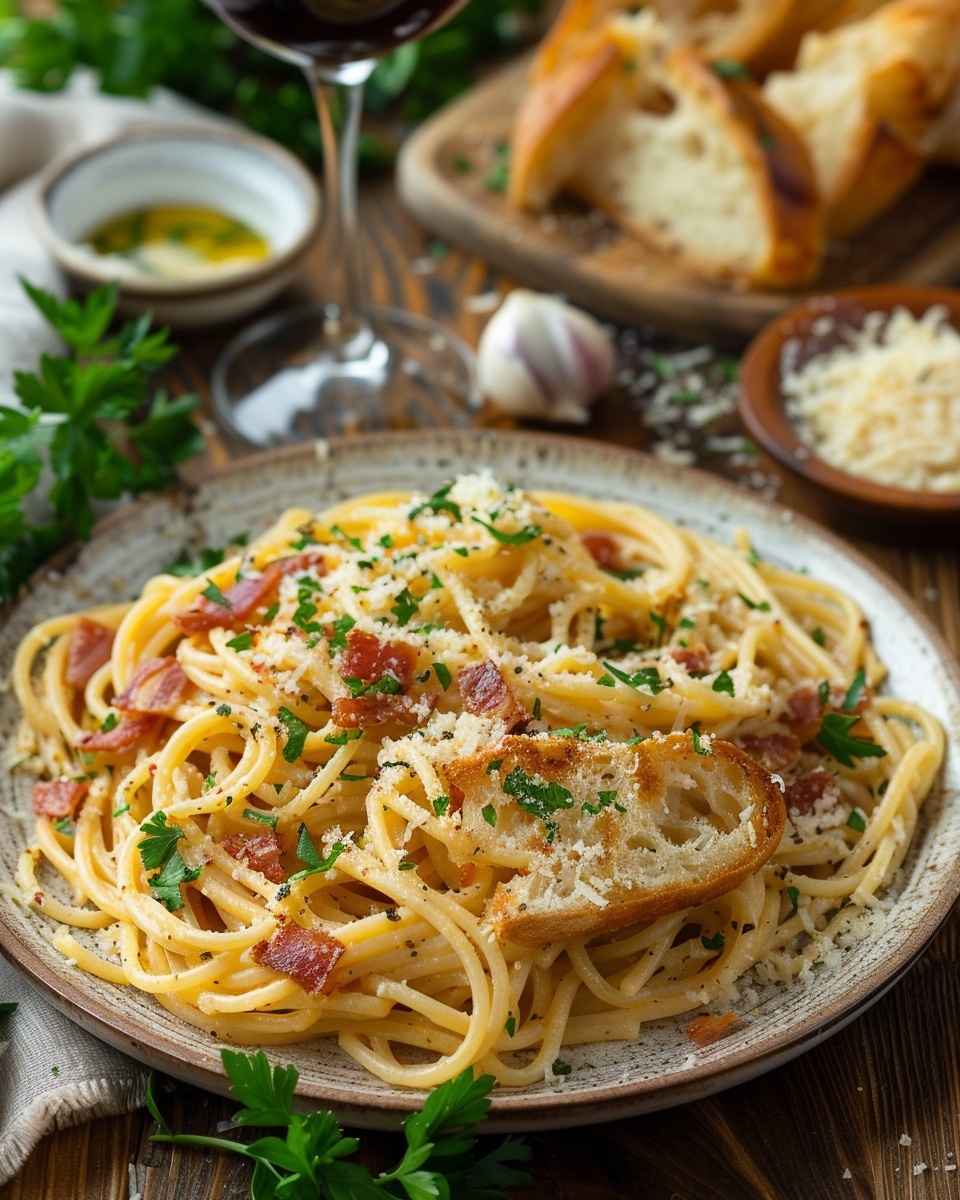
Welcome to My Kitchen: Let’s Make Carbonara Easy
Last Tuesday night, my neighbor knocked on my door asking if I could smell something burning. I laughed because what she smelled was actually my carbonara easy dinner that had gone perfectly right. The rich, savory aroma had drifted through the hallway and made her stomach growl. That’s the power of a good carbonara.
I still remember the first time I tried making carbonara. I was 22 years old and thought I could wing it. I ended up with scrambled eggs mixed with pasta. My roommate called it “Italian breakfast gone wrong.” But here’s the thing: once you understand the basics, carbonara becomes one of the easiest and most impressive dishes you can make.
Welcome to my kitchen, where we make delicious Italian dishes simple and easy. No fancy equipment needed. No complicated techniques that require a culinary degree. Just honest, straightforward cooking that delivers restaurant-quality results at home.
Today, I’m excited to share with you a carbonara easy recipe that will have your family and friends asking for seconds. This isn’t just another pasta recipe. It’s a dish that transforms simple ingredients into something magical. The kind of meal that makes people think you spent hours in the kitchen when you really only needed about 20 minutes.
Whether you’re a beginner who can barely boil water or an experienced cook looking to perfect your technique, this guide will help you create a mouthwatering carbonara in no time. I’ll walk you through every step and share the mistakes I’ve made so you don’t have to repeat them.
Understanding the Basics of a Traditional Carbonara
Let’s start by understanding what makes a traditional carbonara special. It’s all about the creamy, rich sauce and perfectly cooked pasta. But here’s what surprises most people: authentic carbonara doesn’t use cream at all.
I know. I was shocked too when my Italian friend Marco told me this. I had been making “carbonara” with heavy cream for years. He watched me cook one evening and gently said, “That’s delicious, but it’s not carbonara.” He wasn’t being rude. He was just being Italian about pasta.
The best carbonara recipe relies on a simple but brilliant technique. You create the sauce by combining hot pasta with eggs and cheese. The heat from the pasta cooks the eggs just enough to create a silky coating. No cream required. The result is lighter and lets you taste each ingredient more clearly.
The key ingredients in a classic carbonara are eggs, cheese, and bacon (or pancetta), but there are many variations. Traditional recipes call for guanciale, which is cured pork cheek. It has a rich, distinctive flavor that regular bacon can’t quite match. But I use bacon all the time because it’s easier to find and still tastes amazing.
For the cheese, you need Pecorino Romano. It’s a sheep’s milk cheese with a sharp, salty bite. Some recipes use Parmigiano-Reggiano instead, or a mix of both. I prefer half and half because Pecorino alone can be too intense for some people.
Making Carbonara Sauce Without Cream
We’ll explore how to make a carbonara sauce without cream and why it’s just as delicious. Actually, I think it’s more delicious. The traditional method creates a sauce that clings to each strand of pasta without feeling heavy.
The secret is all in the technique. You need to work quickly and keep everything at the right temperature. Too hot and you get scrambled eggs. Too cold and the sauce won’t come together. It sounds scary but becomes second nature after you do it once or twice.
Here’s how it works: you beat eggs with grated cheese and black pepper. That’s your sauce base. When your pasta is done cooking, you drain it but save some pasta water. Then you toss the hot pasta with the crispy bacon. Remove the pan from heat and quickly stir in the egg mixture. The residual heat cooks the eggs into a creamy sauce.
The pasta water is your secret weapon. If the sauce seems too thick, add a splash of that starchy water. It helps the sauce become silky and helps it coat the pasta better. I always save at least a cup of pasta water just in case.
The Best Creamy Carbonara Recipe Options
For those who love a bit of creaminess, we’ll also cover the best creamy carbonara recipe in the world, using single cream or milk. I know I just said traditional carbonara doesn’t use cream. But sometimes you want that extra richness. And honestly, there’s no pasta police coming to arrest you for adding cream.
A carbonara recipe with cream is more forgiving for beginners. The cream stabilizes the sauce and makes it harder to accidentally scramble the eggs. You get a thicker, richer result that some people prefer. My kids actually like this version better because it’s milder.
When making a carbonara sauce recipe with cream, you add the cream along with the eggs. Use about half a cup of heavy cream or three-quarters of a cup if you’re using single cream. The single cream has less fat, so you need a bit more to get the same richness.
You can also make a carbonara sauce recipe with milk if you want something lighter. Whole milk works best because you need some fat for the sauce to feel creamy. I’ve tried it with skim milk and the sauce turned out thin and watery. Not terrible, but not great either.
The technique changes slightly with cream. You can actually cook the sauce gently on low heat instead of relying only on residual heat. This makes it much easier for nervous cooks who worry about the temperature.
Essential Spaghetti Carbonara Ingredients
Let’s talk about your shopping list. The spaghetti carbonara ingredients are simple, which means quality matters. You can’t hide behind fancy sauces or complicated seasonings. Each ingredient needs to shine.
For pasta, spaghetti is traditional but I also love using bucatini or rigatoni. Bucatini is like thick spaghetti with a hole through the center. The sauce gets inside the tube and makes every bite perfect. Rigatoni has ridges that grab the sauce beautifully.
You need about one pound of pasta for four people. That’s the standard box size, which makes shopping easy.
For the carbonara ingredients, here’s what you need:
- 4 large eggs (plus one extra yolk if you want extra richness)
- 1 cup of grated Pecorino Romano cheese (or a mix of Pecorino and Parmesan)
- 8 ounces of bacon, pancetta, or guanciale, cut into small pieces
- Lots of freshly ground black pepper
- Salt for the pasta water
- Optional: garlic cloves for extra flavor
That’s it for the traditional version. For an easy carbonara recipe with cream, add half a cup of heavy cream to that list.
The eggs should be at room temperature. Cold eggs don’t mix as smoothly with the hot pasta. I take mine out of the fridge about 30 minutes before cooking. If I forget, I put them in a bowl of warm water for five minutes.
Black pepper is not optional. Traditional carbonara uses a generous amount of coarsely ground black pepper. It’s one of the main flavors in the dish. I use about two teaspoons, but you can adjust based on your taste.
Some people add garlic to their carbonara. Purists say no, but I sometimes cook a smashed garlic clove with the bacon and then remove it. It adds a subtle background flavor that I really enjoy.


Getting Your Carbonara Ingredients Ready
Now that you know what makes carbonara special, let’s actually get everything organized before we start cooking. Trust me on this one. The French have their fancy term “mise en place,” but I just call it “not running around like a headless chicken while your pasta overcooks.”
I learned this lesson the hard way. Picture me frantically grating cheese while my pasta sat in the colander getting cold and sticky. My sauce turned into clumps instead of that smooth, silky coating I wanted. My dog even looked disappointed, and he eats everything.
So here’s what I do now. Before I even fill the pot with water, I get everything measured and ready. The whole cooking process moves fast once you start, so you want all your carbonara ingredients lined up like soldiers ready for battle.
Start with your pasta. A standard one-pound box of spaghetti feeds four hungry people or three teenagers. I’ve raised two boys, and I know the difference. If you’re cooking for teens, maybe grab an extra half box. You’ll also need a large pot for boiling and a big bowl for mixing everything together at the end.
The eggs are next. Crack four large eggs into a medium bowl. I add one extra yolk because it makes the sauce richer and more golden. My grandmother taught me this trick, though she added two extra yolks because she believed more was always better. She wasn’t wrong, but I’m trying to be somewhat reasonable here.
Grate your cheese fresh. Please don’t use the pre-grated stuff from a container. I know it’s convenient, but it has additives that prevent clumping, which also prevents it from melting smoothly into your sauce. I bought a good box grater ten years ago for fifteen dollars and it’s still going strong. Grate about one cup of Pecorino Romano, or do half Pecorino and half Parmesan if you want a milder flavor.
Here’s something nobody tells you. Grate the cheese on the smaller holes, not the big shredder side. Finely grated cheese melts into the sauce much better than big shreds. It takes an extra two minutes but makes a huge difference in the final texture.
Mix the grated cheese right into your beaten eggs. Add a generous amount of black pepper now too, about two teaspoons of coarsely ground pepper. Whisk it all together until it looks like a thick, cheesy scrambled egg mixture. This is your sauce base, and it should sit at room temperature while you prep everything else.
For the meat, cut about eight ounces of bacon or pancetta into small pieces. I cut mine into roughly quarter-inch strips, but don’t stress about perfect uniformity. This isn’t a cooking competition. By the way, if you’re using guanciale and you actually found it at your store, congratulations. Cut it the same way.
If you want to make an easy carbonara recipe with cream, measure out half a cup of heavy cream and have it ready near your egg mixture. For a lighter version, you can use about three-quarters cup of single cream instead. The single cream has less fat, so you need more of it to get that luxurious mouthfeel.
I sometimes make a carbonara sauce recipe with milk when I’m trying to cut calories, though I’ll admit it’s not quite the same. Use whole milk, about three-quarters of a cup, and accept that it’ll be a bit thinner. You might want to add an extra egg yolk to compensate for the lower fat content.
One more thing before we cook. Fill a large measuring cup with water and keep it near the stove. You’ll need this to save some pasta water later. I can’t tell you how many times I’ve drained my pasta and then remembered I needed to save the water. Now I just put an empty cup right next to the colander so I remember.
Cooking Your Easy Carbonara Step by Step
Alright, everything’s prepped. Let’s actually cook this thing. Fill your largest pot with water and add enough salt that it tastes like the sea. I use about two tablespoons of salt for a big pot. People always undersalt their pasta water, then wonder why restaurant pasta tastes better.
Get that water boiling while you start cooking your bacon. Put a large skillet over medium heat and add the bacon pieces. You don’t need oil because bacon releases its own fat. Cook it slowly, stirring occasionally, until it’s crispy and golden. This takes about eight to ten minutes.
Some people add minced garlic to the bacon while it cooks. Traditional recipes don’t include garlic, but I’m not Italian so I do what tastes good to me. If you want to try it, add one or two smashed garlic cloves when the bacon is almost done. Let them sizzle for a minute, then fish them out before they burn.
Once your bacon is crispy, turn off the heat and leave it in the pan. You’ll add the pasta directly to this pan later, and the bacon fat becomes part of your sauce. That rendered fat is liquid gold, packed with flavor. Never throw it away.
When your water reaches a rolling boil, add the spaghetti. Stir it immediately so it doesn’t stick together. Set a timer for one minute less than the package directions say. So if the box says 11 minutes, set your timer for 10 minutes. The pasta will finish cooking when you toss it with the sauce.
This is when I usually make a simple side salad or set the table. You’ve got about ten minutes before the pasta is ready. Don’t wander off to check your phone though. I once got sucked into a text conversation and ended up with mushy pasta. My family still brings it up at dinner sometimes.
Similar to how I approach pesto pasta where timing is everything, carbonara requires your full attention during these final minutes. The difference between perfect and scrambled is literally seconds.
When your timer goes off, scoop out at least one full cup of pasta water with that measuring cup you set out earlier. I usually grab about two cups just to be safe. Then drain the pasta in a colander. Give it a quick shake but don’t rinse it. That starchy coating helps the sauce stick.
Now work quickly but calmly. Add the hot pasta directly to the pan with the bacon. If your pan isn’t big enough to hold all the pasta comfortably, transfer everything to that large mixing bowl instead. Toss everything together so the pasta gets coated with the bacon fat.
Here comes the crucial part. Turn off any heat source completely. Your pan should not be on the stove anymore. The residual heat from the pasta will cook the eggs. Add your egg and cheese mixture and start tossing immediately. Use tongs or two wooden spoons to lift and toss the pasta continuously for about two minutes.
The sauce will look thin at first, then suddenly it’ll start to thicken and cling to the pasta. It’s like magic. If it seems too thick or the pasta looks dry, add splashes of that reserved pasta water. I usually end up using about half a cup, adding it in small amounts and tossing between each addition.
For a carbonara recipe with cream, the process is slightly different and more forgiving. You can keep the pan on very low heat. Add the cream to your egg mixture before you pour it over the pasta. Stir constantly for about two minutes until the sauce thickens to your liking. The cream stabilizes everything so you don’t have to worry as much about scrambling the eggs.
The texture should look glossy and coat each strand of pasta like a silky glove. Not goopy or thick like chicken alfredo pasta, but smooth and flowing. If you lift the pasta with tongs, the sauce should cling but still drip slowly back into the bowl.
Taste it now. Does it need more salt? More pepper? This is your chance to adjust. I usually add another good grinding of fresh black pepper at this point because I love that spicy bite.
Funny enough, carbonara actually gets better if you let it sit for about 30 seconds before serving. The sauce continues to thicken slightly and everything melds together. I plate it immediately into warm bowls though, because nobody likes lukewarm pasta.
If you’re feeling fancy, save a few pieces of crispy bacon to sprinkle on top as garnish. Add another small handful of grated cheese and a final crack of black pepper over each bowl. It looks impressive and adds nice texture contrast.
The whole cooking process from the moment you start boiling water to plated pasta takes about 25 minutes. Maybe 30 if you’re moving slowly or this is your first time. Compare that to the hour-plus you’d spend on something like lasagna rolls, and you can see why carbonara is my go-to weeknight dinner.
One last thing I’ve learned. If you’re cooking for a crowd, don’t double the recipe in one pan. Make two separate batches instead. The technique requires everything to stay at the right temperature, and too much pasta in one pan means it cools down too fast. Your sauce won’t come together properly.
I once tried to make carbonara for eight people in one giant pan. It turned into a clumpy mess that looked nothing like the silky sauce I wanted. Now I just make two pans, one right after the other. It only adds ten minutes and the results are so much better.
The best carbonara recipe is really about the technique more than the exact ingredients. Once you nail the method, you can play around with additions. I’ve seen people add peas, mushrooms, even shrimp to their carbonara. Italians might cry, but if it tastes good to you, that’s what matters.


Easy Variations to Make Your Carbonara Special
Here’s something I wish someone had told me years ago. Once you’ve made basic carbonara a few times and you’re comfortable with the technique, you can start playing around with it. The traditional recipe is fantastic, but sometimes you want something a little different. Maybe you want it richer, or lighter, or with some vegetables thrown in because you’re trying to convince yourself it’s healthy.
Last month my daughter came home from college and asked if I could make carbonara but “with something green in it” because she’d been eating nothing but ramen and pizza for weeks. I threw in some fresh peas and baby spinach. She loved it. My Italian neighbor pretended not to see when I told him about it.
One of my favorite tweaks is adding mushrooms. I slice baby bella mushrooms thin and cook them with the bacon until they’re golden and crispy around the edges. They add this earthy, meaty flavor that makes the whole dish feel more substantial. My husband actually prefers this version now, though he’d never admit it in front of his Italian coworkers.
You can also experiment with different pasta shapes beyond spaghetti. I’ve made carbonara with penne, and it works beautifully because the sauce gets trapped inside the tubes. Fettuccine gives you a more luxurious, restaurant-style presentation. Even angel hair works if you’re feeding young kids who struggle with twirling long noodles. Just remember that thicker pastas need an extra minute or two of cooking time.
The cheese is another place where you can get creative without ruining the dish. I’ve used aged Asiago mixed with Parmesan when I couldn’t find Pecorino. It was different but still delicious. A friend of mine uses Grana Padano because that’s what her grandmother always used. There’s no pasta police coming to arrest you for using the cheese you have on hand.
For people watching their nutrition, you might want to check the carbohydrate content of different pasta brands. Some whole wheat or protein-enriched pastas have significantly different nutritional profiles. I’ve made carbonara with chickpea pasta for my diabetic uncle and it turned out surprisingly good, though the texture takes some getting used to.
Adding vegetables is easier than you’d think. Frozen peas are classic and they don’t require any extra work. Just throw a handful into the pasta water during the last minute of cooking. Asparagus is another good choice if you cut it into small pieces. I sometimes roast cherry tomatoes with garlic and add them on top at the end for color and freshness.
If you want to make your carbonara feel more special for guests, try adding a splash of white wine to the bacon while it cooks. Let it reduce until it’s almost gone before you add the pasta. This adds a subtle depth that people notice but can’t quite identify. My sister-in-law kept asking what my “secret ingredient” was until I finally told her.
For a lighter version that still feels indulgent, I sometimes use turkey bacon instead of regular bacon. I know, I know. But it actually works pretty well and cuts down on the fat significantly. You might need to add a tiny bit of olive oil to the pan since turkey bacon doesn’t render as much fat. The flavor isn’t quite as rich, but it’s a decent compromise when you’re trying to be somewhat responsible about what you eat.
Pro Tips for Perfecting Your Carbonara Every Time
Let me share some tricks I’ve picked up over the years that make a real difference. These aren’t in any cookbook I’ve read. They’re just things I’ve figured out through trial and error, usually after messing something up first.
First tip, warm your serving bowls. I run mine under hot water for a minute, then dry them right before serving. This keeps the carbonara at the perfect temperature longer. Cold bowls make the sauce seize up and get clumpy. I learned this after serving carbonara on cold plates straight from the cupboard and watching the sauce turn weird and grainy within two minutes.
The pasta water you save is more important than most people realize. That starchy water is what makes your sauce silky instead of gloppy. But here’s the thing nobody mentions, the water should be added gradually. I use about a tablespoon at a time, tossing between additions. If you dump in too much at once, you’ll thin out your sauce too much and you can’t really fix it.
Room temperature eggs are crucial for the traditional method without cream. I mentioned this earlier but it’s worth repeating because it makes such a difference. Cold eggs don’t emulsify as smoothly with the hot pasta, and you’re more likely to get lumpy sauce. If you forget to take them out ahead of time like I constantly do, just put the whole eggs in a bowl of warm tap water for five minutes.
Here’s something weird that works. Add your black pepper to the raw egg mixture, but also add some at the very end. The pepper that cooks into the sauce gives background spiciness, while the fresh pepper on top gives you these little bursts of flavor. It creates layers of taste that make the dish more interesting.
For the best carbonara recipe results, use the freshest eggs you can find. I get mine from a local farm stand when possible. The yolks are bright orange and the flavor is noticeably better than regular supermarket eggs. It’s one of those small upgrades that elevates the whole dish without adding any difficulty.
If you’re nervous about scrambling the eggs, here’s a safety net. Take your pan completely off the stove and set it on a folded kitchen towel on your counter. This creates a buffer between the pan and any heat source. Pour in your egg mixture, start tossing, and the temperature will be perfect. You physically cannot scramble eggs this way unless you put the pan back on the heat.
By the way, leftovers are tricky with carbonara. The sauce tends to get absorbed into the pasta and dry out in the fridge. But I’ve found a fix. When reheating, add a few tablespoons of milk or cream and heat gently in a skillet, tossing constantly. It won’t be quite as good as fresh, but it’s pretty close. Way better than microwaving it into rubbery submission anyway.
For an easy carbonara recipe with cream that’s basically foolproof, use this ratio: four eggs, half a cup of heavy cream, and one cup of cheese for one pound of pasta. Beat everything together and add it to your pasta off the heat. Stir for two minutes. That’s it. It’s hard to mess up because the cream protects the eggs from overcooking.
One more thing about bacon versus pancetta versus guanciale. Yes, guanciale is the most authentic and has the best flavor. But bacon is fine. Really. I’ve served bacon carbonara to Italian friends and they’ve cleaned their plates while complaining that it wasn’t authentic. If the food is gone, the food was good. That’s my philosophy.
If you want your bacon extra crispy, which I highly recommend, cook it at a lower temperature for longer. High heat makes it chewy and tough. Medium-low heat for about fifteen minutes gives you these perfect crispy pieces that shatter when you bite them. Patience pays off here.
The salt level is another balancing act. Your pasta water should be salty, and both the cheese and bacon add salt. So you rarely need to add more salt at the end. But always taste before serving. I keep a small dish of flaky sea salt nearby just in case, though I almost never need it.
Troubleshooting Common Carbonara Problems
Let’s talk about what to do when things go wrong, because they will eventually. I’ve made carbonara probably 200 times and I still occasionally have issues. The difference is now I know how to fix them or work around them.
Problem number one, scrambled eggs. If your sauce looks grainy and broken instead of smooth, you cooked the eggs too much. Unfortunately, you can’t really unscramble eggs. But you can save dinner. Add a good amount of pasta water and some cream if you have it. Blend everything with an immersion blender right in the pan. It won’t be traditional carbonara, but it’ll taste good and have a smooth texture. Call it carbonara soup and move on with your life.
If your sauce is too thick and pasty, you just need more liquid. Add pasta water one splash at a time until it loosens up. I’ve had this happen when I used too much cheese or not enough pasta water. It’s an easy fix and your carbonara will be fine.
On the flip side, if your sauce is too thin and won’t cling to the pasta, you probably added too much liquid or didn’t let the residual heat work long enough. Put the pan back on the lowest possible heat for 30 seconds while tossing constantly. The gentle heat will help the eggs thicken just enough. Watch it carefully though, because there’s a fine line between thickened and scrambled.
Sometimes the pasta and sauce seem to separate in the bowl. This usually happens when the pasta is too cold or you didn’t toss it enough with the bacon fat first. The fat helps emulsify everything together. If this happens, transfer everything back to the pan, add a bit more pasta water, and toss vigorously for another minute over no heat. The mechanical action of tossing helps bring the sauce together.
For anyone exploring more pasta and noodles recipes beyond carbonara, these troubleshooting techniques work for many cream-based or egg-based pasta sauces. The fundamental principles of temperature control and emulsification apply across different dishes.
Here’s an odd problem I had once. My carbonara tasted flat and boring even though I followed the recipe perfectly. Turns out my Pecorino Romano was old and had lost its punch. Cheese does go stale, especially pre-grated stuff. Fresh cheese makes all the difference. Now I always taste my cheese before I start cooking to make sure it has that sharp, salty bite.
If you’re making a carbonara sauce without cream and it just won’t come together no matter what you do, admit defeat and add some cream. Seriously. There’s no shame in it. I’ve had nights where the timing was off or the pan was the wrong temperature or Mercury was in retrograde or whatever. Adding half a cup of cream saved dinner more than once. Your family cares about eating something delicious, not whether you followed the exact traditional method.
The final common issue is overcooked pasta. There’s really no fixing mushy pasta, so your best bet is prevention. Set a timer and actually pay attention to it. Taste the pasta a minute before the timer goes off to check doneness. It should be al dente, with just a slight firmness in the center when you bite it. Remember, it’ll continue cooking slightly when you toss it with the hot sauce.
Making carbonara easy is really about practice and not being afraid to adjust things to your taste. The recipe police don’t exist, and even if they did, they’re not invited to your dinner table. If you like your carbonara with cream, make it with cream. If you want to use bacon instead of guanciale because that’s what’s available, do it. The goal is delicious food that makes you and your people happy.
With these techniques and tips in your back pocket, you’re ready to make carbonara that’ll impress everyone at your table. The key is staying calm, keeping your ingredients at the right temperature, and remembering that even if it doesn’t turn out perfect, it’ll probably still taste pretty great. After all, we’re talking about pasta, eggs, cheese, and bacon. That combination is hard to completely ruin.
So grab your ingredients, set aside twenty-five minutes, and make yourself some carbonara tonight. You’ve got this. And if it doesn’t work out perfectly the first time, that’s what second chances are for. I’ve taught this recipe to absolute beginners who now make it weekly. If they can do it, you definitely can too.
Frequently Asked Questions About Making Carbonara
What is the best carbonara recipe?
The best carbonara recipe depends on your preference, but traditionally it uses eggs, Pecorino Romano cheese, guanciale or bacon, and black pepper without any cream. For beginners, I recommend a version with a small amount of cream because it’s more forgiving and less likely to scramble. The key to any great carbonara is working quickly with hot pasta and taking the pan off the heat when you add the eggs. Once you master the basic technique, you can adjust ingredients to match your taste.
Can I make carbonara without cream?
Absolutely, and authentic Italian carbonara never uses cream at all. The creamy texture comes from the eggs and cheese mixing with the hot pasta and starchy pasta water. You beat eggs with grated cheese, then toss them with hot pasta off the heat, and the residual warmth creates a silky sauce. It’s actually lighter and lets you taste each ingredient more clearly than cream-based versions. The trick is keeping everything at the right temperature so the eggs coat the pasta instead of scrambling.
How do I make a carbonara sauce with milk?
To make a carbonara sauce recipe with milk, use whole milk for the best results since you need some fat for creaminess. Add about three-quarters of a cup of milk to your beaten eggs and cheese mixture. You might want an extra egg yolk to compensate for the lower fat content compared to cream. The technique is the same as the cream version, you can gently heat it on low while stirring constantly until it thickens. It’ll be lighter in texture and flavor than traditional carbonara but still tasty.
What are the essential spaghetti carbonara ingredients?
The spaghetti carbonara ingredients are wonderfully simple: one pound of pasta, four large eggs, one cup of grated Pecorino Romano cheese, eight ounces of bacon or pancetta, plenty of black pepper, and salt for the pasta water. That’s the complete traditional list. Some people add an extra egg yolk for richness or mix Parmesan with the Pecorino for a milder flavor. For non-traditional versions, you’d add cream or milk to that base list. Quality matters with so few ingredients, so get the freshest eggs and best cheese you can afford.
Is carbonara easy to make for beginners?
Yes, carbonara easy is absolutely achievable for beginners, especially if you start with a cream-based version which is more forgiving. The traditional method requires more attention to temperature and timing, but it’s not complicated once you understand the technique. The hardest part is building confidence to work quickly when combining the hot pasta with the egg mixture. I recommend reading through the entire recipe first, getting all your ingredients prepped before you start, and not panicking if it doesn’t turn out perfect the first time. Most people get it right by their second or third attempt.
Why did my carbonara sauce get lumpy or scrambled?
Lumpy or scrambled carbonara happens when the eggs get too hot and actually cook into curds instead of forming a smooth sauce. This usually occurs when the pan is still on the heat or the pasta is too hot when you add the egg mixture. Always remove the pan completely from the heat source before adding your eggs. If your sauce does scramble, add pasta water and some cream, then blend it smooth with an immersion blender. It won’t be traditional, but it’ll still taste good and you’ll save dinner.
Can I add vegetables to my carbonara?
You definitely can add vegetables even though it’s not traditional. Frozen peas are the most common addition, just throw them into the pasta water during the last minute of cooking. Asparagus, zucchini, baby spinach, and mushrooms all work well too. I cook mushrooms with the bacon until they’re crispy, and I add leafy greens directly to the hot pasta so they wilt. These additions make the dish feel more balanced and add nutrition without significantly changing the flavor profile. Just don’t tell Italian purists what you’re doing.
What’s the difference between using bacon, pancetta, and guanciale?
Guanciale is cured pork cheek and it’s the traditional choice with a rich, distinctive flavor that’s slightly sweet and very fatty in the best way. Pancetta is cured pork belly, similar to bacon but not smoked, with a cleaner pork flavor. Regular bacon is smoked pork belly, readily available and works perfectly fine despite not being authentic. Honestly, I use bacon most of the time because it’s convenient and delicious. The flavor is slightly different but carbonara made with quality bacon still tastes amazing and nobody at my table has ever complained.
How do I reheat leftover carbonara?
Leftover carbonara is tricky because the sauce gets absorbed and the pasta dries out in the fridge. Don’t microwave it or you’ll end up with rubbery, sad pasta. Instead, reheat it gently in a skillet over low heat and add a few tablespoons of milk, cream, or even just water to help revive the sauce. Toss constantly until it’s heated through and looks creamy again. It won’t be quite as good as fresh carbonara, but this method gets pretty close. I’ve even added a beaten egg to leftover carbonara while reheating to refresh the sauce.
Can I make carbonara ahead of time for a dinner party?
Unfortunately, carbonara doesn’t hold well and really needs to be made right before serving for the best texture and temperature. The sauce can separate or get gummy if it sits too long. What I do for dinner parties is prep everything ahead, getting my eggs beaten with cheese, bacon cooked and set aside, and pasta measured out. Then I boil the pasta and assemble everything right before serving, which only takes about fifteen minutes. Your guests can wait an extra few minutes for fresh, hot carbonara rather than eating reheated pasta that’s lost its magic.
Carbonara Easy
Ingredients
Equipment
Method
- Fill a large pot with water, add salt until it tastes like the sea, and bring to a rolling boil.
- In a large skillet, cook the bacon over medium heat until crispy and golden, about 8-10 minutes.
- While the bacon is cooking, prepare the pasta according to package directions but set a timer for one minute less than recommended.
- Crack eggs into a medium bowl and whisk with grated cheese and black pepper; let the mixture sit at room temperature.
- Scoop out at least 1 cup of pasta water and set it aside before draining the pasta.
- Add the hot pasta directly to the skillet with the bacon (or transfer everything to a large mixing bowl).
- Remove from heat and quickly pour in the egg and cheese mixture, tossing continuously until creamy.
- If the sauce seems thick, add reserved pasta water gradually until it reaches desired consistency.
- For the creamy version, mix cream with the eggs and cheese, and gently heat on low while stirring until thickened.
- Taste and adjust seasoning before serving with extra cheese and black pepper on top.