
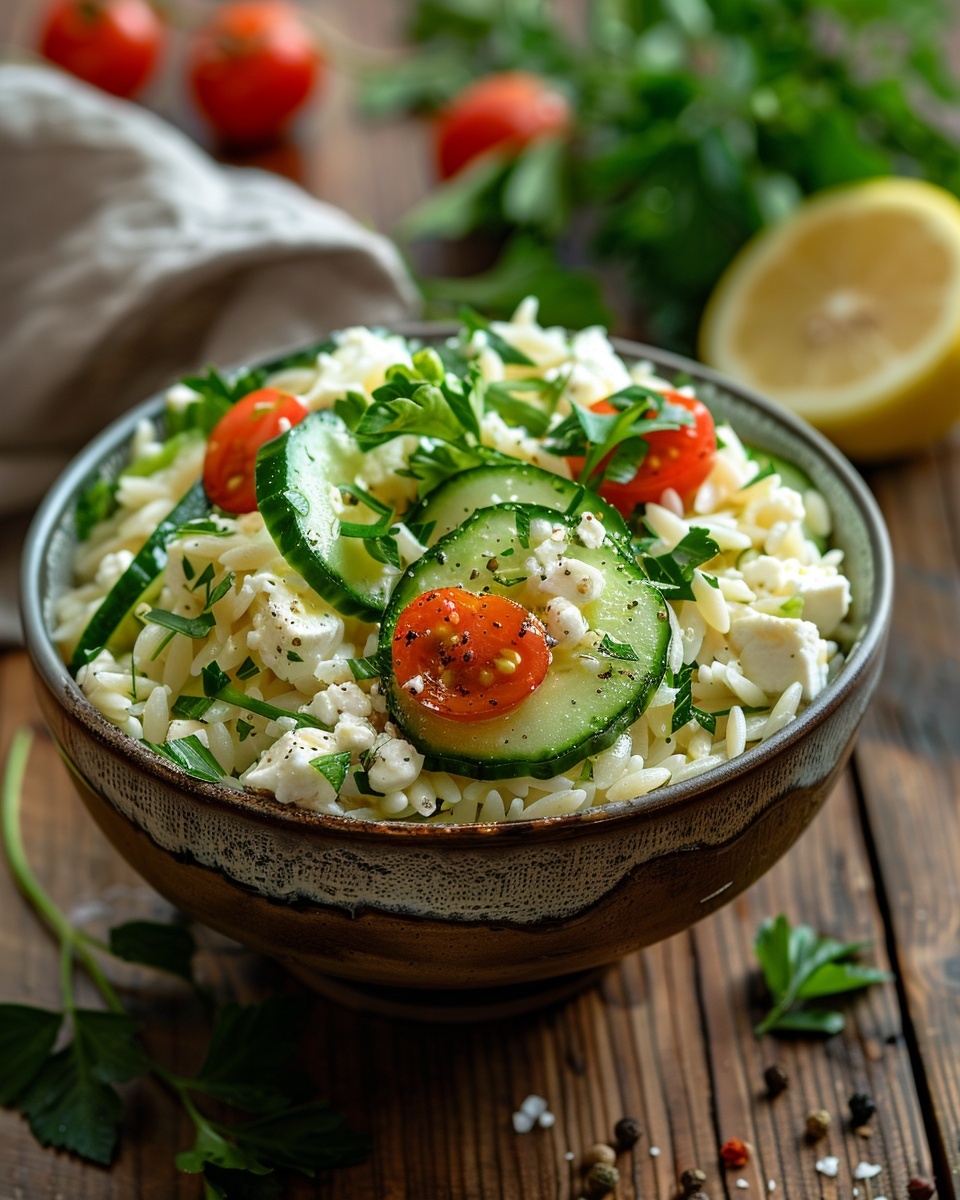
Last summer, I brought a big bowl of orzo feta salad to my friend’s backyard barbecue. I wasn’t sure how it would go over since I was still new to making this dish. But within twenty minutes, people were coming back for seconds and thirds. One guest even asked if I could share the recipe right there on the spot. That’s when I realized I had stumbled onto something special.
Hi there! I’m thrilled to share one of my absolute favorite recipes with you today. Orzo feta salad has become my go-to dish for pretty much every gathering I attend. Whether it’s a casual picnic in the park or a fancy potluck dinner, this salad never fails to impress. The best part? It’s surprisingly simple to make, even if you’re not a confident cook.
What I love most about this dish is how flexible it is. You can toss in spinach for extra greens, add sundried tomatoes for a tangy kick, or sprinkle pine nuts on top for some crunch. Every time I make it, I switch things up based on what’s in my fridge or what sounds good that day. The base recipe stays the same, but the possibilities are endless.
This salad works perfectly for gatherings because it feeds a crowd without breaking your budget. It travels well, tastes great at room temperature, and looks beautiful on any table. Plus, it can sit out for a while without getting soggy or weird. I’ve served it at graduation parties, baby showers, and even casual Tuesday night dinners with my family. It always gets rave reviews.
Why Orzo Feta Salad is a Crowd Favorite
There’s something about the combination of tender orzo pasta and tangy feta cheese that just works. I’ve watched people who claim they don’t like pasta salads go back for second helpings. The secret is in the balance of flavors and textures. You get creamy, crunchy, tangy, and fresh all in one bite.
When I talk about the best orzo salad ever, I’m not exaggerating. This isn’t one of those complicated recipes with a million steps or hard-to-find ingredients. You need orzo pasta, feta cheese, and a few simple additions. That’s it. The magic happens when these basic ingredients come together with a good dressing.
The popularity of this salad makes total sense when you think about it. People love pasta. People love cheese. Put them together in a fresh, bright salad, and you’ve got a winner. I’ve served this at picnics where it sat in a cooler for hours, and it still tasted amazing. I’ve brought it to potlucks where it competed with dozens of other dishes, and the bowl always came home empty.
One reason this salad works so well for gatherings is its wide appeal. Kids like it because it’s mild and familiar. Adults appreciate the sophisticated flavor combinations. Vegetarians can enjoy it without modifications. Even my picky uncle, who usually sticks to burgers and potato chips, asked for the recipe last Fourth of July.
The easy orzo salad for a crowd approach means you can make a huge batch without spending all day in the kitchen. I usually double or triple the recipe when I know I’m feeding more than six people. It takes maybe ten extra minutes of prep time. The orzo cooks quickly, and while it’s cooling, you can chop your vegetables and mix your dressing.
Temperature flexibility is another huge advantage. Unlike some salads that must be served ice cold or piping hot, this one tastes good however you serve it. I’ve eaten leftovers straight from the fridge, and I’ve also left it on the counter to come to room temperature. Both ways work great. This makes it perfect for outdoor events where keeping food at the right temperature can be tricky.
The versatility of orzo salad with feta and spinach means you can sneak in some extra nutrition without anyone complaining. The spinach adds color and vitamins, but it doesn’t overpower the other flavors. My kids barely notice it’s there. When I want to make the salad heartier, I add more vegetables. When I want it lighter, I keep it simple.
I also love making orzo salad with feta and sundried tomatoes when I want something with a bit more punch. The sundried tomatoes bring this intense, concentrated flavor that pairs beautifully with the creamy feta. They also add a gorgeous pop of red color that makes the whole dish look more appetizing. Every time I make this version, people ask what makes it taste so special.
For a fancier twist, try orzo pasta salad with feta and pine nuts. The pine nuts add this buttery, slightly sweet crunch that elevates the whole dish. I like to toast them lightly in a dry pan before adding them to the salad. This step takes maybe three minutes, but it makes such a difference in the final result. The toasted nuts smell incredible and taste even better.
If you’re looking for something with Italian flair, an Italian orzo salad variation works wonderfully. Add some fresh basil, a splash of balsamic vinegar, and maybe some diced mozzarella along with the feta. Throw in some cherry tomatoes and black olives, and you’ve got a salad that tastes like it came from a Italian bistro. I made this version for a dinner party last month, and guests were scraping the bowl clean.
The orzo antipasto salad takes inspiration from traditional antipasto platters. Think salami, artichoke hearts, roasted red peppers, and plenty of Italian herbs. This version is heartier and can almost serve as a main course. I’ve packed it for lunch and felt satisfied all afternoon. It’s filling without being heavy.
A bright orzo salad lemon version is my summer favorite. Fresh lemon juice and zest wake up all the other flavors. The citrus cuts through the richness of the feta and keeps everything tasting fresh. I make this version when the weather gets hot and I want something that feels light and refreshing. It pairs perfectly with grilled chicken or fish.
For those watching their intake, you might wonder about Greek orzo salad calories. The good news is that you can control the calorie count by adjusting the amount of cheese and oil you use. The base of orzo and vegetables is relatively light. If you’re being mindful, use less feta and dress the salad with lemon juice instead of heavy dressing. It still tastes great.
Family dinners are where this salad really shines for me. I can make it ahead on a busy weeknight, and it actually gets better as it sits in the fridge. The flavors blend together, and everything soaks up the dressing. My weeknight routine often includes making this salad on Sunday and eating it throughout the week. It saves me so much time and stress during those crazy after-school hours.


Variations of Orzo Feta Salad
Now that you know why this salad works so well, let’s dive into some of my favorite variations that keep things interesting without complicating your life.
Orzo Salad with Feta and Spinach
The first time I made orzo salad with feta and spinach, I was trying to get my youngest daughter to eat more greens. She’s the type of kid who picks lettuce out of tacos and claims she’s allergic to anything green. But something magical happened when I mixed tender baby spinach into this pasta salad. She didn’t even notice it at first, and by the time she did, she’d already decided she liked it.
Here’s the thing about spinach in this salad—it doesn’t wilt into sad, soggy leaves like it does in some recipes. If you use fresh baby spinach and add it to the orzo after the pasta has cooled down completely, it stays bright and slightly crisp. The leaves soak up just enough dressing to taste flavorful without losing their structure. I usually grab a big handful of spinach, maybe two or three cups, and fold it in gently right before serving.
The combination works because spinach has this mild, slightly earthy flavor that doesn’t fight with the tangy feta. Instead, the two ingredients balance each other out beautifully. I like to add cucumber and red onion to this version too. The cucumber brings freshness and crunch, while the red onion gives you these little bursts of sharpness that wake up your taste buds. Sometimes I’ll throw in some kalamata olives if I’m feeling fancy.
This variation reminds me a bit of my favorite kale quinoa salad, though obviously with a completely different base. Both salads prove that you can sneak healthy greens into dishes without making them taste like rabbit food. My sister, who swears she hates salads, actually requests this spinach version for family gatherings.
The dressing I use for the spinach variation is super simple. Extra virgin olive oil, fresh lemon juice, minced garlic, a pinch of oregano, and salt and pepper. That’s literally it. I whisk it together in a jar, pour it over the cooled orzo and vegetables, and toss everything until it’s nicely coated. The spinach gets added last, right at the end, so it stays perky.
By the way, this version is particularly great if you’re trying to make something light but still satisfying. It’s not as heavy as pasta salads loaded with mayonnaise or cream-based dressings. When I bring this to summer gatherings, people always appreciate having a refreshing option that won’t leave them feeling stuffed. It pairs wonderfully with grilled meats or fish, but it’s also hearty enough to eat on its own for lunch.
Orzo Salad with Feta and Sundried Tomatoes
Funny enough, I discovered orzo salad with feta and sundried tomatoes completely by accident. I was making the regular version one afternoon when I realized I’d run out of fresh tomatoes. All I had were these sundried tomatoes packed in oil that had been sitting in my pantry for who knows how long. I figured, why not?
That decision changed everything. Sundried tomatoes bring this incredible depth of flavor that fresh tomatoes just can’t match. They’re intensely sweet and tangy at the same time, with this concentrated tomato essence that makes your mouth water. The oil they’re packed in becomes part of your dressing, adding richness and carrying the tomato flavor throughout the entire salad.
The Mediterranean influence in this version is unmistakable. It tastes like something you’d eat at a seaside taverna in Greece, sitting under a grape arbor with the sun setting over the water. I know that sounds dramatic, but seriously, this variation has that kind of transportive quality. The combination of feta and sundried tomatoes is classic Mediterranean cooking at its finest.
I usually chop the sundried tomatoes into smaller pieces before adding them to the salad. Whole ones are too intense and chewy. When you dice them up, you get little flavor bombs distributed throughout the dish. Each bite has a chance to capture some of that rich, tangy goodness. I use about half a cup of sundried tomatoes for a standard batch of salad, but you can adjust based on how much you love them.
This version also benefits from fresh basil. I tear up a handful of basil leaves and toss them in right before serving. The herbal, slightly peppery flavor of basil complements the sundried tomatoes perfectly. If you’ve ever had a Caprese salad, you know how well tomatoes and basil work together. It’s the same principle here, just with pasta and feta joining the party.
The flavor profile here is definitely richer and more robust than the spinach version. It’s not quite as light and refreshing, but it’s incredibly satisfying in a different way. I make this variation when I want something that feels a bit more indulgent and special. It’s excellent alongside grilled chicken or lamb. Actually, it reminds me of the bold flavors you get in a good beet and goat cheese salad, where strong ingredients come together to create something memorable.
One tip I learned the hard way—don’t skip draining the sundried tomatoes if they’re super oily. Too much oil can make the salad greasy instead of luxurious. I usually give them a light pat with a paper towel before chopping. You want some of that flavored oil, but not so much that it pools at the bottom of your serving bowl.
Orzo Pasta Salad with Feta and Pine Nuts
When I want to impress people, I make orzo pasta salad with feta and pine nuts. This is my fancy version, the one I bring when I really want to show off a little. Pine nuts might seem like a small addition, but they transform this salad into something that feels gourmet and restaurant-quality.
The nutty, buttery flavor of toasted pine nuts adds this whole other dimension. They’re delicate and slightly sweet, with a texture that’s both creamy and crunchy at the same time. I know pine nuts can be expensive—believe me, I’ve winced at the grocery store checkout more than once—but you don’t need a ton of them. A third of a cup is usually plenty for a big batch of salad.
Toasting the pine nuts is absolutely essential. Raw pine nuts are fine, I guess, but toasted pine nuts are spectacular. I heat a dry skillet over medium heat, add the pine nuts, and shake the pan frequently for about three to four minutes. You’ll smell this amazing aroma when they’re ready, and they’ll turn golden brown. Watch them carefully though, because they go from perfect to burned in about ten seconds. I’ve lost more batches of pine nuts to distraction than I care to admit.
This version works beautifully for occasions when you want to elevate your presentation. I’ve brought it to fancy dinner parties where people were serving multiple courses on fine china. I’ve also made it for summer barbecues where we ate off paper plates in the backyard. It fits both settings equally well because the ingredients speak for themselves.
I like to add arugula to the pine nut version. The peppery bite of arugula pairs wonderfully with the mild, buttery nuts and tangy feta. Fresh parsley works great too, adding color and freshness. Sometimes I’ll include both. The green herbs make the salad look vibrant and appetizing, and they contribute their own subtle flavors to the mix.
The dressing for this variation gets a tiny drizzle of honey. Just a teaspoon or so in the whole batch. The honey complements the natural sweetness of the toasted pine nuts and rounds out the acidic tang from the lemon juice and feta. It’s similar to how a touch of sweetness works in a spinach strawberry salad, where unexpected sweet notes make savory ingredients shine even brighter.
People always ask if this is an orzo pasta salad with feta barefoot contessa recipe because it has that sophisticated simplicity that Ina Garten is famous for. While I’ve never actually tried her version, I think this captures that same philosophy of using quality ingredients and letting them speak for themselves without overcomplicating things.
This pine nut variation is probably my favorite for special occasions. Last month I brought it to a colleague’s retirement party, and at least five people asked for the recipe. One woman told me it was better than anything she’d had at her favorite Italian restaurant. That might have been the wine talking, but I’ll take the compliment anyway. The combination of creamy pasta, tangy cheese, and crunchy toasted nuts creates textural interest that keeps every bite feeling new and exciting.
If you’re looking for something different from the usual cookout fare, try this version alongside your burgers and hot dogs. It holds its own next to grilled favorites but offers something completely different in terms of flavor and sophistication. It’s also fantastic with a simple taco salad if you’re doing a mixed menu and want variety on your table.


Popular Orzo Feta Salad Recipes
After years of experimenting with different versions, I’ve come across some recipes that truly stand out from the rest. These are the ones I turn to when I want something specific, whether that’s elegant simplicity or bold Italian flavors.
Orzo Pasta Salad with Feta Barefoot Contessa
I remember the first time I watched Ina Garten make her version of this salad on TV. I was folding laundry on a lazy Saturday afternoon, half paying attention, when she said something that stuck with me: “If you use good ingredients, you don’t need to do much to them.” That simple philosophy completely changed how I approached cooking, especially when it comes to orzo pasta salad with feta barefoot contessa style.
Ina’s approach to this salad is all about quality over complexity. She doesn’t mess around with a million add-ins or fancy techniques. Instead, she focuses on getting the best feta you can afford, using real extra virgin olive oil, and adding fresh herbs at just the right moment. Her version typically includes diced cucumber, halved cherry tomatoes, chopped scallions, and tons of fresh dill. The dill is key—it brings this bright, slightly tangy flavor that makes the whole dish taste fresh and special.
What I appreciate most about her method is the attention to detail in simple things. She always seasons the pasta cooking water generously with salt, which seems obvious but makes such a difference. The orzo absorbs that seasoning as it cooks, so every grain of pasta tastes good on its own before you even add the dressing. She also insists on cooling the pasta completely before adding the feta. Hot pasta will make the cheese melt and turn gummy, while cooled pasta keeps everything nice and distinct.
The dressing in her version is straightforward but perfectly balanced. Good olive oil, fresh lemon juice, red wine vinegar, minced garlic, and Dijon mustard whisked together until emulsified. That touch of Dijon is something I never thought to add before watching her show, but it adds this subtle depth and helps the dressing cling to the pasta better. The mustard also gives you this tiny bit of sharpness that plays beautifully against the creamy feta.
One thing Ina emphasizes is not overdressing the salad. You want everything lightly coated, not swimming in liquid. I learned this lesson after drowning my first few attempts in way too much dressing. Now I add about three-quarters of the dressing, toss everything together, taste it, and then decide if I need the rest. Usually I don’t. The salad tastes cleaner and lighter when you show some restraint with the dressing.
Her recipe works beautifully for dinner parties because it looks elegant without being fussy. The colors are gorgeous—white pasta, green herbs and cucumber, red tomatoes, creamy white feta. It sits beautifully in a white serving bowl and looks like something from a magazine spread. But here’s the thing—it’s so easy that you can throw it together on a weeknight when you just need something quick and satisfying.
Italian Orzo Salad
My Italian neighbor Rosa introduced me to her version of Italian orzo salad a few summers ago during a block party. She brought this huge pottery bowl filled with orzo tossed with salami, mozzarella, roasted red peppers, and fresh basil. I think I stood by that bowl for twenty minutes just eating and chatting with her about the recipe. She laughed at my enthusiasm and said, “It’s just what we eat at home, nothing fancy.”
But that’s exactly what makes Italian versions of this salad so special—they feel like something made with love in someone’s kitchen, not a restaurant trying to impress you. The Italian orzo salad approach uses ingredients you’d find on an antipasto platter. We’re talking about salami or prosciutto cut into small pieces, cubes of fresh mozzarella, marinated artichoke hearts, roasted red peppers, and plenty of Italian herbs like basil, oregano, and parsley.
The flavor profile is completely different from the Greek-inspired versions. Instead of tangy feta and lemon, you get this rich, savory quality from the cured meats and the mild creaminess of mozzarella. The roasted red peppers bring sweetness and a slightly smoky flavor, especially if you roast them yourself instead of using jarred ones. Though honestly, I usually use jarred because I’m not trying to spend my whole afternoon roasting peppers when I’ve got three kids asking me for snacks every ten minutes.
Rosa taught me to add a splash of balsamic vinegar to the dressing for this version. Just a tablespoon or so mixed with the olive oil and lemon juice. The balsamic adds this subtle sweetness and complexity that ties all the Italian flavors together. Sometimes I’ll also add a pinch of red pepper flakes if I want a little heat. Not enough to make it spicy, just enough to wake everything up a bit.
This version is hearty enough to serve as a main course, especially if you’re generous with the salami and mozzarella. I’ve packed it for lunch countless times and felt satisfied until dinner. It’s also fantastic alongside grilled Italian sausages or chicken parmigiana. When I’m planning an Italian-themed dinner, this salad fits right in with everything else on the table. It’s got that same rustic, homey quality that makes Italian food so comforting.
One trick I learned is to add the mozzarella at the last minute. If you mix it in too early and refrigerate the salad, the cheese can get rubbery and release liquid. I usually keep the mozzarella separate and fold it in about thirty minutes before serving. This keeps it soft and fresh-tasting. Same goes for the fresh basil—add it right before you put the salad on the table so the leaves stay bright green and don’t turn brown.
The beauty of this Italian variation is how well it represents the Mediterranean approach to everyday nutrition—combining pasta, vegetables, healthy fats, and moderate amounts of protein in a way that’s both satisfying and balanced. Every time I make it, I think about Rosa and her casual attitude toward cooking. Good food doesn’t have to be complicated. Sometimes the best meals come from throwing together ingredients you love and enjoying them with people who matter to you.
Greek Orzo Salad Calories and Health Benefits
Let me be honest with you—I’m not someone who obsesses over calories. But I do think it’s helpful to understand what you’re eating, especially if you’re trying to make mindful choices. When people ask me about Greek orzo salad calories, I usually tell them it depends entirely on how you make it.
A typical serving of this salad, about a cup and a half, usually comes in around 300 to 400 calories. That’s assuming you’re using a moderate amount of feta and dressing. If you go heavy on the cheese and olive oil, you could easily push that number higher. On the flip side, if you load up on vegetables and use a lighter hand with the oil, you can keep it on the lower end. The orzo itself contributes roughly 200 calories per cooked cup, which is pretty standard for pasta.
Here’s what I find really appealing about this salad from a nutrition standpoint—it’s incredibly balanced. You’re getting complex carbohydrates from the orzo, which give you sustained energy. The feta provides protein and calcium. The vegetables add fiber, vitamins, and minerals. The olive oil brings healthy monounsaturated fats that your body actually needs. It’s not one of those salads that’s all lettuce and sadness. This is real food that fuels you.
The fiber content is particularly noteworthy if you add plenty of vegetables. Cucumbers, tomatoes, bell peppers, and spinach all contribute fiber that helps with digestion and keeps you feeling full longer. I’ve noticed that when I eat this salad for lunch, I don’t get that mid-afternoon energy crash that happens with heavier, greasier meals. The combination of carbs, protein, and healthy fats keeps my blood sugar stable.
Feta cheese, despite its strong flavor, is actually lower in fat and calories than many other cheeses. It’s also easier to digest for some people who have trouble with other dairy products. Plus, it’s packed with calcium and B vitamins. I remember reading somewhere that traditional Mediterranean diets, which include moderate amounts of cheese like feta, are associated with better heart health and longevity. That makes me feel pretty good about enjoying this salad regularly.
The olive oil deserves its own mention. Yes, it’s calorie-dense, but those calories come with serious health benefits. Extra virgin olive oil is loaded with antioxidants and anti-inflammatory compounds. It’s one of those ingredients where quality really matters. When I splurge on good olive oil, I can taste the difference, and I feel better knowing I’m getting more of those beneficial compounds.
If you’re watching your sodium intake, you can control that by using less feta and being mindful about salting the pasta water and dressing. Feta is naturally salty, so you really don’t need to add much additional salt. I’ve made versions where I skipped the extra salt entirely and nobody noticed because the cheese provides plenty of that salty, savory flavor on its own.
For anyone following a vegetarian diet, this salad is a fantastic option. It provides protein from the cheese and if you add nuts like pine nuts, you’re getting even more protein plus healthy fats. I have several vegetarian friends who struggle to find satisfying dishes that don’t leave them hungry an hour later. This salad consistently gets their approval because it’s filling and flavorful without relying on meat.
The lemon juice in most versions of this salad adds vitamin C, which helps with iron absorption if you’re pairing the salad with other iron-rich foods. It also aids in digestion and adds virtually no calories while making everything taste brighter and fresher. I squeeze fresh lemon juice over mine right before eating, and that little burst of acidity makes such a difference.
By the way, if you’re interested in exploring more nutritious options, you might enjoy browsing through other salad recipes that offer similar benefits with different flavor profiles. I’m constantly amazed by how many ways you can create satisfying, healthy meals that don’t feel like diet food.
One last thing about the health aspects of this salad—it’s incredibly customizable based on your dietary needs. Need more protein? Add chickpeas or grilled chicken. Want more vegetables? Load it up with whatever you have on hand. Trying to reduce carbs? Use less orzo and more vegetables. The base recipe is just a starting point, and you can adjust it to fit whatever your body needs right now.
The fact that this salad tastes just as good—or even better—the next day means you can meal prep it and have healthy lunches ready all week. I do this constantly. Sunday afternoon I make a big batch, and then I’ve got lunch sorted for Monday through Wednesday. It saves me from making poor choices when I’m starved and tempted by the drive-through on my way home from work. Having something this delicious waiting in my fridge makes it so much easier to stick with healthier eating habits.
So while I wouldn’t call this a low-calorie diet food, I would absolutely call it a nutritious, well-balanced meal that fits beautifully into a healthy lifestyle. It proves that eating well doesn’t mean choking down boring, tasteless food. You can have something that’s good for you and tastes amazing at the same time. That’s the kind of cooking I’m all about—food that nourishes your body and makes you happy to eat it.
I hope these different versions and insights inspire you to get creative with your own orzo feta salad. The best part about this dish is that there’s no single right way to make it. You can follow a recipe exactly, or you can use it as a jumping-off point for your own experiments. Trust your instincts, taste as you go, and don’t be afraid to try something new. Some of my best cooking discoveries have come from happy accidents or last-minute substitutions when I didn’t have the “right” ingredient on hand.
Frequently Asked Questions
What makes orzo feta salad so popular?
The combination of tender pasta, tangy cheese, and fresh vegetables creates a perfect balance of flavors and textures that appeals to almost everyone. It’s versatile enough to work for casual picnics or fancy dinner parties, and it travels well without getting soggy. The fact that it tastes great at room temperature makes it ideal for potlucks and outdoor gatherings. Plus, it’s simple to make with ingredients most people already enjoy, which means it has broad appeal across different age groups and taste preferences.
Can I make orzo feta salad ahead of time?
Absolutely, and it actually tastes better when made ahead! I usually prepare mine at least a few hours before serving, or even the night before. The flavors have time to blend together, and the pasta absorbs the dressing beautifully. Just hold off on adding delicate ingredients like fresh herbs, spinach, or mozzarella until closer to serving time. Store it in an airtight container in the refrigerator for up to three days. You might need to add a small drizzle of olive oil or lemon juice before serving if it seems a bit dry after sitting in the fridge.
What are some good substitutes for feta cheese in orzo salad?
If you can’t find feta or just want to try something different, goat cheese works wonderfully and provides a similar tangy, creamy quality. Fresh mozzarella gives you a milder, softer option that’s great for Italian variations. For a dairy-free version, you can use tofu feta, which you can either buy or make yourself by marinating firm tofu in lemon juice, olive oil, and herbs. Some people enjoy using small cubes of sharp cheddar or even crumbled blue cheese if they want a stronger flavor. Each substitution will change the character of the salad slightly, but they all work well.
How do I store leftover orzo feta salad?
Transfer any leftovers to an airtight container and refrigerate within two hours of making it. Properly stored, it’ll keep for three to four days in the fridge. The salad might absorb the dressing as it sits, so you may want to freshen it up with a bit of extra olive oil and a squeeze of lemon juice before serving again. Avoid freezing this salad, as the pasta texture changes dramatically when thawed, and the vegetables become mushy. If you know you won’t finish it within a few days, consider making a smaller batch next time.
Is orzo feta salad suitable for vegetarians and vegans?
The basic recipe is perfect for vegetarians since it contains no meat, just pasta, cheese, vegetables, and dressing. For vegans, you’ll need to swap out the feta for a plant-based alternative like tofu feta or cashew cheese. Many store-bought vegan feta options are available now that taste remarkably good. You can also simply omit the cheese altogether and add more vegetables, nuts, or beans to keep the salad hearty and satisfying. The Mediterranean flavors still shine through beautifully even without dairy.
How long does orzo take to cook?
Orzo typically cooks in about 8 to 10 minutes in boiling salted water, though you should always check the package directions since different brands vary slightly. I usually taste it around the 8-minute mark to check for doneness. You want it al dente, meaning it still has a slight firmness when you bite into it. Remember that it will continue to soften a bit as it sits in the salad, so don’t overcook it. Once it’s done, drain it immediately and rinse with cold water to stop the cooking process and cool it down for the salad.
Can I add protein to make this a complete meal?
Definitely! Grilled chicken is probably the most popular addition, cut into bite-sized pieces and tossed right into the salad. Grilled shrimp works beautifully, especially in the lemon-based versions. For vegetarian protein, try adding chickpeas, white beans, or even hard-boiled eggs. I’ve also added leftover rotisserie chicken when I needed a quick weeknight dinner. Canned tuna or salmon can work too, though they’ll change the flavor profile significantly. The salad is substantial enough on its own, but adding protein makes it even more filling and turns it into a proper main course.
What’s the best way to prevent orzo from sticking together?
After draining the cooked orzo, rinse it thoroughly under cold running water while gently stirring it with your hands or a spoon. This washes away excess starch that causes clumping. Then spread it out on a baking sheet or large plate to cool completely before adding it to your salad. You can also toss the cooled orzo with a tiny bit of olive oil, which creates a light coating that prevents sticking. I usually skip this step if I’m adding dressing right away, but it’s helpful if the pasta needs to sit for a while before you finish the salad.
Can I use a different type of pasta instead of orzo?
Sure, though the salad will have a different character with other pasta shapes. Small pasta like pearl couscous, ditalini, or small shells all work well and have a similar size and texture to orzo. Farfalle (bow ties) or fusilli (spirals) are larger but still work nicely because they hold the dressing well. Just keep in mind that cooking times will vary depending on which pasta you choose, so check the package directions. The flavor combinations will still taste great, but you’ll lose that signature look and texture that makes orzo salad special.
How can I make orzo feta salad more filling?
Beyond adding protein like chicken or chickpeas, you can increase the heartiness by adding more substantial vegetables like roasted red peppers, artichoke hearts, or sun-dried tomatoes. Nuts and seeds—pine nuts, walnuts, or sunflower seeds—add healthy fats and crunch that make the salad more satisfying. Some people add quinoa along with the orzo for extra protein and fiber. You could also increase the proportion of pasta to vegetables if you want something that feels more like a substantial side dish rather than a light salad. Just taste as you go to make sure the flavors stay balanced.
Orzo Feta Salad
Ingredients
Equipment
Method
- Cook the orzo in boiling salted water according to package instructions, usually about 8-10 minutes, until al dente.
- Drain the orzo and rinse it under cold water to halt cooking, then let it cool completely.
- In a large bowl, combine the cooled orzo, crumbled feta, and any additional mix-ins such as spinach, sundried tomatoes, pine nuts, red onion, cucumber, cherry tomatoes, and olives.
- In a small bowl, whisk together the olive oil, lemon juice, minced garlic, oregano, salt, and pepper.
- Pour the dressing over the orzo mixture and toss well to combine.
- Taste and adjust seasoning if necessary.
- Serve immediately or refrigerate for a few hours to allow flavors to meld.