
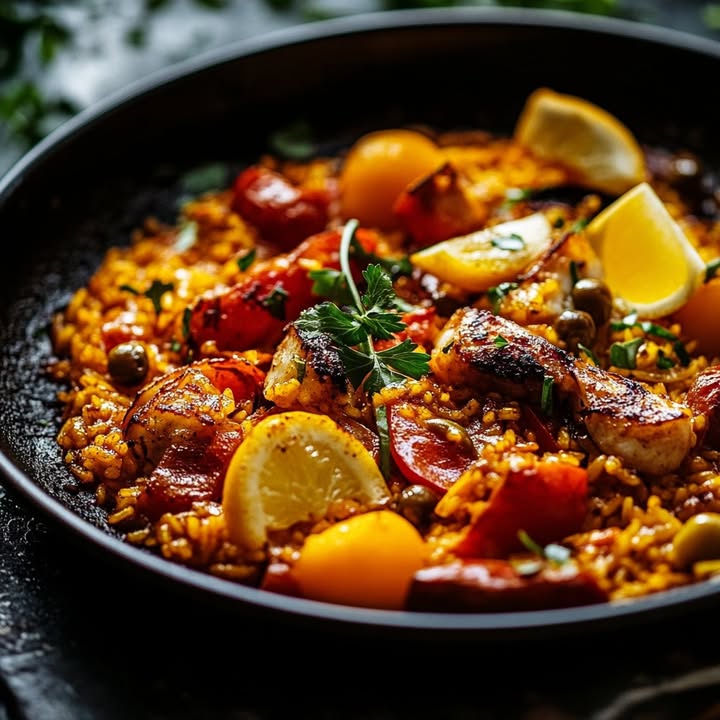
Seafood Chicken Paella: A Dish That Feels Like a Vacation
I still remember the first time I tasted Seafood Chicken Paella. It was during a family trip to Spain, sitting under the warm Mediterranean sun. The vibrant colors of the dish—golden saffron rice, juicy shrimp, tender chicken, and fresh veggies—were almost too beautiful to eat. Almost. One bite, and I was hooked. Back home, I decided to recreate this magic in my kitchen. After lots of trial and error (and some very patient friends), I finally nailed it. Now, I want to share this recipe with you because it’s just that good.
A Little History of This Spanish Treasure
Paella is more than just a dish; it’s a symbol of Spanish culture. Originating from Valencia, it started as a humble farmer’s meal cooked over an open fire. Traditionally, it included rabbit, snails, and whatever veggies were in season. Over time, coastal regions added seafood, creating the Seafood Chicken Paella we know and love today. It’s a perfect mix of land and sea, comfort and elegance. When you make this dish, you’re not just cooking—you’re celebrating centuries of tradition.
Why You’ll Fall in Love with This Recipe
This paella is a flavor powerhouse. The smoky paprika, fragrant saffron, and juicy seafood create a symphony of tastes that will transport you straight to Spain. Plus, it’s surprisingly easy to make. No fancy equipment needed—just one big pan and your stove. Whether you’re a beginner cook or a seasoned pro, this recipe is forgiving and rewarding. And trust me, nothing beats the look on your guests’ faces when you serve them this colorful masterpiece.
Perfect Occasions for Seafood Chicken Paella
Seafood Chicken Paella is versatile. It’s perfect for weeknight dinners when you want something special but not too complicated. It also shines at dinner parties, holiday feasts, or themed nights like “Taste of Spain.” I once made it for a friend’s birthday, and it became the star of the evening. Everyone gathered around the pan, scooping up seconds and thirds. It’s the kind of dish that brings people together.
Ingredients You’ll Need
- 2 tablespoons olive oil
- 1 large onion, finely chopped
- 6 garlic cloves, minced
- 1 small red bell pepper, diced
- 4 boneless chicken thighs, cut into bite-sized pieces
- 4 large tomatoes, chopped
- Salt and pepper, to taste
- 10-12 mussels, cleaned
- 225 grams squid rings
- 3 cups low-sodium chicken or fish stock
- 2 cups medium-grain or jasmine rice
- ½ cup frozen peas
- 1 teaspoon saffron threads or powder
- 1 teaspoon smoked or sweet paprika
- ½ teaspoon garlic powder
- ½ teaspoon onion powder
- 600 grams shrimp, peeled and deveined
- 2 tablespoons fresh parsley, chopped
- 1 tablespoon roasted red pepper strips
Substitution Options
If you can’t find certain ingredients, don’t worry! Swap chicken thighs for turkey or even firm tofu if you’re going meat-free. Use vegetable broth instead of chicken or fish stock for a vegetarian version. Clams or scallops work beautifully in place of mussels, and if saffron is hard to find, a pinch of turmeric adds color (though not quite the same flavor). Frozen corn kernels can replace peas if needed.
Step 1: Prepare the Aromatic Base
Start by heating the olive oil in a large skillet or paella pan over medium heat. Toss in the chopped onion, minced garlic, and diced red bell pepper. Sauté them for about 3 minutes until they soften and release their amazing aroma. This trio forms the base of your dish, so take your time here. Pro tip: Don’t rush the onions—they should be translucent, not browned.
Step 2: Cook the Chicken
Next, add the chicken pieces to the pan. Let them sear until golden brown, which locks in their juices and gives them a rich flavor. Stir in the chopped tomatoes, salt, and pepper. Simmer for 5 minutes until the mixture thickens slightly. At this point, your kitchen will smell incredible, and you’ll know you’re on the right track.
Step 3: Add the Seafood
Now comes the fun part—the seafood! Throw in the mussels and squid rings. Let them cook for about 5 minutes until the mussels start opening up. Pour in the stock, rice, peas, saffron, paprika, garlic powder, and onion powder. Give everything a gentle stir. Watch how the saffron transforms the liquid into a gorgeous golden hue. Chef’s tip: Resist the urge to stir too much once the rice starts cooking—it needs time to absorb the flavors properly.
Step 4: Cook the Rice
Bring the mixture to a boil, then lower the heat and cover the pan. Let the rice simmer gently, absorbing all those delicious juices. Stir occasionally to prevent sticking. Keep an eye on the liquid level—if it looks dry, add a splash more stock. This step takes patience, but trust me, it’s worth it. The result? Perfectly cooked, fluffy rice infused with layers of flavor.
Step 5: Finish with Shrimp
When the rice is nearly done, scatter the shrimp evenly across the top. Cover the pan again and let the shrimp cook until they turn pink and opaque. This final touch adds a burst of color and freshness to the dish. Sprinkle chopped parsley and roasted red pepper strips before serving for a pop of green and red.
Timing Breakdown
- Prep Time: 15 minutes
- Cooking Time: 35 minutes
- Total Time: 50 minutes
This quick timing makes Seafood Chicken Paella ideal for busy evenings without sacrificing quality or taste.
Chef’s Secret
Here’s my secret to restaurant-worthy paella: Toast the rice briefly in the pan before adding the stock. This step enhances its nutty flavor and helps it absorb the liquid better. Just toss the rice in the hot pan for 1-2 minutes before proceeding with the recipe.
An Interesting Fact About Saffron
Saffron, the star ingredient in paella, is one of the most expensive spices in the world. Why? Because it takes about 75,000 flowers to produce just one pound of saffron threads. But don’t let that scare you—a little goes a long way. A single teaspoon can elevate your entire dish.
Necessary Equipment
To make Seafood Chicken Paella, you’ll need a large skillet or a traditional paella pan, a sharp knife for chopping, a wooden spoon for stirring, and measuring spoons. If you don’t have a paella pan, any wide, shallow pan will do the trick.
Storage Tips
Leftover paella keeps well in the fridge for up to 3 days. Store it in an airtight container to preserve its flavors. Reheat gently on the stovetop with a splash of water to keep the rice moist. Freezing isn’t recommended, as the texture of the seafood may change upon thawing.
If you’re planning ahead, prep the veggies and measure out the spices beforehand. This cuts down on prep time significantly. For best results, cook the dish fresh and enjoy it immediately.
One last note: Always store the seafood separately if you’re prepping in advance. Add it only when you’re ready to cook to maintain its freshness and texture.
Tips and Advice
Use high-quality saffron for authentic flavor. Opt for fresh seafood whenever possible—it makes a noticeable difference. Adjust the seasoning gradually; you can always add more salt or spices later. Finally, serve the paella directly from the pan for a rustic touch that impresses every time.
Presentation Ideas
- Garnish with extra parsley and lemon wedges for brightness.
- Serve on a large wooden board for a casual vibe.
- Add edible flowers for a fancy twist.
- Pair with crusty bread and a crisp white wine.
- Present it family-style in the center of the table.
- Use colorful napkins and plates to match the dish’s vibrancy.
Healthier Alternatives
For a lighter version, try these variations:
- Vegetarian Paella: Skip the chicken and seafood, and load up on veggies like zucchini, artichokes, and mushrooms.
- Quinoa Paella: Replace rice with quinoa for added protein and fiber.
- Low-Sodium Option: Use no-salt-added stock and limit added salt.
- Gluten-Free Version: Ensure your stock and spices are gluten-free.
- Spicy Kick: Add chili flakes or hot paprika for heat.
- Herb-Infused: Mix in fresh herbs like cilantro or basil for extra freshness.
Mistake 1: Overcrowding the Pan
Overloading the pan leads to uneven cooking and soggy rice. To avoid this, use a wide pan and resist the urge to double the recipe unless you have two pans. Pro tip: Cook in batches if necessary.
Mistake 2: Stirring Too Much
Constant stirring disrupts the rice’s ability to form that coveted socarrat (crispy bottom layer). Once the liquid is added, let the rice cook undisturbed for most of the process. Trust the recipe!
Mistake 3: Skipping the Saffron
Saffron is what gives paella its signature flavor and color. Omitting it changes the essence of the dish entirely. If budget is a concern, buy small quantities from specialty stores.
Mistake 4: Adding Cold Stock
Adding cold stock slows down the cooking process and affects the texture of the rice. Always bring your stock to room temperature or warm it slightly before using.
Mistake 5: Overcooking the Shrimp
Shrimp cooks quickly, so adding them too early results in rubbery bites. Wait until the rice is almost done before tossing them in.
FAQ: Can I Use Instant Rice?
No, instant rice won’t work here. It lacks the structure needed to absorb the flavorful stock properly. Stick to medium-grain or jasmine rice for the best results.
FAQ: What Is Socarrat?
Socarrat refers to the crispy, caramelized layer of rice at the bottom of the pan. It’s considered a delicacy in authentic paella. To achieve it, increase the heat slightly toward the end of cooking and listen for a crackling sound.
FAQ: Can I Make This Ahead?
While it’s best served fresh, you can prep ingredients like chopping veggies and marinating the chicken ahead of time. Assemble and cook just before serving for optimal flavor and texture.
FAQ: How Do I Clean Mussels?
Scrub the shells under running water and remove the “beard” (the fibrous part sticking out). Discard any mussels that don’t close when tapped—they’re not safe to eat.
FAQ: Can I Use Bottled Garlic?
Fresh garlic is preferable for its robust flavor, but bottled garlic works in a pinch. Just reduce the amount since it’s stronger and more concentrated.
FAQ: Why Does My Rice Turn Mushy?
Mushy rice often happens due to excess liquid or over-stirring. Measure your stock carefully and let the rice sit undisturbed while it absorbs the liquid.
FAQ: Can I Freeze Leftovers?
Freezing isn’t ideal for paella because the seafood loses its texture. However, if you must, freeze the rice and veggies separately and reheat gently.
FAQ: What Wine Pairs Well?
A crisp white wine like Albariño or Sauvignon Blanc complements the dish beautifully. For non-alcoholic options, try sparkling water with a squeeze of lemon.
FAQ: Can I Use Frozen Shrimp?
Yes, but thaw them completely and pat dry before cooking to prevent excess moisture from diluting the flavors.
FAQ: Where Can I Buy Saffron?
Look for saffron at specialty spice shops, gourmet grocery stores, or online retailers. Always check for authenticity to ensure you’re getting real saffron.
FAQ: Can Kids Enjoy This Dish?
Absolutely! Most kids love the mild, savory flavors of paella. You can omit spicy elements like paprika if needed.
FAQ: How Do I Know When It’s Done?
The rice should be tender but still have a slight bite. The liquid should be fully absorbed, and the shrimp should be pink and opaque. If unsure, taste a small portion before serving.
This Seafood Chicken Paella has become a staple in my household, and I hope it becomes one in yours too. It’s a dish that celebrates life’s simple pleasures—good food, good company, and great memories. So grab your apron, gather your loved ones, and get ready to create magic in the kitchen. Bon appétit!
Seafood Chicken Paella
Ingredients
Equipment
Method
- Heat olive oil in a large skillet or paella pan over medium heat; sauté chopped onion, minced garlic, and diced red bell pepper for about 3 minutes.
- Add chicken pieces; sear until golden brown, then stir in chopped tomatoes, salt, and pepper, and simmer for 5 minutes.
- Add mussels and squid rings; cook for about 5 minutes until mussels start to open.
- Pour in stock, rice, peas, saffron, paprika, garlic powder, and onion powder; stir gently and bring to a boil.
- Lower the heat, cover, and let rice simmer, stirring occasionally and adding more stock if necessary.
- When rice is nearly done, scatter shrimp across the top, cover, and cook until shrimp turn pink and opaque.
- Sprinkle with chopped parsley and roasted red pepper strips before serving.