
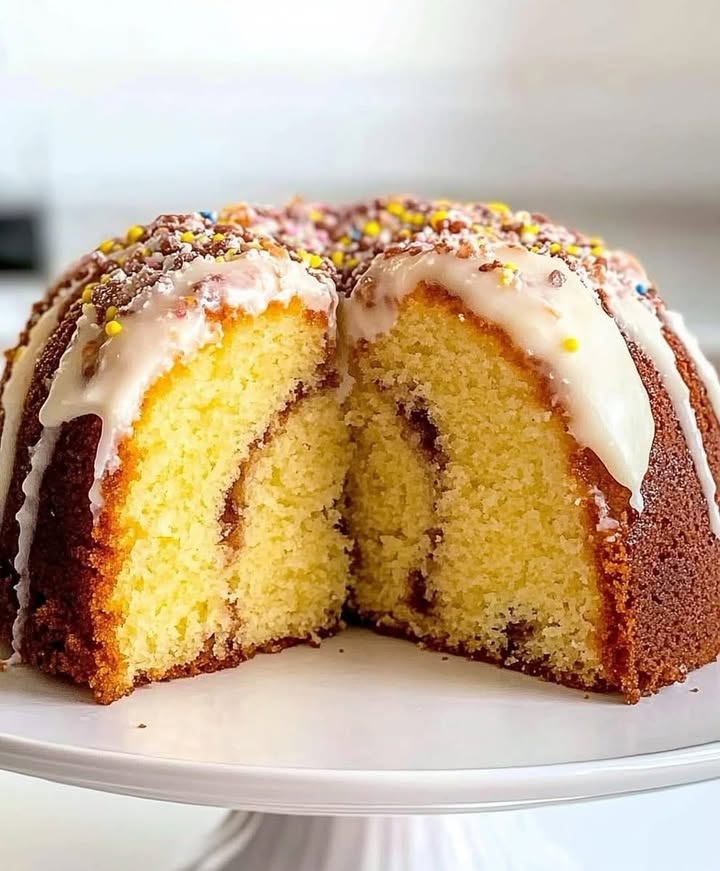
Glazed Pound Cake: More Than Just a Cake, It’s a Hug in Dessert Form
There’s a special kind of quiet in the kitchen just before a glazed pound cake comes out of the oven. The air is sweet and buttery, promising pure comfort. This isn’t a fancy dessert, it’s a classic. It’s the cake you remember from family gatherings, the one that never lasts more than two days on the counter. My grandmother’s recipe card is stained with vanilla and love, and today, I’m sharing my tried-and-true version with you. Let’s bake a memory.
A Slice of History: The Story Behind Pound Cake
The glazed pound cake has such a simple, honest beginning. Centuries ago in Europe, the recipe was easy to remember: a pound of flour, a pound of butter, a pound of sugar, and a pound of eggs. That’s it! It was a baker’s formula, not a fancy name. Over time, bakers (like my grandma) added their own touches—a splash of vanilla, a dollop of sour cream for incredible moisture, and yes, that pretty vanilla glaze drizzle. My modern version lightens it up just a touch with baking powder, but it stays true to that rich, dense, melt-in-your-mouth spirit that has made it a classic dessert for generations. It’s a testament to the fact that the simplest ideas are often the very best.
Why You’ll Fall in Love With This Glazed Pound Cake
You will adore this recipe because it works. Every. Single. Time. It’s a one-bowl cake recipe (mostly!) that yields a stunning, golden-brown cake with a velvety texture. The sour cream is the magic ingredient, creating a crumb so tender it practically sighs when you cut it. The simple vanilla glaze adds a sweet, glossy finish that makes it look bakery-perfect. It’s incredibly versatile, pairs beautifully with coffee or tea, and freezes like a dream. This cake is your new secret weapon for making people feel loved and welcome.
The Perfect Moments for a Classic Pound Cake
This cake is your go-to for any occasion that calls for a touch of homemade grace. It’s brilliant for:
- Sunday Brunches: Served with fresh berries.
- Holiday Gatherings: A beautiful, non-fussy centerpiece.
- Neighborly Gifts: Wrapped in parchment, it’s the kindest “hello.”
- Potlucks: It travels perfectly and always gets eaten first.
- Just Because: A Tuesday afternoon deserves dessert, too.
Gathering Your Ingredients for Success
Here’s your shopping list for this easy baking project. Remember, using room-temperature ingredients is the first secret to a perfect cake!
For the Cake:
- 3 cups all-purpose flour
- ½ teaspoon baking powder
- ¼ teaspoon salt
- 1 cup (2 sticks) unsalted butter, softened
- ½ cup shortening
- 3 cups granulated sugar
- 6 large eggs, room temperature
- 1 cup sour cream, room temperature
- 1 tablespoon pure vanilla extract
For the Vanilla Glaze:
- 1 cup powdered sugar
- 2-3 tablespoons milk or cream
- ½ teaspoon vanilla extract
Handy Ingredient Swaps
Out of something? No panic. Here are some easy substitutions:
- Sour Cream: Full-fat plain Greek yogurt is a great 1:1 substitute.
- Shortening: You can use all butter (for a total of 1 ½ cups). The shortening just helps create a finer crumb.
- Vanilla: Try using almond extract for a different, lovely flavor. Use 1 ½ teaspoons instead of a full tablespoon.
- Glaze Milk: Lemon juice or a flavored coffee creamer can replace the milk for a fun twist.
Step-by-Step: Baking Your Masterpiece
Follow these steps, and you’re guaranteed a gorgeous, delicious glazed pound cake. Let’s get mixing!
Step 1: Prepare Your Kitchen
First, preheat your oven to 325°F (163°C). This lower temperature is key for baking such a large, dense cake evenly without over-browning. Take your Bundt pan and grease it incredibly well. I mean it—get into every nook and cranny with softened butter or baking spray. A well-greased pan is your ticket to a cake that releases in one beautiful, intact piece.
Step 2: Combine the Dry Goods
In a medium bowl, whisk together the flour, baking powder, and salt. Sifting or whisking does two things: it removes any lumps and evenly distributes the leavening agent. This ensures every bite of your homemade cake has a consistent, tender texture. Set this bowl aside for its big moment later.
Pro tip: For an extra-fine crumb, you can sift the flour mixture. But a thorough whisking does the job just fine!
Step 3: Cream the Butter and Sugar
In a large mixing bowl, combine the softened butter, shortening, and granulated sugar. Beat with an electric mixer on medium-high speed for a full 5 to 7 minutes. You want it to become very pale, fluffy, and almost whipped. This step is NOT optional! Creaming incorporates air, which is essential for the cake’s structure and fine texture. You’ll know it’s ready when it looks almost like a fluffy cloud.
Step 4: Incorporate Eggs and Sour Cream
With the mixer on medium, add the room-temperature eggs one at a time. Beat well after each addition until the yolk is fully blended. This patience prevents the batter from curdling. Now, add about one-third of your flour mixture and mix on low just until combined. Follow with half of the sour cream. Repeat, ending with the final third of flour. Finally, stir in the glorious vanilla extract. The batter will be wonderfully thick, creamy, and speckled with vanilla beans if you used a good extract.
Step 5: Bake to Golden Perfection
Carefully spoon the thick batter into your prepared Bundt pan. Smooth the top with a spatula. Place it in the center of your preheated oven. Now, the hard part: wait. Bake for 1 hour and 15 minutes. Start checking at the 1-hour mark. The cake is done when it’s a deep golden brown and a long toothpick inserted into the center comes out clean or with just a few moist crumbs.
Chef’s tip: Do not open the oven door for at least the first hour! A draft can cause the delicate cake to fall.
Step 6: Whip Up the Simple Glaze
While the cake cools, make the glaze. In a small bowl, combine powdered sugar, 2 tablespoons of milk, and the vanilla. Whisk until completely smooth. If it’s too thick to drizzle, add more milk, a teaspoon at a time. You’re looking for a thick but pourable consistency that will cling to the cake’s curves.
Step 7: The Grand Finale: Glaze and Serve
Let the cake cool in the pan on a wire rack for 25 minutes. Then, carefully invert it onto the rack to cool completely. A warm cake will melt the glaze right off. Once it’s totally cool, drizzle your vanilla glaze artfully over the top. Let it set for a few minutes. Then, slice, pour a cup of coffee, and savor the sweet, buttery, vanilla-scented triumph of your classic glazed pound cake.
Your Timetable for Cake Success
- Prep Time: 20 minutes
- Cook Time: 1 hour 15 minutes
- Cooling Time: 1 hour 30 minutes
- Total Time: About 3 hours (mostly hands-off!)
The Secret to an Unbelievably Moist Pound Cake
My grandmother’s secret weapon? Sour cream. The high fat content and acidity in sour cream tenderize the gluten in the flour, resulting in an exceptionally moist, dense, and velvety crumb. It also adds a very slight tang that balances the intense sweetness perfectly. Don’t even think of skipping it—it’s what makes this recipe special.
A Fun Baking Fact
The name “pound cake” comes from its original recipe, which was literally one pound each of flour, butter, sugar, and eggs. This made it easy for illiterate bakers to remember! While our recipe has evolved, that 1:1:1:1 ratio is a fun piece of culinary history you can share when you serve your stunning creation.
Equipment You’ll Need
- 10-12 cup Bundt pan
- Electric stand or hand mixer
- Large and medium mixing bowls
- Whisk and spatula
- Wire cooling rack
- Toothpick or cake tester
Storing Your Delicious Glazed Pound Cake
Because this cake is so moist, storing it properly is easy. Once the glaze has fully set, you can simply cover the cake with a cake dome or place it under an inverted bowl right on the counter. It will stay fresh and delicious for up to 3 days at room temperature.
For longer storage, you can freeze the cake. Wrap the unglazed, completely cooled cake tightly in two layers of plastic wrap and then a layer of aluminum foil. It will keep well in the freezer for up to 3 months. Thaw overnight on the counter, then make your fresh glaze and drizzle it over the thawed cake.
If you’ve already glazed it and need to store slices, place them in a single layer in an airtight container. You can separate layers with parchment paper. Refrigerate for up to 5 days. Let slices come to room temperature for the best flavor and texture before serving.
My Best Tips for Guaranteed Success
- Room Temperature is Key: Cold ingredients don’t incorporate well. Take your eggs, butter, and sour cream out at least an hour before baking.
- Don’t Over-mix: Once you add the flour, mix on low speed just until combined. Over-mixing develops gluten and leads to a tough cake.
- Grease Your Pan Like a Pro: Use melted butter or a baking spray with flour (like Baker’s Joy) to ensure a clean release.
- Cool Completely: I know it’s tempting, but glazing a warm cake is a messy disaster. Patience rewards you with a beautiful finish.
Pretty Presentation Ideas
- Place the glazed cake on a beautiful vintage cake stand.
- Garnish with a light dusting of powdered sugar or edible flowers.
- Serve with a side of macerated berries and a dollop of whipped cream.
- For a party, cut the cake into small, bite-sized pieces for easy sharing.
Six Fun Flavor Twists to Try
Once you master the classic, the world is your oyster! Here are six delicious variations on the glazed pound cake recipe:
- Lemon Blueberry: Add the zest of 2 lemons to the batter and fold in 1 ½ cups of fresh blueberries tossed in a tablespoon of flour.
- Chocolate Marble: Reserve one cup of batter. Mix it with ¼ cup of cocoa powder and 2 tbsp of milk. Swirl into the main batter.
- Brown Sugar Pecan: Substitute 1 cup of the white sugar with dark brown sugar. Fold 1 cup of toasted, chopped pecans into the batter.
- Coconut Cream: Use coconut extract instead of vanilla. Fold in 1 cup of sweetened shredded coconut. Use coconut milk in the glaze.
- Spiced Chai: Add 2 teaspoons of chai spice blend to the dry ingredients for a warm, cozy flavor perfect for fall.
- Almond Poppy Seed: Use 2 teaspoons of almond extract. Fold 3 tablespoons of poppy seeds into the batter for classic crunch.
Common Mistakes to Avoid for Pound Cake Perfection
Mistake 1: Using Cold Ingredients
This is the number one reason a pound cake can be dense and heavy. Cold butter and eggs won’t emulsify properly with the sugar. You’ll end up with a curdled-looking batter that bakes unevenly. Always plan ahead. Take your butter, eggs, and sour cream out of the fridge at least an hour before you start baking. Your batter will be smooth, creamy, and will rise beautifully.
Mistake 2: Not Creaming Long Enough
Creaming butter and sugar isn’t just about mixing. It’s about beating air into the butter. This air creates the cake’s structure. If you only mix for a minute or two, you’re missing out. Set a timer and beat on medium-high for a full 5 to 7 minutes. The mixture should become very pale, light, and fluffy. This step is your best friend for a cake with a fine, tender crumb.
Mistake 3: Over-measuring the Flour
Scooping your measuring cup directly into the flour bag packs it down, leading to too much flour in your cake. Too much flour makes a dry, tough cake. The right way is to spoon the flour lightly into your measuring cup and then level it off with a knife. For guaranteed accuracy, consider weighing your flour. 3 cups of all-purpose flour is about 360 grams.
Mistake 4: Opening the Oven Door Early
We get it—you want to peek! But opening the oven door in the first hour of baking lets out precious heat. This can cause the delicate cake structure to collapse before it’s fully set. Trust the process and the oven light. Only open the door to test for doneness after at least 60 minutes of baking time have passed.
Mistake 5: Glazing a Warm Cake
You’ve waited so long, and that warm cake smells incredible. But pouring glaze on a warm cake will cause it to melt, soak in, and become a sticky, soggy mess. It will also lose its beautiful glossy look. Let the cake cool completely in the pan, then on the rack. The wait ensures a perfect, defined, sweet glaze that sits prettily on top of every slice.
Your Glazed Pound Cake Questions, Answered
Can I make this pound cake in loaf pans?
Absolutely! This batter works wonderfully for two standard 9×5-inch loaf pans. Just grease the pans well and reduce the baking time. Start checking for doneness at around 50-55 minutes. A toothpick inserted in the center should come out clean. This is a great option if you want to gift one loaf and keep the other.
Why did my cake stick to the Bundt pan?
This is a heartbreaker, but it’s usually due to insufficient greasing. Bundt pans have lots of details. You must grease every single crevice with softened butter or a non-stick baking spray that contains flour. Don’t be shy! Also, let the cake cool in the pan for only 20-25 minutes before inverting it. Cooling too long can cause it to steam and stick.
Can I use all butter and omit the shortening?
Yes, you can. Using all butter (1 ½ cups total) will give you a richer, more buttery flavor. However, shortening helps create a lighter, finer crumb and can sometimes make the cake more moist. The all-butter version is delicious but may be slightly denser. It’s a matter of personal taste—both work!
How do I know for sure the cake is done baking?
Use the reliable toothpick test. Insert a long wooden skewer or toothpick into the thickest part of the cake. If it comes out clean or with just a few dry crumbs clinging to it, it’s done. Also, look for the cake pulling away slightly from the sides of the pan, and the top should be a deep, golden brown. If the top is browning too fast, you can tent it loosely with foil.
My glaze is too thin/too thick. How do I fix it?
Glaze consistency is easy to adjust. If it’s too thin and runny, simply whisk in more powdered sugar, a tablespoon at a time, until it thickens. If it’s too thick and won’t drizzle, add more liquid (milk, cream, or lemon juice) just a teaspoon at a time. You want it to be thick but pourable, like a heavy syrup.
Can I add flavors to the basic glaze?
Of course! The basic vanilla glaze is a perfect canvas. Try adding a tablespoon of lemon or orange zest and juice instead of milk. A pinch of cinnamon or a splash of almond extract are lovely. For a citrus cake, a simple glaze made with just lemon juice and powdered sugar is divine. Get creative with your flavors.
How long will this cake stay fresh?
When stored properly at room temperature under a cake dome, your glazed pound cake will stay incredibly moist and delicious for 3 to 4 days. The sugar and fat content act as preservatives. If your kitchen is very warm or humid, you might choose to store it in the refrigerator for up to 5 days.
Can I freeze the glazed cake?
It’s best to freeze the unglazed cake. Wrap the cooled cake tightly in plastic wrap, then foil. Freeze for up to 3 months. Thaw overnight on the counter. Make a fresh batch of glaze and drizzle it over the thawed cake. This gives you the best texture and appearance.
What’s the purpose of sour cream in the recipe?
Sour cream is a powerhouse ingredient here. Its high fat content adds incredible richness and moisture. The acidity helps tenderize the gluten in the flour, resulting in that melt-in-your-mouth, velvety crumb we all love. It also adds a very slight tang that balances the sweetness, making the cake taste more complex and less cloying.
My cake is very dense. What did I do wrong?
A pound cake is meant to be dense compared to a light sponge cake, but it shouldn’t be heavy or gummy. Common causes are over-mixing the batter after adding the flour (which develops gluten), using cold ingredients, or under-baking. Next time, make sure your ingredients are room temp, mix the flour in just until it disappears, and test for doneness with a toothpick.
The Final Slice
There you have it—the secrets to a perfect, glazed pound cake. This recipe is more than a list of steps; it’s an invitation to create joy. It’s forgiving, impressive, and tastes like home. Whether it’s for a special celebration or a simple Tuesday treat, this cake delivers. So, preheat your oven, pull out your Bundt pan, and get ready for the compliments. Happy baking, my friend!
Classic Glazed Pound Cake
Ingredients
Equipment
Method
- Preheat your oven to 325°F (163°C) and grease a Bundt pan well.
- In a medium bowl, whisk together the flour, baking powder, and salt; set aside.
- In a large mixing bowl, cream the softened butter, shortening, and granulated sugar for 5 to 7 minutes until pale and fluffy.
- Add eggs one at a time, mixing well after each addition, then incorporate one-third of the flour mixture and half of the sour cream. Repeat, ending with the final third of flour and the vanilla extract.
- Spoon the batter into the prepared Bundt pan and smooth the top. Bake for 1 hour and 15 minutes, checking for doneness after 1 hour.
- While the cake cools, mix the powdered sugar, milk, and vanilla extract in a small bowl for the glaze until smooth.
- Let the cake cool in the pan for 25 minutes, then invert onto a wire rack to cool completely, glaze it, and serve.