
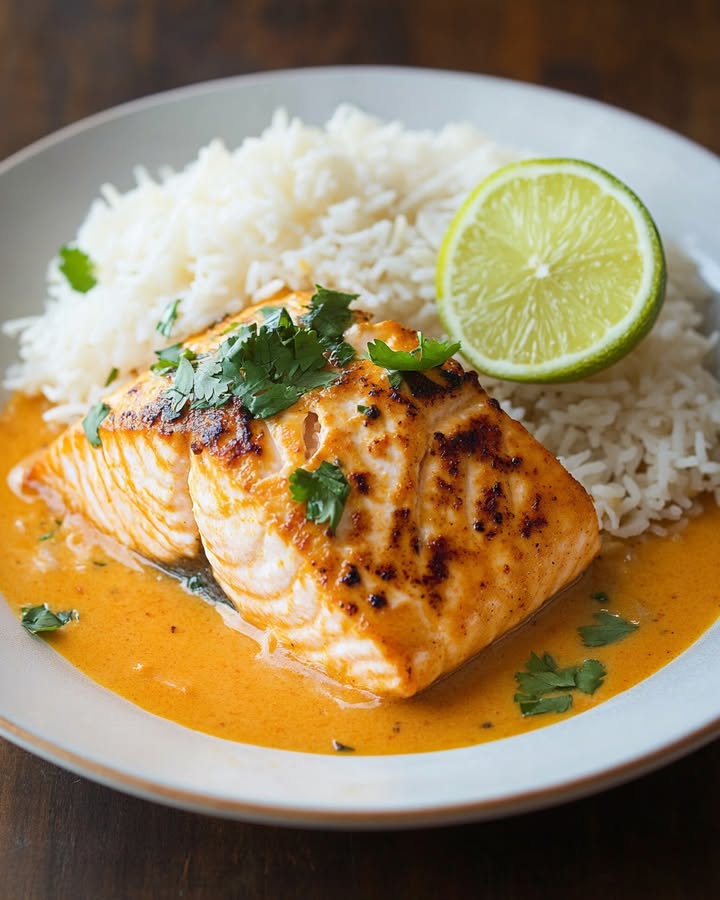
My Kitchen’s Favorite Escape: Exquisite Coconut Curry Salmon
I have a confession. Sometimes, after a long day, I dream of escaping to a beachside café with a breeze and a stunning meal. This Exquisite Coconut Curry Salmon with fluffy jasmine rice is my kitchen’s way of granting that wish without leaving home. The moment you lift the lid and the steam carries the scent of ginger, coconut, and curry into the room, the whole house seems to sigh with happiness. It’s that kind of magic.
The Story Behind This Coconut Curry Salmon
This recipe isn’t from a faraway family trip, but from a cozy friendship. My neighbor, who spent years in Thailand, shared her simple home-cooking secrets. She showed me that authentic flavor doesn’t need a dozen ingredients, but relies on fresh basics: good curry paste, full-fat coconut milk, and a balance of tangy lime and savory fish sauce. My version is a tribute to her lessons, tweaked for my family who loves rich flavors but also needs a quick dinner solution. It’s a bridge between traditional inspiration and my modern, busy kitchen.
Why You’ll Absolutely Love This Recipe
You’ll love this for three big reasons. First, the **flavor is a whole adventure** in one bowl—creamy, a little spicy, tangy, and savory all at once. Second, it’s **surprisingly simple**. The sauce builds in one pan while your rice cooks nearby. Third, it feels fancy and healthy, making it perfect for a Tuesday dinner or a Saturday when friends drop by. It’s a crowd-pleaser that never makes you sweat.
Perfect Occasions for This Dish
This Coconut Curry Salmon shines at so many moments! It’s my go-to for a **special weeknight dinner** that feels like a celebration. It’s fantastic for a **small, intimate dinner party** because it’s beautiful on the plate. I’ve even served it for a **casual weekend lunch** when you want something satisfying but not heavy. Honestly, it works anytime you crave something delicious and comforting.
Ingredients for Exquisite Coconut Curry Salmon & Rice
For the Coconut Curry Salmon:
- 4 salmon fillets (about 6 oz each)
- 1 tablespoon vegetable oil or coconut oil
- 1 medium onion, finely chopped
- 3 cloves garlic, minced
- 1-inch piece ginger, minced
- 1-2 green chilies, sliced (adjust for spice)
- 1 tablespoon red curry paste (or more, to taste)
- 1 can (14 oz) coconut milk
- 1 tablespoon fish sauce (optional)
- 1 tablespoon lime juice
- 1 teaspoon brown sugar
- Salt and pepper, to taste
- Fresh cilantro, for garnish
- Lime wedges, for serving
For the Jasmine Rice:
- 1.5 cups jasmine rice
- 3 cups water
- 1 teaspoon salt
- 1 tablespoon lime juice (optional)
Easy Substitutions to Make It Your Own
Don’t stress if you’re missing something! Here are my favorite swaps:
- Salmon: Try firm tofu or large shrimp. Both cook beautifully in the curry.
- Red Curry Paste: Yellow or green curry paste works. Each brings a different flavor profile—yellow is milder, green is herbaceous.
- Fish Sauce (optional): A splash of soy sauce or a pinch more salt can mimic that savory depth.
- Green Chilies: A dash of red chili flakes or a spoonful of sriracha can provide the heat.
- Jasmine Rice: Basmati or plain white rice are perfect alternatives.
How to Make Coconut Curry Salmon: Step-by-Step
Step 1: Rinse and Start Your Rice
Begin by rinsing your jasmine rice under cold water. Swirl it around until the water runs clear, not cloudy. This washes away extra starch so your rice cooks up separate and fluffy, not gluey. Drain it well and put it in a saucepan with the water and salt. Bringing this to a boil now means your rice will be ready and resting just as your amazing curry sauce finishes. Pro tip: Listen for the gentle simmer after you cover it—that’s the sound of perfect rice cooking.
Step 2: Build Your Flavor Foundation
Heat your oil in a large skillet over medium heat. Add the chopped onion and let it sauté until it softens and turns a lovely translucent gold. This sweet base is crucial. Now, stir in the minced garlic, ginger, and your sliced green chilies. The kitchen will smell incredible in just a minute—pungent, sharp, and wonderfully aromatic. This trio is the soul of your sauce.
Step 3: Wake Up the Curry Paste
Add the red curry paste to the skillet. Stir it into the onion mixture for a full minute or two. You’re not just mixing; you’re “cooking out” the paste. This step blooms its flavors, releasing deeper, richer notes and marrying it with the other ingredients. It transforms from a raw paste into a complex flavor base.
Step 4: Create the Luxurious Coconut Sauce
Slowly pour in the coconut milk, stirring as you go. Watch the vibrant red paste swirl into the creamy white milk, creating a gorgeous orange-pink sauce. Let it come to a gentle simmer. The coconut milk will thicken slightly and its richness will meld with the spicy foundation. This is the moment your sauce becomes velvety and inviting.
Step 5: Cook the Salmon to Perfection
Carefully nestle your salmon fillets into the simmering sauce. Spoon some sauce over each one to coat it. Cover the skillet. This gentle poaching in the curry sauce cooks the salmon evenly, keeping it moist and infusing it with flavor. Cook for 8-10 minutes, until the salmon flakes easily with a fork. Now, taste the sauce! Adjust the magic with fish sauce (for savoriness), lime juice (for brightness), brown sugar (for balance), and salt and pepper.
Step 6: Fluff Your Rice and Serve
Your rice should be done. Remove it from heat, let it sit covered for 5 minutes (this is key for perfect texture), then fluff it with a fork. Stir in a tablespoon of lime juice if you want an extra zing. To serve, spoon that fluffy rice onto plates, top with a salmon fillet and generous ladles of sauce. Garnish with fresh cilantro and lime wedges. Chef’s tip: Let people squeeze fresh lime over their own portion—it adds a burst of freshness they’ll love.
Your Timeline for a Stress-Free Meal
- Prep Time: 15 minutes (chopping, rinsing)
- Cooking Time: 25 minutes (rice and salmon curry simultaneously)
- Resting Time: 5 minutes (for the rice)
- Total Time: About 45 minutes from start to first delicious bite.
A Chef’s Secret for Unbeatable Flavor
My secret is in the **taste and adjust** step after the salmon cooks. Don’t just follow the measures blindly. Taste your sauce then. Maybe you want more lime for tang, or a pinch more sugar if the chilies are too fierce. That final personal tweak makes the dish uniquely yours and perfectly balanced for your table.
A Little Extra Info About Our Star Ingredient
Coconut milk isn’t just for tropical drinks! In curries, its fat content carries and mellows the spices, creating a sauce that’s both rich and light. Full-fat coconut milk gives the best texture and flavor. Using it feels indulgent, but salmon and coconut are packed with good nutrients. For more on the benefits of including fatty fish and other healthy ingredients in your diet, you can check out this dietary information from a trusted source.
Necessary Equipment
You only need a few basics:
- A medium saucepan (for the rice)
- A large skillet or deep frying pan with a lid (for the salmon curry)
- A good knife and cutting board
- A wooden spoon or spatula for stirring
- A fork for fluffing rice
How to Store Your Coconut Curry Salmon
For leftover storage: Place any leftover salmon and sauce in an airtight container. Store it separately from the rice if you can, as the rice absorbs sauce and can become mushy. It will keep well in the refrigerator for up to 2 days.
Reheating tips: Reheat the curry gently in a skillet over low heat or in the microwave. Avoid high heat, which can overcook the salmon and break the coconut sauce. For the rice, a quick steam in the microwave with a sprinkle of water will bring back its fluffiness.
Freezing is possible, but with caution: You can freeze the curry sauce, but I don’t recommend freezing the cooked salmon as it can become dry and lose texture upon thawing. If you do freeze, thaw slowly in the fridge and reheat gently.
My Best Tips and Advice
- Rinse that rice! It truly makes a difference in the final texture.
- Don’t rush the onion sauté. Let it become truly soft and sweet—it’s the foundation.
- Use full-fat coconut milk. Light coconut milk won’t give you the same luxurious, creamy body.
- Let the rice rest. That 5-minute wait after cooking allows the grains to set perfectly.
Presentation Tips to Wow Your Guests
- Serve in shallow bowls to showcase the beautiful sauce pooling around the rice.
- Place a bright lime wedge and a sprig of fresh cilantro directly on the salmon.
- For a pop of color, sprinkle a few red chili slices or a pinch of paprika over the dish.
- If serving for guests, consider a small side of quick-pickled cucumber slices for a fresh crunch.
6 Delicious Variations to Try
Love this recipe? Try these twists!
- Coconut Curry Chicken: Swap salmon for chicken thighs. Simmer until the chicken is cooked through and tender. It’s equally comforting and rich.
- Vegetable Coconut Curry: Skip the fish and add hearty veggies like bell peppers, cauliflower, and chickpeas. A vibrant, filling vegetarian option.
- Spicy Shrimp Curry: Use large shrimp instead of salmon. Cook them just until pink and curled—they take less time and bring a different seafood sweetness.
- Thai-Inspired Noodle Bowl: Serve the curry sauce over cooked rice noodles instead of jasmine rice. Add bean sprouts and basil for a street-food vibe.
- “Weeknight Fisherman’s” Curry: Use any firm white fish like cod or halibut. The cooking method is the same, but the flavor feels lighter.
- Extra-Green Curry: Use green curry paste and stir in fresh spinach or kale at the end. It’s an herbaceous, health-packed version.
If you enjoy one-pan dinners that are packed with flavor, you might also love our Creamy Garlic Butter Chicken and Rice Skillet. For a sauce that feels truly special, our Marry Me Chicken with Sun-Dried Tomato Cream Sauce is a reader favorite. If you’re looking for a quick, healthy ground beef option, this One-Pot Ground Beef Zucchini Skillet is a winner. And for effortless oven cooking, nothing beats our classic Sheet Pan Lemon Garlic Chicken and Potatoes.
Common Mistakes to Avoid
Mistake 1: Not Rinsing the Jasmine Rice
This seems like a small step, but skipping it leads to sticky, clumpy rice instead of the desired separate, fluffy grains. The starch on unrinsed rice makes it gluey as it cooks. Simply place the rice in a bowl, cover with cold water, swish it around, and drain. Repeat until the water is mostly clear. It takes two minutes but changes your whole meal.
Mistake 2: Overcooking the Salmon
Salmon cooked too long becomes dry and loses its delicate texture. Since it’s poaching in sauce, 8-10 minutes is usually perfect for 6-ounce fillets. Check by pressing a fork gently into the thickest part; it should flake easily but still look moist inside. Remove it from the heat as soon as it’s done. Pro tip: If your fillets are thinner, reduce the time by a minute or two.
Mistake 3: Using Light Coconut Milk
Light coconut milk is watered down. It won’t give your sauce the rich, creamy body that makes this dish so indulgent and helps carry the spice flavors. Always opt for full-fat, unsweetened coconut milk. The sauce will be velvety and coat the rice and salmon beautifully, creating that luxurious feel.
Mistake 4: Adding Curry Paste Straight to Cold Liquid
If you just dump the curry paste into the coconut milk without first cooking it in the oil with the onions, garlic, and ginger, its flavors will be flat and undeveloped. That minute or two of stirring it in the hot skillet “wakes up” the spices, deepening their taste and aroma. Don’t skip this blooming step.
Mistake 5: Skipping the Final Taste-Adjustment
The recipe gives measures, but your palate is the final judge. After the salmon cooks, taste the sauce! Maybe you need more lime for brightness, or a pinch of salt. Perhaps the spice is too strong and a teaspoon of sugar would balance it. This final adjustment tailors the dish to your liking and ensures a perfect result.
This Coconut Curry Salmon is just one example of the many satisfying main dish recipes we have that turn simple ingredients into something special.
Your Coconut Curry Salmon Questions Answered
Can I use a different type of fish?
Absolutely! Firm-fleshed fish like cod, halibut, or even sea bass work wonderfully in this coconut curry. The cooking method is the same, but keep an eye on the timing as thinner fillets might cook a bit faster. The key is to ensure the fish doesn’t overcook and fall apart. The rich sauce pairs beautifully with almost any seafood, making this a versatile recipe for your favorite catch.
How can I make this dish less spicy?
To control the heat, start by using only one green chili, or even omit it entirely. You can also choose a milder red curry paste—some brands are hotter than others. Remember, the final taste-adjustment step is crucial. If the sauce is still too spicy for your taste, a little extra coconut milk or a teaspoon more of brown sugar can help mellow and balance the flavors perfectly.
Is the fish sauce really necessary?
Fish sauce is not strictly necessary, but it adds a unique savory, umami depth that is classic in many Southeast Asian curries. If you don’t have it or prefer not to use it, you can substitute with a splash of soy sauce or simply add a bit more salt to the sauce. The dish will still be delicious, but the fish sauce provides a distinct flavor layer that many lovers of this cuisine enjoy.
Can I add vegetables to the curry?
Yes, adding vegetables is a great way to make the meal more substantial and nutritious. Quick-cooking veggies like bell peppers, spinach, or snap peas can be stirred into the sauce a few minutes before the salmon is done. For harder vegetables like carrots or cauliflower, sauté them with the onions at the beginning to ensure they soften properly. It’s a flexible dish.
What’s the best way to reheat leftovers?
Reheat leftovers gently to preserve the salmon’s texture. Place the salmon and sauce in a skillet over low heat, covering it to create a gentle steam. You can also use the microwave on a medium setting for short bursts. For the rice, sprinkle a little water over it before reheating to bring back moisture. Avoid high heat which can make the salmon dry and the sauce separate.
Can I prepare the sauce ahead of time?
You can prepare the curry sauce base ahead of time! Cook the onions, garlic, ginger, chilies, and curry paste, then add the coconut milk and simmer. Cool and refrigerate this sauce for up to a day. When ready to cook, reheat the sauce to a simmer, then add the salmon and finish as directed. This saves time and makes weeknight cooking even faster.
My sauce seems too thin. How can I thicken it?
If your sauce is thinner than you’d like, let it simmer uncovered for a few extra minutes after adding the coconut milk. This allows evaporation and natural thickening. Alternatively, you can mix a tablespoon of cornstarch with a little cold water, stir it into the simmering sauce, and cook for another minute. The cornstarch will thicken it without altering the flavor.
What can I serve alongside this dish?
This dish is quite complete on its own with the rice. For a simple side, a quick cucumber salad or steamed bok choy complements it well. If you’re serving a crowd, some fresh spring rolls or a plate of crispy roasted Brussels sprouts can add variety. The lime wedges and cilantro garnish already provide freshness, so sides are optional.
How do I know when the salmon is perfectly cooked?
Perfectly cooked salmon will flake easily when gently pressed with a fork at its thickest part, but it should still look moist and slightly translucent in the very center. It shouldn’t be firm all the way through. The internal temperature should reach about 125°F to 130°F for medium. Remember, it will continue to cook a little after you remove it from the heat, so take it out just as it flakes.
Can I use frozen salmon for this recipe?
Yes, you can use frozen salmon. Thaw it completely in the refrigerator before cooking. Pat the fillets dry very well with paper towels to remove excess moisture. This ensures they sear properly in the sauce and don’t release too much water, which could dilute your beautiful curry. Properly thawed and dried frozen salmon works just fine.
Final Thoughts on This Family Favorite
This Exquisite Coconut Curry Salmon with fluffy jasmine rice has become a staple in my home. It’s the recipe I pull out when I want a dinner that feels like a treat but doesn’t require a whole afternoon of work. It’s flavorful, healthy, and endlessly adaptable. I hope it brings a little escape and a lot of joy to your table, just as it does to mine. Give it a try, taste and adjust, and make it your own. Happy cooking!
Coconut Curry Salmon
Ingredients
Equipment
Method
- Rinse jasmine rice under cold water until the water runs clear, then drain well.
- In a saucepan, combine the rinsed rice, water, and salt, and bring to a boil.
- Heat oil in a large skillet over medium heat and sauté the chopped onion until soft and translucent.
- Stir in the minced garlic, ginger, and sliced green chilies, cooking for about a minute.
- Add red curry paste to the skillet and cook for 1-2 minutes until the flavors bloom.
- Slowly pour in the coconut milk, stirring until combined, and let it come to a gentle simmer.
- Nestle the salmon fillets into the sauce, spooning some sauce over each one, then cover the skillet.
- Cook for 8-10 minutes until the salmon flakes easily with a fork, then adjust the seasoning to taste.
- Remove the rice from heat, let it sit covered for 5 minutes, then fluff with a fork and stir in lime juice if desired.
- Serve the rice topped with salmon and generous ladles of the sauce, garnished with cilantro and lime wedges.