
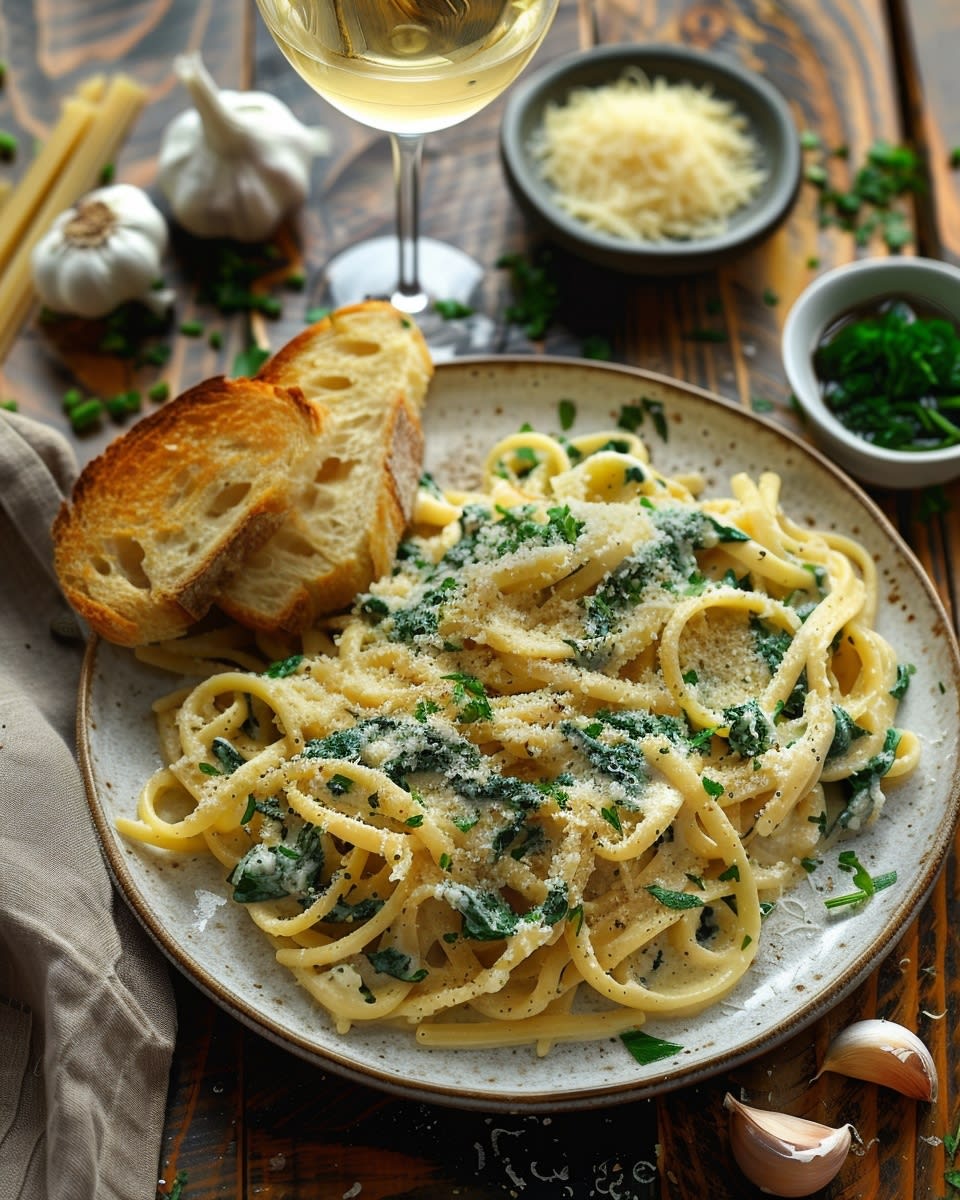
Creamy Spinach Garlic Parmesan Pasta
I still remember the night I threw together this pasta dish out of sheer desperation. My fridge was nearly empty, and I had friends coming over in an hour. All I had was some spinach that needed using, a box of pasta, garlic, and parmesan cheese. What started as a panic dinner became my most requested recipe. That’s the beauty of Creamy Spinach Garlic Parmesan Pasta. It tastes like you spent hours in the kitchen, but it’s ready in about 20 minutes.
This dish has become a favorite among pasta lovers for good reason. The creamy sauce coats every strand of pasta perfectly. Fresh garlic adds that amazing smell that fills your kitchen. Spinach brings color and nutrients. And parmesan cheese? It creates that rich, savory flavor that makes you want seconds.
The taste experience is hard to beat. Each bite gives you smooth creaminess mixed with the slight bite of garlic. The spinach adds a mild earthiness that balances everything out. The parmesan brings a salty, nutty flavor that ties it all together. It’s comfort food at its finest.
Whether you’re cooking for yourself on a Tuesday night or hosting a dinner party, this recipe works. I’ve made it dozens of times, and it never fails to impress. The best part? You probably have most of these ingredients already. So grab your pot and pan. Let’s make something delicious together.
Ingredients Overview for Your Creamy Spinach Garlic Parmesan Pasta
The ingredient list for this dish is refreshingly short. You don’t need a dozen specialty items or expensive products. Just simple, quality ingredients that work together beautifully.
Here’s what you’ll need for the basic recipe:
- Pasta – I prefer fettuccine or linguine, but any long pasta works great
- Fresh spinach – About 3 to 4 cups, which wilts down nicely
- Garlic – 4 to 5 cloves, minced or thinly sliced
- Parmesan cheese – Freshly grated, about 1 cup
- Heavy cream – 1 cup for that rich, creamy texture
- Butter – 2 tablespoons adds extra richness
- Olive oil – For cooking the garlic
- Salt and pepper – To taste
- Pasta water – Save some before draining
Let me be clear about one thing. Fresh ingredients make a huge difference here. I learned this the hard way when I tried using pre-grated parmesan from a can. The texture was grainy, and the flavor fell flat. Freshly grated parmesan melts smoothly into the sauce and creates that silky consistency you want.
Fresh spinach beats frozen every time for this recipe. Baby spinach is my favorite because the leaves are tender and cook down quickly. You can use regular spinach too, just remove those tough stems. Fresh garlic is non-negotiable. The jarred minced stuff doesn’t give you that same punch of flavor.
The type of pasta matters more than you might think. Long pasta like fettuccine, linguine, or spaghetti holds the creamy sauce better than short shapes. The sauce clings to each strand. But I won’t judge if you use penne or rigatoni. Use what you have or what you love.
Heavy cream creates that luxurious texture we’re after. Some people ask if they can use milk instead. You can, but the sauce won’t be as thick or rich. Half and half works as a middle ground if you want something lighter.
Optional add-ins can transform this dish into a complete meal. Here are my favorite protein additions:
- Grilled chicken – Slice it thin and add it at the end
- Shrimp – Sauté them separately and toss them in
- Italian sausage – Cook it first, then make the sauce in the same pan
- Bacon – Crispy bits add a smoky flavor
I often make this with chicken when I need something more filling. Just season some chicken breasts with salt and pepper. Cook them in a separate pan while the pasta boils. Slice them up and add them to the finished pasta. It takes maybe five extra minutes.
Shrimp works beautifully too. The sweetness of shrimp pairs perfectly with the garlic and parmesan. Season them with a little salt and red pepper flakes. Sauté them in butter until pink. Done.
You can also add extra vegetables if you want. Cherry tomatoes bring a burst of freshness. Mushrooms add an earthy flavor. Sun-dried tomatoes create a tangy contrast. Red pepper flakes give it a gentle kick.
Now let’s talk about how these ingredients work together. The butter and olive oil create the base for cooking the garlic. Garlic needs fat to release its flavor without burning. The heavy cream becomes our sauce foundation. When you add hot pasta water to cream, magic happens. The starchy water helps the sauce stick to the pasta.
Parmesan cheese does double duty. It thickens the sauce and adds that signature savory taste. The salt in parmesan means you need less additional salt. Fresh spinach wilts into the hot sauce in seconds. It adds color, nutrition, and a subtle flavor that doesn’t overpower the dish.
The pasta water is your secret weapon. That starchy liquid helps bind everything together. It loosens the sauce if it gets too thick. Never skip saving some before you drain the pasta. I’ve forgotten before, and I regretted it every time.
One thing I love about this recipe is how flexible it is. Out of heavy cream? Try cream cheese thinned with milk. No fresh spinach? Frozen works in a pinch (just thaw and squeeze out the water first). You can adjust the garlic based on how much you love it. I use five cloves because I’m a garlic fanatic.
The beauty of Creamy Spinach Garlic Parmesan Pasta is its simplicity. Each ingredient has a purpose. Nothing is there just for show. The garlic provides aroma and flavor. The spinach adds freshness. The parmesan creates depth. The cream brings it all together in a velvety sauce.
These ingredients are also easy to keep on hand. I always have pasta, garlic, and parmesan in my kitchen. A bag of spinach lasts in the fridge for days. Heavy cream freezes well if you buy extra. This means you can make this dish whenever the craving hits.


Preparation Steps for Making Creamy Spinach Garlic Parmesan Pasta
Now that we’ve covered what goes into this dish, let’s talk about actually making it. The cooking process is straightforward, but there are some tricks I’ve picked up that make the difference between good pasta and restaurant-quality pasta.
First things first, get your water boiling. Fill a large pot with water and add a generous amount of salt. I’m talking more than you think you need. The water should taste like the sea. This is your only chance to season the pasta itself, so don’t be shy. I learned this from an Italian friend who nearly had a heart attack watching me cook unsalted pasta water. She was right to be horrified.
While the water heats up, prep your garlic and spinach. Mince the garlic or slice it thin, your choice. I like mine minced because it distributes more evenly through the sauce. Rinse your spinach even if the bag says pre-washed. Give it a good shake to remove excess water. Wet spinach makes the sauce watery, and nobody wants that.
Once your water reaches a rolling boil, add the pasta. Give it a good stir right away so nothing sticks to the bottom. Check your package for cooking time, but here’s my rule: cook it one minute less than the package says. This gives you perfectly al dente pasta that still has a slight bite. Mushy pasta ruins this dish faster than anything else.
Set a timer. Seriously, set one. I can’t tell you how many times I’ve gotten distracted and overcooked pasta. While it cooks, grab a measuring cup or small bowl. When the timer goes off, scoop out about a cup of that starchy pasta water before draining. This step is crucial. That cloudy water is liquid gold for your sauce.
Here’s where timing becomes important. About three minutes before your pasta finishes cooking, start your sauce. Heat a large skillet over medium heat. Add your olive oil and butter together. Let the butter melt and start to foam slightly. This combination gives you the best of both worlds – the butter adds richness while the olive oil prevents burning.
Toss in your garlic. This is the moment that makes your whole house smell incredible. Watch that garlic like a hawk. It should sizzle gently and turn light golden, which takes maybe a minute. The second it starts to brown too much, you need to move fast. Burnt garlic tastes bitter and ruins everything. I speak from experience here. Once I got distracted by my phone and ended up with blackened garlic that I had to throw out and start over.
The trick with garlic is keeping the heat at medium. Too high and it burns before releasing its flavor. Too low and it just sits there doing nothing. You want to hear that gentle sizzle. When the garlic becomes fragrant and just starts to turn golden at the edges, add your spinach immediately.
Dump all that spinach into the pan. It looks like way too much at first. Don’t worry. Spinach is basically just water and leaves, so it shrinks down dramatically. Use tongs or a wooden spoon to toss it around in the garlicky oil. Within thirty seconds, it starts wilting. Within two minutes, it’s completely cooked down. Season it with a pinch of salt and some black pepper.
Now comes the fun part – building the sauce. Lower your heat to medium-low. Pour in the heavy cream. Let it warm up for about thirty seconds, then start adding your freshly grated parmesan a handful at a time. This is where patience pays off. If you dump all the cheese in at once, it clumps up into a ball. Nobody wants stringy cheese chunks in their pasta.
Stir constantly as you add the cheese. Watch it melt into the cream, creating this gorgeous, glossy sauce. The sauce will thicken as the cheese melts. If it starts looking too thick, add a splash of that reserved pasta water. The starch in the water helps everything come together and creates a silky texture that coats the pasta perfectly.
Funny enough, I used to skip the pasta water step entirely. I thought it was one of those fancy cooking show tricks that didn’t really matter. Then I tried it once, and the difference was night and day. The sauce clings to each strand instead of pooling at the bottom of the bowl. It’s like discovering that one missing ingredient that makes everything click.
By now your pasta should be done. Drain it quickly and add it straight to the sauce while both are still hot. This is important – hot pasta absorbs the sauce better than cold pasta. Use tongs to lift and toss the pasta through the sauce. I find this works better than stirring with a spoon. You want every strand coated evenly.
Keep tossing and adding splashes of pasta water until you get the consistency you want. The sauce should coat the pasta but still have some movement. Not too thick, not too runny. Just right. Taste it now and adjust your seasoning. Need more salt? Add it. Want more pepper? Go for it. Some people like a pinch of nutmeg here, which sounds weird but actually brings out the creaminess of the sauce.
The whole process from start to finish takes about twenty minutes if you’ve got everything ready. That’s less time than ordering delivery. And honestly, it tastes better than most Italian restaurants I’ve been to. Maybe I’m biased because I made it myself, but my friends agree.
One more tip I discovered by accident: don’t rinse your pasta after draining. I know some people do this, but it washes away the starch that helps the sauce stick. Just drain and immediately toss with the sauce. The residual heat and starch work together to create that perfect creamy coating.
If you’re adding protein like chicken or shrimp, fold it in at the very end after everything else is combined. This keeps it from getting overcooked or lost in the sauce. Same goes for any extra vegetables you might want to throw in. Keep it simple, let each component shine.
Serving Suggestions and Making It Special
The beauty of this creamy garlic parmesan pasta is how well it stands alone, but sometimes you want to round out the meal. I usually serve it with something light and fresh since the pasta itself is pretty rich.
A simple side salad works perfectly. Nothing fancy – just mixed greens with a basic vinaigrette cuts through the richness of the cream sauce. I often whip up something similar to a Mediterranean chickpea cucumber salad when I want something with more substance. The bright, tangy flavors balance the creamy pasta beautifully.
Garlic bread is the obvious choice, and I won’t pretend I don’t make it almost every time. But here’s the thing – you already have garlic in your pasta, so you don’t need to go overboard with garlic on the bread. Sometimes I just brush sliced baguette with olive oil, sprinkle some parmesan on top, and toast it until golden. Simple and perfect for scooping up any extra sauce.
For weeknight dinners, I keep it casual. Serve the pasta in big bowls with a little extra parmesan grated on top. Maybe a glass of white wine if you’re feeling fancy. The whole meal comes together so quickly that it feels like a treat even on a Tuesday.
But when I want to make it feel more special, a few small touches transform the dish. A sprinkle of red pepper flakes adds a gentle heat that wakes up your taste buds without overpowering anything. Fresh lemon zest might sound odd, but trust me on this one. Just a tiny bit grated over the top right before serving adds this bright note that cuts through the richness. Don’t skip it if you really want to impress someone.
By the way, fresh herbs make a huge difference in presentation. Torn basil leaves or chopped parsley scattered on top make the dish look like something from a restaurant. I keep both growing on my windowsill just for moments like this. They’re easy to grow and cost way less than buying them at the store every week.
I’ve served this pasta at dinner parties where I needed to feed eight people without spending hours in the kitchen. The secret? I doubled the recipe and used my biggest pot and pan. Everyone thinks you slaved away when really you just stirred some cream and cheese together. Nobody needs to know it took twenty minutes.
For a lighter meal, pair it with something protein-rich like my high protein cottage cheese egg bake if you’re doing brunch. Or if you want to keep things in the dinner realm, the pasta works surprisingly well alongside grilled fish. The creaminess complements rather than competes with simply prepared seafood.
Here’s something I discovered last summer: this pasta is amazing for picnics if you serve it at room temperature. I know that sounds crazy for a creamy pasta, but hear me out. Let it cool slightly, add a bit more pasta water to keep it from drying out, and pack it in containers. It’s like a fancy pasta salad that actually has flavor. Just bring extra parmesan to sprinkle on top before eating.
The versatility really shines through depending on what you pair it with. Serve it with salmon and fresh vegetables for a more upscale feel. Or keep it super casual with just the pasta and some crusty bread. Both work perfectly.
For kids, I sometimes leave out the pepper and go easy on the garlic. They love the creamy cheese sauce, and the spinach sneaks in some vegetables without them really noticing. My nephew calls it “green spaghetti” and asks for it constantly. His mom thanks me every time because getting him to eat anything green is usually a battle.
If you’re meal prepping, this pasta reheats surprisingly well for a cream sauce. Add a splash of milk or cream when reheating to loosen it back up. Microwave it in thirty-second bursts, stirring between each one. Or reheat it gently on the stove with a little extra liquid. Either way works.
Want to make it feel like a complete restaurant experience at home? Serve it in warmed bowls. Just run your serving bowls under hot water for a minute, dry them off, and then add the pasta. The warm bowl keeps everything at the perfect temperature longer. Small detail, big impact.
Sometimes when I’m eating this alone on a weeknight, I’ll pair it with something totally different like a light vegetable soup as a starter. The contrast between the light soup and rich pasta makes both taste even better. Plus, it makes a simple dinner feel more special without any extra effort.


Health Benefits and Nutritional Value
Let’s talk about something that might surprise you. This creamy, indulgent pasta actually brings some legitimate nutritional benefits to your table. I’m not saying it’s health food exactly, but it’s definitely not the nutritional disaster you might assume.
The spinach alone makes this dish worth celebrating. Fresh spinach is packed with vitamins A, C, and K. It’s also loaded with iron, which your body needs to carry oxygen through your blood. My doctor once told me that adding just one cup of cooked spinach to your daily meals can make a noticeable difference in your energy levels. I didn’t believe her until I started eating more greens regularly, and honestly, she was right.
Here’s what makes spinach special in this recipe. Unlike some cooking methods that destroy nutrients, the quick wilting technique we use preserves most of the good stuff. You’re barely cooking it for two minutes. That means the vitamins stay intact. Plus, the fat from the cream and butter actually helps your body absorb the fat-soluble vitamins in spinach better. So that richness serves a purpose beyond just tasting amazing.
Garlic deserves its own moment of appreciation. People have used garlic for medicinal purposes for thousands of years, and modern science backs up a lot of those traditional beliefs. Garlic contains compounds that can support your immune system and heart health. The allicin in garlic has natural antibacterial properties. Every time cold season rolls around, I make this pasta extra garlicky and convince myself it’s keeping me healthy. Placebo effect or not, I rarely get sick.
Now let’s address the elephant in the room – the cream and cheese. Yes, they’re high in fat and calories. But parmesan cheese brings more than just flavor. It’s an excellent source of calcium, which your bones need to stay strong. One cup of grated parmesan contains about 20 grams of protein too. According to the USDA guidelines for protein balance, getting protein from different sources throughout the day supports muscle health and keeps you feeling full longer.
The protein content in this dish surprised me when I actually calculated it. Between the parmesan and the pasta itself, you’re getting a decent amount. Add chicken or shrimp, and you’ve got a meal that keeps you satisfied for hours. I used to get hungry an hour after eating regular spaghetti with marinara. This version keeps me full until my next meal.
The pasta contributes more than you might think. It provides carbohydrates that give you energy. Your brain runs on glucose from carbs, so don’t let anyone tell you pasta is the enemy. The key is portion control and balance, not elimination. I learned this the hard way during a brief phase where I tried cutting out all carbs. My workouts suffered, my mood tanked, and I was miserable. Carbs are your friend when eaten in reasonable amounts.
Want to boost the nutritional profile even more? Swap regular pasta for whole wheat. I’ll be honest – I resisted this switch for years because I thought whole wheat pasta was cardboard-textured sadness. Then I found a good brand that actually tastes great. Whole wheat pasta adds fiber, B vitamins, and minerals that white pasta lacks. The fiber helps with digestion and keeps your blood sugar more stable.
The texture difference is real though. Whole wheat pasta has a slightly nuttier flavor and chewier texture. Some people love it right away. Others need time to adjust. My suggestion? Start by mixing half regular and half whole wheat pasta. Cook them together, and you get some extra nutrition without a dramatic texture change. Eventually, you might find you prefer the whole wheat version entirely.
Another way to lighten this dish without sacrificing too much flavor is adjusting the cream. Instead of a full cup of heavy cream, try using half cream and half milk. Or use half and half throughout. The sauce won’t be quite as thick or rich, but it still tastes delicious. I do this sometimes when I’m making it multiple times in a week and don’t want to overdo it on the heavy stuff.
You could also reduce the amount of cream entirely and increase the pasta water. The starchy water creates a silky coating on its own when combined with butter and cheese. Italian grandmothers have been making creamy pasta sauces without any cream for generations. They just use pasta water, olive oil, butter, and cheese. It works remarkably well if you get the ratios right.
Here’s something I tried that actually worked better than expected. I mixed in some Greek yogurt along with reduced cream. Sounds weird, I know. But Greek yogurt adds protein and creates creaminess while cutting calories. Use plain, full-fat Greek yogurt and add it off the heat so it doesn’t curdle. Start with just a few tablespoons mixed with your reduced cream amount. The tanginess adds an interesting dimension that some people actually prefer.
The beauty of this dish is that it can absolutely fit into a balanced diet. You don’t need to eat it every single night, but having it once or twice a week isn’t going to derail any health goals. Pair it with that big salad we talked about earlier. Make sure you’re eating vegetables at other meals. Stay active. Balance is the whole point.
I’ve maintained a healthy weight while regularly eating this pasta because I don’t stress about individual meals. Some meals are lighter, some are richer. It all evens out over time. The moment you start labeling foods as completely off-limits is when you start craving them obsessively. At least that’s how my brain works.
Portion size matters more than anything else. Restaurant portions of pasta are usually enough for two or three people. At home, measure out a reasonable serving. Add extra vegetables to bulk up the meal without adding tons of calories. The spinach we already include helps, but throwing in some cherry tomatoes, mushrooms, or zucchini makes it even better.
One trick I use is serving the pasta in smaller bowls. Sounds silly, but it actually works. Your brain sees a full bowl and feels more satisfied than seeing the same amount of food in a huge bowl that looks half empty. Psychology is weird like that.
If you’re really watching your intake closely, you can measure everything precisely. Four ounces of dry pasta per person is a standard serving. That’s about the diameter of a quarter when you make a circle with your thumb and index finger. The cream sauce goes a long way, so you don’t need as much pasta as you think to feel satisfied.
The garlic and spinach also support your overall wellness in ways beyond basic nutrition. Spinach contains antioxidants that protect your cells from damage. Garlic may help lower blood pressure slightly in some people. The olive oil we use provides healthy monounsaturated fats. Even the butter, in moderation, supplies vitamins A and D.
By the way, making food at home automatically makes it healthier than eating out most of the time. You control the ingredients, the portions, and the quality. You know exactly what goes into your meal. No mystery additives or excessive salt. That alone makes this recipe a win for anyone trying to eat better.
If you’re looking for more ways to include nutritious pasta dishes in your weekly rotation, I’ve collected quite a few options in my pasta and noodles collection that balance flavor with wholesome ingredients.
The bottom line is this: Creamy Spinach Garlic Parmesan Pasta isn’t a diet food, but it’s not junk either. It contains real, whole ingredients that provide genuine nutrition. The vegetables, the protein, the calcium, the energy from carbs – it all counts toward fueling your body. Enjoy it without guilt, maybe tweak it to fit your specific needs, and move on with your life. Food is meant to be enjoyed, not feared.
I hope this recipe becomes one of those reliable favorites you turn to again and again. It’s worked that way for me and countless friends I’ve shared it with. The fact that it comes together so quickly while tasting so good makes it special. Give it a try, adjust it to your taste, and don’t be afraid to make it your own.
Frequently Asked Questions About Creamy Spinach Garlic Parmesan Pasta
How long does it take to make Creamy Spinach Garlic Parmesan Pasta?
The entire dish takes about 20 minutes from start to finish. The pasta cooks for roughly 10-12 minutes depending on the type you use. While that’s happening, you can prep your ingredients. The sauce itself comes together in less than 5 minutes once everything is ready. This makes it perfect for busy weeknights when you want something delicious but don’t have much time. I’ve made it after long work days more times than I can count.
Can I use other types of cheese in this recipe?
Absolutely, though each cheese will give you a different result. Pecorino Romano works great and tastes similar to parmesan but slightly saltier and sharper. Asiago is another good option with a nutty flavor. You could even mix in some mozzarella for extra creaminess, though it doesn’t add much flavor on its own. I’d avoid pre-shredded cheese if possible since it contains anti-caking agents that prevent smooth melting. Grate your cheese fresh right before cooking for the best texture every time.
Is this dish suitable for vegetarians?
Yes, the basic recipe is completely vegetarian. It contains no meat or fish, just pasta, vegetables, dairy, and seasonings. However, make sure to check your parmesan cheese. Some traditional parmesan is made with animal rennet, which strict vegetarians avoid. Many brands now offer vegetarian versions made with microbial or plant-based rennet instead. The label should specify if it’s vegetarian-friendly. Everything else in the recipe naturally fits a vegetarian diet without any modifications needed.
How can I make this pasta gluten-free?
Just swap the regular pasta for your favorite gluten-free variety. Brown rice pasta, quinoa pasta, and chickpea pasta all work well with this sauce. Follow the package directions since gluten-free pasta often has different cooking times than wheat pasta. Some gluten-free pastas get mushy easily, so watch them carefully and test for doneness frequently. The sauce itself is naturally gluten-free already since cream, cheese, spinach, and garlic contain no gluten. Make sure your butter doesn’t contain any hidden gluten additives, though most pure butter is safe.
What are some good wine pairings for this pasta?
A crisp white wine cuts through the richness beautifully. Pinot Grigio or Sauvignon Blanc are my go-to choices because they’re light and refreshing without overpowering the garlic and parmesan flavors. Chardonnay works too, especially an unoaked one that’s not too buttery. If you prefer red wine, go for something lighter like Pinot Noir rather than a heavy Cabernet. The cream sauce clashes with big, bold reds in my experience. I’ve also served this with prosecco for celebrations, and the bubbles make everything feel more festive.
How do I store leftovers?
Put cooled leftovers in an airtight container and refrigerate within two hours of cooking. They’ll stay good for 3-4 days in the fridge. The sauce might look a bit separated or congealed when cold, but that’s normal. When reheating, add a splash of milk, cream, or even just water to bring back the creamy consistency. Reheat gently on the stove over low heat, stirring frequently, or microwave in short intervals. The pasta absorbs sauce as it sits, so adding liquid is essential for bringing it back to life.
Can I freeze the pasta for later?
Cream-based sauces are tricky to freeze because they can separate and become grainy when thawed. That said, I’ve done it in a pinch and it was still edible, just not quite as smooth. If you want to try freezing it, use a freezer-safe container and leave some room for expansion. It’ll keep for about a month. Thaw it overnight in the fridge, then reheat very gently while stirring constantly and adding extra cream to help it come back together. Honestly, this dish is so quick to make that I usually just make it fresh rather than freezing it.
Are there any common mistakes to avoid when making this dish?
The biggest mistake is burning the garlic, which happens faster than you think. Keep the heat at medium and watch it constantly. Another common error is adding all the cheese at once, creating clumps instead of a smooth sauce. Add it gradually while stirring. Don’t forget to save pasta water before draining – I’ve made that mistake more than once and regretted it immediately. Also, avoid rinsing your pasta after draining since that removes the starch you need. Finally, serve it right away while it’s hot since the sauce thickens as it cools.
Can I make this pasta ahead of time for meal prep?
You can, though it’s best made fresh. If you’re meal prepping, slightly undercook the pasta and use a bit less cheese in the sauce than normal. Store everything in divided containers and add a tiny bit of cream or milk to each portion. When reheating throughout the week, the pasta will absorb that extra liquid and the sauce will stay creamy. Keep the portions in the fridge and reheat only what you’ll eat that day. I find it works better for lunch the next day rather than making a whole week’s worth at once.
What’s the best way to get my kids to eat the spinach in this dish?
The spinach wilts down so much that it becomes almost invisible in the creamy sauce. Most kids don’t even notice it’s there once it’s mixed in thoroughly. You can also chop it finer before adding it if your kids are particularly picky about texture. The garlic and cheese flavors dominate, so the spinach just adds color without a strong taste. I’ve served this to several skeptical kids who cleaned their plates without complaint. If they ask what the green bits are, just casually say it’s part of the sauce and keep the conversation moving to something else they’re interested in.
Ingredients
Equipment
Method
- Faites bouillir une grande casserole d'eau salée.
- Préparez l'ail en le pelant et en le hachant, et rincez les épinards.
- Ajoutez les pâtes à l'eau bouillante et faites cuire pendant une minute de moins que les instructions du paquet pour qu'elles soient al dente.
- Avant d'égoutter les pâtes, réservez environ une tasse d'eau de cuisson.
- Chauffez une grande poêle à feu moyen et ajoutez de l'huile d'olive et du beurre.
- Une fois le beurre fondu, ajoutez l'ail à la poêle et faites-le revenir jusqu'à ce qu'il soit légèrement doré.
- Ajoutez rapidement les épinards à la poêle et remuez jusqu'à ce qu'ils soient flétris (environ deux minutes).
- Abaissez le feu, versez la crème épaisse, et laissez chauffer pendant environ 30 secondes.
- Ajoutez progressivement le fromage parmesan râpé, en remuant constamment jusqu’à ce qu'il soit fondu et lisse.
- Égouttez les pâtes et ajoutez-les à la sauce pendant qu'elles sont encore chaudes, en remuant bien pour enrober.
- Si la sauce est trop épaisse, ajoutez l'eau de cuisson réservée en un filet à la fois jusqu'à atteindre la consistance désirée.
- Assaisonnez selon votre goût avec du sel et du poivre, et servez immédiatement.