
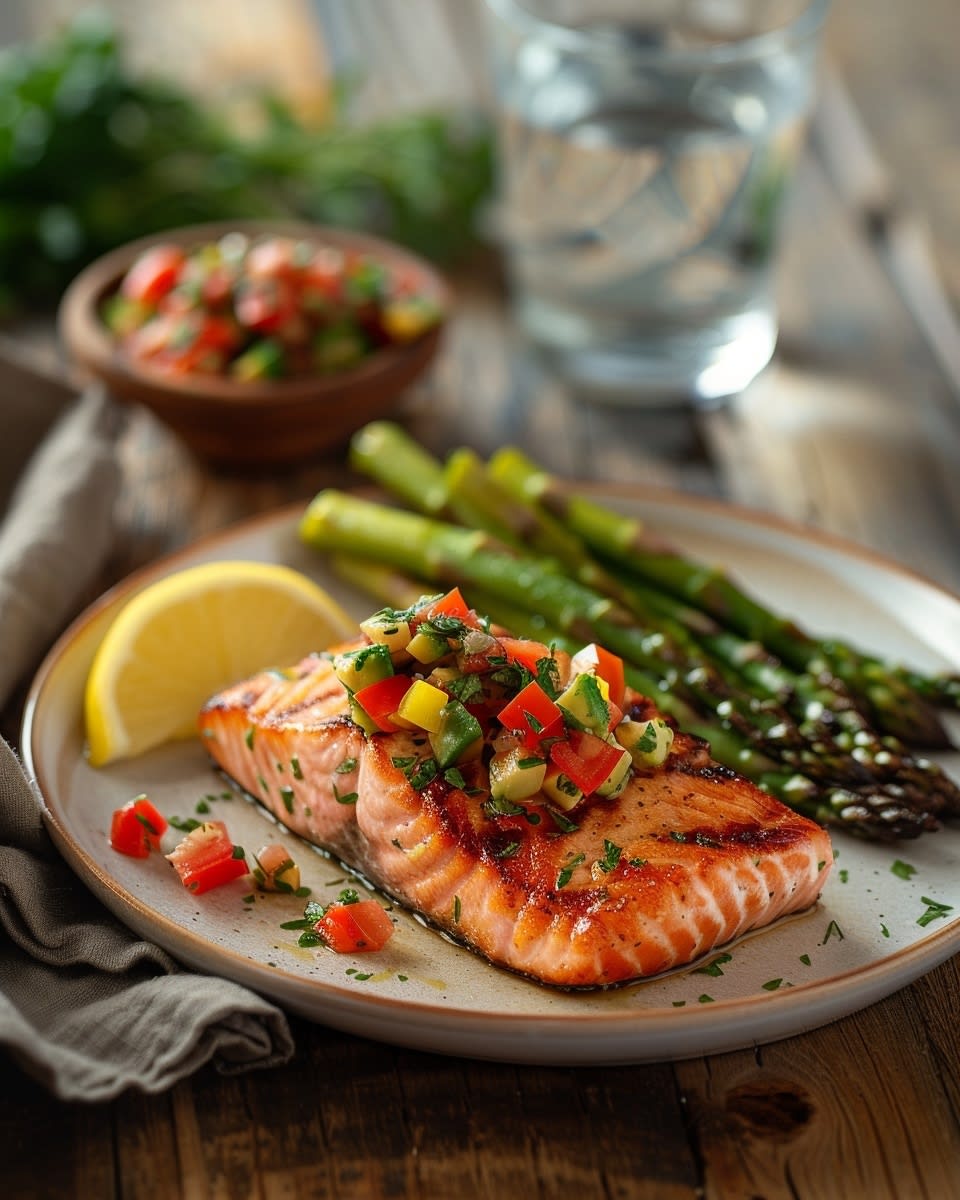
Introduction: Your New Favorite Grilled Salmon with Avocado Salsa
Last summer, I stood at my grill on a warm evening, flipping salmon fillets while my neighbor leaned over the fence. “What smells so amazing?” she asked. That was my grilled salmon with avocado salsa, and it’s become my go-to meal whenever I want something healthy that doesn’t taste like diet food.
Here’s the thing about this dish. It looks fancy enough for guests but takes less time than ordering takeout. The pink salmon gets those beautiful char marks, and the bright green avocado salsa adds color that makes every plate look like it came from a restaurant.
I fell in love with this combination after trying salmon avocado rice at a local café. The creamy avocado balanced the rich fish perfectly. I went home that day and started experimenting in my kitchen. After a few tries, I created this version that my whole family requests at least twice a month.
This grilled salmon with avocado salsa fits into almost any meal plan. It’s low in carbs, high in protein, and packed with healthy fats. If you’re watching your weight, building muscle, or just trying to eat better, this recipe checks all the boxes. Plus, it’s gluten-free and paleo-friendly without even trying to be.
In this article, I’ll walk you through everything you need to know. We’ll cover the ingredients, how to pick the best salmon and avocados, and my secret low carb marinade that makes the fish taste incredible. Then I’ll share my grilling technique that gives you perfect salmon every single time. You’ll also learn how to make the fresh avocado salsa that ties everything together.
Ingredients You Need for Perfect Salmon with Avocado Tomato Salsa
Let me break down what you’ll need for this recipe. I always buy these ingredients fresh because it makes a huge difference in the final taste.
For the Grilled Salmon:
- 4 salmon fillets (about 6 ounces each)
- 3 tablespoons olive oil
- 2 tablespoons fresh lime juice
- 2 cloves garlic, minced
- 1 teaspoon cumin
- 1/2 teaspoon smoked paprika
- Salt and black pepper to taste
- Fresh cilantro for garnish
For the Avocado Salsa:
- 2 ripe avocados, diced
- 1 cup cherry tomatoes, quartered
- 1/4 red onion, finely chopped
- 1 jalapeño, seeds removed and minced (optional)
- Juice of 2 limes
- 1/4 cup fresh cilantro, chopped
- Salt to taste
Picking the right salmon matters more than most people think. I always look for wild-caught salmon when possible. The color should be bright and vibrant, not dull or gray. Fresh salmon shouldn’t smell fishy at all. It should smell clean, like the ocean. If it smells strong, walk away.
The flesh should bounce back when you press it gently. If your finger leaves an indent, that salmon has been sitting too long. I prefer skin-on fillets because the skin gets crispy on the grill and helps hold the fish together.
For avocados, you want that perfect ripeness. Too hard and they won’t mash well for your fish with avocado salsa. Too soft and they’re brown inside. Here’s my trick: hold the avocado in your palm and squeeze gently. It should give slightly but not feel mushy. The color near the stem matters too. Pop off the little stem at the top. If it’s green underneath, you’re good. If it’s brown, the avocado is overripe.
I buy my avocados a few days before I plan to cook. If they’re rock hard at the store, they’ll ripen on my counter in 2-3 days. Put them in a paper bag with a banana if you need them to ripen faster.
Creating a Low Carb Salmon Marinade
Most marinades are loaded with sugar or honey. My low carb salmon marinade gets tons of flavor from spices and citrus instead. The lime juice adds brightness without carbs. The garlic and cumin give it a slightly Mexican-inspired taste that pairs beautifully with the avocado.
Mix your olive oil, lime juice, minced garlic, cumin, and smoked paprika in a bowl. Whisk it together until combined. This marinade works for other recipes too. I’ve used it for chicken and even shrimp. It’s become my standard go-to when I want something light and flavorful.
The olive oil helps the salmon stay moist during grilling. The acid from the lime starts breaking down the proteins slightly, which makes the fish more tender. Just don’t marinate for more than 30 minutes. Too long and the acid can make the fish mushy.
Preparing the Salmon Like a Pro
I learned this technique from a chef friend, and it changed my salmon game completely. Start by rinsing your salmon fillets under cold water. Pat them completely dry with paper towels. This step is important because dry fish gets better grill marks and doesn’t stick as much.
Check the fillets for any small bones. Run your fingers along the flesh in the thickest part. You’ll feel any pin bones sticking up. Use clean tweezers or needle-nose pliers to pull them out at an angle. It takes an extra minute but makes eating so much better.
Place your salmon fillets in a shallow dish. Pour the marinade over them, making sure each piece is coated. I usually flip them once or twice to distribute the marinade evenly. Cover the dish with plastic wrap and put it in the fridge for 20-30 minutes.
While the salmon marinates, I prep my grill and make the salsa. This timing works perfectly because everything finishes at the same time. If you’re planning a salmon and avocado salad or salmon avocado sandwich instead, you can use this same marinated fish. It’s that versatile.
Grilling Tips for Juicy Salmon
Here’s where many people mess up. They either overcook the salmon until it’s dry, or they undercook it. I’m going to share my method that works every time.
Preheat your grill to medium-high heat, around 375-400 degrees. Clean the grates really well with a grill brush. Then oil them. I fold a paper towel, dip it in vegetable oil, and use tongs to rub it on the grates. This prevents sticking better than anything else I’ve tried.
Take the salmon out of the fridge about 10 minutes before grilling. Cold fish straight from the fridge cooks unevenly. Let it sit on the counter to take the chill off.
Place the salmon skin-side down on the grill. Close the lid. Don’t touch it for 4-5 minutes. I know it’s tempting to peek, but leave it alone. This is when those gorgeous grill marks form.
After 4-5 minutes, carefully slide a thin spatula under the salmon. If it sticks, give it another minute. When it’s ready, it will release easily. Flip it over and cook for another 3-4 minutes.
Here’s my test for doneness. The salmon should flake easily with a fork but still look slightly translucent in the very center. It will continue cooking for a minute after you take it off the grill. If you cook it until it’s completely opaque on the grill, it will be overdone by the time you eat it.
The internal temperature should read 145 degrees on an instant-read thermometer. But honestly, I usually just check by eye now. The flesh should look opaque and separate into flakes easily.
This same grilled salmon works great if you’re making salmon and avocado pasta or adding it to salmon avocado rice. I sometimes grill extra fillets just to have leftovers for lunch the next day.


Making the Fresh Avocado Salsa That Changes Everything
Now that your salmon is resting off the grill, it’s time to focus on the star topping. Honestly, I’ve thrown this salsa on everything from eggs to tacos, but it truly shines on this grilled salmon with avocado salsa.
Start by cutting your avocados in half lengthwise. I twist the halves in opposite directions to separate them. Then comes the fun part, removing the pit. Here’s my safe method: hold the avocado half with the pit in a kitchen towel in your non-dominant hand. Carefully tap the heel of your knife into the pit, twist gently, and it pops right out. Never use your palm like some people do because that’s how accidents happen.
Scoop the avocado flesh into a medium bowl. I use a large spoon and run it between the flesh and the skin. Cut the avocado into bite-sized chunks. You want pieces, not mush. This isn’t guacamole. The texture of distinct avocado cubes against the flaky salmon is part of what makes this dish special.
Next, quarter those cherry tomatoes. I use cherry or grape tomatoes because they’re sweeter and have less water than regular tomatoes. Too much tomato water makes your salsa soggy and dilutes the flavors. If you only have regular tomatoes, remove the seeds and inner pulp before dicing. It’s an extra step, but worth it.
Finely chop the red onion. And I mean finely. Big chunks of raw onion overpower everything else. If you’re sensitive to raw onion, soak the chopped pieces in cold water for five minutes, then drain them. This removes some of that harsh bite while keeping the flavor.
The jalapeño is totally optional. My kids don’t like spice, so I often skip it for family dinners. When I do add it, I remove all the seeds and the white membrane inside. That’s where most of the heat lives. Mince it very small so the heat distributes evenly rather than giving someone an unexpected spicy surprise.
Mixing It All Together
Add everything to the bowl with your avocado chunks. Pour in the fresh lime juice. I cannot stress enough how important fresh lime juice is here. The bottled stuff tastes flat and artificial. Real lime juice brightens every ingredient and keeps your avocados from turning brown.
Toss in the chopped cilantro. I know some people have that gene that makes cilantro taste like soap. If that’s you, try fresh parsley instead. It won’t be exactly the same, but it still adds that fresh herb element.
Season with salt. I start with half a teaspoon and taste as I go. The salmon already has seasoning, so you don’t want the salsa too salty.
Here’s where technique matters. Fold everything together gently with a rubber spatula. Don’t stir aggressively or you’ll smash the avocados. You want to maintain those nice chunks. Fold from the bottom of the bowl upward, rotating the bowl as you go. After maybe ten gentle folds, everything should be mixed and coated with lime juice.
Taste it. Does it need more lime? More salt? Trust your palate. I sometimes add a pinch of cumin to echo the marinade flavors, but that’s personal preference.
Fun Variations That Work Beautifully
The basic version above is my standard, but I switch things up depending on my mood. Sometimes I add a diced mango for sweetness, especially in summer when mangoes are perfect. The sweet-savory combination is incredible.
If you’re using smoked salmon instead of grilled, this same salsa works perfectly. Actually, smoked salmon and avocado might be an even better combination because the smokiness adds another layer. I make this version for brunch sometimes. The smoked salmon doesn’t need cooking, so you just flake it over the salsa or layer them together.
For an avocado lime salmon twist, I add extra lime zest to both the marinade and the salsa. The zest has oils that give you pure lime flavor without extra acidity. Just grate the green part of the lime skin before you juice it. Avoid the white pith underneath because it’s bitter.
Corn is another addition I love. Cut the kernels off a raw cob or use thawed frozen corn. It adds sweetness and a nice texture contrast. My friend who makes amazing high protein chicken and quinoa bowl taught me that trick, and now I use corn in half my salsas.
Funny enough, this salsa keeps surprisingly well. The lime juice preserves the avocado for a few hours. If I’m making it ahead, I press plastic wrap directly onto the surface to keep air out. It’ll stay bright green for about four hours this way.
Serving This Dish Like You Planned It
Plating matters more than people think. I learned this after serving my salmon with avocado tomato salsa on plain white plates next to colorful restaurant photos I’d seen online. The presentation was half the appeal.
My favorite way to serve this is over salmon avocado rice. I use jasmine or basmati rice cooked with a little lime zest in the water. The rice goes down first, then I place the grilled salmon fillet on top, and spoon that gorgeous green salsa right over everything. The juices from the salsa soak into the rice, and every bite has layers of flavor.
For rice, I cook it while the salmon marinates. By the time the fish comes off the grill, the rice is ready. Perfect timing. If you want to keep this meal even lighter, try cauliflower rice instead. I’ve done that plenty of times when I’m watching carbs more carefully.
Another option I genuinely love is salmon and avocado pasta. This one’s great for cooler weather when you want something more substantial. I use angel hair or linguine. Toss the hot pasta with a little olive oil, lemon juice, salt, and pepper. Lay the grilled salmon on top and add the salsa. As you eat, the salmon flakes into the pasta and everything mixes together.
The key with pasta is not overdoing it. About two ounces of dry pasta per person keeps the focus on the fish and salsa rather than loading up on carbs. Sometimes I add baby spinach to the hot pasta right before serving. It wilts from the heat and adds vegetables without extra cooking.
What About Leftovers
Let me tell you about leftover magic. Cold grilled salmon is actually delicious, which means this recipe works overtime. I flake leftover salmon and mix it with the remaining salsa to make the best salmon and avocado salad you’ve ever tasted.
Start with mixed greens, arugula, or spinach. Add the flaked salmon and salsa. That’s honestly enough, but I sometimes throw in cucumber slices and shredded carrots. The dressing is just extra lime juice and olive oil because the salsa already has so much flavor.
Or make a salmon avocado sandwich. This is my usual lunch after salmon night. Toast some good bread, maybe sourdough or whole grain. Spread a thin layer of mayo or Greek yogurt on both slices. Add lettuce, the cold salmon, and top it generously with the salsa. I eat this at least twice a month.
If you’re big on sandwiches like I am, the technique I use for my cinnamon roll monkey bread applies here too, layering flavors so each bite is complete. Though obviously those flavors are completely different.
You could even stuff this into a wrap with some crunchy cabbage. I’ve done that for picnics because it travels better than a regular sandwich.
Building a Complete Meal
Here’s the thing about balance. The salmon gives you protein and healthy fats. The avocado adds more healthy fats and fiber. But you probably want more vegetables to round things out.
I usually serve roasted vegetables on the side. Asparagus is my first choice because it cooks in the same amount of time as the salmon. Toss asparagus spears with olive oil and salt, throw them on the grill alongside the fish. They get slightly charred and tender in about eight minutes.
Grilled zucchini works too. Slice it lengthwise into planks, brush with oil, and grill until you see those marks. Sweet potato wedges are great if you want more substance. I season them with the same cumin and paprika from the salmon marinade to tie the flavors together.
A simple green salad with lemon vinaigrette keeps everything light and fresh. Sometimes that’s all you need. The meal already has so much flavor that plain lettuce with lemon actually tastes refreshing.
If you’re feeding kids or people who need more food, add a simple grain. Quinoa works beautifully and adds protein. Couscous is fast. Even just some crusty bread for soaking up the salsa juices makes people happy.
By the way, this meal pairs nicely with a crisp white wine if that’s your thing. Sauvignon blanc or pinot grigio both work. The acidity in the wine matches the lime in the dish. But honestly, sparkling water with lime wedges is just as good.
After a meal like this, I usually keep dessert simple. Maybe some fresh fruit or, if I’m feeling ambitious, something like chocolate chip cookie dough bites that I made earlier in the week. Or those blueberry crumble dessert bars that everyone always asks about.
The beauty of this fish with avocado salsa is how adaptable it is to your needs. Serving two people? Make two fillets. Feeding six? Scale everything up. The recipe multiplies easily. And whether you’re doing keto, paleo, or just trying to eat more real food, this meal fits right in without feeling restrictive.


Why This Grilled Salmon with Avocado Salsa Is Actually Good for You
I’m not a nutritionist, but I’ve spent enough time reading labels and talking to my doctor about better eating habits to understand why this meal hits differently than most restaurant food. Every time I make this grilled salmon with avocado salsa, I feel good about what I’m putting in my body. Not guilty good. Actually good.
Let’s talk about salmon first. This fish is basically a superfood without the hype. It’s loaded with omega-3 fatty acids, specifically EPA and DHA. These aren’t just random letters. They’re the types of fats your brain needs to function properly. My dad started eating more salmon after his doctor told him it could help with heart health, and his cholesterol numbers actually improved over six months.
Wild-caught salmon gives you about 2,200 milligrams of omega-3s in a six-ounce serving. That’s more than most supplements. These fats reduce inflammation throughout your body. If you deal with joint pain, skin issues, or even mood swings, omega-3s can help. I noticed my skin looked better after I started eating salmon twice a week, though that could be other factors too.
The protein content is incredible. A six-ounce fillet has around 34 grams of complete protein, meaning it contains all nine essential amino acids your body can’t make on its own. If you’re lifting weights, recovering from surgery, or just trying to maintain muscle as you age, this matters a lot.
Salmon also delivers vitamin D, which most of us don’t get enough of, especially in winter. One serving covers about 75% of your daily needs. Vitamin D affects everything from bone health to immune function. B vitamins are in there too, particularly B12 and niacin, which help convert food into energy.
Now for the avocados. People used to avoid them because of the fat content, but we’ve figured out that not all fats are bad. Avocados have monounsaturated fats, the same type in olive oil. These fats actually help lower bad cholesterol while raising good cholesterol. My friend’s nutritionist told her to eat half an avocado daily, and her lipid panel improved significantly.
One avocado has about 10 grams of fiber. Most Americans get maybe half the fiber they need. Fiber keeps your digestion regular, helps control blood sugar, and keeps you full longer. That’s why this salmon with avocado tomato salsa satisfies you for hours without feeling heavy.
Avocados also contain potassium, more than a banana actually. Potassium helps regulate blood pressure and counteracts sodium. Given how much hidden salt is in processed food, adding potassium-rich whole foods makes sense.
How This Meal Fits Your Diet
I’ve served this dish to friends following wildly different eating plans, and everyone found a way to enjoy it. If you’re doing keto or low-carb, skip the rice and serve the fish with avocado salsa over cauliflower rice or just with extra vegetables. The whole meal stays under 10 grams of net carbs without the grain.
The low carb salmon marinade I shared earlier uses no sugar, unlike most store-bought marinades that sneak in honey or brown sugar. The flavor comes entirely from spices, citrus, and good olive oil. This keeps your blood sugar stable, which is huge if you’re managing diabetes or just trying to avoid afternoon crashes.
For paleo folks, this recipe is already compliant. You’re eating fish, vegetables, healthy fats, and herbs. Nothing processed. Nothing artificial. Just real food that humans have eaten for thousands of years.
Gluten-free? Obviously yes. There’s no grain or wheat anywhere unless you add it intentionally with bread or regular pasta. I have a cousin with celiac disease who gets nervous at family dinners, but she can eat this without worry.
Even if you’re following the Mediterranean diet, which cardiologists love recommending, this fits perfectly. Fatty fish twice a week is a cornerstone of that approach. Olive oil, fresh vegetables, herbs, and citrus are all Mediterranean staples. You could argue this is basically a Mediterranean recipe with a Mexican twist.
The principles of healthy meal planning emphasize balanced portions of protein, vegetables, and healthy fats, which this dish delivers naturally without requiring complicated calculations or tracking.
Small Changes That Boost Nutrition Even More
Here’s where you can get creative based on your specific health goals. Want more vegetables? Add diced cucumber, bell peppers, or radishes to your salsa. I sometimes throw in a handful of baby spinach right before serving. It wilts slightly from the warm salmon and adds iron and vitamins without changing the taste much.
If you’re really focused on heart health, use extra virgin olive oil exclusively. The quality matters. Cheap olive oil loses many of the beneficial compounds. I buy mine from a local store that sources directly from California growers. It costs more, but I use less because the flavor is stronger.
Bump up the garlic in your marinade. Garlic has compounds that support cardiovascular health and boost immune function. I’ve used up to four cloves before, and it just makes everything taste better.
Switch regular onions for green onions or scallions in the salsa if raw onion bothers your stomach. You still get that onion flavor plus extra vitamin K, but they’re gentler on digestion.
Add seaweed flakes or nori strips on top before serving. I know that sounds weird, but it adds iodine, which many people lack, especially if you don’t use iodized salt. Plus it gives you that extra umami depth.
If inflammation is your concern, increase the anti-inflammatory ingredients. Add fresh ginger to the marinade along with the garlic. Use extra cumin and add turmeric to the spice mix. These small additions don’t change the basic flavor profile but add compounds that actively fight inflammation.
One trick I learned from a friend who does triathlons: squeeze extra lime over everything right before eating. The vitamin C helps your body absorb the iron from the salmon and any greens you added. Little details like this add up over time.
The Mental Health Angle Nobody Talks About
This might sound strange, but cooking this meal genuinely improves my mood. Part of it is the omega-3s, which studies link to better mental health. But honestly, part of it is just the act of making something beautiful and nourishing.
There’s something meditative about chopping vegetables and watching salmon transform on the grill. The colors alone, that bright pink fish and vibrant green salsa, trigger something positive in my brain. Food that looks this good makes you feel like you’re taking care of yourself, not punishing yourself with another bland diet meal.
When I’m stressed, I make this. The routine of preparing it calms me down. The smell of cumin and lime takes me back to a great vacation I took years ago. Food memories are powerful that way.
Questions People Always Ask Me About This Recipe
What are some other fish options that go well with avocado salsa?
Honestly, this salsa works with almost any fish. I’ve used it on grilled mahi-mahi, which has a milder flavor than salmon but still holds up beautifully. Halibut is another great choice if you prefer white fish, though it’s pricier. Trout works wonderfully too, especially if you can find rainbow trout at your market. Even firm white fish like cod or sea bass tastes great with this topping. The key is making sure whatever fish you choose can handle grilling without falling apart.
Can I use canned salmon for this recipe?
You definitely can, though the result will be different. Canned salmon works great if you’re making a salmon and avocado salad or salmon avocado sandwich with this salsa. Just drain it well and flake it into chunks. It won’t have those grill marks or that smoky char flavor, but it’s convenient and still nutritious. I keep canned salmon in my pantry for busy weeks when I don’t have time to shop for fresh fish. Mix it with the salsa and stuff it in a wrap for a quick lunch.
How can I make this dish spicier?
If you want more heat, leave the seeds in your jalapeño when you add it to the salsa. You could also add a diced serrano pepper, which is significantly hotter. Another option is mixing some cayenne pepper or red pepper flakes into your marinade. I’ve added a teaspoon of chipotle powder to the marinade before, which gives you heat plus a smoky depth. Or just serve hot sauce on the side so people can adjust their own spice level. Frank’s RedHot or your favorite habanero sauce both work great drizzled over the finished plate.
Is there a way to make the avocado salsa ahead of time?
You can prep it about four hours ahead if you take precautions. Make the salsa as directed, then press plastic wrap directly onto the surface with no air pockets. The lime juice helps prevent browning, but direct contact with air is what really turns avocados brown. Keep it in the fridge until you’re ready to serve. I wouldn’t make it a full day ahead because the tomatoes release water over time and make everything watery. If you absolutely need to prep further in advance, chop everything except the avocados, then dice and add those right before serving.
What are some good wine pairings for grilled salmon with avocado salsa?
I’m not a wine expert, but I’ve learned what works through trial and error. A crisp Sauvignon Blanc from New Zealand is my go-to because the citrus notes match the lime in the salsa perfectly. Albariño from Spain is another favorite, slightly more mineral and crisp. If you prefer rosé, a dry Provence rosé works beautifully with the richness of both the salmon and avocado. For people who like red wine even with fish, try a light Pinot Noir served slightly chilled. The key is avoiding anything too heavy or oaky that would overpower the fresh flavors.
How do I store leftover salmon and salsa?
Store them separately in airtight containers in the fridge. The salmon will keep for three days, while the salsa is best within 24 hours before the avocados start breaking down. When storing the salsa, again press plastic wrap directly on the surface. The salmon is actually great cold the next day. I flake it over salads or make that salmon avocado sandwich I mentioned earlier. You can also freeze cooked salmon for up to two months if you vacuum seal it, though the texture changes slightly when you thaw it.
Can I substitute the salmon with another type of fish?
Absolutely, and I do this all the time based on what’s available or on sale. Arctic char is probably the closest substitute, with similar color and fat content. Rainbow trout works great and is often more affordable. For a completely different experience, try swordfish or tuna steaks, both of which are meaty enough to handle the bold salsa flavors. Just adjust your cooking time since different fish have different thicknesses and fat contents. Thicker cuts need more time, leaner fish cooks faster.
Are there any non-fish alternatives for this dish?
The salsa is so versatile that it works on grilled chicken breasts or thighs. I’ve also used it on pork chops, which might sound weird but tastes incredible. Grilled shrimp works beautifully too, you’d just skewer them and grill for about two minutes per side. For a vegetarian option, try it on grilled portobello mushroom caps or thick slices of grilled eggplant. The mushrooms especially have that meaty texture that stands up to the chunky salsa. Even grilled tofu works if you press it well and use the same marinade.
How can I make this dish suitable for a vegetarian diet?
Replace the salmon with a plant-based protein that can handle grilling. Extra-firm tofu is my top choice, just press it for at least 30 minutes to remove excess water, then marinate it the same way you would the salmon. Tempeh also works and has a firmer texture plus a nutty flavor. You could also do thick slices of cauliflower “steaks” brushed with the marinade and grilled until tender. For something heartier, try large portobello caps marinated and grilled gill-side up to catch all those juices. The avocado tomato salsa is already vegetarian, so that part stays exactly the same.
By the way, if you’re exploring more nutritious meal options that don’t sacrifice flavor, you might enjoy browsing through other healthy recipes that focus on whole ingredients and balanced nutrition without feeling restrictive.
Why This Recipe Stays in My Rotation
After making this grilled salmon with avocado salsa probably fifty times over the past few years, it hasn’t gotten old. That’s rare for me because I usually get bored with recipes after the tenth time. But this one adapts to my changing needs and moods without losing what makes it special in the first place.
The next time you’re standing in front of your grill wondering what to make that’s both impressive and actually healthy, give this recipe a try. Pay attention to the small details, the dry fish before grilling, the gentle folding of the salsa, the resting time after cooking. Those little things separate an okay dinner from something people remember and ask you to make again. And if you put your own spin on it, even better. That’s how the best recipes evolve.
Ingredients
Equipment
Method
- Rincez les filets de saumon sous l'eau froide et séchez-les avec des serviettes en papier.
- Vérifiez les arêtes et retirez-les si nécessaire.
- Dans un bol, mélangez l'huile d'olive, le jus de citron vert, l'ail haché, le cumin et le paprika fumé ; fouettez jusqu'à ce que le mélange soit homogène.
- Placez les filets de saumon dans un plat peu profond et versez la marinade sur eux, en les enrobant uniformément ; couvrez et réfrigérez pendant 20-30 minutes.
- Pendant que le saumon marine, préparez la salsa d'avocat en coupant les avocats et en retirant le noyau.
- Récupérez la chair de l'avocat dans un bol et coupez-la en morceaux, puis ajoutez les tomates cerises coupées en quartiers, l'oignon rouge finement haché, le jalapeño (si utilisé), le jus de lime, la coriandre hachée et assaisonnez de sel ; mélangez délicatement.
- Préchauffez le gril à chaleur moyenne (375-400°F) et nettoyez-le avec une brosse à gril ; huilez les grilles.
- Retirez le saumon du réfrigérateur environ 10 minutes avant de griller ; placez-le côté peau vers le bas sur le gril.
- Grillez sans bouger pendant 4-5 minutes, puis retournez délicatement et faites cuire encore 3-4 minutes jusqu'à ce qu'il soit floconneux et bien cuit.
- Servez le saumon grillé garni de salsa d'avocat et décorez de coriandre fraîche.