
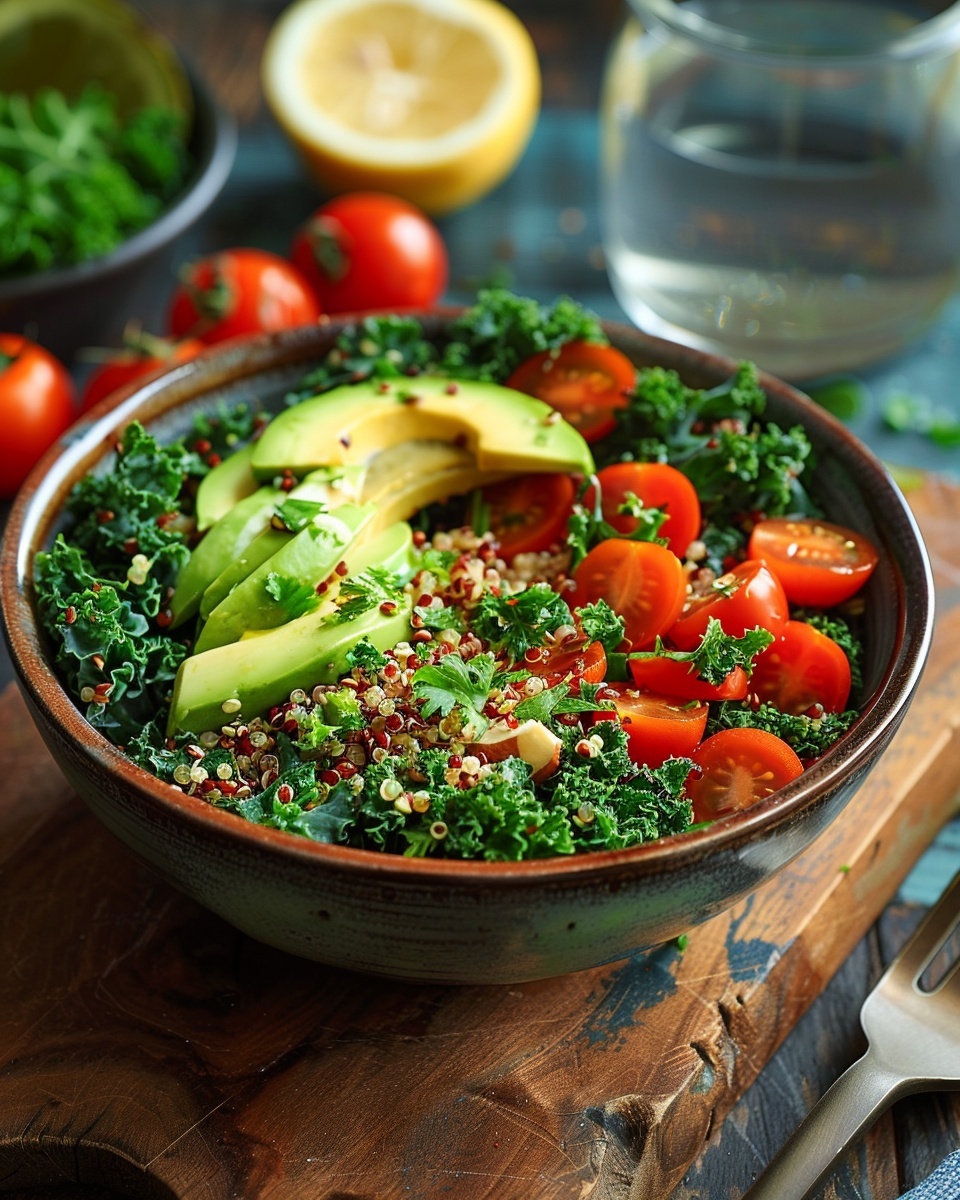
Why I Can’t Stop Making This Kale Quinoa Salad
I’ll never forget the first time I tried a kale quinoa salad at a small café downtown. I was skeptical. Kale seemed like one of those trendy greens that tasted like grass, and quinoa looked like bird food. But one bite changed everything. The mix of textures, the bright dressing, and the unexpected crunch made me a believer. Now, I make some version of this salad at least twice a week.
The beauty of a kale quinoa salad is its flexibility. You can toss in whatever you have in your fridge and still end up with something delicious. Add feta cheese for a tangy kick, or keep it completely plant-based for a satisfying kale quinoa salad vegan option. Drizzle on some balsamic vinegar, squeeze fresh lemon juice, or go wild with a tahini dressing. Each variation brings something new to the table.
This salad isn’t just tasty. It’s packed with nutrients that actually make you feel good. After eating a big bowl for lunch, I don’t get that sluggish feeling I used to get from heavy meals. Instead, I feel energized and ready to tackle the rest of my day. That’s the magic of combining two superfoods in one simple dish.
Whether you’re trying to eat healthier, lose weight, or just want something fresh and filling, this salad checks all the boxes. It’s become my go-to meal when I want something quick but don’t want to sacrifice flavor or nutrition. Let me show you why this salad deserves a regular spot in your meal rotation.
The Nutritional Power Behind Kale and Quinoa
Kale and quinoa aren’t just trendy ingredients. They’re nutritional powerhouses that bring serious health benefits to your plate. When you combine them in a salad, you’re getting a meal that fuels your body in the best way possible.
Let’s start with kale. This leafy green is loaded with vitamins A, C, and K. Just one cup gives you more than your daily requirement of these essential nutrients. Kale also contains powerful antioxidants that help fight inflammation and protect your cells from damage. The fiber content keeps your digestive system happy and helps you feel full longer.
Quinoa brings its own impressive resume to the table. Unlike most grains, quinoa is a complete protein. This means it contains all nine essential amino acids your body needs but can’t produce on its own. For anyone following a plant-based diet, this is huge. You’re getting quality protein without any animal products.
The kale quinoa salad calories count is another major selling point. A basic serving with just kale, quinoa, and a light dressing usually comes in around 200 to 300 calories. That’s incredibly reasonable for a meal that keeps you satisfied for hours. You can add more ingredients and still keep it under 400 calories if you’re mindful about portions.
Both ingredients are naturally vegan and gluten-free. This makes the base of your kale quinoa salad vegan friendly right from the start. People with celiac disease or gluten sensitivity can enjoy this meal without worry. And if you’re cooking for a group with different dietary needs, this salad is a safe bet that everyone can eat.
Quinoa also offers important minerals like iron, magnesium, and zinc. These support everything from energy production to immune function. Iron is especially important for people who don’t eat meat, and quinoa provides a plant-based source that your body can actually use.
Kale contains compounds called glucosinolates. Research suggests these may have cancer-fighting properties. While eating kale won’t cure diseases, adding it to your regular diet certainly doesn’t hurt. Every little bit of prevention counts.
The fiber from both kale and quinoa helps regulate blood sugar levels. This means you won’t experience those energy crashes that come from eating refined carbs. Your blood sugar stays steady, and so does your mood and concentration.
Here’s what you get in a typical serving of kale quinoa salad:
- High levels of vitamins A, C, and K from kale
- Complete protein from quinoa with all essential amino acids
- Plenty of fiber to support digestion and satiety
- Important minerals including iron, magnesium, and calcium
- Powerful antioxidants that fight inflammation
- Low calorie count that fits most diet plans
The combination of protein, fiber, and healthy fats (when you add nuts or avocado) creates a balanced meal. This balance is what keeps you feeling satisfied. You’re not hungry an hour later like you might be after eating just a salad of lettuce.
I used to think healthy food meant boring food. This salad proved me wrong. When you start with ingredients this nutritious, you don’t need to load up on heavy dressings or unhealthy toppings. The natural flavors shine through, especially when you massage the kale to soften it.
The kale quinoa salad balsamic version is one of my favorites for showcasing these ingredients. The tangy balsamic vinegar brings out the earthy flavors of both the kale and quinoa. A little olive oil adds healthy fats that help your body absorb all those fat-soluble vitamins.
If you’ve ever tried the kale quinoa salad Cheesecake Factory serves, you know how addictive this combination can be. Their version includes grilled chicken, but the base is still these two superfoods doing their thing. You can easily recreate a similar salad at home with better control over ingredients and portions.
For seafood lovers, a shrimp kale quinoa salad adds lean protein and omega-3 fatty acids to the mix. The shrimp cooks quickly and pairs beautifully with the hearty greens and nutty quinoa. This turns the salad into a complete restaurant-quality meal.
The lemony kale quinoa salad variation brightens everything up with fresh citrus. Lemon juice helps your body absorb the iron from the kale and quinoa better. It’s a simple trick that makes your healthy meal even more nutritious.
Some people add apples for a sweet crunch. The kale quinoa apple salad combination works wonderfully in fall when apples are at their peak. The sweetness balances the slight bitterness of raw kale perfectly.
Making a shredded kale and quinoa salad recipe is easier than you might think. You don’t need any special equipment. Just cook the quinoa according to package directions, chop or shred your kale, and mix them together. From there, the world is your oyster in terms of add-ins and dressings.


Creative Variations That Keep This Salad Exciting
Now that you understand why these ingredients work so well together, let me share all the different ways you can spin this salad into something new every time you make it.
The first time I added feta cheese to my kale quinoa salad, I realized I’d been missing out. The salty, tangy chunks of kale quinoa salad feta create these little flavor explosions throughout the bowl. I crumble it over the top right before serving, so it stays creamy and doesn’t get too mixed in. Greek feta works best in my opinion, though French feta has this milder taste that some people prefer. The cheese adds protein and calcium while keeping the salad vegetarian-friendly.
My sister goes absolutely crazy for the kale quinoa apple salad version I make in autumn. I use Honeycrisp or Granny Smith apples, depending on whether I want sweetness or tartness. The apples get diced into small cubes so every forkful has a bit of that crisp texture. Honestly, it reminds me of those fancy salads you’d get at a wedding reception, but way better because you control what goes in it. Sometimes I’ll toast some walnuts or pecans to throw in there too, which adds another layer of crunch and brings healthy omega-3s to the party.
Here’s the thing about the kale quinoa salad balsamic approach: it completely transforms the flavor profile from earthy to bright and sophisticated. I make a simple dressing with balsamic vinegar, olive oil, a touch of Dijon mustard, and a tiny drizzle of honey or maple syrup. The vinegar’s acidity cuts through the heartiness of the kale and quinoa, waking up your taste buds in the best way. My husband, who claims he hates salads, will actually go back for seconds when I make this version. The balsamic creates this beautiful glaze that coats everything without being heavy or overwhelming.
By the way, if you want something similar to a fresh Southwest chicken salad, you can definitely take this kale and quinoa base in that direction with some black beans and corn.
For those weeks when I need more protein and variety, the shrimp kale quinoa salad becomes my best friend. I season the shrimp with garlic powder, paprika, and just a pinch of cayenne before sautéing them in a hot pan. Takes maybe five minutes total. The shrimp get this gorgeous pink color and slightly charred edges that add a smoky flavor to the salad. Sometimes I’ll squeeze lime juice over the warm shrimp right when they come off the heat. This version feels like something you’d order at a coastal bistro, but you’re making it on a Tuesday night in your own kitchen.
The lemony kale quinoa salad has become my summer staple. Fresh lemon juice and zest make everything taste brighter and lighter. I use both in my dressing, along with good quality olive oil and minced garlic. The lemon helps break down the tough fibers in the kale when you massage it in, which I’ll explain more about later. This citrusy version pairs incredibly well with grilled chicken or fish if you want to add protein. Actually, it would work beautifully alongside a perfectly grilled steak if you’re serving it as a side dish instead of a main course.
Funny enough, I stumbled onto the shredded kale and quinoa salad recipe method completely by accident. I was making regular chopped kale one day and got impatient, so I just ran my knife through it about fifty times until it was super fine. The texture was completely different. Instead of big leafy pieces, the kale became almost delicate. It mixed with the quinoa more evenly, and each bite had the perfect ratio of greens to grain. Now I always shred my kale into thin ribbons for this salad. Takes an extra minute but makes a noticeable difference in how it eats.
Some people ask me about making this salad meal-prep friendly. The trick is keeping components separate until you’re ready to eat. I’ll cook a big batch of quinoa on Sunday, wash and shred my kale, and store them in different containers. Then throughout the week, I’ll grab what I need and add fresh toppings. One day it’s the feta version, the next day I’ll throw in some leftover rotisserie chicken and make it similar to how you’d enjoy seasoned fajitas with fresh vegetables.
What Makes the Restaurant Versions So Special
Let’s talk about the kale quinoa salad Cheesecake Factory serves, because that’s honestly where a lot of people first try this combination. Their version comes loaded with grilled chicken, roasted beets, cucumber, tomatoes, and red onion. The whole thing gets tossed in their house vinaigrette. I’ve probably ordered it a dozen times while out with friends.
What makes their version stand out is the variety of textures and temperatures. The quinoa is served slightly warm while the kale stays cool and crisp. Those roasted beets add an earthy sweetness that you don’t expect but totally works. The portions are massive too, which is very on-brand for Cheesecake Factory. I usually end up taking half of it home and having it for lunch the next day.
The thing is, you can totally recreate their version at home for a fraction of the price. I roast my own beets wrapped in foil until they’re tender, then peel and dice them. The vinaigrette is probably just olive oil, red wine vinegar, Dijon mustard, and some herbs. Nothing too complicated. Making it yourself means you control the salt and can adjust sweetness to your preference.
Then there’s the kale quinoa salad Smitten Kitchen version, which comes from Deb Perelman’s amazing food blog. Her approach is a bit different and more laid-back than restaurant versions. She focuses on simplicity and lets the ingredients speak for themselves. Her recipe includes dried cranberries and toasted almonds, which create this sweet-and-savory situation that’s absolutely addictive. The dressing in her version is lemony and light, not heavy or creamy.
What I love about Deb’s recipe is how she emphasizes massaging the kale. She really gets into the technique of working the dressing into the leaves with your hands. It sounds weird if you’ve never done it, but it genuinely makes the kale so much more pleasant to eat. The leaves become tender instead of tough and leathery. I massage my kale for at least two minutes, sometimes while watching TV or talking on the phone. It’s kind of therapeutic, actually.
Her version also sits well in the fridge for a day or two, which isn’t true for all kale salads. The dressed kale continues to soften overnight, and the flavors meld together. Some salads get soggy and sad, but this one just gets better. Perfect for those times when you want to make lunch the night before.
Between the Cheesecake Factory and Smitten Kitchen versions, you’ve got two totally different philosophies. One is restaurant-style with maximum ingredients and bold flavors. The other is home-cook friendly with accessible ingredients and simple techniques. Both are delicious. Both prove that this salad works in multiple contexts and settings.
I’ve also seen versions at local cafes that add everything from roasted chickpeas to pickled onions. One place near me does a version with tahini dressing that tastes like a deconstructed falafel bowl. Another adds roasted sweet potato chunks and a maple-mustard vinaigrette. The possibilities really are endless once you have the base down.
Restaurant versions tend to be higher in calories because they’re generous with cheese, nuts, and dressing. When I make mine at home, I can be more mindful about portions while still creating something that feels indulgent and satisfying. If you’re watching your intake like I sometimes do, the homemade route gives you complete control without sacrificing any flavor or enjoyment. Kind of like how making your own classic egg salad lets you adjust the mayo to exactly what you want.
The beauty of trying different versions is discovering what you like best. Maybe you’re team balsamic vinegar, or maybe citrus is more your style. Perhaps you need that salty feta kick, or you prefer keeping it completely plant-based. There’s no wrong answer here, just personal preference and what makes your taste buds happy on any given day.


How to Make the Perfect Kale Quinoa Salad at Home
Alright, let’s get into the actual process of making this salad from scratch. I promise it’s way easier than you might think, even if you’ve never cooked quinoa before in your life.
First things first: selecting your ingredients matters more than you’d expect. For kale, I always choose bunches that look vibrant and dark green, with firm stems and no yellow or brown spots. Curly kale and lacinato kale (also called dinosaur kale) both work great, but I lean toward lacinato because it’s a bit more tender and has a milder flavor. At the grocery store, give the leaves a gentle squeeze. They should feel crisp, not limp or wilted.
Quinoa comes in white, red, and black varieties. White quinoa has the fluffiest texture and mildest taste, which makes it perfect for salads. Red and black quinoa hold their shape better and have a slightly nuttier flavor, but they can be a bit chewier. I usually stick with white or do a mix of all three for visual interest. Make sure you buy pre-washed quinoa or rinse it thoroughly before cooking. Unwashed quinoa has this natural coating called saponin that tastes bitter and soapy. Trust me, you don’t want to skip the rinsing step.
Here’s my foolproof method for cooking quinoa: use a 2:1 ratio of water to quinoa. So for one cup of dry quinoa, you’ll need two cups of water or broth. I often use vegetable broth instead of water because it adds extra flavor right from the start. Bring the liquid to a boil, add your rinsed quinoa, reduce the heat to low, and cover. Let it simmer for about 15 minutes until all the liquid is absorbed. Then turn off the heat and let it sit covered for another 5 minutes. This resting time makes the quinoa super fluffy. Fluff it with a fork and spread it on a baking sheet to cool down. Warm quinoa on cold kale creates this weird temperature contrast that nobody really enjoys.
While the quinoa cools, prep your kale. Remove the tough stems by holding the bottom of the stem with one hand and running your other hand up the leaf to strip it off. Stack several leaves together, roll them up like a cigar, and slice them into thin ribbons. This is that shredding technique I mentioned earlier. Once you’ve got all your kale shredded, put it in a large bowl and sprinkle it with a pinch of salt and a small drizzle of olive oil or your dressing.
Now comes the massage. I know it sounds silly, but this step genuinely transforms the kale from tough and chewy to tender and delicious. Use your hands to scrunch and squeeze the kale for about two to three minutes. You’ll notice the leaves start to darken and reduce in volume. They’ll feel softer and almost silky. My kids think this step is hilarious and sometimes they’ll help me do it. It’s actually kind of fun once you get into it.
Once your quinoa is completely cool and your kale is massaged, combine them in your largest mixing bowl. This is where the creativity kicks in. The basic formula I follow is: kale and quinoa base, plus something crunchy, something creamy or salty, something sweet or tangy, and a great dressing.
For crunch, consider toasted nuts like almonds, walnuts, or pecans. Toasting them takes five minutes in a dry skillet and makes them taste a million times better. Seeds work too. Sunflower seeds, pepitas (pumpkin seeds), or even hemp hearts add texture and nutrients. Dried cranberries, raisins, or chopped dates bring natural sweetness that balances the earthy flavors.
Here’s a simple formula for customizing your salad:
- Crunchy element: toasted nuts, seeds, crispy chickpeas, or diced raw vegetables like bell peppers and cucumbers
- Creamy or salty component: feta cheese, goat cheese, avocado, or nutritional yeast for a vegan option
- Sweet touch: dried fruit, fresh apple chunks, pomegranate seeds, or roasted sweet potato
- Protein boost: grilled chicken, hard-boiled eggs, chickpeas, white beans, or that shrimp I mentioned earlier
- Fresh herbs: parsley, cilantro, mint, or basil add brightness and complexity
Dressing is where you can really make this salad your own. My go-to basic dressing is three parts olive oil to one part acid (lemon juice, lime juice, or vinegar), plus salt, pepper, and a touch of sweetener like honey or maple syrup. Whisk it together or shake it in a jar. Sometimes I’ll add minced garlic, Dijon mustard, or fresh herbs to the dressing for extra flavor.
For a creamy version without dairy, tahini dressing is incredible. Mix tahini with lemon juice, a splash of water to thin it out, minced garlic, and salt. The tahini creates this rich, nutty sauce that coats everything beautifully. Another option is a simple avocado-lime dressing made by blending avocado, lime juice, cilantro, and a bit of water until smooth.
Here’s something I learned the hard way: don’t overdress your salad. Start with less dressing than you think you need, toss everything together, taste it, and add more if needed. You can always add more dressing, but you can’t take it away once the salad is swimming in it. I usually make extra dressing and keep it on the side so people can add more to their individual portions if they want.
When it comes to storage, this salad actually holds up remarkably well. The hearty nature of kale means it doesn’t wilt and get gross like delicate lettuce would. I store leftover salad in an airtight container in the fridge for up to three days. The kale continues to soften and absorb the flavors, which honestly makes it taste even better on day two.
If I’m making this for meal prep, I keep the dressing separate and only dress the portion I’m about to eat. I’ll pack the dressing in a small container and toss it with the salad right before eating. This keeps everything fresh and prevents sogginess. The quinoa and kale base, along with most toppings, store perfectly together for about four days.
One trick for keeping things interesting throughout the week: make a big batch of the kale and quinoa base, then change up your toppings each day. Monday might be the feta and tomato version. Tuesday could be shrimp with avocado and lime. Wednesday you throw in some chickpeas and go Mediterranean with olives and cucumbers. Same base, completely different eating experience each time.
Serving this salad can go a few different ways. I love it as a main dish for lunch, where I’ll pile a big portion in a wide, shallow bowl and eat it with a fork. It also works beautifully as a side dish for grilled meats or fish. When I’m having people over for dinner, I’ll serve it family-style in a large platter, which looks gorgeous with all the colorful toppings arranged on top.
The salad tastes great at room temperature too, which makes it perfect for potlucks or picnics. I’ve brought this to countless gatherings, and it’s always one of the first things to disappear. People who claim they don’t like kale or quinoa always come back asking for the recipe. Following established guidelines for healthy eating becomes so much easier when you have versatile recipes like this in your rotation.
Temperature matters more than you might think. I prefer my quinoa completely cooled before mixing it with the kale. Some people like their quinoa slightly warm, which is fine if you’re eating the salad right away. Just don’t refrigerate warm quinoa mixed with dressed kale, or you’ll end up with a mushy, unappetizing mess.
If you’re looking for more creative salad ideas to expand your repertoire, you’ll find plenty of inspiration by exploring other fresh and flavorful salad recipes that work for different seasons and occasions.
One last tip that really elevates this salad: season as you go. Add salt to the kale when you massage it. Season the quinoa while it’s still warm. Taste your dressing before adding it to the salad. This layered approach to seasoning creates depth of flavor that you just don’t get when you dump everything together and add salt at the end. Each component should taste good on its own, and when combined, they should taste amazing together.
The whole process from start to finish takes me about 30 minutes, including cooking the quinoa. If you’ve got leftover cooked quinoa in your fridge, you can throw this together in literally ten minutes. That’s faster than most takeout and infinitely healthier.
Making this salad at home gives you complete control over every element, from the type of kale to the exact amount of dressing. You’ll save money compared to buying it at a restaurant, and you’ll know exactly what’s going into your body. Plus, there’s something really satisfying about creating a beautiful, nourishing meal with your own hands.
Frequently Asked Questions About Kale Quinoa Salad
What are the main ingredients in a kale quinoa salad?
The two essential ingredients are kale and cooked quinoa, which form the base of the salad. Beyond that, most versions include some type of dressing, usually made with olive oil and an acid like lemon juice or vinegar. Common additions include nuts or seeds for crunch, dried fruit for sweetness, and cheese like feta for a salty, creamy element. Fresh vegetables like tomatoes, cucumbers, or bell peppers often make an appearance too. The beauty is that you can customize it endlessly while keeping those two core ingredients as your foundation.
How do you make a kale quinoa salad vegan?
Making this salad vegan is actually super easy since the base ingredients are already plant-based. Skip any cheese and use a vegan dressing made from olive oil, lemon juice, and your choice of seasonings. Instead of honey in the dressing, use maple syrup or agave nectar as a sweetener. For added creaminess without dairy, try adding avocado slices or making a tahini-based dressing. Nutritional yeast can provide that cheesy, savory flavor if you’re missing the feta. Load up on chickpeas, nuts, or seeds to make sure you’re getting enough protein and healthy fats.
Can you add shrimp to a kale quinoa salad?
Absolutely, and it’s one of my favorite ways to turn this salad into a complete restaurant-quality meal. Season your shrimp with garlic powder, paprika, salt, and pepper before cooking them in a hot skillet with a bit of olive oil. They only take about two to three minutes per side until they’re pink and opaque. You can serve the shrimp warm on top of the cold salad, or let them cool and mix them in. The mild sweetness of shrimp pairs beautifully with lemony or citrus-based dressings. This combination gives you lean protein plus all the nutrients from the greens and quinoa.
What does the balsamic dressing bring to the kale quinoa salad?
Balsamic vinegar adds a sophisticated, tangy-sweet flavor that cuts through the earthiness of both kale and quinoa. The acidity helps balance richer additions like cheese or nuts, while the slight sweetness makes the whole salad more crave-worthy. Good quality balsamic has this complex, almost wine-like depth that elevates simple ingredients into something special. When you whisk it with olive oil, Dijon mustard, and a touch of honey or maple syrup, you create a dressing that coats everything beautifully. It’s one of those flavor combinations that just works, transforming the salad from healthy obligation into something you genuinely look forward to eating.
Is the kale quinoa salad from the Cheesecake Factory worth trying?
If you’ve never had a really good kale quinoa salad before, the Cheesecake Factory version is definitely worth ordering to see what all the fuss is about. Their version comes loaded with grilled chicken, roasted beets, tomatoes, cucumber, and red onion, all tossed in their house vinaigrette. The portions are massive, so you’ll likely have leftovers for the next day. That said, it’s pretty easy to recreate something similar at home for much less money and with better control over ingredients. Their version tends to be higher in sodium and calories than a homemade version would be. But for a special treat or if you’re out with friends, it’s a solid choice that won’t leave you feeling heavy or sluggish.
How many calories are in a typical kale quinoa salad?
A basic serving with just kale, quinoa, and a light vinaigrette usually contains between 200 and 300 calories, which makes it incredibly reasonable for a filling meal. When you start adding ingredients like nuts, cheese, avocado, or protein like chicken or shrimp, the calorie count goes up to around 400 to 500 calories. Restaurant versions, especially the one from Cheesecake Factory, can easily hit 600 to 800 calories or more because they’re generous with toppings and dressing. The great thing about making it at home is you control exactly what goes in, so you can keep it lighter or make it more substantial depending on your needs. Either way, you’re getting a nutrient-dense meal that keeps you satisfied for hours.
What makes the Smitten Kitchen kale quinoa salad special?
Deb Perelman’s version from Smitten Kitchen focuses on simplicity and technique rather than loading up with tons of ingredients. She really emphasizes the importance of massaging the kale to make it tender and enjoyable to eat. Her recipe includes dried cranberries and toasted almonds for that perfect sweet-and-savory balance, along with a bright lemony dressing that’s light but flavorful. What sets it apart is how well it holds up in the fridge, actually tasting better the next day as the flavors meld together. Her approach is very home-cook friendly with accessible ingredients and straightforward instructions. It’s the kind of recipe you can make on a Sunday and enjoy all week without getting bored.
Can you use different types of apples in a kale quinoa apple salad?
Definitely, and the type of apple you choose will change the flavor profile of your salad in interesting ways. Honeycrisp apples bring a sweet, juicy crunch that most people love. Granny Smith apples are tart and firm, providing a nice contrast to sweet elements like dried cranberries or a honey-based dressing. Fuji apples are super sweet and crisp, making them great for kids or anyone who prefers less tartness. Gala apples offer a mild, balanced flavor that won’t overpower other ingredients. I’ve even used Pink Lady apples, which have this perfect sweet-tart balance. Just make sure to dice them into small, bite-sized pieces and toss them with a little lemon juice to prevent browning.
How long does kale quinoa salad last in the refrigerator?
Dressed kale quinoa salad stays fresh for about three to four days in an airtight container in the fridge. The kale actually holds up better than most lettuce-based salads because it’s heartier and doesn’t wilt as easily. In fact, the kale continues to soften and absorb flavors as it sits, which many people find even more delicious than when it’s freshly made. If you want it to last even longer, store the dressing separately and only dress the portion you’re about to eat. The undressed base of quinoa and kale can last up to five days. Just avoid adding delicate ingredients like avocado or tomatoes until you’re ready to eat, as those can get mushy or watery over time.
Should you eat kale quinoa salad warm or cold?
This really comes down to personal preference, though most people serve it cold or at room temperature. I prefer letting the quinoa cool completely before mixing it with the kale and other ingredients, then serving the whole thing chilled or at room temperature. Some people like to add warm protein like freshly grilled chicken or sautéed shrimp on top of the cold salad for a nice temperature contrast. Eating it cold makes it perfect for meal prep and packed lunches. Room temperature brings out the flavors a bit more and makes the dressing taste brighter. The only thing I’d avoid is serving the whole thing hot, as warm kale can be a bit too wilted and the quinoa gets mushy when reheated with dressing on it.
Whether you’re making this salad for the first time or you’ve been enjoying it for years, I hope these tips help you create a version that becomes your new go-to meal. The best part about this recipe is that it grows with you, adapting to whatever ingredients you have on hand and whatever your body needs that day. Give it a try, play around with different combinations, and don’t be afraid to make it your own.
Kale Quinoa Salad
Ingredients
Equipment
Method
- Rinse quinoa under cold water and cook according to package instructions using a 2:1 ratio of water to quinoa.
- While the quinoa cooks, remove the tough stems from kale and shred the leaves into thin ribbons.
- Place shredded kale in a large bowl and drizzle with olive oil and a pinch of salt. Massage the kale for 2-3 minutes until tender.
- Allow the quinoa to cool, then fluff with a fork and add to the bowl with the massaged kale.
- Customize your salad by adding desired toppings and dressing, starting with less dressing than you think you need.
- Toss everything together gently, taste, and adjust seasoning as needed.
- Serve immediately or store in an airtight container in the fridge for up to three days.