
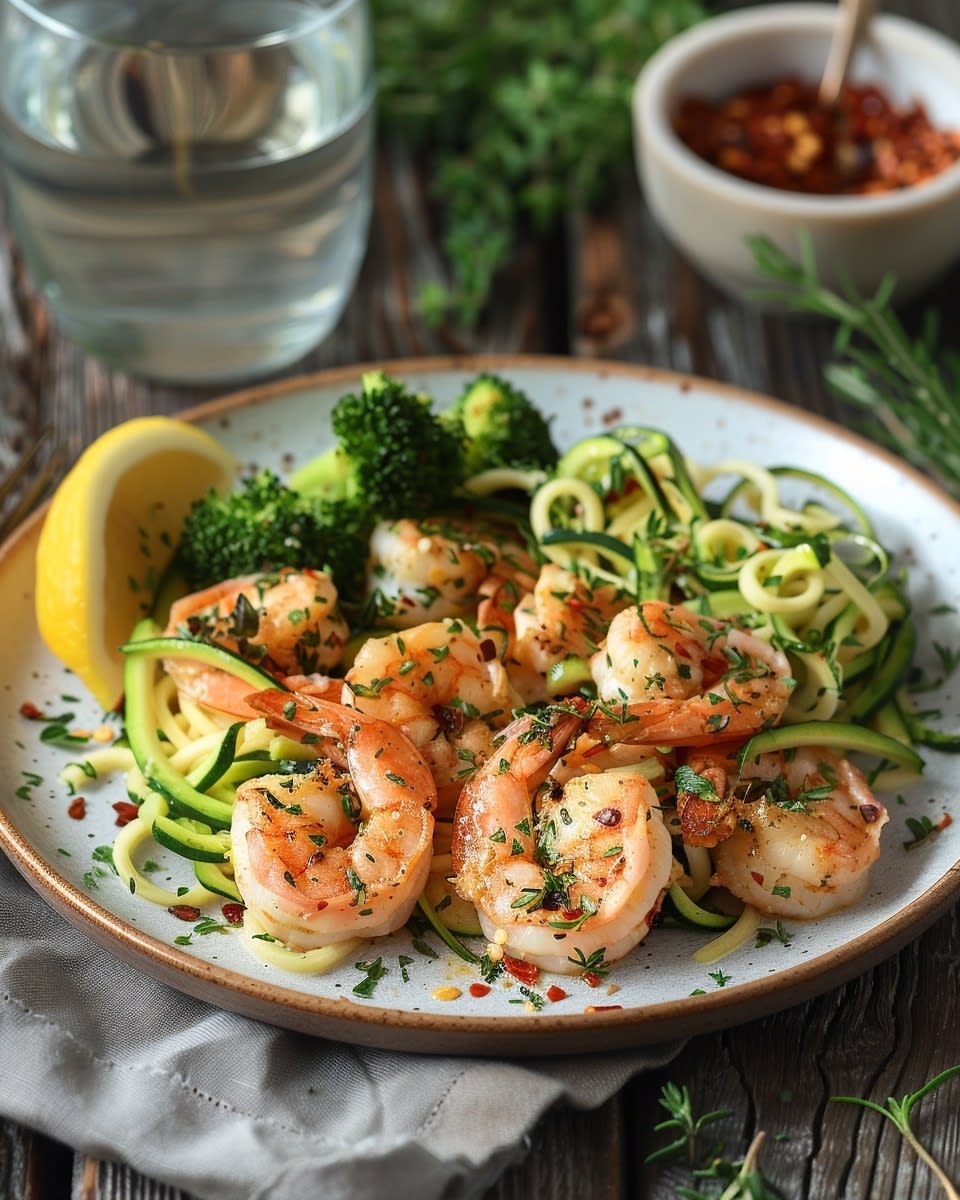
Your New Favorite Low-Carb Dinner: Lemon Garlic Shrimp and Zucchini Noodles
Last Tuesday, I stood in my kitchen staring at a pile of zucchini from my garden. I needed something quick, healthy, and tasty. That’s when I threw together Lemon Garlic Shrimp and Zucchini Noodles, and my family couldn’t stop raving about it. My ten-year-old even asked for seconds, which never happens with vegetables.
This dish changed how I think about healthy eating. It’s light but filling. It’s quick but feels fancy. Best of all, it delivers amazing flavor without the carb overload that leaves you sluggish.
If you’re looking for a meal that checks all the boxes, you’ve found it. Lemon Garlic Shrimp and Zucchini Noodles brings together bright citrus, aromatic garlic, and tender shrimp over a bed of fresh zucchini noodles. It’s the kind of meal that makes you feel good while you’re eating it and even better afterward.
Zucchini noodles, or zoodles as many people call them, are a brilliant swap for traditional pasta. They’re crunchy, fresh, and soak up whatever sauce you pair them with. Plus, they won’t leave you feeling stuffed or tired. One medium zucchini has only about 33 calories and barely any carbs. Compare that to a cup of regular pasta with over 200 calories and 40 grams of carbs.
I love how this recipe fits into any meal plan. Whether you’re counting calories, cutting carbs, or just trying to eat more vegetables, this dish works. It’s ready in under 30 minutes, which means you can make it on busy weeknights without stress.
Let me walk you through why this recipe deserves a spot in your weekly rotation.
Why Choose Lemon Garlic Shrimp and Zucchini Noodles?
The health benefits of this dish are hard to beat. Shrimp is packed with protein but low in calories. A four-ounce serving gives you about 24 grams of protein with only 120 calories. That protein keeps you satisfied for hours without weighing you down.
Shrimp also contains selenium, which supports your immune system and thyroid function. It has vitamin B12 for energy and brain health. You also get iodine, zinc, and omega-3 fatty acids. All this nutrition in tiny, delicious packages.
The zucchini brings its own benefits to the table. It’s loaded with vitamin C, which helps your body heal and protects your cells. The vegetable also contains potassium for heart health and healthy blood pressure. Zucchini has lots of water and fiber, which aids digestion and keeps you hydrated.
Here’s what makes this combination so smart:
- Low in carbs: Perfect for keto, low-carb, or diabetic-friendly eating plans
- High in protein: Keeps you full and supports muscle health
- Rich in vitamins: Covers multiple nutritional bases in one meal
- Light but satisfying: Won’t leave you feeling heavy or bloated
- Anti-inflammatory: The garlic and lemon both fight inflammation
Now let’s talk about flavor, because healthy food means nothing if it doesn’t taste good. The lemon garlic shrimp combination is a classic for good reason. The bright, tangy lemon cuts through the richness of the shrimp. The garlic adds depth and aroma that fills your kitchen.
When you cook garlic in olive oil or butter, it transforms into something magical. It becomes sweet and mellow instead of sharp. That caramelized garlic coats each piece of shrimp and every strand of zoodle. The lemon juice and zest wake up your taste buds with citrus brightness.
I like to add a pinch of red pepper flakes for subtle heat. Fresh parsley or basil at the end brings a pop of color and freshness. Sometimes I throw in cherry tomatoes for extra flavor and nutrition. The beauty of this recipe is how easy it is to customize.
The versatility of Lemon Garlic Shrimp and Zucchini Noodles makes it a winner for different eating styles. Are you following a gluten-free diet? This dish naturally contains no gluten. Doing keto? It fits perfectly within your macros. Trying to eat more whole foods? This recipe uses simple, real ingredients you can pronounce.
I’ve served this dish to friends with all kinds of dietary needs. My gluten-free neighbor loves it. My cousin who eats paleo makes it weekly. Even my friend who isn’t watching what she eats requests it when she comes over.
The dish works just as well for a quick Tuesday dinner as it does for entertaining. When I have guests, I plate it nicely with some lemon wedges and fresh herbs. It looks restaurant-quality but takes less time than ordering takeout.
Here’s a quick comparison of traditional pasta versus zucchini noodles:
| Aspect | Regular Pasta (1 cup cooked) | Zucchini Noodles (1 cup) |
|---|---|---|
| Calories | 220 | 20 |
| Carbohydrates | 43g | 4g |
| Fiber | 3g | 1g |
| Protein | 8g | 1.5g |
| Prep Time | 10-12 minutes | 5 minutes |
The numbers speak for themselves. You save hundreds of calories and dozens of carb grams by making this simple swap.
I remember the first time I tried zucchini noodles. I was skeptical. How could a vegetable replace pasta? But after one bite of properly cooked zoodles with the right sauce, I was sold. The key is not overcooking them. You want them tender but still with a slight crunch.
Another reason I love this meal is the speed. From start to finish, you’re looking at 20 to 25 minutes. The shrimp cooks in just a few minutes per side. The zoodles need only a quick sauté or even just a warm-through. You spend more time waiting for water to boil for regular pasta than you do making this entire dish.
For busy parents, this is a lifesaver. I can get home from work, make this dinner, and have everyone fed while it’s still light outside. My kids actually eat their vegetables without complaint because the garlic and lemon make everything taste so good.
The leftovers are excellent too. I pack them for lunch the next day. The flavors actually get better as they sit together. Just store the zoodles and shrimp separately if you can, and combine them when you’re ready to eat. This prevents the noodles from getting too watery.
Whether you’re trying to lose weight, maintain your health, or just eat more vegetables, Lemon Garlic Shrimp and Zucchini Noodles delivers. It gives you the satisfaction of a full meal without the guilt or sluggish feeling that comes from heavy dishes. You’ll finish eating and feel energized instead of needing a nap.


Getting Your Ingredients Ready for Perfect Lemon Garlic Shrimp
Now that you know why this dish is so amazing, let’s get into the actual making of it. First up, gathering your ingredients. This recipe keeps things simple, which is part of its charm. You won’t need to hunt down specialty items or spend a fortune at the grocery store.
For the shrimp and sauce, you’ll need one pound of large shrimp, peeled and deveined. I prefer the 16/20 count, which means 16 to 20 shrimp per pound. These are big enough to have a nice meaty bite. You’ll also need four medium zucchinis, three tablespoons of olive oil or butter (I usually do a mix of both), four cloves of garlic minced fine, the juice and zest of one large lemon, salt and pepper to taste, and a quarter teaspoon of red pepper flakes if you like a little kick. Fresh parsley is my go-to garnish, but basil works beautifully too.
Here’s the thing about buying shrimp. Quality matters more than you might think. I always check whether the shrimp smells like the ocean in a fresh way, not fishy or like ammonia. That smell means they’re past their prime. Fresh shrimp should be firm to the touch, not mushy. If you’re buying frozen, which is totally fine and sometimes fresher than “fresh” depending on where you live, look for shrimp that are individually frozen rather than in a solid block. This makes them easier to thaw and use exactly what you need.
Wild-caught versus farm-raised is a debate I’ve gone down the rabbit hole on. Wild-caught tends to have better flavor and firmer texture, but it costs more. Farm-raised from responsible sources works just fine for weeknight meals. I usually grab whatever looks best at my store that day. Sometimes I luck out and find wild-caught on sale.
By the way, frozen shrimp is often your best bet unless you live right on the coast. Most “fresh” shrimp at the grocery store was previously frozen anyway. They just thawed it for you, which means it’s been sitting there losing quality. I keep a bag of frozen shrimp in my freezer at all times. They thaw in about fifteen minutes in a bowl of cold water.
For the zucchini, look for medium-sized ones that feel firm when you squeeze gently. Huge zucchinis tend to be watery and have big seeds that make the noodles fall apart. Small to medium ones have better texture and sweeter flavor. The skin should be bright green without soft spots or wrinkles. I grab the darkest green ones I can find because they usually taste best.
Funny enough, my neighbor grows zucchini and practically begs people to take them in late summer. If you know a gardener, you’re set. One plant produces more zucchini than most families can handle. That’s actually how I started making this dish regularly.
Preparing Those Zucchini Noodles Like a Pro
The spiralizer is where the magic happens. I resisted buying one for years because I thought it was just another kitchen gadget that would collect dust. Wrong. It gets used in my house at least twice a week now. You can pick up a decent handheld spiralizer for under fifteen dollars, or go fancier with a countertop model if you’re really into veggie noodles.
Don’t have a spiralizer? No problem. You can use a julienne peeler or even a regular vegetable peeler to make long ribbons. They won’t look exactly like spaghetti, but they’ll taste just as good. I’ve also seen pre-spiralized zucchini noodles in the produce section of most grocery stores now. They cost more but save time if you’re in a rush.
Once you’ve spiralized your zucchini, here comes a step that makes a huge difference. Salt them and let them drain. I’m serious about this. Zucchini is mostly water, and if you skip this step, your beautiful dish turns into a watery mess. Sprinkle about a teaspoon of salt over your noodles in a colander, toss them around, and let them sit for ten to fifteen minutes.
The salt draws out excess moisture. After they’ve sat, you’ll see liquid pooling at the bottom. Press the noodles gently with paper towels or a clean kitchen towel to squeeze out even more water. This seems fussy, I know, but it takes maybe two minutes of actual work and prevents soggy zoodles. Your future self will thank you.
While the zoodles are draining, you can prep everything else. Mince your garlic. I use a microplane grater for mine because it gets the garlic super fine and releases more flavor. Plus it’s faster than chopping. Zest your lemon before you juice it because it’s way easier that way. I learned that the hard way trying to zest an already-juiced lemon half.
If you want to jazz up the basic recipe, this is where you can get creative. Cherry tomatoes are fantastic here. Just halve about a cup of them and toss them in with the shrimp. They get soft and jammy and add pops of sweetness. Asparagus cut into inch-long pieces works great too. Sometimes I throw in baby spinach right at the end. It wilts in seconds from the residual heat. Similar to how I add greens to my high protein chicken and quinoa bowl, the vegetables blend right into the dish.
For garnishes beyond parsley, consider toasted pine nuts or slivered almonds for crunch. A sprinkle of parmesan cheese adds salty, nutty flavor if you’re not dairy-free. Capers give a briny punch that pairs beautifully with lemon. Fresh basil instead of parsley brings a sweet, aromatic quality that changes the whole vibe of the dish.
Cooking the Shrimp to Juicy Perfection
Alright, everything’s prepped. Time to cook. Heat a large skillet over medium-high heat. I use a 12-inch pan so everything has room to spread out. Add two tablespoons of olive oil and let it get shimmery but not smoking. If your oil starts smoking, your pan is too hot. Turn it down a notch.
Pat your shrimp completely dry with paper towels. This is important because wet shrimp steams instead of getting a nice sear. Season them with salt and pepper on both sides. When the oil is ready, add the shrimp in a single layer. Don’t crowd them. If you dump them all in a pile, they’ll steam and turn rubbery.
Here’s the secret to perfect shrimp: they cook fast. Like, way faster than you think. We’re talking two to three minutes per side max. You’ll know they’re ready to flip when the bottom half turns pink and opaque. Flip them with tongs and cook the other side for another two minutes or so. The shrimp are done when they’re pink all over and formed a loose C shape. If they curl into tight little Os, you’ve gone too far and they’ll be tough.
I used to overcook shrimp all the time until my friend who worked at a seafood restaurant showed me the trick. She said to take them off the heat when they look almost done because they keep cooking from residual heat. That advice changed everything for me.
Once the shrimp are cooked, transfer them to a plate. In the same pan, turn the heat down to medium and add another tablespoon of oil or butter. Butter makes the sauce richer and more restaurant-quality, but olive oil keeps it lighter. I usually do a mix.
Add the minced garlic and cook it for just thirty seconds to a minute, stirring constantly. You want it fragrant and golden, not brown and bitter. Burnt garlic ruins everything, trust me. The second it smells amazing and looks lightly golden, add the lemon juice and zest. It’ll sizzle and smell incredible.
Let that sauce simmer for about a minute. It’ll reduce slightly and the flavors will concentrate. Add the red pepper flakes now if you’re using them. This is your lemon garlic sauce, and it’s what makes everything sing. Taste it and adjust with more salt, pepper, or lemon juice if needed. I almost always add a pinch more salt.
Bringing It All Together
Now comes the easy part. Add your drained, dried zucchini noodles to the pan with the sauce. Toss them around with tongs for about two to three minutes. You want them heated through and coated in the sauce but still with some bite. They should be tender-crisp, not mushy.
The key here is not to overdo it. Overcooked zoodles turn to mush and nobody wants that. I keep them moving in the pan the whole time so they cook evenly. Think of it like tossing a salad more than cooking pasta. You’re really just warming them and letting them soak up that garlicky lemon goodness.
Add the shrimp back to the pan and toss everything together gently. The shrimp will warm back up in seconds. The whole tossing process takes maybe three minutes total. Some people prefer to keep the zoodles raw and just let the hot sauce and shrimp warm them through. That works too and keeps them extra crunchy. I’ve done it both ways depending on my mood.
For extra flavor, I sometimes add a tablespoon of butter right at the end and swirl it into the sauce. It adds richness and helps the sauce cling to the noodles better. Chefs call this mounting the sauce with butter, and it’s a simple trick that makes everything taste more luxurious.
If the dish seems dry, add a splash of pasta water. Wait, you don’t have pasta water because there’s no pasta. A splash of chicken broth or even just water works to loosen up the sauce if needed. Usually the zucchini releases enough moisture on its own, but sometimes if you dried them really thoroughly, you might need a tiny bit of liquid.
The technique here reminds me of how I finish grilled salmon with avocado salsa, where timing is everything. You want each component cooked right and brought together at the last moment so nothing gets overcooked or soggy.
Plate it up immediately while everything is hot. I like to use tongs to twirl the zoodles into a nest on each plate, then arrange the shrimp on top. Drizzle any extra sauce from the pan over everything. Sprinkle with fresh parsley or basil, add a lemon wedge on the side, and maybe a crack of fresh black pepper.
The whole cooking process from heating the pan to plating takes about fifteen minutes. That’s faster than boiling water and cooking regular pasta. And the best part? Only one pan to wash. I’m all about minimal cleanup on weeknights.
After dinner, if you’re craving something sweet that’s still relatively light, I sometimes whip up chocolate chip cookie dough bites or blueberry crumble dessert bars. They balance out the savory dinner perfectly without making you feel stuffed.
This cooking method works for so many variations too. Swap the shrimp for chicken, scallops, or even tofu. Change the seasonings to Italian herbs, Cajun spices, or Asian-inspired flavors with ginger and soy sauce. The technique stays the same. Master this basic recipe and you’ve got endless possibilities.


Turning Your Lemon Garlic Shrimp Into a Complete Meal Experience
One of my favorite things about Lemon Garlic Shrimp and Zucchini Noodles is how well it plays with other dishes. While it’s totally satisfying on its own, sometimes you want to round things out with a few complementary sides. I’ve experimented a lot over the months, and I’ve found some combinations that really elevate the whole dinner experience.
A simple arugula salad with a light vinaigrette balances the richness of the garlic butter beautifully. The peppery bite of arugula cuts through the sauce in the best way. I usually toss some cherry tomatoes in there, maybe shaved parmesan, and dress it with olive oil, lemon juice, and a touch of honey. Takes five minutes and adds freshness to the plate.
Crusty bread is another winner if you’re not strictly low-carb. I mean, you’ve got that amazing garlicky, lemony sauce just sitting there begging to be soaked up. A good sourdough or ciabatta does the job perfectly. Toast it lightly, rub it with a cut garlic clove if you’re feeling fancy, and you’ve got yourself a simple but delicious accompaniment.
For something heartier, roasted vegetables work wonderfully. I’ll throw asparagus, bell peppers, or Brussels sprouts in the oven with olive oil, salt, and pepper while I’m cooking the shrimp. They roast in about twenty minutes at 400 degrees, and the caramelized edges add a sweet depth that complements the bright citrus notes in the main dish.
Cauliflower rice is another option I turn to frequently. It keeps the meal firmly in low-carb territory while adding bulk and a different texture. I season mine with a bit of butter and garlic to echo the flavors in the shrimp. Sometimes I’ll toss in some herbs like parsley or cilantro for color and freshness.
Here’s the thing about side dishes, though. You really don’t need them. The beauty of this recipe is its completeness. You’ve got protein from the shrimp, vegetables from the zucchini, healthy fats from the olive oil or butter, and tons of flavor from the garlic and lemon. It checks all the nutritional boxes without needing backup.
Creative Variations to Keep Things Interesting
After making the basic version a dozen times, I started playing around with different flavor profiles. That’s when this dish really became exciting for me. The formula stays the same, but swapping herbs and spices gives you completely different meals.
Try an Italian twist by adding sun-dried tomatoes, fresh basil, and a handful of Kalamata olives. The tomatoes bring sweetness and tang, while the olives add brininess. A sprinkle of Italian seasoning in the sauce transforms it into something that tastes like summer in Tuscany. I finish it with fresh mozzarella torn into chunks if I’m feeling indulgent.
For Asian-inspired flavors, swap the lemon for lime and add fresh ginger to the garlic. A splash of soy sauce or coconut aminos instead of salt changes everything. Throw in some snap peas or bok choy with the zucchini noodles. Top it with sesame seeds and sliced green onions. Suddenly you’ve got a completely different meal that’s just as delicious.
Mexican flavors work surprisingly well too. Use lime instead of lemon, add cumin and chili powder to the shrimp, and toss in some black beans and corn. Top with cilantro, diced avocado, and a dollop of Greek yogurt instead of sour cream. It’s like shrimp tacos deconstructed over zoodles.
My neighbor who’s obsessed with spicy food adds Calabrian chili paste to her version. Just a teaspoon stirred into the sauce gives it serious heat without overwhelming the other flavors. If you can’t find Calabrian chilis, sriracha or harissa work great too. Start with a little and build up because you can always add more heat but you can’t take it away.
Here are some other variation ideas I’ve tried or heard about:
- Pesto version: Toss everything with fresh basil pesto instead of the lemon garlic sauce
- Creamy style: Add a splash of heavy cream or coconut milk to the sauce for richness
- Mediterranean mix: Include artichoke hearts, feta cheese, and fresh oregano
- Cajun spiced: Season the shrimp with Cajun seasoning and add diced bell peppers
- Thai-inspired: Use fish sauce, lime, Thai basil, and a touch of brown sugar
The protein swaps I mentioned earlier really do work brilliantly. Chicken breast cut into bite-sized pieces cooks in about the same time as shrimp. Scallops are even faster and just as luxurious. For a budget-friendly option, white fish like cod or tilapia works well. Cut it into chunks and handle it gently so it doesn’t fall apart.
Vegetarians in my life have made this with chickpeas instead of shrimp. They roast the chickpeas first until crispy, then toss them with the sauce and zoodles. It’s a completely different texture but equally satisfying. Tofu works if you press it really well and get a good sear on it. The key is making sure your plant-based protein has enough flavor and texture to stand up to the zucchini noodles.
Balancing Nutrition and Creating a Complete Plate
When I think about making a complete meal, I consider the macronutrients. Protein, check. We’ve got plenty from the shrimp. Vegetables, check. The zucchini covers that. Healthy fats, check. The olive oil and any butter we use provides those. But depending on your activity level and goals, you might want to add more of something.
If you need more carbs, maybe you’re training for a marathon or you’re feeding growing teenagers, adding a grain makes sense. Quinoa seasoned with lemon and herbs complements the dish perfectly. Brown rice works too. Even a small serving of whole wheat pasta mixed with the zoodles gives you that carb boost while still keeping things relatively healthy.
For extra healthy fats, avocado slices on top are amazing. They’re creamy and rich and add substance without much effort. A drizzle of good quality extra virgin olive oil right before serving adds flavor and nutrition. Pine nuts or walnuts toasted and sprinkled over the top contribute omega-3s and a satisfying crunch.
Sometimes I’ll add white beans to bulk up the dish and add more protein and fiber. Cannellini beans are mild and soak up the sauce beautifully. They also make the meal more filling without changing the flavor profile much. Just drain and rinse a can, then toss them in with the zoodles.
The FDA recommends making smart food choices that include a variety of vegetables, lean proteins, and healthy fats, which is exactly what this dish delivers. You’re checking all those boxes with simple, whole ingredients that you can actually recognize and pronounce.
For kids who might be skeptical of zucchini noodles, I’ve found that mixing in some regular pasta helps. Start with half and half. They get used to the texture and flavor of the zoodles while still having something familiar. Over time, you can increase the ratio of zucchini to pasta. My kids didn’t even notice when I eventually went full zoodle because the transition was so gradual.
Another trick for picky eaters is to spiralize other vegetables too. Carrots make colorful noodles with a slight sweetness. Sweet potato noodles are sturdier and have more substance. Cucumber noodles stay super crunchy and refreshing. Mixing different vegetable noodles together creates a rainbow plate that’s visually appealing and nutritionally diverse.
Making the Recipe Work for Your Lifestyle
The flexibility of this dish extends beyond just flavor variations. It adapts to different meal prep situations and dietary needs really well. I’ve packed it for work lunches, served it at dinner parties, and even made it for weekend brunch with a poached egg on top. That egg idea came from a brunch place I went to in Portland, and let me tell you, the runny yolk mixing with the lemon garlic sauce is next level.
For meal prep, I spiralize my zucchini on Sunday and store them in the fridge in a container lined with paper towels to absorb moisture. They stay good for three to four days. Then it’s super quick to cook the shrimp and toss everything together on a weeknight. The actual cooking time is so minimal that even with prep done, it feels fresh.
If you’re feeding a crowd, this recipe scales up beautifully. I’ve made it for twelve people at a family gathering. Just use multiple pans or work in batches. Keep the cooked shrimp warm in a low oven while you finish the rest. Everyone loved it, and I got so many requests for the recipe that I finally just texted it to the family group chat.
The recipe also works cold as a pasta salad type situation. After everything’s cooked and tossed, let it cool to room temperature, then chill it in the fridge. Add a bit more lemon juice and olive oil before serving since the noodles absorb the dressing as they sit. It’s refreshing on hot summer days when you don’t want to eat anything heavy or warm.
By the way, this has become my go-to dish when I need to bring something to a potluck. It’s easy to transport, looks impressive, and accommodates so many dietary restrictions. Gluten-free folks can eat it. Low-carb and keto people love it. It’s pescatarian-friendly. Unless someone has a shellfish allergy, pretty much everyone can enjoy it.
I encourage you to really make this recipe your own. Use it as a starting point and then go wild with whatever sounds good to you. Maybe you have an herb garden overflowing with thyme or oregano. Throw it in. Found beautiful heirloom tomatoes at the farmer’s market? Dice them up and add them. Cooking should be fun and creative, not stressful or rigid.
The confidence you’ll build from mastering this technique translates to other dishes too. Once you understand how to properly cook shrimp and handle vegetable noodles, you can apply those skills everywhere. You’ll start seeing possibilities with other proteins and vegetables. That’s when cooking really becomes enjoyable instead of just a chore you have to do.
For anyone looking to expand their repertoire of nutritious meals that actually taste good, exploring more healthy recipes can provide endless inspiration and keep your weekly menu exciting without compromising on flavor or your wellness goals.
So grab those ingredients, fire up your stove, and give this dish a try. Start with the basic recipe to get the technique down, then let your creativity take over. There’s something really satisfying about taking a simple combination of ingredients and turning it into something that makes you feel nourished and happy. That’s what good food should do.
Frequently Asked Questions About Lemon Garlic Shrimp and Zucchini Noodles
How do I make zucchini noodles without a spiralizer?
You can use a julienne peeler to create thin strips of zucchini that work just like noodles. Another option is a regular vegetable peeler to make wider ribbons, which some people actually prefer for the texture. A mandoline slicer with a julienne blade also does the job nicely if you have one. You can even carefully use a sharp knife to cut the zucchini into thin matchsticks, though this takes more time and knife skills. Many grocery stores now sell pre-spiralized zucchini noodles in the produce section if you want to skip the prep entirely.
Can I use frozen shrimp for this recipe?
Absolutely, and frozen is often fresher than what’s labeled as “fresh” at the seafood counter. Just thaw the shrimp properly by placing them in a colander under cold running water for about fifteen minutes. You can also thaw them overnight in the refrigerator if you’re planning ahead. Make sure to pat them completely dry with paper towels before cooking, as excess moisture prevents them from getting a nice sear. Frozen shrimp that’s been individually quick-frozen works best because you can use exactly what you need. Avoid thawing and refreezing shrimp as this degrades the texture and quality significantly.
What can I substitute for zucchini if I don’t like it?
Yellow squash works almost identically to zucchini and has a slightly milder, sweeter flavor. Cucumber noodles stay crunchier and have a refreshing quality, though they’re best served raw or just barely warmed. Carrot noodles are sweeter and sturdier, holding up well to cooking. Sweet potato noodles are heartier and add more carbs if that fits your goals. Even thinly sliced cabbage or broccoli slaw can work in a pinch, giving you a different texture but still soaking up that delicious sauce beautifully.
Is this dish suitable for a keto diet?
Yes, this is an excellent keto-friendly meal. One serving typically contains only about five to seven grams of net carbs, depending on how much zucchini you use. The shrimp provides plenty of protein, and the olive oil or butter adds the healthy fats that keto requires. To make it even more keto-friendly, use butter instead of olive oil and add extra fat through avocado slices, pine nuts, or a cream-based sauce. The dish keeps you satisfied without kicking you out of ketosis, making it perfect for regular rotation on a keto meal plan.
How can I make this dish spicier?
The easiest way is to increase the red pepper flakes from a quarter teaspoon to a half teaspoon or more. Fresh sliced jalapeños added with the garlic give you a different kind of heat that’s bright and fresh. Calabrian chili paste stirred into the sauce provides a rich, complex spiciness that’s not just heat for heat’s sake. A few dashes of your favorite hot sauce at the end lets everyone customize their own heat level. Cayenne pepper mixed with the shrimp seasoning distributes the spice evenly throughout the dish for consistent heat in every bite.
Can I prepare the zucchini noodles ahead of time?
You can spiralize them up to three days in advance if you store them properly. Place the raw noodles in an airtight container lined with paper towels to absorb excess moisture. Change the paper towels after the first day to keep things fresh. Salt them and let them drain just before cooking, not when you first spiralize them, or they’ll become too soggy. Some people blanch the noodles quickly in boiling water and then freeze them, though I find the texture changes too much for my preference. For best results, spiralize the morning of or the night before you plan to cook.
What are some other sauces that go well with this dish?
A simple marinara sauce turns this into an Italian-style dish that’s hearty and comforting. Pesto, whether basil, sun-dried tomato, or even spinach artichoke, coats the noodles beautifully and adds tons of flavor. An Asian-inspired sauce with soy sauce, ginger, sesame oil, and a touch of honey creates an entirely different meal. Creamy Alfredo sauce made lighter with Greek yogurt instead of heavy cream gives you richness without too many calories. Even a simple brown butter sauce with fresh sage transforms the basic ingredients into something elegant enough for company.
How long does this dish keep in the refrigerator?
The cooked dish will keep for about three days in an airtight container in the fridge. Store the zoodles and shrimp separately if possible, as the noodles release moisture as they sit and can make everything watery. When reheating, I prefer to do it gently in a skillet over medium-low heat rather than the microwave, which can overcook the shrimp and make them rubbery. Add a splash of water or broth if it seems dry when reheating. The flavors actually meld together nicely overnight, so leftovers often taste even better the next day for lunch.
Can I make this dish dairy-free?
Definitely, just use olive oil instead of butter throughout the recipe. The dish is naturally dairy-free except for the butter, so that one swap takes care of it completely. You can add a tablespoon of nutritional yeast at the end if you want a slightly cheesy flavor without actual cheese. Coconut oil works too if you want a subtle sweetness, though I’d use the refined kind so it doesn’t taste too coconutty. The lemon and garlic provide so much flavor that you really don’t miss the dairy at all.
What’s the best way to prevent rubbery shrimp?
The number one mistake is overcooking, so watch your shrimp closely and remove them from heat as soon as they turn pink and opaque. They should curl into a loose C shape, not a tight circle. Always pat them dry before cooking so they sear instead of steam. Don’t crowd the pan, cook them in a single layer with space between each piece. Use medium-high heat, not scorching high, which cooks the outside too fast while leaving the inside underdone. Let them come to room temperature for about ten minutes before cooking so they cook more evenly from edge to center.
This dish has honestly changed the way I approach weeknight dinners. It’s proof that healthy eating doesn’t have to be boring or time-consuming. Give it a try, experiment with the variations that sound good to you, and see how it fits into your life. I bet it’ll become a regular in your rotation just like it has in mine.
Ingredients
Equipment
Method
- Spiralisez les courgettes et salez-les, en les laissant égoutter pendant 10-15 minutes pour enlever l'excès d'humidité.
- Essuyez les crevettes et assaisonnez-les de sel et de poivre des deux côtés.
- Dans une grande poêle à feu moyen-vif, ajoutez 2 cuillères à soupe d'huile.
- Une fois l'huile chaude, ajoutez les crevettes en une seule couche et faites cuire pendant 2-3 minutes de chaque côté jusqu'à ce qu'elles soient roses et opaques, puis retirez-les de la poêle.
- Dans la même poêle, réduisez le feu à moyen et ajoutez la cuillère à soupe d'huile ou de beurre restante.
- Ajoutez l'ail haché dans la poêle et faites sauter pendant 30 secondes à 1 minute jusqu'à ce qu'il soit parfumé mais pas brûlé.
- Incorporez le jus et le zeste de citron, en laissant la sauce mijoter pendant environ 1 minute.
- Ajoutez les nouilles de courgette égouttées dans la poêle et mélangez pendant 2-3 minutes jusqu'à ce qu'elles soient chaudes mais encore légèrement croquantes.
- Remettez les crevettes cuites dans la poêle et mélangez délicatement avec les nouilles de courgette.
- Servez immédiatement, garni de persil ou de basilic et de quartiers de citron si désiré.