
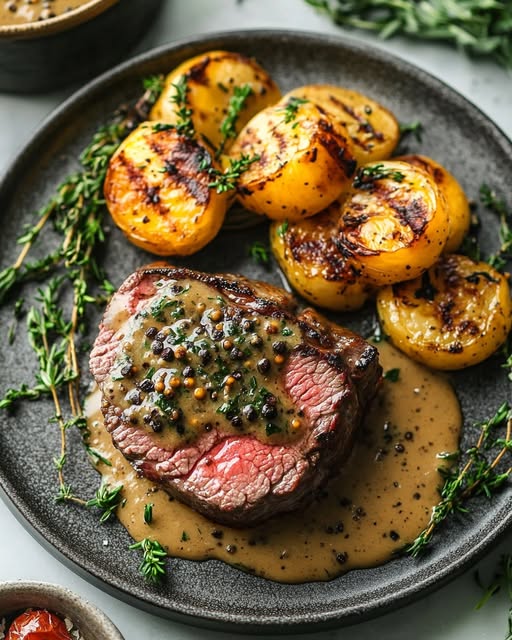
Filet Mignon en Cuisson Inversée avec Sauce au Poivre: Your Ticket to Steakhouse Perfection at Home
Let me tell you about my last dinner party. I was determined to wow my friends with a restaurant-quality steak. I was tired of the guesswork, the smoke alarm serenades, and the dreaded overdone center. Then I discovered the magic of the reverse sear. This reverse seared filet mignon with a creamy brandy peppercorn sauce was the star of the evening. It was so tender you could cut it with a fork. The crust was incredible. My friend Mark actually asked if I’d ordered takeout from a fancy spot. Nope! Just a brilliant, foolproof method. This recipe is now my secret weapon for elegant, stress-free dinners.
A Little Story Behind This Reverse Seared Steak
Filet mignon is the tenderloin cut, known for its butter-soft texture. The classic way is to sear it hot and fast. The reverse sear method flips that script. It started gaining real popularity among home chefs and pitmasters in the last 15 years. Why? Because ovens and low-temperature cooking are wonderfully predictable. This method gently brings the steak up to temperature. It cooks it evenly from edge to edge. No more gray band of overcooked meat surrounding a pink center. Then, you finish with a blistering hot sear for that perfect crust. It’s modern kitchen science meeting classic French technique. The creamy peppercorn sauce, or “Sauce au Poivre,” is a bistro classic. It adds a luxurious, punchy finish to the mild filet.
Why You’ll Fall in Love With This Reverse Sear Recipe
You will love this because it takes the panic out of cooking expensive steaks. The low oven does most of the work. It gives you perfect control. The result is steak with a stunning pink interior from edge to edge. The sear at the end is quick and smoky. The brandy peppercorn sauce is the crowning glory. It’s rich, creamy, and has a wonderful kick. This dish feels incredibly special. Yet the process is surprisingly simple. It will make you feel like a total kitchen pro.
When to Make This Showstopping Dish
This is your go-to recipe for any occasion that calls for a “wow” factor. It’s perfect for a romantic date night at home. Light some candles and open a good bottle of red wine. It’s also fantastic for a small, elegant dinner party with close friends. Holidays like Valentine’s Day, anniversaries, or New Year’s Eve are ideal. Honestly, any Tuesday you want to treat yourself qualifies too. Life is short. Eat amazing steak.
What You’ll Need: The Ingredients List
For the Reverse Seared Filet Mignon:
- 4 filet mignon steaks (170-225g / 6-8 oz each)
- Kosher salt and freshly ground black pepper, to taste
- 1 tbsp neutral oil (like avocado or canola oil)
- 1 tbsp good-quality unsalted butter
For the Brandy Peppercorn Sauce:
- 1/4 cup minced shallots (about 1 small shallot)
- 2 tsp minced garlic (about 2 large cloves)
- 1 tbsp all-purpose flour
- 1/4 cup brandy
- 3/4 cup low-sodium beef broth
- 1/2 cup heavy cream
- 1 tbsp Dijon mustard
- 2 tsp coarsely cracked black peppercorns
No Shallots? No Brandy? Easy Swaps!
- Shallots: Use about 3 tablespoons of very finely minced red or yellow onion. The flavor will be stronger, but still delicious.
- Brandy: Good cognac works perfectly. In a pinch, you can use a good dry sherry or even a splash of dry white wine. The flavor will be different but still fantastic.
- Heavy Cream: For a slightly lighter sauce, half-and-half can work. The sauce won’t be as thick or rich, but it will still be creamy.
- Beef Broth: A good beef stock is great. For a deeper flavor, use a beef demi-glace if you have it.
Your Step-by-Step Guide to Reverse Seared Perfection
Step 1: Dry Brine (The Secret for Flavor & Crust)
This optional step makes a huge difference. Place a wire rack on a baking sheet lined with foil. Generously season all sides of your steaks with kosher salt. Let them sit uncovered on the rack for 1 hour on the counter. For the best results, you can do this overnight in the fridge. This dry brine draws out moisture. The salt then gets reabsorbed, seasoning the meat deeply. It also helps the surface dry out. A dry surface means a much better sear later. Pro tip: Take the steaks out of the fridge 30 minutes before they go in the oven. This helps them cook evenly.
Step 2: The Low and Slow Oven Cook
Preheat your oven to a low 107°C (225°F). This gentle heat is the heart of the reverse sear technique. Place the steaks directly on the rack (no need to pat them dry again). Now, grind a generous amount of fresh black pepper all over them. Slide the baking sheet into the oven. Cook until a meat thermometer reads 43-46°C (110-115°F) for medium-rare. This takes about 25-28 minutes. Start checking at 20 minutes. The steaks will look gray and uninspiring. Don’t worry! The magic happens next. Let them rest for 5-8 minutes after the oven.
Step 3: The Sizzling Hot Sear
While the steaks rest, heat a cast-iron skillet over medium-high heat. Get it very hot. Add the oil and butter, swirling to coat the pan. When the fat is shimmering and hot, carefully add the steaks. You should hear a loud, immediate sizzle. Sear for about 2 minutes total per side. I flip them every 30 seconds. This builds a beautiful, even crust without burning. The aroma is incredible. Transfer the steaks to a clean plate. Let them rest another 5-8 minutes before serving.
Step 4: Building the Luxurious Sauce
Use the same skillet. Pour off all but about 1 tablespoon of the fat. Lower the heat to medium. Add the minced shallots. Cook them until they are soft and fragrant, about 2-3 minutes. Stir in the garlic and cook for just 30 seconds more. You don’t want the garlic to burn. Sprinkle the flour over the shallots. Cook for 1 minute to get rid of the raw flour taste.
Step 5: Deglaze and Simmer
Here comes the fun part. Pour in the brandy. Be careful, as it may flame up briefly. Use your spoon to scrape up all the delicious browned bits from the pan bottom. These bits are pure flavor. Let the brandy bubble and reduce until it’s almost gone. This takes about 2 minutes. Now, pour in the beef broth. Let it simmer for 2-3 minutes. The sauce will start to thicken slightly.
Step 6: Finish the Creamy Peppercorn Sauce
Reduce the heat to low. Stir in the heavy cream, Dijon mustard, and cracked peppercorns. Keep stirring until the sauce is smooth and velvety. Let it simmer gently for another 2 minutes. It will thicken to a perfect, coat-the-back-of-a-spoon consistency. Taste it. Add a pinch of salt if needed. Chef’s tip: For an extra smooth sauce, you can strain it through a fine mesh sieve to remove the shallot bits. I usually don’t bother. I love the texture!
Timing is Everything: Your Cooking Schedule
This recipe is all about planning, not rushing. Here’s a helpful breakdown:
- Prep Time: 15 minutes (mostly chopping and seasoning).
- Dry Brine Time (Optional but recommended): 1 hour at room temp or up to 24 hours in the fridge.
- Oven Cooking Time: 25-28 minutes at low heat.
- Resting Time (After Oven): 5-8 minutes.
- Searing Time: About 4 minutes total.
- Final Resting Time: 5-8 minutes.
- Sauce Making Time: About 10 minutes (done during the rests).
- Total Active Time: About 30 minutes.
- Total Project Time: About 50 minutes without dry brining.
My One Can’t-Miss Chef’s Secret
My absolute secret is the double rest. Letting the steaks rest after the oven is crucial. It allows the hot interior heat to even out. This means when you sear, you’re only worrying about the crust, not the doneness. The second rest after searing is just as important. It lets the juices, which rushed to the center during searing, settle back throughout the meat. If you skip this, you’ll cut into it and lose all those delicious juices to the plate. Patience makes perfect, juicy steak.
A Fun Fact About Peppercorns
That bold flavor in your sauce comes from black peppercorns. They are actually the dried, unripe berry of the pepper plant. The cracking or coarse grinding is key here. Pre-ground pepper loses its volatile oils and flavor quickly. By cracking whole peppercorns just before making the sauce, you capture the most intense, aromatic punch. It makes the sauce truly special.
Gear You Need for This Recipe
- Rimmed Baking Sheet & Wire Rack: Essential for the oven phase. The rack lets hot air circulate.
- Cast-Iron Skillet: The best tool for getting a phenomenal, even sear. A heavy stainless steel pan works too.
- Instant-Read Thermometer: Non-negotiable for the reverse sear method. It takes all the guesswork out.
- Sharp Knife: For chopping shallots and garlic.
- Tongs: For handling the steaks safely.
Storing and Reversing Your Leftovers
Leftover reverse seared filet is a rare treat in my house, but it happens. Let the steak and sauce cool completely. Store them separately in airtight containers in the fridge. The steak will keep for 3-4 days. The sauce is best within 2-3 days.
Reheating steak is tricky. You don’t want to overcook it. The best method is gently. Let the steak come to room temp for 30 minutes. Warm it very slowly in a 120°C (250°F) oven until just warmed through. You can also slice it cold and add it to a salad. It’s delicious.
For the sauce, reheat it slowly in a small saucepan over low heat. Add a tiny splash of broth or cream if it has thickened too much. Stir it often to prevent scorching.
My Best Tips for Flawless Filet
- Season Fearlessly: Don’t be shy with the kosher salt. Steak needs a good coating to taste its best.
- Patience with the Pan: Make sure your skillet is properly hot before adding the steaks. You should see light smoke from the oil.
- Don’t Crowd the Pan: Sear two steaks at a time if your pan is small. Overcrowding creates steam and ruins the crust.
- Use the Thermometer: Trust the internal temperature, not the clock. Steak thickness varies.
- Quality Matters: Splurge on the best steaks you can for this special meal. It makes a difference.
Pretty on the Plate: Presentation Ideas
- Place the rested steak on a warm plate. Spoon the creamy peppercorn sauce generously over the top, letting some pool underneath.
- Garnish with a tiny sprig of fresh thyme or a twist of fresh cracked pepper.
- Serve with simple, elegant sides. Garlic mashed potatoes, crispy roasted asparagus, or a simple green salad are perfect.
- For a restaurant touch, slice the steak against the grain before plating. Fan the slices out and drizzle with sauce.
Want to Mix It Up? Try These Tasty Twists
This method is versatile. Here are six delicious ways to change your reverse seared steak.
- Herb-Crusted: After searing, roll the hot steak in a mix of finely chopped fresh herbs like rosemary, thyme, and parsley.
- Blue Cheese Butter: Skip the pan sauce. Top your steak with a cold pat of butter mixed with crumbled blue cheese and chives.
- Mushroom Marsala Sauce: Swap the brandy for Marsala wine. Sauté sliced mushrooms with the shallots for a earthy, rich sauce.
- Café de Paris Style: Make a compound butter with herbs, capers, and mustard. Place a slice on the hot steak just before serving.
- Asian-Inspired Glaze: For the sear, use sesame oil. Make a simple glaze with soy sauce, honey, ginger, and garlic to brush on at the end.
- Smoky Reverse Sear: If you have a smoker or pellet grill, use it for the low-temperature phase. It adds an incredible subtle smoke flavor.
Common Mistakes to Avoid for Your Reverse Seared Steak
Mistake 1: Skipping the Meat Thermometer
This is the biggest error. Guessing doneness by time or look is a recipe for disappointment. Ovens and steak thickness vary. Without a thermometer, you risk undercooking or, worse, overcooking your expensive filet. The whole point of the reverse sear method is precision. A good instant-read thermometer is your best friend. It tells you exactly when to pull the steak from the oven for perfect results every single time.
Mistake 2: Searing with a Cold Pan
If your pan isn’t hot enough, you won’t get that beautiful, flavorful crust. The steak will just stew and turn gray. You need that loud, immediate sizzle when the meat hits the pan. Let your cast-iron skillet preheat for a good 5 minutes over medium-high heat. Test it by flicking a tiny drop of water into the pan. It should skitter and evaporate instantly. Then add your oil and butter. Wait for it to shimmer before adding the steak.
Mistake 3: Not Letting the Steak Rest
I know it’s tempting to cut right in. But if you do, all the flavorful juices will run out onto the cutting board. Your steak will be dry. Resting is not optional. It’s a critical step. The fibers of the meat relax during the rest. They reabsorb the juices. Always let your steak rest for at least 5 minutes after searing. Cover it loosely with foil to keep it warm. You worked hard for those juices. Keep them in the steak where they belong.
Mistake 4: Using Pre-Ground Black Pepper
That fine powder in a shaker has lost its oomph. For a standout peppercorn sauce, you need freshly cracked flavor. The volatile oils in whole peppercorns are what give the sauce its signature aromatic punch. Buy whole black peppercorns. Crush them with the bottom of a heavy pan or in a mortar and pestle just before cooking. You’ll taste the incredible difference immediately.
Your Reverse Seared Filet Mignon Questions, Answered
Can I use this reverse sear method on other cuts of steak?
Absolutely. The reverse sear technique works wonders on any thick-cut steak. It’s especially great for ribeye, New York strip, or even a thick pork chop. The key is thickness. Aim for steaks at least 1.5 inches thick. Thinner steaks don’t benefit as much from the slow oven phase. They might overcook before you get a good sear. For those big, beautiful, bone-in cuts, this is the best way to cook them evenly.
What if I don’t have a wire rack for the baking sheet?
You can still make it work. Crumble up a few large pieces of aluminum foil into long, snake-like shapes. Create a little platform for the steaks on the baking sheet with these foil coils. This will lift them up slightly and allow some air flow. It’s not as good as a proper rack, but it’s much better than placing the steak directly on the hot pan. The goal is to let hot air circulate all around the meat for even cooking.
My sauce is too thin. How can I thicken it?
Let it simmer a little longer over low heat. The cream will reduce and thicken naturally. If you’re in a rush, you can make a “slurry.” Mix 1 teaspoon of cornstarch with 1 tablespoon of cold water or broth until smooth. Whisk this mixture into the simmering sauce. Cook for another minute or two until it thickens. Be careful not to add too much. You want a creamy sauce, not a gelatinous one. Start with just half the slurry.
Is it safe to cook steak at such a low oven temperature?
Yes, it is perfectly safe. The danger zone for bacterial growth is between 40°F and 140°F (4°C and 60°C). Your oven at 225°F (107°C) is well above that. The steak will pass through the danger zone relatively quickly as it heats up. Using a thermometer ensures you cook it to a safe internal temperature of at least 130°F (54°C) for medium-rare. The slow, controlled heat is what makes this method so effective and safe.
Can I prepare anything ahead of time for this recipe?
You can do a lot ahead. The dry brining step is perfect prep. Season your steaks the night before and leave them uncovered in the fridge. Chop your shallots and garlic. Measure out your broth, cream, and brandy. Store everything separately in the fridge. When you’re ready to cook, just take the steaks out 30 minutes early. Having your “mise en place” (everything in its place) ready makes the cooking process smooth and relaxing.
What’s the best side dish to serve with this?
You want sides that complement, not compete. Creamy mashed potatoes are a classic pairing. They soak up the delicious sauce. Crispy roasted potatoes or a rich potato gratin are also fantastic. For vegetables, try simple roasted asparagus, garlicky green beans, or a buttered pea and pearl onion medley. A simple arugula salad with a sharp lemon vinaigrette cuts through the richness beautifully. Keep it elegant and simple.
Why is my steak still cold in the center after the oven?
This likely means you didn’t let it come to room temperature before cooking. Taking the steak out of the fridge 30-45 minutes before it goes in the oven is crucial. A cold center takes much longer to heat up. This can throw off your timing and leave you with an undercooked middle. Also, double-check your oven temperature with a separate oven thermometer. Sometimes oven dials are not accurate. A low oven that’s too low will definitely cause this issue.
Can I make the peppercorn sauce without alcohol?
You sure can. The brandy adds a deep, rich flavor, but you can replace it. Use an equal amount of additional beef broth. To make up for the lost complexity, add a teaspoon of Worcestershire sauce or a splash of good balsamic vinegar at the end. Another trick is to use a small amount of apple juice or cider for a touch of sweetness. The sauce will still be creamy and pepper-forward, just with a slightly different background note.
How do I know when the pan is hot enough to sear?
Use the visual and sound test. First, let the cast-iron heat for a solid 5 minutes over medium-high. Add your oil and butter. The butter should melt quickly and foam. The surface of the oil will look like it’s moving, almost shimmering. Finally, the most reliable test: carefully flick one tiny drop of water into the pan. If it immediately balls up and dances around before vanishing, your pan is ready. If it just sits and boils, it needs more heat.
What kind of brandy should I buy for cooking?
You don’t need a super expensive bottle for cooking. A decent, mid-range brandy or cognac is perfect. Look for a basic VS (Very Special) cognac or a standard American brandy. The rule of thumb is: don’t cook with anything you wouldn’t enjoy sipping. Avoid the super cheap, harsh-tasting stuff. The flavor concentrates in the sauce. A smooth, flavorful brandy will make a noticeable difference in your final dish. The small bottle by the register is usually just fine.
Go Forth and Cook the Perfect Steak
So there you have it. My foolproof guide to an unforgettable reverse seared filet mignon. It might seem like a fancy restaurant dish. But with this method, it’s completely doable in your own kitchen. The low oven does the hard work. You just provide the final sizzle and that amazing sauce. Remember the thermometer. Don’t skip the rest. And season with love. Your next special dinner is waiting to be legendary. You’ve got this.
Reverse Seared Filet
Ingredients
Equipment
Method
- (Optional) Dry brine the steaks by seasoning with kosher salt and letting them sit uncovered on a wire rack for 1 hour or overnight.
- Preheat your oven to 107°C (225°F) and place the steaks directly on the rack, seasoning with black pepper.
- Cook the steaks in the oven until the internal temperature reaches 43-46°C (110-115°F) for medium-rare, about 25-28 minutes.
- Let the steaks rest for 5-8 minutes after cooking.
- Heat a cast-iron skillet over medium-high heat, adding oil and butter.
- Sear the rested steaks for about 2 minutes total per side, flipping them every 30 seconds.
- Transfer steaks to a plate and let them rest again for 5-8 minutes.
- In the same skillet, add shallots and cook until soft, about 2-3 minutes, followed by garlic for 30 seconds.
- Sprinkle flour over shallots and cook for 1 minute.
- Deglaze the pan with brandy, scraping the bottom and reducing for about 2 minutes.
- Add beef broth, simmering for 2-3 minutes until slightly thickened.
- Stir in heavy cream, Dijon mustard, and cracked peppercorns, allowing the sauce to simmer gently for another 2 minutes.