
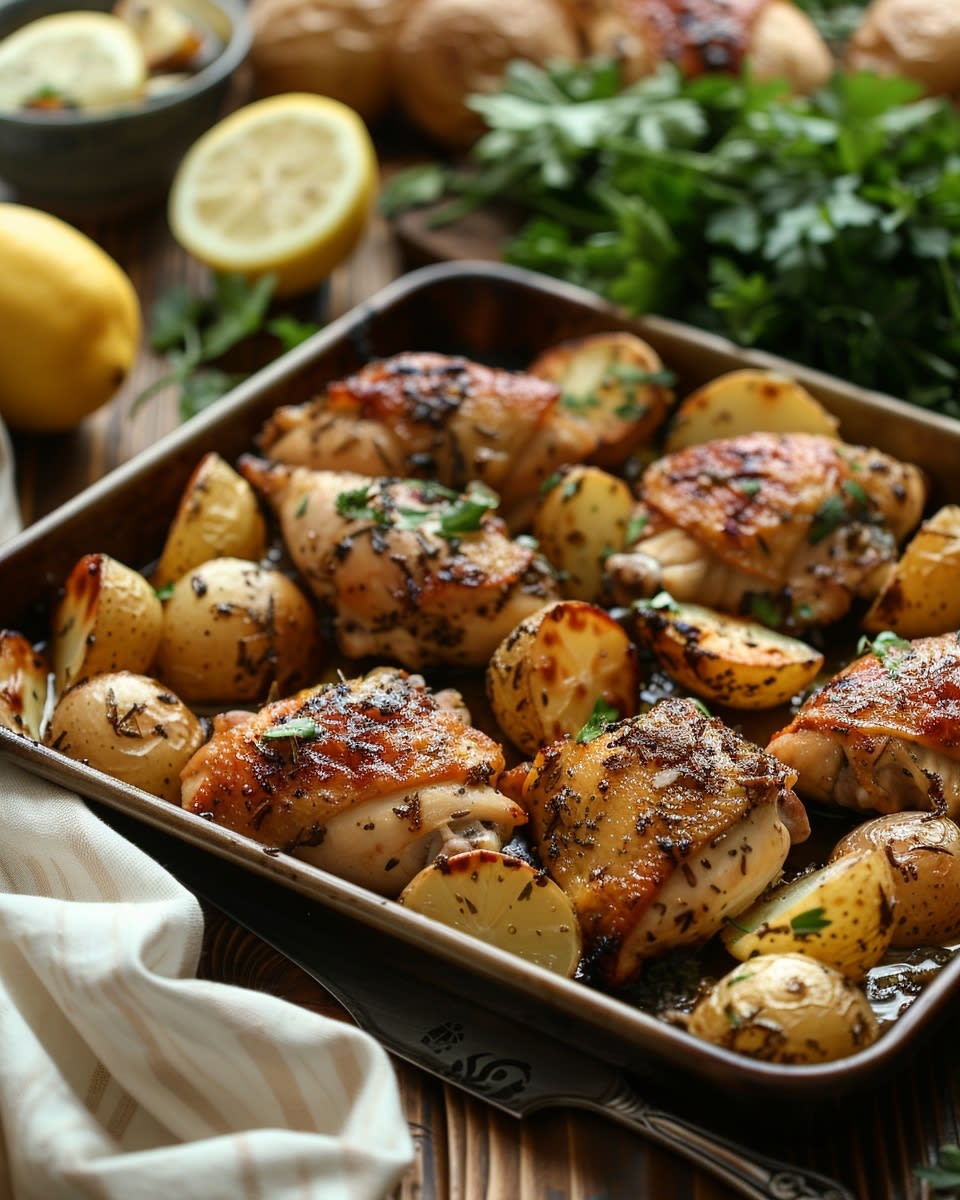
Last Tuesday, I stood in front of my open fridge at 5:30 PM with zero dinner plans and a family waiting to eat. Sound familiar? That’s when I grabbed what I had on hand—chicken thighs, a couple of lemons, and some potatoes—and created what’s now become our favorite weeknight meal. The best part? Everything cooked on a single pan while I helped with homework and folded laundry.
Welcome to my kitchen! Today, I’m excited to share a recipe that’s not only easy but also bursting with flavor: Sheet Pan Lemon Garlic Chicken and Potatoes. This dish saved my Tuesday dinner disaster and has since earned a permanent spot in my weekly rotation. I’ve made it at least twenty times in the past few months, and my family still asks for it.
This dish is perfect for a quick weeknight dinner or a special family gathering. It’s all about simplicity and great taste. You don’t need fancy ingredients or complicated techniques. Just fresh chicken, baby potatoes, bright lemons, and garlic come together to create something that tastes like you spent hours cooking. The truth? You’ll have dinner on the table in about 45 minutes, and most of that time is hands-off.
The magic happens in your oven while the chicken and potatoes roast together. The lemon juice mingles with the garlic and olive oil, creating a golden sauce that coats everything. Your kitchen will smell amazing. Your family will think you’re a cooking genius. And you’ll know the secret: it was actually super simple.
Why This Recipe Stands Out
I’ve tried dozens of chicken and potato combinations over the years. Some were too dry. Others left me with a sink full of dirty pans. This sheet pan version solves every problem I’ve ever had with roasted chicken dinners.
The combination of lemon and garlic creates a zesty and aromatic flavor profile that elevates the chicken and potatoes to a whole new level. The acidity from fresh lemon juice does something special to chicken. It tenderizes the meat while adding brightness that cuts through the richness. Garlic brings depth and warmth. Together, they create layers of flavor that make every bite interesting.
Here’s what makes this recipe different from other sheet pan dinners I’ve tried:
- The lemon garlic marinade penetrates the chicken, keeping it moist and flavorful
- Potatoes absorb all those delicious pan juices while they roast
- Everything cooks at the same temperature and finishes at the same time
- The chicken skin gets crispy while the meat stays juicy
- You can throw in extra vegetables without changing the cooking time much
It’s a one-pan wonder, making cleanup a breeze. I can’t stress this enough. After a long day, the last thing I want is a mountain of dishes. This recipe uses one sheet pan, one mixing bowl, and basic utensils. That’s it. I line my pan with parchment paper or foil, which makes cleanup even easier. Sometimes I skip the liner and just let the pan soak while we eat. Either way, you’re looking at maybe five minutes of cleanup time.
My husband usually handles dishes in our house, and he absolutely loves this recipe for the cleanup factor alone. He’s specifically requested that I make more one-pan meals. This one set the bar pretty high.
Perfectly crispy potatoes and juicy, tender chicken in every bite. Getting both components to cook properly takes a little technique, but nothing complicated. I cut my potatoes into similar sizes so they cook evenly. Smaller pieces get crispy on the outside and fluffy inside. The chicken sits on top of everything, allowing the fat to drip down and flavor the potatoes below.
The potatoes develop these amazing crispy edges where they touch the hot pan. They soak up the lemon garlic sauce and turn golden brown. Meanwhile, the chicken develops a beautiful crispy skin on top while staying moist underneath. It’s the best of both worlds on one pan.
A versatile dish that can be adapted to your taste preferences and dietary needs. This is where the recipe really shines. I’ve made countless variations based on what I had available or what my family wanted.
You can use chicken breasts instead of thighs if you prefer white meat. I personally love thighs because they stay juicier and have more flavor, but breasts work fine. Just watch the cooking time since they can dry out faster.
The potatoes are flexible too. I’ve used baby potatoes, russets, red potatoes, and even sweet potatoes. Each variety brings something different to the table. Sweet potatoes add a hint of sweetness that plays nicely with the lemon. Russets get extra crispy. Baby potatoes are convenient because you can roast them whole or just cut them in half.
Don’t eat dairy? This recipe is naturally dairy-free. Following a low-carb diet? Skip the potatoes and double up on low-carb vegetables like broccoli, cauliflower, or green beans. Need to feed a crowd? Double the recipe and use two pans. It scales up beautifully.
I’ve added cherry tomatoes, bell peppers, zucchini, asparagus, and Brussels sprouts to this dish at various times. Everything works. The key is cutting vegetables into pieces that will cook in roughly the same time as the potatoes. Harder vegetables like carrots should be cut smaller. Softer ones like zucchini can be larger chunks.
My kids aren’t huge vegetable fans, but they’ll eat anything that’s been roasted with this lemon garlic sauce. I’ve successfully snuck in extra veggies many times using this recipe as my vehicle. They’re too busy enjoying the crispy potatoes and flavorful chicken to complain about the Brussels sprouts hiding underneath.
The herb situation is flexible too. I usually use fresh thyme or rosemary, but dried herbs work when that’s what I have. Oregano, basil, or Italian seasoning all complement the lemon and garlic nicely. Sometimes I throw in red pepper flakes for a little heat. My husband loves that version.
This sheet pan meal has become my answer to busy weeknights, unexpected guests, and those times when I want something delicious without much effort. It looks impressive enough to serve to company but easy enough to make on a random Tuesday. That’s exactly the kind of recipe I need in my regular rotation.


Now that you know why this recipe works so well, let’s get into what you actually need to make it happen in your own kitchen.
What You’ll Need
Here’s the thing—I love recipes that don’t require a shopping trip to three different specialty stores. This sheet pan lemon garlic chicken uses ingredients you probably already have, or can grab in one quick stop at any regular grocery store.
For the chicken, I go with bone-in, skin-on chicken thighs about 90% of the time. Usually six to eight pieces, depending on how many people I’m feeding. The bone keeps everything juicy, and that skin gets ridiculously crispy in the oven. But listen, if you’re a breast person, go ahead and use those instead. Just know they cook a bit faster and can dry out if you’re not careful. I’ve done it both ways and my family eats it either way.
The potatoes are where I get a little picky. Baby potatoes are my first choice because they’re already the perfect size—just halve them and you’re done. Yukon golds work beautifully too. They’ve got this buttery texture that soaks up the lemon garlic goodness like a dream. I use about two pounds for a family of four. When my kids were younger and ate less, I’d use maybe a pound and a half. Now that they’re teenagers? Two pounds barely cuts it.
You’ll need two large lemons, maybe three if they look small or dried out at the store. I learned the hard way that those rock-hard lemons sitting in your fruit bowl for two weeks don’t give you much juice. Fresh is better. Trust me on this. Roll them on the counter before cutting to get more juice out—my grandmother taught me that trick.
The garlic situation is important. I use about six to eight cloves, minced up real fine. Sometimes more if I’m feeling it. My husband would probably add ten cloves if I let him take over. When garlic roasts, it gets sweet and mellow, so don’t worry about it being too intense. One time I ran out of fresh garlic and used garlic powder instead—it worked in a pinch, but it’s definitely not the same experience.
For oil, extra virgin olive oil is what I reach for. You need about a third of a cup, maybe a bit more. The olive oil carries the lemon and garlic flavors to everything on the pan. I’ve tried using regular vegetable oil when I ran out of olive oil once, and yeah, it technically works, but you lose some of that rich flavor. If you’ve got a nice olive oil, this is a good recipe to use it in.
Salt and pepper seem obvious, but I’ll mention them anyway. Kosher salt and freshly cracked black pepper make a difference. I probably use about two teaspoons of salt total and half a teaspoon of pepper, but I’m not super precise about it. I season in layers—some on the potatoes, some on the chicken. Taste as you go if you can.
The herbs are where you can get creative. Fresh rosemary or thyme are my usual picks. Just a few sprigs of either one adds so much. Strip the leaves off the woody stems and either chop them or leave them whole. Both ways work. Dried herbs are fine too—use about a tablespoon if that’s what you’ve got. I’ve made versions of this recipe with different herbs, and honestly, it’s hard to go wrong.
By the way, if you’re the type who likes a little heat, red pepper flakes are a fantastic addition. Just a pinch scattered over everything before roasting. My daughter can’t handle spice at all, so I usually leave them off or just sprinkle them on half the pan.
How to Prepare the Ingredients
Okay, prep time. This is where the recipe gets even easier, because there’s not much to it.
First things first—preheat your oven to 400°F. I cannot tell you how many times I’ve forgotten this step and had to wait around with everything ready to go. Set that oven heating before you do anything else. It needs a good 15 minutes to come up to temperature, especially if you’ve got an older oven like mine.
While the oven heats up, grab your potatoes. Give them a good rinse under cold water—you’d be surprised how much dirt hangs out in those little crevices. I usually just rub them with my hands under running water. Then halve each potato, or quarter them if they’re on the larger side. You want pieces that are roughly the same size so they cook evenly. Nothing worse than some potatoes being perfectly done while others are still hard in the middle.
Next up, deal with those lemons. Zest one lemon first if you want extra citrus punch—I do this maybe half the time. Just grate the yellow part, not the white pith underneath because that’s bitter. Then juice both lemons. You should get about a third of a cup of juice, give or take. Sometimes I’ll cut a few extra slices from one lemon to throw on the pan too. They caramelize in the oven and look pretty.
The garlic needs mincing. I use a knife and cutting board, but a garlic press works if you prefer. Either way, you want small pieces so the flavor distributes evenly. Fun fact—I used to think I hated garlic because my mom would use these huge chunks that were way too strong. Once I learned to mince it properly, everything changed. If you’re making this for someone who thinks they don’t like garlic, try mincing it extra fine so it kind of melts into the sauce.
Now comes the fun part. Get a large mixing bowl—and I mean large, because you’re about to toss a bunch of stuff together and you don’t want it flying all over your counter. Been there, done that, cleaned lemon juice off my kitchen floor.
Throw your halved potatoes into that bowl. Add the minced garlic, lemon juice, lemon zest if you’re using it, olive oil, salt, pepper, and herbs. Use your hands or a big spoon to toss everything together until the potatoes are well coated. I prefer hands because you can feel whether everything’s getting covered evenly. Plus, somehow food just tastes better when you’ve gotten your hands into it a little. My kids think I’m weird for saying that.
Pat your chicken pieces dry with paper towels—this helps the skin get crispy. Then add them to the bowl with everything else. Coat the chicken thoroughly in that lemony, garlicky mixture. Really massage it in there, especially if you’re using thighs with skin. You want that flavor getting everywhere.
Grab your sheet pan. I use a rimmed 18×13 inch pan for this recipe. Anything smaller and you’ll be overcrowding, which leads to steaming instead of roasting. Not what we want. Line it with parchment paper or aluminum foil if you’re like me and hate scrubbing pans. Some people skip the liner because they like the extra browning you get from direct pan contact. Your call.
Here’s how I arrange everything: potatoes go down first in a single layer, cut side down when possible. That gives you the maximum crispy surface area. Then nestle the chicken pieces on top and around the potatoes. You want everything in one layer, not stacked up. The chicken can overlap with potatoes a bit, but don’t pile multiple chicken pieces on top of each other.
Pour any remaining marinade from the bowl over the whole pan. Don’t waste that liquid gold. Sometimes there are garlic bits stuck to the bowl—scrape them out and scatter them over the pan.
Expert Tips for Perfect Results
Alright, I’ve made this sheet pan chicken recipe enough times to have learned a few tricks that make a real difference.
The sheet pan size matters more than you’d think. If your pan is too small and everything’s crowded together, you’ll end up with soggy, steamed food instead of crispy roasted perfection. The heat needs to circulate around each piece. I learned this the hard way when I tried to cram a double batch onto one pan for a dinner party. Not my finest cooking moment. Use a large sheet pan and give everything space to breathe. If you’re feeding a crowd, use two pans instead of overloading one.
That parchment paper I mentioned? It’s not just about cleanup, though that’s a huge benefit. It also prevents sticking and helps with even browning. I buy the pre-cut sheets now because I got tired of wrestling with the roll. Aluminum foil works too, but sometimes things stick to it more. Whatever you use, make sure it’s oven-safe up to at least 425°F.
Here’s something I started doing about the tenth time I made this: flip the chicken pieces halfway through cooking. I know, I know—the whole point of sheet pan dinners is that they’re hands-off. But taking two minutes around the 20-minute mark to flip each chicken piece means you get crispy skin on both sides instead of just the top. It’s worth the tiny bit of extra effort. Use tongs so you don’t burn your fingers.
Speaking of crispy skin, if you really want to take it to the next level, broil everything for the last three to five minutes. Keep the oven door cracked and watch it like a hawk, because the line between perfectly crispy and burnt is about 30 seconds under the broiler. I usually set a timer for two minutes, check it, then add more time if needed. The chicken skin gets this gorgeous golden-brown color and extra crunch that makes everyone think you’re some kind of cooking wizard.
One more thing about timing—chicken thighs take about 35 to 40 minutes at 400°F. Breasts might be done in 25 to 30 minutes. Use a meat thermometer to check. You want 165°F in the thickest part. I resisted buying a meat thermometer for years because I thought I could just tell by looking. Then I got one and realized how often I’d been overcooking or undercooking chicken. It’s a game-changer. They’re like ten bucks and totally worth it.
The potatoes should be tender when you poke them with a fork and golden brown on the edges. If they’re done but the chicken needs more time, you can pull out the potatoes and keep the chicken going. Hasn’t happened to me yet, but it’s an option.
Funny enough, leftovers of this dish might be even better than the fresh version. Everything sits in that lemony sauce overnight and the flavors just deepen. I eat leftover chicken and potatoes cold straight from the fridge sometimes when I’m looking for a quick lunch. My husband reheats his in a skillet to crisp everything back up. Both ways are delicious.


How to Serve and Enjoy This Lemon Garlic Sheet Pan Meal
So you’ve got this beautiful pan of golden chicken and crispy potatoes coming out of the oven. The smell alone is making everyone hover around the kitchen asking when dinner’s ready. Now what?
Honestly, this dish is a complete meal all by itself. I’ve served it plenty of times with absolutely nothing else on the table. Just transfer everything to plates or a big serving platter, making sure everyone gets some of those crispy potatoes and a piece of juicy chicken. Pour any extra pan juices over the top—that’s basically liquid gold that you don’t want to waste.
That said, sometimes I like to round things out with something green and fresh. A simple arugula salad with a light vinaigrette works perfectly. The peppery greens and bright dressing complement the rich, lemony chicken without competing with it. I literally just toss arugula with olive oil, a squeeze of lemon, salt, and pepper. Takes two minutes. Sometimes I’ll throw in some shaved parmesan or toasted pine nuts if I’m feeling fancy.
My go-to easy side is steamed broccoli with a little butter and garlic salt. Nothing complicated. The kids will actually eat broccoli when it’s served alongside this chicken, probably because they’re in such a good mood from the crispy potatoes. I’ve also done roasted Brussels sprouts on a separate pan, green beans with almonds, and simple cucumber tomato salads. All of them work.
Here’s a trick I discovered by accident: if you want to add vegetables directly to the sheet pan, throw them on during the last 10 to 15 minutes of cooking. Green beans, asparagus, and snap peas all work great this way. Just toss them in a little olive oil first and nestle them around the chicken and potatoes. They’ll pick up all those lemony, garlicky flavors and get slightly caramelized on the edges. The timing works out perfectly—they cook through but don’t turn to mush.
Cherry tomatoes are another favorite addition of mine. I’ll scatter a handful around the pan about halfway through cooking. They burst and release their juices, adding another layer of flavor to the whole situation. Plus they look really pretty on the final plate, which matters when you’re trying to make a weeknight dinner feel a little special.
For something more substantial, crusty bread is never a bad idea. I’ve served this with everything from grocery store French bread to homemade focaccia. Anything that can soak up those pan juices is a winner in my book. My kids fight over who gets to wipe up the last bits from the serving platter with bread.
Rice or couscous work too if you want something to bulk up the meal a bit more. I’ve made lemon couscous to go with this—just cook the couscous in chicken broth and stir in some lemon zest and fresh herbs at the end. Takes maybe five minutes and ties the whole meal together nicely.
Creative Variations Worth Trying
One of the best things about mastering a basic recipe like this is that you can spin it a hundred different directions depending on what you’re in the mood for or what’s lurking in your fridge.
The potato swap is probably the easiest variation. Sweet potatoes completely change the vibe of this dish. They get these crispy, caramelized edges that are almost candy-like, and the sweetness plays off the lemon in this unexpected way. I peel them first and cut them into chunks about the same size as I would regular potatoes. They might take a few extra minutes to get tender, so check them with a fork.
Carrots work beautifully too. I’ll do thick carrot rounds or even baby carrots if that’s what I have. They get sweet and tender and pick up the garlic flavor like crazy. Sometimes I’ll do half potatoes and half carrots just to mix things up. My daughter actually prefers the carrot version, which is saying something because she’s typically a potato-only kind of kid.
Butternut squash is another option I’ve tried when I was really trying to impress some guests. I cut it into cubes, and it roasted up with these amazing caramelized edges. It’s a bit more work to peel and cut up a butternut squash, so I only do this when I have the time and energy. But wow, the results are worth it for a special occasion.
Want to make this feel more indulgent? Sprinkle parmesan cheese over everything during the last 5 minutes of cooking. The cheese gets melty and slightly crispy and adds this salty, umami punch that makes the whole dish feel more luxurious. I use the real stuff, either freshly grated or those little shaved pieces. The powdery kind from the green can doesn’t melt the same way.
My husband loves when I add bacon to this. I’ll cook a few strips until crispy, crumble them up, and scatter them over the finished dish. Is it necessary? Absolutely not. Does it make everything taste even better? You bet. Bacon makes everything better—that’s just science.
The herb variations are fun to play with too. Oregano and basil take this in a Mediterranean direction. Add some kalamata olives and a few chunks of feta cheese and suddenly you’ve got Greek-inspired sheet pan chicken. I’ve done this version probably a dozen times, especially in the summer when fresh basil is growing in my garden.
Italian seasoning is another easy swap. That pre-mixed blend of herbs just works with lemon and garlic. Sometimes I’ll add sun-dried tomatoes to this version too. They get a little crispy around the edges and add these intense pockets of tomato flavor throughout the dish.
For an Asian-inspired spin, I’ve swapped the lemon for lime and added fresh ginger to the marinade. Throw in some sesame oil and maybe a splash of soy sauce. Completely different flavor profile but the same easy cooking method. Top it with sliced green onions and sesame seeds when it comes out of the oven. My family was skeptical the first time I tried this variation, but now they request it regularly.
Speaking of switching things up, the fat content in chicken thighs versus breasts really does affect both the flavor and the nutritional profile. Thighs are higher in fat, which is why they stay so juicy and flavorful. If you’re watching your fat intake, breasts are the leaner option—the USDA’s food database has detailed nutritional information if you want to compare the exact numbers. Personally, I think the extra fat in thighs is worth it for the flavor and texture, but it’s totally a personal choice.
You could also try this with bone-in chicken drumsticks. They’re usually cheaper than thighs and have a similar fat content so they stay moist during roasting. Takes about the same amount of time to cook. My kids actually prefer drumsticks because they can pick them up and eat them with their hands. Less civilized maybe, but they’re cleaning their plates, so I’m not complaining.
One time I made a spicy version by adding harissa paste to the marinade. If you haven’t tried harissa, it’s this North African chili paste that’s smoky and spicy and incredibly flavorful. Just a tablespoon or two mixed into the lemon and garlic completely transforms the dish. Fair warning though—it’s got some heat to it. I made the mistake of not warning my kids before they dug in. Lesson learned.
You can also turn this into a complete one-pan meal by adding chickpeas or white beans. I’ve tossed a drained can of chickpeas right onto the sheet pan with everything else. They get crispy on the outside and creamy on the inside and add protein and fiber. This makes the meal more filling and stretches the chicken further if you’re feeding a crowd.
For a summer version, I sometimes use fresh corn. Cut the kernels right off the cob and scatter them over the pan during the last 15 minutes. They get a little charred and sweet and add pops of color. Zucchini works great in the summer too. I slice it into thick rounds and it roasts up beautifully without getting mushy.
Actually, this basic technique—protein plus vegetables on a sheet pan with some kind of marinade or sauce—works for so many different combinations. Once you master this lemon garlic chicken version, you can apply the same approach to salmon, pork chops, sausages, or even tofu if you’re cooking for vegetarians. The possibilities are pretty much endless. I’ve got a whole rotation of sheet pan dinners now, but this chicken one started it all and is still my favorite.
Over time, I’ve come across plenty of inspiring main dish recipes that use similar simple techniques to create impressive meals without complicated steps. That’s really what home cooking should be about—good food that doesn’t stress you out.
Frequently Asked Questions
Q: Can I use chicken breasts instead of thighs for this sheet pan meal?
A: Yes, absolutely! Chicken breasts work fine in this recipe. The main thing to remember is that breasts cook faster than thighs, usually taking about 25 to 30 minutes instead of 35 to 40. They also tend to dry out more easily since they’re leaner. I recommend checking the internal temperature with a meat thermometer and pulling them out as soon as they hit 165°F. You might also want to pound the breasts to an even thickness before cooking so they cook uniformly.
Q: Is this Sheet Pan Lemon Garlic Chicken and Potatoes recipe gluten-free?
A: Yes, this recipe is naturally gluten-free as written. There’s no flour, breadcrumbs, or any other gluten-containing ingredients. Just make sure to double-check any seasonings or spice blends you might add, as some pre-mixed seasonings can contain hidden gluten. If you’re cooking for someone with celiac disease or serious gluten sensitivity, always verify that your ingredients are certified gluten-free to avoid cross-contamination.
Q: How should I store leftovers and how long will they last?
A: Store any leftover chicken and potatoes in an airtight container in the refrigerator. They’ll keep for up to 3 or 4 days. I actually think the leftovers taste even better the next day after everything has sat in those delicious juices overnight. To reheat, you can use the microwave for quick results, or put everything in a skillet over medium heat to crisp things back up. The oven works too—just heat at 350°F until warmed through, about 10 to 15 minutes.
Q: Can I prepare this recipe ahead of time?
A: Definitely! This is great for meal prep. You can toss the chicken and potatoes with the marinade and store everything in a covered container or zip-top bag in the fridge for several hours or even overnight. The longer marinating time actually makes the flavors even better. Just pull the container out when you’re ready to cook, arrange everything on your sheet pan, and pop it in the oven. This makes busy weeknights so much easier.
Q: What can I use instead of lemons if I don’t have any?
A: Limes are the most obvious substitute and work beautifully. The flavor is slightly different but still bright and citrusy. You could also use a combination of white wine vinegar or apple cider vinegar mixed with a tiny bit of sugar or honey to mimic that sweet-tart balance. I’ve even used orange juice in a pinch, though that takes the flavor in a sweeter, less tangy direction. Bottled lemon juice works too if that’s all you have, though fresh is definitely better.
Q: How do I get the potatoes extra crispy?
A: The secret to super crispy potatoes is removing as much moisture as possible before roasting. After cutting them, pat them completely dry with paper towels or a clean kitchen towel. Some people swear by tossing them with a tablespoon of cornstarch before adding the oil—this creates an extra crispy coating. Make sure they’re in a single layer with space between them so hot air can circulate. The cut sides should be facing down against the pan for maximum contact and crispiness.
Q: Can I freeze this dish?
A: You can freeze the cooked chicken and potatoes, though I’ll be honest—the texture of the potatoes changes a bit after freezing and reheating. They lose some of that crispy exterior and can get a bit mushy. The chicken freezes much better. If you want to freeze this, I’d suggest freezing the chicken separate from the potatoes, and just making fresh potatoes when you’re ready to eat. Frozen cooked chicken will keep for about 3 months in an airtight freezer container.
Q: What size sheet pan should I use?
A: A standard 18×13 inch rimmed sheet pan (often called a half-sheet pan) is perfect for this recipe. It gives you enough space to spread everything out in a single layer without crowding. If your pan is smaller, you might need to use two pans or cook in batches. Crowding leads to steaming instead of roasting, which means you won’t get those crispy edges on the potatoes or golden skin on the chicken. Size really does matter here.
Q: Do I need to marinate the chicken for a long time?
A: Not necessarily. Even just tossing the chicken in the lemon garlic mixture right before cooking gives you great flavor. That said, if you have 30 minutes to an hour to let it sit, the flavors will penetrate deeper into the meat. I wouldn’t go much longer than overnight though, especially with the lemon juice—too much acid for too long can start to break down the texture of the chicken and make it mushy. An hour or two is the sweet spot if you’re planning ahead.
Q: Can I make this recipe dairy-free?
A: Great news—this recipe is already completely dairy-free as written! There’s no butter, cheese, cream, or any other dairy products. Just chicken, potatoes, olive oil, lemon, garlic, and herbs. This makes it perfect for anyone who’s lactose intolerant or following a dairy-free diet. Of course, some of the variations I mentioned do include cheese, but the basic recipe is totally dairy-free and still absolutely delicious.
I really hope this recipe becomes as much of a lifesaver in your kitchen as it has been in mine. There’s something special about a meal that’s both incredibly easy and genuinely delicious—the kind of thing your family asks for again and again. Give it a try this week and see what you think!
Ingredients
Equipment
Method
- Préchauffez votre four à 400°F (200°C).
- Rincez les pommes de terre sous l'eau froide et coupez-les en deux ou en quartiers pour une cuisson uniforme.
- Zestez un citron (facultatif), puis pressez les deux citrons pour obtenir environ un tiers de tasse de jus.
- Hachez finement l'ail.
- Dans un grand bol, mélangez les pommes de terre, l'ail haché, le jus de citron, le zeste de citron (si utilisé), l'huile d'olive, le sel, le poivre et les herbes. Mélangez bien pour enrober les pommes de terre.
- Essuyez les morceaux de poulet avec des serviettes en papier et ajoutez-les au bol. Enrobez soigneusement le poulet avec la marinade.
- Tapissez une grande plaque à pâtisserie avec du papier sulfurisé ou de l'aluminium.
- Disposez les pommes de terre en une seule couche sur la plaque, puis placez les morceaux de poulet sur le dessus et autour des pommes de terre.
- Versez toute la marinade restante sur le poulet et les pommes de terre.
- Faites rôtir au four pendant 35 à 40 minutes jusqu'à ce que le poulet atteigne une température interne de 165°F (74°C) et que les pommes de terre soient tendres et croustillantes.