
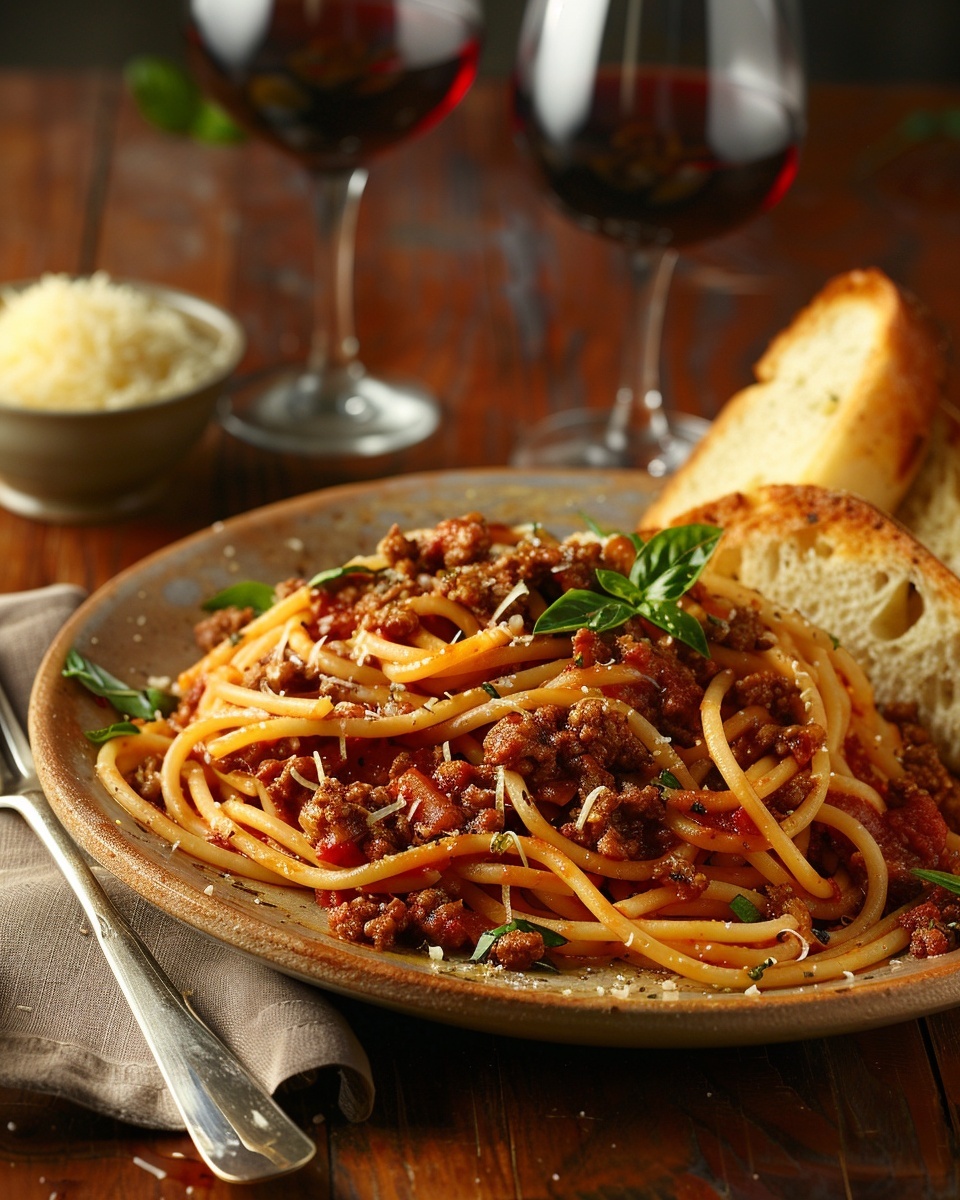
I still remember the first time I made spaghetti bolognese from scratch. The kitchen smelled amazing, and my family couldn’t stop asking when dinner would be ready. That’s the magic of this dish—it brings people together around the table like few other meals can.
Spaghetti bolognese is comfort food at its finest. It’s hearty, flavorful, and satisfying in ways that make you want seconds (and maybe thirds). Whether you’re cooking for picky kids, hosting friends, or just craving something warm and filling, this classic pasta dish never disappoints.
This beloved recipe has earned its place in kitchens worldwide for good reason. It’s simple enough for beginners but has enough depth to keep experienced cooks interested. Plus, you can adapt it to match your taste or dietary needs without losing that rich, meaty goodness.
I’m here to share everything you need to know about making perfect spaghetti bolognese. We’ll cover the basics, explore different cooking methods from slow cooker versions to quick weeknight options, and look at variations inspired by famous chefs. By the end, you’ll have all the tools to create a deliciously easy spaghetti bolognese recipe that becomes your go-to family favorite.
What Exactly is Spaghetti Bolognese?
Spaghetti bolognese is a pasta dish that combines cooked spaghetti noodles with a thick, savory meat sauce. The sauce features ground meat (usually beef), tomatoes, vegetables, and herbs that simmer together until they create a rich, flavorful topping.
Here’s something interesting: what we call spaghetti bolognese outside of Italy isn’t quite what Italians traditionally eat. The authentic version from Bologna, Italy, is called ragù alla bolognese. Italians typically serve this sauce over tagliatelle or other flat pasta, not spaghetti. They consider the flat noodles better at holding the thick, meaty sauce.
The dish became popular internationally during the mid-1900s when Italian immigrants brought their cooking traditions abroad. Over time, each country adapted the recipe to local tastes and available ingredients. What many people now know as traditional spaghetti bolognese is really an international version of the Italian original.
What exactly is Bolognese sauce?
Bolognese sauce is a meat-based sauce that originated in Bologna, a city in northern Italy. The authentic Italian version relies on a few key elements that make it special.
The sauce starts with a soffritto—finely chopped onions, carrots, and celery cooked in fat until soft. This vegetable base creates the foundation of flavor. Then you add ground meat, traditionally a mix of beef and pork. Some recipes include pancetta or bacon for extra richness.
Wine is another essential ingredient. Red or white wine adds depth and helps tenderize the meat. After the wine reduces, tomatoes join the party. Traditional recipes use tomato paste or crushed tomatoes, but not as much as you might think. The sauce should taste meaty, not overly tomato-forward.
The secret to great bolognese is time. The sauce needs to simmer slowly, sometimes for hours. This long cooking process allows the flavors to blend and the sauce to develop that deep, complex taste that makes it so special. Many cooks add milk or cream near the end, which might surprise you. This adds richness and balances the acidity from the tomatoes.
What makes bolognese different than spaghetti sauce? Regular spaghetti sauce is usually tomato-based and vegetarian. Bolognese puts meat front and center, with tomatoes playing a supporting role. The texture is also different—bolognese is thick and clings to pasta, while regular spaghetti sauce tends to be thinner and more liquid.
What is spaghetti bolognese made from?
Let me break down the basic ingredients you’ll need for a great spaghetti bolognese:
- Ground meat: Beef is most common, but pork, veal, or a combination works well
- Aromatics: Onions, garlic, carrots, and celery form the flavor base
- Tomatoes: Crushed tomatoes, tomato paste, or canned whole tomatoes
- Liquid: Red wine, beef stock, or both add depth
- Dairy: Milk or cream enriches the sauce
- Herbs and seasonings: Bay leaves, oregano, basil, salt, and pepper
- Fat: Olive oil or butter for cooking
- Spaghetti pasta: The vehicle for all that delicious sauce
The beauty of this recipe is its flexibility. You can adjust ingredients based on what’s in your pantry or your personal preferences. Some recipes add mushrooms for earthiness, while others include a pinch of sugar to balance acidity.
How to Make Spaghetti Bolognese
Making spaghetti bolognese from scratch is easier than you might think. I’ll walk you through the process step by step, so you can create a restaurant-quality dish at home.
Step-by-Step Cooking Process
Step 1: Prepare your ingredients
Chop your onions, carrots, and celery into small, even pieces. Mince the garlic. Having everything ready before you start cooking makes the process smooth and stress-free.
Step 2: Build the flavor base
Heat olive oil in a large, heavy-bottomed pot over medium heat. Add the chopped vegetables and cook until they soften, about 5-7 minutes. This step is important—don’t rush it. The vegetables should be tender and fragrant, not browned.
Step 3: Brown the meat
Increase the heat to medium-high and add your ground beef. Break it up with a wooden spoon as it cooks. You want the meat to brown nicely, which adds flavor. This takes about 8-10 minutes. Don’t drain all the fat—it carries flavor.
Step 4: Add wine and let it reduce
Pour in about a cup of red wine. Let it bubble and reduce by half. This concentrates the wine’s flavor and cooks off the alcohol. The kitchen will smell incredible at this point.
Step 5: Add tomatoes and seasonings
Stir in your tomatoes, tomato paste, bay leaves, and dried herbs. Season with salt and pepper. Bring everything to a simmer, then reduce the heat to low.
Step 6: The long simmer
This is where patience pays off. Let the sauce simmer gently for at least 45 minutes, though longer is better. Stir occasionally and add stock if it gets too thick. The sauce should bubble lazily, not boil hard.
Step 7: Finish with dairy
About 10 minutes before serving, stir in a splash of milk or cream. This rounds out the flavors and adds richness.
Step 8: Cook the pasta
While the sauce finishes, cook your spaghetti according to package directions in well-salted water. Save a cup of pasta water before draining.
Step 9: Combine and serve
Toss the cooked spaghetti with the sauce. Add a bit of pasta water if needed to help the sauce coat the noodles. Serve hot with grated Parmesan cheese.
Tips for Selecting the Best Ingredients
The quality of your ingredients directly affects the final dish. Here’s what I look for when shopping:
Choose the right meat: I prefer ground beef with about 15-20% fat content. Too lean and your sauce will be dry. Too fatty and it becomes greasy. Some butchers will grind a mix of beef and pork for you, which adds great flavor.
Use good tomatoes: Canned tomatoes work better than fresh for this recipe. San Marzano tomatoes from Italy are worth the extra cost if you can find them. They’re sweeter and less acidic than regular canned tomatoes.
Don’t skip the wine: Wine adds complexity you can’t get from other ingredients. Use something drinkable—if you wouldn’t drink it, don’t cook with it.
Fresh versus dried pasta: Both work fine. Fresh pasta cooks faster and has a silky texture. Dried pasta is convenient and holds up well to hearty sauces. I keep both on hand.
Cooking Techniques and Timing
Temperature control makes a big difference in how to make spaghetti bolognese successfully. The sauce should simmer gently, not boil. High heat toughens the meat and can make the sauce taste harsh.
For a deliciously easy spaghetti bolognese recipe, plan for about 30 minutes of active cooking and at least 45 minutes of simmering. If you have more time, let it go for 2-3 hours. The longer cooking time creates deeper flavors.
A spaghetti bolognese slow cooker version saves time and effort. Brown the meat and vegetables on the stove first, then transfer everything to your slow cooker. Cook on low for 6-8 hours or high for 3-4 hours. This method is perfect for busy days when you want dinner ready when you get home.
Season as you go, not just at the end. Taste the sauce after it’s simmered for 30 minutes and adjust the salt, pepper, or herbs. The flavors concentrate as the liquid reduces, so go easy on salt at first.
One trick I learned from watching spaghetti bolognese Gordon Ramsay videos: finish your pasta in the sauce. After draining the spaghetti, add it to the pot with the bolognese and toss everything together over medium heat for a minute. This helps the sauce stick to every strand.


Deliciously Easy Spaghetti Bolognese Recipe
Now that you know the technique, let me share my go-to weeknight version that cuts down on time without sacrificing flavor.
This deliciously easy spaghetti bolognese recipe comes together in about 40 minutes, making it perfect for those nights when you need something satisfying but don’t have hours to spare. I’ve tweaked and adjusted this over the years until it became the one my kids actually request by name.
Start by heating two tablespoons of olive oil in your biggest pot. Toss in one large diced onion, two finely chopped carrots, and two celery stalks (all chopped small). Let these cook for about five minutes while you prep everything else. Add four minced garlic cloves and cook another minute until your kitchen smells amazing.
Push the vegetables to the side and add a pound of ground beef. Break it apart and let it brown properly—this takes maybe eight minutes. Pour in half a cup of red wine (or beef stock if you prefer), scraping up any browned bits from the bottom. Let that bubble away for a couple minutes.
Next comes a 28-ounce can of crushed tomatoes, two tablespoons of tomato paste, a teaspoon of dried oregano, two bay leaves, and a good pinch of salt and pepper. Stir everything together, bring it to a simmer, then reduce the heat to low. Let it bubble gently for at least 30 minutes, though 45 is better if you’ve got the time.
Here’s where I do something a bit different—I add a splash of milk (about quarter cup) in the last ten minutes. My Italian neighbor taught me this trick. It mellows out any acidity and makes the sauce taste richer without being heavy.
While the sauce finishes, cook a pound of spaghetti in heavily salted water. I mean really salty—the water should taste like the ocean. This is your only chance to season the pasta itself. Drain it when it’s just shy of done (save that pasta water!), then toss it right into the pot with your sauce. Add a splash of that starchy pasta water to help everything come together.
Funny enough, the variations on this basic recipe are endless. Need a traditional spaghetti bolognese that’s gluten-free? Swap regular pasta for your favorite gluten-free brand—the sauce is naturally gluten-free. For a vegetarian version, replace the beef with finely chopped mushrooms, lentils, or plant-based ground meat. I’ve done all three, and the mushroom version surprised me with how meaty it tasted.
If you’re following a low-carb diet, skip the pasta entirely and serve the bolognese over spiralized zucchini or spaghetti squash. My sister does this regularly and swears it’s just as satisfying. For dairy-free needs, leave out the milk at the end or use a splash of coconut cream instead (sounds weird, but it works).
Want to sneak in extra vegetables? I sometimes add finely diced zucchini or grated carrot beyond what the recipe calls for. My kids never notice, and it bulks up the sauce nicely. You could also stir in some fresh spinach right at the end—it wilts in seconds and adds nutrition without changing the flavor much.
Celebrity Chefs’ Spaghetti Bolognese Recipes
By the way, if you want to level up your bolognese game, looking at how famous chefs approach this dish can be really educational. Each one brings something unique to the table.
Let’s talk about spaghetti bolognese Jamie Oliver style first. Jamie’s version focuses on simplicity and fresh ingredients, which is totally his brand. He often uses a combination of beef and pork for deeper flavor and isn’t shy about adding vegetables. One thing I borrowed from his approach is grating the vegetables instead of chopping them. This makes them almost dissolve into the sauce, which is great if you’re cooking for picky eaters who claim they hate vegetables.
Jamie also likes to tear in fresh basil at the end and sometimes adds a good glug of balsamic vinegar for extra depth. I tried his method of cooking the pasta directly in the sauce for the last few minutes (adding stock as needed), and honestly, it creates this incredible creamy coating you don’t get otherwise. The pasta absorbs the sauce flavors from the inside out. Just watch the liquid levels so nothing burns.
The spaghetti bolognese recipe Gordon Ramsay promotes takes a more technical approach. Gordon insists on high-quality ingredients and proper technique. His version typically includes pancetta, which you cook first to render the fat, then use that fat to cook your vegetables. This adds a smoky, salty depth that regular ground beef alone can’t achieve.
Gordon also emphasizes the importance of not rushing the browning process. He’ll tell you to really caramelize that meat until it’s properly browned, not gray. I watched him make this once on a cooking show, and he was almost aggressive about it—turning up the heat, not stirring too much, letting everything develop color. The result speaks for itself though. That extra five minutes of patience creates layers of flavor that make people ask what your secret ingredient is (spoiler: it’s time and temperature control).
Another Gordon trick worth stealing—he finishes his bolognese with a knob of cold butter stirred in right before serving. The French call this “mounting” the sauce, and it creates this silky, glossy finish that looks restaurant-quality.
Then there’s spaghetti bolognese recipe Nigella Lawson’s approach, which feels more relaxed and forgiving. Nigella’s all about making cooking less stressful, and her bolognese reflects that philosophy. She often uses a food processor to blitz the vegetables, which saves time and creates a super-smooth base. If you’re looking for something inspired by Asian noodle dishes, you might enjoy crispy stir-fried noodles with beef for a completely different take on pasta and meat.
What I love about Nigella’s version is how she embraces convenience ingredients without apology. She’ll use worcestershire sauce for umami depth, and she’s not afraid of a good squeeze of tomato ketchup (yes, really) to add sweetness and body. Before you judge, try it. That little bit of ketchup does something magical to balance the acidity.
Nigella also tends to add more liquid than traditional recipes, creating a saucier consistency that’s perfect for soaking into the pasta. She serves it with plenty of grated Parmesan and sometimes a dollop of ricotta on top, which melts into little pockets of creamy goodness.
Each of these celebrity approaches teaches something valuable. Jamie shows us that fresh, simple ingredients shine. Gordon proves that technique and patience matter. Nigella reminds us that cooking should be enjoyable, not stressful. Mix and match their tips based on what works for your kitchen and family.
Slow Cooker Spaghetti Bolognese
Here’s the thing—some days you just don’t want to stand over a stove for an hour. That’s where spaghetti bolognese slow cooker methods become absolute lifesavers.
I discovered slow cooker bolognese during a particularly hectic work period when I was barely getting home before dinner time. The idea of cooking seemed exhausting, but ordering takeout every night felt wasteful and unhealthy. The slow cooker changed everything.
The beauty of making bolognese this way is that the long, gentle cooking creates incredibly deep flavors. The meat becomes tender, the sauce develops complexity, and your whole house smells incredible all day. Plus, it’s genuinely hands-off once you get past the initial prep.
Here’s how I do it: Brown your ground beef in a large skillet over high heat. This step is not optional—you need that caramelization for flavor. Transfer the browned meat to your slow cooker. In the same pan (don’t wash it), sauté your chopped onions, carrots, celery, and garlic for about five minutes. This quick step makes a huge difference in the final taste.
Dump everything into the slow cooker—the sautéed vegetables, a large can of crushed tomatoes, tomato paste, red wine or stock, your herbs, and seasonings. Stir it all together, put the lid on, and walk away. Cook on low for six to eight hours or high for three to four hours. That’s it. You’re done until dinner time. For those interested in exploring spicier beef and noodle combinations, this cumin-spiced beef noodle recipe offers exciting flavors worth trying.
The mistake people make with slow cooker bolognese is adding too much liquid at the start. Remember, nothing evaporates in a slow cooker like it does on the stovetop. Start with less liquid than you think you need. You can always add more at the end if the sauce seems too thick.
About 30 minutes before serving, taste and adjust your seasonings. This is when I add that splash of milk or cream to round everything out. If the sauce looks too thin, mix a tablespoon of cornstarch with a little cold water and stir it in. Let it cook on high for another 15 minutes to thicken up.
One advantage of the slow cooker method that nobody talks about enough—you can make enormous batches. I often double the recipe and freeze half for later. Bolognese freezes beautifully for up to three months. Just thaw it overnight in the fridge and reheat gently on the stove. If you enjoy experimenting with different pasta sauces, Cajun shrimp pasta provides a spicy, seafood alternative that’s equally satisfying.
The slow cooker also works great if you’re making bolognese for a crowd. Last year I made it for my daughter’s birthday party—twenty kids and their parents. I used two slow cookers running side by side, and people kept coming back for seconds. The best part? I wasn’t stuck in the kitchen missing the party.
Some people worry that slow cooker bolognese won’t taste as good as the stovetop version. Honestly, it’s just different. The stovetop version has a slightly brighter, more concentrated flavor from the reduction process. The slow cooker version tastes mellower and more blended, with all the flavors married together. Neither is better—they’re just suited for different situations.
If you’re adapting a regular bolognese recipe for the slow cooker, reduce the liquid by about a third. Cut back on delicate herbs like fresh basil since they’ll lose flavor over long cooking—add those at the end instead. And consider browning your meat and aromatics first. Yes, you can skip this step and dump everything in raw, but taking ten extra minutes to brown things first produces noticeably better results. Much like the varied approach to beef dishes, trying another version of spiced beef noodles can inspire new flavor combinations for your pasta sauce.
One last slow cooker tip from my own trial and error—resist the urge to lift the lid and stir constantly. Every time you lift that lid, you release heat and add 15-20 minutes to your cooking time. Trust the process, leave it alone, and you’ll be rewarded with a deeply flavorful sauce that tastes like it took way more effort than it actually did.


Spaghetti Bolognese for Special Diets
Here’s something that surprises a lot of people—spaghetti bolognese is actually one of the easiest dishes to adapt for different dietary needs. Whether you’re watching calories, following a specific eating plan, or just trying to make healthier choices, this classic can totally work for you.
The spaghetti bolognese slimming world version has become super popular in the UK, and for good reason. Slimming World focuses on filling foods that keep you satisfied without counting every calorie. Their approach to bolognese is actually pretty clever—you use extra-lean ground beef (5% fat or less) to keep the fat content down. Instead of cooking the vegetables in oil, you can use a low-calorie cooking spray or just a tablespoon of stock to soften them.
I tried making this version when my cousin started following the plan, and honestly? I couldn’t tell much difference from my regular recipe. The trick is bulking up the sauce with loads of vegetables. Grated carrots, diced zucchini, chopped mushrooms, even some red bell pepper—all of these add volume and nutrition without adding significant calories. The vegetables create that satisfying, hearty texture you want from bolognese.
For a proper Slimming World version, you’d count the lean mince as your protein, load up on “free” vegetables, and then measure your pasta portion. Most people on the plan use whole wheat spaghetti because it’s more filling, though regular pasta works too if you stick to the recommended serving size. Some folks swap half the pasta for spiralized vegetables to stretch the meal further.
One thing I learned from experimenting with lighter versions—don’t skimp on the herbs and seasonings. When you reduce fat, you sometimes lose flavor, so compensate with extra garlic, fresh herbs, a good quality stock, and maybe a splash of Worcestershire sauce. These ingredients add virtually no calories but make everything taste richer.
Speaking of spaghetti bolognese calories, let’s talk numbers because this varies wildly depending on how you make it. A typical restaurant-size portion of traditional spaghetti bolognese runs anywhere from 600 to 900 calories. That includes about 2 cups of cooked pasta with a generous helping of meat sauce and Parmesan cheese.
Breaking it down, the pasta itself contributes roughly 400 calories per 2-cup serving. The meat sauce adds another 300-400 calories depending on the fat content of your beef and how much oil you use. Cheese on top? That’s another 50-100 calories for a couple tablespoons of Parmesan.
But here’s where you can make choices that really matter. Using extra-lean beef instead of regular ground beef saves about 100 calories per serving. Reducing your pasta portion to 1.5 cups instead of 2 cuts another 100 calories. Measuring your oil instead of just pouring it in the pan? That alone can save 50-100 calories you didn’t even realize you were eating.
The lightest version I’ve made came in around 350 calories per generous serving. I used extra-lean turkey instead of beef, tons of vegetables to bulk up the sauce, whole wheat pasta measured carefully, and just a sprinkle of Parmesan on top. Was it as indulgent as the full-fat version? No, I won’t lie to you. But it was satisfying, flavorful, and something I could eat regularly without feeling guilty.
By the way, if you’re tracking macros or watching carbs specifically, you’ve got options. The sauce itself is actually pretty low-carb—it’s mainly the pasta that contributes carbohydrates. A full serving of spaghetti bolognese might have 60-70 grams of carbs, with about 55 of those coming from the pasta alone. Swap the pasta for zucchini noodles, and you drop that to maybe 15 grams total.
For anyone concerned about food safety while preparing lighter versions with leaner meats, it’s worth noting that proper handling matters more when fat content is lower—the FDA provides guidelines about preventing cross contamination when working with ground meats and fresh vegetables in the same meal prep.
Protein content sits around 30-35 grams per serving with traditional beef bolognese, which is pretty solid for a pasta dish. Fat ranges from 15-25 grams depending on your meat choice and oil usage. Fiber comes mainly from the vegetables and whole grain pasta if you use it—anywhere from 6-10 grams per serving.
Spaghetti Bolognese in Italian Culture
Okay, so this might ruffle some feathers, but I need to share something important about what we call spaghetti bolognese. If you travel to Bologna, Italy, and ask for this dish by that name, you might get some confused looks. Maybe even a little side-eye from the waiter.
What do Italians actually call spaghetti bolognese? Well, they don’t. The authentic dish is called ragù alla bolognese or just ragù. And here’s the kicker—they almost never serve it with spaghetti. I learned this the hard way during a trip to Bologna a few years back. I confidently ordered spaghetti bolognese at a traditional restaurant, and the server gently corrected me, suggesting tagliatelle al ragù instead.
The pasta shape matters more to Italians than you might think. Tagliatelle, pappardelle, or other wide, flat noodles are the traditional choice because their broad surface area catches and holds the thick meat sauce better than round spaghetti. It’s not snobbery—it’s just practical. The sauce actually stays on the pasta instead of sliding off onto your plate.
The whole “spaghetti bolognese” concept is really an Anglo-American invention that became popular in the mid-20th century. Italian immigrants adapted their traditional recipes to ingredients available abroad, and the dish evolved into something slightly different. It’s not bad or wrong—it’s just not what you’d find in Bologna itself.
Funny enough, there’s actually an official recipe for ragù alla bolognese registered with the Italian Academy of Cuisine. They documented it in 1982 to preserve the traditional method. According to this official version, the sauce must include beef, pancetta, onions, carrots, celery, tomato paste, wine, and milk or cream. The meat should be coarsely ground or even chopped by hand, not finely ground like we often use.
The cooking time specified in the official recipe? A minimum of two hours, though three is better. The sauce should be thick enough to coat a spoon and taste predominantly of meat, with tomatoes as a background note. When I finally tried making it the truly traditional way, I understood why they’re protective of this recipe. It’s significantly different from what most of us know as bolognese—richer, meatier, more complex.
Regional variations exist even within Italy. In some areas, they add chicken livers for extra richness. Others include a tiny amount of nutmeg or substitute white wine for red. Some cooks insist on butter instead of olive oil for the initial cooking. Each family has their own version passed down through generations, with small tweaks that make it uniquely theirs.
The cultural significance of this dish in Bologna can’t be overstated. It’s comfort food, celebration food, and everyday food all rolled into one. Families make huge batches on Sundays, and the smell of ragù simmering is just part of what home smells like. It’s something grandmothers teach granddaughters, with techniques and secret ingredients shared quietly in the kitchen.
What’s interesting is how the international version—our traditional spaghetti bolognese—has become its own legitimate dish. It might not be authentically Italian, but it’s authentic to the cultures that adopted and adapted it. British bolognese tastes different from Australian bolognese, which differs from American versions. Each country made it their own.
I’ve stopped worrying too much about whether my version is “authentic” or not. What matters is that it tastes good and brings people together around the table. The Italians have their ragù, we have our spaghetti bolognese, and there’s room in the world for both. If you’re interested in exploring more comforting pasta and noodle recipes that blend tradition with personal creativity, you’ll find plenty of inspiration for your next family dinner.
That said, if you ever get the chance to try real ragù alla bolognese in Bologna, do it. Order it over tagliatelle like the locals do, and taste the difference that centuries of tradition and technique create. Then come home and make your own version however you like it best. That’s the beautiful thing about food—it evolves, travels, and becomes part of new stories while honoring the old ones.
Making spaghetti bolognese at home isn’t just about following a recipe—it’s about creating memories, feeding the people you love, and finding comfort in something warm and delicious. Whether you’re using a slow cooker on a busy weekday, spending hours perfecting an authentic ragù, or adapting the recipe to fit your dietary needs, you’re participating in a tradition that spans continents and generations. My kitchen has seen countless versions of this dish, and each one has been worth the effort. Grab your biggest pot, gather your ingredients, and start building those layers of flavor. Your family will thank you, and you might just create your own tradition in the process.
Frequently Asked Questions
What makes bolognese different than spaghetti sauce?
Bolognese is fundamentally a meat sauce where ground meat is the star ingredient, with tomatoes playing a supporting role. Regular spaghetti sauce is usually tomato-based and often vegetarian, with a thinner consistency. Bolognese requires long, slow cooking to develop deep flavors and create a thick sauce that clings to pasta. The traditional version also includes milk or cream, wine, and a soffritto base, which gives it a complexity that simple tomato sauce doesn’t have. Basically, if you can see more meat than tomato, you’re looking at bolognese.
What exactly is Bolognese sauce?
Bolognese sauce originated in Bologna, Italy, as a rich meat-based sauce built on a foundation of soffrito (onions, carrots, and celery). The sauce combines ground meat (traditionally beef and pork), tomatoes, wine, and dairy to create layers of flavor. It requires slow simmering for at least an hour, though longer is traditional. The authentic Italian version is thicker and meatier than most people expect, with a velvety texture from the addition of milk or cream. It’s designed to coat pasta rather than pool around it like thinner sauces do.
What is spaghetti bolognese made from?
The basic ingredients include ground beef (or a mix of beef and pork), onions, carrots, celery, garlic, canned tomatoes, tomato paste, red wine, and beef stock. You’ll also need olive oil or butter for cooking, herbs like oregano and bay leaves, salt, pepper, and often a splash of milk or cream at the end. The spaghetti itself is obviously essential, along with Parmesan cheese for serving. Some recipes add pancetta, mushrooms, or other vegetables, but these core ingredients form the foundation of any good bolognese.
What do Italians call spaghetti bolognese?
Italians call the authentic version ragù alla bolognese or simply ragù, and they traditionally serve it over tagliatelle or other flat pasta, not spaghetti. The term “spaghetti bolognese” is actually an English-language invention that became popular outside Italy. If you order spaghetti bolognese in Bologna, you’ll likely be gently corrected and offered tagliatelle al ragù instead. The dish we know as spaghetti bolognese is really an international adaptation of the Italian original, and it’s evolved into something distinct from its roots.
Can I make bolognese ahead of time?
Absolutely—bolognese actually tastes better the next day after the flavors have had time to blend and develop. Make the sauce up to three days ahead and store it in an airtight container in the refrigerator. You can also freeze it for up to three months, which makes it perfect for meal prep. Just reheat gently on the stovetop, adding a splash of stock or water if it’s thickened too much. Cook your pasta fresh when you’re ready to serve for the best texture.
Why do you add milk to bolognese?
Milk or cream serves several purposes in bolognese sauce. It tenderizes the meat, making it softer and more melt-in-your-mouth. The dairy also balances the acidity from the tomatoes and wine, creating a rounder, more mellow flavor. Adding milk toward the end of cooking creates a silky, rich texture that you just can’t get without it. This is a traditional technique in authentic Italian ragù, not just a modern shortcut. Even just a quarter cup makes a noticeable difference in the final taste.
What type of pasta works best with bolognese?
While spaghetti is popular internationally, wider pasta shapes like tagliatelle, pappardelle, or rigatoni actually work better with thick bolognese sauce. The broader surface area of flat noodles or the ridges and tubes of short pasta catch and hold more sauce. Fresh pasta absorbs the sauce slightly differently than dried, creating an almost creamy coating. That said, use whatever pasta you enjoy—the sauce is delicious regardless of shape. I keep both spaghetti and pappardelle in my pantry depending on my mood.
How can I make my bolognese more flavorful?
The secret to deeply flavorful bolognese is time and layering flavors throughout the cooking process. Brown your meat properly until it’s caramelized, not gray. Don’t skip the wine reduction step—it adds complexity. Use good quality canned tomatoes and consider adding a Parmesan rind to the sauce as it simmers (remove before serving). Season at multiple stages rather than just at the end. A tiny pinch of sugar can balance acidity, and finishing with butter creates restaurant-quality richness.
Is bolognese healthy?
Bolognese can be part of a balanced diet, especially if you make smart ingredient choices. Using lean ground beef, loading up on vegetables, and watching your pasta portions keeps calories reasonable. The sauce itself provides protein from the meat and nutrients from the tomatoes and vegetables. You can make it healthier by using whole grain pasta, adding extra veggies, and going easy on the cheese. A homemade version is definitely healthier than most restaurant versions because you control the ingredients and portions.
Can I use turkey or chicken instead of beef?
Yes, ground turkey or chicken works fine in bolognese, though the flavor will be milder than beef. I’d recommend using dark meat turkey or a mix of white and dark for better flavor and moisture. You might want to add extra herbs and seasonings since poultry doesn’t have the same depth as beef. Adding a tablespoon of tomato paste or a splash of soy sauce can boost the umami flavor you lose when you skip the beef. It’s a great lighter option that still satisfies.
Spaghetti Bolognese
Ingredients
Equipment
Method
- Chop the onions, carrots, celery, and mince the garlic.
- Heat olive oil in a large pot over medium heat.
- Add chopped vegetables and cook until softened, about 5-7 minutes.
- Increase heat to medium-high and add ground beef, breaking it up as it cooks, about 8-10 minutes.
- Pour in red wine (or beef stock) and let it reduce by half.
- Stir in crushed tomatoes, tomato paste, oregano, bay leaves, salt, and pepper; bring to a simmer.
- Reduce heat to low and let the sauce simmer gently for at least 30-45 minutes.
- About 10 minutes before serving, stir in milk or cream.
- Cook spaghetti according to package directions in well-salted water.
- Toss cooked spaghetti with the sauce, adding pasta water if necessary, and serve with grated Parmesan.