
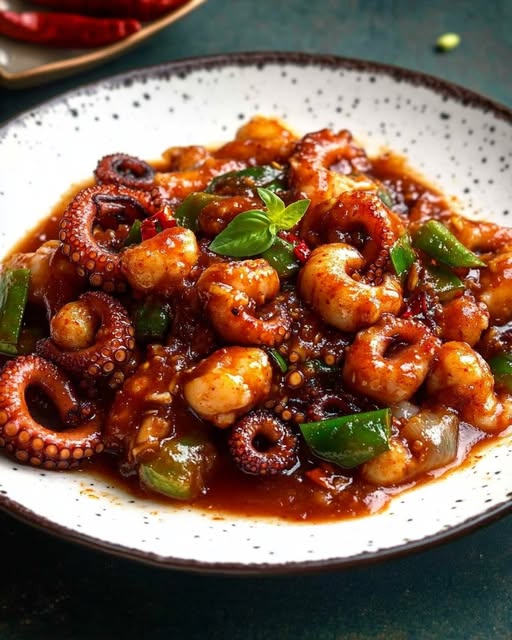
Discover the Magic of Korean Spicy Octopus Stir-fry
Let me tell you about my first real attempt at this dish. It was for a friend’s birthday, and I was terrified. I mean, octopus? Could I really make it tender and tasty? The moment that spicy, sweet, and savory aroma hit my kitchen, I knew I was onto something special. My guests couldn’t stop raving, and it quickly became my go-to for impressing a crowd. Today, I’m sharing that magic with you. This Spicy Octopus Stir-fry, or Nakji-bokkeum, is a fiery, flavorful adventure you can make at home.
A Taste of Korea’s Coastal Flavors
Nakji-bokkeum comes from Korea’s love for fresh seafood and bold spices. It’s a popular dish in Korean restaurants and homes, known for its bright red color and addictive kick. Traditionally, it uses long-arm octopus for its perfect chewy-yet-tender texture. Modern versions might include extra veggies or adjust the heat level. My recipe stays true to the classic stir-fry method. It delivers that authentic restaurant-quality blast of flavor in under 30 minutes of active cooking.
Why You’ll Love This Spicy Octopus Stir-Fry
This recipe is a winner for so many reasons! First, the flavors are unreal—sweet, spicy, savory, and umami all in one bite. Second, it looks incredibly impressive but is surprisingly simple to put together. The prep is straightforward, and the cooking happens in a flash. It’s also a fantastic way to try cooking seafood at home. You’ll feel like a pro chef when you serve this sizzling, aromatic dish straight from the pan.
Perfect Occasions for This Fiery Feast
This stir-fry is perfect for when you want to make dinner feel like an event. I love making it for weekend family gatherings. It’s a hit at potlucks (just bring extra rice!). It’s also my secret weapon for a fun, interactive date night at home. The bold flavors pair amazingly with cold beer or soju, making it great for casual parties. Any time you need a dish that sparks conversation and delights taste buds, this is your recipe.
Your Nakji-bokkeum Shopping List
Here’s everything you’ll need for this delicious spicy octopus stir-fry. Freshness is key for the octopus, and don’t skimp on the gochugaru—it’s the soul of the dish!
- 1 package (700g) frozen long arm octopus, thawed in the fridge
- 2 tablespoons of flour or coarse salt
- 7 garlic cloves, minced
- 2 teaspoons of minced ginger
- 1 Korean spicy green pepper or jalapeño, sliced
- 120g onion, chopped
- 1 large Korean green onion or 4 green onions, chopped
- 2 to 3 tablespoons of vegetable oil
- 1 teaspoon of toasted sesame oil
- For the seasoning: ⅓ cup Korean chili flakes (gochugaru), 3 tbsp soy sauce, 1 tbsp sugar, 1 tbsp potato or corn starch, ¼ cup rice syrup, ½ tsp ground black pepper.
No-Problem Ingredient Swaps
Don’t stress if you’re missing an item! Cooking should be fun and flexible. Here are easy swaps you can make:
- Octopus: Use pre-cleaned baby octopus to skip the prep steps. Squid (ojingeo) works great too, but cook it for a slightly shorter time.
- Gochugaru (Chili Flakes): This gives the authentic flavor, but in a pinch, use a mix of paprika and cayenne pepper for color and heat. The taste will be different but still tasty.
- Rice Syrup: Honey or corn syrup are perfect substitutes for that glossy sweetness.
- Korean Green Pepper: Any spicy fresh chili like serrano or Thai bird’s eye chili works. For less heat, use a bell pepper.
Let’s Make This Spicy Octopus Stir-fry!
Ready to create some magic? Follow these steps for a perfect, tender, and explosively flavorful nakji-bokkeum. I’ll guide you through every sizzle and stir.
Step 1: Prepping Your Octopus
Start with your thawed octopus. Gently open the head to find and remove the intestines and the hard beak. It sounds tricky, but it pulls out easily. Place the octopus in a big bowl and add the flour or coarse salt. Now, get ready for a little workout! Rub and massage the octopus vigorously for about 2 minutes. You’ll see a slimy foam form—this is how you clean and tenderize it. Rinse it very well under cold water until it’s no longer slippery. Pro tip: The flour or salt scrub is the secret to a non-slimy, perfectly tender texture, so don’t skip it!
Step 2: The Quick Blanch
Bring a pot of water to a rolling boil. We’re going to blanch the octopus for just 10-12 seconds. This super quick dip in hot water tightens the flesh slightly. It makes it easier to cut and helps it keep its shape during stir-frying. Drain it immediately and move it to a cutting board. Let it cool just enough to handle. Then, chop the head and the arms into bite-sized pieces. Set your beautiful octopus pieces aside.
Step 3: Whisking the Fiery Sauce
In a small bowl, combine all your seasoning ingredients: the vibrant red gochugaru, soy sauce, sugar, starch, rice syrup, and black pepper. Whisk it really well with a spoon or fork until it’s completely smooth and lump-free. You’ll get a thick, beautifully red, glossy paste. This sauce is the heart of the dish, packing all the sweet heat and deep flavor. Pro tip: Taste a tiny dab on your finger. Adjust the sweetness or saltiness now if you like—more syrup for sweetness, more soy for saltiness.
Step 4: Sizzling the Aromatics
Heat a large pan or wok over high heat. Add the vegetable oil and let it get nice and hot. Toss in your aromatic dream team: the minced garlic, ginger, spicy green pepper, onion, and green onions. Stir-fry this colorful mix for about 3 minutes. The kitchen will smell incredible. Cook until the garlic just starts to turn golden and the onions become soft and translucent. This base builds the foundational flavor that will cling to the octopus.
Step 5: The Grand Finale Stir-fry
Now, add your chopped octopus and the glorious red sauce to the pan. Keep the heat high! Stir everything together quickly and constantly. You want every piece of octopus to get coated in that spicy, sticky sauce. Cook for just 2 to 3 minutes. The octopus is already mostly cooked from blanching. We’re just heating it through and letting the sauce thicken and cling. As soon as it’s done, turn off the heat. Drizzle that final teaspoon of toasted sesame oil over the top and give it one last stir. Chef’s tip: The key is a fast, hot cook here. Overcooking makes octopus rubbery. A quick, fiery sauté keeps it wonderfully tender.
Your Cooking Timeline
Here’s a quick breakdown of your time investment for this spicy octopus dish:
- Prep Time: 20 minutes (includes octopus cleaning and veggie chopping)
- Cooking Time: 10 minutes
- Total Time: 30 minutes
Most of the work is in the prep. The actual stir-fry is lightning fast!
My Secret for the Best Nakji-bokkeum
My absolute secret is in the massage. Rubbing the octopus with flour or salt isn’t just for cleaning. It physically breaks down some of the proteins, making it incredibly tender. Be vigorous with it! Think of it as giving the octopus a spa treatment that results in melt-in-your-mouth texture later. This simple step makes all the difference between good and restaurant-great.
A Fun Fact About Octopus
Did you know octopus arms have a mind of their own? Sort of! Two-thirds of an octopus’s neurons are in its arms. This lets them taste and feel things independently. That’s why when you cook it right, the texture is so uniquely pleasurable—firm yet yielding. It’s like cooking a little piece of the ocean’s genius.
Tools You’ll Need
You don’t need fancy equipment. Just gather these kitchen basics:
- A large bowl for the octopus massage.
- A sharp chef’s knife and cutting board.
- A medium pot for blanching.
- A large skillet or wok (non-stick or carbon steel works best).
- A small bowl for mixing the sauce.
- A sturdy spatula or pair of tongs for stirring.
Storing Your Spicy Octopus Creation
Let your stir-fry cool completely to room temperature before storing. Don’t leave it out for more than two hours. Transfer it to an airtight container. It will keep in the refrigerator for up to 2 days.
To reheat, I recommend using a skillet over medium heat with a tiny splash of water. This gently rewarms it without overcooking the octopus. The microwave can work in a pinch, but it might make the texture a bit chewier. Stir halfway through reheating.
I do not recommend freezing this dish. The texture of the octopus and vegetables can become watery and mushy when thawed. It’s truly best enjoyed fresh the day you make it.
Tips for a Flawless Dish
- Dry the octopus: After rinsing, pat the octopus pieces dry with paper towels. This helps it sear instead of steam when it hits the hot pan.
- Have everything ready: Stir-frying is fast! Chop all your veggies and make your sauce before you even turn on the stove. This “mise en place” prevents burning.
- Control the heat: Don’t be shy with high heat for the stir-fry. It quickly caramelizes the sauce and cooks the octopus perfectly without drying it out.
- Toast your sesame oil: Always use toasted sesame oil, not the light kind. It’s for flavoring at the end, not for cooking.
Make It Look Beautiful on the Plate
We eat with our eyes first! Here’s how to plate your spicy octopus stir-fry like a pro:
- Serve it in a bright white bowl to make the vibrant red sauce pop.
- Garnish with a final sprinkle of thinly sliced green onions and a few sesame seeds.
- Place it in the center of the table with a big bowl of steamed white rice and small side dishes (banchan) like kimchi or spinach.
- For individual servings, spoon the stir-fry next to a neat mound of rice, not on top of it, so the colors stay distinct.
Try These Delicious Variations
Love this recipe? Mix it up! Here are six tasty twists on the classic nakji-bokkeum.
- Seafood Medley Stir-fry: Add shrimp, mussels, and squid along with the octopus for a luxurious seafood feast.
- Vegetable-Packed Nakji: Boost the veggies with sliced carrots, bell peppers, and zucchini for more color and nutrients.
- Cheesy Dakgalbi-Style: Add mozzarella or cheddar cheese on top after cooking, cover the pan until melted. Inspired by Korean dakgalbi!
- Nakji Bokkeum with Noodles: Stir in cooked Korean rice cakes (tteok) or udon noodles at the end for a filling, saucy noodle dish.
- Sweet and Non-Spicy Version: Replace gochugaru with more rice syrup and a bit of paprika for color. Perfect for kids or those who dislike heat.
- Quick Lunch Nakji Fried Rice: Chop leftover stir-fry finely and stir it into day-old rice with an extra egg for a fantastic fried rice.
Common Mistakes to Avoid With Your Stir-fry
Avoid these pitfalls to ensure your spicy octopus dish is perfect every time.
Mistake 1: Skipping the Cleaning Massage
It’s tempting to just rinse the octopus and move on. But skipping the flour or salt rub means missing two big benefits. First, you won’t remove all the slippery slime. Second, you won’t tenderize the meat. The result can be a chewier, slightly slick texture. Always take two minutes to massage it well. Your effort will be rewarded with a much nicer eating experience.
Mistake 2: Overcooking the Octopus
Octopus goes from tender to tough very quickly. The blanching step pre-cooks it. The final stir-fry is just to heat it and coat it in sauce. If you cook it for more than 3-4 minutes in the pan, it will become rubbery. Watch the clock closely. The octopus is done when it’s just heated through and the sauce is glossy and thick.
Mistake 3: Using Raw Sesame Oil for Cooking
Toasted sesame oil has a low smoke point and a strong flavor. It burns easily and turns bitter if used to fry the aromatics. Always use a neutral vegetable oil for the main cooking. Save the fragrant toasted sesame oil for the very end, drizzling it in after you’ve turned off the heat. This preserves its nutty aroma.
Mistake 4: Not Pre-mixing the Sauce
If you add the soy sauce, starch, and gochugaru separately to the hot pan, they won’t combine properly. The starch can clump. The flavors won’t meld. You’ll end up with an uneven, lumpy sauce. Always whisk your sauce ingredients in a bowl until smooth before adding it to the pan. This ensures a perfectly cohesive, glossy coating.
Your Nakji-bokkeum Questions, Answered
Can I use fresh octopus instead of frozen?
Absolutely, if you can find it! Fresh octopus is wonderful. The main advantage of frozen is that the freezing process helps break down the tissue, making it more tender. With fresh octopus, the cleaning massage step is even more critical. You might also need to boil it for a minute or two longer during the blanch if it’s very fresh and thick. The flavor will be fantastic either way.
My dish turned out too spicy. How can I fix it?
Don’t worry, we can fix that! Stir in a bit more rice syrup or honey to balance the heat with sweetness. You can also add a tablespoon of water or a splash of milk to dilute the sauce slightly. Serving it with plenty of plain white rice is the best way to cool down each bite. Next time, reduce the amount of gochugaru or use a milder Korean pepper powder.
Is there a way to make this less spicy for my family?
Yes, you can easily make a family-friendly version. Use only 2-3 tablespoons of gochugaru instead of ⅓ cup. You can also add a bit of paprika for the red color without the heat. Omit the fresh spicy green pepper entirely or use a sliced bell pepper instead. Taste the sauce before adding it to adjust the seasoning to your family’s preference.
What should I serve with spicy octopus stir-fry?
Steamed white rice is a must—it soaks up the delicious sauce. I love serving it with simple Korean side dishes like cool cucumber salad (oi muchim), seasoned spinach (sigeumchi namul), or kimchi. A bowl of mild soup, like miyeokguk (seaweed soup), also pairs nicely. For drinks, try cold beer, soju, or even a sparkling cider to cut through the spice.
How do I know if the octopus is cooked properly?
Properly cooked octopus should be tender but still have a slight bite, not mushy and not tough like rubber. After blanching, it will be opaque and curl slightly. After the final stir-fry, it should be just heated through. The best test is to taste a piece! It should be easy to chew without being stringy or overly resistant.
Can I prepare any parts of this recipe ahead of time?
You can do a lot ahead to make dinner quick! Clean and chop the octopus, store it covered in the fridge. Chop all your vegetables and keep them in a container. Mix the sauce in a jar. When you’re ready to cook, everything comes together in under 10 minutes. I don’t recommend cooking the whole dish ahead, as the octopus is best fresh.
Where can I find gochugaru (Korean chili flakes)?
Look for it in Korean or Asian grocery stores, either in the spice aisle or the Korean food section. It’s often sold in medium or large bags. You can also find it online on Amazon or other specialty food websites. Make sure it’s labeled “gochugaru” or “Korean red pepper flakes.” It has a unique flavor different from other chili powders.
What’s the difference between gochugaru and regular chili powder?
Gochugaru is coarser, sun-dried, and has a sweet, smoky, slightly fruity flavor with moderate heat. Regular chili powder (like cayenne) is much finer, hotter, and can have other spices like cumin and garlic mixed in. They are not direct substitutes. Using regular chili powder will give a different, often hotter and less complex, flavor to your spicy stir-fry.
Can I use a different type of seafood?
Definitely! Squid (ojingeo) is a classic alternative and cooks even faster. Shrimp or scallops work beautifully too. For shrimp, add them in the last 1-2 minutes of cooking since they cook very quickly. You can also use a mix for a fantastic seafood bokkeum. Just adjust cooking times based on the size and type of seafood you choose.
My sauce didn’t get thick and glossy. What went wrong?
The starch in the sauce needs to boil for a moment to thicken. If your heat was too low, the sauce might not have reached a simmer. Also, make sure you measured the starch correctly—too little won’t thicken, too much can make it gloppy. Next time, ensure your pan is very hot when you add the sauce. Let it bubble and stir constantly for the full 2-3 minutes. It should coat the back of a spoon nicely.
Ready for Your Korean Kitchen Adventure?
And there you have it—my foolproof path to an incredible homemade Nakji-bokkeum. This spicy octopus stir-fry is more than just a meal. It’s a fun, flavorful experience that brings the excitement of Korean dining right to your table. Don’t let the octopus intimidate you. That little flour massage is your secret weapon. So grab your pan, turn up the heat, and get ready for the compliments. Happy cooking, and enjoy every delicious, spicy bite!
Spicy Octopus Stir-fry
Ingredients
Equipment
Method
- Start with your thawed octopus. Gently open the head and remove the intestines and hard beak.
- Place the octopus in a big bowl and add the flour or coarse salt.
- Rub and massage the octopus vigorously for about 2 minutes and rinse it under cold water until it's no longer slippery.
- Bring a pot of water to a rolling boil and blanch the octopus for just 10-12 seconds.
- Drain the octopus and let it cool, then chop it into bite-sized pieces.
- In a small bowl, combine all the seasoning ingredients and whisk until smooth.
- Heat a large pan over high heat and add the vegetable oil.
- Stir-fry garlic, ginger, green pepper, onion, and green onions for about 3 minutes.
- Add the chopped octopus and seasoning sauce to the pan and stir quickly.
- Cook for 2 to 3 minutes until coated and heated through, then drizzle with toasted sesame oil and stir.