
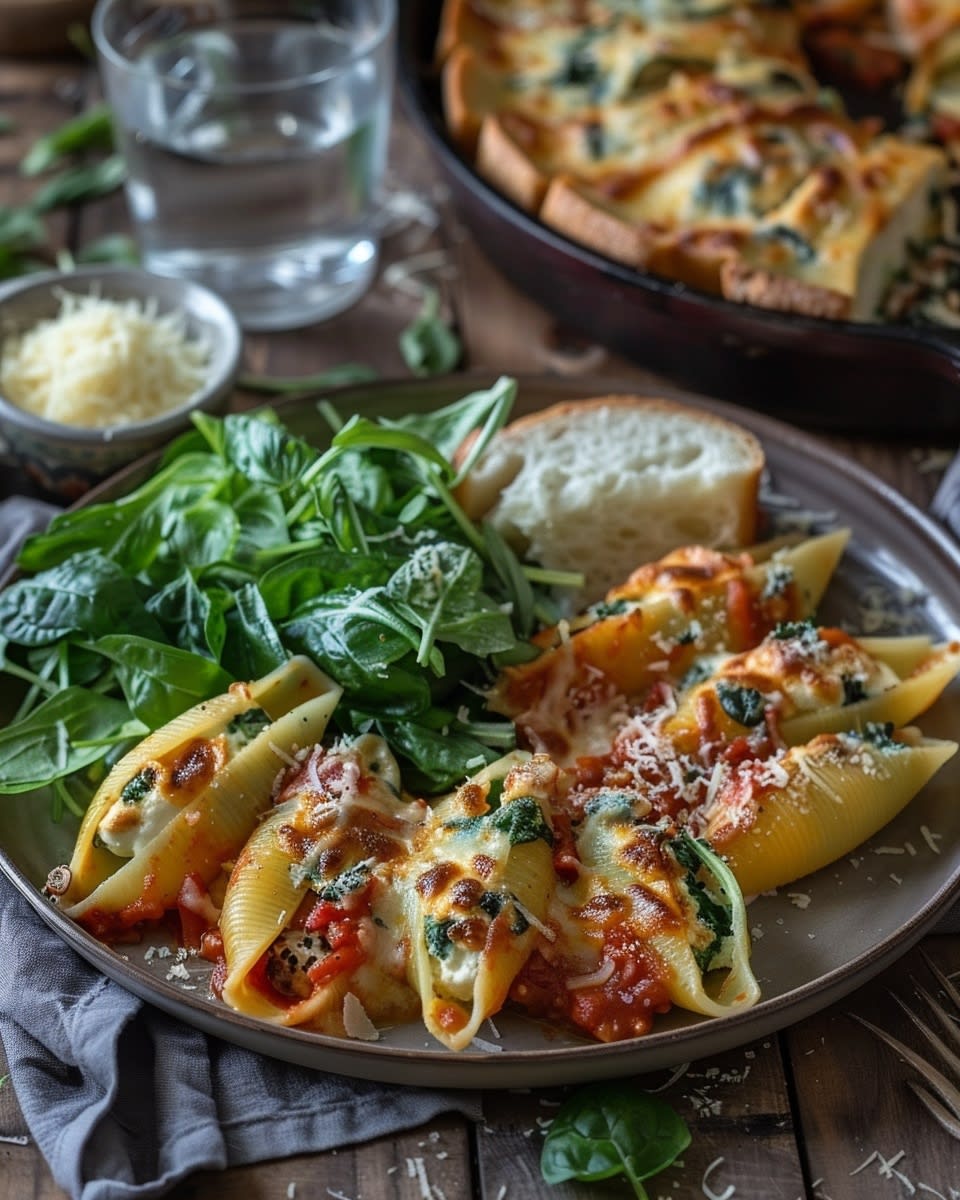
Welcome to My Kitchen: Discovering the Magic of Spinach Ricotta Stuffed Shells
Last Tuesday, my daughter walked into the kitchen and asked what smelled so good. I told her I was making stuffed shells, and her eyes lit up. That’s the power of this dish. It fills your home with warmth and brings everyone running to the table.
Today, I’m sharing my recipe for Spinach Ricotta Stuffed Shells. This isn’t just another pasta dish. It’s comfort food that feels fancy enough for guests but easy enough for busy weeknights. The creamy ricotta mixed with tender spinach, all tucked into giant pasta shells and baked until bubbly. Every bite is pure happiness.
I fell in love with this recipe about ten years ago when a friend brought it to a potluck. I couldn’t stop thinking about those shells for days. After some trial and error in my own kitchen, I created a version that my family now requests at least twice a month. My husband says it’s better than any restaurant version he’s tried, and coming from him, that means something.
This dish works perfectly for family dinners because you can make it ahead. Just prep everything in the morning, pop it in the fridge, and bake it when you’re ready to eat. It’s also great for special occasions like Easter, Christmas, or when you want to impress your mother-in-law. Trust me on that last one.
In this article, I’ll walk you through everything you need to know. We’ll cover the ingredients, how to make the perfect filling, tips for cooking the shells just right, and even some fun variations. By the end, you’ll feel confident making this dish your own.
Ingredients You’ll Need for Perfect Ricotta Stuffed Pasta Shells
Let’s talk about what goes into these beautiful shells. Getting quality ingredients makes a real difference in how your dish turns out. I learned this the hard way when I tried to cut corners with cheap ricotta. The filling turned out watery and bland. Never again.
Here’s what you’ll need for the classic version:
- 12-15 jumbo pasta shells (buy extra in case some break)
- 15 ounces whole milk ricotta cheese
- 10 ounces frozen spinach, thawed and squeezed dry
- 1 cup shredded mozzarella cheese (plus more for topping)
- 1/2 cup grated Parmesan cheese
- 1 large egg
- 2 cloves garlic, minced
- 1/2 teaspoon salt
- 1/4 teaspoon black pepper
- 1/4 teaspoon nutmeg (secret ingredient!)
- 2-3 cups marinara sauce
- Fresh basil for garnish
When shopping, look for ricotta that feels heavy for its size. This usually means it’s creamier and has less water. I prefer whole milk ricotta because it tastes richer. Low-fat versions can work, but the filling won’t be as smooth.
For the spinach, frozen works great. Just make sure you squeeze out every drop of water. I wrap it in a clean kitchen towel and twist until my hands hurt. Excess water will make your filling soupy.
Buy good Parmesan cheese and grate it yourself. The pre-grated stuff in the green can tastes like cardboard. A block of real Parmigiano-Reggiano costs more, but you’ll taste the difference.
Now, let’s talk about variations. If you want to try stuffed shells with spinach and cream cheese, swap 8 ounces of the ricotta for cream cheese. This makes the filling extra smooth and tangy. My sister loves this version.
For stuffed shells with spinach and meat, brown 1/2 pound of Italian sausage or ground beef. Drain the fat and mix it into your filling. This turns the dish into a heartier meal that satisfies big appetites.
You can also make stuffed shells with spinach and chicken. Dice up about one cup of cooked chicken breast and fold it into the ricotta mixture. This is perfect for using up leftover rotisserie chicken.
If you’re out of ricotta, stuffed shells with spinach and cottage cheese work too. Just blend the cottage cheese in a food processor first to make it smoother. Add an extra egg to help bind everything together.
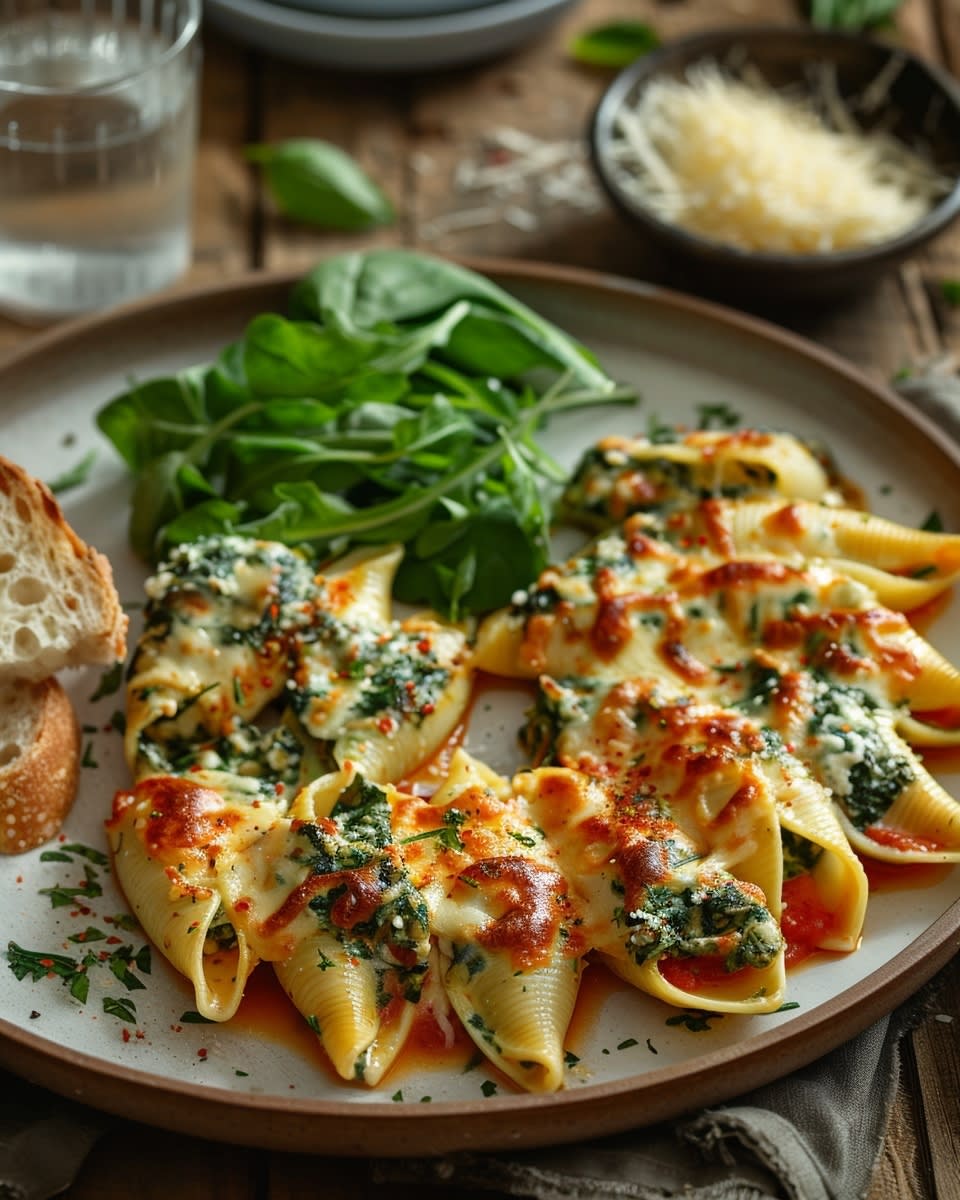
Some people make spinach and ricotta stuffed shells with alfredo instead of marinara. Pour alfredo sauce over the shells before baking for a richer, creamier dish. You can even use spinach ricotta stuffed shells alfredo sauce as both the base and topping.
Preparing the Perfect Spinach and Ricotta Filling
Making the filling is the fun part. It comes together quickly, and you can taste-test as you go. Just don’t eat too much or you won’t have enough for the shells. I’m guilty of this more times than I’ll admit.
Start by squeezing your thawed spinach. This step is important. Lay the spinach in a clean kitchen towel, gather the edges, and twist over the sink. You’ll be shocked at how much water comes out. Keep squeezing until barely any liquid drips out.
In a large bowl, dump the ricotta cheese. Add your super-dry spinach, breaking up any clumps with your fingers. Crack in the egg. This helps bind everything together so your filling doesn’t fall out during baking.
Toss in the mozzarella and Parmesan. The mozzarella makes it stretchy and gooey. The Parmesan adds a sharp, salty punch. Together, they create the perfect cheese blend.
Mince your garlic really fine. Nobody wants to bite into a big chunk of raw garlic. I use a microplane grater for this. It turns the garlic into a paste that spreads evenly through the filling.
Add your salt, pepper, and nutmeg. That little bit of nutmeg is magic. It doesn’t make the dish taste like pumpkin pie. It just brings out the flavor of the spinach and cheese in a way that makes people ask what your secret is.
Mix everything together with a wooden spoon or your hands. I prefer hands because I can feel if there are any lumps. The mixture should look creamy and green-flecked. Taste it. Does it need more salt? More garlic? Adjust now before you stuff the shells.
To make the filling extra creamy, try adding 2 tablespoons of heavy cream. This loosens the mixture slightly and makes it richer. Another trick is using marscarpone cheese. Replace 4 ounces of ricotta with marscarpone for an incredibly smooth texture.
If you’re making the cream cheese version, beat the cream cheese first until it’s fluffy. This prevents lumps. Then fold in the other ingredients. The result tastes almost like cheesecake mixed with spinach, in the best way possible.
For meat variations, cook your protein first and let it cool. Mix it in last so it stays in chunks throughout the filling. Season the meat well before adding it. Bland meat makes bland stuffing.
Tips for Perfectly Cooked Pasta Shells
Cooking the shells correctly is where many people struggle. Too soft, and they fall apart when you try to stuff them. Too firm, and they crack. I’ve ruined entire boxes learning this lesson.
Fill a large pot with water. You want plenty of room for the shells to move around. Add a generous amount of salt. The water should taste like the ocean. This is your only chance to season the pasta itself.
Bring the water to a rolling boil. Add your shells. Set a timer for 2 minutes less than the package directions say. If the box says 11 minutes, cook them for 9 minutes. They’ll finish cooking in the oven.
Stir gently every couple minutes. Shells like to stick to the bottom of the pot. Use a wooden spoon so you don’t break them.
While they cook, prepare a baking sheet. Drizzle it with olive oil and spread it around. This prevents sticking and makes the shells easier to pick up.
When time’s up, drain the shells carefully. Don’t dump them violently into the colander or they’ll crack. Pour slowly. Rinse them with cool water to stop the cooking.
Lay each shell on your oiled baking sheet with the opening facing up. Don’t stack them. Let them cool for a few minutes before stuffing. They’ll be easier to handle.
If shells stick together despite your best efforts, don’t panic. Run them under cool water and gently separate them. A little tear won’t ruin anything. Just use those shells on the bottom where nobody will see.
Some people add oil to the cooking water, but I don’t think it helps much. The key is using enough water and stirring often. That’s what really prevents sticking.
If you’re making a big batch, cook the shells in two pots. Crowding makes them stick together more. Give them space to swim freely in the boiling water.


Stuffing and Baking Your Spinach Ricotta Stuffed Shells to Perfection
Now that your shells are cooled and ready to go, it’s time for the most satisfying part of the whole process. I love this step. There’s something oddly therapeutic about filling each shell with that creamy mixture. My kids used to help when they were younger, and we’d make a game of who could stuff theirs the neatest.
Grab a spoon or a small cookie scoop. I prefer a cookie scoop because it gives you consistent portions every time. Scoop up a generous amount of your spinach ricotta filling. Hold a shell in one hand and gently push the filling inside with the other. Don’t overstuff or the shell might crack, but don’t be shy either. You want each bite to be full of that cheesy goodness.
Work your way through all the shells, arranging them as you go. Some people lay them seam-side up, others seam-side down. Honestly, it doesn’t matter much. I do seam-side up because I think it looks prettier and the cheese on top browns better that way.
Here’s a trick I learned from my aunt who made these for years: use a piping bag for stuffing if you’re feeling fancy. Fill a large ziplock bag with your ricotta mixture, snip off one corner, and pipe the filling directly into each shell. It’s faster and way less messy. Plus, you’ll feel like a professional chef. Give it a try next time you make creamy spinach garlic Parmesan pasta too, if you’re storing extra filling.
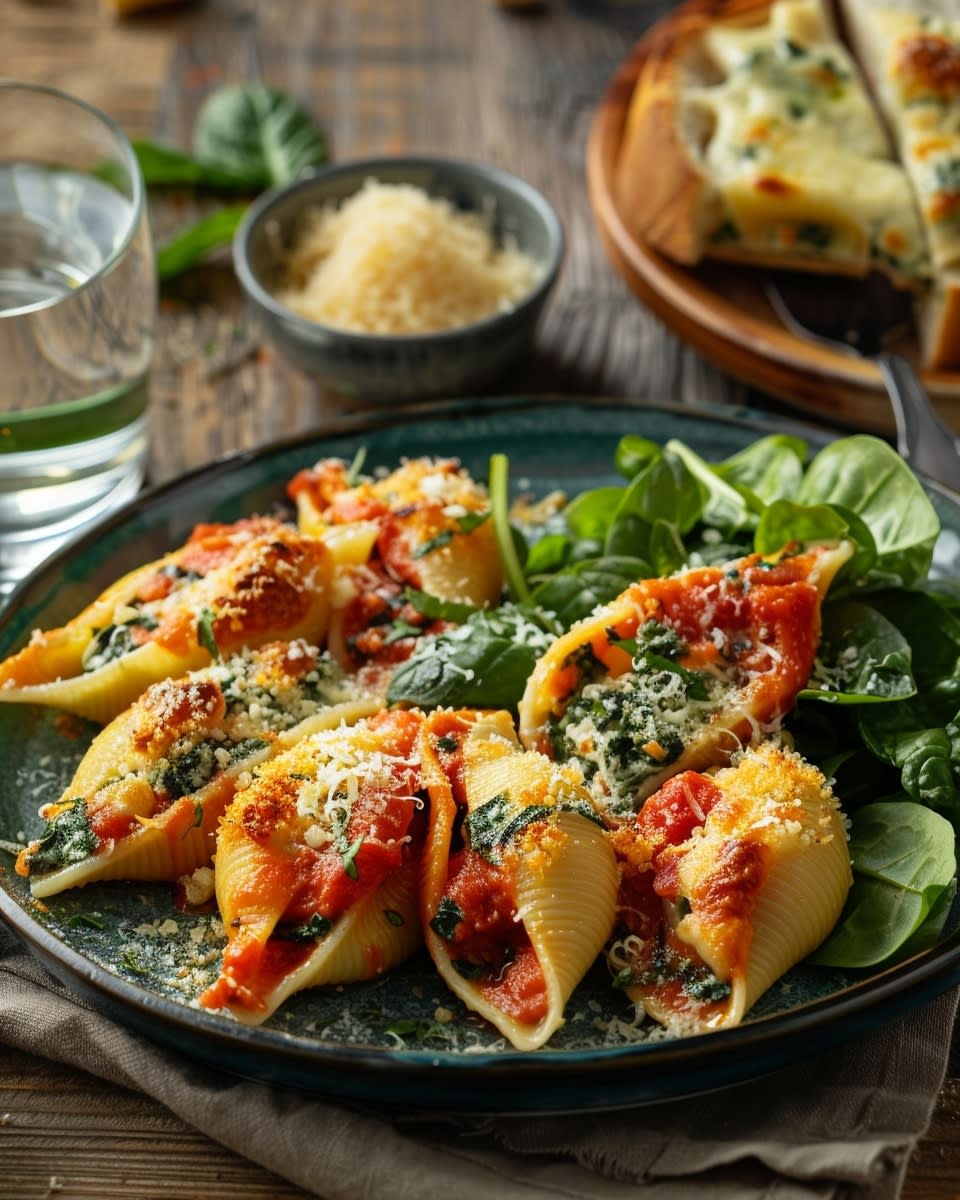
For your baking dish, I recommend a 9×13 inch pan. Pour about a cup of marinara sauce on the bottom and spread it around. This creates a flavor cushion and prevents the shells from sticking to the pan. I learned this after scraping too many burnt shells off the bottom.
Arrange your stuffed shells in a single layer on top of the sauce. They can touch each other, but try not to cram them in too tight. You want a little sauce to flow between them. Once they’re all nestled in, pour another cup or two of marinara over the top. Don’t drown them completely. You should still see some shell peeking through.
If you’re going the spinach and ricotta stuffed shells with alfredo route, now’s the time to switch it up. Instead of marinara, use a rich alfredo sauce. You can make your own or use a good quality jarred version. Pour it over and between the shells just like you would with red sauce. The combination of spinach, ricotta, and cream sauce is absolutely divine. It reminds me of the flavors in one pot creamy chicken alfredo pasta, but with the fun texture of stuffed shells.
Some people do half marinara and half alfredo. Crazy, right? But it works. Put marinara on one side of the pan and alfredo on the other. That way, people can choose their favorite or try both. I did this once for a party and everyone loved having options.
Sprinkle shredded mozzarella over everything. Be generous. This creates that golden, bubbly top we’re all chasing. Add a bit more Parmesan too if you want extra flavor.
Cover the pan tightly with aluminum foil. This is important for the first part of baking. The foil traps steam and helps cook the shells through without drying them out. Preheat your oven to 375°F while you’re getting everything ready.
Slide the covered pan into the oven and bake for 25 minutes. Set a timer. After 25 minutes, carefully remove the foil. Watch out for the steam. It’s hot enough to burn you. I’ve learned this the painful way more than once.
Put the pan back in the oven uncovered. Bake for another 10-15 minutes until the cheese on top turns golden brown and everything’s bubbling around the edges. If you want an extra crispy top, turn on the broiler for the last 2 minutes. Just watch it closely because it can go from perfect to burnt in seconds.
You’ll know it’s done when you can see the sauce bubbling enthusiastically and the cheese has those beautiful brown spots. Let it rest for about 5 minutes before serving. This lets everything set up a bit so the shells don’t slide around when you’re dishing them out.
Creative Variations to Make This Recipe Your Own
By the way, once you’ve mastered the basic recipe, the variations are endless. I’ve probably made this dish fifty different ways over the years. Some experiments failed spectacularly, but others became family favorites.
The stuffed shells with spinach and ricotta giada version that Giada De Laurentiis makes includes fresh herbs like basil and oregano mixed right into the filling. She also adds lemon zest, which sounds weird but actually brightens everything up. That little citrus note cuts through the richness in a really nice way.
Food Network versions of spinach and ricotta stuffed shells often feature roasted garlic instead of raw. Roasting mellows the garlic and makes it sweet. Just wrap a whole head in foil with olive oil and roast at 400°F for 40 minutes. Squeeze out the soft cloves and mash them into your filling. The flavor is completely different from raw garlic.
For stuffed shells with spinach and sausage, brown a pound of Italian sausage with some diced onion. I like the sweet Italian kind, but hot sausage works if you want a kick. Drain off the grease, let it cool, then mix it into your ricotta. This version is much heartier and satisfies even the biggest appetites. My teenage son requests this one constantly.
The stuffed shells with spinach and chicken variation is perfect for meal prep. Roast or poach chicken breasts, dice them small, and fold them into the filling. Season the chicken well with Italian herbs before adding it. I’ve also used rotisserie chicken from the grocery store when I’m short on time. Nobody can tell the difference.
Funny enough, my husband prefers stuffed shells with spinach and meat made with ground beef. He thinks it tastes more like lasagna. Brown the beef with garlic and Italian seasoning, then mix half into the filling and layer the other half with the marinara sauce. It’s basically a deconstructed lasagna in shell form.
Using spinach ricotta stuffed shells alfredo sauce creates an entirely different dish. Make or buy a good alfredo sauce and pour it generously over your shells. Top with extra Parmesan and maybe some crispy breadcrumbs for texture. The result tastes incredibly indulgent. If you love creamy pasta dishes, this variation might become your go-to. It has similar vibes to Turkish yogurt beef pasta, just with Italian flavors instead.
You can even make a seafood version. Mix cooked shrimp or crab meat into your filling. Use white wine cream sauce instead of marinara. Add fresh dill or tarragon to the ricotta mixture. It feels fancy enough for company but isn’t actually that hard to pull off. The technique is similar to making garlic butter shrimp linguine, just stuffed in shells instead.
Serving Your Shells and Making the Meal Complete
Once those shells come out of the oven all golden and bubbly, you’re almost there. Let them cool for just a few minutes like I mentioned. Then use a wide spatula to lift them out carefully. They should hold together perfectly if you followed the steps.
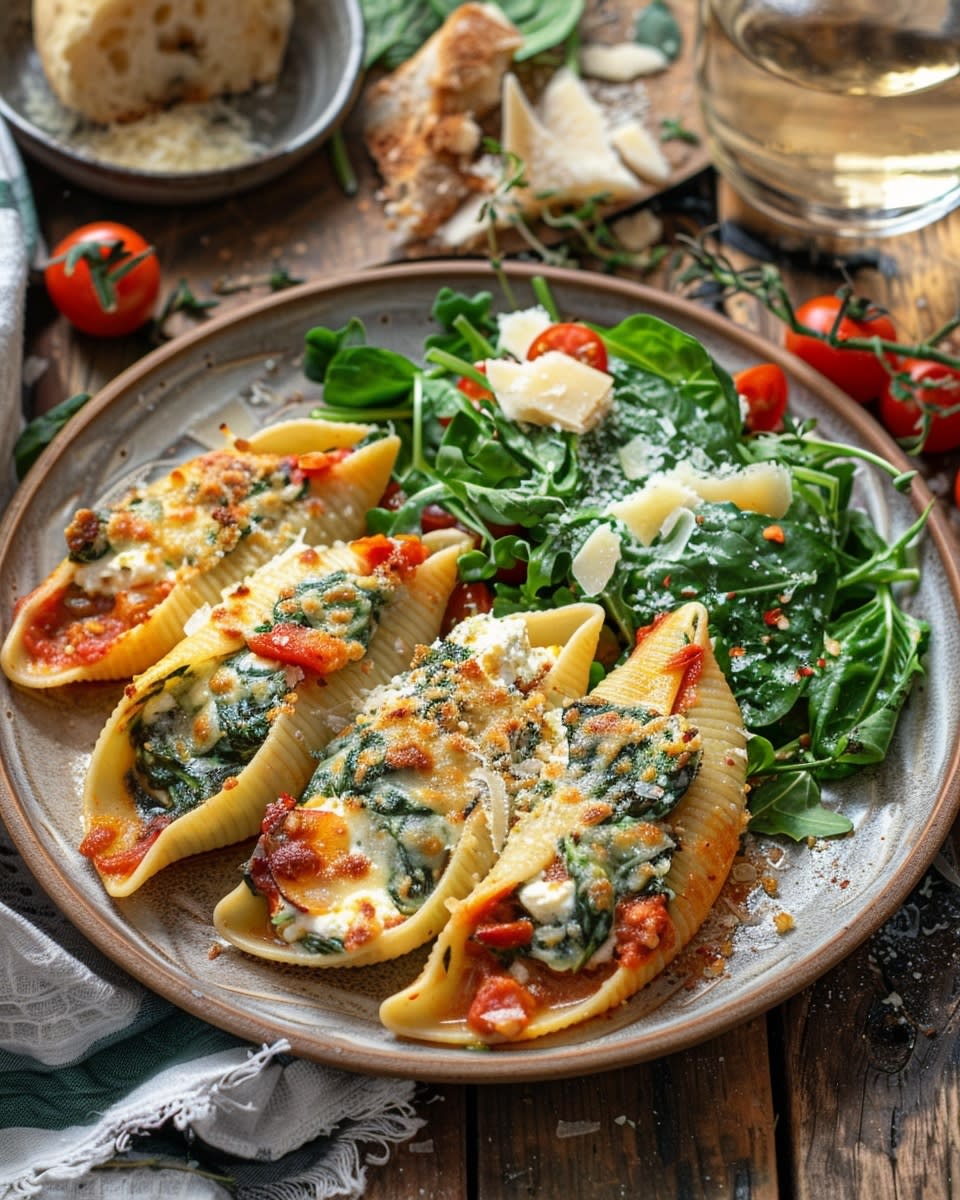
I like to serve these with a simple green salad on the side. Something light with a vinaigrette helps balance the richness of the cheese. Throw together some mixed greens, cherry tomatoes, cucumbers, and red onion. Dress it with olive oil, balsamic vinegar, salt, and pepper. Done.
Garlic bread is also a must in my house. Toast some crusty Italian bread, rub it with garlic cloves, and brush with butter. My kids will eat an entire loaf if I let them. The bread is perfect for soaking up any extra sauce on your plate.
For wine, I usually reach for a medium-bodied red like Chianti or Sangiovese. The acidity cuts through the cheese nicely. If you made the alfredo version, try a Pinot Grigio or Chardonnay instead. White wine works better with cream sauces in my experience.
Here’s the thing about leftovers: they’re almost better the next day. Store them in an airtight container in the fridge for up to four days. To reheat, I put a portion on a plate, cover it with a damp paper towel, and microwave for about 2 minutes. The damp towel keeps everything from drying out.
You can also freeze these beautifully. Assemble the whole dish, cover it tightly with plastic wrap and then foil, and freeze for up to three months. Thaw overnight in the fridge, then bake as directed. Or bake from frozen, just add 15-20 extra minutes to the cooking time. This makes it perfect for meal planning or taking to someone who just had a baby.
Sometimes I make a double batch and freeze one pan. Then on crazy weeknights when I have zero energy, I just pop it in the oven. It’s like having restaurant-quality food ready to go with almost no effort. That’s the beauty of ricotta stuffed pasta shells. They’re special enough to impress people but practical enough for real life.
Common Questions About Making Spinach Ricotta Stuffed Shells
Over the years, I’ve gotten tons of questions about making this dish. People ask me stuff at parties, through messages, even at the grocery store when they see shells in my cart. So I figured I’d answer the most common ones right here. These are real questions from real people who just want their dinner to turn out great.
Can I use frozen spinach instead of fresh spinach?
Absolutely, and honestly, I prefer frozen for this recipe. Fresh spinach sounds fancier, but it’s way more work. You’d need to wash it, remove all the stems, wilt it down in a pan, and then squeeze out the water anyway. A ten-ounce box of frozen chopped spinach does all that for you. Just thaw it completely, then squeeze every last drop of moisture out. I can’t stress this enough because watery spinach ruins the whole filling. Wrap it in a clean kitchen towel and twist until your hands hurt. That’s when you know you’ve gotten enough water out.
What can I substitute for ricotta cheese in the filling?
Cottage cheese is the most popular swap. Just blend it smooth in a food processor first because nobody wants those big curds in their filling. Add an extra egg to help everything bind together properly. The flavor is slightly different, more tangy, but still really good. Some people use mascarpone for a super luxurious version. It’s richer and creamier than ricotta but costs more. You could also try a combination of cream cheese and sour cream. Mix eight ounces of softened cream cheese with half a cup of sour cream. Beat it until it’s fluffy, then add your other ingredients. This makes an incredibly smooth filling that my sister swears by.
How do I make the filling less runny?
Runny filling usually means you didn’t squeeze enough water from your spinach. That’s mistake number one. Go back and squeeze it again if you think there’s any moisture left. Another trick is to add a few tablespoons of breadcrumbs or panko to the mixture. They’ll absorb excess liquid without changing the flavor much. Some people add an extra egg, but too many eggs makes the filling taste, well, eggy. If your ricotta itself seems watery, drain it in a fine-mesh strainer for about thirty minutes before using it. Let gravity do the work. The cheese that’s left behind will be much thicker and easier to work with.
Can I prepare the stuffed shells ahead of time?
This is actually one of my favorite things about this dish. You can make it completely ahead and just bake when you’re ready. Stuff all your shells, arrange them in the baking dish with sauce, cover tightly with plastic wrap and foil, then refrigerate for up to two days. When you’re ready to eat, remove it from the fridge while the oven preheats. This takes the chill off a bit. Then bake as directed, maybe adding five extra minutes since it started cold. For longer storage, freeze the assembled dish. I do this all the time. Just make sure it’s wrapped really well to prevent freezer burn. It’ll keep for three months easily.
Is there a vegetarian option for the stuffed shells with spinach and meat?
The basic spinach ricotta stuffed shells recipe is already vegetarian as long as you check your marinara sauce. Some brands sneak in meat or anchovies. If you want more protein and heartiness without meat, try adding white beans. Mash half a can of cannellini beans and mix them into the filling. They add creaminess and protein without changing the flavor much. Mushrooms work great too. Dice them super fine, sauté with garlic until all their moisture evaporates, then fold them into the ricotta mixture. Chopped sun-dried tomatoes add bursts of flavor. Toasted pine nuts give you texture and richness. There are so many ways to make this filling without touching meat.
How long should I bake the stuffed shells?
The magic number is about 35-40 minutes total at 375°F. That’s 25 minutes covered with foil, then 10-15 minutes uncovered. The foil stage cooks everything through without drying it out. The uncovered stage browns the cheese on top. You’ll know they’re done when the sauce is bubbling around the edges and the cheese has golden brown spots. If you’re baking from frozen, add about 20 extra minutes to the covered time. Use a knife to poke into the center of one shell. If it feels hot all the way through, you’re good to go. Every oven is different though. Mine runs hot, so I sometimes need less time. Get to know your oven’s quirks.
Can I use a different type of pasta if I don’t have shells?
Sure, but you’ll need to change your approach. Jumbo shells are perfect because they’re designed to hold filling. Without them, you’re basically making a different dish, which is totally fine. Use manicotti tubes instead. They work almost the same way. Pipe or spoon your filling inside and bake exactly as you would with shells. You could also make it like a lasagna. Layer cooked lasagna noodles with your ricotta mixture and sauce. It tastes the same, just looks different. Some people use large pasta tubes like rigatoni or paccheri. You can’t stuff those, but you can toss them with the filling and bake everything together casserole-style. Not traditional, but still delicious.
What are some gluten-free alternatives for the pasta shells?
Gluten-free jumbo shells exist now, which is amazing. Brands like Barilla and Tinkyada make them. They’re usually made from rice or corn. Cook them even more carefully than regular shells because they break easier. Undercook them by at least three minutes. They’ll be fragile but less likely to fall apart. Another option is to skip pasta entirely and use vegetables. Hear me out. Large portobello mushroom caps work great. Remove the stems and gills, fill them with your ricotta mixture, and bake with sauce. Hollowed-out zucchini boats are another good choice. They add extra vegetables and work for people watching their carbs too. Even bell pepper halves can hold the filling nicely.
How do I add more flavor to the spinach ricotta filling?
Here’s where you can get creative. Start by upping your garlic. I use two cloves in the basic recipe, but you could easily go to four or five if you love garlic like I do. Fresh herbs make a huge difference. Chop up fresh basil, parsley, or oregano and mix them in. Red pepper flakes add a nice kick without making it spicy. Just a quarter teaspoon wakes everything up. Lemon zest brings brightness that cuts through all that cheese. Sun-dried tomatoes add sweet, tangy bursts. Caramelized onions mixed in create deep, sweet flavor. Even a tablespoon of pesto stirred through changes everything in the best way. Adding food variety to your meals helps create more interesting flavors and better nutrition overall.
Can I use a different type of cheese besides ricotta?
We touched on this earlier, but let me expand. Goat cheese makes an incredible filling if you like tangy flavors. Mix it half and half with ricotta or cream cheese so it’s not too strong. Boursin or other soft herbed cheeses add tons of flavor. You’d use less because they’re more intense. Feta cheese mixed with ricotta creates a Greek-inspired version. Add some dill and it tastes completely different but amazing. For a really indulgent version, try mixing in some Gruyere or fontina. These melting cheeses create the stretchiest, most luxurious filling you’ve ever tasted. Just remember that whatever cheese you choose needs to be soft enough to mix smoothly and mild enough not to overpower the spinach.
By the way, once you get comfortable with the basic technique, you’ll start seeing possibilities everywhere. I’ve made Mexican-inspired versions with pepper jack cheese and green chiles. I’ve done Mediterranean versions with feta, olives, and oregano. Last month I made a Buffalo chicken version that my husband went crazy for. The shells are just a vehicle. The filling can be whatever you dream up.
These shells also travel well, which makes them perfect for potlucks or taking to someone who needs a meal. They hold up better than most casseroles. Just keep them warm in an insulated carrier and they’ll still be perfect an hour later. I’ve brought these to church functions, baby showers, and funeral receptions. They always disappear fast.
If you’re someone who likes to experiment in the kitchen, this recipe is your playground. Change the cheese, swap the sauce, add different vegetables or proteins. The structure stays the same but the flavors can go anywhere. That’s what I love about ricotta stuffed pasta shells. They’re reliable but never boring.
One more thing I want to mention is portion sizes. These shells are rich and filling. Most people eat two or three shells as a serving, especially if you’re serving bread and salad alongside. A box of jumbo shells usually has about 20-24 shells in it. So one batch typically feeds six to eight people comfortably. If you’re feeding a crowd, make two pans. They take up the same amount of effort and you’ll have leftovers for days.
The beauty of this dish is that it feels special without being complicated. You’re not making some fancy French recipe with techniques you’ve never heard of. You’re cooking pasta, mixing cheese, and baking. Simple stuff. But the result looks and tastes impressive enough that people think you worked way harder than you did. That’s the sweet spot we’re all looking for in the kitchen, right? Maximum impact with reasonable effort.
I’ve taught this recipe to at least a dozen friends over the years. Every single one says it’s now in their regular rotation. That tells me something. When you find a dish that’s this versatile, this crowd-pleasing, and this forgiving, you hold onto it. You make it for your family on Tuesday nights. You make it for your in-laws on Sunday. You make it when someone needs comfort or celebration or just a really good meal. If you’re looking for more inspiration for comforting pasta dishes like this one, check out all the options in our collection of pasta and noodles recipes.
So grab a box of shells next time you’re at the store. Get that ricotta and spinach. Set aside an hour when you’re not rushed. Put on some music, pour yourself a glass of wine, and stuff some shells. I promise you won’t regret it. This recipe might just become your new go-to for everything from quiet weeknights to holiday tables. It did for me, and I think it will for you too.
Frequently Asked Questions About Spinach Ricotta Stuffed Shells
Can I use frozen spinach instead of fresh spinach?
Yes, frozen spinach actually works better for this recipe. It’s already chopped and cleaned, saving you tons of prep time. Just make sure you thaw it completely and squeeze out every drop of water. I mean really squeeze it hard in a clean kitchen towel until barely any moisture comes out. Excess water will make your filling runny and watery. One ten-ounce package of frozen spinach equals about a pound of fresh spinach once it’s cooked and wilted down.
What can I substitute for ricotta cheese in the filling?
Cottage cheese is the most common substitute, but blend it smooth first in a food processor to get rid of the lumps. Add an extra egg to help bind everything together. Cream cheese mixed with sour cream also works beautifully for an extra tangy, smooth filling. Mascarpone creates a luxurious, rich version if you want to splurge a little. Even a combination of Greek yogurt and cream cheese can work in a pinch, though the texture will be slightly different.
How do I make the filling less runny?
The main culprit is usually water from the spinach, so squeeze it really well. If your filling still seems loose, add two or three tablespoons of breadcrumbs or panko to absorb the extra moisture. You can also drain your ricotta in a fine-mesh strainer for thirty minutes before using it. Some brands are wetter than others, and this simple step removes that excess liquid. Adding an extra egg can help too, but don’t overdo it or the filling will taste eggy.
Can I prepare the stuffed shells ahead of time?
Absolutely, and I actually recommend it for busy schedules. Stuff your shells, arrange them in the baking dish with sauce, cover tightly with plastic wrap and foil, then refrigerate for up to two days. When you’re ready to eat, let the dish sit out while the oven preheats, then bake as directed. You can also freeze the assembled dish for up to three months. Just make sure it’s wrapped really well to prevent freezer burn, and add about 20 extra minutes to the baking time if cooking from frozen.
Is there a vegetarian option for the stuffed shells with spinach and meat?
The basic recipe is already vegetarian, just check that your marinara doesn’t contain meat. If you want to add more protein without meat, try mashed white beans, finely diced sautéed mushrooms, or chopped sun-dried tomatoes. Toasted pine nuts or walnuts add texture and richness too. These ingredients keep the dish filling and satisfying while maintaining the vegetarian profile. You can also add extra vegetables like roasted red peppers or zucchini for more variety and nutrition.
How long should I bake the stuffed shells?
The total baking time is 35-40 minutes at 375°F. Bake covered with foil for the first 25 minutes to cook everything through without drying it out. Then remove the foil and bake another 10-15 minutes until the cheese on top is golden brown and bubbling. If you’re baking from frozen, add an extra 20 minutes to the covered baking time. You’ll know they’re done when the sauce is bubbling enthusiastically around the edges and a knife inserted into the center feels hot when you touch it to your lip.
Can I use a different type of pasta if I don’t have shells?
Manicotti tubes work almost exactly the same way as shells for stuffing. If you don’t have either, you can layer the filling between lasagna noodles to make it lasagna-style instead. Large tube pasta like rigatoni or paccheri can be tossed with the filling and baked casserole-style, though you won’t get that stuffed effect. The flavor will still be great, just presented differently. The technique might change but the delicious cheese and spinach combination stays the same.
What are some gluten-free alternatives for the pasta shells?
Several brands now make gluten-free jumbo shells from rice or corn flour. Barilla and Tinkyada are two reliable options. Cook them very carefully since they’re more fragile than regular pasta, and undercook by at least three minutes. For a completely different approach, use large portobello mushroom caps, hollowed-out zucchini boats, or bell pepper halves as your vessels instead. These vegetable options add nutrition and work great for people avoiding carbs altogether, not just gluten.
How do I add more flavor to the spinach ricotta filling?
Start by increasing the garlic or using roasted garlic for a sweeter, mellower flavor. Fresh herbs like basil, parsley, or oregano brighten everything up. Add lemon zest for a citrusy note that cuts through the richness. A pinch of red pepper flakes adds warmth without real heat. Mix in sun-dried tomatoes, caramelized onions, or a spoonful of pesto for completely different flavor profiles. Even a quarter teaspoon of nutmeg, which I mentioned earlier, makes a surprising difference by enhancing the spinach flavor.
Can I use a different type of cheese besides ricotta?
Goat cheese creates a tangy, sophisticated filling when mixed half and half with ricotta or cream cheese. Boursin or other herbed soft cheeses add tons of flavor but use less since they’re more intense. Feta cheese mixed with ricotta makes a Greek-inspired version that’s amazing with dill and lemon. For the stretchiest, most indulgent filling, add some shredded Gruyere or fontina to your ricotta mixture. Just make sure whatever cheese you choose is soft enough to mix smoothly and won’t overpower the other flavors.
Ingredients
Equipment
Method
- Préchauffez le four à 375°F.
- Pressez les épinards décongelés pour enlever l'excès d'eau.
- Dans un bol, mélangez le fromage ricotta, les épinards, l'œuf, la mozzarella, le parmesan, l'ail haché, le sel, le poivre et la muscade ; mélangez bien.
- Faites cuire les coquilles de pâtes pendant 2 minutes de moins que les instructions du paquet ; égouttez et laissez refroidir.
- Garnissez chaque coquille du mélange de ricotta à l'aide d'une cuillère ou d'une poche à douille.
- Étalez 1 tasse de sauce marinara au fond d'un plat de cuisson.
- Disposez les coquilles farcies en une seule couche sur la sauce.
- Versez le reste de la sauce marinara sur les coquilles, en veillant à ce qu'elles soient encore visibles.
- Parsemez de mozzarella râpée et de parmesan supplémentaire sur le dessus.
- Couvrez tightly avec une feuille d'aluminium et faites cuire pendant 25 minutes.
- Retirez le papier d'aluminium et faites cuire encore 10-15 minutes jusqu'à ce que le fromage soit doré et bouillonnant.
- Laissez reposer 5 minutes avant de servir ; garnissez de basilic frais.