
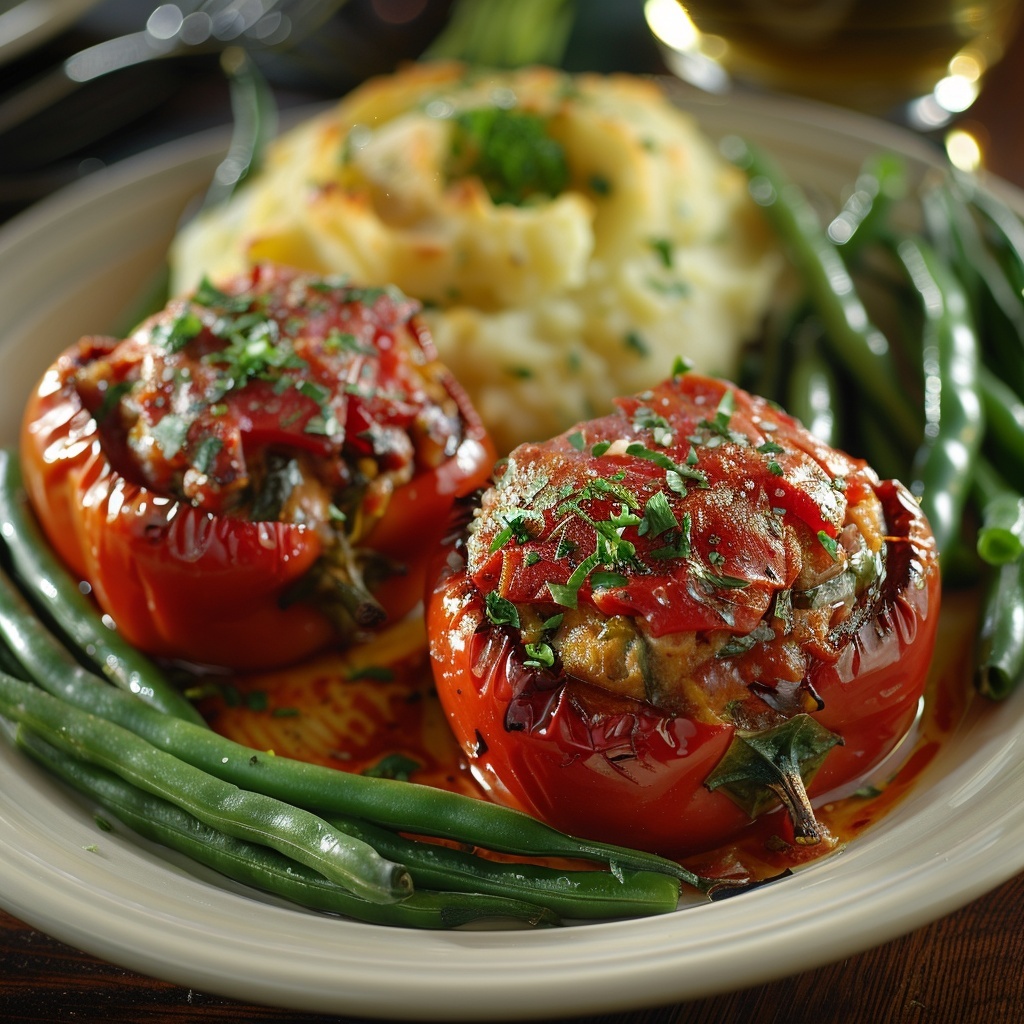
Last Tuesday, I stood in my kitchen staring at six gorgeous bell peppers from the farmers market, wondering what magic I could create with them. My teenage son walked in and said, “Mom, not those stuffed peppers again!” But here’s the funny thing—he ate three of them that night and asked if there were leftovers for lunch. That’s the power of a really good stuffed pepper recipe, folks. It sneaks up on you and becomes a family favorite before you even realize it. These colorful vegetable cups are like edible bowls of comfort that make you feel like a culinary genius without breaking a sweat.
A Dish That Brings Families Together
Stuffed bell peppers have been gracing dinner tables for generations, and there’s a good reason they’ve stuck around. This recipe transforms simple ingredients into something that looks fancy enough for company but feels cozy enough for a weeknight meal. I first fell in love with this dish at my neighbor’s potluck five years ago, and I’ve been perfecting my version ever since. The beauty of stuffed peppers is that they’re forgiving, adaptable, and honestly pretty hard to mess up once you know the basics.
What makes this recipe special is how it brings everyone to the table with anticipation. The peppers emerge from the oven bubbling with melted cheese, their vibrant colors brightened by the heat, and the aroma filling your kitchen with promises of deliciousness. Whether you’re feeding picky eaters or adventurous foodies, these peppers deliver satisfaction in every bite.
The Story Behind Stuffed Bell Peppers
Stuffed peppers have roots that stretch across multiple cultures and continents. Eastern European countries claim versions with cabbage and rice, while Mediterranean regions celebrate their own variations with lamb and herbs. The American version, particularly the southern stuffed bell peppers, evolved into the comfort food classic we know today, usually featuring ground beef, rice, and tomato sauce.
My grandmother used to make her version during summer when bell peppers were cheap and plentiful. She’d spend Sunday afternoons stuffing dozens of them, freezing half for those cold winter nights when fresh vegetables cost a fortune. She always said stuffed peppers were “depression food done right” because they stretched a small amount of meat into a full meal that fed the whole family.
The modern versions have exploded with creativity. Now we have stuffed bell peppers vegetarian options, stuffed bell peppers keto adaptations, and even stuffed bell peppers without rice for those watching their carbs. The classic concept remains the same, but the fillings have gotten wonderfully diverse. Some folks swear by the stuffed bell peppers betty crocker method, while others have developed their own family secrets passed down through generations.
Why This Stuffed Bell Peppers Recipe Will Win Your Heart
This recipe has become my go-to for several reasons, and I’m confident it’ll become yours too. First, it’s a complete meal in one colorful package. You get your protein, vegetables, and grains all in one shot. My kids call them “pepper boats,” which makes them way more willing to eat their vegetables without the usual dinnertime negotiations.
The best stuffed bell peppers hit that sweet spot between healthy and indulgent. You’re eating a whole vegetable as your main dish, but it’s filled with savory goodness that satisfies even the heartiest appetites. I’ve served this to my carb-counting friends and my meat-loving uncle, and everyone leaves happy. The versatility is unmatched.
Another reason I adore this recipe is the make-ahead factor. You can prep these beauties in the morning, stick them in the fridge, and pop them in the oven when you get home from work. On chaotic weeknights when everyone has different schedules, I can keep these warm in the oven, and people can grab one whenever they stumble through the door. Game changer for busy families.
Plus, there’s something deeply satisfying about serving a dish that looks this impressive. When you place a platter of colorful stuffed peppers on the table, people think you’ve been slaving away for hours. Little do they know you threw everything together during your lunch break while catching up on your favorite podcast.
Perfect Occasions for Stuffed Bell Peppers
These peppers shine at potlucks and family gatherings because they’re easy to transport and serve. I’ve brought them to church suppers, neighborhood block parties, and football watch parties. They hold up well, look beautiful on a buffet table, and people can easily grab one with a pair of tongs.
Weeknight dinners become less stressful when you have this recipe in your rotation. The healthy stuffed bell peppers version works perfectly for meal prep Sundays. Make a big batch, and you’ve got lunches sorted for half the week. My husband takes them to work, and his coworkers are always jealous of his “fancy” lunch.
I also love making these for date nights at home. They’re romantic without being fussy, and you can customize each pepper to suit different tastes. My partner prefers the spicy version while I go for the milder filling. We light some candles, open a bottle of wine, and suddenly our kitchen table feels like a cozy bistro.
Holiday gatherings benefit from having a stuffed pepper option too. When you’ve got vegetarian cousins, keto aunts, and traditional meat-and-potatoes uncles all coming to dinner, you can make several versions of stuffed peppers to keep everyone happy. They’re the ultimate crowd-pleaser.
Ingredients for the Best Stuffed Bell Peppers
Here’s what you’ll need to create these delicious stuffed beauties. I’ve listed the classic version here, but don’t worry—we’ll talk about substitutions next.
- 6 large bell peppers (any color, though I love using a mix for visual appeal)
- 1 pound ground beef (80/20 blend works great)
- 1 cup cooked white or brown rice
- 1 medium yellow onion, finely diced
- 3 cloves garlic, minced
- 1 can (15 oz) tomato sauce, divided
- 1 can (14.5 oz) diced tomatoes, drained
- 1½ cups shredded mozzarella cheese, divided
- 2 tablespoons olive oil
- 1 teaspoon Italian seasoning
- 1 teaspoon paprika
- ½ teaspoon salt
- ½ teaspoon black pepper
- ¼ teaspoon red pepper flakes (optional, for heat)
- Fresh parsley for garnish
Smart Substitution Options for Every Diet
The beauty of this recipe lies in its flexibility. Here are substitutions that work wonderfully depending on your dietary needs or what’s hiding in your pantry.
For the protein, swap ground beef with ground turkey for a leaner option. The stuffed bell peppers with ground turkey version is just as delicious and cuts down on fat and calories. Ground chicken, Italian sausage, or ground lamb all work beautifully too. My stuffed bell peppers with chicken version uses rotisserie chicken leftovers, which saves even more time.
Rice alternatives abound for those doing low-carb or keto diets. Cauliflower rice makes excellent stuffed bell peppers keto friendly. Quinoa adds protein and a nutty flavor. For stuffed bell peppers without rice, try chopped mushrooms, extra vegetables, or even crumbled cornbread for a southern twist.
Cheese lovers can experiment with cheddar, pepper jack, or Monterey Jack instead of mozzarella. For dairy-free versions, nutritional yeast provides a cheesy flavor without actual cheese. I’ve also made successful batches using vegan cheese alternatives when my lactose-intolerant friend comes for dinner.
The tomato sauce can be replaced with marinara, salsa, or even enchilada sauce for a Mexican-inspired twist. Some folks prefer cream-based sauces for a richer flavor profile. During summer when fresh tomatoes overflow my garden, I make my own quick sauce by blending roasted tomatoes with basil and garlic.
For stuffed bell peppers vegetarian versions, replace the meat with black beans, lentils, or a mix of chopped vegetables like zucchini, mushrooms, and eggplant. I’ve made fantastic vegetarian versions with chickpeas and spinach that even my carnivore friends devoured.
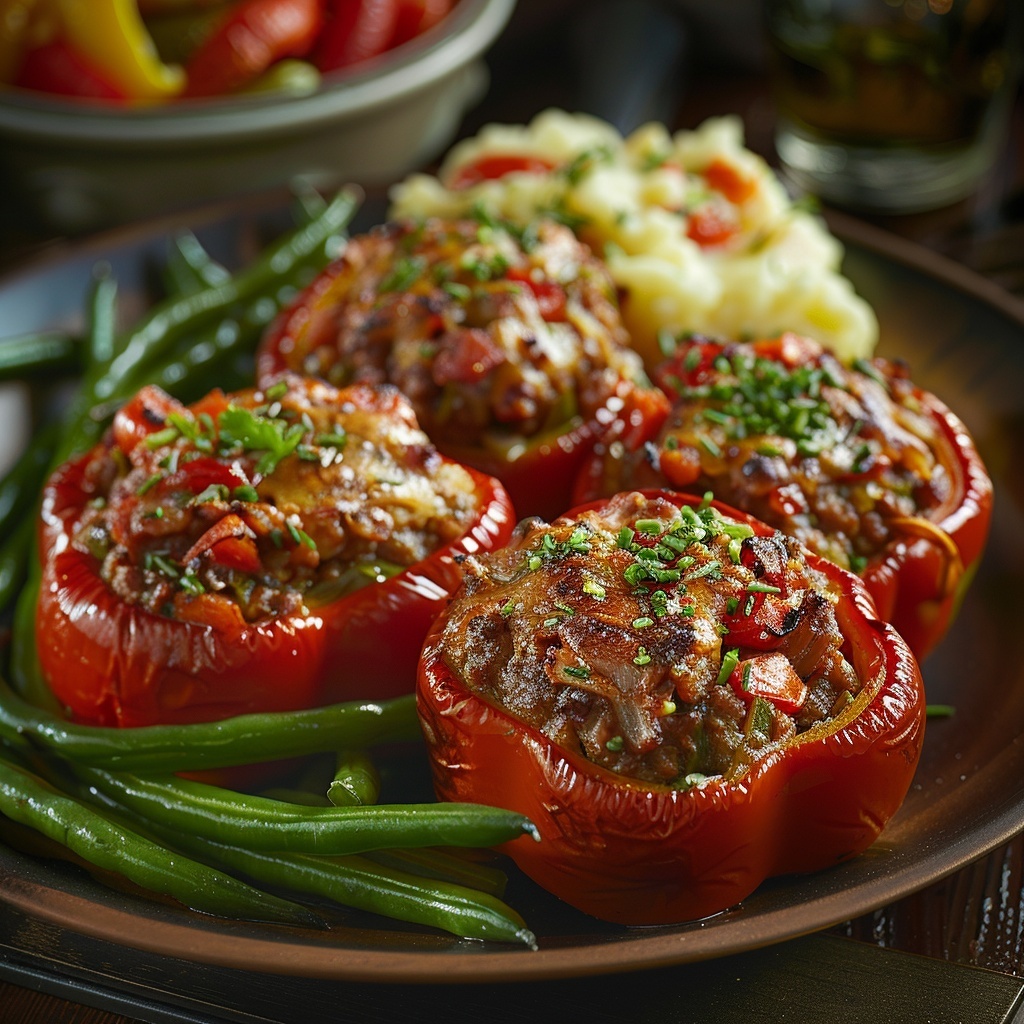
How to Make Stuffed Bell Peppers Step by Step
Step 1: Prepare Your Bell Peppers
Start by preheating your oven to 375°F. This temperature gives you perfectly tender peppers with a slight bite, not mushy. Wash your bell peppers thoroughly under cold water, then grab a sharp knife and cut off the tops about half an inch down from the stem. I save these tops sometimes and dice them up to add to the filling—waste not, want not! Carefully remove all the seeds and white membranes from inside. This part is surprisingly satisfying, almost therapeutic.
If your peppers won’t stand upright, slice a tiny bit off the bottom to create a flat base, but be careful not to cut through and create a hole. Stand them in a 9×13 inch baking dish. At this stage, some people wonder about pre-cooking, and that’s a valid question. The peppers will soften beautifully during the baking process, so you don’t need to blanch them first unless you prefer them really soft. I like a little structure to my peppers, so I skip the pre-cooking step entirely.
Pro tip: Rub the outside of each pepper with a tiny bit of olive oil before stuffing. This gives them a beautiful glossy finish and helps them caramelize slightly in the oven, adding extra flavor.
Step 2: Cook the Meat and Aromatics
Heat the olive oil in a large skillet over medium-high heat. Once it shimmers, add your diced onion and let it cook for about 3-4 minutes until it turns translucent and starts to smell amazing. My kitchen always smells like comfort food heaven at this stage. Add the minced garlic and cook for another minute, stirring constantly so it doesn’t burn. Burned garlic tastes bitter and will ruin your whole dish, so keep your eyes on it.
Add the ground beef, breaking it up with a wooden spoon or spatula as it cooks. I like to really break it down into small crumbles because nobody wants to bite into a giant chunk of meat in their pepper. Cook until the meat is completely browned, which takes about 6-8 minutes. You’ll see it change from pink to that gorgeous brown color, and the fat will render out nicely. If there’s excessive grease in the pan, drain most of it off, leaving just a tablespoon or so for flavor.
Pro tip: Season the meat while it’s browning rather than waiting until later. This helps the flavors penetrate the meat better. I add half my salt and pepper at this stage.
Step 3: Build Your Filling
With your meat cooked and aromatic, it’s time to add the remaining ingredients that transform this from plain ground beef to something special. Stir in your cooked rice, mixing it thoroughly with the meat mixture. The rice should get coated with all those savory juices from the beef. Add the drained diced tomatoes, half of your tomato sauce (save the rest for later), and 1 cup of the shredded cheese. Save that remaining half cup of cheese for topping.
Sprinkle in the Italian seasoning, paprika, the remaining salt and pepper, and red pepper flakes if you like a little kick. My daughter can’t handle spice, so I often make half the batch without the pepper flakes. Stir everything together until it’s completely combined and looking deliciously unified. The mixture should be moist but not soupy. If it seems dry, add a splash more tomato sauce. Taste it at this stage and adjust the seasonings. This is your chance to make it perfect.
Pro tip: Let the filling cool for just a couple of minutes before stuffing the peppers. This makes it easier to handle and prevents the cheese from completely melting before the peppers even go in the oven.
Step 4: Stuff Those Peppers
Now comes the fun part that my kids always want to help with. Grab a large spoon and start filling each pepper generously. Don’t be shy here—really pack that filling in. I use the back of the spoon to press it down gently, making room for more. Fill them right to the top, creating a slight mound. The filling will settle a bit as it cooks, so overstuffing is actually encouraged.
Once all six peppers are standing proud and stuffed in your baking dish, pour the remaining tomato sauce around the base of the peppers. This creates a flavorful sauce that keeps everything moist and adds extra flavor. The stuffed bell peppers with tomato sauce approach is classic for good reason—that sauce gets slightly caramelized on the edges and becomes absolutely divine. Some of it will bubble up around the peppers as they cook, creating these delicious crispy bits.
Pro tip: If you have extra filling, don’t throw it away. Spread it in a small baking dish, top with cheese, and bake it alongside the peppers. My family fights over this “bonus” dish.
Step 5: Bake to Perfection
Cover your baking dish tightly with aluminum foil. This is important because it traps steam, which helps cook the peppers through without drying out the filling. Slide the dish into your preheated oven and bake for 35 minutes. Set a timer so you don’t forget about them while you’re cleaning up the kitchen or helping with homework.
After 35 minutes, carefully remove the dish from the oven and take off the foil. Watch out for that steam—it’s hot enough to burn. Sprinkle the remaining half cup of cheese over the tops of each pepper. I like to be generous here because who doesn’t love a cheesy, golden top? Return the dish to the oven, uncovered this time, and bake for another 10-15 minutes. You’re looking for the cheese to melt completely and turn golden brown in spots. The peppers should be tender when pierced with a fork but still holding their shape.
Pro tip: If you want extra crispy cheese on top, turn on your broiler for the last 2-3 minutes of cooking. Watch it carefully though—the line between golden brown and burnt happens fast under a broiler.
Step 6: Rest and Serve
Once your peppers emerge from the oven looking gorgeous and smelling incredible, resist the urge to dive in immediately. Let them rest for about 5 minutes. This allows the filling to settle and makes them easier to serve without everything falling apart. During this time, the flavors meld together beautifully.
While they’re resting, chop some fresh parsley for garnish. The bright green against the colorful peppers and melted cheese makes the whole dish look restaurant-worthy. Use a large spatula or tongs to transfer each pepper to individual plates. Spoon some of that delicious tomato sauce from the bottom of the pan over each pepper. The sauce will have concentrated and become slightly thicker during baking, almost like a light gravy.
Pro tip: Serve these with a simple side salad and crusty bread for soaking up that amazing sauce. A dollop of sour cream on top adds a nice tangy contrast to the rich filling.
Timing Your Stuffed Bell Peppers to Perfection
Understanding the timing for this recipe helps you plan your meal without stress. Here’s the complete breakdown of how long each stage takes.
Prep time: 20 minutes. This includes washing and prepping the peppers, dicing the onion, mincing garlic, and gathering your ingredients. If you’re an efficient chopper, you might shave off a few minutes. If you’re chatting with family or sipping wine while cooking like I usually am, it might take 25 minutes.
Cooking the filling: 15 minutes. Browning the meat and sautéing the aromatics doesn’t take long, especially if you use a large skillet that gives everything room to cook evenly.
Assembly time: 10 minutes. Stuffing the peppers goes quickly once you get into a rhythm. Kids can help with this part, which makes it take slightly longer but way more fun.
Baking time: 45-50 minutes total. This includes 35 minutes covered and 10-15 minutes uncovered for that beautiful cheese topping. Your oven might vary slightly, so check for tender peppers and bubbly cheese.
Resting time: 5 minutes. Don’t skip this step even though it’s tempting. It makes serving so much easier.
Total time: About 1 hour and 30 minutes from start to finish. For a meal that feeds six people and provides leftovers, that’s pretty reasonable. Most of the time is hands-off baking time, so you can do other things.
My Secret for the Best Stuffed Bell Peppers
Here’s something I discovered by accident that transformed my stuffed peppers from good to absolutely incredible. Add a tablespoon of Worcestershire sauce to your meat mixture. I know, I know—it’s not in the traditional recipe, but trust me on this one. The Worcestershire adds this savory, slightly tangy depth that makes people ask what your secret ingredient is.
I stumbled upon this trick when I was making the filling and thought it tasted a bit flat. I grabbed the Worcestershire from my pantry on a whim, and it was like magic. That umami-rich sauce brings out the meatiness of the beef and plays beautifully with the tomatoes. Now I add it every single time, and my stuffed peppers have achieved legendary status in my friend group. People specifically request them for gatherings.
A Fun Fact About Bell Peppers
Here’s something that blew my mind when I learned it: those different colored bell peppers you see at the store? They’re often the same type of pepper at different stages of ripeness. Green peppers are harvested early, while red, yellow, and orange ones are allowed to ripen longer on the plant. That’s why green peppers taste more bitter and the others taste sweeter.
The ripening process also affects the nutrition profile. Red bell peppers contain way more vitamin C than green ones—almost three times as much. They also have significantly more beta-carotene, which gives them that gorgeous color. So when you’re making healthy stuffed bell peppers, using red, yellow, or orange peppers actually boosts the nutritional value.
Bell peppers belong to the nightshade family, which also includes tomatoes, eggplants, and potatoes. Despite being called “peppers,” they’re technically fruits, not vegetables, because they contain seeds and develop from the flower of the plant. But let’s be honest—nobody’s putting bell peppers in their fruit salad anytime soon.
Equipment You’ll Need for Stuffed Bell Peppers
The beauty of this recipe is that it doesn’t require any fancy equipment. You probably have everything you need already. Here’s what you’ll use:
- 9×13 inch baking dish: This is the perfect size for six large peppers with a little room around them. Glass or ceramic works great because you can see the beautiful sauce bubbling around the peppers.
- Large skillet: A 12-inch skillet gives you plenty of room to brown the meat and cook the filling without crowding. Crowded pans mean steaming instead of browning, which affects flavor.
- Sharp chef’s knife: You’ll use this for cutting the pepper tops, dicing onions, and mincing garlic. A dull knife makes prep work frustrating and dangerous.
- Cutting board: A large, stable cutting board makes prep work safer and more efficient.
- Wooden spoon or spatula: Perfect for breaking up the meat as it cooks and stirring the filling together.
- Large spoon: You’ll use this for stuffing the peppers. A regular tablespoon works, but a larger serving spoon makes the job faster.
- Aluminum foil: Essential for covering the dish during the first part of baking to trap steam and cook the peppers through.
- Measuring cups and spoons: For portioning out rice, cheese, and seasonings accurately.
- Can opener: Unless you buy tomato sauce and diced tomatoes with pull-tabs, you’ll need this basic tool.
If you want to get fancy, a garlic press speeds up the garlic prep, and a cheese grater lets you shred your own cheese, which melts better than pre-shredded. But these are nice-to-haves, not must-haves.
Storing Your Stuffed Bell Peppers
One of the best things about stuffed peppers is how well they store, making them perfect for meal prep or saving leftovers. Proper storage keeps them fresh and delicious for days, and they actually taste even better the next day after the flavors have had time to meld together.
For short-term storage, let the peppers cool completely to room temperature before putting them away. This usually takes about 30-45 minutes. Place them in an airtight container or cover the baking dish tightly with plastic wrap or foil. They’ll keep in the refrigerator for up to 4 days. I often make these on Sunday and eat them throughout the week for easy lunches. Just grab one from the fridge, microwave it for 2-3 minutes until heated through, and you’ve got a complete meal ready in minutes. The peppers hold up remarkably well and don’t get soggy or fall apart.
Freezing stuffed peppers is absolutely possible and gives you a stash of ready-made meals for those nights when cooking feels impossible. You can freeze them before or after baking. For unbaked peppers, stuff them as directed, wrap each one individually in plastic wrap, then place them all in a freezer-safe bag or container. They’ll keep for up to 3 months. When you’re ready to eat them, thaw in the refrigerator overnight, then bake as directed, adding an extra 10 minutes to the covered baking time. For already-baked peppers, let them cool completely, wrap individually, and freeze the same way. Reheat from frozen at 350°F for about 45 minutes covered, or thaw first and bake for 20-25 minutes.
The tomato sauce at the bottom of the pan stores beautifully too. Transfer it to a small container and keep it with the peppers. When reheating, spoon some of that sauce over the pepper to keep it moist and flavorful. I’ve found that the texture of the peppers changes slightly after freezing—they become a bit softer—but the flavor remains fantastic. If you’re particular about texture, I recommend freezing the filling separately and stuffing fresh peppers when you’re ready to cook. This gives you the convenience of prepared filling with the texture of freshly made peppers.
Tips and Advice for Perfect Stuffed Bell Peppers
After making hundreds of batches of stuffed peppers over the years, I’ve picked up some tricks that make the process smoother and the results even better. These tips will help you avoid common pitfalls and create restaurant-quality peppers at home.
Choose peppers that are similar in size so they cook evenly. Nothing’s more frustrating than having some peppers perfectly done while others are still crunchy. Look for peppers that can stand upright on their own—this makes your life easier during stuffing and baking. Different colors aren’t just pretty; they offer slightly different flavors. Red and yellow are sweeter, orange is mild, and green has a more vegetal, slightly bitter taste.
Don’t overcook your rice before adding it to the filling. It will continue cooking in the oven, so slightly underdone rice works better. I usually cook my rice to about 80% doneness. If you use fully cooked rice, you risk ending up with mushy filling. Leftover rice from Chinese takeout works perfectly, actually.
Season boldly. The pepper itself is fairly neutral, so your filling needs to be well-seasoned to shine through. Taste your filling before stuffing the peppers and adjust the salt, pepper, and spices. Remember that cheese adds saltiness too, so factor that in. I always err on the side of slightly over-seasoning because flavors mellow during baking.
If your peppers keep tipping over in the baking dish, nestle them close together so they support each other. You can also use a muffin tin to hold each pepper upright—just place one pepper in every other cup. This trick works great if you’re making fewer than six peppers.
For extra flavor in your tomato sauce base, add a splash of red wine, a pinch of sugar to balance acidity, or some fresh herbs like basil or oregano. The sauce that pools at the bottom becomes incredibly flavorful and shouldn’t be wasted. I sometimes add extra sauce to the pan specifically so I have more to spoon over the peppers when serving.
Make a double batch when you’re already doing the work. Stuffed peppers freeze beautifully, and your future self will thank you for having a homemade meal ready to go on a busy night. The effort to make twelve peppers versus six is minimal.
Room temperature ingredients mix together better than cold ones. If you’re using refrigerated cooked rice or pre-shredded cheese, let them sit out for 15 minutes before mixing into your filling. Everything combines more evenly.
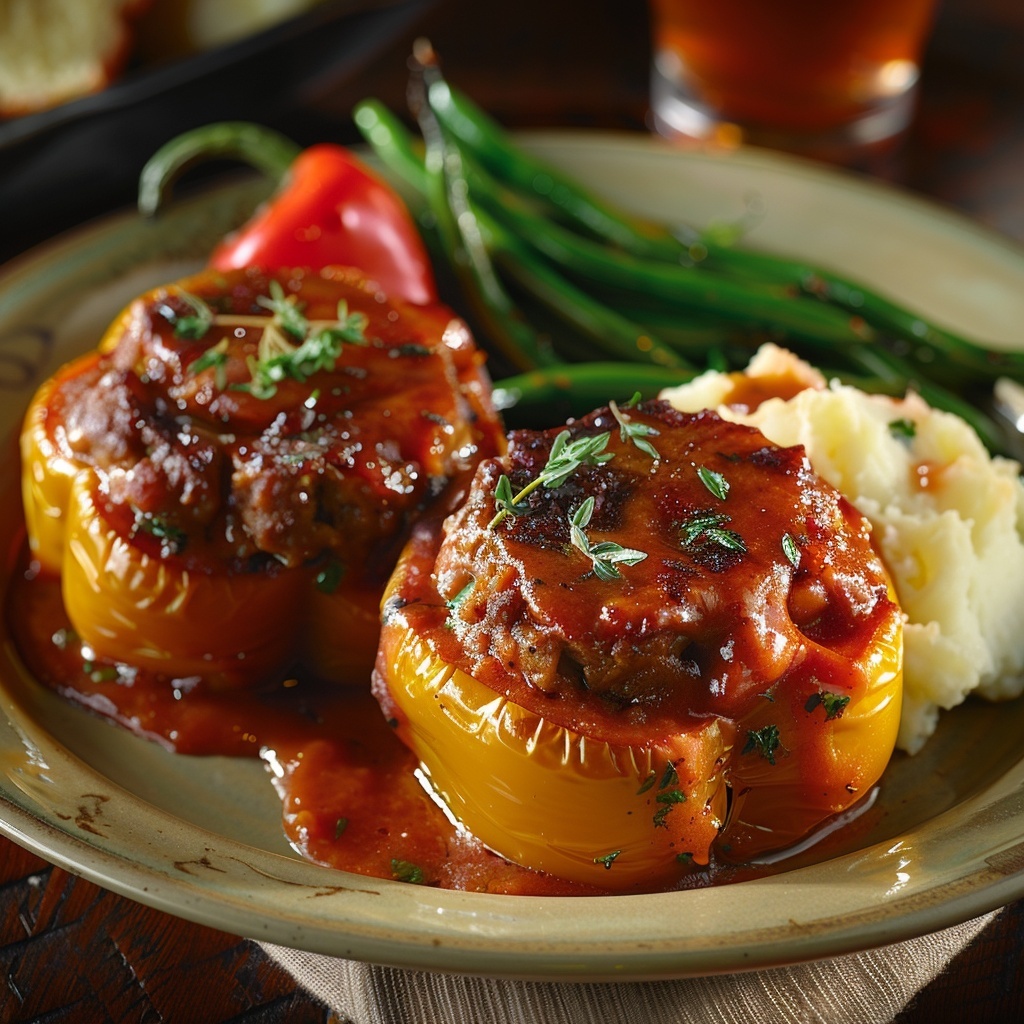
Presentation Ideas for Stuffed Bell Peppers
These peppers are naturally beautiful, but a little extra attention to presentation can make them truly stunning. Here are some ideas for serving them in style.
- Individual plates with sauce art: Place each pepper slightly off-center on a white plate. Drizzle the tomato sauce around it in an artistic pattern. Garnish with fresh basil leaves and a light sprinkle of parmesan cheese.
- Rustic family-style platter: Arrange all the peppers on a large wooden cutting board or rustic platter. Scatter fresh herbs around them and serve with crusty bread on the side for a casual, inviting presentation.
- Ring of greens: Place each pepper on a bed of fresh arugula or mixed greens. The peppery greens complement the rich filling beautifully, and the color contrast is stunning.
- Topped with fresh garnishes: After plating, top each pepper with a dollop of sour cream, a sprinkle of fresh cilantro, diced avocado, or crispy fried onions for added texture and flavor.
- In the baking dish: Sometimes simple is best. Serve them straight from a beautiful baking dish with some of that sauce spooned over top and fresh parsley scattered across everything.
- Sliced presentation: For a more elegant dinner party, slice the stuffed peppers in half lengthwise after baking. Arrange the halves cut-side up on a platter to show off the beautiful layered filling inside.
Healthier Variations of Stuffed Bell Peppers
The versatility of stuffed peppers means you can adapt them to fit almost any dietary preference or health goal. Here are six variations I’ve tested and loved, each offering something special.
Keto-Friendly Stuffed Bell Peppers
For those following a ketogenic diet, stuffed bell peppers keto style work beautifully. Replace the rice entirely with riced cauliflower—you won’t miss the carbs at all. Use full-fat ground beef (80/20) for its fat content, and load up on cheese. I use a combination of cream cheese mixed into the filling and sharp cheddar on top. Add extra fat by incorporating some crumbled bacon into the meat mixture. The result is rich, satisfying, and keeps you in ketosis.
To boost the fat content further, stir in a couple tablespoons of heavy cream to the filling. Use a tomato sauce with no added sugar, or make your own by blending fresh tomatoes with herbs. Each pepper comes out to about 6-8 net carbs depending on the size of your pepper and how much filling you use. My keto friends absolutely devour these and don’t feel like they’re missing out on anything.
Mediterranean Quinoa Stuffed Peppers
This vegetarian version brings bright Mediterranean flavors to your table. Replace the ground meat with cooked quinoa as the protein base. Add crumbled feta cheese, kalamata olives, sun-dried tomatoes, and fresh spinach to the filling. Season with oregano, lemon zest, and a touch of cinnamon for that authentic Mediterranean taste. The quinoa provides complete protein while keeping everything light and fresh.
I often add chickpeas to this version for extra protein and texture. The combination of quinoa and chickpeas makes this surprisingly filling despite being meat-free. Top with a mixture of feta and mozzarella before the final baking stage. Finish with fresh dill and a squeeze of lemon juice right before serving. These are perfect for summer when you want something satisfying but not heavy.
Mexican-Inspired Stuffed Peppers
Transform your stuffed peppers with bold Mexican flavors. Use black beans, corn, and rice for the filling base. Season with cumin, chili powder, and smoked paprika. Mix in some salsa verde or diced green chilies for moisture and heat. Replace the Italian cheese blend with pepper jack or a Mexican cheese blend. The tomato sauce gets swapped out for enchilada sauce or more salsa.
Top these beauties with crushed tortilla chips mixed with cheese in the final 10 minutes of baking for a satisfying crunch. Serve with sour cream, fresh cilantro, diced avocado, and lime wedges on the side. Sometimes I add ground chorizo mixed with lean ground beef for extra spice. These have become my go-to when we’re craving Mexican food but want something a bit lighter than enchiladas or burritos.
Thanksgiving Leftover Stuffed Peppers
Here’s a creative way to use up Thanksgiving leftovers that my family actually gets excited about. Dice up leftover turkey and mix it with leftover stuffing, some dried cranberries, and a bit of cream of mushroom soup to bind everything together. Add some thawed frozen green beans for color and nutrition. The combination sounds weird but tastes absolutely incredible.
Top with leftover mashed potatoes instead of cheese—spread them over the top like you would with shepherd’s pie. The mashed potatoes get slightly crispy and golden in the oven. Finish with a sprinkle of fried onions or panko breadcrumbs for texture. These turn day-after-Thanksgiving meal fatigue into something people actually look forward to. I’ve started making extra stuffing just so I can make these peppers the following week.
Asian-Inspired Stuffed Peppers
Take your taste buds on a trip to Asia with this creative variation. Use ground pork or chicken mixed with cooked jasmine rice. Add grated fresh ginger, minced garlic, diced water chestnuts for crunch, and sliced scallions. Season with soy sauce, sesame oil, and a touch of hoisin sauce. Mix in some shredded cabbage or bok choy for vegetables.
Instead of tomato sauce, use a mixture of chicken broth and soy sauce in the bottom of the pan. Skip the cheese entirely or use just a tiny bit of mozzarella if you can’t imagine them without it. After baking, drizzle with sriracha mayo and garnish with sesame seeds and more sliced scallions. The filling tastes similar to potstickers or egg rolls but in a healthier package. These are especially fun for kids who love Asian takeout.
Breakfast Stuffed Peppers
Who says stuffed peppers are only for dinner? This breakfast version has become my secret weapon for brunch gatherings. Fill the peppers with scrambled eggs, crumbled breakfast sausage, sautéed mushrooms and onions, and diced potatoes. Add some spinach for color and nutrition. Mix in shredded cheddar cheese throughout the filling.
Bake at the same temperature but for slightly less time since eggs cook faster than rice. Top with more cheese in the final minutes, then finish with salsa, sour cream, and chopped fresh chives. These reheat beautifully throughout the week for quick breakfast meal prep. I make a batch on Sunday and have grab-and-go breakfasts ready all week. They’re way more interesting than another bowl of oatmeal and keep me satisfied until lunch.
Common Mistakes to Avoid When Making Stuffed Peppers
Mistake 1: Using Peppers That Are Too Small
I see this mistake all the time, especially when peppers are on sale and people grab whatever’s cheapest. Small peppers seem like a cute idea until you realize there’s barely any room for filling. You end up with more pepper than stuffing, which throws off the whole balance of the dish. The pepper flavor overwhelms the filling, and each serving feels skimpy and unsatisfying.
Look for large, blocky bell peppers that can hold at least three-quarters to one cup of filling each. They should feel heavy for their size and have thick walls. Yes, large peppers cost more, but you need fewer of them, and the eating experience is so much better. If you can only find small peppers, plan on serving two per person and adjust your filling amount accordingly.
Mistake 2: Overfilling the Peppers
I know I said to be generous with filling, but there’s a limit. Overstuffed peppers look impressive until the filling starts overflowing during baking, creating a mess in your pan and potentially burning. The pepper walls can split under pressure, especially if you pack the filling in too tightly. Plus, overfilled peppers are hard to eat gracefully without the filling spilling out onto your plate and lap.
Fill the peppers to just below the rim, creating a slight dome on top. The filling should be snug but not compressed. Leave about a quarter inch of space at the very top so the cheese has somewhere to melt without overflowing. If you have extra filling, bake it separately in a small dish rather than trying to cram it all into the peppers. Your dinner guests will thank you for peppers that actually stay together when they cut into them.
Mistake 3: Not Adding Enough Liquid
Dry stuffed peppers are sad stuffed peppers. I learned this the hard way when I tried to cut calories by reducing the tomato sauce. The peppers came out looking shriveled, the filling was dry and crumbly, and the whole dish was just disappointing. The liquid in and around the peppers creates steam during baking, which cooks everything evenly and keeps it moist. Without enough moisture, you end up with tough peppers and chalky filling.
Always pour sauce or broth around the base of the peppers before baking, using at least one cup of liquid. The liquid should come about a quarter to halfway up the sides of the peppers. If you’re watching calories, use low-sodium chicken broth instead of cutting liquid entirely. You can also add a few tablespoons of water or broth directly to the filling mixture before stuffing the peppers. The result is tender, juicy peppers that practically melt in your mouth.
Mistake 4: Skipping the Covered Baking Step
Impatient cooks sometimes skip covering the peppers with foil, thinking it’s an unnecessary step that just dirties another dish. But baking the peppers uncovered the entire time leads to dried-out tops, unevenly cooked peppers, and filling that forms a hard crust. The foil traps steam, which is essential for softening the peppers and cooking everything through gently. Without it, the exposed filling dries out while the bottom of the pepper is still crunchy.
Always cover tightly with foil for the first 35 minutes of baking. Make sure the foil is sealed around the edges of the dish to trap steam effectively. Only remove the foil for the final 10-15 minutes to brown the cheese and give the peppers a beautiful finish. This two-stage baking process is the secret to peppers that are tender but not mushy, with filling that’s moist but not soupy.
Mistake 5: Using Cold Ingredients
This seems like a minor detail, but it makes a real difference. When you mix cold cooked rice and cold cheese directly from the fridge into your hot meat mixture, the temperature drops dramatically. This means everything takes longer to heat through in the oven, potentially leaving you with cold centers even when the outside looks done. Cold ingredients also don’t combine as smoothly, creating an inconsistent filling.
Let your cooked rice sit at room temperature for 15-20 minutes before mixing it in, or warm it slightly in the microwave. If using pre-shredded cheese, take it out of the fridge while you’re prepping everything else. When all your filling ingredients are at similar temperatures, they blend together beautifully and heat evenly during baking. This is one of those small changes that noticeably improves the final result without requiring any extra effort.
Frequently Asked Questions About Stuffed Bell Peppers
Should I cook my bell peppers before stuffing them?
This is one of the most common questions I get about stuffed peppers, and the answer is: it depends on your preference. You don’t have to pre-cook them if you’re baking them covered for 35-45 minutes, as this gives them plenty of time to soften. I rarely blanch my peppers because I like them to retain some structural integrity and a slight crunch. Pre-cooking is helpful if you prefer very soft peppers or if you’re short on oven time and need them to cook faster. To blanch, simply boil whole peppers for 3-4 minutes, then drain and cool before stuffing. This method also helps reduce bitterness in green peppers.
What goes inside stuffed bell peppers?
The classic American stuffed bell pepper contains ground beef, cooked rice, onions, garlic, tomato sauce, and cheese. However, the possibilities are nearly endless. You can use any ground meat including turkey, chicken, pork, or lamb. The starch component can be rice, quinoa, couscous, or even bread cubes. Add vegetables like corn, zucchini, mushrooms, or spinach. Beans work wonderfully for protein in vegetarian versions. The binding liquid might be tomato sauce, cream soup, broth, or salsa. Cheese is optional but highly recommended. The key is balancing protein, starch, vegetables, liquid, and seasonings in proportions that fill but don’t overflow your peppers.
What fillings go well in bell peppers?
Beyond the traditional beef and rice, some of my favorite combinations include Italian sausage with orzo and mozzarella, ground turkey with wild rice and cranberries, black beans with corn and pepper jack cheese, and ground lamb with couscous and feta. Mediterranean fillings with quinoa, chickpeas, and sun-dried tomatoes are delicious. Asian-inspired fillings using ground pork, ginger, and water chestnuts bring exciting flavors. Taco-seasoned beef with Mexican rice and salsa creates a Tex-Mex version. Even leftover pulled pork mixed with coleslaw makes an incredible stuffed pepper. The pepper is really just a vessel, so let your favorite flavor combinations guide you.
What are some common mistakes when making stuffed peppers?
The biggest mistakes include not adding enough liquid to the filling or pan, which results in dry peppers. Using fully cooked rice that becomes mushy during baking is another frequent error. Underseasoning the filling is common because people forget the pepper itself is bland. Baking the peppers uncovered the entire time dries them out. Choosing peppers that can’t stand upright creates frustration during assembly and baking. Not letting the cooked peppers rest before serving means the filling falls out everywhere. Finally, overcooking until the peppers completely collapse removes all textural interest. Each of these mistakes is easily avoided once you’re aware of them.
Can I make stuffed bell peppers ahead of time?
Absolutely, and this is one of the best features of this recipe. You can prepare the peppers completely, cover them tightly with plastic wrap or foil, and refrigerate for up to 24 hours before baking. When you’re ready to cook, let them sit at room temperature for 20 minutes, then bake as directed, possibly adding 5-10 minutes to the covered baking time. You can also prepare just the filling ahead and refrigerate it separately, then stuff fresh peppers when you’re ready to cook. Fully cooked peppers reheat beautifully, so making them a day ahead for a dinner party is completely viable. They actually taste better the next day after the flavors have married.
How do I know when stuffed peppers are done?
Perfectly cooked stuffed peppers should be tender when pierced with a fork but still hold their shape without collapsing. The filling should be heated through to 165°F in the center, which you can check with an instant-read thermometer if you’re unsure. The cheese on top should be melted and golden brown in spots. The sauce around the peppers will be bubbling. If you cut into one, the filling should be cohesive and moist, not dry or crumbly. The pepper skin might have slight browning or blistering, which adds flavor. Total baking time is usually 45-50 minutes, but oven temperatures vary, so use visual and textural cues rather than relying solely on time.
Can stuffed bell peppers be frozen?
Yes, stuffed bell peppers freeze exceptionally well, making them perfect for meal prep. You can freeze them before or after baking depending on your preference. For unbaked peppers, stuff them completely, wrap each one individually in plastic wrap, then place them all in a freezer bag. They’ll keep for 3 months. Bake from frozen, adding 15-20 minutes to the covered baking time. For already-baked peppers, let them cool completely, wrap individually, and freeze the same way. Reheat from frozen at 350°F covered for about 45 minutes, or thaw overnight in the fridge and reheat for 20-25 minutes. The texture becomes slightly softer after freezing, but the flavor remains excellent.
What can I serve with stuffed bell peppers?
Since stuffed peppers are a complete meal with protein, vegetables, and starch, you don’t need much on the side. A simple green salad with vinaigrette provides freshness and cuts through the richness. Crusty bread or garlic bread is perfect for soaking up that delicious tomato sauce. Roasted vegetables like zucchini, asparagus, or green beans add color and nutrition. For heartier appetites, serve with a side of pasta tossed with olive oil and herbs. Coleslaw provides a crunchy, tangy contrast. A light soup like tomato or minestrone works well as a starter. Really though, one large stuffed pepper with some of that sauce is satisfying enough for most people.
Are stuffed bell peppers healthy?
Stuffed bell peppers can definitely be a healthy meal option depending on how you prepare them. The peppers themselves are loaded with vitamin C, vitamin A, and antioxidants while being low in calories. Using lean ground turkey or making vegetarian versions reduces fat and calories significantly. Brown rice or quinoa adds fiber and nutrients. Loading up on vegetables in the filling boosts nutrition. The healthy stuffed bell peppers versions I make use minimal cheese, lots of vegetables, and lean proteins. Each pepper typically provides 250-400 calories depending on the filling, with good amounts of protein, fiber, and vitamins. They’re naturally gluten-free and can be adapted for almost any dietary need.
Why are my stuffed peppers watery?
Watery stuffed peppers usually result from too much liquid in the filling or from the peppers releasing their own moisture during cooking. To prevent this, make sure your filling mixture isn’t soupy before stuffing. If you’re using canned tomatoes, drain them well. Vegetables like zucchini and mushrooms release water when cooked, so sauté them first to remove excess moisture before adding to the filling. Don’t add too much sauce to the pan around the peppers. Another cause is fully cooking the rice beforehand instead of slightly undercooking it, so it can absorb moisture during baking. If you end up with watery peppers, simply drain the excess liquid from the pan before serving.
Can I use different colored peppers in the same batch?
Not only can you mix colors, but I actually recommend it for the most beautiful presentation. Using red, yellow, orange, and green peppers together creates a stunning rainbow effect on your dinner table. The different colors also provide slightly different flavors. Red peppers are the sweetest, orange is mild and fruity, yellow is tangy-sweet, and green is more vegetal and slightly bitter. They all cook at the same rate when they’re similar sizes, so there’s no issue with mixing them. The nutritional profiles vary slightly too, with red peppers containing the most vitamin C and antioxidants. A colorful variety makes the dish more visually appealing and gives everyone a choice of their favorite pepper color.
Wrapping Up Your Stuffed Bell Pepper Journey
Stuffed bell peppers have earned their place as a beloved comfort food for good reason. They’re versatile enough to adapt to any dietary need, beautiful enough to serve at dinner parties, and simple enough to become a regular weeknight meal. From the classic southern stuffed bell peppers that remind us of grandma’s kitchen to modern variations like stuffed bell peppers keto and stuffed bell peppers vegetarian, there’s a version for everyone.
I hope this guide has given you the confidence to make these beauties part of your cooking rotation. Whether you choose the traditional stuffed bell peppers with ground turkey, the rich stuffed bell peppers with tomato sauce, or branch out with creative fillings, you’re creating a meal that brings people together. The best stuffed bell peppers are the ones made with love and shared with people who appreciate them.
Remember that cooking is part science and part art. Follow the basics I’ve outlined, but don’t be afraid to make this recipe your own. Add your favorite spices, swap ingredients based on what’s in your pantry, and adjust seasonings to match your family’s tastes. The beauty of stuffed peppers is their forgiving nature and endless adaptability.
Next time you’re standing in the produce section wondering what to make for dinner, grab those colorful bell peppers and give this recipe a try. Your kitchen will smell amazing, your family will be impressed, and you’ll have a new go-to recipe that works for everything from casual Tuesday dinners to special occasions. Happy cooking, and may your peppers always be perfectly stuffed and delicious.
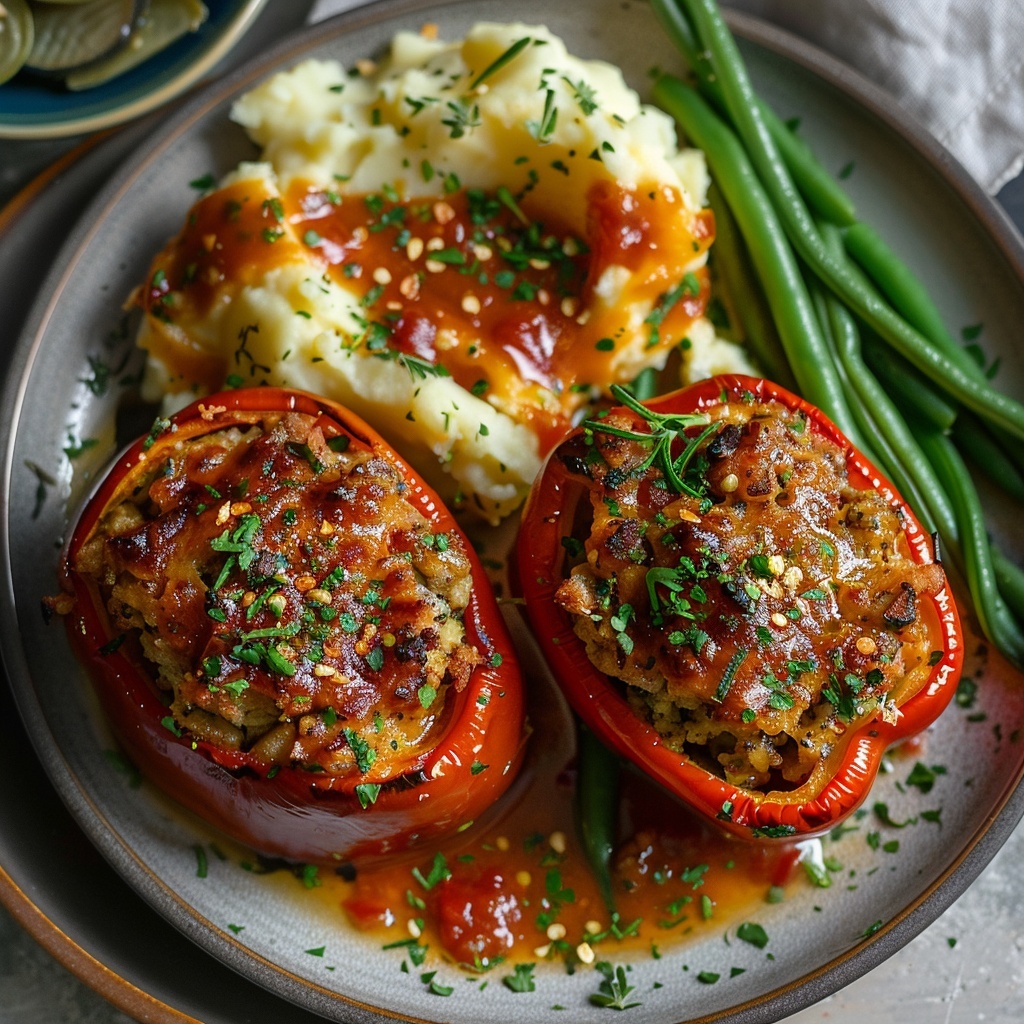
Stuffed Bell Peppers
Ingredients
Equipment
Method
- Preheat your oven to 375°F.
- Wash the bell peppers and cut off the tops, removing seeds and membranes.
- Rub the outside of each pepper with a bit of olive oil.
- Heat olive oil in a large skillet over medium-high heat.
- Cook diced onion until translucent, about 3-4 minutes.
- Add minced garlic and cook for another minute.
- Add ground beef, breaking it up, and cook until browned, about 6-8 minutes.
- Drain excess grease if needed, leaving a tablespoon for flavor.
- Stir in cooked rice, drained diced tomatoes, half of the tomato sauce, and 1 cup of shredded cheese.
- Add Italian seasoning, paprika, salt, pepper, and red pepper flakes (if using), then mix well.
- Let the filling cool for a few minutes before stuffing the peppers.
- Fill each pepper generously with the meat mixture.
- Pour the remaining tomato sauce around the base of the peppers in a baking dish.
- Cover with aluminum foil and bake for 35 minutes.
- Remove foil, sprinkle remaining cheese on top, and bake uncovered for another 10-15 minutes.
- Let the peppers rest for 5 minutes before serving.
- Garnish with fresh parsley and serve with tomato sauce from the baking dish.