
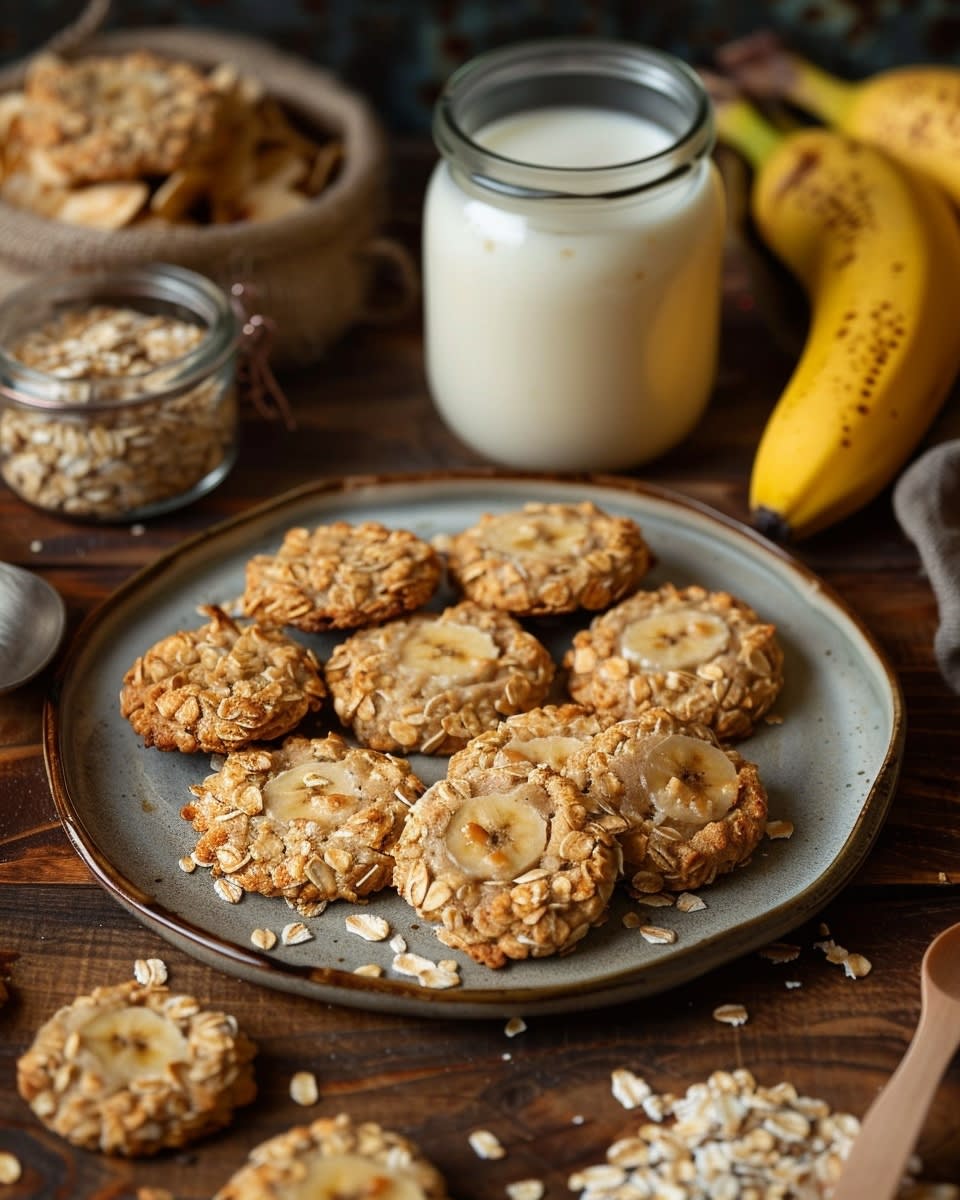
I’ll never forget the morning my toddler decided to “help” me bake. Flour covered every surface, eggs dripped down the cabinets, and I nearly cried looking at the mess. That’s when I discovered the magic of 3 Ingredient Banana Oat Cookies. No complicated steps. No hour-long cleanup. Just three simple ingredients that came together in minutes.
These cookies changed my baking life. They’re incredibly easy to make, surprisingly delicious, and actually good for you. If you’ve ever wanted fresh-baked treats without the stress, this recipe is your answer. You don’t need fancy equipment or a pantry full of exotic ingredients. Just grab some ripe bananas, oats, and one mix-in of your choice.
The best part? These cookies work for breakfast, snacks, or dessert. Your kids won’t even realize they’re eating something healthy. Bananas bring natural sweetness and moisture, while oats provide lasting energy and fiber. It’s a winning combination that doesn’t require measuring cups or complicated techniques.
I’ve made these cookies on my busiest mornings and my laziest weekends. They never disappoint. Whether you’re a baking beginner or just short on time, this recipe fits into any lifestyle. The simple banana cookies taste like you spent hours in the kitchen, but you’ll know the truth.
Why 3 Ingredient Banana Oat Cookies Are Perfect for Busy Bakers
Let’s talk about why these easy banana oat cookies deserve a permanent spot in your recipe collection. Most cookie recipes demand a dozen ingredients and multiple mixing bowls. Not these. You need exactly three things, and chances are you already have them in your kitchen right now.
The convenience factor is unbeatable. I can decide I want cookies and have them baked within 20 minutes. There’s no softening butter for 30 minutes or hunting for baking powder in the back of your pantry. You just mash, mix, and bake. That’s it.
Cleanup is a dream. One bowl. One fork for mashing. One baking sheet. I’ve literally made these cookies during my lunch break and still had time to eat them warm. Compare that to traditional cookie recipes that dirty every dish you own and leave your kitchen looking like a disaster zone.
How do you make 3 ingredient banana oat cookies? The process couldn’t be simpler. You mash ripe bananas until smooth, stir in oats, and add your favorite mix-in like chocolate chips or nuts. Scoop the mixture onto a baking sheet and pop it in the oven. No creaming butter and sugar. No waiting for dough to chill. No complicated steps that make you second-guess your baking skills.
These cookies solve the eternal breakfast problem too. I make a batch on Sunday evening and grab two cookies on my way out the door each morning. They’re filling enough to keep me satisfied until lunch, unlike sugary pastries that leave me hungry an hour later. My kids think they’re getting dessert for breakfast, which makes mornings so much easier.
The healthy banana cookies also work as a pre-workout snack. The natural sugars from bananas give you quick energy, while the oats provide sustained fuel. I eat one about 30 minutes before my morning run, and I never feel weighed down or sluggish.
Working parents especially appreciate this recipe. You can involve young children without worrying about raw eggs or complicated measurements. My five-year-old loves mashing the bananas and stirring the mixture. It’s a safe, fun activity that actually produces something we enjoy eating together.
The ingredient flexibility is another huge advantage. Feeling like chocolate? Toss in some chips. Want something fruity? Add dried cranberries. Need extra protein? Stir in a scoop of peanut butter as your third ingredient. The 3 ingredient oatmeal cookies adapt to whatever you’re craving or whatever you have on hand.
Cost matters too. A bunch of bananas, a container of oats, and one bag of chocolate chips costs less than ten dollars. That gives you multiple batches of cookies. Compare that to buying pre-made snacks at the store, which often contain preservatives and ingredients you can’t even pronounce.
Storage couldn’t be easier either. These cookies keep well in an airtight container for several days. I’ve even frozen batches and pulled out individual cookies as needed. They thaw quickly or can be warmed in the microwave for ten seconds for that fresh-baked taste.
The lack of butter, eggs, and refined sugar makes these cookies naturally friendly for various dietary needs. They’re dairy-free if you skip chocolate chips or use dairy-free ones. They’re egg-free already. With certified gluten-free oats, they work for gluten-sensitive friends. This banana oatmeal cookie recipe accommodates different eating styles without requiring separate batches.
I love that I can feel good about eating these cookies. Traditional desserts often come with a side of guilt, but these taste like a treat while actually nourishing your body. The bananas provide potassium, vitamin B6, and vitamin C. The oats deliver fiber, protein, and important minerals like iron and magnesium.
These simple oatmeal cookies never fail to impress guests either. I’ve served them at brunches and playdates, and people always ask for the recipe. They’re shocked when I tell them there are only three ingredients. Everyone assumes something this good must be complicated.
The texture surprises first-time bakers. Despite the minimal ingredients, these cookies have a pleasant chewiness. They’re not dry or crumbly like you might expect. The bananas provide all the moisture and binding that eggs and butter usually supply in regular cookie recipes.
You can also adjust the sweetness easily. Super ripe bananas with lots of brown spots create sweeter cookies. Slightly less ripe bananas make them more subtly sweet. You control the final taste just by choosing your bananas carefully at the store.
Making banana and oat cookies has become my solution for overripe bananas too. Instead of throwing away brown bananas or always making banana bread, I whip up a quick batch of these cookies. It reduces food waste while creating something my whole family enjoys.
The recipe scales beautifully as well. Need just a few cookies for yourself? Make a small batch. Hosting a crowd? Triple the recipe. The proportions stay simple no matter how much you make, which means less math and less room for error.


Ingredients and Nutritional Benefits
Now that you understand why this recipe works so well, let’s break down what actually goes into these amazing cookies. The ingredient list is refreshingly short, but each component plays a crucial role.
First up, you need ripe bananas. I’m talking about the ones with brown spots that everyone else ignores at the grocery store. Those are your golden ticket. I usually keep two or three on my counter specifically for this recipe. The riper they are, the sweeter and more flavorful your cookies will be. You’ll need about two medium bananas for a standard batch, which gives you roughly one cup of mashed banana.
Next comes rolled oats. Please don’t use instant oatmeal packets or steel-cut oats here. Old-fashioned rolled oats are what you’re after. They provide the perfect texture and hold everything together. I buy the big canister from the store because I go through it so quickly. You’ll need about one and a half cups for a basic batch. Quick oats can work in a pinch, but your cookies might turn out slightly softer.
The third ingredient is where you get creative. I rotate between chocolate chips, chopped walnuts, dried cranberries, shredded coconut, or even a handful of peanut butter. This flexibility means you never get bored with the recipe. My kids vote for chocolate chips every single time, naturally. Mini chocolate chips distribute more evenly throughout the cookies than regular-sized ones, which I learned after a few experimental batches.
What are the health benefits of eating banana oat cookies? I’m glad you asked, because this is where these cookies really shine compared to traditional desserts. Bananas are nutrition powerhouses. They’re loaded with potassium, which helps regulate blood pressure and supports heart health. One medium banana contains about 422 milligrams of potassium, which is roughly 9% of your daily recommended intake.
Bananas also provide vitamin B6, which your body needs for brain development and immune function. The natural sugars in bananas—fructose, glucose, and sucrose—give you quick energy without the crash you get from refined sugar. Plus, bananas contain pectin, a type of fiber that helps with digestion and may even help moderate blood sugar levels after meals.
The oats bring their own impressive nutritional profile. They’re rich in beta-glucan, a special type of soluble fiber that’s been shown to reduce cholesterol levels. I started eating more oats after my doctor mentioned my cholesterol was creeping up, and these cookies made that transition delicious rather than difficult.
Oats also provide quality plant-based protein—about 5 grams per half cup of dry oats. That might not sound like much, but for a cookie, it’s fantastic. The complex carbohydrates in oats digest slowly, keeping your blood sugar stable and helping you feel full longer. This is why I can eat two of these cookies for breakfast and actually make it to lunch without snacking.
Here’s the thing about these healthy banana oat cookies: they deliver important minerals that most desserts completely lack. Oats contain manganese, phosphorus, magnesium, copper, iron, and zinc. Your body needs all of these for various functions, from bone health to energy production. Traditional cookies made with white flour and sugar offer almost zero nutritional value beyond calories.
The combination of bananas and oats creates a synergistic effect too. The carbohydrates from both ingredients work together to fuel your muscles and brain. The fiber from both sources promotes healthy digestion and feeds beneficial gut bacteria. It’s like getting a health boost disguised as a treat.
If you add nuts as your third ingredient, you’re incorporating healthy fats, extra protein, and additional minerals. Walnuts specifically contain omega-3 fatty acids, which support brain and heart health. Dark chocolate chips provide antioxidants called flavonoids that may improve heart health. Even dried fruit adds vitamins and minerals that traditional cookie recipes simply can’t match.
My favorite part? These cookies contain no refined sugar, no butter, and no eggs. That makes them naturally lower in saturated fat and cholesterol compared to regular cookies. You’re not sacrificing flavor or satisfaction—you’re just making smarter choices about ingredients. Similar to how no bake peanut butter oat bars offer wholesome ingredients, these cookies prove healthy can taste incredible.
Step-by-Step Instructions
Let me walk you through exactly how I make these cookies every single time. The process is so straightforward that you’ll have it memorized after one batch.
Start by preheating your oven to 350°F (175°C). Line a baking sheet with parchment paper or lightly grease it. I prefer parchment paper because cleanup is even easier, and the cookies slide right off without sticking.
Grab your ripest bananas and peel them into a medium mixing bowl. Now comes the fun part—mashing. I use a regular fork and just go at it until the bananas are mostly smooth. Some small lumps are totally fine and actually add nice texture to the finished cookies. This takes maybe two minutes of effort. My kids fight over who gets to do this step because it’s oddly satisfying.
Add your rolled oats directly to the mashed bananas. For two medium bananas, I use about one and a half cups of oats. The exact ratio isn’t critical, which is another reason this recipe is so forgiving. Stir everything together until the oats are evenly coated with banana. The mixture should look thick and somewhat sticky.
Now add your third ingredient. I typically use about half a cup of chocolate chips, but you can adjust based on personal preference. Fold them in gently until they’re distributed throughout the mixture. The banana oat cookie recipe is complete at this point—seriously, that’s all the mixing required.
Use a spoon or cookie scoop to drop portions of the mixture onto your prepared baking sheet. I make mine about two tablespoons each, which yields approximately 12 cookies. Space them about an inch apart because they spread slightly while baking. Here’s a tip I learned the hard way: flatten each cookie slightly with the back of your spoon. Unlike traditional cookie dough, this mixture doesn’t spread much on its own, so shaping them before baking ensures they actually look like cookies rather than lumpy mounds.
Bake for 15-18 minutes, depending on how crispy you like them. I prefer mine slightly soft in the middle, so I pull them at 15 minutes. If you want crunchier cookies that hold up better for packing in lunches, leave them for the full 18 minutes. They should look lightly golden around the edges when they’re done.
Let the cookies cool on the baking sheet for about five minutes before transferring them to a cooling rack. They’ll be quite soft when they first come out of the oven but will firm up as they cool. By the way, the kitchen smells absolutely amazing during this cooling period. That warm banana-oat-chocolate aroma is better than any expensive candle.
Can I add other ingredients to 3 ingredient banana oat cookies? Absolutely, and I encourage you to experiment. The base recipe is just a starting point. I’ve successfully added cinnamon (about half a teaspoon gives wonderful warmth), vanilla extract (a teaspoon if you have it), or even a pinch of salt to enhance all the flavors.
Nut butters work beautifully as mix-ins. Add two tablespoons of peanut butter, almond butter, or sunflower seed butter directly to the mashed bananas for extra protein and richness. This creates a slightly different texture but an incredible flavor. You might also enjoy brown butter chocolate chip cookies if you’re looking for something with deeper, nuttier flavors in your baking rotation.
Shredded coconut adds tropical flair and pleasant chewiness. Dried fruit like raisins, chopped dates, or cranberries contributes extra sweetness and variety. Chopped nuts—walnuts, pecans, almonds—provide crunch and healthy fats. Seeds like chia, flax, or hemp boost the nutritional profile even further.
Funny enough, I’ve even added a scoop of protein powder to the mixture when I wanted post-workout snacks. Use about a quarter cup of your favorite protein powder and maybe add a splash of milk if the mixture seems too thick. This transforms the cookies into legitimate meal replacements.
For holidays or special occasions, I’ve gotten creative with seasonal variations. Pumpkin spice and a handful of white chocolate chips for fall. Crushed candy canes and dark chocolate for winter. Dried blueberries and lemon zest for spring. The possibilities are honestly endless, kind of like how Dubai chocolate strawberry cups offer endless customization options.
One trick I’ve discovered: if your bananas aren’t quite ripe enough and your cookies turn out less sweet than you’d like, drizzle them with a little honey or maple syrup after baking. This adds sweetness without requiring you to change the recipe. Though nothing beats using properly spotted bananas from the start.
The type of oats you choose matters more than you might think. Old-fashioned rolled oats create the best texture—chewy with slight substance. Quick oats work but make softer, more delicate cookies. Steel-cut oats are too hard and won’t incorporate properly. If you want even more texture, try using a mix of rolled oats and oat flour, which you can make by pulsing oats in a blender for a few seconds.
Storage tip: keep these cookies in an airtight container at room temperature for up to four days, in the refrigerator for up to a week, or freeze them for up to three months. I often double the batch and freeze half immediately. On busy mornings, I grab a frozen cookie and it thaws perfectly by the time I’m ready to eat it. They’re also delicious straight from the freezer if you like your cookies a bit firmer, much like enjoying crispy garlic butter steak and potatoes right off the hot pan for maximum texture.


Tips for Perfect Texture and Flavor
After making these cookies probably a hundred times, I’ve picked up some tricks that take them from good to absolutely amazing. The texture issue is what most people ask me about first. Some days I want soft, chewy cookies that feel almost cake-like. Other times I’m craving something with a bit more crunch that holds up better when I pack them for work.
For chewier cookies, use bananas that are extremely ripe—I’m talking almost black. They have more moisture and sugar, which creates that soft texture everyone loves. Also, pull your cookies from the oven right at the 15-minute mark. They’ll still look slightly underdone in the center, which is exactly what you want. Let them cool completely on the baking sheet rather than moving them to a cooling rack. This allows them to continue cooking gently from residual heat without drying out.
If you prefer crispier cookies, use slightly less ripe bananas with just a few brown spots rather than completely brown ones. Flatten your cookie mounds more before baking, making them wider and thinner. Bake for the full 18 minutes, and immediately transfer them to a cooling rack so air can circulate all around them. This stops the steaming process that keeps cookies soft. I also discovered that using quick oats instead of rolled oats creates a slightly crunchier texture, though you sacrifice some of that hearty oat flavor.
Here’s something nobody tells you: humidity affects your cookies. On rainy days, my cookies always turn out softer because the oats absorb moisture from the air before I even mix them. On those days, I add an extra tablespoon or two of oats to compensate. Living in a humid climate taught me to pay attention to weather when baking these.
How can I make my banana oat cookies more flavorful? Spices are your secret weapon here. Cinnamon is the obvious choice—I use about three-quarters of a teaspoon for a standard batch. It complements both the banana and oat flavors perfectly without overwhelming them. Nutmeg adds warmth and complexity; just a tiny pinch goes a long way. Cardamom creates an exotic twist that surprises people in the best way.
I’ve experimented with ginger, cloves, and even a dash of cayenne pepper for adventurous flavor combinations. Last month I made a batch with cinnamon, ginger, and molasses (as my third ingredient instead of chocolate chips), and they tasted exactly like gingerbread cookies. My neighbor couldn’t believe they were the same base recipe.
Vanilla extract makes everything better. Add a teaspoon directly to your mashed bananas before mixing in the oats. Pure vanilla costs more than imitation, but the flavor difference is worth every penny. I keep a bottle specifically for baking these cookies because I go through it so fast.
Salt might seem unnecessary, but a quarter teaspoon enhances all the other flavors. It’s like turning up the volume on everything else. The cookies don’t taste salty at all—they just taste more interesting and complex. I learned this trick from my grandmother, who always said that even sweet recipes need a little salt.
Sweeteners can transform these cookies too. If you’re after the best banana oat cookies possible, try mixing a tablespoon of honey or maple syrup into your mashed bananas. This adds depth and a slight caramel-like quality. Coconut sugar stirred into the mixture provides a brown sugar flavor without actual brown sugar. Date syrup creates incredible richness and extra nutrition.
Toasting your oats before adding them to the bananas is a game-changer I discovered by accident. Spread them on a baking sheet and toast at 350°F for about 5-7 minutes until they smell nutty and fragrant. This extra step adds a whole new dimension of flavor. The cookies taste more complex, almost like you used some secret ingredient nobody can quite identify.
The banana variety matters more than I initially realized. Regular Cavendish bananas work fine, but I’ve experimented with red bananas, which have a slightly raspberry-like flavor, and plantains when they’re fully ripe and black. Each creates subtle differences in taste. My local farmers market sometimes has finger bananas that make incredibly sweet, intensely flavored cookies.
Mix-in quality affects the final product significantly. Generic chocolate chips versus high-quality dark chocolate chips creates noticeably different cookies. I splurge on good chocolate because the cookies deserve it. Same goes for nuts—fresh walnuts or pecans beat old, slightly rancid ones every time. If you’re including healthy fats through nuts or seeds, make sure they’re fresh and stored properly for the best flavor and nutritional benefit.
Temperature matters too. Room temperature bananas mash more easily and incorporate better than cold ones straight from the refrigerator. Sometimes I microwave cold bananas for about 15 seconds to take the chill off. Warm bananas actually create a slightly different texture—more cohesive and uniform throughout the cookie.
The size of your cookies impacts texture dramatically. Smaller cookies cook faster and turn out crispier. Larger cookies stay softer in the middle with slightly crispy edges. I usually make mine about the size of a golf ball, which gives that perfect balance. My kids prefer bigger cookies, so I sometimes make four giant ones just for them and smaller ones for me.
Mixing technique might seem irrelevant with such a simple recipe, but it actually matters. Overmixing makes the cookies denser and tougher. Mix just until the oats are evenly distributed throughout the banana—maybe 20-30 stirs total. Undermixing leaves clumps of dry oats that don’t bind properly. You’ll develop a feel for it after one or two batches.
Pan placement in the oven affects how evenly your cookies bake. I always use the middle rack for consistent heat distribution. The top rack makes them brown too quickly on top while staying undercooked underneath. The bottom rack does the opposite—too brown on the bottom with pale tops.
One trick for extra flavor: let your cookie dough rest for about 10 minutes before baking. This allows the oats to absorb some banana moisture, which creates better texture and more uniform flavor throughout. The oats soften slightly, which means they bake more evenly. I usually use those ten minutes to clean up my one bowl and get the coffee started.
Here’s a weird tip that actually works: adding a tiny bit of instant coffee or espresso powder to chocolate chip versions intensifies the chocolate flavor without making the cookies taste like coffee. Use maybe an eighth of a teaspoon, dissolved in a tiny splash of water first. This is the same trick fancy bakeries use.
Zesting citrus directly over your mashed bananas adds brightness and complexity. Lemon zest makes them feel fresh and spring-like. Orange zest creates this incredible bakery-quality flavor that people can’t quite place but absolutely love. I keep a microplane zester just for this purpose.
Double chocolate versions happen when you use cocoa powder mixed into the bananas plus chocolate chips as mix-ins. Add about two tablespoons of unsweetened cocoa powder to your mashed bananas for intensely chocolate cookies that still maintain that healthy ingredient list. My teenager requests these constantly.
If you’re feeling ambitious, there are countless desserts you can explore when you’re ready to branch out from these cookies, though honestly, this recipe satisfies most of my sweet cravings without needing anything more complicated.
Cooling time affects texture too. Eating these cookies warm from the oven gives you a completely different experience than eating them fully cooled. Warm cookies are soft, almost gooey, and incredibly comforting. Cooled cookies have more defined texture and hold together better. I like both versions for different reasons and different times of day.
For special occasions, I’ve drizzled melted chocolate or a simple glaze made from powdered sugar and milk over cooled cookies. This makes them feel fancy enough for guests while still being that same simple recipe underneath. Presentation matters, and a little chocolate drizzle transforms these from everyday snack to impressive dessert.
I hope these cookies become as much a staple in your kitchen as they are in mine. There’s something special about having a recipe this simple that delivers this much satisfaction. Give them a try this weekend, adjust them to your preferences, and see how they fit into your life. I’d love to hear what variations you create and which mix-ins become your favorites.
FAQs
How long do banana oat cookies stay fresh? These cookies keep beautifully for about four days at room temperature in an airtight container. I’ve found they actually taste better on day two after the flavors have melded together overnight. Refrigerating them extends their life to about a week, though they’ll be firmer and you might want to warm them for a few seconds before eating. Freezing works perfectly for up to three months—just thaw at room temperature or pop them in the microwave for 15 seconds. I always make double batches specifically so I can freeze half for future emergencies.
Can I use instant oats instead of rolled oats? You can, but the texture won’t be quite the same. Instant oats are more processed and finer than rolled oats, which means your cookies will turn out softer and potentially mushier. They’ll also spread more during baking and might not hold their shape as well. If instant oats are all you have, I’d suggest adding an extra quarter cup to compensate for how quickly they absorb moisture. Quick oats work better than instant as a substitute, though rolled oats remain the ideal choice for the best texture and that hearty oat flavor.
Why are my banana oat cookies falling apart? This usually happens when your bananas aren’t ripe enough or when you haven’t mashed them thoroughly. Bananas act as the binder in this recipe since there are no eggs, so they need to be really ripe and mashed until almost smooth. A few lumps are fine, but big chunks of firm banana won’t hold things together properly. Also check that you’re not adding too many oats relative to banana—stick to the ratio of about two medium bananas to one and a half cups of oats. Finally, make sure you’re letting the cookies cool completely before moving them, as they firm up significantly during cooling.
Are these cookies suitable for babies and toddlers? Absolutely, and they’re actually a fantastic option for little ones. The soft texture is easy for babies who are learning to chew, and there’s no choking hazards like whole nuts if you stick to chocolate chips or leave the third ingredient out entirely. My pediatrician recommended these when my youngest was starting solid foods. Just make sure your baby can handle the texture, and always supervise young children while eating. You might want to make them slightly smaller for tiny hands. The lack of added sugar and presence of whole grains makes them way healthier than most baby snacks you’d buy at the store.
Can I make these cookies without the third ingredient? Yes, and you’ll end up with pure two-ingredient banana oat cookies. They’re less exciting without chocolate chips or mix-ins, but they’re still perfectly edible and healthy. I’ve made them this way when I’m completely out of everything else, and they work fine as a basic breakfast cookie. The texture is slightly more dense without the interruption of chips or nuts. To make them more interesting without adding ingredients, try increasing the cinnamon or adding other spices. They’re bland compared to the three-ingredient version, but they still beat most store-bought breakfast bars.
What’s the best way to mash bananas for this recipe? A regular fork works perfectly and is honestly all you need. I just peel the bananas into a bowl and smash them repeatedly with the fork until they’re mostly smooth. This takes maybe two minutes of effort. Some people use a potato masher, which works great if you’re making a large batch. Blenders and food processors are overkill and create unnecessary dishes. The texture from fork-mashing is actually ideal—mostly smooth with a few small lumps that add character to the finished cookies. Don’t stress about getting them completely smooth like baby food.
Can I reduce the sweetness of these cookies? These cookies get all their sweetness from ripe bananas, so the only way to reduce it is by using less ripe bananas. Choose ones that are just starting to get brown spots rather than heavily spotted or black. This will make milder, less sweet cookies that taste more like oats with a hint of banana. You can’t really add anything to counterbalance the sweetness without changing the recipe significantly. If you find them too sweet with chocolate chips, try using dark chocolate chips or switching to nuts instead. Some people add a pinch of salt, which doesn’t reduce sweetness but makes it less one-dimensional.
Why do my cookies spread too much while baking? Overly ripe or warm bananas can make the mixture too liquidy, causing spreading. Also, if you’re not flattening them before baking, they might spread unevenly trying to find their shape. Make sure your oven is fully preheated before baking—cookies going into a cool oven will spread more as they slowly come up to temperature. Using parchment paper instead of a greased pan can help too. If your kitchen is particularly warm, try chilling the shaped cookies in the refrigerator for 10 minutes before baking. This firms up the mixture slightly and helps them hold their shape better during the initial baking minutes.
Can I use frozen bananas for this recipe? Definitely, and I actually keep frozen bananas on hand specifically for these cookies. Thaw them completely first and drain any excess liquid that separates—frozen bananas release quite a bit of water when thawed. The texture might be slightly more watery than fresh bananas, so you may need to add a bit more oats to compensate. Frozen bananas are already super soft when thawed, so mashing takes almost no effort. The flavor is identical to fresh ripe bananas. This is a perfect way to use bananas that got too ripe before you could eat them fresh.
How can I make these cookies more filling for breakfast? Add protein-rich ingredients like a scoop of protein powder, a few tablespoons of nut butter, or chopped nuts as your mix-in. Chia seeds or ground flaxseed boost both protein and fiber without changing the flavor much. Making larger cookies obviously helps too—I sometimes make four huge ones instead of twelve small ones when I want a substantial breakfast. Eating them with a glass of milk or spreading a little extra peanut butter on top after baking adds staying power. The combination of protein, fiber, and complex carbs already makes them pretty filling, but these additions take them to meal-replacement level.
Ingredients
Equipment
Method
- Préchauffez votre four à 175°C (350°F) et tapissez une plaque à pâtisserie de papier sulfurisé.
- Pelez les bananes et écrasez-les dans un bol de mélange jusqu'à obtenir une consistance lisse.
- Ajoutez les flocons d'avoine aux bananes écrasées et mélangez jusqu'à obtenir un mélange homogène.
- Incorporez doucement le mélange de votre choix dans le mélange.
- Utilisez une cuillère ou une boule à biscuits pour prélever des portions du mélange et déposez-les sur la plaque préparée.
- Aplatissez légèrement chaque biscuit pour une cuisson uniforme.
- Faites cuire pendant 15 à 18 minutes jusqu'à ce que les bords soient légèrement dorés.
- Laissez refroidir les biscuits sur la plaque pendant environ 5 minutes avant de les transférer sur une grille de refroidissement.