
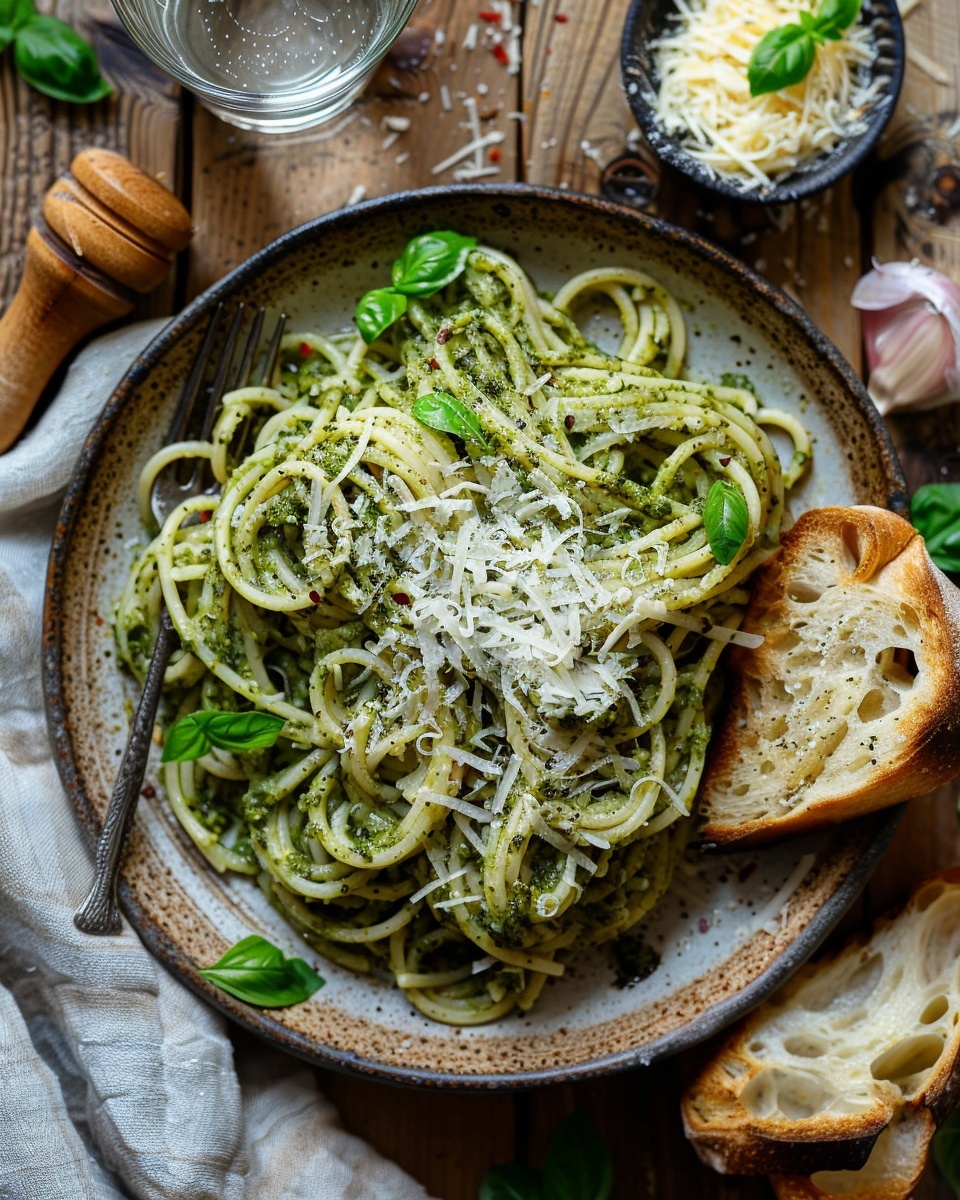
Welcome to My Kitchen: Let’s Talk Pesto Pasta
Last Tuesday night, I stood in my kitchen staring at a half-wilted bunch of basil and a box of pasta. I had exactly 20 minutes before my friends arrived for dinner. That’s when I remembered my secret weapon: pesto pasta. Twenty minutes later, everyone was convinced I’d spent hours cooking. The truth? This dish is ridiculously simple and tastes like you slaved away all day.
Pesto pasta saved me that night, and it’s been my go-to recipe ever since. I’ve made it for quick weeknight dinners, fancy date nights, and even meal prep Sundays. The best part? You can dress it up or keep it simple. Either way, you’ll end up with something delicious.
Today, I’m sharing everything I know about making amazing pesto pasta. Whether you’re cooking for one or feeding a crowd, this guide will show you how to create restaurant-quality dishes right at home. I’ll walk you through the basics and show you creative ways to make this classic Italian favorite your own.
What’s in Pesto Pasta?
Before we get cooking, let’s break down what makes this dish so special. A basil pesto pasta recipe starts with two main components: pasta and pesto sauce. Simple, right? But understanding these ingredients will help you make better choices in the kitchen.
The star of the show is pesto sauce. Traditional Italian pesto comes from the Liguria region, where they’ve been making it for centuries. The word “pesto” actually comes from “pestare,” which means to pound or crush. Back in the day, cooks made pesto using a mortar and pestle. I still do this sometimes when I want to feel fancy, but a food processor works just as well.
Here’s what goes into classic pesto pasta sauce:
- Fresh basil leaves – The foundation of any good pesto. You want bright green leaves with no brown spots.
- Garlic – Adds that signature punch. I usually use 2-3 cloves, but adjust based on your love for garlic.
- Pine nuts – These little guys add richness and a buttery texture. Toast them first for extra flavor.
- Parmesan cheese – Use real Parmigiano-Reggiano if you can. The pre-shredded stuff doesn’t melt the same way.
- Olive oil – This brings everything together into a smooth sauce. Extra virgin is best.
- Salt and pepper – Just a pinch to balance the flavors.
Now, some people ask me, “Can I just put pesto in pasta?” The short answer is yes! You absolutely can toss cooked pasta with pesto straight from the jar or your food processor. I’ve done this countless times when I’m running late or too tired to think.
But here’s what I’ve learned: taking just a few extra minutes can transform your dish from good to incredible. Adding pasta water to thin the sauce helps it coat every piece of pasta. Throwing in some extras like cherry tomatoes or grilled chicken takes it to the next level.
Different Ways to Enjoy Your Pesto Pasta
One reason I love this dish is its flexibility. You can keep it traditional or get creative with variations. Let me share some of my favorite versions.
The creamy pesto pasta recipe is perfect when you want something rich and comforting. I make this version by adding heavy cream or cream cheese to the regular pesto sauce. Sometimes I use Greek yogurt for a lighter option that still gives you that silky texture. The cream mellows out the garlic and creates a creamy pesto pasta sauce that clings beautifully to every noodle.
My husband goes crazy for pesto pasta recipe chicken. I usually grill or pan-sear chicken breasts, slice them up, and toss them with the pasta. The protein makes it a complete meal. Plus, chicken soaks up the pesto flavors like a sponge. Sometimes I marinate the chicken in a bit of pesto before cooking for even more flavor.
If you love seafood like I do, try pesto pasta with shrimp. Shrimp cooks in minutes and pairs incredibly well with basil and garlic. I sauté the shrimp with a little butter, then mix everything together. The combination of sweet shrimp and herbaceous pesto is something special. My mom taught me this version, and it’s been a family favorite for years.
For my vegetarian friends, pesto pasta vegetarian options are endless. You can load it up with roasted vegetables, sun-dried tomatoes, or fresh mozzarella. I’ve made pesto pasta recipes with vegetables using everything from zucchini to bell peppers to broccoli. The vegetables add color, nutrition, and different textures that make every bite interesting.
There’s also pesto pasta vegan for those avoiding animal products. Just swap the Parmesan for nutritional yeast or skip the cheese entirely. Use extra pine nuts or walnuts to keep the sauce thick and creamy. I’ve served this to vegan guests who couldn’t believe how flavorful it was without cheese.
Speaking of different approaches, the pesto pasta Jamie Oliver method is worth mentioning. Jamie’s known for keeping things simple and letting quality ingredients shine. His technique focuses on cooking pasta just right and not drowning it in sauce. I’ve borrowed some of his tips, like adding lemon zest for brightness and using pasta shapes that hold sauce well.
How to Mix Up Pesto Pasta
Here’s where many people go wrong. They cook the pasta, drain it completely, then wonder why the pesto won’t stick properly. I made this mistake for years until an Italian friend showed me the right way.
The secret is pasta water. Before you drain your pasta, scoop out at least a cup of that starchy cooking water. This liquid is gold. It helps thin the pesto so it coats the pasta evenly instead of clumping up.
Here’s my process: I cook the pasta until it’s al dente (still has a slight bite to it). Then I drain it, but I save that precious pasta water. I put the pasta back in the warm pot, add the pesto, and start tossing. As I mix, I add pasta water bit by bit until the sauce reaches the perfect consistency. It should be glossy and coat each piece of pasta without pooling at the bottom of the bowl.
Temperature matters too. Make sure your pasta is still hot when you add the pesto. The heat helps the sauce loosen up and blend with the pasta. Cold pasta and pesto just don’t mix well together.
What Goes Well in Pesto Pasta?
This question comes up all the time, and I love answering it because the possibilities are endless. The beauty of pesto pasta is that it plays well with so many ingredients.
For proteins, think beyond chicken and shrimp. I’ve added Italian sausage, grilled steak strips, and even leftover rotisserie chicken. White beans or chickpeas work great for a vegetarian protein boost. They soak up the pesto flavors and add a nice creamy texture.
Vegetables are where you can really get creative. Cherry tomatoes are my number one choice. I slice them in half and let them warm through with the hot pasta. They release their juices and create a light sauce that mixes with the pesto. Roasted red peppers add sweetness. Spinach or arugula wilts right into the hot pasta and adds freshness.
I also love adding texture with toasted pine nuts, crispy breadcrumbs, or even chopped walnuts. A handful of fresh mozzarella pearls scattered on top melts slightly from the heat. Burrata cheese torn over the finished dish creates little creamy pockets throughout.
Don’t forget about acids and finishing touches. A squeeze of fresh lemon juice brightens everything up. Lemon zest adds a pop of citrus without extra liquid. Red pepper flakes give a nice kick if you like heat. Fresh basil leaves on top aren’t just pretty, they reinforce that herby flavor.
One combination I make constantly is pesto pasta with roasted cherry tomatoes, grilled chicken, and a sprinkle of toasted pine nuts. Another favorite is shrimp, asparagus, and sun-dried tomatoes. The key is balancing flavors and textures so nothing overwhelms the pesto.
I keep different add-ins in my fridge and pantry so I can throw together a new version of pesto pasta whenever the mood strikes. Olives, artichoke hearts, capers, and roasted garlic all work beautifully. You really can’t go wrong as long as you respect the balance of the dish.


Pesto Pasta
Ingredients
Equipment
Method
- Cook the pasta according to package instructions until al dente, reserving 1 cup of pasta water before draining.
- In a food processor, combine basil leaves, garlic, toasted pine nuts, and Parmesan cheese.
- Pulse the ingredients until finely chopped.
- With the food processor running, slowly drizzle in olive oil until the mixture becomes a smooth sauce.
- Season the pesto with salt and pepper to taste.
- Return the drained pasta to the warm pot.
- Add the pesto sauce to the pasta and toss to combine.
- Gradually add reserved pasta water, a little at a time, until the sauce clings to the pasta and reaches the desired consistency.