
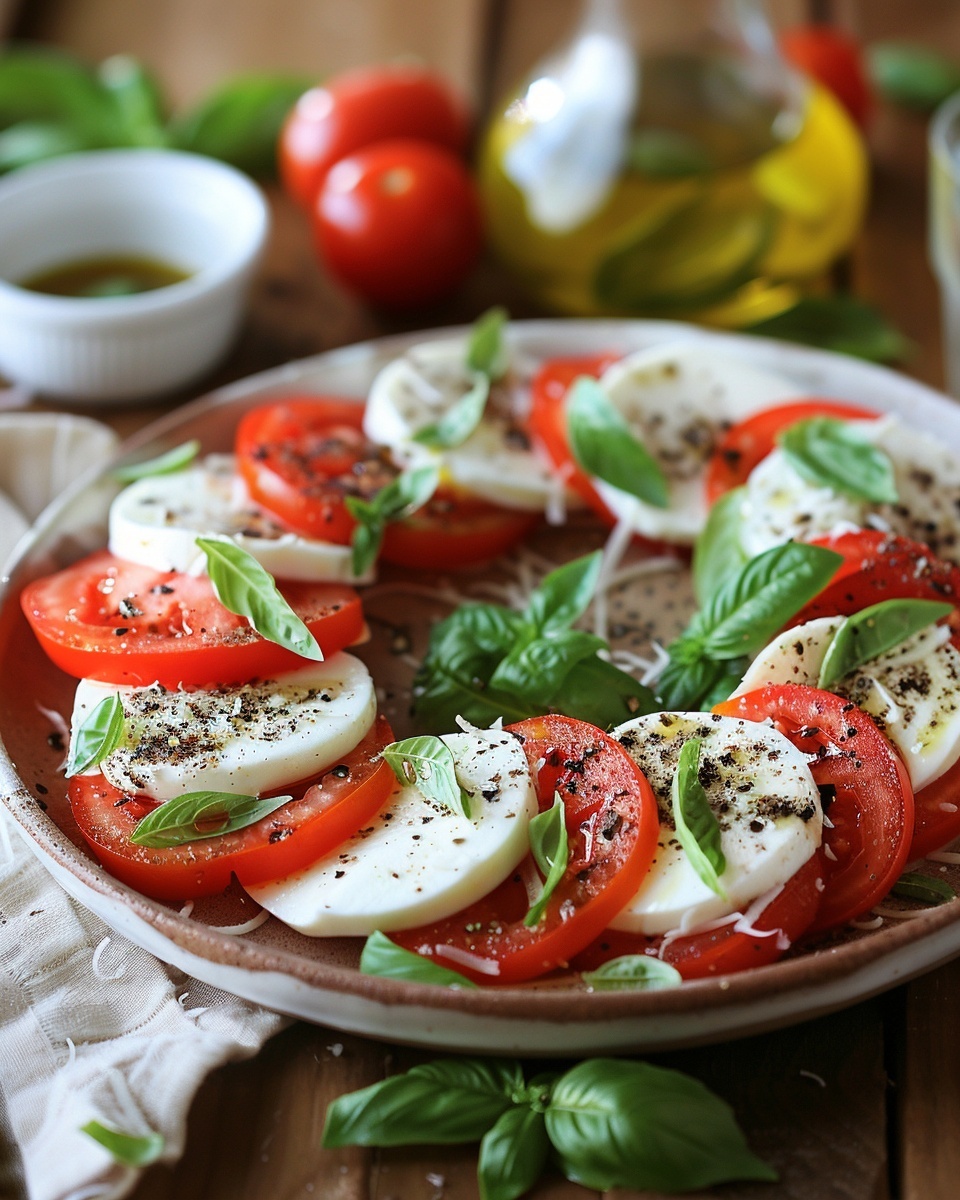
I’ll never forget the first time I tried a real Caprese salad in a tiny restaurant tucked away in Rome. The chef brought out a simple white plate with just three ingredients, and I thought, “Is that it?” One bite changed everything. The sweet tomato juice mixed with creamy mozzarella and fresh basil created something almost magical. That moment taught me that sometimes the simplest recipes are the most powerful.
Welcome to my guide on making the best Caprese salad! I’m excited to share everything I’ve learned about this classic Italian dish. Whether you’re planning a summer party or just want a quick lunch, this salad never disappoints. It looks fancy but takes less than 10 minutes to make.
A Caprese salad is one of Italy’s most beloved dishes. It features just a few fresh ingredients that work together perfectly. People love it because it tastes amazing and requires almost no cooking skills. You don’t need to be a chef to make restaurant-quality results at home.
In this guide, I’ll walk you through everything you need to know. We’ll cover the essential ingredients and where to find the best ones. I’ll share tips for avoiding common mistakes that can ruin your salad. You’ll also discover fun variations like caprese salad skewers, chopped caprese salad, and caprese salad pasta. By the end, you’ll feel confident making this dish for any occasion.
What are the Ingredients of Caprese Salad?
The beauty of a traditional Caprese salad lies in its simplicity. You only need three main ingredients to create this stunning dish. Let me break down what makes each component so special.
Fresh mozzarella forms the creamy base of your salad. I’m talking about the soft, milky kind that comes packed in water or whey. You want fresh mozzarella di bufala if you can find it. This cheese has a delicate flavor that melts on your tongue. Skip the low-moisture mozzarella you’d use for pizza. That stuff is too firm and doesn’t have the same taste. Fresh mozzarella should feel slightly squishy and smell mildly sweet.
Ripe tomatoes bring the juicy, sweet-tart flavor that balances the mild cheese. I prefer using large beefsteak tomatoes or heirloom varieties during summer. Their size makes slicing easy and they have incredible flavor. Some people love making caprese salad cherry tomatoes versions for a bite-sized twist. Cherry tomatoes work great for caprese salad skewers at parties. The key is ripeness. Your tomatoes should smell sweet and give slightly when you press them. Hard, pale tomatoes will make a sad salad.
Fresh basil adds that aromatic, peppery note that ties everything together. You need whole leaves, not the dried stuff from your spice cabinet. Fresh basil smells amazing and has a bright green color. I like to use medium-sized leaves because they’re tender and flavorful. Tiny leaves don’t pack enough punch, and huge leaves can taste too strong.
Beyond these three stars, you’ll want extra virgin olive oil and salt. Some recipes call for balsamic vinegar or a special caprese salad dressing, but I’ll cover those options later. The traditional version keeps things simple with just good olive oil and a sprinkle of flaky sea salt.
Here’s a quick breakdown of what you need for a basic serving:
- 8 ounces fresh mozzarella cheese
- 2-3 large ripe tomatoes (or 2 cups cherry tomatoes)
- 1 cup fresh basil leaves
- 3 tablespoons extra virgin olive oil
- Sea salt and black pepper to taste
The importance of using high-quality, fresh ingredients cannot be overstated. I’ve made this salad with grocery store tomatoes in January, and it tasted flat. I’ve also made it in August with farmers market produce, and it was incredible. The difference shocked me. Since you’re only using a few ingredients, each one really matters.
Your olive oil should be the good stuff too. Buy extra virgin olive oil that tastes fruity and slightly peppery. Cheap oil can taste bitter or bland. I keep a nicer bottle just for salads and finishing dishes. You’ll taste the difference, I promise.
The Caprese salad originated on the island of Capri in Italy. Legend says it was created to honor the Italian flag with its red, white, and green colors. The dish became popular in the 1950s and spread throughout Italy and beyond. Now you can find versions of it on menus worldwide. The name “Caprese” literally means “from Capri,” connecting this simple salad to its Mediterranean roots.
Italian cooks have always known that fresh, local ingredients make the best food. They don’t hide quality produce under heavy sauces. This philosophy shines through in every bite of a well-made Caprese salad.
Some modern variations add extra ingredients to create new flavors. A caprese salad with arugula brings a peppery, slightly bitter green that contrasts nicely with the sweet tomatoes. The arugula adds volume and makes the dish more filling. A caprese salad with lettuce works the same way, though I find it less exciting than arugula.
You might also see chopped caprese salad recipes where everything gets cut into small pieces and tossed together. This style works great for meal prep or when you want every bite to have all the flavors. It’s less formal than the traditional sliced presentation but just as tasty.
For those watching their diet, caprese salad calories stay relatively low. A typical serving has around 200-250 calories, depending on how much mozzarella and oil you use. The fresh vegetables and moderate cheese make it a lighter option compared to many salads loaded with creamy dressings.
When shopping for ingredients, timing matters. Summer is prime season for tomatoes and basil. During these months, you’ll find the best quality and lowest prices. Winter tomatoes often taste like cardboard no matter how much you spend. If you must make this salad off-season, greenhouse cherry tomatoes usually have more flavor than large ones.
For mozzarella, check your cheese section for balls packed in liquid. Some stores keep them near the deli counter. Italian markets or specialty food shops often carry the best quality. The cheese should have a “use by” date, and fresher is always better. I’ve found that mozzarella starts losing flavor after just a few days, even in the fridge.
Fresh basil grows easily in pots if you want to keep some at home. I started growing my own after spending too much on those tiny plastic packages at the store. A small plant costs about the same as two packages but gives you fresh basil all summer long.


How to Make an Easy Caprese Salad
Now that you’ve got your ingredients sorted, let’s actually put this thing together. I promise making an easy caprese salad is so simple that you’ll wonder why you haven’t been making it all along.
Start by slicing your tomatoes. I like to cut them into rounds about a quarter-inch thick. Not too thin or they’ll fall apart, but not so thick that they’re awkward to eat. Lay your tomato on a cutting board and use a sharp knife with a serrated edge if you have one. Regular knives can squish the tomato and make a mess. I learned this the hard way when I tried using a dull knife and ended up with tomato juice all over my counter.
Next up is the mozzarella. If you bought a ball of fresh mozzarella, drain it first and pat it dry with paper towels. Wet cheese makes your presentation look sloppy and dilutes the flavors. Slice it the same thickness as your tomatoes so everything looks uniform. Some people prefer tearing the mozzarella into chunks for a more rustic look, which honestly works just as well and maybe even tastes better since you get those rough edges.
Here’s where it gets fun. You can arrange your salad however you want, but the classic method involves alternating slices of tomato and mozzarella on a plate. I overlap them slightly in a line or circle, kind of like dominoes leaning against each other. Tuck fresh basil leaves between the slices. The green against the red and white looks stunning, especially if you’re serving guests.
The final touch makes all the difference. Drizzle your best extra virgin olive oil over the whole thing in a zigzag pattern. Don’t be shy with it either. The oil carries flavors and makes everything taste richer. Then sprinkle flaky sea salt and freshly cracked black pepper on top. I use more salt than you might think because tomatoes and mozzarella both need proper seasoning to really shine.
For a caprese salad dressing that takes things up a notch, add a balsamic glaze. You can buy this ready-made or make your own by simmering regular balsamic vinegar until it reduces and gets syrupy. The sweet-tart flavor of balsamic complements the tomatoes perfectly. I drizzle it on right before serving so it doesn’t soak in too much. Just thin lines across the top work beautifully.
By the way, timing matters with this salad. I make it right before serving, not hours in advance. The salt draws moisture out of the tomatoes, and you’ll end up with a puddle on your plate if it sits too long. If I absolutely must prep ahead, I slice everything and keep it separate, then arrange and dress it at the last minute.
One trick I picked up from a cooking class is to let your mozzarella and tomatoes sit at room temperature for about twenty minutes before assembling. Cold ingredients from the fridge don’t release their flavors as well. Room temperature tomatoes taste sweeter, and the mozzarella gets creamier. This small step makes a noticeable difference.
The whole process takes maybe ten minutes, tops. That’s faster than most salads that require chopping a dozen vegetables. It’s almost embarrassing how easy this is compared to something like a Cobb salad with all its components, yet people always seem impressed when you serve it.
Variations of Caprese Salad
Once you’ve mastered the basic version, the fun really begins. I love experimenting with different ways to serve these same flavors.
A chopped caprese salad completely changes the game. Instead of careful slicing and arranging, you just dice everything into bite-sized pieces and toss it together in a bowl. Cut your tomatoes into chunks, cube the mozzarella, and roughly chop the basil. Mix it all up with olive oil, salt, and pepper. This version is perfect when you’re feeding a crowd because people can serve themselves easily. I also find that every forkful has a perfect ratio of ingredients since they’re all mixed together. It’s less elegant than the traditional presentation but way more practical for picnics or potlucks.
Funny enough, the chopped version actually holds up better if you need to make it slightly ahead. The ingredients don’t slide around on the plate, and somehow it just works. I made this for a summer barbecue last year and people kept asking for the recipe. I felt a bit silly telling them it was just three ingredients chopped up and mixed.
Caprese salad skewers are my absolute favorite party trick. Thread cherry tomatoes, small mozzarella balls (called bocconcini), and basil leaves onto small wooden skewers or toothpicks. You end up with these adorable little bites that guests can grab with one hand. They look fancy but take almost no effort. I arrange them standing up in a glass or laying flat on a platter, then drizzle everything with olive oil and balsamic glaze right before serving.
These skewers work great for gatherings where people are standing and mingling. Nobody wants to juggle a plate and fork at a cocktail party. The skewer format solves that problem completely. Kids love them too because they’re fun to eat. I’ve served these at birthday parties, baby showers, and even just casual game nights. They disappear fast every single time.
Here’s the thing about skewers though. The assembly can get tedious if you’re making a bunch. I usually set up a little assembly line with bowls of each ingredient and just zone out while putting them together. Stick on a podcast or some music and it goes quicker than you’d think. You can prep these a few hours ahead and keep them refrigerated, just remember to let them warm up a bit and add the dressing right before serving.
Now, if you want something more substantial, caprese salad pasta turns this light side dish into a full meal. Cook your favorite pasta (I like penne or farfalle for this), drain it, and let it cool slightly. Then toss it with chopped tomatoes, mozzarella cubes, fresh basil, olive oil, and a splash of the pasta cooking water to help everything come together. The warm pasta slightly melts the cheese, creating these amazing creamy pockets.
This pasta version reminds me a bit of a tuna pasta salad in terms of being filling enough for lunch, but it tastes completely different and feels lighter. I make it for summer dinners when it’s too hot to eat anything heavy. You can serve it warm or at room temperature, which makes it super versatile.
Some people add grilled chicken to their caprese pasta to bump up the protein, similar to how you might with an avocado chicken salad. The chicken works surprisingly well if you season it with Italian herbs. I’ve also seen versions with added vegetables like zucchini or spinach for extra nutrition. At that point you’re really riffing on the concept rather than making a true Caprese, but who cares if it tastes good?
For the pasta variation, the proportions matter less than with the traditional salad. You’re adding ingredients to taste rather than carefully arranging slices. I usually use about two cups of cherry tomatoes and eight ounces of mozzarella for a pound of pasta. That gives you plenty of the good stuff in every bite without overwhelming the pasta.
Speaking of variations, I should mention that adding greens changes the whole vibe. Some folks make a caprese salad with arugula by placing the traditional components on a bed of peppery greens. The arugula adds a nice bitter note that contrasts with the sweet tomatoes. It makes the dish feel more like a proper salad rather than just arranged vegetables and cheese. This version works great as a lunch because the greens add bulk without many calories.
A caprese salad with lettuce serves the same purpose but tastes milder. I prefer arugula myself since lettuce can be kind of boring. But if you’re serving kids or people who don’t like strong flavors, lettuce provides a neutral base. Mixed greens work nicely too, giving you variety in texture and subtle flavors. Just like with a Greek salad, the greens help stretch the ingredients and make the dish more filling.
The beauty of all these variations is that they follow the same basic principle: combine fresh mozzarella, tomatoes, and basil in different formats. Once you understand that core flavor combination, you can adapt it to whatever situation you’re in. Need finger food? Make skewers. Want a main dish? Go with pasta. Feeding a crowd? Chop everything up. The possibilities really are endless, which is probably why this simple Italian combination has stayed popular for so long.


Common Mistakes to Avoid When Making Caprese Salad
I’ve made enough mediocre Caprese salads to know exactly where things go wrong. Let me save you from the same disappointments I’ve experienced over the years.
The biggest mistake, hands down, is using low-quality or out-of-season ingredients. I cannot stress this enough. Last February, I got excited about making a best caprese salad for a dinner party. I grabbed pale, hard tomatoes from the grocery store because I was craving those summer flavors. The result tasted like absolutely nothing. My guests were polite, but I knew it was bad. The tomatoes had zero sweetness, and the whole thing just felt sad on the plate.
Here’s the thing about seasonal eating. Tomatoes need warm sun and time on the vine to develop their sugars and that incredible tomato flavor we all love. Winter tomatoes get picked green and ripen in trucks. They look red on the outside but taste like crunchy water. If you’re making this salad between November and May in most places, you’re fighting an uphill battle. I’ve learned to just wait until real tomato season or choose a different dish entirely.
The same goes for basil. Those sad, wilted bunches with black spots won’t do your salad any favors. Fresh basil should smell intensely aromatic when you rub a leaf between your fingers. The leaves should be perky and bright green, not droopy or yellowing. I once used basil that had been sitting in my fridge for a week, and it tasted almost metallic. Not good.
Mozzarella quality matters tremendously too. That pre-shredded stuff or those rubber-like balls of “mozzarella” you find near the string cheese won’t cut it. You need fresh mozzarella that’s soft, milky, and slightly sweet. When shopping, understanding food responsibility standards helps you identify truly fresh dairy products that meet proper safety and quality guidelines. The texture should be delicate, almost like it might fall apart if you’re too rough with it.
Another common mistake is overdressing the salad. I get it—we’re used to salads drowning in dressing. But this isn’t that kind of dish. The tomatoes and mozzarella already have plenty of moisture. If you dump too much olive oil on there, everything gets greasy and the delicate flavors disappear under all that fat. I made this mistake when I first started cooking, thinking more oil meant more flavor. Wrong. A light drizzle is all you need.
The same goes for balsamic. Some people make their caprese salad dressing way too heavy-handed with balsamic vinegar or glaze. A little goes a long way. Too much and your salad tastes like you’re drinking vinegar with a side of vegetables. I use maybe a teaspoon or two drizzled artistically across the top, not pooling at the bottom of the plate.
Salt is another tricky one. You need it, absolutely. But if you salt too early, the tomatoes release all their juice and you end up with a watery mess. I learned to salt right before serving, maybe five minutes max beforehand. This gives just enough time for the salt to enhance the flavors without turning everything into tomato soup.
By the way, using the wrong oil can totally tank your salad. I’ve seen people reach for vegetable oil or that bottle of olive oil they bought three years ago. Rancid or flavorless oil adds nothing good to your dish. Sometimes it even tastes bitter or off. Invest in decent extra virgin olive oil and taste it before using. It should taste fruity and peppery, not flat or unpleasant. Store it in a cool, dark place so it doesn’t go bad quickly.
One mistake that took me forever to figure out was not allowing the flavors to meld before serving. Wait, didn’t I just say to assemble at the last minute? Let me clarify. You should let your ingredients come to room temperature before you put them together, but you don’t want the assembled salad sitting for hours. The sweet spot is assembling everything, dressing it, and then letting it hang out for about five to ten minutes before people dig in.
That short rest time lets the olive oil carry the basil’s aroma to the other ingredients. The salt starts working its magic on the tomatoes, drawing out just a hint of juice that mixes with the oil to create a light natural dressing. The flavors start talking to each other instead of tasting like separate components. But leave it longer than twenty minutes and things get soggy. It’s a delicate balance.
Temperature matters more than most people think. Serving everything ice cold straight from the fridge is a huge mistake. Cold temperatures dull flavors significantly. Your taste buds literally can’t pick up as much when food is cold. The mozzarella gets firm and kind of rubbery instead of creamy. The tomatoes lose their sweetness. Even the basil doesn’t smell as good. I always pull my ingredients out at least twenty minutes before serving time. Thirty minutes is even better if the kitchen isn’t too hot.
Another thing I see people mess up is the knife situation. Using a dull knife on tomatoes creates carnage. The blade crushes and squishes instead of slicing cleanly. You lose juice, the slices look ragged, and it’s just frustrating. A sharp knife glides through, keeping the tomato intact and looking beautiful. Same with the mozzarella. A sharp blade gives you clean cuts instead of tearing the cheese apart.
Presentation mistakes happen too, though they don’t affect taste. I’ve watched people just plop everything on a plate in a pile. It still tastes fine, but it looks sloppy. The traditional overlapping arrangement takes maybe thirty seconds longer but looks ten times better. People eat with their eyes first. A nice presentation makes the same ingredients seem fancier and more appealing.
Funny enough, one mistake I made early on was overthinking it. I tried adding too many “improvements” like red onion, capers, or different cheeses. Those things aren’t necessarily bad, but they take away from what makes a Caprese salad special. The whole point is simplicity and letting quality ingredients shine. When you start piling on additions, it becomes a different salad entirely. Sometimes I need to remind myself that not everything needs to be complicated.
FAQs
What dressing goes on Caprese?
The traditional caprese salad dressing is simply high-quality extra virgin olive oil with a sprinkle of salt and black pepper. Many people add a drizzle of balsamic vinegar or balsamic glaze for sweetness and acidity. Some versions skip the balsamic entirely and stick with just olive oil to let the fresh ingredients speak for themselves. I usually go with olive oil plus a tiny bit of balsamic glaze for that perfect sweet-tangy finish. The key is using less dressing than you think you need since the tomatoes and mozzarella are already pretty moist.
What are the ingredients of Caprese salad?
A classic Caprese salad has just three main ingredients: fresh mozzarella cheese, ripe tomatoes, and fresh basil leaves. Beyond those, you add extra virgin olive oil, salt, and black pepper for seasoning. Some people include balsamic vinegar or glaze as well. The simplicity is what makes it special, so resist the urge to add a bunch of other stuff. Quality matters way more than quantity with this dish.
What are some common mistakes to avoid when making Caprese salad?
The most common mistakes include using out-of-season tomatoes that taste like nothing, buying low-quality mozzarella, and overdressing the salad with too much oil or vinegar. People also mess up by serving everything ice cold straight from the fridge instead of letting it come to room temperature. Another big one is salting too early, which makes the tomatoes release all their moisture and creates a watery puddle. Finally, not using fresh basil or using wilted, old basil really hurts the final result since that herb provides crucial aroma and flavor.
What is the Jennifer Aniston salad called?
The Jennifer Aniston salad is actually called a “bulgur salad” or sometimes just “the Friends salad” because she supposedly ate it every day while filming the show Friends. It contains bulgur wheat, cucumbers, parsley, mint, red onion, feta cheese, chickpeas, and a lemon vinaigrette. It’s completely different from a Caprese salad but became internet-famous when people started recreating it. The recipe went viral on TikTok and everyone started making their own versions. It’s a healthy, protein-packed option if you’re looking for something more substantial than a Caprese.
Can I make Caprese salad ahead of time?
I don’t recommend assembling a Caprese salad more than about fifteen minutes before serving. The salt and acidic tomato juice will make everything soggy and watery if it sits too long. What you can do is prep the ingredients ahead by slicing everything and storing the components separately in the fridge. Then just arrange and dress it right before you’re ready to eat. This works great for dinner parties when you want to minimize last-minute stress.
How many calories are in a Caprese salad?
A typical serving of caprese salad contains around 200 to 250 caprese salad calories, though this varies based on how much mozzarella and olive oil you use. The tomatoes and basil add minimal calories, while the cheese and oil contribute most of the calorie count. If you’re watching calories, you can use less mozzarella and go lighter on the olive oil without sacrificing too much flavor. It’s still a relatively light and healthy option compared to many other salads with heavy creamy dressings.
What type of mozzarella is best for Caprese salad?
Fresh mozzarella packed in water or whey is what you want, not the low-moisture kind used for pizza. Mozzarella di bufala, made from buffalo milk, is considered the gold standard and has incredible creamy flavor. If you can’t find that, regular fresh mozzarella works perfectly fine. The cheese should be soft, mild, and slightly sweet. Avoid pre-shredded mozzarella or those vacuum-sealed blocks, as they have the wrong texture and don’t taste nearly as good in this application.
Can I use cherry tomatoes instead of large tomatoes?
Absolutely! Caprese salad cherry tomatoes work wonderfully, especially for caprese salad skewers or a chopped caprese salad version. Cherry tomatoes often have better flavor than large tomatoes during off-season months since they’re grown in greenhouses. Just halve them or leave them whole if they’re really small. The flavor profile stays the same, just in a cuter, more bite-sized format. I actually prefer cherry tomatoes for casual gatherings because they’re less messy to eat.
Should I add balsamic vinegar to my Caprese salad?
Adding balsamic is totally optional and comes down to personal preference. Traditional Italian versions often skip it and use only olive oil, salt, and pepper. Balsamic vinegar or glaze adds sweetness and tangy acidity that many people love. If you do add it, use a good-quality balsamic and go light—just a drizzle, not a pour. The thick balsamic glaze is easier to control and looks prettier than regular vinegar. Taste as you go and stop before it gets overpowering.
What can I serve with Caprese salad?
Caprese salad works as an appetizer, side dish, or light lunch. I love serving it alongside grilled chicken, steak, or fish for a complete meal. It pairs beautifully with crusty bread that you can use to soak up the juices and olive oil from the plate. The salad also goes great with pasta dishes or as part of an Italian antipasto spread. Since it’s pretty light, it complements heavier main courses without making the meal feel overwhelming.
The wonderful thing about exploring different salad recipes like this one is discovering how simple combinations of fresh ingredients can create something truly special. Once you nail the basic technique and avoid those common pitfalls, you’ll find yourself making Caprese salad all the time during tomato season. Trust me, it becomes addictive once you get it right.
So go ahead and give it a try. Grab the best tomatoes you can find, some creamy fresh mozzarella, and a handful of basil. Keep it simple, don’t overthink it, and let those beautiful ingredients do what they do best. You’ll be amazed at how something so easy can taste so incredibly good.