
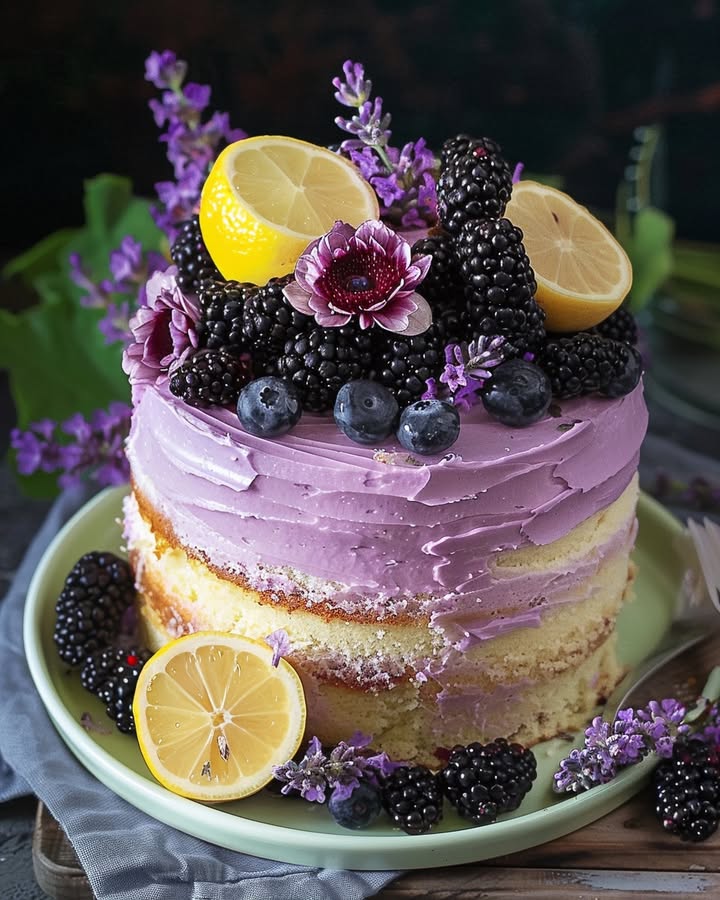
A Slice of Sunshine: My Lavender Lemon Blackberry Cake
Have you ever tasted a memory? For me, this cake is exactly that. It all started last summer when my garden exploded with blackberries and my lavender decided to show off. I wanted a cake that tasted like a sunny afternoon, sweet yet sophisticated. After a few (delicious) attempts, this Lavender Lemon Blackberry Cake was born. It’s the star of every family gathering now, and I can’t wait for you to make it yours.
From Garden to Table: The Story of This Cake
This recipe doesn’t have centuries of history, but it has heart. It’s my modern twist on classic French buttercream and simple berry cakes. I adore the elegance of French patisserie but wanted something a bit more relaxed and bursting with garden-fresh flavor. The lavender adds that magical, floral note that makes everyone ask, “What is that amazing taste?” It’s a beautiful blend of home-baking comfort and a touch of fancy tea-party charm.
Why You’ll Fall Head Over Heels for This Cake
Let me count the ways! First, the textures are a dream team. The tender, moist almond cake crumbles just right. The juicy blackberries pop in your mouth. The lavender buttercream is so smooth it feels like silk. It’s surprisingly simple to make for such a show-stopping dessert. You get to impress everyone without spending all day in the kitchen. It’s a total crowd-pleaser that looks like you bought it from a fancy bakery.
The Perfect Moment for This Lavender Lemon Blackberry Cake
This cake isn’t just for birthdays. It’s for life’s sweet little celebrations! I love serving it at bridal or baby showers—the lavender color is so pretty. It’s perfect for a Mother’s Day brunch or a summer garden party. Honestly, I’ve even made it just because it was Tuesday and we deserved a treat. Any occasion feels more special with a slice of this beauty on the plate.
Gathering Your Ingredients
Using fresh, good-quality ingredients makes all the difference here. Here’s what you’ll need:
For the Lemon Blackberry Cake Layers:
- 3/4 cup unsalted butter, softened
- 1 cup granulated sugar
- 1 tsp vanilla extract
- 4 large eggs, separated
- Zest from 1 lemon
- 1 cup lukewarm milk
- 1 1/2 cups all-purpose flour
- 3/4 cup almond flour
- 4 tsp baking powder
- 1/4 tsp salt
- 1 cup fresh blackberries
- 1 tbsp cornstarch
For the Lavender French Buttercream:
- 1/3 cup water
- 1 cup granulated sugar
- 5 egg yolks
- 2 cups unsalted butter, softened
- 1/4 tsp lavender oil (culinary-grade)
- Purple food coloring (optional)
No Worries! Handy Ingredient Swaps
Don’t have something on hand? No problem! Here are some easy swaps:
- Almond Flour: You can use an equal amount of additional all-purpose flour. The cake will be slightly less tender but still delicious.
- Fresh Blackberries: Frozen blackberries work great! Don’t thaw them. Toss them frozen in the cornstarch to prevent a mushy batter.
- Lavender Oil: Use 1 tablespoon of finely ground culinary lavender buds steeped in the warm milk for the cake. For the buttercream, steep 1 tsp in the hot sugar syrup, then strain.
- French Buttercream: If this feels too advanced, a simple American buttercream works. Cream 2 cups softened butter with 4 cups powdered sugar, 1/4 cup milk, and lavender extract to taste.
Let’s Bake! Your Step-by-Step Guide
Step 1: Prep Your Pans and Oven
First, get that oven preheating to 350°F. This gives it time to reach the perfect, even temperature. While it warms up, grab your three round cake pans. Grease them generously with butter or baking spray, then dust with a light coat of flour. Tap out the excess. This little dance ensures your beautiful cakes will release cleanly later. Trust me, no one wants a cake that sticks!
Step 2: Cream the Butter and Sugar
In a large bowl, beat the softened butter and granulated sugar together. Use an electric mixer if you have one. Beat it for a good 3-5 minutes until it’s incredibly pale, fluffy, and light. This isn’t just mixing—it’s adding air for a tender crumb. Now, beat in the vanilla and the egg yolks, one at a time. Each yolk should disappear into the mixture before you add the next. Finally, stir in that sunny, fragrant lemon zest. The smell alone is heavenly!
Step 3: Combine the Dry Ingredients
In another bowl, whisk together your flours, baking powder, and salt. This “sifts” them lightly and makes sure the leavening is evenly spread. Now, add about one-third of this dry mixture to your fluffy butter bowl. Mix on low until it’s just combined. Follow that with half of the lukewarm milk. Repeat, ending with the dry ingredients. Mix until the batter is smooth, but don’t overdo it! Overmixing leads to a tough cake.
Step 4: Prepare and Fold in the Blackberries
Take your fresh blackberries and toss them in a small bowl with the cornstarch. The cornstarch is a magic dust! It coats the berries and helps absorb extra juice, so they don’t sink to the bottom and bleed too much. Gently fold these coated berries into your cake batter with a spatula. Be careful not to smash them. You want glorious, whole berry bursts in every slice.
Pro tip: If your berries are huge, you can halve them to make folding easier and distribution better.
Step 5: Fold in the Egg Whites
In a super clean bowl, beat those reserved egg whites. Beat them until stiff, glossy peaks form. This means when you lift the beaters, the peak stands straight up. Now, take a big scoop of this fluffy cloud and stir it into your batter to lighten it. Then, gently, gently fold in the rest. Use a cutting and folding motion with your spatula. This keeps all that air in, making your cake layers beautifully tall and light.
Step 6: Bake to Golden Perfection
Divide that gorgeous, berry-speckled batter evenly among your three prepared pans. Smooth the tops with your spatula. Slide them into your preheated oven. Bake for 25-30 minutes. You’ll know they’re done when the tops are springy to the touch and a toothpick poked in the center comes out clean or with a few dry crumbs. Your kitchen will smell incredible.
Step 7: Cool the Cake Layers
Patience is key here! Let the cakes cool in their pans on a wire rack for just 10 minutes. This lets them firm up a bit. Then, run a knife around the edges to loosen them. Invert them onto the wire rack and let them cool completely. Trying to frost a warm cake is a recipe for a meltdown (for you and the frosting!).
Step 8: Make the Lavender French Buttercream
This is the fancy part, but you can do it! In a small pot, heat the water and sugar until the sugar dissolves and the syrup reaches 240°F on a candy thermometer. While it heats, beat the egg yolks in your mixer until thick and pale. With the mixer running, very slowly pour the hot syrup into the yolks. Keep beating until the bowl feels cool to the touch. Now, add the soft butter, one tablespoon at a time. Finally, beat in the lavender oil and a drop of purple coloring if you like. It will be silky, fragrant, and amazing.
Chef’s tip: If your buttercream looks soupy at any point, just pop the bowl in the fridge for 10 minutes, then beat again. It will come together.
Step 9: Assemble and Frost Your Masterpiece
Place your first cake layer on a plate or cake stand. Spread a generous layer of buttercream on top. Add the next layer and repeat. Place the final layer on top, bottom-side up for a flat surface. Now, apply a thin “crumb coat” of frosting all over the cake. Chill for 15 minutes. This traps any crumbs. Finally, frost the entire cake with the remaining buttercream. Swirl it, smooth it, make it beautiful!
Timing is Everything
Here’s a quick look at the clock so you can plan your baking adventure:
- Prep Time: 20 minutes (for the batter)
- Baking Time: 30 minutes
- Cooling Time: 1 hour (crucial!)
- Buttercream & Assembly: 30 minutes
- Total Time: About 2 hours 20 minutes
- Kcal: Approximately 450 per generous slice
- Servings: Makes a stunning 3-layer cake, serving 12-14 people.
My Secret Weapon
Freeze your cake layers before frosting! Once the layers are completely cool, wrap them tightly in plastic wrap and freeze for at least an hour. A frozen cake layer is sturdier. It crumbles less when you handle it. It also helps lock in moisture. The buttercream spreads like a dream on a cold cake. This one trick gives you a gorgeous, professional-looking result every single time.
A Berry Interesting Bite
Did you know blackberries aren’t actually berries in the botanical sense? They’re “aggregate fruits,” made up of many tiny individual fruits called drupelets. Each little bump is its own fruit with its own seed! That’s why they have that gorgeous clustered look. This also means they pack a powerful punch of flavor and nutrients in every bite.
Your Baking Toolbox
You don’t need professional gear, but these tools will make your life easier:
- Three 8-inch round cake pans
- Electric hand mixer or stand mixer
- Medium and large mixing bowls
- Whisk and rubber spatula
- Wire cooling rack
- Candy thermometer (for the buttercream)
- Offset spatula (for easy frosting)
Storing Your Lavender Lemon Blackberry Cake
For short-term storage: Because of the fresh buttercream, this cake is best kept in the refrigerator. Cover it with a cake dome or large bowl to protect it. It will stay fresh and delicious for up to 3-4 days. Let it sit at room temperature for about 30 minutes before serving to soften the frosting.
For freezing: You can freeze the finished cake! First, freeze it uncovered on a tray for an hour to harden the frosting. Then, wrap it tightly in several layers of plastic wrap and foil. It will keep for up to 2 months. Thaw it overnight in the fridge.
Storing cake layers: You can bake the layers ahead of time. Wrap each cooled layer tightly in plastic wrap, then foil. Freeze for up to 2 months. Thaw in the fridge before frosting.
Tips for a Flawless Cake
- Use room temperature ingredients! Cold eggs and butter don’t cream properly.
- Measure your flour correctly. Spoon it into your measuring cup and level it off. Don’t scoop straight from the bag.
- When folding, use a gentle hand. You want to keep as much air in the batter as possible.
- Test your cake a few minutes before the timer goes off. Ovens can vary.
- If your blackberries are very tart, you can toss them with a teaspoon of sugar along with the cornstarch.
Make It Look Magazine-Ready
Presentation is the final touch of love! Here are some simple ideas:
- Top the cake with a cascade of fresh blackberries, a sprinkle of edible lavender buds, and thin lemon slices.
- Use the back of a spoon to create pretty swirls and peaks in the buttercream.
- Dust the serving plate with a little powdered sugar or edible glitter for sparkle.
- Slice with a clean, hot knife. Run your knife under hot water and dry it for the cleanest cuts.
Healthier and Delicious Twists
Want to mix it up? Here are six fabulous variations on this lavender lemon blackberry cake:
- Gluten-Free Lavender Cake: Swap the all-purpose flour for a 1:1 gluten-free baking blend. Ensure your almond flour is certified GF. The texture remains wonderfully tender.
- Dairy-Free Delight: Use vegan butter sticks and your favorite unsweetened plant-based milk (almond or oat milk work well). For the buttercream, a high-quality vegan butter is key.
- Lemon Blueberry Version: Not a blackberry fan? Swap them for an equal amount of fresh blueberries. The classic lemon-blueberry combo is always a winner.
- Raspberry Rose Cake: Replace blackberries with raspberries and swap the lavender oil for a tiny drop of rose water or rose extract. So floral and romantic!
- Yogurt Cake Simplicity: Make a simpler, one-layer loaf. Use 1 cup of plain Greek yogurt in place of some milk and butter for a protein-rich, moist snack cake.
- Lavender Lemon Bundt: Pour the batter into a greased Bundt pan and bake a bit longer. Finish with a simple lemon glaze instead of buttercream for an elegant, easy dessert.
Common Mistakes to Avoid
Mistake 1: Not Coating the Blackberries
It’s tempting to just toss the berries in the batter. But skipping the cornstarch coat is a big mistake. Without it, the berries release all their juice as they bake. This can create soggy, purple streaks in your cake layers and cause the berries to sink straight to the bottom. The cornstarch creates a light barrier. It helps suspend the fruit beautifully throughout the cake. Always take that extra 30 seconds to coat them.
Mistake 2: Overmixing the Batter
Once you add the flour, you need a gentle hand. Overmixing after the flour is added develops the gluten in the flour. This leads to a dense, tough, and chewy cake instead of a light and tender one. Mix on low speed and just until you no longer see streaks of flour. When folding in the egg whites, use a wide spatula and fold gently. A few small streaks are better than a deflated batter.
Mistake 3: Frosting a Warm Cake
I know you’re excited to assemble your creation! But frosting a cake that’s even slightly warm is a disaster. The heat will melt the delicate French buttercream on contact. You’ll end up with a runny, sliding mess and crumbs everywhere. Be patient. Let the layers cool completely on a wire rack. This can take a full hour. You can speed it up by popping them in the fridge once they’re no longer hot.
Mistake 4: Using Too Much Lavender
Lavender is a powerful flavor. A little goes a very, very long way. Using too much lavender oil or too many buds can make your cake taste like perfume or soap. It should be a subtle, floral hint in the background, not the main event. Always start with less than the recipe calls for. You can add more, but you can’t take it out. Taste your buttercream as you go!
Your Lavender Lemon Cake Questions, Answered
Can I use dried lavender buds instead of lavender oil?
Absolutely! Culinary-grade dried lavender buds are a great substitute. To use them, steep about 1 tablespoon of buds in the lukewarm milk for the cake. Let it cool completely, then strain out the buds before using the milk. For the buttercream, you can steep 1 teaspoon of buds in the hot sugar syrup, then strain it before pouring it into the egg yolks. This gives a lovely, subtle flavor without any bits in your frosting.
What if my buttercream looks curdled?
Don’t panic! This happens often with French buttercream and is totally fixable. It usually means the mixture is too warm or the butter was added too quickly. The simple solution is to keep beating. Just continue mixing on medium speed. It may look worse before it gets better, but it will usually come together into a smooth, silky texture. If it’s really soupy, chill the bowl for 10 minutes, then beat again.
Can I make this cake ahead of time?
Yes, and I highly recommend it for stress-free entertaining! You can bake the cake layers up to 2 days ahead. Let them cool completely, wrap them tightly in plastic wrap, and store at room temperature. You can also freeze them for longer. Make the buttercream 1-2 days ahead and keep it covered in the fridge. Let it come to room temperature and re-whip it before using. Assemble the cake the day you plan to serve it for the freshest taste and texture.
Why did my blackberries all sink to the bottom?
This is usually caused by one of two things. First, the batter might have been too thin. Make sure you’re measuring your flour correctly. Second, not coating the berries in cornstarch is a common culprit. The cornstarch helps “grip” the batter. Also, if you cut very large berries in half, they become denser and may sink. Try using smaller, whole berries and always give them that cornstarch coat.
Can I use frozen blackberries?
You sure can, and it’s a great way to make this cake year-round! The key is to use them directly from the freezer. Do not thaw them first. Thawed berries are too wet and will make your batter soggy. Toss the frozen berries in the cornstarch and fold them in. You may need to add 2-5 extra minutes to the baking time since you’re starting with a colder ingredient.
My cake layers are domed and cracked. What went wrong?
A slight dome is normal, but a big crack usually means your oven was too hot. The outside sets too fast while the inside is still rising, causing it to burst through the top. Invest in an inexpensive oven thermometer to check your oven’s true temperature. Also, make sure you’re not over-mixing the batter, which can incorporate too much air. To fix domed layers, just use a serrated knife to carefully slice the dome off to create a flat surface before frosting.
Is lavender oil the same as essential oil?
No, it is critically important that you do not use regular lavender essential oil. Many essential oils are not safe for consumption. You must use a culinary-grade lavender oil or extract that is specifically labeled for food use. These are made with safe, edible carriers. You can find them at specialty baking stores, online, or in the baking aisle of some well-stocked grocery stores.
Can I make cupcakes with this batter?
This batter makes wonderful cupcakes! Line your muffin tin with papers and fill each cup about 2/3 full. The baking time will be less, around 18-22 minutes. You can frost them with the lavender buttercream for an elegant treat. This recipe should yield about 24 standard cupcakes. It’s perfect for parties where individual servings are easier.
How do I get my buttercream so purple?
Getting a soft lavender shade without using a ton of food coloring is a trick. I recommend using a gel-based food coloring. Liquid coloring can water down your buttercream. Gel colors are highly concentrated, so you only need a tiny drop. Start with a toothpick dip’s worth, mix it in, and add more as needed. For a natural tint, you can try a very small amount of powdered freeze-dried blueberry or blackberry powder, though the color will be more muted.
What can I do with leftover egg whites?
Never waste them! You have perfect egg whites ready for other treats. You can make light-as-air meringue cookies, add them to a healthy omelet or scramble, or freeze them for later. To freeze, place each white in an ice cube tray. Once frozen, pop them into a zip-top bag. Label it with the date and quantity. They keep for months and are great for another baking day.
Go Bake Something Beautiful
There you have it, my dear friend—my whole heart in a cake recipe. This Lavender Lemon Blackberry Cake is more than just dessert. It’s a way to bring a little beauty and joy to your table. It’s about sharing something you made with love. Don’t be intimidated by the layers or the buttercream. Just take it one step at a time. I promise, the look on your loved ones’ faces when they take that first bite will be worth every minute. Now, preheat that oven and get baking! Your sunny, fragrant masterpiece awaits.
Cheesy Sausage Bake
Ingredients
Equipment
Method
- Preheat the oven to 350°F and grease and flour three 8-inch round cake pans.
- In a large bowl, cream the softened butter and granulated sugar until fluffy; beat in the vanilla and egg yolks one at a time.
- In another bowl, whisk together flours, baking powder, and salt.
- Gradually add the dry mixture and milk to the butter mixture, alternating between the two until just combined.
- In a small bowl, toss the blackberries with cornstarch, then gently fold them into the batter.
- Beat the egg whites until stiff peaks form, then gently fold into the batter.
- Divide the batter among the prepared pans and bake for 25-30 minutes, until a toothpick comes out clean.
- Let the cakes cool in pans for 10 minutes, then invert onto a wire rack to cool completely.
- For the buttercream, combine water and sugar in a pot; heat until dissolving, reaching 240°F.
- Beat egg yolks until thick, then slowly pour in the hot syrup while mixing until cool.
- Gradually add softened butter to the yolk mixture, then beat in lavender oil and food coloring if desired.
- Assemble the cake by layering it with buttercream and chilling between layers before frosting the top.