
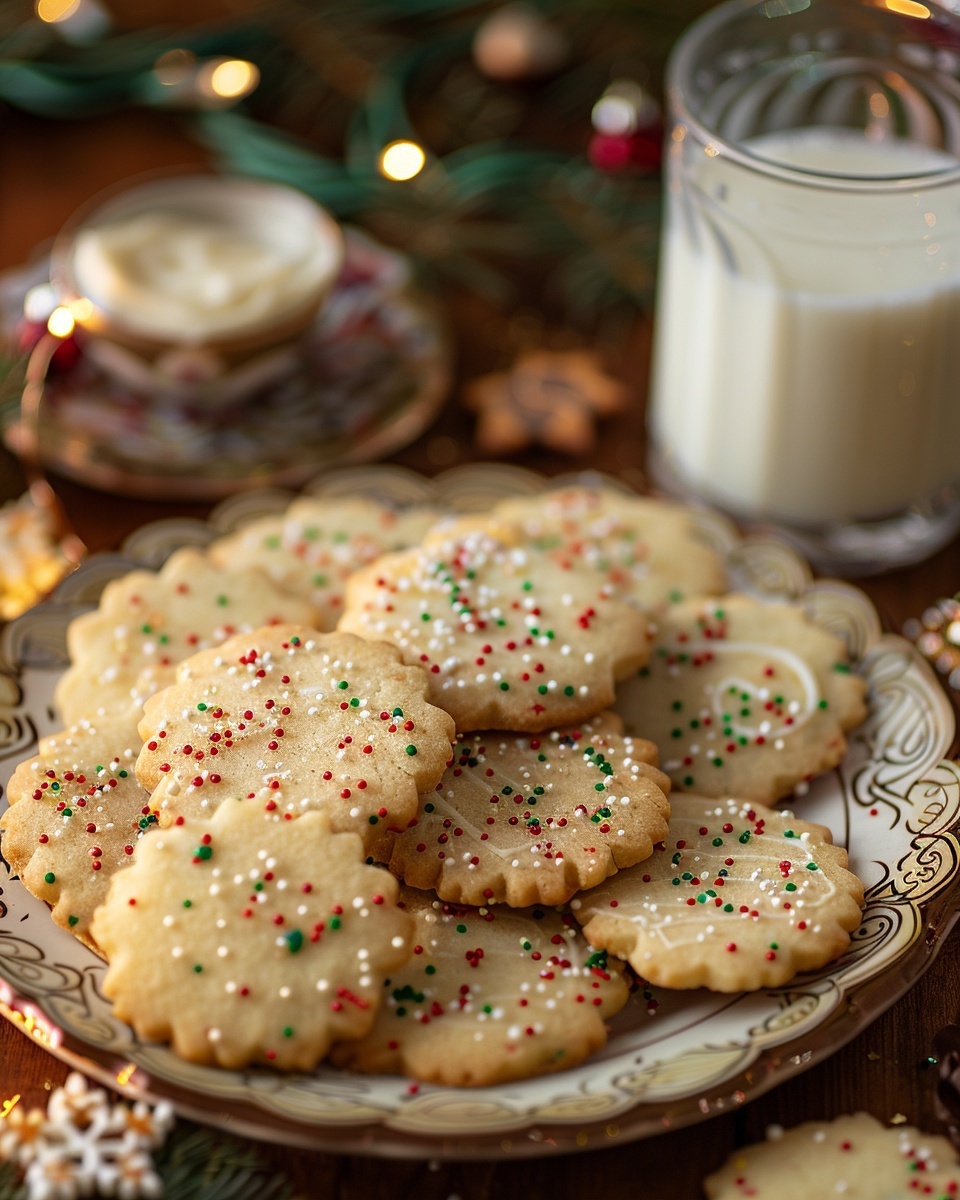
Introduction
The smell of butter and vanilla fills my kitchen every December. It’s that time of year when I pull out my favorite cookie cutters and mixing bowls. Christmas sugar cookies have been part of my holiday routine for as long as I can remember. When I was little, my grandmother would let me press shapes into the dough while she rolled it out. Those memories stuck with me. Now I make the same cookies with my own family.
There’s something magical about these simple treats. They bring people together in ways that fancy desserts just can’t match. Kids get excited to cut out stars and reindeer. Adults enjoy the peaceful task of decorating each cookie with care. These cookies work for every skill level too. First-timers can make beautiful results, and experienced bakers can push their creativity.
This article focuses on everything you need to know about making Christmas sugar cookies. I’ll share tips I’ve learned over years of baking. You’ll discover what makes them turn out soft or crispy. You’ll learn the best ways to decorate them. Most importantly, you’ll understand why this treat remains a holiday favorite in homes across the world.
Why Christmas Sugar Cookies Are a Holiday Staple
Last year, my neighbor stopped by on Christmas Eve with a plate of store-bought cookies. They looked nice enough, but something was missing. The taste felt flat. The texture was too uniform. That’s when I realized what makes homemade Christmas cookies so special. They carry the care and attention that went into making them.
I remember one particular December when my kids were young. We spent an entire afternoon making cookies together. Flour ended up everywhere. Sprinkles scattered across the floor. My daughter dropped a whole bottle of red food coloring on the counter. Despite the chaos, those cookies tasted amazing. We still talk about that day years later. The mess didn’t matter. The time together did.
These cookies became popular for good reasons. A classic sugar cookie recipe requires simple ingredients that most people already have. You don’t need exotic spices or hard-to-find items. Flour, butter, sugar, eggs, and vanilla create something wonderful. This simplicity means families can make them without stress or extra shopping trips.
The decorating aspect makes them even more appealing. Christmas sugar cookies with icing become edible art projects. You can pipe detailed designs or let kids splash colors freely. Royal icing works for detailed work. Buttercream frosting spreads easily for younger helpers. Either way, the cookies look festive and taste great.
I’ve tried dozens of sugar cookies icing variations over the years. Some dry too hard. Others stay sticky for days. The best versions strike a balance. They set firm enough to stack but stay soft enough to bite through easily. Getting that texture right makes all the difference between good cookies and great ones.
Another reason these cookies dominate holiday tables comes down to versatility. You can make them weeks ahead and freeze them. They travel well to parties and cookie exchanges. They look impressive without requiring professional baking skills. A simple round cookie with green icing and red sprinkles still screams Christmas.
The Secret to Perfect Sugar Cookies
I’ve made hundreds of batches of sugar cookies in my life. Some turned out amazing. Others went straight to the trash. The difference between success and failure often comes down to small details. Temperature matters. Mixing method matters. Even the mood you’re in while baking can affect the results.
Perfect sugar cookies have three key qualities. First, they hold their shape during baking. Those cute gingerbread men shouldn’t blob into formless circles. Second, they offer the right texture. Too hard and they’re unpleasant to eat. Too soft and they fall apart. Third, they taste buttery and sweet without being overwhelming.
People often ask me about the worlds best sugar cookie recipe. Here’s the truth: that recipe changes based on what you like. Some prefer thin and crispy cookies that snap when you bite them. Others want thick and soft cookies that melt in your mouth. Neither approach is wrong. You just need to know which type you’re trying to make.
The appeal of a truly great recipe lies in consistency. You should get similar results every time you bake. That means precise measurements and clear instructions. It also means understanding why each ingredient matters. Butter creates flavor and tenderness. Sugar adds sweetness and helps with browning. Eggs bind everything together and add richness.
If you’re after a soft sugar cookie recipe, focus on moisture and fat content. More butter generally means softer cookies. A touch of sour cream or cream cheese in the dough helps too. You also want to slightly underbake them. They should look set but still pale when you remove them from the oven. They’ll firm up as they cool.
Here are my essential tips for achieving cookie perfection:
- Chill your dough properly: Cold dough spreads less during baking and stays in shape better
- Use room temperature butter: It creams better with sugar and creates better texture
- Don’t overmix: Too much mixing develops gluten and makes cookies tough
- Roll to even thickness: Consistent thickness means even baking throughout
- Watch baking time closely: One extra minute can mean the difference between perfect and overdone
Temperature control deserves special attention. Your oven probably runs hotter or cooler than the dial suggests. I learned this the hard way after burning several batches. An oven thermometer costs less than ten dollars and saves so much frustration. Place it in the center of your oven and check the actual temperature.
The rolling surface matters too. I prefer rolling dough between two sheets of parchment paper. This method prevents sticking without adding extra flour. Too much flour in the dough makes cookies dry and tough. The parchment paper trick keeps your dough at the right consistency.
Decorating brings its own challenges. Sugar cookie frosting should complement the cookie without overwhelming it. I avoid recipes with corn syrup when possible. Sugar cookie frosting without corn syrup tastes cleaner and less artificially sweet. Powdered sugar, butter, milk, and vanilla create a simple frosting that everyone loves.
The key to great decorated cookies is patience. Let each layer of icing dry completely before adding the next. This prevents colors from bleeding together. It also makes the cookies easier to handle and stack. I usually decorate one day and let them set overnight before packaging or serving them.


Mastering the Art of Sugar Cookie Icing
Speaking of letting decorations set overnight, that actually leads perfectly into the real star of any decorated cookie: the icing itself.
I used to think the cookie was everything. Then one Christmas, I tried a basic sugar cookie with incredibly smooth, perfectly flavored icing. My whole perspective shifted. The cookie acts as a canvas, sure, but the icing makes it memorable. You could have the most perfectly baked cookie in the world, but pair it with gritty, overly sweet icing and nobody remembers it fondly. On the flip side, even a decent cookie becomes spectacular when topped with best tasting sugar cookie icing.
Here’s the thing about icing: it’s way more complicated than people realize. The moisture content affects how it spreads. The sugar type changes the texture. The drying time determines whether your cookies stick together in storage or stay perfectly separated. I’ve had batches where the icing never fully hardened, leaving sticky fingerprints on everything. I’ve also made icing so hard it practically shattered when someone tried to bite through it.
Royal icing became my go-to for detailed work. It dries completely hard and creates that professional bakery look. You know those cookies with perfect lines and patterns that look almost too pretty to eat? That’s royal icing at work. The basic formula uses powdered sugar, meringue powder, and water. Some recipes call for egg whites instead of meringue powder, but I avoid that for food safety reasons, especially when giving cookies to pregnant friends or elderly relatives.
The consistency matters tremendously with royal icing. Thick icing works for outlining and creating borders. Thin icing floods the interior spaces smoothly. I usually make one batch and divide it, then thin part of it with extra water. The outline-and-flood method takes practice, but once you get it down, your cookies look incredibly polished.
Buttercream frosting offers a different experience entirely. It stays softer and tastes richer. Kids generally prefer it because it’s sweeter and creamier. My nephew refuses to eat cookies with royal icing, but he’ll devour anything topped with buttercream. For casual family baking sessions, buttercream wins every time. It’s also more forgiving. If you mess up a design, you can scrape it off and start over.
Now let me tell you about sugar cookie frosting without corn syrup. This became important to me after my friend mentioned her daughter’s corn sensitivity. I started experimenting with recipes that skipped the corn syrup entirely. Turns out, you don’t even need it. A simple mixture of powdered sugar, butter, vanilla, and milk creates gorgeous frosting. It tastes cleaner too, without that slightly artificial sweetness corn syrup sometimes brings.
The secret to vibrant colors lies in gel food coloring rather than liquid. I learned this after years of making pastel cookies when I wanted bright reds and greens. Liquid coloring adds too much moisture and dilutes your icing. Gel coloring packs intense pigment into tiny amounts. A toothpick dipped in gel coloring colors an entire batch of frosting. Just be careful, because a little goes incredibly far. I once made fluorescent green cookies that looked radioactive because I added too much.
For smooth icing application, invest in squeeze bottles and various piping tips. Those cheap plastic bottles from craft stores work perfectly fine. Fill them with your thinned icing and you can create precise lines and designs. For flood icing, I use the squeeze bottle to fill in outlined areas, then use a toothpick to spread it evenly into corners. This technique eliminates air bubbles and creates a glass-smooth surface.
Drying time depends on humidity and icing thickness. In my dry winter climate, royal icing sets in about two hours. During humid summers, it can take six hours or more. I always plan decorating sessions with plenty of time before I need the cookies. Nothing’s worse than packaging cookies too early and watching all your careful designs smear together. If you’re hosting a holiday gathering similar to the elaborate spreads people create for Thanksgiving turkey dinners, give yourself at least a full day between decorating and serving.
Store-Bought vs Homemade: Pillsbury to the Rescue
Look, I’ll be honest here. Some weeks I don’t have time to make dough from scratch. Between work deadlines and kids’ activities, sometimes convenience wins. That’s where Christmas sugar cookies Pillsbury comes in handy. I keep a roll in my freezer for emergencies.
My mother-in-law once got offended when she saw store-bought dough in my fridge. She made some comment about “real baking.” But here’s my take: making cookies with my kids matters more than making everything from scratch. If pre-made dough means we actually do the activity instead of me stressing about time, then store-bought wins that day.
The taste difference is noticeable, though. Pillsbury dough tends toward a slightly artificial vanilla flavor. The texture leans more uniform and less buttery. But you know what? Covered in icing and sprinkles, most people can’t tell the difference. I’ve brought store-bought cookies to exchanges where people raved about them. They still taste good. They’re just different from homemade.
Funny enough, I use a hybrid approach sometimes. I’ll make homemade dough for cookies I’m giving as gifts or bringing to adult gatherings. For casual family decorating sessions or last-minute school parties, I grab the Pillsbury roll. This strategy saves my sanity while still letting me enjoy the scratch-made version when it matters most.
The convenience factor really can’t be understated. Store-bought dough eliminates the chilling time. You literally slice and bake. For people who work long hours or have limited kitchen skills, this accessibility opens up cookie decorating to everyone. I’d rather someone make cookies from a tube than skip the tradition entirely because homemade feels too intimidating.
Cost-wise, homemade usually wins. A batch of scratch cookies costs maybe three dollars in ingredients. A roll of Pillsbury dough runs around four or five dollars and makes fewer cookies. But convenience has value too. Your time matters. Only you can decide whether saving an hour is worth an extra few dollars.
Baking Tips for Flawless Christmas Sugar Cookies
By the way, regardless of whether you make dough from scratch or buy it, the baking technique determines your final results.
Rolling dough evenly stumped me for years. My cookies would come out thick on one side and thin on the other. Then I discovered rolling pin rings. These rubber or plastic rings slip onto your rolling pin ends and keep the dough at consistent thickness. They come in different heights for thin or thick cookies. Game changer. Seriously, if you struggle with even rolling, order a set immediately.
Chilling between steps makes such a difference. After cutting shapes, I chill the cookies again on the baking sheet before they go in the oven. This extra cold time helps them hold their shape. Those sharp points on star cookies and reindeer antlers stay crisp instead of rounding out during baking.
Spreading happens when butter gets too warm or when there’s too much sugar in proportion to flour. If your cookies consistently spread into blobs, try refrigerating your dough longer. Also check that you’re measuring flour correctly. Spooning it into the measuring cup and leveling it off gives more accurate measurements than scooping directly from the bag, which packs in extra flour.
Browning on the bottoms while the tops stay pale drives people crazy. This usually means your oven temperature runs hot or your baking sheet is too dark. Dark pans absorb more heat. I switched to light-colored aluminum sheets and the problem mostly disappeared. You can also try moving your oven rack up one position so cookies sit further from the bottom heating element.
A classic sugar cookie recipe should produce consistent results once you nail down these techniques. That’s what separates good recipes from great ones. Clear instructions plus solid technique creates perfect sugar cookies every single time.
Parchment paper versus silicone mats became my great baking debate. I prefer parchment because cookies slide off effortlessly and cleanup takes seconds. Some bakers swear by silicone mats for even heat distribution. Both work fine. Just avoid baking directly on greased pans, which can cause excess spreading.
Watch your baking time like a hawk. Set a timer for two minutes before the recipe suggests checking. Ovens vary so much that following times blindly leads to burnt cookies. You want edges barely set and centers that still look slightly underdone. They’ll continue cooking on the hot pan after you remove them from the oven. This is especially crucial for achieving that soft sugar cookie recipe texture everyone loves.
The cooling process matters too. Leave cookies on the baking sheet for exactly two minutes after removing from the oven. This lets them set up enough to move without breaking. Then transfer them to a wire rack so air circulates underneath. Leaving them on the hot pan too long results in overdone bottoms. Moving them too soon causes breakage. Timing is everything.
Similar to how timing matters when preparing Christmas ham with glaze, where you need to monitor that perfect caramelization, cookies demand attention at crucial moments. These aren’t dishes you can walk away from. Just like I wouldn’t serve dry latkes at a Hanukkah celebration, I refuse to serve burnt cookies at Christmas. The holiday spread deserves your best effort, even if that means staying focused during those critical final baking minutes. And speaking of special occasions, the same precision that goes into a New Year champagne cake applies here. Details matter when you’re creating memories around food.


Creative Ways to Decorate Your Cookies
Last Christmas, my daughter wanted to make cookies that looked exactly like photos she found on Pinterest. You know those impossibly perfect cookies with intricate designs and flawless icing? Yeah, those. I tried explaining that professionals with years of experience made them, but she insisted we could do it. And you know what? We got pretty close. Not perfect, but definitely impressive. The secret wasn’t fancy equipment or special skills. It was just trying different techniques and having fun with it.
Decorating Christmas sugar cookies with icing opens up endless creative possibilities. You’re not stuck with one look or style. Some years I go traditional with red and green. Other years I try metallics or pastels. The beauty of these cookies is their blank canvas quality. Whatever vision you have in your head, you can probably make it happen with the right tools and a bit of patience.
Piping bags changed everything for me. I used to try spreading icing with knives and getting frustrated when it looked messy. Then my sister-in-law showed me how to use disposable piping bags with various tips. Suddenly I could create clean lines, write names, and add tiny details. You don’t need expensive reusable bags either. The disposable ones work perfectly fine and save cleanup time. I buy packs of fifty at restaurant supply stores for almost nothing.
Different piping tips create completely different effects. A round tip makes dots and lines. A star tip creates textured swirls. A leaf tip makes perfect little leaves for wreaths and holly designs. I keep about five different tips on hand and that covers most projects. For basic cookie decorating, you honestly only need a small round tip and maybe a star tip. Everything else is bonus.
Stencils became my secret weapon for complex designs. You can buy them or make your own from food-safe plastic sheets. Place the stencil on your cookie, dust with colored sanding sugar or cocoa powder, and lift carefully. Instant professional-looking design. I made snowflake cookies last year using this technique and people thought I’d spent hours on each one. The whole batch took maybe twenty minutes to decorate.
Sprinkles deserve their own discussion because there are so many types now. Basic rainbow sprinkles work fine, sure. But have you seen the specialty ones? There are snowflake-shaped sprinkles, metallic dragées, pearl dust that makes everything shimmer, and even edible glitter. My personal favorite is sanding sugar. It catches light beautifully and adds texture without overwhelming the cookie flavor. Plus it comes in every color imaginable.
Here’s a technique I stumbled on accidentally: wet-on-wet decorating. Instead of letting your base icing dry completely, add contrasting colors while it’s still wet. Use a toothpick to swirl the colors together and create marbled effects. This works great for ornament cookies where you want that swirled glass look. Just make sure both icing consistencies match so they blend properly.
The flooding technique I mentioned earlier really shines with shaped cookies. Outline your cookie shape with thick icing, then fill the interior with thinned icing. The outline acts as a dam that keeps the flood icing contained. Once the flood layer dries completely, you can add details on top. This two-step process creates those bakery-quality cookies with smooth surfaces and crisp details.
Food coloring gels offer more control than liquid colors. I keep red, green, blue, and yellow on hand since you can mix those to create almost any color. A tiny dab creates soft pastels. More gel produces vibrant, saturated colors. Just remember that colors often deepen as the icing dries, so start lighter than you think you need.
For metallics, edible luster dust works wonders. Mix it with clear alcohol or lemon extract and paint it onto dried icing. This creates gorgeous gold, silver, or bronze accents. I use this technique for star cookies and ornament cookies. The shimmer makes them look extra special without much effort. You can also dust it on dry for a softer metallic effect.
Cookie stamps provide another easy decorating option. Press them into rolled dough before cutting shapes, or use them on cookies after baking. Dust the design with powdered sugar or cocoa powder to make it stand out. This works beautifully for cookies you’re planning to eat fresh rather than ice. Sometimes simple designs look more elegant anyway.
Funny enough, some of my favorite decorated cookies use barely any icing at all. A light dusting of powdered sugar on a perfectly baked cookie looks elegant and sophisticated. Or try drizzling melted chocolate in thin lines across the surface. Not everything needs elaborate decoration. Sometimes simplicity wins, especially when you’re making large quantities or when time runs short.
Edible markers let you add details after the icing dries. I use these for faces, writing messages, or adding tiny accents that would be impossible with piping bags. My kids love them because they can essentially color on cookies. The markers come in lots of colors and wash off hands easily, unlike gel food coloring which stains fingers for days.
Transfer designs using printed images is another trick I picked up recently. Print a design with edible ink on frosting sheets, cut it out, and place it on iced cookies. This method lets you create photo-realistic images or complex patterns without artistic skills. I made cookies with my kids’ faces on them using this technique. Everyone thought it was hilarious.
Nature provides decoration too. Crushed candy canes create peppermint sparkle. Chopped pistachios add green color and nutty flavor. Freeze-dried raspberries crushed into powder make natural pink dust. These natural decorations taste amazing and often look more interesting than artificial alternatives. Plus they align with growing interest in food sustainability and using real ingredients over synthetic ones.
Assembly techniques open up three-dimensional possibilities. Use royal icing as glue to construct cookie houses, standing Christmas trees, or cookie boxes. The icing dries hard enough to hold shapes together permanently. I make standing gingerbread men sometimes by attaching legs at an angle. They look like they’re walking across the plate.
Themed sets tell stories. Instead of random shapes, create coordinated designs. Make a snowman cookie, a hat cookie, a scarf cookie, and buttons, then arrange them on a plate so they form a complete snowman. Or make cookies that spell out messages when placed in order. This approach makes cookie plates look thoughtful and intentional.
Remember that decorating should stay fun. Some cookies will turn out perfect. Others won’t. That’s completely normal and actually part of the charm. My family loves finding the wonky cookies with crooked designs or colors that bled together. Those “mistakes” often taste just as good as the perfect ones. And honestly, the memories of decorating together matter infinitely more than professional results. Whether you’re trying the worlds best sugar cookie recipe or simple Christmas cookies from Pillsbury, the decorating process brings joy regardless of your starting point.
By the way, if you’re looking for more festive inspiration beyond cookies, check out other creative ideas in our holiday and event recipes collection. Sometimes seeing different holiday treats sparks new cookie decorating ideas you hadn’t considered before.
FAQs About Christmas Sugar Cookies
What’s the best way to store Christmas sugar cookies?
Store completely cooled cookies in airtight containers at room temperature for up to a week. Layer them with parchment paper to prevent sticking, especially if they’re decorated with icing. Keep different flavors in separate containers so they don’t exchange tastes. If you live somewhere humid, toss a piece of bread in the container to absorb moisture and keep cookies from getting soggy. For longer storage, freeze undecorated cookies for up to three months in freezer-safe containers or bags.
Can I freeze sugar cookie dough for later use?
Absolutely, and I do this all the time. Wrap dough tightly in plastic wrap, then place it in a freezer bag with the date labeled. It keeps perfectly for up to three months frozen. When you’re ready to use it, thaw it overnight in the refrigerator rather than at room temperature. This prevents condensation from forming and making the dough sticky. Frozen dough actually rolls out easier sometimes because it stays colder longer while you work with it.
How do I prevent my icing from cracking?
Cracking usually happens when icing dries too quickly or when the layer is too thick. Add a tiny bit more liquid to your royal icing to make it slightly less stiff. Let cookies cool completely before decorating because warm cookies cause rapid drying. Don’t place decorated cookies in direct sunlight or near heat sources. Humidity actually helps prevent cracking, so if you live somewhere very dry, consider letting cookies dry in a closed container with just a tiny opening for air circulation.
Why do my cut-out shapes spread during baking?
Spreading happens when the dough is too warm or contains too much butter relative to flour. Always chill dough for at least two hours before rolling, then chill cut shapes again before baking. Make sure your butter was at room temperature, not melted, when you made the dough. Use proper measuring techniques for flour by spooning it into cups rather than scooping. If you’ve done all this and still get spreading, try adding two more tablespoons of flour to your next batch.
Can I make sugar cookies without a mixer?
Yes, though it takes more arm strength. Cream the butter and sugar together with a wooden spoon using vigorous circular motions for several minutes until fluffy. Add eggs and mix thoroughly. Stir in dry ingredients until just combined. The process takes longer than using a mixer, but the results turn out equally good. I actually prefer mixing by hand sometimes because it’s easier to avoid overmixing, which makes cookies tough.
What’s the difference between royal icing and buttercream for cookies?
Royal icing dries completely hard and creates smooth, professional-looking surfaces perfect for detailed designs and stacking cookies. It’s made from powdered sugar and egg whites or meringue powder. Buttercream stays soft, tastes richer and more buttery, and is easier for kids to work with. It’s made from butter, powdered sugar, and milk or cream. Choose royal icing for cookies you’re giving as gifts or displaying, and buttercream for casual family decorating sessions where taste matters most.
How far in advance can I bake Christmas cookies?
Undecorated cookies freeze beautifully for up to three months, so you can bake them way ahead. Decorated cookies with royal icing last about two weeks at room temperature in airtight containers. Buttercream-frosted cookies should be eaten within a week for best taste. I usually bake cookies two weeks before Christmas, freeze them undecorated, then thaw and decorate them a few days before I need them. This spreads out the work and reduces holiday stress significantly.
Why are my sugar cookies hard instead of soft?
Overbaking is the most common culprit. Remove cookies when the edges barely set and centers still look slightly underdone. They continue cooking on the hot pan after removal. Too much flour also creates hard cookies, so measure carefully. Make sure you’re not overmixing the dough, which develops gluten and creates tough texture. Adding an extra egg yolk or tablespoon of sour cream to your dough makes cookies softer and more tender.
Do I need to use parchment paper when baking sugar cookies?
It’s not absolutely required, but I strongly recommend it. Parchment prevents sticking without adding extra fat that can cause spreading. Cookies slide right off after baking, making removal effortless. Cleanup takes seconds since you just throw away the paper. Silicone baking mats work too if you prefer reusable options. Greasing pans directly often causes excess spreading and inconsistent browning, so I avoid that method entirely.
Can I use salted butter instead of unsalted in sugar cookies?
You can, but you’ll need to reduce or eliminate added salt in the recipe. Unsalted butter gives you better control over the final salt level. Different brands of salted butter contain varying amounts of salt, which makes consistency tricky. I keep unsalted butter on hand specifically for baking because it produces more predictable results. If you only have salted butter available, cut the recipe’s salt by half and taste the dough before baking to see if it needs adjustment.
Making Christmas sugar cookies is one tradition that never gets old, no matter how many years you’ve been doing it. Each batch brings new opportunities to create, connect, and share something made with your own hands. Don’t stress about perfection. Just enjoy the process, involve the people you love, and remember that even imperfect cookies taste wonderful when made with care.
Christmas Sugar Cookies
Ingredients
Equipment
Method
- Preheat your oven to 350°F (175°C).
- In a bowl, combine flour, baking powder, and salt; set aside.
- In a mixer's bowl, cream together butter and sugar until light and fluffy.
- Beat in the egg and vanilla (and almond extract, if using).
- Gradually add the flour mixture to the butter mixture until well combined.
- Chill the dough for at least 2 hours in the refrigerator.
- Roll out the chilled dough between two sheets of parchment paper to your desired thickness.
- Cut out shapes using cookie cutters and place them on a baking sheet.
- Chill the cut-out cookies on the baking sheet for another 10 minutes.
- Bake for 8-10 minutes until edges are barely set but centers look pale.
- Allow cookies to cool on the baking sheet for 2 minutes before transferring to a wire rack.