
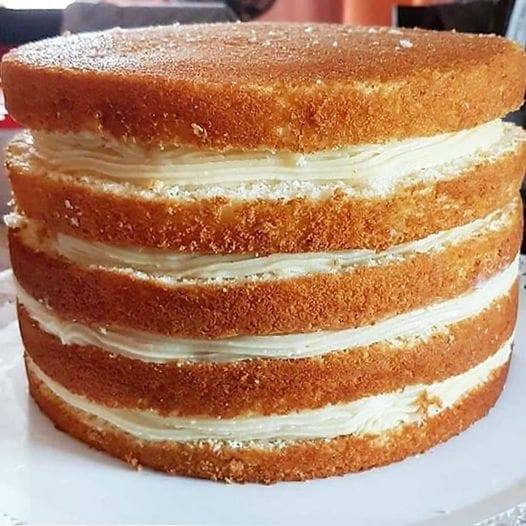
The Secret to the Most Amazing, Cloud-Soft Birthday Cake You’ll Ever Bake
You know that panic moment when you bite into a birthday cake and it’s dry, dense, or just… sad? We’ve all been there. My mission for my daughter’s 5th birthday was to bake a cake so light and fluffy, it would practically float off the plate. I tried a dozen recipes, and my kitchen looked like a flour bomb went off. Then I found this old-school sponge bread recipe. It’s not a butter cake—it’s something magical. And the best part? It’s the perfect, sturdy, yet tender canvas for any frosting dream you have. Let me share my kitchen-tested winner with you.
A Slice of History: Why Sponge Bread is a Timeless Classic
This sponge bread, or “pão de ló” as it’s known in some cultures, is one of the oldest cakes in the book. Before baking powder was a pantry staple, bakers relied on the incredible power of whipped eggs for lift. It’s the grandparent of all modern cakes! I love that this recipe connects us to generations of bakers who celebrated life’s sweetest moments with just eggs, flour, and sugar. Today, we might add a dash of vanilla, but the soul of the cake remains beautifully simple and utterly delicious.
Why You Will Adore This Birthday Sponge
This recipe is your new best friend for three big reasons. First, the texture is unbeatable—it’s springy, soft, and melts in your mouth. Second, it’s surprisingly simple with only four main ingredients. No weird additives! And third, its neutral flavor is a dream. It soaks up syrups beautifully and pairs perfectly with rich buttercream, fresh fruit, or a simple dusting of powdered sugar. It’s a versatile superstar that never fails to impress.
When to Whip Up This Wonderful Sponge Cake
Obviously, it’s the ultimate birthday cake base. But don’t limit its joy to just birthdays! It’s perfect for:
- Celebration Layers: Wedding anniversaries, baby showers, or “just because” parties.
- Afternoon Tea Treat: Sliced and served with berries and whipped cream.
- Upside-Down Cakes: A fantastic base for pineapple or peach upside-down cake.
- Tiramisu or Trifle: Its sturdy-yet-absorbent texture is ideal for layered desserts.
Your Simple Shopping List
Gather these pantry heroes:
- 2 cups of wheat flour (all-purpose, NOT self-rising)
- 8 large eggs, at room temperature (this is crucial!)
- 1 and 1/2 cups of granulated sugar
- 1 tablespoon of vanilla essence (optional, but highly recommended)
Ingredient Swaps and Substitutions
Out of something? No worries!
- Gluten-Free: Use a 1:1 gluten-free all-purpose flour blend.
- Vanilla: Use the seeds from one vanilla bean for an incredible flavor boost.
- Citrus Twist: Replace vanilla with the zest of one lemon or orange.
- Superfine Sugar: If you have it, use it! It incorporates into the eggs even more smoothly.
Your Step-by-Step Guide to Fluffy Perfection
Step 1: The Gentle Prep Work
First, let’s get organized. Take your flour and sugar and sift them each into separate bowls. I know, sifting feels like an extra step, but trust me! It aerates the flour and breaks up any lumps in the sugar, which helps create that delicate crumb we’re after. Set these bowls aside. Now, crack all 8 eggs into the sparkling clean bowl of your stand mixer. Using room temperature eggs is non-negotiable here—they whip up to a much greater volume than cold ones, giving your cake its signature height.
Step 2: The Magical Whipping Stage
This is where the magic happens! Attach the whisk to your mixer and beat those eggs on high speed for a full 5 minutes. You’ll watch them transform from a gooey yellow pool into a thick, pale, and luxurious foam. It should at least triple in volume. When you lift the whisk, the mixture should fall back onto itself in a slow, thick ribbon that holds its shape for a few seconds. This ribbon stage is your ticket to a light cake.
Step 3: Sweetening and Flavoring the Mix
Now, reduce your mixer speed to medium-low. We need to be gentle. Gradually, spoonful by spoonful, add the sifted sugar to the whipped eggs. Let each addition incorporate before adding the next. This prevents the mixture from deflating. Once all the sugar is in, add your vanilla essence for that warm, comforting aroma. Now, turn the speed back up to high and let it beat for a full 10 minutes. Yes, 10! This stabilizes the foam and gives you an incredibly stable base for the flour.
Pro tip: Set a timer. This long whipping time is the secret to a sponge that doesn’t collapse.
Step 4: The Delicate Folding Dance
Turn off the mixer. This next part is done by hand, with love and patience. Remove the bowl from the mixer. Grab a wire whisk or a large flexible spatula. Take a spoonful of your sifted flour and gently sprinkle it over the surface of the egg foam. Using the whisk, fold it in with a gentle motion: cut down through the center, scoop along the bottom, and lift up and over. Rotate the bowl a quarter turn and repeat. We are preserving all those precious air bubbles. Continue adding the flour spoon by spoon until it’s all just combined. The batter will be beautifully thick and airy.
Pro tip: Always stir from the bottom up. A rough stir will push all the air out, and we’ve worked too hard for that!
Step 5: Pan Prep and Baking to Golden Glory
While the oven preheats to 350°F (180°C), prepare your pan. Here’s my foolproof trick for the perfect rise: only grease the bottom of your pan with a little butter. Then, cut a round of parchment paper to fit just the bottom. Do NOT grease the sides of the pan! This allows the cake to climb the ungreased walls as it bakes. Gently pour your glorious batter into the prepared pan and give it a gentle tap on the counter to release any large air bubbles. Bake it in the preheated oven for 40 to 45 minutes. It’s done when the top is a deep golden brown and springs back when lightly touched, or a toothpick inserted in the center comes out clean.
Chef’s tip: Avoid the urge to open the oven door for at least the first 30 minutes. A draft can make a rising cake sink in the middle!
Your Time Investment
Prep Time: 20 minutes
Cook Time: 45 minutes
Cooling Time: 1 hour (be patient!)
Total Time: 2 hours 5 minutes
The #1 Secret for an Un-Sinky Cake
The parchment paper trick is everything. Buttering the sides of the pan gives the batter no traction to cling to as it rises. The ungreased sides provide just enough friction for the cake to pull itself up tall and proud. When you take it out of the oven, it might have a beautiful dome. It will settle slightly as it cools, which is perfectly normal.
A Fun Bit of Cake Science
Did you know this type of cake is called a “foam cake”? Its entire structure comes from the air bubbles trapped in the whipped eggs. That’s why there’s no butter or oil! The protein in the egg whites forms a network around the air bubbles, and the steam from baking sets that structure, giving you that iconic, airy texture. It’s edible science at its tastiest.
Essential Kitchen Tools
- Stand mixer or a very sturdy hand mixer
- Large mixing bowl (if using a hand mixer)
- Fine-mesh sieve or sifter
- Wire whisk and/or large silicone spatula
- 9-inch round cake pan (springform works beautifully)
- Parchment paper and scissors
How to Store Your Masterpiece
Once your cake is completely cool, you can store it. If you’re not frosting it right away, wrap the whole cake tightly in plastic wrap. This keeps it moist. You can leave it at room temperature for a day.
For longer storage, a double layer of plastic wrap followed by aluminum foil is best. You can freeze the unfrosted sponge for up to 2 months. It freezes exceptionally well! Thaw it overnight in the refrigerator still wrapped, then bring it to room temperature before decorating.
Once frosted, storage depends on your frosting. If it’s a buttercream frosting, the cake can be kept at cool room temperature under a cake dome for a few days. If your frosting contains dairy or whipped cream, you must refrigerate it. Let a refrigerated cake sit out for 30 minutes before serving for the best texture.
My Best Extra Tips and Advice
- Weigh your flour for absolute accuracy. 2 cups of all-purpose flour is about 240 grams.
- If your cake cracks on top, don’t fret! It’s a sign of a good, well-risen sponge and will be covered by frosting.
- To get perfectly flat layers for stacking, use a serrated knife to carefully slice off the dome once the cake is cool.
- Brush the layers with a simple syrup (equal parts sugar and water, heated until dissolved) before frosting for extra moisture and flavor.
Making It Pretty: Presentation Ideas
- Go Naked Cake: Frost the outside with a very thin layer of buttercream so the golden sponge peeks through. Adorn with fresh seasonal berries.
- Classic Elegance: Cover in a smooth white Swiss meringue buttercream and pipe simple rosettes around the top edge.
- Colorful Fun: Tint your frosting in bright birthday colors and let the kids decorate it with sprinkles and candy.
- Drip Cake Drama: Pour a glossy chocolate or mirror glaze over a frosted cake and let it drip down the sides. Top with gold leaf or macarons.
Lighten It Up: Healthier Twists on the Classic
Want to tweak the recipe? Here are six ideas:
- Whole Wheat Honey Sponge: Swap half the white flour for whole wheat and use honey for half the sugar. The flavor is nutty and rich.
- Orange-Almond Sponge: Replace 1/4 cup of flour with finely ground almond flour and add orange zest. It’s wonderfully fragrant.
- Lemon Poppy Seed Version: Add the zest of two lemons and 2 tablespoons of poppy seeds to the flour for a bright, textured cake.
- Dairy-Free Chocolate Sponge: Replace 1/4 cup of flour with unsweetened cocoa powder for a light chocolate base that’s naturally dairy-free.
- Reduced-Sugar Berry Sponge: Reduce sugar to 1 cup and fold in 1 cup of finely diced, lightly floured strawberries before baking.
- Coconut Cloud Cake: Substitute 1/2 cup of flour with desiccated coconut and use coconut extract instead of vanilla for a tropical feel.
Common Mistakes to Avoid
Mistake 1: Using Cold Eggs Straight From The Fridge
Cold egg yolks are thick and don’t whip as well. They won’t trap enough air, leading to a dense, flat cake. Always plan ahead! To quickly bring eggs to room temperature, place them in a bowl of warm (not hot) water for 10 minutes before cracking.
Mistake 2: Not Whipping the Eggs Long Enough
Impatience here is the enemy. If you stop beating when the eggs are just frothy, you haven’t built the strong, stable foam needed to hold up the flour. The ribbon stage (where the batter falls in a thick, slowly dissolving ribbon) is your visual cue. If you don’t see it, keep whipping!
Mistake 3: Deflating the Batter When Adding Flour
This is the most common point of failure. Dumping in all the flour and stirring aggressively with a spoon will pop all the tiny air bubbles you created. You must fold gently and patiently with a whisk or spatula, scraping from the bottom up. It should feel light, not like a workout.
Mistake 4: Greasing the Sides of the Baking Pan
It seems helpful, but it’s a trap! A greased side offers no resistance. The cake needs to grip the sides to climb upwards as it bakes. Just grease the bottom and use parchment paper. Your cake will thank you with a beautiful, even rise.
Mistake 5: Opening the Oven Door Too Early
We all want to peek. But a rush of cold air in the first half of baking can shock the delicate air structure, causing the center to collapse. Trust the process. Use your oven light to check on it, and only open the door after the 35-minute mark for a quick toothpick test.
Your Sponge Cake Questions, Answered
Can I make this sponge cake without a stand mixer?
You absolutely can, but be prepared for an arm workout! A strong hand mixer will work just fine. The key is to beat the eggs and sugar for the full suggested times, even if your hand gets tired. The volume and ribbon stage are what matter most. Make sure your hand mixer is powerful enough to handle thick batter for extended periods.
Why did my cake sink in the middle after baking?
A sunken middle usually points to underbaking or a draft. The center wasn’t fully set when you took it out, so it collapsed as it cooled. Next time, bake a few minutes longer and ensure your toothpick test comes out completely clean with no crumbs. Also, check that your oven temperature is accurate with an oven thermometer.
Can I use this recipe to make cupcakes?
Yes, this batter makes lovely, light cupcakes! Fill lined cupcake tins about 2/3 full. The baking time will be much shorter, usually around 18-22 minutes at the same temperature. Watch them closely, as they can go from perfect to overdone quickly. A toothpick test is your best friend here too.
My cake is very dense and eggy. What went wrong?
This sounds like the eggs weren’t whipped enough, or the flour was mixed in too harshly. A dense texture means not enough air was incorporated. An eggy flavor can also mean the sugar wasn’t fully dissolved into the eggs during the whipping stage. Next time, ensure you whip to the full, thick ribbon stage and fold with a very light hand.
How do I know if my eggs are at the “ribbon stage”?
After whipping the eggs and sugar for the full time, stop the mixer. Lift the beaters or whisk out of the batter. Let the batter fall back into the bowl. It should fall in a thick, wide stream that sits on top of the batter in the bowl for several seconds before slowly melting back in. If it immediately sinks, it needs more whipping. If it sits there forever without melting, you may have over-whipped.
Can I add other flavors like lemon or almond?
Absolutely! This cake is a fantastic flavor canvas. Add 2 teaspoons of finely grated citrus zest (lemon, orange, lime) when you add the vanilla. For almond, replace the vanilla with 1.5 teaspoons of almond extract. You can even fold in up to 1/2 cup of finely chopped nuts or chocolate chips after the flour, but be gentle.
How long should I let the cake cool before frosting it?
Patience is key. Let the cake cool in the pan on a wire rack for about 15 minutes. Then, run a thin knife around the edge to loosen it from the ungreased sides. Invert it onto the rack, remove the parchment paper, and let it cool completely, at least 1 hour. Frosting a warm cake is a disaster—the frosting will melt and slide right off!
What’s the best type of frosting for this sponge cake?
Because the cake is so light, pair it with a frosting that’s not overly heavy. Swiss or Italian meringue buttercream is silky and light. A simple whipped cream sweetened with a little sugar is fresh and lovely. A classic vanilla buttercream is always a crowd-pleaser. For a fruity twist, a layer of jam and fresh cream is divine.
Can I make this cake a day ahead?
Yes, and it’s often recommended! Baking the cake layers a day ahead allows them to settle, making them less crumbly and easier to frost. Once completely cool, wrap each layer tightly in plastic wrap and store at room temperature. You can also freeze them for longer storage. The flavor is sometimes even better the next day.
My cake stuck to the pan even with parchment. Why?
If you greased the bottom, added parchment, and it still stuck, the cake might have been underbaked or the pan might have been scratched or damaged. Also, ensure you are running your knife around the edge *before* trying to invert it. Letting it cool for the full 15 minutes helps it pull away from the sides naturally.
The Joy of a Perfectly Baked Sponge
There is something truly special about mastering a classic recipe. This birthday sponge bread is more than just a cake; it’s a promise of a soft, celebratory bite, a vehicle for sweet memories, and a testament to the simple magic of eggs, sugar, and flour. It might take a little focus, but the proud “oohs” and “aahs” when you slice into that fluffy, golden interior are worth every second. So preheat your oven, grab your whisk, and get ready to bake the birthday cake that will become your family’s new tradition. Happy baking!
Creamy Cajun Pasta
Ingredients
Equipment
Method
- Sift the flour and sugar into separate bowls.
- Crack the 8 eggs into the bowl of your stand mixer.
- Beat the eggs on high speed for 5 minutes until thick and pale.
- Gradually add the sifted sugar to the whipped eggs on medium-low speed.
- Add vanilla essence and whip on high speed for 10 minutes.
- Gently fold in the sifted flour spoon by spoon using a whisk or spatula.
- Grease the bottom of a 9-inch round cake pan and line it with parchment paper.
- Pour the batter into the pan and bake at 350°F (180°C) for 40-45 minutes.
- Allow to cool for about 1 hour before removing from the pan.