
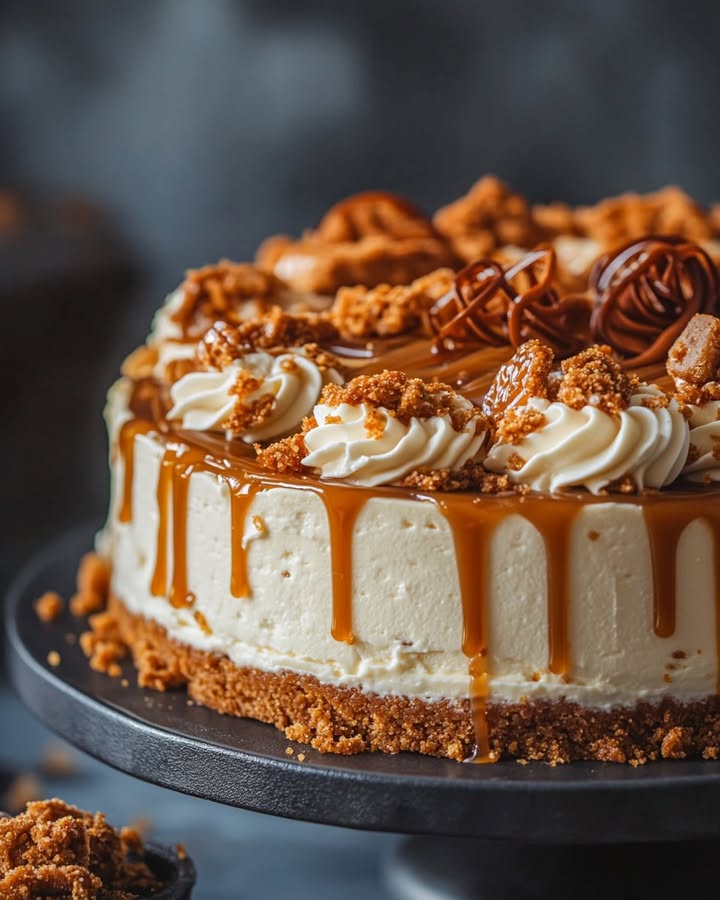
There are desserts, and then there are events. The moment you mention a cheesecake with Biscoff and salted caramel, you can actually see people’s eyes light up. It’s the kind of recipe that feels like a warm hug and a party all at once. I first made this for a friend’s birthday, and let’s just say it’s now a non-negotiable request. The magic is in the layers: that spiced, buttery cookie crust, the impossibly creamy filling with a hint of caramelized depth, and that glorious, gooey salted caramel crown. It’s a showstopper that’s surprisingly straightforward to make. Let’s create some magic together.
From Airline Cookie to Kitchen Star: The Biscoff Story
Long before it was a pantry staple, Biscoff was the crisp, caramelized cookie handed out on airplanes. That humble origin story makes its global dessert fame even sweeter. The unique flavor—a blend of cinnamon, nutmeg, and brown sugar—comes from a special baking process called the “Lotus secret.” While classic New York cheesecake is timeless, this version is a beautiful evolution. It takes the familiar creamy texture and marries it with the cozy, spiced notes of Biscoff, creating something entirely new. It’s a modern treat born from a very happy accident.
Why You’ll Adore This Biscoff Cheesecake
This cheesecake is a true delight for so many reasons. First, it’s a flavor explosion. The spicy cookie crust contrasts perfectly with the rich, smooth filling and the sweet-salty caramel. Second, it’s incredibly forgiving. The water bath method I’ll share is your best friend against cracks. Finally, it makes you look like a pastry pro. The gorgeous layers and elegant finish promise rave reviews. You get restaurant-quality results from your own kitchen.
When to Serve Your Cheesecake Masterpiece
This dessert is versatile enough for any gathering. It’s the perfect centerpiece for holiday dinners, bringing a cozy warmth to the table. It’s a guaranteed hit at potlucks and parties—be prepared to share the recipe! For a special family weekend, making it together becomes part of the fun. It also makes a heartfelt, homemade gift that says “you’re special” far more than any store-bought item.
Gathering Your Ingredients
Here’s what you’ll need to create this Biscoff Salted Caramel Cheesecake Delight:
- For the crust: 1 package Biscoff cookies (crushed into fine crumbs), 1/4 cup unsalted butter (melted).
- For the cheesecake filling: 24 oz cream cheese (softened), 1 cup granulated sugar, 3 large eggs, 1 cup heavy cream, 1 tsp vanilla extract, Optional: 1/4 cup Biscoff spread.
- For the topping: 1 jar salted caramel sauce, 1 package Biscoff cookies (crushed, for garnish).
Smart Swaps and Substitutions
Don’t fret if you’re missing an item. Here are some easy swaps:
- Biscoff Cookies: Graham cracker crumbs or ginger snap crumbs work well, though the flavor will be different.
- Salted Caramel Sauce: A good quality dulce de leche or even a chocolate ganache makes a lovely alternative topping.
- Heavy Cream: Full-fat sour cream can be used for a slightly tangier filling.
- Biscoff Spread: If you don’t have it, simply omit it. The crust and garnish provide plenty of Biscoff flavor.
Crafting Your Biscoff Salted Caramel Cheesecake Delight
Follow these steps for a flawless, gorgeous cheesecake.
Step 1: Build the Foundation
Start by turning your Biscoff cookies into fine crumbs. A food processor is quick, or place them in a sealed bag and roll with a rolling pin. Listen for the satisfying crunches turning into soft, sandy whispers. Mix the crumbs with melted butter until it resembles wet sand. Press this mixture firmly into the bottom of your springform pan. This buttery, spiced base is the crucial first layer of flavor. Taking time to pack it down evenly ensures every slice has the perfect bite. Pro tip: Use the bottom of a measuring cup to press the crumbs for a compact, level crust.
Step 2: Create the Creamy Heart
In a large bowl, beat the softened cream cheese and sugar until completely smooth. No lumps allowed! This step is key for that velvety texture. Add the eggs one at a time, mixing just until each yellow yolk disappears into the pale, creamy mixture. Then, slowly pour in the heavy cream and vanilla. If using the Biscoff spread, add it now. The filling will transform into a luscious, pourable dream with the warm color of caramel. Chef’s secret: Use room temperature ingredients. Cold cream cheese leads to a lumpy batter, and cold eggs can cause the filling to separate.
Step 3: The Gentle Bake
Wrap the bottom of your springform pan tightly with heavy-duty aluminum foil. This protects it from the water bath. Place the pan in a larger roasting dish and pour the filling over the crust. Smooth the top. Now, create a water bath by pouring hot water into the roasting dish until it comes about halfway up the sides of the springform pan. This steam is the secret to gentle, even cooking that prevents cracks. Bake until the edges are set but the center still has a slight, graceful jiggle.
Step 4: The Patient Chill
Once baked, turn off the oven and crack the door open. Let the cheesecake cool slowly inside for about an hour. This gradual temperature change further prevents sinking or cracking. Then, remove it and let it cool completely on the counter. Finally, refrigerate it for at least four hours, but overnight is truly best. This long chill allows the flavors to meld and the texture to firm up into that perfect, sliceable creaminess.
Step 5: The Grand Finale
This is the fun part. Unlock and remove the springform ring. Give your salted caramel sauce a good stir to make it smooth and pourable. Pour it over the chilled, firm surface of the cheesecake, using a spoon or offset spatula to guide it to the edges in beautiful drips. Finally, take your reserved crushed Biscoff cookies and sprinkle them generously around the border. This adds a final crunch and makes the whole dessert look professionally finished.
Your Baking Timeline
- Prep Time: 30 minutes
- Cook Time: 1 hour
- Chilling Time: 4 hours (or overnight)
- Total Time: 5 hours 30 minutes
- Servings: 12
A Secret for the Smoothest Filling
After blending your filling, tap the bowl firmly on the counter a few times. This brings any hidden air bubbles to the surface. Pop them with a toothpick or gently run a knife through the batter before baking. Fewer bubbles mean a smoother, more professional-looking surface on your finished cheesecake.
The Cookie That Conquered the World
Did you know the name “Biscoff” is a portmanteau of “Biscuit” and “Cofffee”? It was created to be the perfect companion to a cup of coffee. This makes our cheesecake a doubly fitting dessert for after dinner with coffee. Its rise from a simple airline snack to a global baking phenomenon is a testament to its uniquely addictive flavor.
Tools You’ll Need
- 9-inch springform pan
- Food processor or zip-top bag and rolling pin
- Large mixing bowl and electric mixer (stand or hand)
- Roasting pan large enough to hold the springform pan
- Heavy-duty aluminum foil
- Offset spatula or spoon for spreading caramel
Keeping Your Cheesecake Delicious
Store any leftover cheesecake (if you have any!) covered in the refrigerator. The best method is to place it on a plate and cover the whole thing with a dome lid or inverted bowl. You can also transfer slices to an airtight container. Properly stored, it will stay fresh and delicious for up to 5 days. The crust may soften slightly from the moisture of the filling and topping, but the flavor will remain incredible.
For longer storage, you can freeze the cheesecake before adding the caramel topping. Wrap the chilled, bare cheesecake tightly in plastic wrap, then in aluminum foil. Freeze for up to 2 months. Thaw overnight in the refrigerator before adding your caramel and cookie garnish.
If you have extra caramel sauce, store it separately in its jar in the fridge. Warm it slightly before drizzling over individual slices if you prefer.
Tips for a Flawless Dessert
- Room Temperature is Key: Ensure your cream cheese, eggs, and heavy cream are all at room temperature before mixing. This is the single best tip for a smooth, lump-free filling.
- Don’t Overmix: Once you add the eggs, mix just until combined. Overbeating incorporates too much air, which can cause the cheesecake to puff and then crack as it cools.
- Trust the Jiggle: The cheesecake is done when the outer ring is set but the center (about the size of a lemon) has a slight jiggle when you gently shake the pan. It will firm up as it chills.
Presenting Your Masterpiece
Serve each slice with a little extra drizzle of caramel on the plate. For a coffee lover’s twist, place a few whole Biscoff cookies on the side. A dollop of freshly whipped cream or a scoop of vanilla ice cream makes it extra decadent. For a dinner party, garnish with a tiny sprinkle of sea salt flakes right on the caramel to highlight the salted element.
Delicious Variations to Try
Love this recipe? Here are six ways to mix it up:
- Chocolate Swirl Biscoff Cheesecake: Melt 1/2 cup of chocolate chips and swirl it into the filling before baking.
- Biscoff Cheesecake Bars: Press the crust into a 9×13 pan, add filling, and bake. Easier to serve a crowd!
- Mini Cheesecakes: Use a muffin tin with liners for adorable individual portions. Reduce baking time to about 20 minutes.
- White Chocolate & Biscoff: Fold 1 cup of white chocolate chips into the filling for sweet, melty pockets.
- Pumpkin Spice Version: Add 1 cup of pumpkin puree and 2 tsp of pumpkin pie spice to the filling for a fall twist.
- No-Bake Biscoff Cheesecake: Use gelatin to set the filling in the fridge. Perfect for hot summer days.
Common Mistakes to Avoid
Using Cold Ingredients
This is the most common pitfall. Cold cream cheese will never blend smoothly with sugar, leaving you with a lumpy batter. Cold eggs can cause the fat in the cream cheese to separate, ruining the texture. Always plan ahead and let your dairy and eggs sit on the counter for at least an hour before you start baking.
Skipping the Water Bath
It might seem like an extra, fussy step, but it’s essential. Baking a cheesecake without a water bath exposes it to direct, harsh heat. This often leads to overcooked edges, a sunken middle, and major cracks. The water bath creates a gentle, steamy environment for even and gradual cooking. Don’t skip this step for the perfect texture.
Overbaking the Cheesecake
A cheesecake continues to cook as it cools. If you bake it until the center is completely firm in the oven, it will be overdone and dry once chilled. You want the center to still have a slight wobble, like set gelatin, when you take it out. It will firm up perfectly in the refrigerator. Trust the jiggle test.
Not Sealing the Springform Pan for the Bath
If water leaks into your pan, you’ll get a soggy crust. Wrap the outside bottom and sides of your springform pan tightly with two layers of heavy-duty aluminum foil. This creates a waterproof shield. Place it in the roasting pan, then add the water. This simple precaution saves the day.
Frequently Asked Questions
Can I make this cheesecake ahead of time?
Absolutely. In fact, it’s better when made ahead! The flavors deepen, and the texture sets perfectly when chilled overnight. You can bake it up to two days in advance. Just wait to add the caramel topping and cookie garnish until a few hours before you plan to serve it to keep everything crisp and beautiful.
Why did my cheesecake crack?
Cracks usually happen from a sudden temperature change or overmixing/overbaking. Using a water bath, cooling the cheesecake slowly in the oven with the door cracked, and not overbeating the eggs are the best defenses. If it does crack, don’t worry—your delicious caramel and cookie topping will cover it right up!
Can I use a different pan if I don’t have a springform?
A springform pan is highly recommended because the removable sides make it easy to get the cheesecake out without damaging it. You can use a regular 9-inch cake pan, but you’ll need to line it very carefully with parchment paper with overhanging edges to lift the cheesecake out. It’s a bit trickier, but it can be done.
How do I know when the cheesecake is done baking?
The edges should look puffed and set, but the center (about a 3-inch circle) should still look slightly wet and jiggle like Jell-O when you gently shake the pan. A thermometer inserted into the filling about 2 inches from the edge should read about 150°F (65°C). Remember, it will firm up significantly during the long chill.
My caramel sauce is too thick to pour. What can I do?
Simply warm it gently. You can microwave the jar (without the lid) in 10-second intervals, stirring between each, until it’s pourable. Alternatively, place the jar in a bowl of warm water for a few minutes. Let it cool slightly before pouring it onto the chilled cheesecake so it doesn’t melt the top.
Is the Biscoff spread in the filling necessary?
It’s optional, but highly recommended for true Biscoff lovers. It intensifies that wonderful, spiced caramel flavor throughout every single bite of the creamy filling. If you don’t have it, the cheesecake will still be delicious from the crust and topping, but adding the spread makes it next-level.
How should I store leftovers?
Keep the cheesecake covered in the refrigerator. An airtight container is best, or you can cover the whole cheesecake (still on its pan base) with plastic wrap or a cake dome. It will stay fresh for up to 5 days. The crust will slowly soften from the moisture but will still taste amazing.
Can I freeze this cheesecake?
Yes, you can freeze it for up to 2 months. Freeze it without the caramel and cookie garnish. Wrap the completely cooled cheesecake tightly in plastic wrap, then in foil. Thaw it overnight in the refrigerator, then add your toppings before serving.
What can I use instead of Biscoff cookies for the crust?
Graham crackers are the most common substitute, offering a sweet, honey-like base. Gingersnap cookies are another fantastic choice—they provide a similar spice profile with a little more peppery zing. Both will work with the same 1/4 cup of melted butter.
My filling seems too thin. Did I do something wrong?
If all your ingredients were at room temperature, the filling should be thick but pourable. If it seems runny, it’s likely because the cream cheese wasn’t fully softened or wasn’t beaten with the sugar long enough to thicken. Don’t panic. Pour it onto the crust and bake as directed. It should still set properly during baking and chilling.
The Final Slice
This Biscoff Salted Caramel Cheesecake Delight is more than just a dessert. It’s a creation story. It starts with simple ingredients and transforms into a breathtaking treat that brings people together. The process is part of the joy, from crushing those fragrant cookies to watching the caramel cascade over the smooth surface. So, gather your ingredients, embrace the steps, and get ready for the compliments. You’ve just baked a masterpiece. Now, go pour the coffee and slice into heaven.
Fluffy Blueberry Biscuits
Ingredients
Equipment
Method
- Crush Biscoff cookies into fine crumbs and mix with melted butter until resembling wet sand; press firmly into a springform pan.
- In a large bowl, beat cream cheese and sugar until smooth. Add eggs one at a time, mixing until fully incorporated. Mix in heavy cream and vanilla, and add Biscoff spread if using.
- Wrap the bottom of the springform pan in aluminum foil and place it in a roasting dish. Pour the filling over the crust and create a water bath by adding hot water to the roasting dish.
- Bake the cheesecake until the edges are set and the center has a slight jiggle, then turn off the oven and crack the door open, letting it cool for one hour.
- Chill the cheesecake in the refrigerator for at least four hours or overnight.
- Pour salted caramel sauce over the chilled cheesecake and top with crushed Biscoff cookies before serving.