
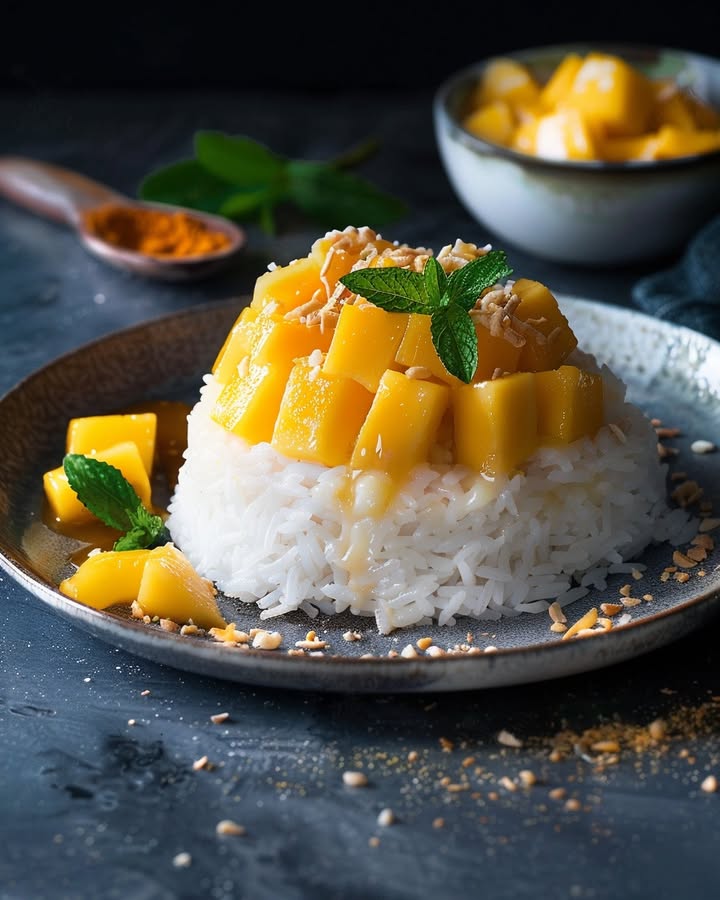
The Taste of Sunshine: Thai Mango Sweet Sticky Rice
There’s a moment in a Thai restaurant that always feels like magic to me. The server brings over that final dessert plate. It holds a mound of pearly white rice, golden slices of mango, and a creamy coconut sauce. That first sweet, fragrant bite is pure joy. It tastes like tropical sunshine. I wanted that magic at home! After many happy (and slightly messy) kitchen tests, I’ve nailed a simple recipe. Now I can share this sweet hug with my family any night.
A Sweet Tradition from Thailand
This dessert, called “Khao Niao Mamuang” in Thailand, is a beloved classic. It’s found everywhere from street food stalls to fancy restaurants. The dish honors the glorious ripe mango season. Thai culture values the balance of flavors. Here, the rich coconut milk and salty sauce perfectly offset the sweet mango and rice. My version sticks to this beautiful tradition. It uses simple, fresh ingredients to create that authentic taste. It’s a little piece of Thai hospitality you can offer at your own table.
Why You’ll Fall in Love With This Mango Sticky Rice
You will love this recipe for so many reasons! First, the flavors are incredible. Sweet, creamy, salty, and fresh all dance together. It’s also surprisingly simple to make. The steps are clear and forgiving. The result feels special and impressive. It’s a gluten-free dessert that everyone can enjoy. Finally, it’s just so pretty! The bright yellow mango against the white rice is a feast for the eyes before you even take a bite.
Perfect Occasions for This Tropical Treat
This dish turns any meal into a celebration. Here are my favorite times to make it:
- Summer BBQs: End a grilled feast with this refreshing, cool dessert.
- Dinner Parties: Impress your friends with a beautiful, exotic finish to the meal.
- Weekend Family Treat: Make a Saturday night feel special with a fun cooking project.
- Potlucks: It travels well and always stands out among the usual cakes and pies.
What You’ll Need: Ingredients for Mango Sticky Rice
Gathering these simple ingredients is the first step to success. Here’s your shopping list:
- 2-3 fresh, ripe mangoes
- 1 cup glutinous/sweet rice
- 1 cup coconut milk
- 1 tablespoon coconut milk (extra, for thickening)
- 1/4 cup sugar
- 1/4 teaspoon salt
- 1/2 teaspoon corn starch
- 1/2 teaspoon sesame seeds (for garnish)
Smart Swaps: Substitution Options
Don’t worry if you’re missing something! You can adapt.
- Rice: You must use glutinous (sweet) rice. Regular rice won’t work.
- Coconut Milk: Full-fat canned coconut milk gives the best flavor and creaminess.
- Sugar: Palm sugar is traditional and adds depth. White sugar works fine too.
- Corn Starch: Tapioca starch or arrowroot powder can be used instead.
- Mangoes: Look for ripe, fragrant Ataulfo or Honey mangoes. They are the sweetest and most tender.
Creating Your Tropical Masterpiece: Step-by-Step
Step 1: Soak and Steam Your Glutinous Rice
Start by soaking your sweet rice. Place it in a bowl with plenty of water. Let it bathe for at least 2 hours, or even overnight. This softens the grains so they steam perfectly. When ready, drain the rice well. Steam it over boiling water for 20-30 minutes. The rice will become soft, shiny, and wonderfully sticky. Pro tip: Check at 20 minutes by tasting a grain. It should be tender all the way through, not hard in the middle.
Chef’s tip: If you don’t have a steamer, make one! Put three balls of aluminum foil in a pot of water. Place a heat-safe bowl or plate on the foil balls. Add your rice. Cover the pot and steam. It works like a charm!
Step 2: Make the Magic Coconut Sauce
While the rice steams, make your sauces. In a saucepan, combine 1 cup coconut milk, sugar, and salt. Heat it until it just begins to boil. This creates a sweet, salty bath for the rice. Pour half of this thin sauce into a bowl and set it aside. Now, take that extra tablespoon of coconut milk. Mix it with the corn starch. Add this mix back to the saucepan. Cook for a few minutes until the sauce thickens beautifully. It will coat the back of a spoon. This thicker sauce is for your final drizzle.
Step 3: Slice Mangoes and Bring It All Together
Pick your prettiest, ripest mangoes. Slice them carefully into long, golden pieces. Now, take your hot, steamed rice. Pour the reserved thin coconut sauce over it. Mix gently until every pearl of rice is coated. Let it sit for 15-20 minutes. This lets the rice absorb the flavor and cool slightly. To serve, place a portion of rice next to a fan of mango slices. Drizzle the thick coconut sauce over everything. A sprinkle of sesame seeds adds the final touch. Then, dig into your taste of sunshine!
Your Time Investment
This recipe is about planning, not constant work.
- Prep Time: 15 minutes (plus soaking time)
- Cooking Time: 30 minutes
- Resting Time: 20 minutes
- Total Time: ~1 hour 5 minutes (excluding soak)
A Chef’s Secret for Perfect Rice
The secret is in the soak! Don’t rush the soaking time. Overnight soaking gives the best, most uniform texture. It ensures every grain cooks evenly and becomes perfectly soft and sticky. If you only have 2 hours, that’s okay. But if you can plan ahead, let it soak overnight. You’ll thank yourself.
A Little Extra Story About Mangoes
In Thailand, this dish is deeply connected to the mango season. The chosen mango is often the “Nam Dok Mai” variety. It’s known for its sweet, non-stringy flesh and floral aroma. While we might use different mangoes here, the spirit is the same. It’s about celebrating the peak perfection of a beautiful fruit. Think of it as a dessert that honors the mango itself.
Tools You’ll Need
You don’t need special equipment. Just a few basics:
- A bowl for soaking
- A steamer basket or your DIY foil-pot setup
- A saucepan
- A mixing spoon
- A sharp knife for the mangoes
- Serving plates
Storing Your Leftover Sunshine
This dessert is best fresh. But leftovers can be saved. Store the rice and mangoes separately in airtight containers in the fridge. The rice will keep for 1-2 days. The coconut sauce can be kept in a small container too. The mango slices are best eaten the same day.
The rice will firm up in the fridge. You can gently reheat it in the microwave with a sprinkle of water. This will soften it again. Always assemble fresh portions when serving leftovers.
I do not recommend freezing this dish. The texture of the rice and mangoes will change too much. It’s a make-and-eat-now kind of treat.
Tips and Advice for Success
- Use full-fat coconut milk for the richest flavor and texture.
- Never skip the salt in the sauce. It balances the sweetness and is key to the authentic taste.
- Make sure your mangoes are truly ripe. They should smell sweet and be slightly soft.
- When steaming, ensure your pot has enough water so it doesn’t dry out completely.
Making It Look Fabulous: Presentation Tips
A beautiful plate makes everyone smile!
- Shape the rice into a neat mound using a small bowl or cup.
- Fan the mango slices out like a sunburst next to the rice.
- Drizzle the thick sauce in a zig-zag or circular pattern.
- Use black sesame seeds for a striking color contrast.
- Add a tiny edible flower or mint leaf for a restaurant-style touch.
Playing with Flavors: Healthier & Fun Variations
You can tweak this recipe in so many fun ways!
- Lower-Sugar Version: Reduce the sugar in the sauce by half. Use very ripe mangoes for natural sweetness.
- Palm Sugar Tradition: Swap white sugar for Thai palm sugar. It gives a deeper, caramel-like flavor.
- Mixed Fruit Rainbow: Add other tropical fruits like sliced strawberries or kiwi alongside the mango.
- Nutty Crunch: Garnish with toasted coconut flakes or chopped peanuts instead of sesame seeds.
- Infused Rice: Soak the rice in water with a drop of pandan extract for a lovely green color and subtle aroma.
- Single-Serve Pots: Serve in small individual jars or cups for a cute, portable dessert.
Common Mistakes to Avoid
Mistake 1: Using the Wrong Rice
This is the biggest error. Regular long-grain or jasmine rice will not work. It won’t become sticky or soft in the same way. You must use glutinous rice, also called sweet rice. It’s a short-grain rice that becomes wonderfully sticky and tender when steamed. Look for it in the Asian section of your grocery store. Pro tip: The bag will clearly say “glutinous rice” or “sweet rice.” Don’t substitute!
Mistake 2: Not Soaking the Rice Long Enough
Soaking is not optional. It’s essential. Skipping it or doing a short soak leads to hard, unevenly cooked grains. The outside might be soft, but the center stays crunchy. Give it the full 2 hours at minimum. Overnight is even better. This hydration step ensures every grain cooks perfectly and yields that ideal soft, chewy texture.
Mistake 3: Overcooking or Over-Mixing the Coconut Sauce
When making the thick sauce, watch it closely. Once you add the corn starch mix, cook it just until it thickens. If you boil it too long, it can become too gluey or even separate. Also, when mixing the thin sauce with the hot rice, be gentle. Fold it in. Don’t stir aggressively. You want to coat the grains, not mash them into a paste.
Mistake 4: Choosing Unripe Mangoes
The mango is a star player. An unripe, sour, or stringy mango can ruin the dish. You need ripe, sweet, and creamy mangoes. Look for varieties like Ataulfo or Honey. They should have a golden yellow skin, feel slightly soft, and smell sweet at the stem end. If your mangoes are bland, the whole dessert will feel lacking.
Your Questions Answered: Mango Sticky Rice FAQ
Can I use regular rice instead of glutinous rice?
No, you cannot. Glutinous rice (sweet rice) is a specific type of short-grain rice. It has a unique starch content that makes it sticky and soft when cooked. Regular rice will not achieve the right texture. It will stay separate and grainy. The sticky, chewy bite is a signature part of this dessert. Always seek out the correct rice.
How do I know if my mango is ripe enough?
A ripe mango will give a little when you gently squeeze it. It shouldn’t be rock hard. The skin color for many varieties will change from green to yellow. The best test is smell. Sniff the stem end (where it was attached to the tree). A ripe mango will have a sweet, fruity, floral aroma there. If it has no smell, it’s likely not ripe yet.
Why do I need to add salt to a sweet dessert?
The salt is crucial! It’s not a mistake. Thai cuisine masterfully balances sweet, salty, sour, and spicy. The salt in the coconut sauce cuts the richness and highlights the sweetness of the mango and sugar. It makes the flavors pop and prevents the dessert from tasting flat or one-dimensionally sweet. Don’t skip it.
Can I make this recipe ahead of time?
You can prepare parts ahead. Soak the rice overnight. Make the coconut sauces and keep them in the fridge. Slice the mangoes a few hours before. But for the best texture, steam the rice and assemble the dessert close to serving time. The rice is best warm or at room temperature, not chilled from the fridge.
What if I don’t have a steamer?
No steamer? No problem! The DIY method works great. Make three balls from aluminum foil. Place them in a pot with water. Put a heat-safe bowl or plate on top of the foil balls. Add your drained rice to that bowl. Cover the pot and steam. It creates a perfect makeshift steamer. Just check that the water doesn’t boil dry.
Is mango sticky rice gluten-free?
Yes, it is naturally gluten-free! The main ingredients—glutinous rice, coconut milk, sugar, mango—do not contain gluten. Glutinous rice gets its name from its glue-like sticky texture, not from gluten. It’s a safe and delicious dessert for anyone avoiding gluten.
How can I prevent the coconut sauce from splitting or curdling?
To keep your sauce smooth, don’t let it boil too vigorously after adding the corn starch. A gentle simmer is enough. Also, use full-fat coconut milk. Lower-fat versions can separate more easily. Stir constantly while it thickens. If you see small lumps, you can whisk the sauce vigorously or even blend it briefly to smooth it out.
Can I use light coconut milk?
I recommend full-fat canned coconut milk. It gives a creamier, richer texture and flavor. Light coconut milk will make a thinner, less luxurious sauce. The dessert might taste a bit watered down. For the best experience, go for the full-fat version. The richness is part of what makes it so special.
What’s the best way to slice a mango?
First, find the flat seed inside. Slice down about a quarter inch from the center on both sides. You’ll get two mango “cheeks.” Score the flesh of each cheek in a grid pattern, down to but not through the skin. Then, push the skin from underneath to pop the cubes outward. You can slice them off easily. For pretty slices, just peel the cheek and slice it lengthwise.
Can I reheat leftover sticky rice?
Yes, you can. Leftover rice will harden in the fridge. Place it in a microwave-safe bowl. Sprinkle a tiny amount of water over it. Cover and heat for short bursts (15-30 seconds). Stop when it’s warm and softened again. Be careful not to overheat it, as it can become too dry or tough.
Your Taste of Thailand is Ready
Making Thai Mango Sweet Sticky Rice is a joyful kitchen adventure. It brings a taste of tropical celebration right to your home. The steps are simple. The ingredients are few. The result is stunning. I hope this recipe becomes a special treat in your home too. It’s a dessert that always makes people smile. So soak that rice, pick your perfect mangoes, and get ready to create a little plate of sunshine. Happy cooking!
Honey Garlic Carrots
Ingredients
Equipment
Method
- Soak the sweet rice in a bowl with plenty of water for at least 2 hours or overnight.
- Drain the rice and steam it over boiling water for 20-30 minutes until soft and sticky.
- In a saucepan, combine 1 cup coconut milk, sugar, and salt, and heat until it starts to boil.
- Pour half of this sauce into a bowl and set it aside.
- Mix the extra tablespoon of coconut milk with the corn starch, then add to the saucepan, cooking until thickened.
- Carefully slice the mangoes into long, golden pieces.
- Pour the reserved thin coconut sauce over the hot steamed rice and mix gently.
- Let the rice sit for 15-20 minutes to absorb the flavors.
- Serve the rice next to the mango slices, drizzle the thick coconut sauce over, and garnish with sesame seeds.