
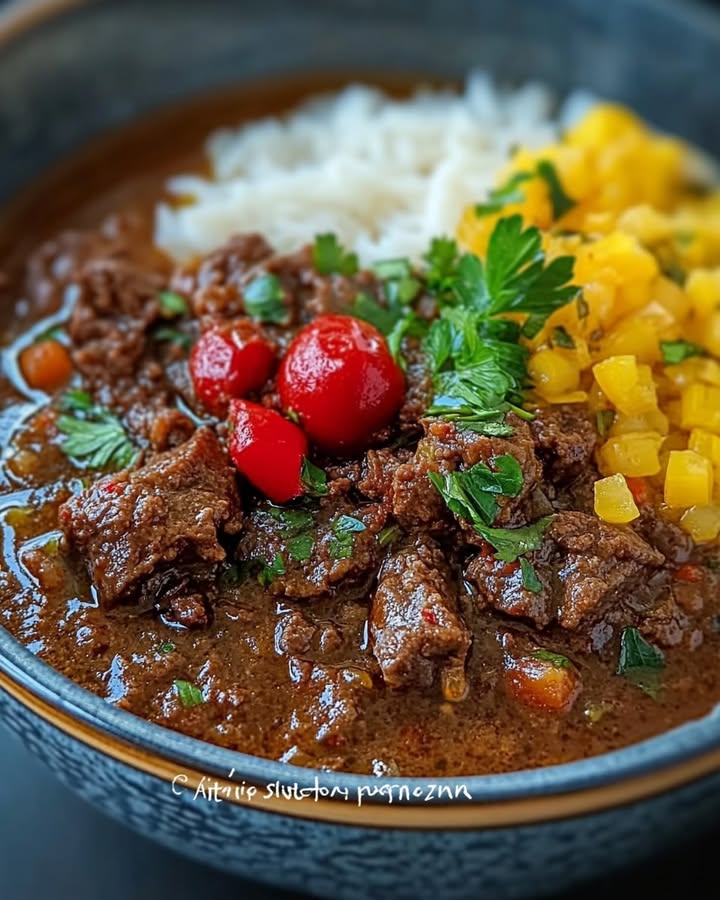
A Taste of Persia in Your Pot: Iranian Beef Stew with Sumac
You know that feeling when the house fills with the smell of something slowly cooking? When the windows fog up a little and the whole family starts drifting toward the kitchen, asking, “Is it ready yet?” That’s the magic this Iranian Beef Stew brings. It’s not just dinner; it’s a warm, fragrant hug in a bowl. I discovered this dish when a friend from Tehran came over on a chilly evening. We cooked, we talked, we laughed, and by the time we sat down to eat, I was completely smitten. The tender meat, the cozy spices, and that unique, lemony kiss from the sumac—it was love at first bite.
The Story Behind the Stew
Persian stews, or khoresh as they are traditionally called, are the heart of Iranian home cooking. They’re slow-simmered masterpieces where meat, beans, fruits, or vegetables live in perfect harmony with spices. This beef stew with sumac is my take on that beautiful tradition. Sumac is a staple in Middle Eastern pantries, a deep red berry ground into a powder that adds a wonderful tangy, almost lemony flavor without any juice. It’s what makes this stew truly special and different from your usual beef stew. In Iran, recipes are often passed down through families, with each cook adding their own secret touch. My secret? A whispered “add a little more love” with every stir.
Why You’ll Fall in Love With This Beef Stew
First, it’s incredibly forgiving. Have to answer the door? No problem. The stew just gets better as it bubbles away. Second, the flavor is complex but the process is simple. You don’t need fancy skills, just a bit of patience. The sumac creates such a bright, interesting depth that makes every spoonful exciting. Finally, it’s a complete, satisfying meal in one pot. Serve it with rice or bread to soak up every last drop of that incredible sauce. It’s the kind of recipe that makes you feel like a master chef with minimal effort.
When to Make This Comforting Stew
This is your go-to recipe for any occasion that calls for cozy, shared food. It’s perfect for:
- A lazy Sunday family dinner.
- Impressively feeding a crowd without stress (it doubles easily!).
- Potlucks (just transport it in the pot!).
- Any cold, rainy day when you need something to warm you from the inside out.
Gathering Your Ingredients for Iranian Beef Stew
Here’s what you’ll need to create this fragrant masterpiece. Try to get everything prepped and measured before you start—it makes the cooking so much smoother!
- 600 g (about 1.3 lbs) of beef shoulder or chuck, cut into chunks.
- 2 tablespoons of olive oil for browning.
- 1 large onion, finely chopped.
- 3 cloves of garlic, minced.
- 1 tablespoon of sumac (the star of the show!).
- 1 teaspoon of turmeric powder.
- 1/2 teaspoon of ground cinnamon.
- 1 teaspoon of sweet paprika.
- 3 cups (750 ml) of beef broth.
- 2 potatoes, cut into chunks.
- 2 tomatoes, grated, or 1/2 cup of crushed tomatoes.
- 1 tablespoon of tomato paste.
- Salt and black pepper to taste.
- A handful of fresh parsley, chopped for garnish.
No Problem! Handy Ingredient Substitutions
- No Sumac? The closest match is a squeeze of lemon juice added at the very end. It gives the acidity but not the distinct fruity note.
- Different Meat? Lamb works beautifully in this recipe. For a leaner option, try chicken thighs.
- Out of Fresh Tomatoes? A full cup of good-quality canned crushed tomatoes will do the trick.
- Extra Veggies? Throw in some carrot chunks with the onions or add zucchini in the last 20 minutes of cooking.
Cooking Your Perfect Persian Stew
Step 1: Sear the Beef
Heat the olive oil in a large, heavy pot or Dutch oven over medium-high heat. Pat your beef chunks dry with a paper towel—this is key for a good sear. Add the meat in a single layer, without crowding the pot. You should hear a happy sizzle. Let it cook undisturbed for a few minutes until a beautiful, brown crust forms. Turn the pieces to brown all sides. This isn’t just for looks; it builds incredible flavor for the entire stew. Remove the beef and set it aside on a plate.
Pro tip: Do this in batches if needed. Crowding the pan steams the meat instead of searing it.
Step 2: Sauté the Aromatics and Spices
In that same wonderful pot, now full of brown bits from the meat, add your chopped onion. Stir and cook for about 5 minutes until they become soft and translucent. Add the garlic, turmeric, cinnamon, paprika, and that glorious sumac. The kitchen will instantly smell incredible—warm, earthy, and a bit tangy. Cook for just 1-2 minutes to wake up the spices. You’ll see the oil take on a golden hue from the turmeric.
Step 3: Build and Simmer the Stew Base
Now, return the browned beef and any juices back to the pot. Add the grated tomatoes and tomato paste. Stir everything together, letting the tomato paste cook for a minute. Pour in the beef broth, just enough to cover the meat. Bring it all to a gentle boil, then immediately reduce the heat to low. Cover the pot with a lid and let it simmer peacefully. Set your timer for 1 hour. This long, slow cooking is what makes the beef incredibly tender.
Step 4: Add the Potatoes
After the hour is up, uncover your pot. The sauce will have thickened and the meat will be starting to soften. Gently stir in your potato chunks. Make sure they are submerged in the lovely broth. Cover the pot again and let it continue to simmer for another 30 to 40 minutes. The stew is ready when both the beef and potatoes are fork-tender.
Step 5: The Final Flavor Check
This is the most important step! Take a spoon and taste the broth. Now, season with salt and pepper. Ask yourself: do I want more tang? If so, you can stir in another half teaspoon of sumac. The flavors should be rich, warm, and have a subtle, bright acidity.
Chef’s tip: Let the stew sit off the heat for 10 minutes before serving. This allows the flavors to marry perfectly and the meat to relax, absorbing even more sauce.
Step 6: Serve and Enjoy!
Ladle the hot stew into deep bowls. Sprinkle generously with the fresh, chopped parsley. The green color looks stunning against the deep red-brown sauce. This Persian beef stew is traditionally served over fluffy basmati rice or with warm, flatbread like lavash or pita to scoop up every last bit.
Your Stew Timeline
- Prep Time: 20 minutes
- Cooking Time: 1 hour 45 minutes
- Resting Time: 10 minutes
- Total Time: About 2 hours 15 minutes
The Chef’s Little Secret
For an unbelievably rich and silky sauce, stir in a tablespoon of plain yogurt or a splash of pomegranate molasses right at the end of cooking, off the heat. The yogurt adds creaminess and a slight tang, while the pomegranate molasses adds a sweet-sour depth that is purely magical.
A Pinch of History: The Spice of Life
Sumac has been used in Middle Eastern and Mediterranean cooking for thousands of years. Romans actually used it as a souring agent before lemons were widely available! In Iran, it’s not just for stews. You’ll often find a small bowl of sumac on the table alongside salt and pepper to sprinkle over rice, kebabs, and salads. It’s a true flavor powerhouse.
What You’ll Need in Your Kitchen
- A large, heavy-bottomed pot or Dutch oven (with a lid!).
- A sharp knife and cutting board.
- Measuring spoons and cups.
- A wooden spoon or sturdy spatula.
- A grater for the tomatoes (if using fresh).
Storing Your Leftover Stew (If You Have Any!)
Let the stew cool completely to room temperature before storing. Never put a hot pot directly into the fridge. Transfer it to an airtight container.
It will keep beautifully in the refrigerator for 3 to 4 days. In fact, many argue it tastes even better on day two as the flavors continue to develop and deepen.
This stew also freezes very well. Portion it into freezer-safe containers or bags for up to 3 months. Thaw overnight in the fridge and reheat gently on the stovetop, adding a splash of water or broth if needed.
My Best Tips for Stew Success
- Browning is non-negotiable. Don’t rush this step. That caramelization is pure flavor.
- Low and slow wins the race. A gentle simmer is key. A rolling boil will make the meat tough.
- Taste as you go, especially at the end. Adjusting salt and acidity (sumac/lemon) makes the dish truly yours.
- Use a good broth. Since the broth is a main component, a flavorful one makes a big difference.
Make It Look as Good as It Tastes
- Serve in a shallow, wide bowl over a mound of white basmati rice, letting the sauce pool around.
- Garnish with a extra sprinkle of sumac and a drizzle of olive oil for a professional touch.
- Add a side of fresh herbs like mint, cilantro, and radishes for a crunchy, refreshing contrast.
- For a dinner party, serve the stew in the Dutch oven at the table for a rustic, family-style feel.
6 Delicious Ways to Shake Up This Stew
- Chickpea & Spinach: Skip the potatoes. Add a can of drained chickpeas and a few big handfuls of fresh spinach in the last 10 minutes of cooking.
- Apricot & Almond: Add 1/2 cup of dried apricots with the broth and garnish with toasted slivered almonds for a sweet and nutty twist.
- Green Herb Stew: Blend a large bunch of cilantro, parsley, and scallions with a little water. Add this vibrant green paste to the stew instead of the tomatoes.
- Eggplant Lover’s: Replace the potatoes with cubed, roasted eggplant added at the very end.
- Lentil Power: Add 1/2 cup of brown or green lentils with the broth for extra fiber and protein.
- Spicy Kick: Add 1/2 teaspoon of cayenne pepper or a chopped fresh chili with the other spices for a warming kick.
Common Mistakes to Avoid With Your Beef Stew
Cutting the Meat Too Small
It’s tempting to cut beef into bite-sized cubes, but they can shrink and become dry during the long cook. Aim for larger, 2-inch chunks. They will hold their shape better and stay wonderfully juicy inside. Remember, the stew cooks for nearly two hours—plenty of time for even larger pieces to become tender.
Skipping the Sear on the Meat
If you just dump raw meat into the broth, you’re missing out on a huge layer of flavor. That brown, caramelized crust created by searing is called the Maillard reaction. It adds a deep, savory, almost nutty taste to the whole dish. Take the extra 10 minutes to properly brown your beef. You’ll taste the difference.
Adding the Sumac Too Late (or Too Early)
Sumac’s bright flavor can fade if it’s cooked for hours. That’s why we add it twice. First, with the spices to infuse the oil, and then a potential final dash at the end to wake up the acidity. If you only add it at the end, you miss the infused base flavor. If you only add it at the start, you might lose that perfect tangy finish.
Overcooking the Potatoes
Adding the potatoes at the very beginning is a common error. They will turn to mush after two hours of simmering. By adding them in the last 30-40 minutes, they cook through perfectly and keep their shape. You want a soft, creamy potato that still holds together in your stew spoon.
Your Persian Stew Questions, Answered
What does sumac taste like?
Sumac has a tart, lemony flavor with a slight fruitiness and virtually no heat. It’s not spicy like chili powder. Think of it as a dry, tangy seasoning that brightens up rich dishes. It’s fantastic on salads, grilled meats, and of course, in this Iranian beef stew. If you’ve never tried it, this recipe is the perfect introduction!
Can I make this stew in a slow cooker or Instant Pot?
Absolutely! For a slow cooker, follow steps 1 and 2 on the stovetop, then transfer everything to the cooker. Cook on LOW for 7-8 hours or HIGH for 4-5 hours, adding potatoes in the last 2 hours. For an Instant Pot, use the Sauté function for steps 1 & 2. Add everything except potatoes, seal, and cook on High Pressure for 35 minutes. Do a quick release, add potatoes, and cook on High Pressure for 4 more minutes.
My stew is too thin. How can I thicken it?
The easiest way is to let it simmer uncovered for an extra 10-15 minutes at the end of cooking. The excess liquid will evaporate and the sauce will naturally thicken. You can also mash a few of the cooked potato pieces against the side of the pot with a fork and stir them in. This releases their starch and creates a lovely, thicker consistency.
What’s the best cut of beef for this Persian stew?
You want a cut with some marbling and connective tissue, as it breaks down during slow cooking and becomes tender. Chuck roast, shoulder, or brisket (cut into chunks) are all excellent choices. Avoid very lean cuts like sirloin or tenderloin, as they can become dry and tough with long cooking.
Is this stew spicy?
Not at all in terms of heat. The spices—turmeric, cinnamon, paprika—are warm and aromatic, not spicy-hot. The sumac adds tang, not burn. It’s a very family-friendly dish. If you want heat, you can add a pinch of cayenne pepper or some red pepper flakes with the other spices.
What should I serve with this besides rice?
This stew is incredibly versatile! Try it with couscous, quinoa, or crusty bread like a baguette or naan. For a low-carb option, serve it over roasted cauliflower rice. A simple side salad with cucumber, tomato, and red onion dressed with lemon and olive oil provides a fresh contrast.
Can I use lamb instead of beef?
Yes, lamb is a traditional and fantastic substitute. Use lamb shoulder or leg, cut into chunks. The cooking method and time remain the same. The rich flavor of lamb pairs beautifully with the sumac and warm spices, offering a truly authentic taste experience.
How do I know when the stew is done cooking?
The beef should be so tender that you can easily pull it apart with a fork. It shouldn’t be tough or chewy. The potatoes should be cooked through and soft when pierced with a knife. The sauce should have thickened slightly and taken on a rich, unified color from all the spices.
Why did my stew turn out bitter?
Bitterness usually comes from burning the spices in Step 2. When you add the turmeric, sumac, etc., keep the heat to medium and stir constantly for just 1-2 minutes. You just want to toast them lightly to release their oils, not burn them. Also, ensure your tomato paste doesn’t burn during that brief cook time after adding it.
Can I prepare this stew ahead of time?
It’s actually better ahead of time! Making it a day in advance allows the flavors to deepen and meld together perfectly. Simply cook as directed, let it cool, and store in the fridge. The next day, gently reheat it on the stovetop, adding a little water if it seems too thick. It’s a lifesaver for dinner parties or busy weeknights.
Ready to Warm Your Kitchen and Your Heart
I hope this Persian Beef Stew with Sumac finds a special place in your recipe rotation, just like it has in mine. It’s more than just food; it’s an experience of comfort, sharing, and discovering new flavors. So grab your pot, gather your spices, and get ready for the compliments to roll in. Don’t forget to pour yourself a glass of something nice while it simmers—you’ve earned it! Happy cooking, and enjoy every delicious, soul-warming bite.
Iranian Beef Stew
Ingredients
Equipment
Method
- Heat the olive oil in a large pot over medium-high heat and sear the beef in batches until browned, then set aside.
- In the same pot, sauté the chopped onion for about 5 minutes until soft, then add minced garlic and spices, cooking for an additional 1-2 minutes.
- Return the beef to the pot, add the grated tomatoes and tomato paste, and pour in the beef broth to cover the meat.
- Bring to a gentle boil, then reduce the heat to low, cover, and let it simmer for 1 hour.
- After an hour, stir in the potato chunks, cover, and simmer for another 30-40 minutes until everything is fork-tender.
- Taste and adjust seasoning with salt, pepper, and additional sumac if desired.
- Let the stew sit off the heat for 10 minutes before serving, then ladle into bowls and garnish with parsley.