
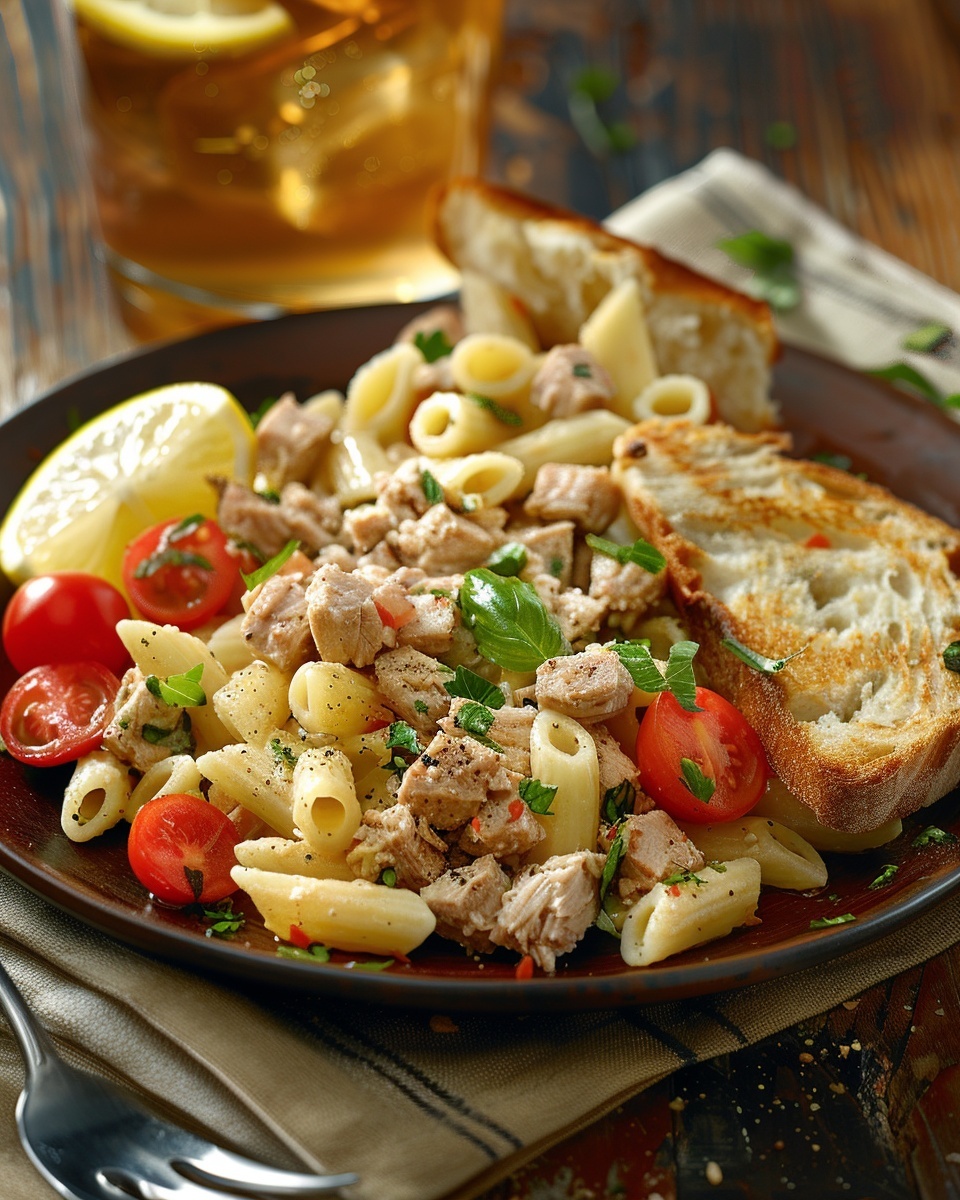
Welcome to My Tuna Pasta Salad Kitchen
Last summer, I showed up to my sister’s pool party empty-handed. I know, I know – total party foul. But here’s the thing: I stopped at the store on my way and whipped up a quick tuna pasta salad in her kitchen while everyone was swimming. Thirty minutes later, that bowl was empty, and I had five people asking for the recipe. That’s when I realized this dish is pure magic.
Tuna pasta salad has been my go-to recipe for over a decade now. It saved me during college when I needed cheap meals that actually tasted good. It impressed my in-laws at our first family dinner. It’s become my signature dish at summer picnics and potlucks. The best part? You can make it a hundred different ways and it still turns out amazing.
This isn’t just another pasta salad recipe. I’m sharing the techniques and tips I’ve learned through years of making this dish. Whether you need a quick lunch for yourself or you’re feeding a crowd at a family gathering, this tuna pasta salad works for every occasion. It tastes just as good straight from the fridge as it does at room temperature on a picnic blanket.
Today, I’ll walk you through the best tuna pasta salad recipe in the world – yes, I’m confident about that title. We’ll cover everything from choosing the right ingredients to creating variations that will keep things interesting. I’ll also share the common mistakes people make and how to avoid them. By the end, you’ll know exactly how to make a tuna pasta salad that gets people asking for seconds.
The Best Tuna Pasta Salad Recipe in the World
Let me tell you about the base recipe that started it all. This classic version is simple, reliable, and absolutely delicious. Once you master this, you can experiment with all the variations I’ll share later.
Ingredients You’ll Need
Here’s what goes into my classic tuna pasta salad:
- Pasta: 12 ounces of your choice (I’ll talk about the best types in a minute)
- Canned tuna: Two 5-ounce cans, drained well
- Cherry tomatoes: 1 cup, halved
- Cucumber: 1 medium, diced
- Red onion: 1/4 cup, finely chopped
- Celery: 2 stalks, diced
- Fresh parsley: 1/4 cup, chopped
- Mayonnaise: 1/2 cup (or more if you like it creamier)
- Lemon juice: 2 tablespoons, freshly squeezed
- Dijon mustard: 1 tablespoon
- Garlic powder: 1/2 teaspoon
- Salt and black pepper: To taste
Step-by-Step Instructions
Step 1: Cook the pasta. Bring a large pot of salted water to a boil. Add your pasta and cook it until it’s al dente. This usually takes about 8 to 10 minutes, but check your package directions. Here’s a tip I learned the hard way: slightly undercook your pasta by about a minute. It will continue to soften as it sits in the dressing.
Step 2: Cool it down fast. Drain the pasta and rinse it under cold water. This stops the cooking process right away. I used to skip this step and ended up with mushy pasta that soaked up all the dressing. Don’t make my mistake.
Step 3: Prepare the vegetables. While the pasta cooks, chop all your vegetables. Keep the pieces roughly the same size so every bite has a good mix of flavors. I like my onions pretty fine because big chunks can overpower everything else.
Step 4: Make the dressing. In a small bowl, whisk together the mayonnaise, lemon juice, Dijon mustard, and garlic powder. Taste it and adjust the seasoning. This is your chance to make it perfect before it goes into the salad.
Step 5: Combine everything. In a large bowl, add the cooled pasta, flaked tuna, all your chopped vegetables, and fresh parsley. Pour the dressing over everything and mix gently but thoroughly. You want every piece of pasta coated with that creamy goodness.
Step 6: Let it rest. Cover the bowl and refrigerate for at least 30 minutes. This resting time lets all the flavors get to know each other. The salad actually tastes even better the next day.
Choosing the Right Pasta
Not all pasta shapes work equally well in this salad. I’ve tried them all, trust me. Here are my top picks:
Rotini is my number one choice. Those little spirals grab onto the dressing and hold it perfectly. Every bite is flavorful.
Penne works great too. The hollow tubes catch bits of tuna and vegetables inside. It’s like a flavor surprise in every piece.
Farfalle (bow-tie pasta) looks beautiful and has good texture. If you’re making this for a party, it adds a nice visual element.
Shells are another solid option. Small to medium shells cup the dressing and create little pockets of flavor.
Skip the long pastas like spaghetti or fettuccine. They don’t work well in cold salads. The pieces stick together and you can’t get a good mix of ingredients in each forkful.
Picking Quality Tuna
The tuna you choose makes a real difference. I’ve tested many brands over the years. Here’s what I’ve learned:
Solid white albacore gives you larger, firmer chunks. It costs a bit more but the texture is worth it. The pieces stay intact when you mix the salad.
Chunk light tuna works fine if you’re on a budget. It has a stronger flavor and breaks into smaller pieces. Some people actually prefer this style.
Always buy tuna packed in water, not oil. You can control the moisture level better. Oil-packed tuna can make your salad greasy.
For a healthy tuna pasta salad, look for low-sodium options. You can always add salt to taste, but you can’t take it out once it’s there.
Customizing Your Tuna Pasta Salad
This is where things get fun. The basic recipe is just your starting point. Here are my favorite ways to switch things up:
For an Italian tuna pasta salad: Add chopped black olives, diced mozzarella, sun-dried tomatoes, and fresh basil. Use olive oil and red wine vinegar instead of mayo for the dressing. Toss in some capers if you like a briny kick.
For tuna pasta salad with Italian dressing: Skip the mayo entirely. Mix your cooked pasta and tuna with bottled Italian dressing or make your own with olive oil, red wine vinegar, Italian herbs, and minced garlic. Add artichoke hearts and roasted red peppers.
For tuna pasta salad with dill: Replace the parsley with fresh dill. Add a tablespoon of dill pickle relish to the dressing. This gives it a tangy, slightly sweet flavor that’s amazing.
For tuna pasta salad no mayo: Use Greek yogurt as your base instead. It’s creamy, tangy, and much healthier. Mix it with lemon juice, olive oil, and your favorite herbs. You won’t miss the mayo at all.
For a warm tuna pasta salad: Toss everything together while the pasta is still warm. Use olive oil instead of mayo since warm mayo is not appealing. This version is perfect for cooler evenings.
For tuna pasta salad with egg: Add two or three hard-boiled eggs, chopped. They add protein and a rich, creamy texture. My mom always made it this way.
Pro Tips for the Perfect Tuna Pasta Salad Dressing
The dressing can make or break your salad. Here are my secrets:
Always dress your salad while it’s slightly cool, not ice cold. The pasta absorbs the flavors better at room temperature.
Make extra dressing and keep it separate. Pasta salads soak up dressing as they sit. Add a bit more before serving if it looks dry.
Balance your flavors. You need acid (lemon juice or vinegar), fat (mayo or oil), and seasoning (salt, pepper, herbs). Each element should be noticeable but not overwhelming.
Don’t be afraid to experiment. I’ve made versions with ranch dressing, pesto mixed with mayo, and even a spicy sriracha mayo. They all turned out great.


Taking Your Tuna Pasta Salad in Exciting New Directions
Once you’ve got the hang of making the basic version, you’ll probably want to mix things up. I mean, I love my classic recipe, but even I get bored eating the same thing every week. That’s when I started experimenting with different flavor profiles, and honestly, it opened up a whole new world of possibilities.
Tuna Pasta Salad with Italian Dressing: When You Want Something Lighter
My neighbor Maria is Italian, and when she tasted my mayo-based version, she smiled politely and said, “In Italy, we do it differently.” The next week, she brought over her version, and it completely changed my perspective. An Italian tuna pasta salad is all about simplicity and fresh flavors.
Her secret? Ditch the mayo completely. She used good quality extra virgin olive oil as the base, mixed with red wine vinegar, a touch of Dijon, and fresh garlic. The vegetables were different too – sun-dried tomatoes, kalamata olives, fresh mozzarella balls (the little ones called bocconcini), and tons of fresh basil. She also insisted on using tuna packed in olive oil for this version, which made sense since the whole dressing was oil-based.
The proportions matter here. For every three parts olive oil, use one part red wine vinegar. Add a teaspoon of Dijon mustard, one minced garlic clove, and Italian seasoning. Whisk it all together like you’re making a vinaigrette. If you’ve ever made a Caesar salad dressing from scratch, you’ll recognize the technique – that emulsification creates a cohesive dressing instead of separated oil and vinegar.
This tuna pasta salad with Italian dressing is perfect for summer because it feels lighter on your stomach. No heavy mayo weighing you down. I made this for a Fourth of July barbecue last year when it was ninety-five degrees outside, and people actually went back for thirds because it was so refreshing.
Fresh Dill Makes Everything Better
Here’s the thing about dill – people either love it or they’ve never really tried it properly. I was in the second category until my college roommate made tuna pasta salad with dill one random Tuesday night. The bright, slightly tangy flavor completely transformed the dish.
For this version, you’ll want fresh dill, not dried. Dried dill is like comparing fresh basil to the dusty jar in your spice cabinet – there’s just no comparison. Chop about three tablespoons of fresh dill fronds (those feathery green parts) and mix them right into your mayo-based dressing. Some people also like adding dill pickle relish, which gives you that briny, slightly sweet element.
I also learned that dill pairs incredibly well with capers. Those little salty bursts complement the tuna beautifully. Add about two tablespoons of drained capers to the mix. The combination reminds me of the flavors you’d find in a Greek salad, which makes sense because dill is huge in Greek cooking.
One warning though – if you’re making this for a crowd, maybe mention the dill upfront. My brother-in-law hates dill with a passion (weird, I know), and he was not happy when he took a big forkful without knowing. Now I always make a small batch without dill just for him.
Warm Tuna Pasta Salad for Chilly Evenings
Most people think pasta salad has to be cold, but warm tuna pasta salad is honestly underrated. I discovered this by accident one night when I was running late for dinner and didn’t have time to chill the salad. Turns out, it was amazing.
The technique is a bit different. Cook your pasta and drain it, but don’t rinse it with cold water. Instead, immediately toss it with olive oil, garlic, and your flaked tuna while everything’s still hot. The residual heat from the pasta warms the tuna and helps all those flavors meld together instantly. Add your vegetables – I recommend roasted cherry tomatoes, sautéed spinach, and caramelized onions for a warm version. Regular raw vegetables don’t have the same appeal when everything else is warm.
Skip the mayo entirely for this one. Warm mayo is just wrong on every level. Instead, use a combination of good olive oil, lemon juice, and maybe some pasta cooking water to create a light sauce. The starchy pasta water helps bind everything together, similar to how you’d finish a traditional pasta dish.
This version works great as a main course on a cool autumn evening. Funny enough, my husband actually prefers it this way now. He says cold pasta salad reminds him too much of sad office lunches.
Going Mayo-Free Without Sacrificing Creaminess
A lot of people ask me about tuna pasta salad no mayo options, especially those watching their calories or dealing with mayo allergies. The good news? You have several delicious alternatives.
Greek yogurt is my favorite mayo substitute. It’s creamy, tangy, and packs way more protein. Use plain, full-fat Greek yogurt for the best texture – the non-fat versions can be a bit watery. Mix it with lemon juice, a drizzle of olive oil, and your seasonings. The result is remarkably similar to mayo-based versions but with a pleasant tanginess that complements the tuna beautifully. If you enjoy protein-rich salads, you might also like Cobb salad, which shares that satisfying, substantial quality.
Another option is avocado-based dressing. Mash one ripe avocado with lemon juice, garlic, and a bit of olive oil until it’s smooth and creamy. This creates a rich, velvety coating for your pasta. The healthy fats from avocado make this a genuinely healthy tuna pasta salad option. By the way, if you love avocado in salads, check out this avocado chicken salad recipe too – it uses similar techniques.
Hummus works surprisingly well too. Thin it out with a little lemon juice and olive oil until it reaches a pourable consistency. The chickpea base adds fiber and protein while creating a creamy Mediterranean-style dressing.
Adding Eggs for Extra Protein and Richness
My grandmother always made tuna pasta salad with egg, and I genuinely thought that’s how everyone did it until I got to college. The eggs add this wonderful richness and turn the salad into a complete meal that keeps you full for hours.
Hard-boil about four eggs – I know everyone has their method, but here’s mine: put eggs in cold water, bring to a boil, immediately turn off heat, cover, and let sit for eleven minutes. Then straight into an ice bath. Perfect eggs every single time.
Chop those eggs into bite-sized pieces, not too fine. You want to see them in the salad. Some people only use the whites to keep it lighter, but honestly, the yolks add so much flavor and creaminess that I can’t imagine leaving them out. When you mix everything together, some of the yolk naturally incorporates into the dressing, making it even richer.
This version is particularly great for meal prep. The combination of tuna and eggs gives you serious protein power that keeps you satisfied. I make a big batch on Sunday and eat it for lunch all week. It actually improves after a day or two in the fridge as all those flavors develop.
What Celebrity Chefs Bring to the Table
I got curious about tuna pasta salad Jamie Oliver style after watching one of his shows. His version includes things like white beans, which I’d never considered before. The beans add creaminess, fiber, and bulk out the salad without adding much cost. He also uses tons of fresh herbs – not just parsley but also mint and basil together, which sounds weird but actually works beautifully.
Jamie’s big on quality ingredients, so he always emphasizes getting the best tuna you can afford. He also adds a anchovy or two to the dressing, which doesn’t make it fishy but rather adds this deep umami flavor that makes people wonder what your secret ingredient is.
What Do You Put in a Tuna Pasta Salad?
People ask me this all the time, like there’s some magic formula. The truth is, you can put almost anything in there as long as it makes sense flavor-wise. Let me break down the categories of ingredients and why each one matters.
Your protein base is obviously tuna, but it doesn’t have to be the only protein. I’ve added chickpeas, white beans, hard-boiled eggs, even leftover grilled chicken. Each protein brings its own texture and flavor.
For vegetables and crunch, think about color and texture variety. Red onions add sharpness, celery brings crunch, cucumbers provide freshness, bell peppers give sweetness. Cherry tomatoes burst with juice. Radishes add a peppery bite. I’ve even used shredded carrots, broccoli florets, and snap peas. The key is cutting everything roughly the same size so you get a balanced bite.
The flavor boosters category includes things like olives, capers, pickles, sun-dried tomatoes, roasted red peppers, and artichoke hearts. These ingredients pack concentrated flavor, so use them sparingly. A little goes a long way.
Don’t forget fresh herbs. Parsley is classic, but basil, dill, cilantro, chives, and mint all work depending on your flavor direction. Fresh herbs make everything taste brighter and more vibrant.
Finally, cheese can be a game-changer. Cubed cheddar, feta crumbles, shredded parmesan, or those tiny mozzarella balls all add richness and another layer of flavor. Just remember that cheese adds salt, so adjust your seasoning accordingly.
The beauty of tuna pasta salad is that it’s incredibly forgiving. You can raid your fridge, throw in whatever vegetables need using up, and it’ll probably turn out great. That’s why it’s been my go-to recipe for so many years – it adapts to whatever I have on hand and never disappoints.


Common Mistakes That Can Ruin Your Tuna Pasta Salad
I’ve made just about every mistake possible with pasta salad over the years. Seriously, I once brought a watery, flavorless disaster to a potluck that people politely avoided all night. That was embarrassing enough to make me figure out exactly where I was going wrong. Now I know the common pitfalls, and I’m going to save you from the same fate.
What Are the Five Mistakes to Avoid in Pasta Salad?
Mistake #1: Overcooking the pasta. This is probably the biggest error people make. When your pasta turns to mush, there’s no saving the salad. Remember, pasta continues to soften even after you drain it, especially when it’s sitting in dressing. I always set my timer for two minutes less than the package directions suggest. The pasta should have a slight bite to it when you drain it – that al dente texture is crucial. My cousin once cooked her pasta for fifteen minutes because she got distracted by a phone call, and the resulting salad was basically baby food. Not appetizing.
Mistake #2: Not draining the tuna properly. This seems obvious, but you’d be surprised how many people just give the can a quick shake and dump everything in. That excess liquid makes your entire salad watery and dilutes all your carefully balanced flavors. I actually press my tuna with the back of a spoon against the side of a strainer to squeeze out every last drop of water. Some people even wrap it in paper towels and give it a gentle squeeze. That extra thirty seconds makes a huge difference.
Mistake #3: Dressing it while it’s too hot or too cold. If you dress your pasta when it’s steaming hot, the mayo can break down and get weird and separated. But if you wait until it’s ice cold from the fridge, the pasta won’t absorb any of the flavors properly. The sweet spot is room temperature, or just slightly cool. That’s when the pasta is most receptive to soaking up all that delicious dressing. I usually let my cooked and rinsed pasta sit for about ten to fifteen minutes before adding anything.
Mistake #4: Not making enough dressing. Here’s the thing – pasta is like a sponge. It keeps absorbing moisture as it sits. What looks perfectly dressed when you first mix it might look dry and sad the next day. I always make about fifty percent more dressing than I think I need and keep it in a separate container. Before serving, I check the salad and add more dressing if needed. This is especially important if you’re making it a day ahead, which honestly makes the flavors better anyway.
Mistake #5: Forgetting to season properly. This is where a lot of home cooks fall short. They season the dressing but forget to taste the final product. Salt, in particular, is essential because pasta can taste really bland without it. I season my pasta cooking water generously, season the dressing, then taste the whole salad once it’s mixed and adjust again. Don’t be shy with the pepper either – it adds a depth that really brings everything together. My rule is to always taste before serving and ask yourself honestly if it needs more of something.
Getting the Texture and Consistency Just Right
Texture is everything in a good pasta salad. You want that perfect balance where it’s creamy but not gloppy, moist but not swimming in dressing. Achieving this consistency has taken me years to master, but here’s what I’ve learned.
First, the pasta-to-dressing ratio matters more than you think. For every pound of cooked pasta, I use about three-quarters to one cup of dressing, depending on the pasta shape. Shapes with more surface area or hollow centers need more dressing. But start with less than you think you need – you can always add more, but you can’t take it back.
The vegetables you choose also affect texture. Watery vegetables like tomatoes and cucumbers release moisture over time, which can make your salad soupy. I learned a trick from a chef friend – salt your cucumbers and tomatoes lightly, let them sit in a colander for about ten minutes, then pat them dry before adding them to the salad. This draws out excess moisture beforehand. Sounds fussy, but it really works.
Temperature plays a role in perceived texture too. Cold dulls flavors and makes dressings seem thicker. If your salad has been in the fridge, let it sit at room temperature for about twenty minutes before serving. Give it a good stir, and you’ll notice the texture improves dramatically. Sometimes I add a tablespoon or two of milk or olive oil just before serving to loosen everything up.
By the way, if you’re interested in reducing food waste, using vegetables that are slightly past their prime works perfectly in pasta salad since everything gets chopped up anyway. The USDA has some great resources on food storage and reducing food waste that helped me understand how to better use ingredients before they spoil.
Storage Secrets for Maximum Freshness
Storing tuna pasta salad properly can mean the difference between something delicious and something you end up throwing away. I’ve definitely learned this the hard way after finding gross, dried-out salad in the back of my fridge more times than I’d like to admit.
Always store your salad in an airtight container. Air is the enemy here – it dries everything out and can make the tuna taste fishy. I use glass containers with tight-fitting lids because they don’t absorb odors like plastic can. Press a piece of plastic wrap directly onto the surface of the salad before putting the lid on. This creates an extra barrier against air exposure.
Your healthy tuna pasta salad will last about three to four days in the refrigerator, but honestly, it tastes best within the first two days. After that, the vegetables start getting mushy and the overall texture deteriorates. If you know you won’t finish it all, consider making a smaller batch or only dressing the portion you plan to eat immediately. You can keep the undressed pasta and vegetables separately and mix individual portions as needed.
Here’s something important – never leave tuna pasta salad out at room temperature for more than two hours. Mayonnaise-based salads and seafood are both prone to bacterial growth when they’re not kept cold. At summer picnics, I keep my salad bowl nestled in a larger bowl filled with ice to keep it chilled. Learned that one after a sketchy experience at a beach cookout where the potato salad sat in the sun all afternoon. Not making that mistake with tuna.
Freezing tuna pasta salad is generally not recommended. The mayo separates, the vegetables turn to mush, and the pasta gets grainy. I tried it once thinking I was being smart by meal-prepping for a month, and the thawed result was completely inedible. Just make fresh batches – it only takes thirty minutes anyway.
Serving Your Salad Like a Pro
Presentation matters, even for something as casual as pasta salad. I’m not saying you need to get fancy, but a few simple touches make your dish look appetizing and well-made.
Serve your salad in a wide, shallow bowl rather than a deep one. This makes it easier for people to scoop and lets them see all the colorful ingredients. I have this ceramic serving bowl that’s slightly sloped on the sides – perfect for pasta salad because everything doesn’t pile up in the middle.
Garnish right before serving. A sprinkle of fresh herbs on top, maybe some extra cherry tomato halves around the edge, or a light dusting of paprika adds visual appeal. If you’ve made an Italian tuna pasta salad, a few whole basil leaves on top and a drizzle of good olive oil makes it look restaurant-quality.
Temperature-wise, I’ve found that slightly cool is better than ice cold. Really cold temperatures mute flavors, and nobody wants to eat something straight from the fridge that makes their teeth hurt. Let it sit out for fifteen to twenty minutes before serving. This also gives you time to taste it one more time and adjust the seasoning if needed.
For parties, I set out my tuna pasta salad dressing on the side in a small pitcher with a spoon. Some people like their salad really saucy, others prefer it lighter. Giving guests the option makes everyone happy. I started doing this after my health-conscious sister complained that my salad was too heavy on the mayo. Now she can control exactly how much dressing she wants.
What Are Some Common Tuna Salad Mistakes?
Beyond the pasta-specific issues, there are mistakes that apply specifically to the tuna component. Getting the tuna right is obviously crucial since it’s literally in the name of the dish.
Using poor quality tuna is mistake number one. I know it’s tempting to grab the cheapest can on the shelf, but trust me, you can taste the difference. Tuna that’s been sitting in the discount bin probably tastes metallic and has a weird texture. Spend the extra dollar or two on solid white albacore or even chunk light from a reputable brand. Your taste buds will thank you.
Another mistake is not flaking the tuna properly. If you just dump in big chunks, you get some bites that are all tuna and others with none. Break it up gently with a fork into bite-sized pieces that distribute evenly throughout the salad. But don’t mash it into paste either – you want to maintain some texture.
Some people add the tuna while it’s still dripping with packing liquid. I already mentioned draining, but it bears repeating because this ruins the consistency every single time. Squeeze that can or pouch until you’re absolutely sure there’s no liquid left.
Funny enough, I’ve seen people rinse their tuna under water after draining it, thinking they’re being extra thorough. Don’t do this. You’re literally washing away flavor. Just drain it well and you’re good to go.
Should You Prep Ahead or Make It Fresh?
This is a question I get all the time, especially from people planning parties or meal prep. The answer is: it depends on your goals.
For flavor development, making your best tuna pasta salad recipe in the world a day ahead is actually ideal. All those ingredients marinating together overnight creates deeper, more complex flavors. The onions mellow out, the herbs infuse everything, and the pasta absorbs all the dressing. This is what I do for potlucks and family gatherings.
However, for the best texture, same-day is better. The vegetables stay crunchier and the pasta maintains that perfect al dente quality without getting too soft. If I’m making it for myself or serving it immediately, I prefer making it just a few hours before eating.
Here’s my compromise – I prep all the components separately the night before. I cook and cool the pasta, chop all the vegetables, mix the dressing, and drain the tuna. Everything goes in separate containers in the fridge. Then an hour or two before serving, I combine everything. This gives me the convenience of advance prep with the texture benefits of fresh assembly.
Testing and Adjusting Before You Serve
I cannot stress this enough – always taste your salad before serving it. I don’t care if you followed the recipe exactly. Different brands of ingredients, different pasta shapes, even different humidity levels in your kitchen can affect the final result.
Take a proper forkful with pasta, tuna, vegetables, and dressing all together. That’s how people will eat it, so that’s how you need to taste it. Ask yourself: Is it too bland? Add more salt, lemon juice, or mustard. Too salty? Add more pasta or a splash of milk to dilute. Too dry? Mix in more dressing. Too wet? Drain off excess liquid or add more pasta and vegetables.
The acid balance is particularly important. If your salad tastes flat or heavy, it probably needs more lemon juice or vinegar to brighten everything up. I keep a lemon on hand specifically for last-minute adjustments. Sometimes just a teaspoon of fresh lemon juice transforms the whole thing.
Get a second opinion if you can. I always make my husband taste it before I serve it to guests. He’s honest enough to tell me if something’s off, which has saved me from serving underseasoned salad more than once.
If you’ve enjoyed learning about pasta salads and want to explore more delicious options, there are plenty of other salad recipes that might inspire your next meal. The techniques you’ve learned here apply to so many different types of salads.
Looking back on all the pasta salads I’ve made over the years, the ones that people remember and ask for again are the ones where I paid attention to these details. It’s not about following a recipe perfectly – it’s about understanding the principles behind what makes a great salad and adjusting based on what you have and what you like. Trust yourself, taste as you go, and don’t be afraid to make it your own. That’s really what cooking is all about.
Frequently Asked Questions About Tuna Pasta Salad
What do you put in a tuna pasta salad?
The basic ingredients include cooked pasta, canned tuna, mayonnaise or another creamy dressing, and various vegetables like celery, onions, and tomatoes. Beyond that, you can customize endlessly with add-ins like hard-boiled eggs, olives, capers, different cheeses, fresh herbs, and various vegetables depending on your taste preferences. I always include something crunchy (celery or cucumbers), something with acid (lemon juice or tomatoes), and fresh herbs to brighten everything up. The beauty of this dish is that you can adapt it based on what you have in your fridge, and it almost always turns out delicious.
What are the five mistakes to avoid in pasta salad?
The biggest mistakes are overcooking the pasta until it’s mushy, not draining the tuna properly which makes everything watery, dressing the pasta at the wrong temperature, not making enough dressing to account for absorption, and under-seasoning the final dish. Each of these errors can turn a potentially great salad into something disappointing. I’ve made all of these mistakes myself, and once you know what to watch out for, your pasta salad improves dramatically. The good news is that they’re all easy to avoid once you understand the basic principles.
What is Matthew McConaughey’s recipe for tuna salad?
Matthew McConaughey has mentioned in interviews that he makes a simple tuna salad with canned tuna, pickles, mustard, and a bit of mayo. His version is apparently pretty straightforward and not particularly fancy – just good quality ingredients mixed together. While he hasn’t publicly shared exact measurements or a detailed recipe, the emphasis seems to be on simplicity and fresh ingredients. It’s a reminder that you don’t need complicated recipes to make something delicious. Sometimes the simplest preparations with quality ingredients are the most satisfying.
What are some common tuna salad mistakes?
Common mistakes include using low-quality tuna that tastes metallic or fishy, not draining the tuna properly before adding it, over-mixing until the tuna becomes pasty, and not balancing the flavors properly. Another big one is adding too much mayonnaise which overwhelms everything else. Some people also forget to season adequately, resulting in bland tuna salad that needs serious help. I’ve found that using good quality tuna and taking the time to drain it thoroughly fixes about half of these problems right away.
Can I make tuna pasta salad ahead of time?
Yes, and it actually tastes better when made a day ahead because the flavors have time to develop and blend together. Store it in an airtight container in the refrigerator and it will keep for three to four days. However, you may need to add a bit more dressing before serving since pasta absorbs liquid as it sits. I always make extra dressing and keep it separate for this exact reason. Just remember to stir it well and let it come to room temperature for about twenty minutes before serving for the best flavor and texture.
How do I keep my pasta salad from getting dry?
Make more dressing than you think you need and reserve some to add later, since pasta absorbs liquid over time. Store the salad in an airtight container with plastic wrap pressed directly against the surface to prevent air exposure. Before serving, stir in additional dressing, a splash of milk, or a drizzle of olive oil to restore creaminess. I’ve also found that slightly undercooking the pasta helps because it stays firmer and doesn’t absorb quite as much dressing. These simple steps ensure your salad stays moist and delicious even the next day.
Is tuna pasta salad healthy?
It can be quite healthy depending on how you make it. Tuna provides lean protein and omega-3 fatty acids, while the vegetables add fiber, vitamins, and minerals. To make it healthier, use whole wheat pasta, Greek yogurt instead of mayo, load up on vegetables, choose low-sodium tuna, and use olive oil in your dressing. The portion size matters too – a moderate serving as part of a balanced meal is perfectly healthy. I make a lighter version with Greek yogurt and tons of vegetables that I eat regularly without any guilt.
What type of pasta works best for pasta salad?
Shapes with texture and curves work best because they hold onto the dressing and catch the other ingredients. Rotini, penne, farfalle (bow ties), and shells are all excellent choices. Avoid long, thin pastas like spaghetti or angel hair because they clump together and don’t create the right texture. I personally prefer rotini because those spirals grab every bit of dressing and create the perfect bite every time. Medium-sized shapes work better than really small or really large ones because they’re easier to eat and mix well with the other ingredients.
Can I use fresh tuna instead of canned?
Absolutely, and it takes the salad to a whole different level. Grill or sear a fresh tuna steak, let it cool, then flake it into chunks. Fresh tuna has a meatier texture and cleaner flavor than canned. However, it’s also more expensive and requires more preparation time, so I usually save this for special occasions. The technique is slightly different too – you’ll want to be gentler when mixing so the fresh tuna doesn’t fall apart completely. If you’re going to splurge on fresh tuna, definitely use it in an Italian-style version with olive oil dressing to really showcase the quality.
How long can tuna pasta salad sit out at room temperature?
Tuna pasta salad should not sit out for more than two hours, or one hour if the temperature is above ninety degrees Fahrenheit. Both mayonnaise and seafood are prone to bacterial growth at room temperature, which can cause foodborne illness. At outdoor events, keep the salad on ice or in a cooler to maintain safe temperatures. I use the trick of nesting my serving bowl inside a larger bowl filled with ice to keep everything chilled during parties. When in doubt, refrigerate it – better safe than sorry when it comes to food safety.
Tuna Pasta Salad
Ingredients
Equipment
Method
- Cook pasta in a large pot of salted water until al dente (about 8-10 minutes).
- Drain the pasta and rinse under cold water to stop the cooking process.
- While the pasta cooks, chop all vegetables to a roughly uniform size.
- In a small bowl, whisk together mayonnaise, lemon juice, Dijon mustard, and garlic powder. Adjust seasoning to taste.
- In a large bowl, combine cooled pasta, flaked tuna, all chopped vegetables, and fresh parsley.
- Pour the dressing over the mixture and mix gently until all ingredients are coated.
- Cover and refrigerate for at least 30 minutes to allow flavors to meld.