
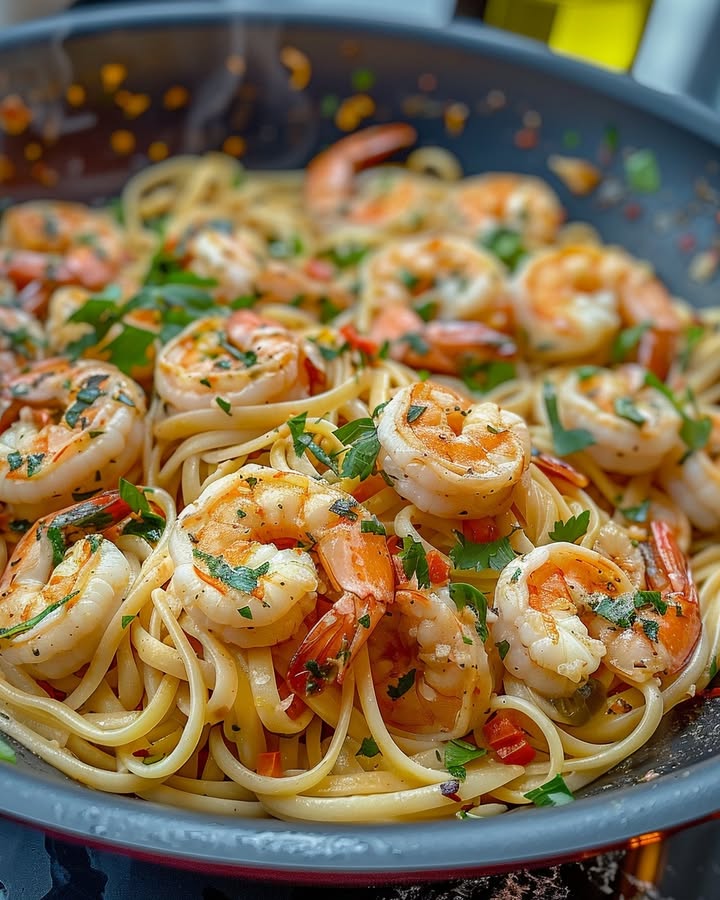
The Magic of Linguine aux Crevettes à l’Ail et au Beurre
You know that feeling when you need a dinner that feels like a warm hug but looks like it came from a fancy restaurant? That’s exactly what happened last Tuesday at my house. My kids were hangry, my husband was late, and I had about 30 minutes to create a miracle. That’s when I pulled out this trusty recipe. Spoiler alert: it worked. The sizzle of garlic in butter, the plump pink shrimp, and those silky linguine noodles created a symphony that had everyone asking for seconds. This Garlic Butter Shrimp Linguine is more than a meal; it’s my secret weapon for turning a chaotic weeknight into a special occasion.
A Dish with a Simple, Savory History
While the name sounds fancy, this dish is pure home-cooking love. It’s inspired by the coastal regions of Italy, where fresh seafood meets simple, bold flavors. The real star is that luscious sauce—garlic and butter. This combo, sometimes called “burro e aglio,” is a cornerstone of Italian cuisine. It proves you don’t need a million ingredients to make something unforgettable. My version adds a splash of white wine for depth and a squeeze of lemon for a bright pop. It’s traditional comfort food with just a little modern sparkle, perfect for today’s busy lives.
Why You’ll Fall in Love with This Garlic Butter Shrimp
Let me count the ways! First, the flavor is insane. It’s rich, garlicky, briny, and bright all at once. Second, it’s stupidly easy and comes together in one pan (mostly!). You get a gourmet result with minimal cleanup, which is a massive win in my book. Third, it’s incredibly versatile. Having friends over? Double it. Want it lighter? Use less butter and more olive oil. It’s the kind of reliable recipe you’ll scribble on a notecard and pass down because it just works every single time.
The Perfect Time for a Plate of Garlic Shrimp Pasta
This dish is like your favorite little black dress—it fits any occasion! Here are my go-to moments for making it:
- Impromptu Date Night: Light some candles, pour some of that leftover white wine, and feel the romance.
- Busy Weeknight Rescue: When soccer practice and work reports collide, this 30-minute meal is your hero.
- Casual Dinner Party: It feels special without you sweating in the kitchen all day. Your friends will be so impressed.
- When You Crave Comfort: Sometimes, you just need a bowl of buttery, carb-y goodness. This is it.
What You’ll Need: The Garlic Butter Shrimp Ingredients
Gathering everything is the first step to flavor town! Here’s your shopping list:
- 250g Linguine: The perfect pasta to hold onto that glorious sauce.
- 450g Large Shrimp: Peeled and deveined. I get the frozen ones and thaw them in cold water—so easy.
- 2 tbsp Olive Oil: For that initial sauté.
- 4 tbsp Butter: The rich, golden heart of the sauce. Use unsalted so you control the salt.
- 4 Garlic Cloves: Freshly minced, please! The pre-chopped stuff just isn’t the same.
- 120ml Dry White Wine: Like a Sauvignon Blanc or Pinot Grigio. It adds amazing flavor.
- Juice of 1 Lemon: The secret weapon that brightens everything up.
- 4 tbsp Fresh Parsley: Chopped. It adds a fresh, green finish.
- Salt & Black Pepper: To taste, always.
- Red Pepper Flakes (optional): A tiny pinch if you like a gentle kick.
No Problem! Handy Ingredient Swaps
Don’t stress if you’re missing something. Cooking is about creativity!
- No Linguine? Spaghetti, fettuccine, or even bucatini will work beautifully.
- Out of White Wine? Use an equal amount of chicken or vegetable broth with a small squeeze of extra lemon.
- Not a Shrimp Fan? Try scallops or even chunks of firm white fish like cod.
- Dairy-Free? A high-quality vegan butter substitute works well for the sauce.
- No Fresh Parsley? A teaspoon of dried parsley will do in a pinch, but fresh is best.
Let’s Get Cooking: Your Step-by-Step Guide
Put on some music, pour yourself a little wine, and let’s make magic happen.
Step 1: Cook the Pasta Perfectly
Fill a large pot with water, salt it generously (it should taste like the sea!), and bring it to a roaring boil. Add your linguine and cook according to the package directions, but aim for al dente—that means it still has a slight bite to it. We’ll finish cooking it in the sauce, so it shouldn’t be mushy. When it’s ready, scoop out a cup of the starchy pasta water before you drain it. This liquid gold will help our sauce cling to the noodles later. Pro tip: Time your pasta so it’s ready just as your sauce is finishing. This keeps everything hot and fresh.
Step 2: Sizzle the Shrimp
While the pasta bubbles away, pat your shrimp very dry with a paper towel. This is key for getting a nice sear instead of a steam. In a large skillet, heat the olive oil and half of your butter over medium-high heat. When the butter is melted and foamy, add the shrimp in a single layer. You’ll hear that beautiful sizzle! Cook them for just 2-3 minutes per side. They’ll turn a lovely opaque pink and curl up slightly. Don’t overcrowd the pan; cook in batches if needed. As soon as they’re done, remove them to a plate. They’ll finish cooking later, so it’s okay if they’re slightly underdone now.
Step 3: Build the Garlic Butter Sauce
In that same gorgeous pan, lower the heat to medium. Add the minced garlic. It should sizzle gently and become fragrant in about a minute—watch it closely so it doesn’t burn! Now, pour in your white wine. It will hiss and steam as it deglazes the pan, lifting all those delicious browned bits from the shrimp. Let it simmer and reduce by about half. This cooks off the alcohol and concentrates the flavor. Then, swirl in the remaining butter until it melts into a glossy, heavenly sauce.
Step 4: The Grand Finale – Bring It All Together
This is where the magic truly happens. Add the drained linguine directly into the skillet with the sauce. Toss it well so every strand gets coated. Now, return the shrimp and any juices to the pan. Add the fresh lemon juice, most of your chopped parsley, salt, pepper, and a pinch of red pepper flakes if using. Toss everything together over low heat for a minute or two. The pasta will soak up the sauce, and the shrimp will heat through. If the sauce seems too thick, add a splash of that reserved pasta water to loosen it up.
Step 5: Serve with Style
Use tongs to twirl generous portions into warm bowls or shallow plates. Make sure everyone gets plenty of those juicy garlic butter shrimp! Garnish with the last bit of fresh parsley for a burst of color. I like to place a lemon wedge on the side for an extra squeeze. Serve it immediately while it’s piping hot and the aromas are filling your kitchen. It’s a moment worth savoring.
Your Time Investment
Good food doesn’t have to take all day! Here’s the breakdown:
- Prep Time: 10 minutes (chopping garlic, peeling shrimp)
- Cooking Time: 20 minutes (mostly hands-off for the pasta)
- Total Time: 30 minutes flat
- Servings: 4 happy people
My Chef’s Secret: The Pasta Water Power
My absolute non-negotiable tip is to always save your pasta cooking water. That starchy, salty water is like culinary glue. When you add it to your sauce at the end, it helps the butter and wine emulsion cling to the linguine, creating a silky, restaurant-quality coating that doesn’t just pool at the bottom of the bowl. It’s the single trick that elevates a good pasta dish to a great one.
A Little Garlic Lore
Did you know garlic has been used for both food and medicine for over 5,000 years? Ancient Egyptians even gave it to pyramid builders for strength! While I can’t promise it’ll give you superhuman energy, the allicin in garlic is what gives it that incredible flavor and health benefits. Crushing or mincing it activates this compound, which is why your kitchen smells so amazing when you start cooking. It’s flavor with a fascinating history.
Gear You’ll Need
Keep it simple! You only need a few tools:
- A large pot for boiling pasta.
- A large, high-sided skillet or sauté pan (12-inch is ideal).
- A good chef’s knife for mincing garlic and parsley.
- Tongs for tossing and serving.
- A colander for draining the pasta.
- A citrus juicer or just a strong hand for the lemon!
Keeping Your Leftovers (If You Have Any!)
This dish is best served fresh, but life happens. Let the pasta cool completely before transferring it to an airtight container. It will keep in the fridge for up to 2 days.
Reheating is a delicate process. The microwave can make the shrimp rubbery and the pasta dry. Instead, gently reheat it in a skillet over low heat with a tiny splash of water, chicken broth, or (you guessed it) more pasta water. Toss it frequently until just warmed through.
I don’t recommend freezing this dish. The shrimp will become tough and the pasta texture will suffer. It’s a make-and-enjoy-now kind of masterpiece.
My Best Tips for Garlic Butter Shrimp Success
- Dry Your Shrimp: Seriously, pat them dry. Wet shrimp steam instead of sear.
- Don’t Burn the Garlic: Use medium heat and keep it moving. Burnt garlic tastes bitter.
- Salt Your Pasta Water: It’s your only chance to season the pasta itself.
- Prep Before You Start: Have everything chopped and measured (mise en place!). It makes the process smooth and stress-free.
Make It Look Fancy: Presentation Ideas
- Twirl the linguine neatly in the center of a wide, white bowl.
- Arrange the shrimp artfully on top and drizzle a little extra sauce over.
- Add a final sprinkle of chopped parsley and a few thin shavings of lemon zest.
- Serve with a crusty baguette on the side to sop up every last drop of that garlic butter sauce.
Love This? Try These Delicious Variations!
Once you master the base, the world is your oyster (or shrimp!). Here are six fun twists:
- Creamy Garlic Shrimp Linguine: Stir in 1/4 cup of heavy cream or mascarpone cheese with the butter for a decadent, velvety sauce.
- Sun-Dried Tomato & Spinach: Add 1/2 cup chopped sun-dried tomatoes and two big handfuls of fresh spinach when you toss everything together.
- Spicy Cajun Style: Toss the raw shrimp in 2 teaspoons of Cajun seasoning before sautéing. Omit the red pepper flakes.
- Lemony Herb Burst: Add fresh herbs like chopped basil, chives, or dill along with the parsley for a garden-fresh flavor.
- Cherry Tomato Blast: Sauté a pint of halved cherry tomatoes with the garlic until they burst and create a vibrant, juicy sauce.
- Zucchini Noodle Light: For a low-carb option, use spiralized zucchini noodles. Add them raw at the very end and just wilt them in the hot sauce.
Common Mistakes to Avoid for Perfect Garlic Shrimp Pasta
Mistake 1: Overcooking the Shrimp into Rubbery Pebbles
This is the biggest heartbreak with shrimp. They cook incredibly fast. If you leave them in the pan too long, they transform from juicy and tender into tough, chewy little pucks. The trick is to cook them just until they turn pink and opaque, then get them out of the pan immediately. Remember, they’ll get a final warm-through when you add them back to the sauce. It’s better to slightly undercook them in the first step than to overcook them.
Mistake 2: Using Pre-Crushed Jarred Garlic
I know it’s convenient, but jarred garlic in water or oil lacks the vibrant, pungent flavor of a freshly minced clove. It can also have a slightly metallic or bitter taste. Taking the one minute to peel and mince fresh garlic makes a world of difference in this dish where garlic is the co-star. The aroma alone is worth the effort and sets the tone for the whole meal.
Mistake 3: Skipping the Deglazing Step with Wine
After cooking the shrimp, those lovely browned bits stuck to the pan are pure flavor. If you just add more butter and garlic on top, you leave that goodness behind. Pouring in the white wine and scraping the pan (deglazing) releases those bits into your sauce. It adds a complex, savory depth that you simply won’t get otherwise. If you don’t cook with wine, broth works too, but don’t skip this step!
Mistake 4: Not Salting Your Pasta Water Enough
Pasta water should taste salty, like the sea. This is your primary chance to season the pasta itself from the inside out. If you use bland water, your linguine will be bland, no matter how flavorful your garlic butter sauce is. A good rule of thumb is about 1-2 tablespoons of salt for a large pot of water. It might seem like a lot, but most of it goes down the drain.
Mistake 5: Dumping Your Pasta Without Saving Water
That cloudy pasta water is a secret ingredient. The starch in it helps thicken your sauce slightly and helps it stick to the linguine, creating a unified dish. If your final sauce looks a bit too thick or separated, a splash of this starchy water brings it right back to a smooth, glossy perfection. Always scoop out a cup with a mug before you drain the pasta.
Your Garlic Butter Shrimp Linguine Questions, Answered
Can I use frozen shrimp for this recipe?
Absolutely! Frozen shrimp are often fresher than “fresh” shrimp at the counter, as they are frozen shortly after being caught. The key is to thaw them properly. Place them in a colander and run cold water over them for 5-10 minutes, or thaw them overnight in the fridge. Most importantly, pat them very dry with paper towels before cooking. Excess water will make them steam instead of getting that nice sear in the garlic butter.
What’s a good non-alcoholic substitute for the white wine?
No problem at all. You have a couple of great options. The best is an equal amount of low-sodium chicken or vegetable broth mixed with a teaspoon of white wine vinegar or a big extra squeeze of lemon juice. This mimics the acidity and complexity of wine. You could also use seafood stock for an even brinier flavor. The goal is to deglaze the pan and add liquid that isn’t just plain water.
How can I tell when my shrimp are cooked perfectly?
Shrimp cook quickly and give you clear visual cues. A raw shrimp is gray and translucent. As it cooks, it will curl into a loose “C” shape and turn a solid, opaque pink or white color. The moment it forms that “C” and is no longer see-through, it’s done. If it curls into a tight “O” shape, it’s likely overdone. Trust the color and shape more than a strict timer.
My sauce looks separated or greasy. What did I do wrong and how can I fix it?
This usually happens if the heat was too high when you added the butter, causing the fat to separate from the other liquids. To fix it, remove the pan from the heat immediately. Add a tablespoon of your reserved starchy pasta water or a splash of cold butter and whisk vigorously. The emulsion should come back together. For next time, keep the heat at a gentle simmer when making the sauce and add the butter off the heat or on very low heat.
Can I make this dish ahead of time for a dinner party?
You can do some prep ahead to make things easier, but I don’t recommend cooking the whole dish in advance. The pasta will continue to absorb the sauce and become mushy. Instead, you can peel and devein the shrimp, mince the garlic, chop the parsley, and measure all your ingredients a few hours ahead. Then, when your guests arrive, you can cook everything fresh in under 20 minutes for the best possible texture and flavor.
What type of pasta is best if I don’t have linguine?
You want a pasta that can hold onto a light, buttery sauce. Great alternatives are spaghetti, fettuccine, bucatini (hollow spaghetti), or even tagliatelle. The long strands or ribbons are perfect for twirling and coating. Avoid very small pasta like elbows or thick, heavy shapes that won’t let the shrimp shine alongside them.
Is it okay to use dried parsley instead of fresh?
In a pinch, yes, but the flavor and visual impact will be much less. Dried parsley is mostly for a hint of color. Fresh parsley adds a bright, clean, almost peppery flavor that cuts through the richness of the garlic butter. If you must use dried, use about one-third of the amount (so about 1 tablespoon plus 1 teaspoon for this recipe).
How can I make this recipe healthier or lower in calories?
There are a few easy tweaks! You can reduce the butter by half and use a bit more olive oil. Use whole-wheat or legume-based linguine for more fiber and protein. Load the dish up with extra vegetables like spinach, cherry tomatoes, or asparagus spears added with the shrimp. These changes add volume and nutrients while still keeping that delicious garlic butter shrimp essence.
My family doesn’t like spicy food. Should I leave out the red pepper flakes entirely?
Yes, you can absolutely omit them. The red pepper flakes are completely optional and just provide a subtle background heat. The dish will still be incredibly flavorful from the garlic, butter, wine, and lemon. If you’re serving to a crowd with mixed preferences, leave them out of the main dish and offer them at the table for those who want a little kick.
What should I serve with this garlic shrimp pasta?
This dish is pretty complete on its own! A simple green salad with a light vinaigrette is the perfect fresh contrast. Garlic bread or a crusty baguette is non-negotiable for mopping up the sauce. For a more substantial meal, add a side of roasted vegetables like broccoli or green beans. And of course, serve the same dry white wine you used in the recipe for a perfect pairing.
The Final Sizzle
And there you have it—my go-to recipe for turning simple ingredients into a show-stopping dinner. This Garlic Butter Shrimp Linguine is more than just food; it’s a promise of a good, satisfying meal that brings people together without stressing you out. I’ve made it for my closest friends on fancy china and for my kids on our most chaotic nights. It never fails. So grab your pan, mince that garlic, and get ready for the compliments. You’ve got this. Now go enjoy every last buttery, garlicky, shrimp-filled bite!
Garlic Butter Shrimp
Ingredients
Equipment
Method
- Fill a large pot with salted water and bring to a boil. Add linguine and cook al dente. Reserve a cup of pasta water before draining.
- Pat shrimp dry with a paper towel. In a skillet, heat olive oil and half the butter over medium-high heat. Cook shrimp for 2-3 minutes per side until opaque. Remove and set aside.
- In the same skillet, lower heat to medium and add minced garlic, cooking until fragrant. Pour in white wine and let it simmer until reduced by half.
- Swirl in the remaining butter until melted into the sauce.
- Add drained linguine to the sauce, tossing to coat. Return shrimp to the pan, add lemon juice, parsley, salt, pepper, and red pepper flakes, and toss well. If needed, use reserved pasta water to loosen the sauce.
- Serve immediately, garnished with extra parsley and a lemon wedge.