
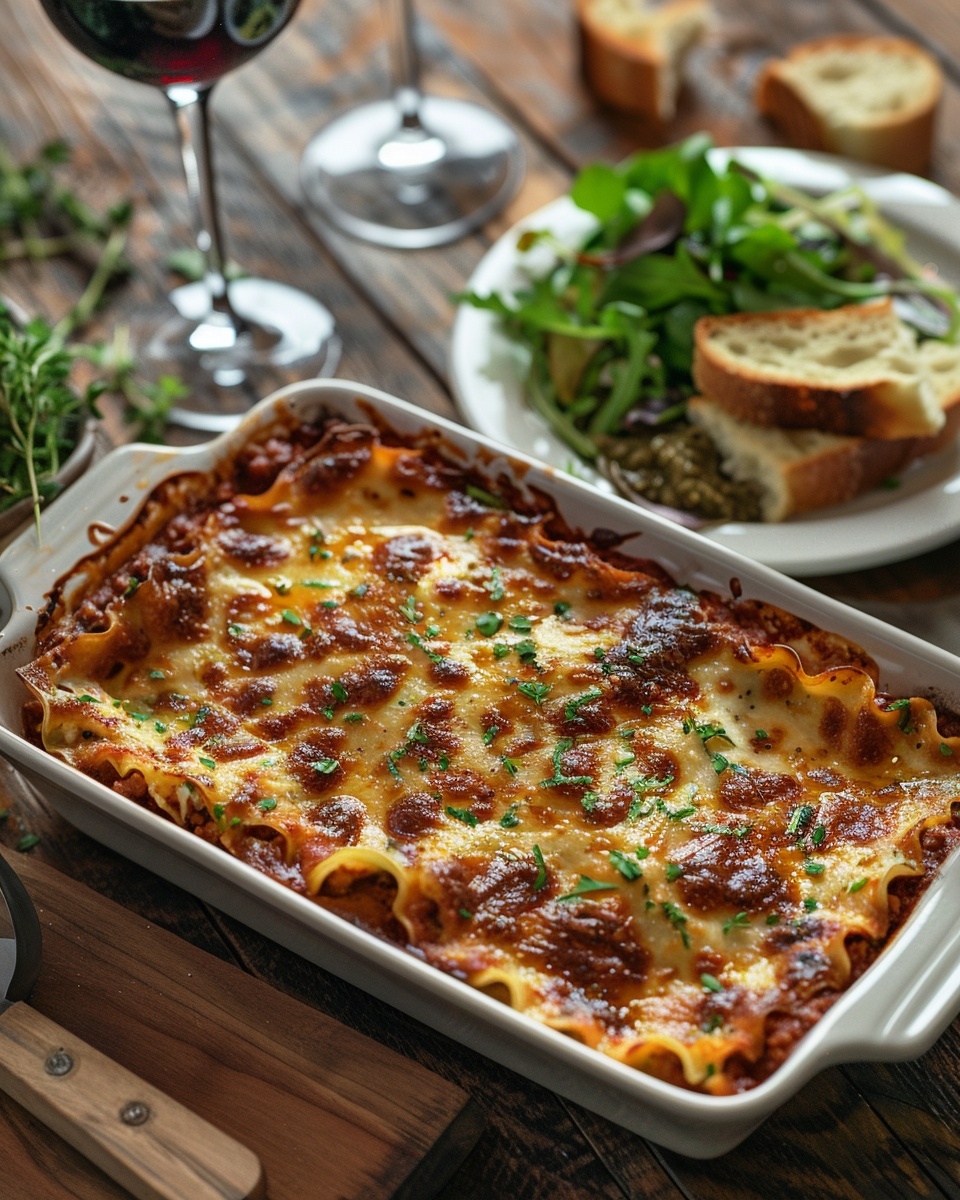
Why I Can’t Stop Making This Classic Beef Lasagna Recipe
Last Sunday, my kitchen smelled like an Italian grandmother’s house. Bubbling tomato sauce, melted cheese, and layers of pasta filled every corner with that unmistakable comfort food aroma. I stood at my counter, spreading ricotta between noodles, and realized something. I’ve made beef lasagna at least fifty times in my life, and I’m still not tired of it.
There’s something magical about pulling a golden, bubbling pan of lasagna from the oven. The cheese stretches as you cut into it. Steam rises from the layers. Everyone at the table leans in a little closer. That’s the power of a great classic meat lasagna recipe.
If you’ve never made lasagna from scratch, you might think it’s too hard. It’s not. Yes, there are layers. Yes, there are steps. But once you understand the basics of how to layer lasagna with meat, it becomes second nature. You’ll wonder why you waited so long to try it.
Today, I’m walking you through everything you need to know. We’ll cover my go-to beef lasagna recipe, the tricks that make layering easy, and some tasty variations like pork and beef lasagna. By the end, you’ll feel ready to tackle this timeless dish with confidence.
Why Beef Lasagna Is a Family Favorite
Let me tell you about the first time I made lasagna for my family. I was nervous. Would the noodles stick together? Would the sauce be too watery? But when I set that pan on the table, everything changed. My kids went quiet. My partner took a second helping before finishing the first. That’s when I understood why meat and cheese lasagna has stayed popular for generations.
The combination is simple but powerful. Rich, meaty sauce meets creamy cheese and tender pasta. Each bite delivers comfort. The portions are hearty enough to satisfy big appetites. And unlike fancy dishes that require perfect timing, lasagna is forgiving. You can make it ahead. You can freeze it. You can even mess up the layers a bit, and it still tastes amazing.
That’s what makes this a true crowd-pleaser. Whether you’re feeding picky eaters or adventurous foodies, everyone finds something to love. The meat provides protein and depth. The cheese adds richness. The tomato sauce brings brightness. Together, they create balance.
I love that this traditional lasagna recipe easy enough for beginners but impressive enough for special occasions. You don’t need fancy skills. You don’t need expensive equipment. Just a few quality ingredients, a baking dish, and a little patience.
The beauty of a classic lasagna recipe is its flexibility. Running low on ricotta? Try a lasagna recipe with cottage cheese instead. Want more flavor in your meat? Mix beef with Italian sausage or ground pork. The basic structure stays the same, but you can adjust it to match what you have or what you love.
My favorite version combines beef and pork because each meat brings something different. Beef gives that deep, savory flavor. Pork adds a touch of sweetness and extra fat that keeps everything moist. When you learn how to make beef lasagna with this combination, you’ll notice how the flavors become more complex.
Choosing the Best Ingredients for Your Beef Lasagna
Here’s what I’ve learned after making countless pans of lasagna. Your ingredients matter more than your technique. You can follow every step perfectly, but if you’re using bland meat or watery cheese, the results will disappoint.
Start with your ground beef. I always choose beef that’s 80% lean, 20% fat. Too lean and your sauce turns dry. Too fatty and you’ll have grease pooling on top. That sweet spot gives you flavor without making the dish heavy. When you’re at the store, look for beef that’s bright red without brown spots. Fresh meat makes better lasagna meat sauce from scratch.
If you want to try pork and beef lasagna, use ground pork with similar fat content. You can do a 50-50 split or adjust based on what you prefer. I usually go with two pounds of beef and one pound of pork for a full pan. The pork shouldn’t overpower the beef. It should support it.
Now let’s talk cheese. You’ll need three types for a proper meat and cheese lasagna:
- Ricotta cheese creates the creamy layer between the noodles. Look for whole milk ricotta. Low-fat versions turn grainy when baked.
- Mozzarella cheese provides that stretchy, melty goodness. I use a mix of shredded and fresh. Shredded melts evenly. Fresh adds pockets of creamy texture.
- Parmesan cheese brings a sharp, salty punch. Always grate it fresh. The pre-grated stuff in the green can doesn’t compare.
Some people prefer cottage cheese instead of ricotta. If you’re making a lasagna recipe with cottage cheese, choose small curd and drain off extra liquid. Press it gently with paper towels before mixing it with eggs and seasonings. This prevents your lasagna from getting soggy.
For the sauce, you have options. Store-bought works fine if you’re short on time. But making lasagna meat sauce from scratch takes your dish to another level. You control the seasoning. You adjust the thickness. You build layers of flavor that jarred sauce can’t match.
My basic meat sauce starts with crushed tomatoes, tomato paste, garlic, onions, and Italian herbs. I let it simmer for at least an hour. The longer it cooks, the richer it gets. The tomatoes break down. The flavors marry. Your kitchen starts smelling incredible.
Don’t skip the herbs. Fresh basil is wonderful, but dried Italian seasoning works great too. I add oregano, basil, a pinch of red pepper flakes, and a bay leaf. Salt and pepper are obvious but important. Taste as you go. Your sauce should be slightly more seasoned than you think because the pasta and cheese will mellow it.
The noodles themselves matter less than you’d think. Regular lasagna noodles need boiling. No-boil noodles save time. Fresh pasta sheets are luxurious but optional. I’ve made successful lasagnas with all three types. Just make sure you have enough. Nothing’s worse than running out of noodles mid-assembly.
One ingredient people often forget is olive oil. A good drizzle in your meat sauce adds richness. A brush of oil on your baking dish prevents sticking. These small touches separate decent lasagna from truly great lasagna.
Quality ingredients cost more upfront. But when you’re making a dish that feeds eight to ten people, the per-serving cost stays reasonable. And the taste difference is worth every penny. Your family will notice. Trust me on this.


Step-by-Step Guide to Making Beef Lasagna
Once you’ve got your ingredients lined up on the counter, you might feel a little overwhelmed. I get it. There are bowls everywhere. The oven needs preheating. Your kitchen looks like a small tornado passed through. But here’s the thing about learning how to make beef lasagna: it’s way more forgiving than you’d expect.
The process breaks down into three main parts. First, you make your meat sauce and let it simmer while you prep everything else. Second, you mix your cheese filling and get your layers ready. Third, you assemble everything like you’re building a delicious edible tower. Then it bakes. That’s it. No magic required.
Let me walk you through my method. I start by browning the ground beef in my largest skillet over medium-high heat. Don’t crowd the pan. If your meat steams instead of browns, you’ll lose that deep, caramelized flavor. Break up the chunks with a wooden spoon as it cooks. I aim for small crumbles, not big clumps. This helps the sauce coat every bite later.
While the beef browns, I chop my onions and garlic. Some people add them first, but I’ve found that adding them after the meat has released some fat works better. The onions soften in all that beefy goodness. They pick up flavor instead of just cooking in plain oil. After about six minutes, when the meat is mostly browned, I push it to the sides and toss the onions into the center of the pan. The garlic goes in last because it burns easily.
Next comes the tomato part. I pour in crushed tomatoes, add tomato paste for thickness, and season everything. My grandmother always said that lasagna meat sauce from scratch needs time more than anything else. She was right. I turn the heat down to low and let it bubble gently for at least an hour. Sometimes longer if I’m ahead of schedule. The sauce should reduce and thicken. You want it coating the back of a spoon, not running off like water.
While the sauce simmers, I work on the cheese mixture. This is where people sometimes get confused. Do you just plop ricotta between the layers? Not quite. I beat together the ricotta, one egg, half the parmesan, some salt, pepper, and chopped parsley. The egg acts as a binder. It helps the cheese layer hold together when you slice the lasagna later. Without it, everything slides apart on the plate.
If you’re using cottage cheese instead, the process is nearly identical. Just make sure you drain it well. I learned this the hard way when my first lasagna recipe with cottage cheese turned into a soupy mess. Now I press it between paper towels for a few minutes before mixing. That extra step saves your dinner.
Funny enough, the actual assembly only takes about ten minutes once everything’s ready. It’s all the prep work that takes time. But that’s true of most cooking, isn’t it? The eating happens fast. The making happens slow.
How to Layer Lasagna With Meat Like a Pro
This is where people either nail it or end up with a lopsided disaster. I’ve seen both outcomes in my own kitchen. The key to learning how to layer lasagna with meat properly is understanding that each layer serves a purpose. You’re not just stacking randomly. You’re building structure.
I always start with sauce on the bottom of the pan. Always. This prevents the bottom noodles from sticking and burning. Spread about a cup of meat sauce across the bottom of your greased baking dish. Make sure it covers every inch. Then lay down your first layer of noodles. They should touch but not overlap too much. Overlapping makes some spots too thick while others stay thin.
Here’s my layering order that’s never failed me: sauce on bottom, noodles, more meat sauce, dollops of the ricotta mixture, shredded mozzarella, then repeat. I usually get three solid layers in a standard 9×13 inch pan. The top layer is different. It gets noodles, sauce, and then a generous blanket of mozzarella with parmesan sprinkled over everything.
One trick I learned from a cooking show years ago: don’t spread the ricotta like frosting. Instead, drop spoonfuls across the layer and gently spread them. You want coverage, but small gaps are fine. The cheese will spread as it heats. If you work too hard to make it perfect, you’ll end up pushing the noodles around and messing up your layers.
People always ask me how to keep lasagna from being watery. That’s probably the most common problem I hear about. The answer has several parts. First, make sure your sauce is thick enough before assembly. If it’s thin and runny when you layer it, it’ll be worse after baking. Second, if you’re using regular noodles that you boiled, don’t overcook them. They should be slightly underdone because they’ll finish cooking in the oven. Third, let the finished lasagna rest for at least fifteen minutes after baking. I know it’s hard to wait when it smells so good, but this resting time lets everything set up.
By the way, the resting period is non-negotiable if you want clean slices. Cut into a lasagna too soon and it oozes across the plate like lava. Wait fifteen minutes and the layers hold their shape beautifully. Your patience gets rewarded with picture-perfect portions.
Another common mistake is using too much cheese or sauce in the middle layers. More isn’t always better. You want balance. Each forkful should have meat, pasta, and cheese in roughly equal amounts. If you load up too heavy on cheese, it overwhelms everything else. If you go too heavy on sauce, you get that watery problem again.
I like to keep a mental ratio in my head: one third meat sauce, one third cheese mixture, one third mozzarella for each layer. It’s not exact. You don’t need measuring cups. But thinking about balance helps you distribute everything evenly instead of running out of sauce halfway through or having tons of ricotta left at the end.
The edges matter too. I make sure sauce reaches all the way to the sides of the pan. Any exposed noodles will turn hard and crunchy during baking. Not in a good way. In a “nobody wants that corner piece” kind of way. So I take an extra moment to push sauce toward the edges with my spoon.
Adding Cheese and Cottage Cheese Variations
Let’s talk more about cheese because it deserves attention. In a meat and cheese lasagna, the cheese is basically half the dish. It’s not a garnish. It’s a main player. And choosing how to use it changes the whole experience.
Traditional recipes call for ricotta, and for good reason. Ricotta has this light, creamy texture that doesn’t get heavy. It stays moist without turning oily. The mild flavor lets the meat and tomatoes shine. But ricotta isn’t always easy to find depending on where you live. And honestly, some people just don’t like the texture. That’s where cottage cheese comes in.
I grew up eating lasagna made with cottage cheese. My mom preferred it because it was cheaper and easier to find at our small-town grocery store. She’d mix it with eggs and seasonings just like you would ricotta. The texture is slightly different. Cottage cheese has curds, so you get little pockets of creamy cheese instead of one smooth layer. Some people love this. Others find it strange. You won’t know which camp you’re in until you try it.
For those of you interested in trying a lasagna recipe with cottage cheese, here’s what changes. Use small curd cottage cheese if you can find it. The smaller curds distribute better between the layers. Drain it thoroughly like I mentioned before. Then mix it with one or two eggs depending on how much you’re using, some grated parmesan, salt, pepper, and Italian herbs. I add a bit more seasoning to cottage cheese than I do to ricotta because cottage cheese is tangier and needs balancing.
The mozzarella layer is where you can get creative. I almost always use a combination of shredded and fresh mozzarella. The shredded kind melts evenly and creates that golden top everyone loves. Fresh mozzarella brings moisture and those Instagram-worthy cheese pulls when you serve it. Tear the fresh stuff into chunks and scatter them across the middle layers. Save the shredded for the top.
Parmesan is your flavor booster. It’s salty, sharp, and adds complexity that mozzarella alone can’t provide. I mix some into the ricotta, sprinkle some between layers, and finish the top with a good handful. When it bakes, the parmesan on top gets crispy and golden. Those crispy bits are my favorite part. My kids fight over the corner pieces that have extra crusty cheese.
Some recipes call for other cheeses too. Provolone adds a smoky note. Fontina melts beautifully and tastes slightly nutty. Romano is like parmesan’s stronger, saltier cousin. If you’re feeling adventurous, you can mix any of these into your layers. Just don’t go overboard. Too many competing cheese flavors muddy the taste instead of enhancing it.
One variation I’ve been making lately combines ricotta and cottage cheese. Half and half. The ricotta brings smoothness while the cottage cheese adds tang and texture. It sounds weird, but it works. You get the best of both worlds. Plus, if you only have a little ricotta left in your fridge, you can stretch it by mixing in cottage cheese.
The cheese-to-meat ratio in your classic meat lasagna recipe is personal preference. I like a generous amount of cheese, but not so much that you lose the meat flavor. Aim for about four cups total of ricotta or cottage cheese mixture for a full pan. Add about three cups of shredded mozzarella distributed across the layers. And keep a cup or so of parmesan for mixing and topping.
These ratios aren’t set in stone. If your family loves cheese, add more. If you prefer a meatier lasagna, use less cheese and more sauce. That’s the beauty of making it yourself. You control everything. No restaurant or frozen version can match your family’s exact preferences like your homemade version can. Similar to how a comforting fish gratin can be adjusted to taste, lasagna rewards personal touches. Or like when you’re making a rich Roquefort sauce and you adjust the cheese to your liking, the same principle applies here. The confidence you gain from mastering these techniques carries over. Just as slow-cooked lamb shanks teach you patience, lasagna teaches you layering. And when you want something completely different, well, baked chicken parmesan uses similar principles of layering cheese and sauce.
What matters most is that you taste as you go. Season your cheese mixture enough that it tastes good on its own. If it’s bland before baking, it’ll be bland after. The oven doesn’t magically add flavor. It just heats and melds what you’ve already created.


Creative Twists on Traditional Beef Lasagna
Here’s something I’ve noticed over the years. Once you master the basics of a traditional lasagna recipe easy enough to make without stress, you start getting curious. What if I added mushrooms? Would spinach work between the layers? Could I swap out some herbs for something unexpected?
That curiosity is what keeps cooking fun. And lasagna handles experimentation better than almost any other dish. The structure is so solid that you can play with flavors without ruining the whole thing. I’ve tried dozens of variations, and while some worked better than others, none were disasters. That’s pretty reassuring when you’re thinking about tweaking a classic meat lasagna recipe that already works perfectly.
One of my favorite additions is sautéed mushrooms mixed right into the meat sauce. I slice them thin and cook them until they’re golden and all their water has evaporated. Then I add them to the beef while it’s browning. The mushrooms add this earthy, almost meaty flavor that makes people ask what my secret is. Baby bellas work great, but even basic white button mushrooms deliver results. You don’t need fancy varieties.
Spinach is another winner. I buy frozen spinach, thaw it completely, and squeeze out every drop of water I can. That last part is crucial. Wet spinach turns your lasagna into a swamp. Once it’s dry, I mix it right into my ricotta mixture. Suddenly you’ve got some green in there, a bit of extra nutrition, and a subtle flavor that complements the beef without fighting it. My kids don’t even notice the spinach when it’s mixed with cheese. That’s a parenting win in my book.
Some people add bell peppers or zucchini to their meat sauce. I’ve done this when I’m trying to use up vegetables that are sitting in my fridge. Dice them small so they cook down into the sauce. Bigger chunks stay too firm and mess with the texture. You want everything soft and integrated. The vegetables shouldn’t announce themselves. They should just make the whole dish taste richer and more complex.
Spices are another area where you can get creative. The traditional Italian herbs are perfect, but what if you added a pinch of nutmeg to your cheese mixture? Sounds weird, right? But nutmeg and cheese have this classic pairing in Italian cooking. Just a tiny grating transforms the ricotta into something special. Or try adding fennel seeds to your meat sauce if you want that Italian sausage flavor without actually using sausage.
I once made a version with roasted red peppers blended into the tomato sauce. The peppers added sweetness and a subtle smokiness that everyone loved. Nobody could quite identify what was different, but they all wanted seconds. That’s the beauty of subtle tweaks. You’re not making a completely different dish. You’re just elevating what’s already there.
Hot peppers are another option if your family likes heat. I sometimes add red pepper flakes to the meat sauce or even mix some diced jalapeños in there. Start small. You can always add more heat, but you can’t take it away once it’s in there. My rule is to make the sauce slightly less spicy than I’d personally like because not everyone has my tolerance for heat.
Fresh herbs make a bigger difference than you’d think. If you have fresh basil on hand, tear some leaves and tuck them between the layers. Do the same with fresh oregano if you’re feeling fancy. The herbs release their oils as the lasagna bakes, and those little pockets of flavor are amazing when you hit them.
Some people ask me about adding wine to the meat sauce. Yes, absolutely. A half cup of red wine added after the meat browns brings depth and complexity. Let it simmer until the alcohol cooks off and the liquid reduces. What’s left is this rich, slightly sweet undertone that makes your lasagna meat sauce from scratch taste like it came from a restaurant kitchen.
One variation I tried recently combined pork and beef lasagna with Italian sausage. I used half the beef, added ground pork, and included some crumbled cooked sausage. The three meats together created this incredible layered flavor profile. The sausage brought spices. The pork added sweetness. The beef provided that classic lasagna taste. It was probably my best version yet.
The point isn’t to reinvent lasagna every time you make it. Sometimes the classic version is exactly what you want. But knowing you can adjust things based on what’s in your fridge or what sounds good that day takes away pressure. You’re not locked into one exact recipe. You’re working with a flexible framework. Similar to the variety you’ll find in main dish recipes across different cuisines, lasagna welcomes creativity while staying true to its comforting roots.
By the way, these variations also help if you’re trying to sneak more vegetables into your family’s diet. Adding fiber-rich vegetables like spinach, zucchini, or mushrooms alongside your meat can contribute to a high fiber diet without making the meal feel like a sacrifice. It’s comfort food that happens to be a bit more balanced.
Tips for Perfectly Baked Lasagna Every Time
Let me share the technical stuff that took me years to figure out. These are the small details that separate good lasagna from incredible lasagna. None of them are complicated. But each one matters.
First, always preheat your oven completely. I know it’s tempting to stick the lasagna in while the oven heats up. Don’t do it. An oven that’s still climbing to temperature bakes unevenly. The edges might be done while the center stays cold. Set your oven to 375°F and wait for it to beep before your lasagna goes in. Use that waiting time to grate extra cheese or clean up your workspace.
Cover your lasagna with aluminum foil for the first part of baking. This traps moisture and prevents the top from burning before the inside heats through. I cover mine for about 25 minutes, then remove the foil for the final 20-25 minutes. That uncovered time lets the cheese on top turn golden and slightly crispy. If you leave it covered the whole time, you miss out on that gorgeous browned cheese everyone wants.
Here’s a trick I learned from a restaurant chef. Spray your foil with cooking spray before putting it on the lasagna, or place it spray-side-down. This prevents the cheese from sticking to the foil when you peel it off. Otherwise, you lose half your beautiful cheese layer to the aluminum. Such a simple thing, but it matters.
Check for doneness by inserting a knife into the center. It should slide in easily without resistance. If you hit firm, uncooked noodles, give it more time. The internal temperature should reach about 165°F if you want to be precise. But honestly, I usually just look for bubbling around the edges and a knife that slides in smoothly.
Now comes the hardest part. Let it rest. I mentioned this before, but it’s so important it’s worth repeating. When you pull that lasagna from the oven, it’s basically molten lava in a pan. The cheese is liquid. The sauce is running. If you cut into it immediately, you’ll get a plate full of delicious soup. Give it at least fifteen minutes. Twenty is even better. The lasagna will still be plenty hot, but everything firms up enough to slice cleanly.
People always ask me, “How long should lasagna cool before cutting?” My answer is fifteen to twenty minutes minimum. I know that waiting feels impossible when your kitchen smells amazing and everyone’s hungry. But trust me, patience pays off. Use that time to make a salad or set the table. When you finally cut into it, you’ll get perfect portions that hold their shape.
If you’re making lasagna ahead of time, which I highly recommend, you have a couple options. You can assemble it completely and refrigerate it before baking. Just add about 15 extra minutes to the baking time since it’s starting cold. Or you can bake it, let it cool, and reheat it later. Both methods work. I actually think lasagna tastes even better the next day after all the flavors have had time to get friendly with each other.
When you reheat lasagna, cover it with foil and bake it at 350°F until heated through. A whole pan might take 45 minutes. Individual portions heat faster, usually 20-25 minutes. You can also microwave individual servings, but the oven gives you better texture. The microwave can make the noodles rubbery.
One mistake I see people make is cutting portions too small. This is lasagna. It’s meant to be hearty. A proper serving is substantial. I cut my 9×13 pan into eight pieces, sometimes even six if everyone’s really hungry. Those tiny portions you see at buffets don’t do this dish justice. Go big or go home.
Storage matters too. Leftover lasagna keeps for about four days in the fridge if you cover it well. Use plastic wrap pressed directly against the surface, then foil over the whole pan. This double coverage prevents it from drying out. Nothing’s sadder than pulling out leftover lasagna and finding crusty, dried-out edges.
For freezing, which I’ll talk more about in the FAQ, assemble the lasagna in a disposable aluminum pan if you have one. Or use a regular pan lined with foil that you can lift out once frozen. Wrap everything very well. Freezer burn is the enemy of good frozen food. A properly wrapped lasagna can stay frozen for up to three months and still taste great when you bake it.
The bottom line is this. How to make beef lasagna that turns out perfect every time isn’t about some secret ingredient or fancy technique. It’s about doing the basic steps carefully. Good ingredients, proper layering, correct temperature, adequate resting time. Get those right and you’ll succeed every single time.
Bringing It All Together
Making your first lasagna from scratch might seem like a big project. But once you’ve done it, you’ll realize it’s actually pretty straightforward. The reward is so much bigger than the effort. You end up with this beautiful pan of food that feeds your whole family, impresses your friends, and fills your house with the kind of smell that makes everyone happy.
Start with a basic beef lasagna recipe until you feel comfortable with the process. Then experiment. Try that pork and beef lasagna combination. Test out a lasagna recipe with cottage cheese if ricotta isn’t your thing. Add vegetables or play with spices. The foundation stays the same, but the possibilities are endless. That’s what makes this dish so worth mastering.
Frequently Asked Questions About Beef Lasagna
What’s the best way to reheat leftover lasagna?
The oven gives you the best results for reheating lasagna. Preheat to 350°F, cover your portion or pan with aluminum foil, and heat for 20-25 minutes for individual servings or 45 minutes for a full pan. The foil keeps moisture in so the edges don’t dry out. If you’re in a hurry, the microwave works but use 50% power and heat in short intervals, checking frequently. I usually add a tablespoon of water before microwaving to create steam that keeps everything moist. The microwave won’t give you that crispy top layer the oven does, but it’s faster when you need quick lunch.
Can I freeze beef lasagna for later use?
Absolutely, and it freezes beautifully. You can freeze it before or after baking, though I prefer freezing it unbaked so it tastes super fresh when you finally cook it. Wrap the pan very tightly with plastic wrap, then add a layer of heavy-duty aluminum foil. Label it with the date and baking instructions. Frozen lasagna stays good for up to three months. When you’re ready to bake it, you can cook it straight from frozen at 375°F covered with foil for about 90 minutes, then uncovered for 20 more. Or thaw it overnight in the fridge first and bake as usual with just a bit of extra time.
How do I prevent lasagna noodles from sticking together?
If you’re boiling traditional noodles, use plenty of water and add a tablespoon of oil to the pot. Stir them occasionally while cooking and don’t overcook them since they finish cooking in the oven. Drain them and immediately lay them flat on a clean kitchen towel or oiled baking sheet. Don’t pile them up or they’ll stick to each other like glue. The oil helps, but spreading them out is really the key. No-boil noodles skip this problem entirely, which is why I use them when I’m short on time or patience.
Why is my lasagna watery?
Watery lasagna usually comes from sauce that’s too thin or vegetables that weren’t drained properly. Make sure your meat sauce simmers long enough to thicken considerably before assembly. If you add vegetables like mushrooms or spinach, cook out all their water first. Frozen spinach especially needs to be squeezed until your hands hurt. Also, letting the baked lasagna rest for 15-20 minutes helps everything set up. Cutting into it too soon releases all the moisture before it has time to be reabsorbed. Using no-boil noodles actually helps with this problem because they absorb excess liquid as they cook.
Do I really need three types of cheese?
You don’t absolutely need all three, but each cheese serves a different purpose and together they create that classic lasagna experience. Ricotta or cottage cheese makes the creamy layer that contrasts with the meat. Mozzarella provides that stretchy, melty goodness everyone loves. Parmesan adds sharp, salty flavor that cuts through the richness. If I had to pick just one, I’d probably go with mozzarella mixed with a little parmesan, but you’d lose that creamy layer that really makes lasagna special. The combination is traditional for a reason.
Can I make lasagna ahead of time?
Yes, and this is actually one of my favorite things about lasagna. Assemble it completely, cover it tightly with plastic wrap and foil, and refrigerate for up to 24 hours before baking. The flavors actually improve as they sit together. Just remember to add about 15 extra minutes to the baking time since you’re starting with a cold pan. You can also bake it completely, let it cool, refrigerate it, and reheat portions as needed throughout the week. This makes weeknight dinners incredibly easy. Just reheat and add a quick side salad.
What can I serve with beef lasagna?
Lasagna is rich and filling, so I usually serve it with something light and fresh. A simple green salad with vinaigrette cuts through all that cheese beautifully. Garlic bread is classic, though it does make the meal pretty heavy. Roasted vegetables like broccoli or green beans add color and nutrition without competing with the main dish. Some people like to serve it with a side of extra marinara sauce for people who want their portions extra saucy. A glass of red wine is nice if you’re serving adults. Keep the sides simple so the lasagna stays the star.
How do I know when lasagna is done baking?
Look for bubbling around the edges and a golden, slightly crispy cheese layer on top. Insert a knife into the center and it should slide in easily without hitting resistance from hard noodles. If you have a food thermometer, the internal temperature should reach 165°F. The cheese should be melted and starting to brown in spots. If the top is browning too fast but the center isn’t hot yet, cover it with foil and continue baking. Total baking time is usually 45-50 minutes at 375°F, but every oven is a little different so use visual cues more than exact timing.
Can I use ground turkey instead of beef?
You definitely can, though the flavor will be milder and leaner. Ground turkey doesn’t have as much fat as beef, so your sauce might be less rich. I recommend using 93% lean turkey rather than the super lean 99% version because you need some fat for flavor and moisture. Add an extra tablespoon of olive oil when you brown it. You might also want to bump up your seasonings a bit since turkey is more neutral in flavor than beef. It makes a lighter version that works well if you’re watching fat intake, just don’t expect it to taste exactly like the beef version.
Why did my lasagna turn out dry?
Dry lasagna usually means not enough sauce or overcooking. Make sure you’re using plenty of meat sauce between the layers and that the sauce itself is moist and slightly loose before assembly. If your sauce is thick as paste, it’ll bake into something even drier. Covering the lasagna with foil for most of the baking time traps moisture and prevents drying out. Also check that you’re not overbaking it. Once the cheese is melted and golden, it’s done. Leaving it in the oven too long will dry it out. Some people also brush the top with a little olive oil before baking to add extra moisture.