
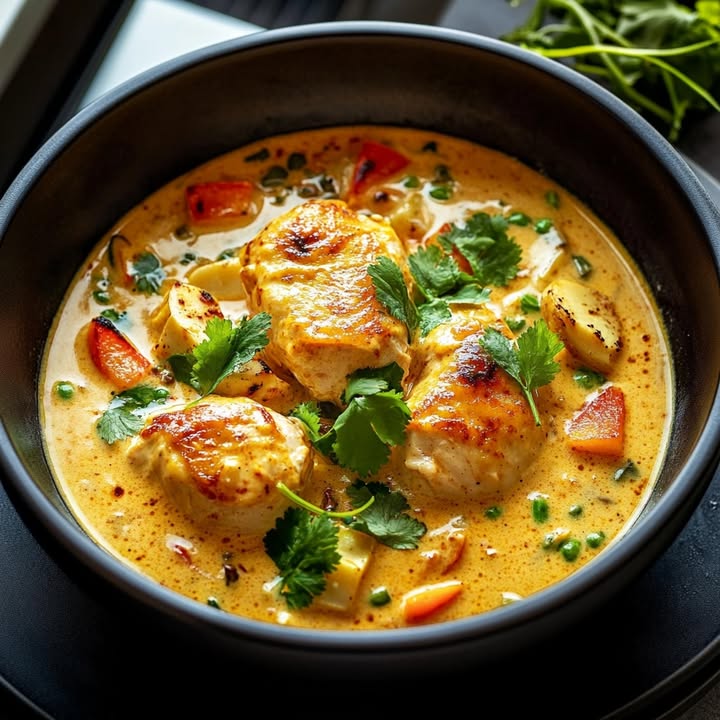
Why Thai Coconut Chicken Curry is a Must-Try Dish
Picture this: it’s a chilly evening, and the aroma of creamy coconut milk, spicy curry paste, and tender chicken fills your kitchen. That’s exactly what happened when I first made Thai Coconut Chicken Curry. My family couldn’t stop raving about how flavorful and comforting it was! This dish isn’t just a meal—it’s an experience. The rich blend of spices, the velvety texture of coconut milk, and the vibrant colors make it a feast for both the eyes and the palate. Whether you’re new to Thai cuisine or a seasoned fan, this recipe will win your heart.
A Little History Behind Thai Coconut Chicken Curry
Thai curries have been around for centuries, deeply rooted in Southeast Asian culinary traditions. They’re a perfect example of how simple ingredients can create complex flavors. In Thailand, curries are often prepared with fresh herbs and spices like lemongrass, galangal, and kaffir lime leaves. While traditional recipes can be time-consuming, this version simplifies the process without compromising on taste. I remember trying authentic Thai curry during a trip to Bangkok—it was love at first bite! When I returned home, I experimented until I nailed this easy yet delicious recipe.
Why You’ll Love This Recipe
This Thai Coconut Chicken recipe is a winner for so many reasons. First, it’s packed with bold flavors that balance spice, sweetness, and creaminess. Second, it’s quick to make—perfect for busy weeknights. Plus, it’s versatile! You can adjust the spice level to suit your family’s preferences. I’ve served this dish to friends who claim they don’t like spicy food, and even they went back for seconds. It’s also gluten-free and can easily be made dairy-free, making it a crowd-pleaser for all dietary needs.
Perfect Occasions to Prepare This Recipe
Whether you’re hosting a dinner party or whipping up a cozy family meal, this Thai Coconut Chicken Curry fits the bill. It’s ideal for weeknight dinners because it’s ready in under 30 minutes. Serve it at a potluck, and watch it disappear faster than any other dish. I’ve also made it for special occasions like birthdays and holidays—it feels indulgent yet healthy. Pair it with rice, quinoa, or naan bread, and you’ve got a complete meal everyone will enjoy.
Ingredients
- 2–3 tablespoons coconut oil or olive oil
- 1 medium/large yellow onion, finely chopped
- 450 g boneless, skinless chicken breast, cut into bite-sized pieces
- 3 garlic cloves, minced or pressed
- 2–3 teaspoons ground ginger or 1 tablespoon fresh ginger, finely chopped
- 2 teaspoons ground coriander
- 1 can (400 ml) full-fat coconut milk (or light, if preferred)
- 1 cup grated carrots
- 1–3 tablespoons Thai red curry paste (adjust to taste)
- 1 teaspoon salt (or to taste)
- ½ teaspoon freshly ground black pepper
- 3 cups fresh spinach leaves
- 1 tablespoon lime juice
- 1–2 tablespoons brown sugar (optional, to taste)
- ¼ cup fresh cilantro, chopped (for garnish)
- Rice, quinoa, or naan bread (optional, for serving)
Substitution Options
- Coconut oil: Use vegetable oil or butter if you don’t have coconut oil.
- Chicken: Swap with shrimp, tofu, or beef for a different protein option.
- Carrots: Substitute with zucchini, bell peppers, or sweet potatoes.
- Curry paste: Replace with curry powder if you can’t find paste.
- Spinach: Kale or Swiss chard works just as well.
Step 1: Sauté the Aromatics
Heat your oil in a large skillet over medium-high heat. Add the chopped onion and cook for about 5 minutes, stirring occasionally. The onions should soften and turn slightly golden, releasing their sweet aroma. This step builds the flavor foundation for your curry. Pro tip: Don’t rush this part—let the onions caramelize a bit for extra depth.
Step 2: Cook the Chicken
Add the chicken pieces to the skillet and cook for another 5 minutes, flipping them frequently to ensure even browning. The chicken should be cooked through and slightly crispy on the edges. Imagine the sizzle and smell of garlic hitting the pan—that’s the magic moment! Keep the heat steady to avoid burning.
Step 3: Add Spices and Herbs
Stir in the garlic, ginger, and coriander. Cook for 1 minute, letting the spices bloom and fill your kitchen with their warm, earthy scent. This step transforms the dish from ordinary to extraordinary. Chef’s tip: Toasting spices briefly enhances their flavor, so don’t skip this!
Step 4: Simmer the Curry
Pour in the coconut milk, add the grated carrots, curry paste, salt, and pepper. Stir everything together and let it simmer for 5 minutes. The sauce will thicken slightly, coating the chicken beautifully. Picture the creamy orange hue of the curry—it’s almost too pretty to eat!
Step 5: Finish with Greens
Toss in the spinach and lime juice. Cook for 1–2 minutes until the greens wilt. Taste and adjust seasoning, adding brown sugar if desired. Garnish with fresh cilantro before serving. The bright green of the spinach against the rich curry is stunning.
Timing
- Prep time: 10 minutes
- Cooking time: 20 minutes
- Total time: 30 minutes
Chef’s Secret
For an extra layer of flavor, toast your curry paste in the skillet for 1 minute before adding the coconut milk. This technique intensifies the spices and makes the curry even more aromatic.
Extra Info
Did you know that coconut milk is naturally lactose-free? It’s a great alternative for those avoiding dairy. Plus, its natural sweetness balances the heat from the curry paste perfectly.
Necessary Equipment
- Large skillet or frying pan
- Wooden spoon or spatula
- Measuring spoons and cups
- Grater (for carrots)
Storage
Store leftovers in an airtight container in the fridge for up to 3 days. Reheat gently on the stovetop or in the microwave. The flavors deepen over time, making it taste even better the next day.
If freezing, portion the curry into freezer-safe containers. It keeps well for up to 3 months. Thaw overnight in the fridge before reheating.
Pro tip: Freeze individual servings for quick weekday lunches. Just pop one in the microwave, and you’re good to go!
Tips and Advice
- Use full-fat coconut milk for a richer texture.
- Adjust the curry paste gradually to control the spice level.
- Don’t overcrowd the pan while cooking the chicken; it ensures proper browning.
Presentation Tips
- Serve in colorful bowls to highlight the vibrant curry.
- Garnish with lime wedges and extra cilantro for a pop of freshness.
- Add a sprinkle of crushed peanuts or sesame seeds for crunch.
Healthier Alternative Recipes
Here are six variations to make this dish healthier:
- Low-Sodium Version: Use low-sodium coconut milk and skip added salt.
- Vegan Option: Replace chicken with chickpeas or tofu.
- Keto-Friendly: Serve with cauliflower rice instead of regular rice.
- Vegetable-Packed: Add broccoli, peas, or green beans.
- Spice-Free: Omit curry paste and use mild spices like turmeric.
- Lightened-Up: Use light coconut milk and reduce the oil.
Mistake 1: Using Too Much Curry Paste
It’s tempting to dump in extra curry paste for more flavor, but this can overpower the dish. Start small and adjust to taste. Pro tip: Mix the paste with a spoonful of coconut milk first to distribute it evenly.
Mistake 2: Overcooking the Spinach
Spinach cooks quickly, so tossing it in too early makes it mushy. Add it in the last couple of minutes to retain its vibrant color and nutrients.
Mistake 3: Skipping the Lime Juice
Lime juice adds brightness to the dish. Without it, the curry may feel heavy. Always include it for balance.
Mistake 4: Not Tasting as You Go
Seasoning is key! Taste the curry throughout the process to ensure it’s perfectly balanced. Adjust salt, sugar, or spice levels as needed.
Mistake 5: Rushing the Onions
Undercooked onions can taste raw and sharp. Give them enough time to soften and caramelize for maximum flavor.
FAQ
What is Thai Coconut Chicken Curry?
It’s a creamy, spicy curry made with chicken, coconut milk, and Thai curry paste. It’s rich, flavorful, and easy to prepare.
Can I make this dish vegan?
Absolutely! Swap chicken for tofu or chickpeas and use vegetable broth if needed.
How spicy is this dish?
The spice level depends on the amount of curry paste you use. Start with 1 tablespoon and increase to suit your preference.
What sides pair well with this curry?
Rice, quinoa, or naan bread are classic choices. Steamed vegetables also complement the dish nicely.
Can I freeze leftovers?
Yes, store in airtight containers and freeze for up to 3 months. Reheat gently when ready to serve.
Is this dish gluten-free?
Yes, as long as you use gluten-free curry paste and serve it with gluten-free sides.
What type of coconut milk should I use?
Full-fat coconut milk provides the richest texture, but light coconut milk works if you’re cutting calories.
Can I use dried herbs instead of fresh?
While fresh herbs are ideal, dried versions work in a pinch. Use half the amount called for.
How do I prevent the curry from being too oily?
Use just enough oil to coat the pan and opt for lean proteins like chicken breast.
Where can I find Thai curry paste?
Most grocery stores carry it in the international aisle. You can also find it online or at Asian markets.
This Thai Coconut Chicken Curry is more than just a recipe—it’s a celebration of flavors and cultures. Whether you’re cooking for yourself or sharing it with loved ones, this dish promises to bring joy to your table. So grab your skillet and give it a try—you won’t regret it!
Thai Coconut Chicken
Ingredients
Equipment
Method
- Heat your oil in a large skillet over medium-high heat. Add the chopped onion and cook for about 5 minutes, stirring occasionally.
- Add the chicken pieces to the skillet and cook for another 5 minutes, flipping frequently.
- Stir in the garlic, ginger, and coriander. Cook for 1 minute.
- Pour in the coconut milk, add the grated carrots, curry paste, salt, and pepper. Stir and let it simmer for 5 minutes.
- Toss in the spinach and lime juice. Cook for 1–2 minutes until the spinach wilts. Garnish with fresh cilantro before serving.