
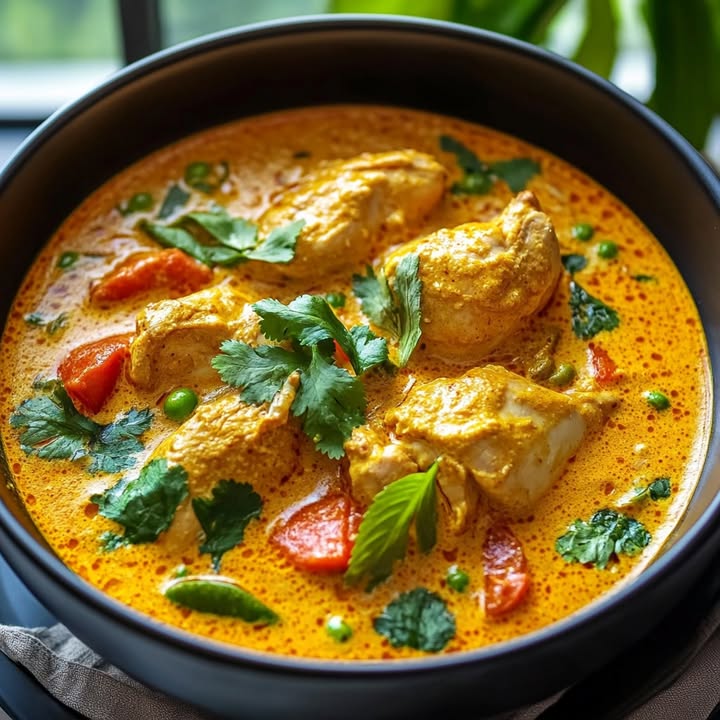
Why This Creamy Thai Coconut Curry Will Win Your Heart
Picture this: a cozy evening, the aroma of spices wafting through your kitchen, and a dish so comforting it feels like a warm hug. That’s exactly what happened when I first made Thai Coconut Curry. My family couldn’t stop raving about it! The creamy coconut milk, tender chicken, and vibrant spices create a symphony of flavors that’s hard to resist. Whether you’re new to Thai cuisine or a seasoned fan, this recipe is simple, quick, and utterly delicious.
A Little History Behind Thai Coconut Curry
Thai curries have been a staple in Southeast Asian kitchens for centuries. Traditionally, they were made by grinding fresh herbs and spices into a paste using a mortar and pestle. Today, we can enjoy the same bold flavors with store-bought curry pastes, making it easier than ever to whip up a restaurant-quality meal at home. I love how this dish bridges tradition and modern convenience—it’s like traveling to Thailand without leaving your kitchen!
Why You’ll Love This Recipe
This Thai Coconut Curry is a winner for so many reasons. First, it’s packed with flavor but doesn’t require hours of prep. Second, it’s versatile—you can tweak the spice level or swap ingredients to suit your taste. Plus, it’s a one-pot wonder, meaning fewer dishes to clean. Trust me, once you try this creamy, spicy, and slightly sweet curry, it’ll become a regular on your dinner rotation.
Perfect Occasions to Make This Dish
Whether you’re hosting a casual dinner with friends or need a quick weeknight meal, this curry fits the bill. It’s also a great option for potlucks, family gatherings, or even date night. Serve it with steamed rice or naan bread, and watch everyone dig in with delight. Bonus: it’s naturally gluten-free and halal-friendly, making it inclusive for all diets.
Ingredients
- 2 to 3 tablespoons of coconut oil or olive oil
- 1 medium/large yellow or sweet onion, finely chopped
- 450 g boneless, skinless chicken breast, cut into bite-sized pieces
- 3 garlic cloves, minced or pressed
- 2 to 3 teaspoons ground ginger or 1 tablespoon fresh ginger, finely chopped
- 2 teaspoons ground coriander
- 1 can (400 ml) full-fat coconut milk (or light, if preferred)
- 1 to 1½ cups grated carrots
- 1 to 3 tablespoons Thai red curry paste (adjust to taste)
- 1 teaspoon salt (or to taste)
- ½ teaspoon freshly ground black pepper
- 3 cups fresh spinach leaves
- 1 tablespoon lime juice
- 1 to 2 tablespoons brown sugar (optional, adjust to taste)
- ¼ cup fresh cilantro or basil, chopped (for garnish)
- Rice, quinoa, or naan bread (optional, for serving)
Substitution Options
- Coconut oil: Use olive oil or any neutral cooking oil.
- Chicken: Swap with tofu, shrimp, or beef for variety.
- Carrots: Replace with zucchini, bell peppers, or sweet potatoes.
- Spinach: Substitute with kale or Swiss chard.
- Brown sugar: Try honey or maple syrup for sweetness.
Preparation
Step 1: Sauté the Aromatics
Heat your oil in a large skillet over medium-high heat. Add the chopped onion and let it cook for about 5 minutes, stirring occasionally. You’ll know it’s ready when the onions turn translucent and start to soften. The smell of caramelizing onions is just heavenly, isn’t it? Pro tip: Don’t rush this step; letting the onions cook slowly builds a rich base flavor.
Step 2: Cook the Chicken
Next, toss in the chicken pieces. Cook them for about 5 minutes, flipping frequently to ensure they’re evenly browned and cooked through. The chicken should look golden and juicy—perfectly prepped for the curry sauce. Pro tip: Pat the chicken dry with paper towels before adding it to the pan to prevent steaming instead of searing.
Step 3: Add the Spices
Now comes the fun part—adding garlic, ginger, and coriander. Stir everything together and let it cook for a minute. Your kitchen will fill with the most amazing aromas. This step wakes up the spices and makes them shine. Chef’s tip: Toast the coriander in a dry pan for 30 seconds before using it—it intensifies the flavor!
Step 4: Build the Curry Sauce
Pour in the coconut milk, grated carrots, curry paste, salt, and pepper. Stir well to combine. Lower the heat to medium and let the sauce simmer for about 5 minutes. You’ll notice it thickening slightly and becoming irresistibly creamy. The vibrant orange color is a feast for the eyes!
Step 5: Finish with Greens
Add the spinach and lime juice. Stir until the spinach wilts, which should take just 1-2 minutes. Taste and adjust the seasoning—add brown sugar if you want a touch of sweetness. Garnish with fresh cilantro or basil before serving. Doesn’t it look gorgeous?
Timing
- Prep time: 10 minutes
- Cooking time: 20 minutes
- Total time: 30 minutes
Chef’s Secret
Here’s my little secret: add a splash of fish sauce to the curry. Just a teaspoon will elevate the umami factor and make the dish taste more authentic. Trust me, it’s a game-changer!
Extra Info
Did you know that Thai curry pastes come in different colors? Red, green, and yellow each have their own unique flavor profiles. Red is spicier, green is herbaceous, and yellow is milder and slightly sweet. Experiment with them to find your favorite!
Necessary Equipment
- Large skillet or frying pan
- Wooden spoon or spatula
- Grater (for carrots)
- Measuring spoons and cups
Storage
This curry stores beautifully in the fridge. Let it cool completely before transferring it to an airtight container. It’ll stay fresh for up to 4 days. Reheat gently on the stovetop or in the microwave, adding a splash of water or coconut milk to loosen the sauce.
If you want to freeze it, portion it into freezer-safe bags or containers. It can last up to 3 months. Thaw overnight in the fridge before reheating.
Pro tip: Label your containers with the date so you don’t forget how long it’s been stored!
Tips and Advice
- Use full-fat coconut milk for a richer texture.
- Adjust the curry paste gradually to avoid overpowering the dish.
- Always taste as you go—you’re the boss of your curry!
Presentation Tips
- Serve in a colorful bowl to highlight the vibrant ingredients.
- Garnish with extra cilantro or a wedge of lime for a pop of color.
- Pair with fluffy white rice or golden naan for contrast.
Healthier Alternative Recipes
Want to switch things up? Here are six variations:
- Vegan Version: Replace chicken with chickpeas or lentils.
- Low-Carb Option: Skip the rice and serve over cauliflower rice.
- Seafood Twist: Use shrimp or salmon instead of chicken.
- Vegetable-Packed Curry: Add broccoli, peas, or mushrooms.
- Spicy Kick: Double the curry paste or add sliced chili peppers.
- Lighter Sauce: Use light coconut milk and reduce the oil.
Common Mistakes to Avoid
Mistake 1: Overcooking the Chicken
Overcooked chicken can turn rubbery and dry. To avoid this, cook the chicken only until it’s no longer pink inside. Pro tip: Cut the chicken into uniform pieces for even cooking.
Mistake 2: Skipping the Lime Juice
The lime juice adds brightness and balances the richness of the coconut milk. Without it, the dish might feel heavy. Always include this final touch!
Mistake 3: Using Old Spices
Stale spices lack flavor. Check the expiration dates on your ground coriander and ginger. Fresh spices make a world of difference.
Mistake 4: Rushing the Simmer
Letting the sauce simmer allows the flavors to meld. Don’t skip this step—it’s worth the wait!
Mistake 5: Overloading the Curry Paste
Start with a small amount of curry paste and adjust to taste. Too much can overwhelm the dish. Remember, you can always add more, but you can’t take it out!
FAQ
What is Thai Coconut Curry?
Thai Coconut Curry is a creamy, flavorful dish made with coconut milk, curry paste, chicken, and vegetables. It’s a popular dish in Thai cuisine known for its balance of spicy, sweet, and savory flavors.
Can I make this dish vegan?
Absolutely! Swap the chicken for plant-based proteins like tofu or chickpeas, and use vegetable broth if needed.
Is this dish spicy?
It depends on the curry paste you use. Start with 1 tablespoon and increase to suit your spice tolerance.
Can I use frozen spinach?
Yes, but thaw and drain it first to avoid excess liquid in the curry.
How do I store leftovers?
Store in an airtight container in the fridge for up to 4 days or freeze for up to 3 months.
What type of rice pairs best?
Jasmine rice is traditional, but basmati or brown rice work too.
Can I add other vegetables?
Definitely! Bell peppers, snap peas, or eggplant would be great additions.
Where can I buy Thai curry paste?
Most grocery stores carry it in the international aisle, or you can find it online.
Do I need special equipment?
Nope! Just a skillet, wooden spoon, and basic kitchen tools will do.
Can kids enjoy this dish?
Of course! Adjust the spice level to make it kid-friendly.
Final Thoughts
This Thai Coconut Curry is a dish that brings people together. Its creamy texture, bold flavors, and ease of preparation make it a standout recipe. Whether you’re cooking for yourself or sharing it with loved ones, this curry promises to satisfy every time. So grab your apron, fire up the stove, and let’s make some magic in the kitchen!
Thai Coconut Curry
Ingredients
Equipment
Method
- Heat your oil in a large skillet over medium-high heat and add the chopped onion; cook until translucent, about 5 minutes.
- Toss in the chicken pieces and cook for about 5 minutes until browned and cooked through.
- Add garlic, ginger, and coriander; stir and cook for 1 minute.
- Pour in the coconut milk, grated carrots, curry paste, salt, and pepper; stir to combine, lower heat to medium, and let simmer for 5 minutes.
- Add the spinach and lime juice; stir until spinach wilts, about 1-2 minutes. Taste and adjust seasoning as needed.