
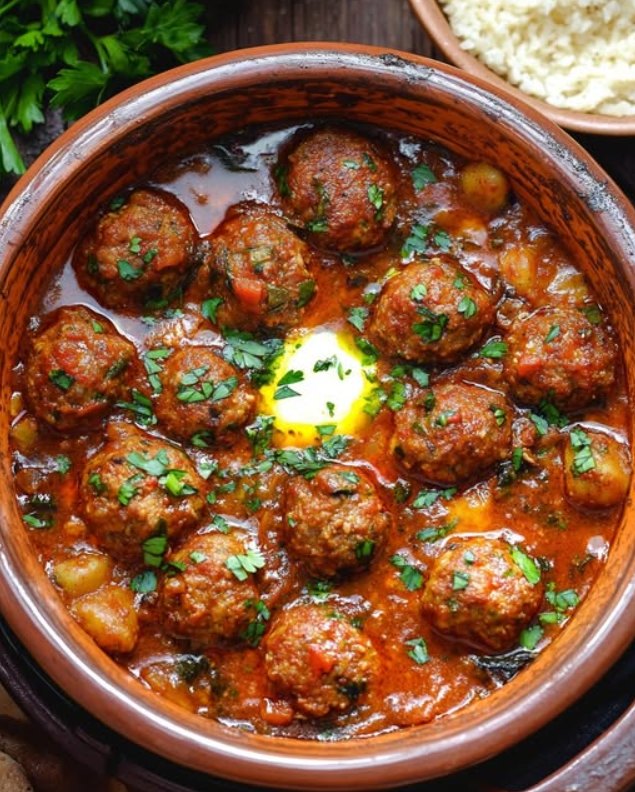
Discover the Magic of Moroccan Kefta Tagine
Picture this: a cozy evening, the smell of spices wafting through the air, and a dish so comforting it feels like a warm hug. That’s exactly what happened when I first made Moroccan Kefta Tagine. It was one of those recipes that felt both exotic and familiar. The tender spiced meatballs bathed in a rich tomato sauce, topped with perfectly cooked eggs—it’s no wonder this dish is a staple in Moroccan households. Whether you’re cooking for your family or hosting friends, this recipe will leave everyone asking for seconds.
A Little History Behind the Dish
The Moroccan Kefta Tagine has deep roots in North African cuisine. Traditionally cooked in a clay tagine pot, this slow-cooked wonder brings out the best in simple ingredients. The word “kefta” refers to spiced ground meat, often lamb or beef, shaped into small balls. My first encounter with this dish was at a friend’s house during a cultural exchange dinner. She served it with fluffy couscous and fresh bread, and I was instantly hooked. Since then, I’ve tweaked the recipe to suit my taste, adding a pinch of ginger here and a sprinkle of cinnamon there. Trust me, once you try it, it’ll become a go-to dish!
Why You’ll Love This Recipe
This Moroccan Kefta Tagine is a flavor powerhouse. The blend of spices—cumin, paprika, coriander, and cinnamon—creates a warm, earthy aroma that fills your kitchen. The sauce is rich and tangy, thanks to fresh tomatoes and herbs. Plus, it’s surprisingly easy to make! Even if you’re new to Moroccan cuisine, this recipe is foolproof. And let’s not forget the optional eggs—they add a creamy texture that ties everything together beautifully. Serve it with crusty bread or fluffy couscous, and you’ve got yourself a meal worth savoring.
Perfect Occasions to Prepare This Recipe
Whether you’re hosting a casual dinner party or simply craving something hearty on a chilly evening, this Moroccan Kefta Tagine fits the bill. It’s perfect for special occasions like birthdays or holidays, but don’t wait for a reason to make it. I love preparing it on Sundays when I have more time to enjoy the cooking process. It’s also a great dish to share with friends who are curious about international flavors. Pair it with a glass of red wine, and you’ve got a feast fit for royalty.
Ingredients
- For the kefta:
- 450 g ground lamb or beef
- 1 grated onion
- 2 tbsp fresh parsley, chopped
- 2 tbsp fresh cilantro, chopped
- 1 tsp paprika
- ½ tsp ground cumin
- 1 tsp ground coriander
- 1 tsp salt
- ½ tsp black pepper
- ½ tsp turmeric
- ½ tsp cinnamon
- ½ tsp ground ginger (optional)
- 2 cloves garlic, grated
- For the tagine:
- 2 tbsp olive oil
- 1 large onion, diced
- 3 cloves garlic, minced
- 1 tsp paprika
- ½ tsp turmeric
- ½ tsp cinnamon
- ½ tsp black pepper
- ½ tsp ground cumin
- 1 tsp ground coriander
- ½ tsp ground ginger (optional)
- ¼ tsp cayenne pepper
- Salt to taste
- 1 tbsp tomato paste
- 1 cup grated tomatoes
- 2 tbsp fresh parsley, chopped
- 2 tbsp fresh cilantro, chopped
- ½ cup water
- 3-4 eggs (optional but recommended)
Substitution Options
If you can’t find ground lamb, ground beef works just as well. For a vegetarian twist, try using finely chopped mushrooms or lentils instead of meat. Fresh herbs can be swapped with dried ones, though fresh always adds a brighter flavor. If you don’t have a traditional tagine pot, a heavy-bottomed skillet or Dutch oven will do the trick. Don’t worry about the eggs if you’re not a fan—they’re optional but highly recommended for an authentic touch.
Step 1: Preparing the Kefta
Start by mixing all the ingredients for the kefta in a large bowl. Use your hands to combine everything until it’s just mixed—don’t overwork it, or the meatballs will become tough. Shape the mixture into small balls, about 3 cm in diameter. Place them on a plate and pop them in the fridge while you prep the sauce. Pro tip: Chilling the meatballs helps them hold their shape during cooking.
Step 2: Sautéing the Aromatics
Heat the olive oil in a large skillet or tagine over medium-high heat. Add the diced onion and sauté until it turns golden brown. Toss in the minced garlic and cook for another minute, stirring constantly to avoid burning. The aroma at this stage is heavenly—sweet onions mingling with garlicky goodness. Keep an eye on the heat; you want the onions caramelized, not charred.
Step 3: Adding the Spices
In a small bowl, mix all the spices—paprika, turmeric, cinnamon, cumin, coriander, and cayenne. Sprinkle this spice blend into the skillet with the onions and garlic. Stir well to coat everything evenly. The spices will release their fragrance almost immediately, filling your kitchen with warmth. Next, add the tomato paste and cook for a minute to deepen its flavor.
Step 4: Building the Sauce
Pour in the grated tomatoes, chopped parsley, and cilantro. Season with a pinch of salt and stir everything together. Add the water and let the sauce simmer gently for 25-30 minutes. The sauce will thicken and develop a rich, savory flavor. Taste and adjust the seasoning if needed. Chef’s tip: Grating the tomatoes gives the sauce a smoother texture compared to chopping them.
Step 5: Cooking the Kefta
Gently place the chilled kefta balls into the simmering sauce. Cover the skillet and let them cook for 10-15 minutes, turning them halfway through to ensure they’re evenly coated with the sauce. The kefta will absorb the flavors of the sauce, becoming juicy and tender. If you’re adding eggs, now’s the time to make little wells in the sauce for them.
Step 6: Adding the Eggs
Crack the eggs into the wells you’ve created in the sauce. Cover the skillet again and let the eggs cook for another 10-15 minutes. You want the whites set but the yolks still runny for that luscious texture. Watching the eggs poach in the fragrant sauce is pure magic. Once done, garnish with extra parsley or cilantro before serving.
Timing
- Prep time: 15 minutes
- Cooking time: 1 hour
- Total time: 1 hour 15 minutes
Chef’s Secret
Here’s a little secret: toast your spices lightly in a dry pan before adding them to the dish. This step enhances their natural oils and intensifies their flavor. It’s a game-changer for any spice-heavy recipe like this Moroccan Kefta Tagine.
Extra Info
Did you know that the tagine pot gets its name from the conical lid that traps steam and allows food to cook slowly? Even if you don’t own one, modern cookware can mimic the effect. Just keep the lid on tight and let the magic happen!
Necessary Equipment
- Large skillet or tagine pot
- Wooden spoon or spatula
- Grater for tomatoes and garlic
- Measuring spoons
Storage
Leftovers of Moroccan Kefta Tagine can be stored in an airtight container in the fridge for up to 3 days. Reheat gently on the stovetop or in the microwave, adding a splash of water to loosen the sauce if needed. For longer storage, freeze the dish without the eggs. Thaw overnight in the fridge and reheat as usual.
If you’re freezing, portion the dish into individual servings for convenience. Label each container with the date to keep track of freshness. When reheating frozen portions, thaw them first to ensure even heating.
One of my favorite tricks is to double the recipe and freeze half for busy days. It’s like having a homemade meal ready to go whenever you need it!
Tips and Advice
- Use freshly ground spices for the best flavor.
- Don’t skip chilling the kefta—it makes a big difference.
- Taste the sauce as it simmers and adjust the seasoning gradually.
- Toast your spices for an extra layer of flavor.
- Serve with warm bread or couscous to soak up the delicious sauce.
Presentation Tips
- Garnish with fresh herbs for a pop of color.
- Serve in the same skillet or tagine pot for a rustic look.
- Add a drizzle of olive oil on top for shine.
- Pair with olives or pickles for contrast.
- Place the dish in the center of the table for a communal dining experience.
Healthier Alternative Recipes
Looking to lighten up this dish? Here are six variations:
- Turkey Kefta: Swap ground lamb or beef with lean ground turkey for a lower-fat option.
- Vegan Kefta: Use mashed chickpeas or lentils instead of meat, and replace eggs with tofu scrambles.
- Low-Sodium Version: Reduce the salt and use low-sodium tomato paste.
- Gluten-Free Option: Ensure all spices and sauces are gluten-free, and serve with gluten-free bread.
- Spice-Lover’s Kefta: Add extra cayenne or harissa paste for a fiery kick.
- Herb-Infused Sauce: Double the amount of fresh herbs for a vibrant twist.
Common Mistakes to Avoid
Mistake 1: Overmixing the Kefta
Overmixing the meat mixture can lead to dense, tough kefta. Mix just until the ingredients come together, and handle the mixture gently. Tip: Use a light touch when shaping the balls.
Mistake 2: Burning the Spices
Spices burn quickly, especially when added to hot oil. To prevent this, sauté them briefly and stir constantly. Tip: Toast spices separately if you’re unsure about timing.
Mistake 3: Skipping the Resting Step
Chilling the kefta might seem unnecessary, but it helps the flavors meld and keeps the balls intact. Tip: Prep the sauce while the kefta rests.
Mistake 4: Overcooking the Eggs
Overcooked eggs lose their creamy texture. Keep an eye on them and remove the dish from heat as soon as the whites set. Tip: Cover the skillet to trap steam and cook the eggs evenly.
Mistake 5: Using Canned Tomatoes
Freshly grated tomatoes give the sauce a fresher taste. If you must use canned, opt for high-quality whole tomatoes and crush them by hand. Tip: Strain canned tomatoes to remove excess liquid.
FAQ
What is Moroccan Kefta Tagine?
Moroccan Kefta Tagine is a traditional dish featuring spiced meatballs cooked in a flavorful tomato-based sauce. Often topped with poached eggs, it’s a comforting and aromatic meal popular in Moroccan cuisine.
Can I use ground chicken instead of lamb?
Absolutely! Ground chicken works well and offers a lighter alternative to lamb or beef. Just adjust the seasoning slightly to complement the milder flavor.
Do I need a tagine pot to make this dish?
No, you don’t. While a tagine pot enhances the authenticity, a heavy-bottomed skillet or Dutch oven works perfectly fine.
How do I store leftovers?
Store leftovers in an airtight container in the fridge for up to 3 days. Freeze portions without eggs for longer storage.
Can I make this dish ahead of time?
Yes, you can prepare the sauce and kefta a day in advance. Assemble and cook just before serving for the best results.
What sides pair well with this dish?
Serve with warm bread, couscous, or a simple green salad. Olives and pickles also complement the flavors nicely.
Is this dish spicy?
The level of spiciness depends on the amount of cayenne or harissa you add. Adjust according to your preference.
Can I omit the eggs?
Yes, the eggs are optional. However, they add a delightful creaminess to the dish.
What herbs work best in this recipe?
Fresh parsley and cilantro are traditional choices. Their bright flavors balance the richness of the sauce.
How do I know when the kefta is cooked?
The kefta should be firm to the touch and no longer pink inside. They typically take 10-15 minutes to cook in the sauce.
This Moroccan Kefta Tagine is more than just a recipe—it’s an experience. From the intoxicating aromas to the satisfying textures, every bite tells a story. So grab your apron, gather your ingredients, and let’s bring a taste of Morocco to your table. Happy cooking!
Moroccan Kefta Tagine
Ingredients
Equipment
Method
- Mix all kefta ingredients in a large bowl, shape into small balls, and refrigerate.
- Heat olive oil in a large skillet or tagine over medium-high heat; sauté diced onion until golden brown.
- Add minced garlic and cook for an additional minute.
- In a small bowl, mix all spices; add to the skillet, stirring to coat the onions and garlic.
- Stir in the tomato paste and cook for a minute.
- Add grated tomatoes, chopped parsley, cilantro, salt, and water; simmer for 25-30 minutes.
- Place the chilled kefta balls into the sauce, cover, and cook for 10-15 minutes, turning halfway through.
- Create wells in the sauce and crack eggs into them; cover and cook for another 10-15 minutes until whites are set.