
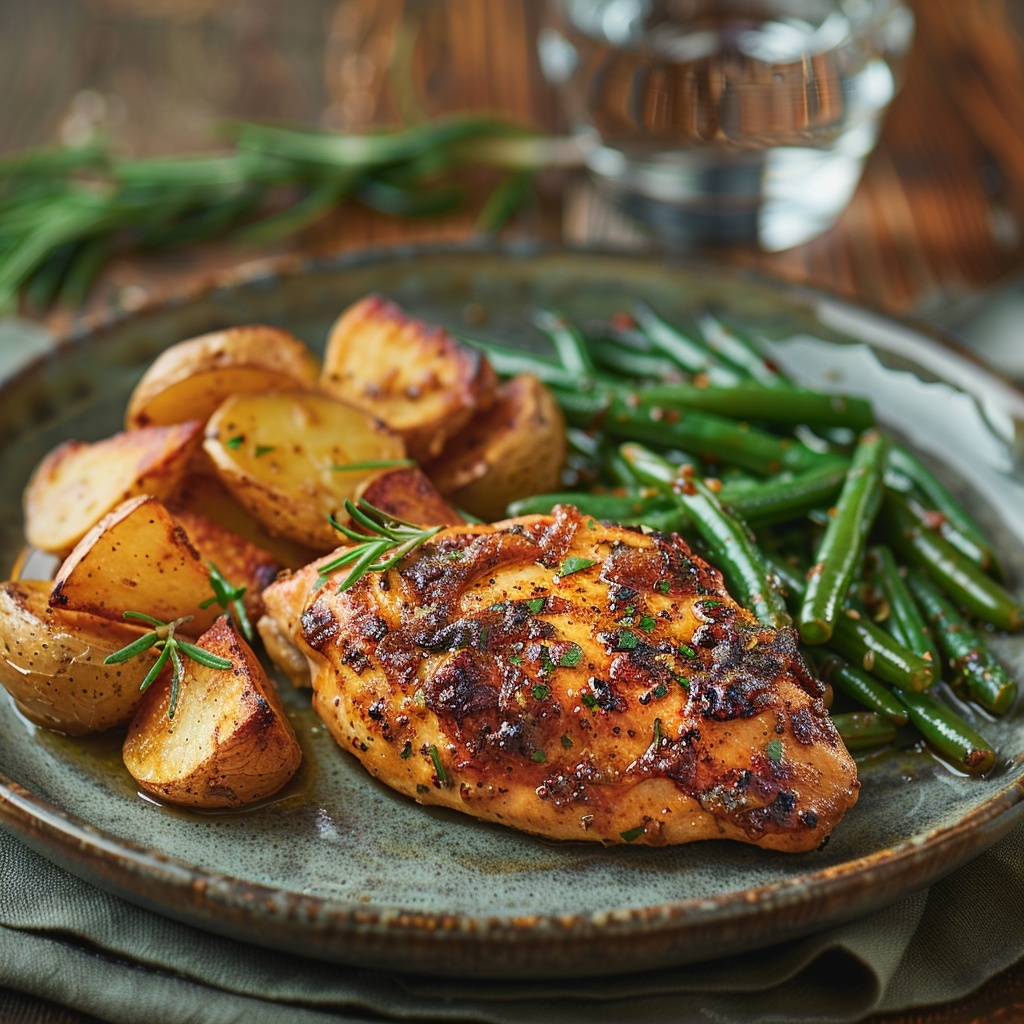
Introduction: My Love for Baked Chicken Breast
Last Tuesday, I opened my fridge at 6 PM and found myself staring at two chicken breasts. My kids were hungry, I was tired, and takeout felt like giving up. Twenty-five minutes later, we sat down to golden, juicy baked chicken that everyone actually finished. That’s the magic of mastering baked chicken breast.
I’ve been cooking chicken breast in the oven for over a decade now. It’s saved me on rushed weeknights, impressed guests at dinner parties, and kept my family well-fed without breaking the bank. No other protein gives you this much flexibility with so little effort.
This guide will walk you through everything I’ve learned about creating perfect baked chicken breast every single time. You’ll discover my favorite gluten free baked chicken breast recipes, learn the exact temperatures and times that work, and pick up tricks that turn boring chicken into something your family requests by name. Whether you’re cooking in Australia or the USA, following a specific diet, or just trying to get dinner on the table, these techniques will work for you.
Why Baked Chicken Breast is a Healthy Choice
Let’s talk about why I reach for chicken breast instead of other proteins most nights. A single four-ounce serving gives you around 26 grams of protein with only 3 grams of fat. That’s incredible for building muscle, staying full, and keeping your energy steady throughout the day.
The best part about healthy baked chicken recipes is how they fit into literally any eating plan. Paleo? Check. Keto? Absolutely. Mediterranean? You bet. Low-carb, dairy-free, or gluten-free? Chicken breast works with all of them.
I’ve noticed that people who include baked chicken in their weekly rotation tend to stick to their health goals better. It’s not about being perfect or following strict rules. It’s about having a reliable, nutritious option that doesn’t feel like diet food.
The baked chicken breast temp you choose affects both safety and taste. Undercooked chicken risks food poisoning, while overcooked chicken turns into rubber. The USDA recommends cooking chicken to an internal temperature of 165°F. I pull mine out at 160°F and let carryover cooking finish the job. This small trick has changed my chicken game completely.
Baked chicken fits perfectly into a balanced diet because you can pair it with any vegetable, grain, or salad. Monday night, I serve it over quinoa with roasted broccoli. Wednesday, I slice it for tacos. Friday, it goes on top of a big Greek salad. Same basic cooking method, completely different meals.
Tips for Choosing the Best Chicken Breast
Walking into the meat section can feel overwhelming. You’ve got organic, free-range, air-chilled, and about ten other labels staring back at you. Here’s what actually matters when you’re choosing chicken breast for baking.
First, look at the color. Fresh chicken breast should be pink with a slight pearl-like quality. If it looks gray or has a yellow tint, skip it. The meat should feel firm when you press on it through the package, not mushy or slimy.
Check the sell-by date carefully. I always grab packages from the back of the display since they’re usually fresher. If you’re not cooking the chicken within two days, freeze it as soon as you get home.
Size matters more than you might think. Chicken breasts that weigh between 6 and 8 ounces cook more evenly than those massive 12-ounce ones. If you end up with jumbo breasts, butterfly them or pound them to an even thickness.
The differences between baked chicken breast Australia standards and USA preferences mainly come down to farming practices. Australian chicken tends to be slightly smaller and leaner due to different breeds and regulations. I’ve cooked both, and the main adjustment is cooking time. Smaller breasts need less time in the oven.
In Australia, chicken labeled “RSPCA Approved” means better animal welfare standards. In the USA, look for “Certified Humane” or “Animal Welfare Approved” if that matters to you. These chickens often have better texture and flavor too.
Organic chicken costs more, but I think it’s worth it when your budget allows. The taste difference isn’t huge, but the texture tends to be firmer and more satisfying. For everyday meals, standard chicken breast works just fine.
Prepping Your Chicken for Maximum Flavor
This is where most home cooks miss the mark. They season chicken for thirty seconds and wonder why it tastes bland. My rule? Spend at least five minutes on prep, and your baking time practically takes care of itself.
My go-to baked chicken seasoning blend starts simple: salt, pepper, garlic powder, and paprika. I mix these in a small bowl with a ratio of 1 teaspoon salt, ½ teaspoon pepper, 1 teaspoon garlic powder, and 1 teaspoon paprika per pound of chicken. This base works for almost any cuisine direction you want to take.
For Italian night, I add dried oregano and basil. For Mexican flavors, cumin and chili powder join the party. Greek-style gets oregano, dried dill, and lemon zest. Having that base seasoning ready means I can pivot depending on what sides I’m making.
One of my absolute favorite preparations is baked chicken breast with onions. I slice two medium onions and spread them across the bottom of my baking dish. The chicken sits right on top, and as everything cooks, the onions caramelize and create this amazing sweet-savory base. The chicken juices drip down and flavor the onions while the onions keep the chicken moist. It’s a win-win situation.
I also brush my chicken with olive oil or melted butter before seasoning. This helps the spices stick and promotes better browning. Don’t skip this step even though it seems small.
Step-by-Step Prep Instructions
Let me walk you through exactly how I prep chicken breast before it goes in the oven. This method answers the question everyone asks: How do you cook chicken breast in the oven so it’s not dry?
Tools you’ll need:
- Baking dish or sheet pan
- Meat thermometer (this is non-negotiable)
- Small bowl for seasoning
- Pastry brush or spoon for oil
- Paper towels
Ingredients for basic prep:
- 2 pounds chicken breast
- 2 tablespoons olive oil or melted butter
- 1 tablespoon salt
- 1 teaspoon black pepper
- 2 teaspoons garlic powder
- 2 teaspoons paprika
The prep process:
- Take your chicken out of the fridge 20 minutes before cooking. Cold chicken straight from the fridge cooks unevenly.
- Pat the chicken completely dry with paper towels. Moisture on the surface prevents browning and creates steam instead of that nice golden crust.
- If your chicken breasts are uneven, pound the thick parts with a meat mallet. You want consistent thickness so everything cooks at the same rate.
- Brush both sides of each breast with oil or butter. Be generous here.
- Mix your seasonings in a small bowl, then sprinkle evenly over both sides of the chicken. Press the seasonings into the meat gently so they stick.
- Let the seasoned chicken sit for 10 minutes while your oven preheats. This resting time lets the salt start working its magic.
The secret to juicy chicken isn’t complicated. It’s about not overcooking it. Most people bake chicken way too long because they’re scared of undercooking it. That’s why a meat thermometer changes everything. When your chicken hits 160°F, pull it out. Let it rest for five minutes, and the internal temp will climb to 165°F while the juices redistribute.
People always ask me about timing. If you’re wondering how long to bake chicken breast at 425, the answer is usually 18 to 22 minutes for standard-sized breasts. For those asking how long to bake chicken breast at 450, it’s more like 15 to 18 minutes. Higher heat means faster cooking and better browning, but you need to watch that thermometer closely.
I prefer 400°F as my standard temperature. It gives you a nice balance between cooking time and moisture retention. At this temp, plan for 20 to 25 minutes depending on thickness.


Mastering Oven Temperatures for Baked Chicken Breast
Now that you’ve got the basics down, let’s talk about something that genuinely confuses people—the temperature game. I’ve gotten countless messages from readers asking whether they should crank their oven up to 450°F or keep it mellow at 350°F, and honestly? The answer depends on what kind of evening you’re having.
Here’s the thing: how long to bake chicken breast at 450 degrees is dramatically different from cooking at lower temps, and both methods have their die-hard fans. When I’m rushing to get dinner on the table because I promised the kids we’d watch a movie (and maybe whip up a refreshing blueberry milkshake for dessert), I go high and fast. At 450°F, you’re looking at about 15-18 minutes for medium-sized breasts. The outside gets this gorgeous caramelization while the inside stays juicy—if you don’t overcook it, which brings me to my next point.
Lower temperatures are more forgiving, though. At 350°F, you’ll need roughly 25-30 minutes, but there’s less risk of drying out your chicken if you get distracted answering emails or helping with homework. I learned this the hard way when I was simultaneously trying to prepare dinner and help my niece with her science project. The chicken at 350°F survived my divided attention; the 450°F batch from the week before? Not so much.
Is it better to bake chicken at 350 or 400 in the oven? This question keeps popping up in my inbox, and my honest answer is that 400°F hits the sweet spot for most home cooks. It’s like the Goldilocks zone of chicken baking. You get decent browning without the stress of watching your meat like a hawk. At this temperature, plan on 20-25 minutes depending on thickness. My kitchen timer has become my best friend at this setting.
Cooking Times Based on Temperature
Let me break down how long to bake chicken breast at 425 and other common temperatures, because I know you’re probably staring at your oven dial right now wondering which number to trust. At 425°F, you’re splitting the difference between speed and safety—figure on 18-22 minutes for average-sized pieces. This is actually my go-to when I’m making a complete meal and need everything to finish around the same time.
Speaking of timing, how long do you cook chicken breasts in the oven at 400 degrees? Generally, you’re looking at that 20-25 minute window I mentioned earlier. But thickness matters more than people realize. A thin cutlet might be done in 15 minutes, while a thick, hefty piece could need 30. I started using my instant-read thermometer religiously after serving undercooked chicken at a dinner party—talk about embarrassing. Now I always check for that magic 165°F internal temperature.
By the way, if you’re coordinating sides, this is where meal planning gets fun. A simple one-pot pasta can simmer on the stove while your chicken bakes, or you could prep a quick salad. The beauty of mastering baked chicken breast temp control is that it frees you up to multitask without constantly checking on things.
One trick I’ve picked up over the years: higher temps work better for bone-in, skin-on pieces because you want that skin to crisp up. For boneless, skinless breasts—which is what most of us buy for weeknight convenience—anywhere from 375°F to 425°F works beautifully. Below 375°F and you’re waiting forever; above 425°F and you’re gambling with dryness unless you’re really experienced.
Exploring Variations of Baked Chicken Recipes
Funny enough, once you nail the basic technique, the world of chicken possibilities opens up in ways you wouldn’t expect. I’ve been experimenting with gluten free baked chicken breast recipes lately because my sister developed some food sensitivities, and let me tell you—you don’t sacrifice flavor by ditching the flour coating. Almond flour or crushed gluten-free crackers create an amazing crust that honestly rivals traditional breadcrumbs.
For anyone searching for healthy baked chicken recipes, the good news is that baking is already one of the healthiest cooking methods out there. You’re not adding tons of oil like you would with frying. My favorite healthy spin involves rubbing chicken with olive oil, fresh herbs, and maybe some lemon zest. It’s clean eating without feeling like you’re punishing yourself. Sometimes I’ll add it to my weeknight chicken stir fry the next day for leftovers that don’t feel like leftovers.
Now, oven baked chicken thighs deserve their own moment in the spotlight. I resisted trying thighs for years because I thought chicken breast was somehow “better” or more proper. What a mistake! Thighs are more forgiving, more flavorful, and honestly easier for beginner cooks. They’ve got more fat, which means they stay moist even if you accidentally leave them in a few minutes too long. Cook them at 400°F for about 35-40 minutes, and they’ll reward you with crispy skin and tender meat underneath.
Recipe Spotlight: Best Baked Chicken Recipe
After years of testing, my personal best baked chicken recipe involves a surprisingly simple technique that changed everything for me. I start by brining the chicken for just 30 minutes in salt water—nothing fancy, just a tablespoon of salt per cup of water. This step alone prevents dryness better than any other trick I’ve tried. Pat them completely dry afterwards (this is crucial), then coat with oil and whatever baked chicken seasoning strikes your mood.
My current obsession is a blend of smoked paprika, garlic powder, dried thyme, and a pinch of cayenne. Sometimes I’ll go Mediterranean with oregano and lemon. Other nights it’s baked chicken breast with onions tucked around the pan, which caramelize beautifully and basically create their own side dish. The onions soak up the chicken juices and turn sweet and sticky—absolutely worth the minimal extra effort.
Here’s my secret for juicy results every single time: let the chicken rest for five minutes after it comes out of the oven. I know you’re hungry and it smells amazing, but those five minutes let the juices redistribute instead of running all over your cutting board. Cover it loosely with foil and use that time to finish your sides or set the table.
For pairing sides with your beautifully baked chicken breast, think about balance. If you went heavy on the seasoning, maybe a simple roasted vegetable or rice pilaf keeps things from overwhelming your palate. When I make my spicier versions, I’ll often serve them alongside something cooling—maybe a cucumber salad or even repurpose the protein for taco night with all the fresh toppings (swap the beef for chicken, obviously). The versatility is what keeps baked chicken breast in my regular rotation week after week, year after year.


Common Mistakes to Avoid When Baking Chicken Breast
Look, I’ve been there. You follow a recipe to the letter, set your timer, and still end up with chicken that tastes like cardboard. It’s frustrating, right? But here’s the thing—most of the time, it’s not about following the recipe perfectly. It’s about understanding what actually goes wrong in that oven.
The biggest culprit? Overcooking. I used to think leaving chicken in “just a few more minutes” would make it safer or better somehow. Wrong. Every minute past the perfect point sucks more moisture out of that meat. Chicken breast is lean, which means it doesn’t have much fat to keep it moist when you push it too far. Once it crosses that line, there’s no bringing it back.
So how do you prevent it? First off, stop relying solely on time. Ovens vary wildly—my mom’s ancient oven runs 25 degrees hotter than the dial says, while my friend’s fancy convection model cooks faster on one side. Time is just a guideline. What you really need is temperature awareness. And honestly, this is where most home cooks drop the ball.
Another mistake people make is slicing into the chicken immediately after pulling it from the oven. I get it—you’re hungry, and you want to check if it’s done. But cutting into it right away releases all those beautiful juices onto your cutting board instead of staying in the meat where they belong. Letting chicken rest after baking isn’t some fancy chef trick; it’s basic science. When meat cooks, the heat pushes moisture toward the center. Resting gives those juices time to redistribute throughout the entire piece. Five to ten minutes is all you need, loosely covered with foil.
By the way, I learned this the hard way at a dinner party years ago. I was so proud of my baked chicken breast with onions, perfectly seasoned and smelling amazing. But I carved it up immediately because guests were waiting, and watched in horror as a pool of juice flooded the platter. The chicken itself ended up dry, and I couldn’t figure out why. My friend’s mom, who’d been cooking for 40 years, took one look and said, “You didn’t let it rest, did you?” Lesson learned.
Pro Tip: Using a Meat Thermometer
If you don’t own a meat thermometer, stop reading and go buy one. Seriously. It’s the single most important tool for perfect chicken, and they’re not expensive. You can get a decent digital one for under twenty bucks, and it’ll change your cooking life.
Here’s why monitoring baked chicken breast temp is essential: chicken needs to reach 165°F (74°C) internally to be safe. Not 170, not 180—just 165. At that temperature, any harmful bacteria are dead, and the meat is still juicy. But without a thermometer, you’re just guessing. Some people poke it and judge by firmness, others cut into it to check the color. Both methods are unreliable and often lead to either undercooked (yikes) or overcooked chicken.
When you use a thermometer, insert it into the thickest part of the breast, making sure not to touch bone if you’re dealing with bone-in pieces. The reading should be instant with digital models. Once it hits 165°F, you’re golden. Actually, I usually pull mine out at 160°F because the temperature continues to rise a few degrees during resting. That’s called carryover cooking, and it’s your secret weapon.
Now, about that related question everyone asks: How long should you cook chicken breasts in the oven? Well, it depends on thickness, temperature, and whether they’re bone-in or boneless. At 400°F, boneless breasts usually take 20-25 minutes. At 350°F, you’re looking at 25-30 minutes. But—and this is crucial—these are estimates. Your thermometer tells you the truth. I’ve had thin cutlets finish in 15 minutes and monster-sized breasts need 35. Don’t trust the clock blindly.
Funny enough, I once tried cooking chicken without a thermometer while camping. I thought I could eyeball it based on years of experience. Nope. Cut into it, still pink. Put it back over the fire, checked again—now it was rubber. A $15 thermometer would’ve saved that meal.
Frequently Asked Questions About Baked Chicken Breast
Is it better to bake chicken at 350 or 400 in the oven?
Both temperatures work, but they give you different results. Baking at 400°F creates a slightly better exterior—a bit more color and texture on the outside while keeping the inside moist, and it’s faster. At 350°F, you get more gentle, even cooking, which can be forgiving if you’re nervous about overcooking. I personally prefer 375-400°F for boneless breasts because the higher heat develops more flavor through browning. However, if you’re making a big batch or cooking with vegetables that need more time, 350°F gives everything a chance to cook together without the chicken getting overdone.
How long do you cook chicken breasts in the oven at 400 degrees?
For boneless, skinless chicken breasts of average size (about 6-8 ounces each), you’re looking at 20-25 minutes at 400°F. If they’re particularly thick or you’ve stuffed them, add another 5-10 minutes. Bone-in breasts take longer—usually 35-40 minutes. But here’s what I always say: these times are starting points. Your actual cooking time depends on breast size, oven accuracy, and whether you’ve pounded them to even thickness. Always use a meat thermometer to check for that magic 165°F internal temperature rather than relying purely on time.
How long should you cook chicken breasts in the oven?
This varies based on temperature and preparation method. At 350°F, boneless breasts need 25-30 minutes; at 375°F, about 23-25 minutes; at 400°F, roughly 20-25 minutes; and if you’re checking how long to bake chicken breast at 425, it’s typically 18-22 minutes. Some recipes even call for 450°F, which is great for a quick dinner—usually 15-20 minutes for medium breasts. The pattern here? Higher temperature equals shorter time. But thickness matters more than anything. A thin cutlet might be done in 12 minutes at 400°F, while a thick breast could need 30.
How do you cook chicken breast in the oven so it’s not dry?
Don’t overcook it—that’s rule number one. Use a meat thermometer and pull it at exactly 165°F. Beyond that, try brining for 30 minutes before cooking (just water and salt), or coat with oil and seasonings to create a protective layer. Baking at higher temperatures (400°F+) for shorter times actually helps retain moisture compared to low and slow cooking, which seems counterintuitive but it’s true. Let it rest after cooking, and consider pounding breasts to even thickness so everything cooks uniformly. Honestly, the thermometer is your best insurance policy against dry chicken.
Can I use the same baked chicken seasoning for different recipes?
Absolutely! A good all-purpose baked chicken seasoning blend—like garlic powder, paprika, salt, pepper, and herbs—works for practically everything. I have one jar I use for basic weeknight dinners, and then I build on it. Add lemon zest and oregano for Greek vibes, or cumin and chili powder for Mexican-inspired dishes. The beauty of a base seasoning is versatility. You’re not locked into one flavor profile, and it saves time not measuring individual spices every single time you cook.
What’s the best temperature for juicy baked chicken breast?
Cook to an internal temperature of 165°F, no more. That’s when it’s safe and still juicy. If you go to 170 or 175°F, you’re entering dry territory fast. Some people prefer pulling it at 160°F and letting carryover cooking finish the job during resting. I’ve tested this dozens of times, and consistently, chicken pulled right at 165°F (or just before) and rested for 5-10 minutes gives the juiciest results. Don’t be afraid of that slightly pink juice that runs out—if the temp is right, it’s perfectly safe.
Are gluten free baked chicken breast recipes different from regular ones?
Not really! Most basic gluten free baked chicken breast recipes are naturally gluten-free anyway since you’re just using chicken, oil, and spices. Where gluten sneaks in is through marinades (soy sauce, some pre-made spice blends) or coatings (breadcrumbs). If you want a crispy coating, swap regular breadcrumbs for gluten-free versions, crushed cornflakes, or almond flour. Otherwise, a simple seasoned chicken breast baked plain is already gluten-free. It’s actually one of the easiest proteins to adapt for gluten-free diets.
Can I apply these tips to oven baked chicken thighs too?
Yes, with one major difference: oven baked chicken thighs are much more forgiving because they have more fat. They’re harder to overcook and stay moist longer. The target internal temperature is still 165°F, but honestly, thighs benefit from going a bit higher—175°F renders more fat and makes them even more tender. Cooking times at 400°F run about 35-45 minutes for bone-in thighs. Same principles apply: use a thermometer, let them rest, don’t skip the seasoning. If you’re new to baking chicken, I’d actually recommend starting with thighs because they’re so much more forgiving.
What should I do if my chicken breasts are different sizes?
Pound them to even thickness using a meat mallet, or butterfly the thicker ones. This is super important because a thin end will overcook while the thick part is still raw. I used to just throw mismatched breasts in the oven and wonder why some pieces were perfect and others were terrible. Evening them out takes literally two minutes and makes a massive difference. Alternatively, you can use a thermometer to check each piece individually and pull them as they hit temperature, but that’s more fussy. I prefer the pounding method—quick, effective, and everything finishes at the same time.
Is baked chicken breast good for meal prep?
It’s fantastic for meal prep! Baked chicken breast stays good in the fridge for 3-4 days and reheats reasonably well. The trick is not overcooking it initially—if it’s slightly juicier than you’d serve fresh, it’ll be perfect after reheating. I usually cook a big batch on Sunday using different seasonings, slice it up, and use it in salads, wraps, grain bowls, and pastas all week. For busy weeks, there’s no simpler protein option. Just store it properly in airtight containers, and you’ll have healthy baked chicken recipes ready to assemble in minutes.
If you’re looking for more inspiration on preparing wholesome meals throughout the week, you might want to check out our full collection of chicken dinner recipes that are perfect for any night of the week. There’s something really satisfying about having reliable techniques you can build on.
The truth is, baked chicken breast doesn’t have to be boring or intimidating. Once you nail down the basics—proper temperature, a good thermometer, resting time, and thoughtful seasoning—you’ve got a foundation for countless meals. Whether you’re exploring baked chicken breast australia style with native spices or sticking to classic American seasonings, the technique stays the same. And finding your own best baked chicken recipe is just about experimenting until you discover what you and your family love most. Don’t be afraid to try something new next time—maybe that baked chicken breast with onions you’ve been thinking about, or a bold new spice blend. Cooking should be fun, not stressful, and chicken is one of the most forgiving places to practice and play around.
Baked Chicken Breast
Ingredients
Equipment
Method
- Take your chicken out of the fridge 20 minutes before cooking.
- Pat the chicken completely dry with paper towels.
- If your chicken breasts are uneven, pound the thick parts with a meat mallet.
- Brush both sides of each breast with oil or butter.
- Mix your seasonings in a small bowl, then sprinkle evenly over both sides of the chicken.
- Let the seasoned chicken sit for 10 minutes while your oven preheats to 400°F (200°C).
- Bake the chicken in the oven for 20 to 25 minutes, or until it reaches an internal temperature of 160°F.
- Let the chicken rest for five minutes before slicing.