
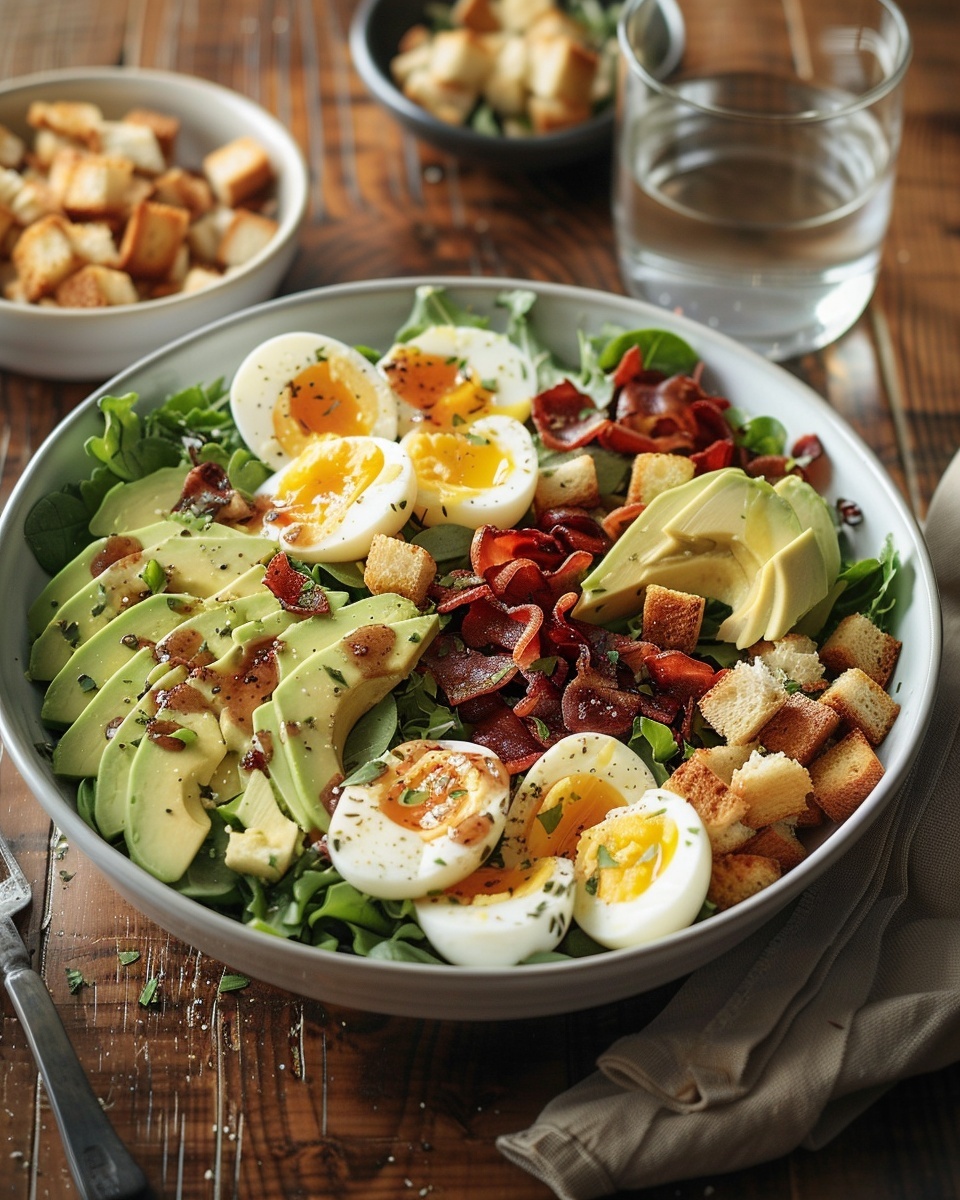
Introduction: My Love for the Classic Cobb Salad
Last Tuesday, I found myself staring into my fridge at 1 PM, starving and tired of the same boring lunch options. Then I spotted leftover grilled chicken, a few hard-boiled eggs, and some bacon from breakfast. That’s when it hit me—I could make a cobb salad. Twenty minutes later, I was eating one of the most satisfying meals I’d had all week.
Welcome to my complete guide on the classic cobb salad! This isn’t just another salad. It’s a full meal packed with protein, healthy fats, and fresh vegetables that actually keeps you full. Whether you’re trying to eat healthier, looking for a quick lunch idea, or just love a good salad, you’re in the right place.
In this guide, I’ll walk you through everything you need to know about making the perfect cobb salad. We’ll cover the traditional recipe, explore different variations, discuss the health benefits, and dive into the best dressing options. I’ll also share tips I’ve learned over the years that make this salad even better.
Why do I love the cobb salad so much? It’s simple. This salad never feels like a punishment or diet food. It’s hearty, flavorful, and colorful. Every bite gives you different textures and tastes. The creamy avocado balances the salty bacon. The tangy blue cheese contrasts with the sweet tomatoes. And unlike most salads that leave you hungry an hour later, this one actually fills you up.
The cobb salad is also incredibly practical. You can prep the ingredients ahead of time and assemble it when you’re ready to eat. It’s perfect for meal prep, family dinners, or even fancy gatherings. I’ve served it at summer barbecues and casual weeknight dinners with equal success.
What Makes a Salad a Cobb Salad?
So what exactly defines a cobb salad? This is a question I get asked often, especially since many restaurants add their own twist to the classic recipe.
A traditional cobb salad is a composed salad, which means the ingredients are arranged in neat rows rather than tossed together. The base is typically chopped romaine lettuce. On top, you’ll find distinct rows of chopped chicken breast, crispy bacon, hard-boiled eggs, ripe avocado, crumbled blue cheese, and fresh tomatoes. Some versions also include chives or green onions.
The essential ingredients that make a cobb salad authentic are:
- Grilled or roasted chicken breast, diced into bite-sized pieces
- Crispy bacon, crumbled or chopped
- Hard-boiled eggs, roughly chopped
- Fresh avocado, diced
- Blue cheese, crumbled (Roquefort is traditional)
- Ripe tomatoes, chopped or halved if using cherry tomatoes
- Fresh romaine lettuce, finely chopped
- Chives or green onions for garnish
The story behind this famous salad is pretty interesting. The cobb salad was created in 1937 at the Brown Derby restaurant in Hollywood, California. Robert Cobb, the restaurant owner, invented it late one night when he was hungry and scrounging through the kitchen.
He grabbed whatever he could find in the refrigerator: lettuce, avocado, tomatoes, chicken, bacon, hard-boiled eggs, and blue cheese. He chopped everything up, added some dressing, and created what would become one of America’s most famous salads. The dish became so popular that it’s still served at restaurants worldwide almost 90 years later.
Now let’s talk about the original cobb salad dressing recipe. The traditional dressing is a red wine vinaigrette, not ranch or blue cheese as many people assume. Here’s how to make it:
Original Cobb Salad Dressing:
- 1/4 cup red wine vinegar
- 1/4 cup water
- 1 teaspoon Dijon mustard
- 1 teaspoon Worcestershire sauce
- 1 small garlic clove, minced
- 1 teaspoon sugar
- 1/2 teaspoon salt
- 1/4 teaspoon black pepper
- 1/2 cup olive oil
- Juice of half a lemon
Mix the vinegar, water, mustard, Worcestershire sauce, garlic, sugar, salt, and pepper in a bowl. Slowly whisk in the olive oil until the dressing emulsifies. Add the lemon juice and adjust the seasoning to taste. This dressing is tangy, slightly sweet, and lets all the salad ingredients shine without overpowering them.
Cobb Salad Dressing Type: Finding Your Perfect Match
While the traditional cobb salad dressing is a red wine vinaigrette, I’ve found that people have strong preferences when it comes to their salad dressings. The beauty of the cobb salad is that it pairs well with several different dressing types.
The traditional vinaigrette I mentioned above is my go-to choice. It’s light, tangy, and doesn’t add too many extra calories. If you’re watching your cobb salad calories, this is your best bet. The acidity cuts through the richness of the bacon, cheese, and avocado perfectly.
Blue cheese dressing is another popular option for chicken cobb salad recipe variations. Since the salad already contains blue cheese, this dressing amplifies that tangy, creamy flavor. It’s richer and more indulgent than vinaigrette. I use this version when I want something really satisfying, especially during colder months.
To make homemade blue cheese dressing, combine 1/2 cup mayonnaise, 1/4 cup sour cream, 1/4 cup buttermilk, 1/2 cup crumbled blue cheese, 1 tablespoon lemon juice, and salt and pepper to taste. It takes five minutes and tastes so much better than store-bought versions.
Ranch dressing has become increasingly popular with cobb salads, especially at chain restaurants. While not traditional, it works well if you prefer a milder, creamier option. Many kids prefer ranch, so I keep it on hand when serving cobb salad to families.
Here are my tips for making the perfect cobb salad dressing at home, regardless of which type you choose:
- Always taste and adjust the seasoning before serving. Dressings need proper salt and acid balance.
- Make dressing ahead of time when possible. Vinaigrettes taste better after sitting for 30 minutes, and creamy dressings improve overnight.
- Keep the dressing on the side until you’re ready to eat. This prevents the salad from getting soggy.
- Use quality ingredients. Good olive oil and real blue cheese make a noticeable difference.
- Start with less dressing than you think you need. You can always add more, but you can’t take it away.
- Whisk vinaigrettes vigorously or shake them in a jar to create a proper emulsion.
For those wondering about cobb salad keto compatibility, stick with the vinaigrette or a full-fat ranch or blue cheese dressing. Skip any dressings with added sugar. The salad itself is naturally low in carbs and high in healthy fats, making it perfect for keto diets.
I like to keep three different dressings ready in my fridge. That way, everyone at the table can choose their favorite. It takes minimal extra effort but makes everyone happy.


Is Cobb Salad Healthy? The Nutritional Truth
Once you’ve got your dressing sorted, the next question everyone asks me is whether this salad is actually good for you. It’s a fair question, especially since it contains bacon and blue cheese—not exactly diet foods, right?
Here’s the thing: a cobb salad can absolutely be healthy, but it depends on how you make it and what portions you use. I’m going to be completely honest with you about the nutritional breakdown so you can make informed choices.
A typical cobb salad contains somewhere between 600 and 900 calories. That’s a pretty wide range, I know. The difference comes down to portion sizes and dressing. If you load up on bacon, cheese, and avocado, then drench everything in creamy dressing, you’re looking at the higher end. Use moderate portions and a lighter vinaigrette, and you’ll land closer to 600 calories.
But cobb salad calories aren’t the whole story. What matters more is what you’re getting for those calories. This salad packs an impressive nutritional punch. A well-made cobb salad delivers approximately 40-50 grams of protein, 15-20 grams of healthy fats, and 10-15 grams of fiber. Plus, you’re getting vitamins A, C, E, K, and several B vitamins, along with minerals like iron, calcium, and potassium.
Let me break down why each main ingredient contributes to making this a cobb salad healthy option:
The chicken breast provides lean protein that helps build muscle and keeps you feeling full for hours. I never feel hungry an hour after eating a proper cobb salad, unlike when I have a pasta dish. That protein also stabilizes your blood sugar, preventing those afternoon energy crashes.
Avocado brings healthy monounsaturated fats that support heart health and help your body absorb all those fat-soluble vitamins from the vegetables. It also adds a creamy texture without needing extra dressing. Fun fact: I started eating more avocado after reading about its benefits, and I noticed my skin looked better within weeks. Coincidence? Maybe, but I’m not stopping now. If you love creative ways to use avocado, you should check out this tropical avocado and mango combination that takes fresh salads to another level.
The eggs contribute additional protein plus important nutrients like choline, which supports brain function. Hard-boiled eggs are also incredibly satiating. They’re one of those foods that make you feel genuinely satisfied rather than just not-hungry.
Blue cheese, while calorie-dense, is rich in calcium and probiotics. A little goes a long way in terms of flavor, so you don’t need much. I typically use about two tablespoons of crumbled blue cheese, which adds tons of taste without excessive calories.
Tomatoes provide lycopene, an antioxidant that becomes more bioavailable when consumed with fats—which this salad has plenty of. They also add vitamin C and a refreshing burst of flavor.
The romaine lettuce base is low in calories but high in vitamins A and K. It provides volume and crunch, making the salad feel substantial. I always chop my romaine finely so every bite has greens mixed with the other ingredients.
Now, about bacon. Yes, bacon isn’t a health food. But in moderate amounts, it adds satisfying flavor and some protein. I use two strips per salad, crumbled. That’s enough to get bacon in most bites without going overboard. You could also use turkey bacon if you want to reduce saturated fat.
For those following a keto diet, you’ll be happy to know that cobb salad keto compatibility is excellent. The standard recipe contains only about 10-12 grams of net carbs, mostly from the tomatoes and vegetables. Skip any sugary dressings and you’ve got a perfect keto meal. I’ve recommended this to several friends on keto, and they all love having a filling option that doesn’t feel restrictive.
To make your cobb salad even more keto-friendly, you can increase the bacon and avocado portions while using full-fat blue cheese dressing. Some people add extra hard-boiled eggs too. The high protein and fat content keeps you in ketosis while providing sustained energy.
How does the cobb salad stack up against other popular salads? I did some research on this because I was curious myself.
Compared to a Caesar salad, the cobb has more protein and vegetables but similar calories if both use creamy dressings. The Caesar relies heavily on croutons and parmesan for flavor, giving it more carbs and less nutritional variety.
Against a Greek salad, the cobb wins on protein content thanks to the chicken and eggs, though the Greek salad typically has fewer calories. Both are excellent choices depending on your goals. The Greek salad is lighter and more refreshing, while the cobb is heartier and more filling.
A simple garden salad with grilled chicken doesn’t come close to the cobb’s nutritional profile. You’re missing the healthy fats from avocado, the probiotics from cheese, and the additional protein from eggs and bacon.
By the way, if you’re concerned about the calorie count but still want something substantial, try using half portions of the richer ingredients. Use one egg instead of two, one strip of bacon instead of two, and half an avocado instead of a whole one. You’ll cut about 200 calories while keeping the salad satisfying and delicious.
Chicken Cobb Salad Recipe: My Step-by-Step Method
Alright, let’s get to the practical part—actually making this chicken cobb salad recipe. I’ve made this literally hundreds of times, so I’ve figured out the easiest and most efficient method.
The key to a great cobb salad is preparation. I know that sounds boring, but trust me. Having everything prepped and ready makes assembly quick and enjoyable rather than stressful.
Start with your chicken. This is the foundation of your salad, so getting it right matters. I’ve tried grilled, roasted, and rotisserie chicken, and each works well but gives slightly different results.
For grilled chicken, I season two boneless, skinless chicken breasts with salt, pepper, garlic powder, and a touch of paprika. Heat your grill or grill pan to medium-high heat. Cook the chicken for about 6-7 minutes per side until it reaches an internal temperature of 165°F. Let it rest for five minutes before chopping. Grilled chicken adds a smoky flavor that I absolutely love, especially in summer.
Roasted chicken is my winter preference. Preheat your oven to 400°F. Season the chicken the same way, place it on a baking sheet, and roast for 20-25 minutes. This method keeps the chicken incredibly moist and is totally hands-off, which I appreciate on busy days.
Honestly though? On weeknights, I often just grab a rotisserie chicken from the grocery store. Remove the skin, shred or chop the meat, and you’re done in two minutes. Nobody has ever complained, and it tastes just as good in the finished salad.
Here’s my complete process: While the chicken cooks or cools, I prep everything else. I hard-boil four eggs using my foolproof method—place eggs in a pot, cover with cold water by an inch, bring to a boil, then remove from heat and let sit covered for 12 minutes. Transfer to ice water, and they peel perfectly every time.
Cook six strips of bacon until crispy. I do this in the oven at 400°F for about 15-20 minutes on a foil-lined baking sheet. Way easier than stovetop, and the bacon comes out perfectly flat and crispy. Plus, no grease splatters to clean.
While those are cooking, I wash and chop one large head of romaine lettuce into small pieces, dice two avocados, halve a pint of cherry tomatoes, and crumble about half a cup of blue cheese. Everything goes into separate containers if I’m meal prepping, or into small bowls if I’m serving right away.
For assembly, I use a large rectangular platter or a big shallow bowl. Spread the chopped romaine as your base. Then arrange the toppings in neat rows across the lettuce: chicken, bacon, eggs, avocado, tomatoes, and blue cheese. This traditional presentation looks gorgeous and lets everyone see exactly what they’re getting.
Some people prefer tossing everything together before serving, which is totally fine. The composed presentation is more traditional and photograph-worthy, but mixed works great for casual meals or when you’re eating it straight from a container at your desk. No judgment here—I’ve done both plenty of times.
Here’s a variation I love: shredded chicken instead of diced. It changes the texture and makes the salad feel more integrated. I use two forks to shred the chicken while it’s still slightly warm, and it takes maybe three minutes.
For sides and beverages, keep it simple. This salad is hearty enough to be a complete meal, but if you want something alongside it, I recommend crusty bread, sweet potato fries, or fresh fruit. For drinks, iced tea, lemonade, or a crisp white wine all pair beautifully. My personal favorite is unsweetened iced tea with lemon—it refreshes your palate between bites without competing with the salad’s flavors.
Finding the Best Cobb Salad Near Me
Sometimes you don’t want to make your own salad. Maybe you’re traveling, working late, or just don’t feel like cooking. I totally get it. Finding a good cobb salad near me has become one of my regular searches when I’m out and about.
Chain restaurants are usually your safest bet for consistency. Chick-fil-A serves a popular version, though the cobb salad Chick fil a offers leans sweeter than traditional recipes due to their honey roasted chicken and corn. It’s good if you like that style, but it’s not quite authentic. I order it without the corn and ask for extra veggies to balance things out.
Local cafes and bistros often make excellent cobb salads. The quality tends to be higher because they use fresher ingredients and make their dressings in-house. I’ve found some amazing versions at independent restaurants that use locally-sourced produce and really good quality chicken.
When ordering at a restaurant, here are my tips: Always ask for the dressing on the side. This gives you control over how much you use and keeps the salad from getting soggy if you have leftovers. Restaurants are notoriously heavy-handed with dressing, and getting it separately can easily save you 200-300 calories.
Ask what kind of chicken they use. Grilled is usually your healthiest option. Some places use fried chicken tenders, which changes the whole nutritional profile and adds unnecessary calories and carbs.
Check if you can customize ingredients. I always ask for extra avocado and light cheese because that’s how I prefer it. Most places are happy to accommodate reasonable requests.
Look at reviews before ordering. People are very vocal about salad quality online, and you can usually tell from reviews whether a restaurant makes fresh salads or uses pre-bagged ingredients and bottled dressings.
Funny enough, some of the best cobb salads I’ve had weren’t at salad-focused restaurants but at upscale steakhouses. They tend to use premium ingredients and take their salads seriously. Worth checking out if you’re celebrating or want to treat yourself.
For those exploring different salad styles, sometimes Mediterranean flavors offer a refreshing change from the classic American cobb. This Spanish-style grilled seafood salad brings similar satisfaction with completely different flavors.
Price-wise, expect to pay anywhere from eight dollars at fast-casual chains to eighteen dollars at upscale restaurants. The difference usually reflects ingredient quality and portion size. I’ve found that mid-range restaurants around twelve to fifteen dollars typically offer the best value—good ingredients, decent portions, fair pricing.


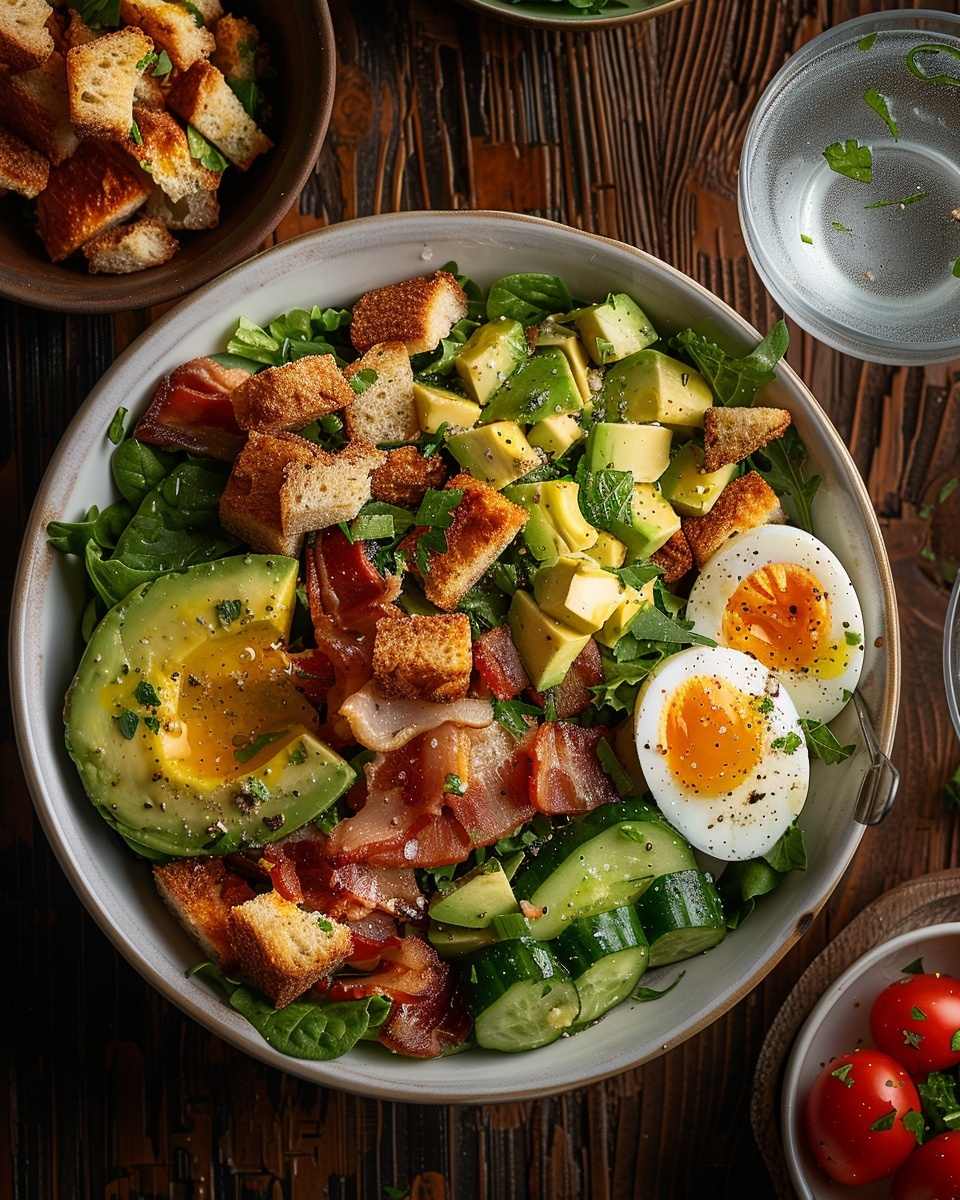
Creative Cobb Salad Variations to Keep Things Interesting
After making the classic version dozens of times, I started experimenting with different takes on the traditional recipe. That’s when things got really fun. The cobb salad is surprisingly adaptable, and these variations have saved me from salad boredom more times than I can count.
Let me start with the cobb salad Chick fil a version since so many people ask about it. Their take includes grilled nuggets instead of sliced chicken, which I actually think is pretty smart. The bite-sized pieces distribute more evenly throughout the salad. They also add roasted corn kernels and their signature Harvest Nut Granola for crunch. It’s sweeter and crunchier than the original, almost like a southern twist on the classic.
What I appreciate about the Chick-fil-A version is the convenience factor. You can grab it on a road trip or during a busy workday and still get a reasonably healthy meal. However, I always customize it. I skip the corn to reduce carbs, ask for extra tomatoes, and use only half the packet of their Avocado Lime Ranch dressing. That brings it closer to the traditional flavor profile while keeping the convenience.
Here’s the thing though—making your own Chick-fil-A-inspired version at home is super easy and way cheaper. Just cut your grilled chicken into nugget-sized pieces, add some toasted pecans or almonds for crunch, and use a cilantro-lime dressing instead of the traditional vinaigrette. My kids actually prefer this version because the smaller chicken pieces are easier to eat.
The cobb salad recipe Martha Stewart developed takes a more refined approach. Martha’s version emphasizes presentation and uses premium ingredients like heirloom tomatoes, artisanal blue cheese, and champagne vinaigrette. She also recommends adding fresh tarragon to the dressing, which adds an unexpected herbal note that really elevates the whole dish.
I tried Martha’s method for a dinner party last spring, and my guests were genuinely impressed. The champagne vinaigrette is lighter and more delicate than red wine vinaigrette, making it perfect for warm weather dining. To make it, whisk together three tablespoons of champagne vinegar, one tablespoon of Dijon mustard, one minced shallot, half a cup of olive oil, and salt and pepper. The shallot makes a huge difference—it’s milder than garlic but adds sophisticated flavor.
Martha also suggests serving the salad on individual plates rather than one big platter, with each ingredient carefully placed for visual impact. It takes a bit more time, but it transforms the salad from casual lunch to dinner party centerpiece. I’ve adopted this presentation style when I want to impress people, and it works every single time.
For those following plant-based diets, a cobb salad vegetarian version is completely doable and honestly delicious. I started making this for my sister who went vegetarian two years ago, and now I make it for myself regularly because it’s lighter but still satisfying.
The key is replacing the animal proteins with substantial plant-based alternatives. I use chickpeas or white beans where the chicken would normally go. Roast them with a bit of olive oil, smoked paprika, and garlic powder at 400°F for about twenty-five minutes until they’re crispy on the outside. They add protein, fiber, and a satisfying crunch that really works in this context.
For the bacon, I’ve found two good options. Coconut bacon—yes, it’s a real thing—provides smoky, salty flavor and crispy texture. You make it by tossing coconut flakes with liquid smoke, maple syrup, and soy sauce, then baking until crispy. Alternatively, tempeh bacon works great. Slice tempeh thin, marinate it in soy sauce and maple syrup with a touch of liquid smoke, then pan-fry until crispy.
Keep the hard-boiled eggs if you’re vegetarian rather than vegan. They’re such an important protein source and add that classic cobb salad texture. If you’re vegan, try marinated tofu cubes or just increase the beans and add some sunflower seeds for additional protein and healthy fats.
The rest stays the same—avocado, tomatoes, lettuce, and if you’re vegetarian, the blue cheese. For vegans, there are some decent cashew-based blue cheese alternatives now, though I’ll admit they’re not quite the same. Nutritional yeast mixed with cashew cream gets you partway there flavor-wise.
Now, about the Jennifer Aniston cobb salad. This became internet-famous when Jennifer and her Friends co-stars talked about eating the same salad every day during filming for ten years straight. Can you imagine? The same salad for a decade. It must be pretty amazing.
The Jennifer Aniston version, sometimes called the “Friends salad,” is actually more of a chopped salad than a traditional cobb, but it has similar ingredients. It includes shredded chicken, chickpeas, chopped cucumber, red onion, fresh herbs like parsley and mint, pistachios, and feta cheese instead of blue cheese. The dressing is lemon juice, olive oil, and fresh herbs.
I tried this version after reading about it, and I understand why they ate it so often. It’s incredibly fresh and light, perfect for California weather. The combination of mint and parsley is really refreshing, and the pistachios add a different kind of richness than you get from bacon. Making mindful food choices like incorporating more fresh herbs and varying your protein sources can genuinely improve how you feel throughout the day.
To make the Jennifer Aniston version, combine two cups of chopped romaine, one cup of shredded chicken, half a cup of cooked chickpeas, half a cup of diced cucumber, quarter cup of diced red onion, quarter cup of chopped parsley, two tablespoons of chopped mint, quarter cup of pistachios, and quarter cup of crumbled feta. For the dressing, whisk together juice of one lemon, three tablespoons of olive oil, one minced garlic clove, and salt and pepper.
The Middle Eastern influence from the mint, chickpeas, and pistachios gives this salad a completely different personality from the classic American cobb. I rotate between the traditional version and Jennifer’s version depending on my mood and the weather. Traditional cobb feels more appropriate for cooler months, while the Jennifer Aniston version is perfect for summer.
Here are some other variations I’ve experimented with that worked surprisingly well. The Mexican cobb replaces blue cheese with cotija or pepper jack, adds black beans and corn, swaps the bacon for chorizo, and uses a cilantro-lime dressing. It’s basically a burrito bowl presented like a cobb salad, and it’s become my husband’s favorite version.
The buffalo chicken cobb uses chicken tossed in buffalo sauce, adds celery and carrots, and uses blue cheese dressing instead of vinaigrette. If you like buffalo wings, you’ll love this salad. It has all that spicy, tangy flavor but with way more vegetables and protein.
I’ve also made an Asian-inspired cobb with sesame-ginger chicken, edamame instead of chickpeas, mandarin oranges, cashews, and a miso-ginger dressing. My teenager requests this one constantly because it reminds her of the salads at her favorite Asian fusion restaurant.
The beauty of the cobb salad format is that once you understand the structure—protein, crispy element, creamy element, vegetables, cheese, and dressing—you can adapt it to almost any flavor profile. Think of it as a template rather than a rigid recipe.
By the way, if you get really into making different salad variations and want to explore more creative combinations beyond just the cobb salad, I’d recommend checking out the full collection of salad recipes available online. There’s a whole world of interesting salads out there that use similar principles but take you in completely new flavor directions.
One last tip for variations: don’t be afraid to experiment based on what you have available or what’s in season. I’ve made winter cobb salads with roasted butternut squash and dried cranberries. I’ve made spring versions with asparagus and peas. The core concept is flexible enough to accommodate all kinds of creative additions.
Frequently Asked Questions About Cobb Salad
What makes a salad a Cobb salad?
A true cobb salad contains specific ingredients arranged in rows: chopped romaine lettuce as the base, with rows of grilled chicken, crispy bacon, hard-boiled eggs, avocado, tomatoes, and blue cheese on top. The composed presentation—with ingredients in neat rows rather than tossed—is part of what defines it. The salad originated at the Brown Derby restaurant in Hollywood in 1937. While modern variations exist, these core ingredients and the arranged presentation are what make it authentically a cobb salad.
What is the healthiest salad to eat at Wendy’s?
While this article focuses on cobb salad, Wendy’s Apple Pecan Chicken Salad is generally considered their healthiest option when you use the pomegranate vinaigrette and go light on the dressing. Their Southwest Avocado Chicken Salad is another good choice with plenty of protein and vegetables. However, Wendy’s doesn’t currently offer a traditional cobb salad on their menu. If you’re specifically looking for a cobb salad from a fast-food chain, Chick-fil-A or Panera would be better options. Always ask for dressing on the side to control calories and sodium.
What is in a Jennifer Aniston Cobb salad?
The Jennifer Aniston salad, made famous during her Friends years, is actually a Mediterranean-inspired variation rather than a traditional cobb. It includes shredded chicken, chickpeas, chopped cucumber, red onion, fresh herbs like parsley and mint, pistachios, and feta cheese over chopped lettuce. The dressing is a simple mixture of lemon juice, olive oil, garlic, and herbs. It’s lighter and more herb-forward than a classic cobb salad. Jennifer and her co-stars reportedly ate this salad almost daily for ten years during filming, which speaks to how satisfying and delicious it is.
What is the difference between a Cobb salad and a chef salad?
While both are hearty American salads, they have distinct differences. A cobb salad contains chicken, bacon, hard-boiled eggs, avocado, blue cheese, and tomatoes, traditionally arranged in rows. A chef salad typically includes ham, turkey, hard-boiled eggs, and Swiss or cheddar cheese, usually tossed together rather than arranged. Chef salads often include more variety of cold cuts and different cheeses. The cobb is richer due to the avocado and bacon, while chef salads tend to be leaner. Both make complete meals, but the flavor profiles are quite different.
Can I make a cobb salad ahead of time? How do I store it?
Absolutely, and meal prepping cobb salad is one of my favorite Sunday activities. Store each component separately in airtight containers in the refrigerator. The chicken, bacon, and hard-boiled eggs keep for three to four days. Chop the lettuce and store it in a container with a paper towel to absorb moisture. Cut the avocado right before serving to prevent browning, or toss it with lemon juice if you must prep it ahead. Keep the dressing separate until you’re ready to eat. This way, everything stays fresh and crisp, and you can assemble individual portions throughout the week.
Are there any common substitutions for traditional cobb salad ingredients?
There are plenty of substitutions that work well. For chicken, try turkey, shrimp, or salmon. Instead of bacon, use turkey bacon, prosciutto, or for vegetarian versions, try coconut bacon or crispy chickpeas. Swap blue cheese for feta, goat cheese, or sharp cheddar if you’re not a blue cheese fan. Iceberg or mixed greens can replace romaine, though the texture will be different. For a nut-free version, use seeds instead of nuts in variations that call for them. The salad is quite forgiving and adapts well to dietary needs and personal preferences.
Is cobb salad actually good for weight loss?
Yes, cobb salad can support weight loss when prepared thoughtfully. It’s high in protein and fiber, which keep you full for hours and reduce overall calorie intake throughout the day. The key is controlling portions of the higher-calorie ingredients like bacon, cheese, and avocado, and using a lighter vinaigrette instead of creamy dressing. A well-portioned cobb salad provides around 400-600 calories with excellent nutrition. Compare that to a typical sandwich or burger meal at 800-1200 calories, and you can see why it’s a smart choice. The protein and healthy fats also help stabilize blood sugar, reducing cravings.
What’s the best way to cook chicken for cobb salad?
My preferred method is grilling because it adds smoky flavor and keeps the chicken moist without adding fat. Season with salt, pepper, and garlic powder, then grill over medium-high heat for six to seven minutes per side. Roasting at 400°F for twenty to twenty-five minutes is another excellent option that’s completely hands-off. For the easiest approach, use a store-bought rotisserie chicken and shred the meat. Poaching is underrated too—it keeps the chicken incredibly tender and moist. Whichever method you choose, let the chicken rest for five minutes before chopping to retain the juices.
Can I freeze cobb salad ingredients for later use?
Some ingredients freeze well, others don’t. Cooked chicken freezes beautifully for up to three months—just thaw it overnight in the refrigerator before using. Cooked bacon also freezes well. However, never freeze lettuce, tomatoes, or avocado, as they become mushy and unappetizing when thawed. Hard-boiled eggs don’t freeze well either—the whites become rubbery. Blue cheese can technically be frozen but the texture changes. Your best bet is freezing only the chicken and bacon, then prepping the fresh ingredients when you’re ready to assemble the salad.
How do I prevent my cobb salad from getting soggy?
The number one rule is keeping the dressing separate until right before eating. Store it in a small container and add it only when you’re ready to eat. Make sure your lettuce is completely dry after washing—use a salad spinner or pat it dry with paper towels. If meal prepping, layer ingredients strategically with heartier items like chicken and eggs on the bottom and delicate lettuce on top. Some people put the dressing in the bottom of a jar, then layer ingredients with lettuce last, and shake it all together when ready to eat. This method works great for portable lunches.
Making your own cobb salad at home really is simpler than you might think, and the payoff is huge. You get a restaurant-quality meal that’s healthier, cheaper, and customized exactly to your preferences. Start with the classic version to understand the basic flavor profile, then branch out into variations based on what you enjoy or what fits your dietary needs. Whether you’re meal prepping for the week, looking for a satisfying lunch that won’t leave you hungry an hour later, or trying to add more vegetables and protein to your diet, the cobb salad delivers on all counts. Give it a try this week—I promise you won’t regret it.
Cobb Salad
Ingredients
Equipment
Method
- Season the chicken breasts with salt, pepper, garlic powder, and paprika.
- For grilled chicken: Heat grill to medium-high, cook chicken for 6-7 minutes per side until internal temperature reaches 165°F, let it rest and chop.
- For roasted chicken: Preheat oven to 400°F, roast chicken for 20-25 minutes, let it rest and chop.
- Cook bacon in the oven at 400°F on a foil-lined baking sheet for about 15-20 minutes until crispy.
- Hard-boil eggs: Place in a pot, cover with water, bring to a boil, remove from heat, cover for 12 minutes, then transfer to ice water.
- Wash and chop the romaine lettuce into small pieces.
- Dice the avocados and halve the cherry tomatoes.
- To make the dressing, mix vinegar, water, mustard, Worcestershire sauce, minced garlic, sugar, salt, and pepper in a bowl, whisk in olive oil, then add lemon juice.
- Assemble the salad on a large platter or bowl with chopped romaine as the base, and arrange the toppings in rows: chicken, bacon, eggs, avocado, tomatoes, and blue cheese.
- Garnish with chives or green onions. Serve with dressing on the side.