
Last Tuesday, I watched my neighbor’s teenage son devour an entire bowl of Caesar salad before moving on to his main course. His mom looked stunned. She’d been trying to get him to eat greens for years. That’s the magic of a good Caesar salad. It somehow makes lettuce irresistible.
Welcome to your complete guide to the Caesar salad, one of America’s most beloved dishes. Whether you’re at a fancy steakhouse or your local diner, you’ll find this creamy, crunchy, savory salad on nearly every menu. It’s the perfect side dish, a satisfying lunch, and with grilled chicken on top, it transforms into a complete meal.
The Caesar salad has earned its spot as a national favorite in the USA. People love it because it works for any occasion. You can serve it at backyard barbecues, holiday dinners, or quick weeknight meals. It pairs beautifully with grilled steak, roasted chicken, or pasta dishes. Some people even eat it as their main course.
In this guide, I’ll walk you through everything you need to know about this iconic salad. We’ll explore its surprising history and origin story. You’ll learn how to make the classic Caesar salad from scratch, including that legendary dressing. I’ll share modern variations like Caesar salad with chicken and lighter versions. We’ll also tackle the big questions about Caesar salad calories and whether this popular dish fits into a healthy diet.
The Origin of Caesar Salad
Here’s something that surprises most people: Caesar salad has nothing to do with ancient Rome or Julius Caesar. The Caesar salad origin story is much more recent and involves a different Caesar entirely.
The salad was born on July 4th, 1924, in Tijuana, Mexico. Chef Caesar Cardini owned a restaurant just across the border from California. That Independence Day brought huge crowds of Americans looking to escape Prohibition laws. His kitchen ran low on supplies as more hungry customers kept arriving.
Caesar needed to create something special with what he had left. He grabbed romaine lettuce, parmesan cheese, olive oil, eggs, Worcestershire sauce, and day-old bread. He tossed everything together tableside with dramatic flair. His daughter Rosa recounted years later how her father would prepare the salad with theatrical gestures, making it as much about the show as the taste.
The original recipe was simpler than what most restaurants serve today. Caesar used whole romaine leaves that guests would pick up with their fingers. He coddled the eggs briefly in hot water rather than using raw yolks. The dressing came from the combination of olive oil, lemon juice, garlic, and those partially cooked eggs emulsified together.
Hollywood celebrities started visiting Caesar’s restaurant in the 1920s and 1930s. They fell in love with the salad and brought the recipe back to Los Angeles. Food writer Julia Child later claimed she ate the original Caesar salad at Caesar’s restaurant as a young girl. She called it one of her most memorable food experiences.
The salad spread across the United States through the 1940s and 1950s. Restaurants added their own touches. Some included anchovies in the dressing, though Caesar’s original recipe didn’t call for them. Others added more garlic or changed the proportions. By the 1960s, the Caesar salad had become a steakhouse staple from coast to coast.
Today, you can find Caesar salad variations in restaurants worldwide. But it remains most popular in the USA, where it consistently ranks among the top five most ordered salads. Caesar Cardini’s emergency creation became a lasting culinary legacy.
Classic Caesar Salad Recipe
Making a proper classic Caesar salad at home is easier than you think. You don’t need fancy equipment or hard-to-find ingredients. The secret lies in using fresh components and following a few simple techniques.
Let me share my favorite recipe that serves four people as a side dish or two as a main course.
What are the Ingredients in a Caesar Salad?
The Caesar salad ingredients list is surprisingly short. Here’s exactly what you need:
- 2 large romaine lettuce hearts
- 1/2 cup freshly grated Parmesan cheese
- 2 cups homemade or quality store-bought croutons
- Optional: 2-4 anchovy fillets for garnish
Caesar Salad Dressing Ingredients
The dressing makes or breaks your salad. These Caesar salad dressing ingredients create that signature creamy, tangy flavor:
- 2 garlic cloves, minced
- 2 anchovy fillets, finely chopped (or 1 teaspoon anchovy paste)
- 2 large egg yolks (or 1/4 cup mayonnaise for a safer alternative)
- 2 tablespoons fresh lemon juice
- 1 teaspoon Dijon mustard
- 1 teaspoon Worcestershire sauce
- 1/2 cup extra virgin olive oil
- 1/3 cup freshly grated Parmesan cheese
- Salt and black pepper to taste
Step-by-Step Preparation
Preparing the Lettuce: Wash your romaine hearts under cold water and pat them completely dry. Wet lettuce makes watery dressing that won’t stick properly. I wrap mine in a clean kitchen towel and put it in the fridge for 30 minutes. This step makes the lettuce extra crispy. Tear or cut the romaine into bite-sized pieces, keeping them fairly large.
Making Perfect Croutons: Cut day-old bread into 3/4-inch cubes. Fresh bread gets soggy instead of crispy. Toss the cubes with olive oil, salt, and garlic powder. Spread them on a baking sheet and bake at 375°F for 10-12 minutes. Shake the pan halfway through. They should turn golden brown and crunchy. Let them cool completely before adding to your salad.
Creating the Dressing: This is where the magic happens. Mash the garlic and anchovy fillets together with a fork until they form a paste. Add the egg yolks (or mayo), lemon juice, Dijon mustard, and Worcestershire sauce to a bowl. Whisk everything together. Now comes the important part: drizzle in the olive oil very slowly while whisking constantly. This creates a smooth emulsion. Once all the oil is incorporated, stir in the Parmesan cheese. Season with salt and pepper.
Assembly: Place your dried romaine in a large bowl. Add about half the dressing and toss gently with your hands or two large spoons. You want every leaf lightly coated, not drowning in dressing. Add more dressing if needed. Toss in most of the croutons and half the Parmesan. Give it one more gentle toss. Transfer to plates and top with remaining croutons, Parmesan, and anchovy fillets if using.
Pro Tips for Success
I learned these tricks through years of making Caesar salads:
- Always use romaine hearts, not the outer leaves, which can taste bitter
- Grate Parmesan fresh from a block – pre-grated cheese doesn’t melt into the dressing properly
- Make dressing 30 minutes ahead to let flavors blend
- Add croutons right before serving so they stay crunchy
- Don’t overdress – you can always add more, but you can’t take it away
- Room temperature ingredients blend better than cold ones
The easy Caesar salad recipe approach uses store-bought dressing and croutons. There’s no shame in that when you’re short on time. But making it from scratch takes only 20 minutes and tastes remarkably better. Once you try homemade dressing, bottled versions taste flat and overly salty by comparison.
My family requests this salad weekly. Sometimes I add grilled chicken breast slices for Caesar salad with chicken. Other times I keep it simple and classic. Either way, that first crunchy, creamy, savory bite never gets old.


Variations and Twists on Caesar Salad
Once you’ve mastered the basic recipe, the real fun begins. The beauty of Caesar salad lies in how adaptable it is. I’ve seen everything from breakfast Caesar salads with poached eggs to dessert versions (yes, really – don’t ask me how that works). But let’s stick with variations that actually make sense.
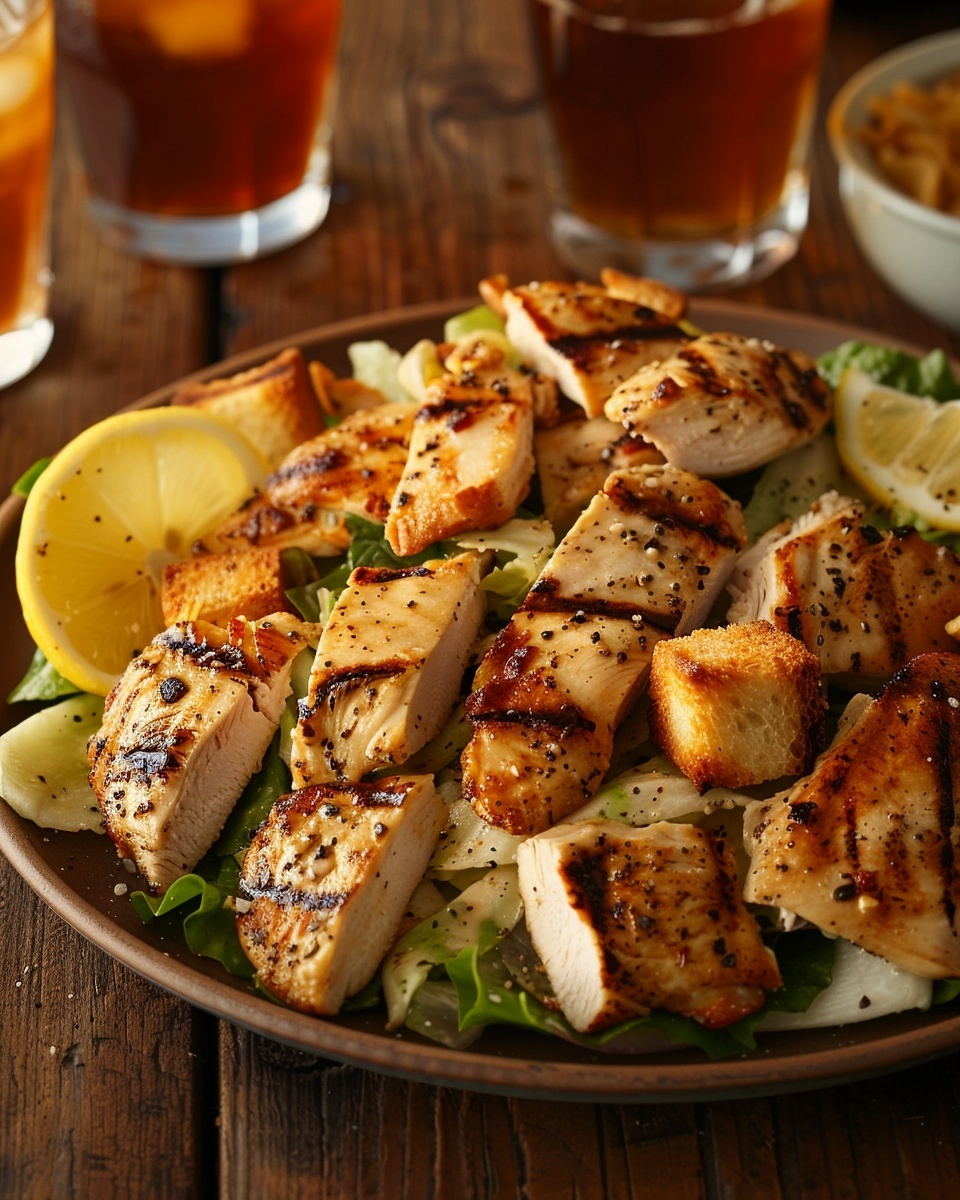
The Caesar salad with chicken remains the most popular twist, and for good reason. Last month, I grilled some chicken breasts seasoned simply with salt, pepper, and olive oil. I sliced them while still warm and arranged them over my classic Caesar. The combination turned a side dish into a proper dinner that left everyone satisfied. My husband, who usually needs a mountain of food to feel full, said this was enough. That’s saying something.
Here’s how I prepare my protein additions: For chicken, I grill or pan-sear boneless, skinless breasts until they reach 165°F internally. Let them rest for five minutes before slicing against the grain. That resting period matters more than people think – it keeps the juices inside the meat instead of all over your cutting board. Sometimes I use leftover rotisserie chicken, which saves time and adds extra flavor from those store seasonings.
Shrimp works beautifully too, though it needs a lighter touch. I learned this the hard way after overcooking shrimp into rubber balls that bounced off my fork. Now I sauté them quickly in butter and garlic for maybe three minutes total, just until they turn pink and curl slightly. The combination of creamy dressing with tender shrimp creates this surf-and-turf contrast that feels fancy without being complicated. If you’re looking for more ways to pair shrimp with fresh ingredients, tropical fruit combinations offer an interesting departure from traditional Caesar flavors.
My friend Sarah introduced me to salmon Caesar salad last summer. She baked a salmon fillet with lemon and dill, flaked it into chunks, and tossed it with the salad components. The richness of salmon stands up well to that tangy, garlicky dressing. It’s become my go-to when I want something that feels healthy and indulgent at the same time. The omega-3s from the fish pair nicely with the healthy fats in the olive oil dressing.
Now, the Italian Caesar salad concept might sound redundant since Caesar Cardini had Italian roots, but this version takes things in a different direction. Italian restaurants often add sun-dried tomatoes, fresh mozzarella balls, and basil leaves alongside the traditional romaine. Some toss in pine nuts for extra crunch. The dressing stays mostly the same, though I’ve seen versions with added balsamic vinegar or red wine vinegar for more complexity.
One Italian chef I met at a food festival told me his grandmother would add marinated artichoke hearts and roasted red peppers. He called it “Caesar Mediterraneo.” The vegetables add color and different flavor notes that complement rather than overpower the classic taste. When preparing seafood-based variations, techniques borrowed from simple shrimp preparations can help maintain that delicate balance.
Vegetarians haven’t been left out of the Caesar evolution. I’ve replaced anchovies with capers and added roasted chickpeas for protein and crunch. The chickpeas, tossed with olive oil and paprika then baked until crispy, provide that satisfying bite you’d normally get from chicken. Grilled portobello mushrooms work as another meaty substitute. Slice them thick, brush with olive oil, grill until tender, and layer over your salad.
The kale Caesar became trendy a few years back, and I initially rolled my eyes. But after trying it, I understood the appeal. Kale holds up better than romaine when dressed in advance, making it perfect for meal prep or potlucks. You need to massage the kale leaves with a bit of olive oil first – literally rub them between your hands for a minute or two. This breaks down the tough fibers and makes the leaves tender enough to enjoy raw.
For a lighter summer version, I sometimes add halved cherry tomatoes and sliced cucumber. These weren’t in Caesar’s original creation, but they add freshness and help stretch the salad to feed more people. My mom adds corn kernels during summer when sweet corn floods the farmers markets. Sounds weird, but that pop of sweetness against the savory dressing creates an interesting contrast.
Brussels sprouts Caesar has gained popularity in recent years. Shave raw Brussels sprouts paper-thin using a mandoline or sharp knife, then treat them exactly like romaine. They have a slightly bitter, nutty flavor that pairs surprisingly well with the creamy dressing. This version holds up even better than kale for advance preparation.
Health and Nutrition
Let’s address the elephant in the room: Are Caesar salads actually healthy? The answer is complicated, and it depends entirely on how you make it and how much you eat.
A typical restaurant Caesar salad with chicken packs anywhere from 600 to 1,200 calories. I was shocked when I first looked up the numbers. That’s as many calories as a burger and fries at some places. The Caesar salad calories add up quickly because of the dressing, cheese, and croutons.
Here’s the breakdown of a standard serving: The romaine lettuce itself contains maybe 10-15 calories and provides vitamins A, K, and folate. That’s the healthy part. Then comes the dressing – about 150-200 calories per two tablespoons, mostly from oil and egg yolks. Most people use way more than two tablespoons. The Parmesan cheese adds another 100 calories per ounce. Croutons contribute 120-150 calories per cup. Add grilled chicken, and you’re looking at another 200-300 calories depending on portion size.
But calories don’t tell the whole story. Caesar salad provides protein from the chicken, eggs, cheese, and anchovies. You get healthy fats from the olive oil. The romaine offers fiber, vitamins, and minerals. Compared to a plate of fried food or a heavy pasta dish, a Caesar salad can be a reasonable choice.
The real nutritional concerns center around sodium and saturated fat. Restaurant versions often contain 1,000-1,500 mg of sodium – that’s most of your daily recommended limit in one dish. The saturated fat from cheese and the traditional egg-based dressing can be high too. For someone watching their heart health or blood pressure, these numbers matter.
I’ve found several ways to lighten up Caesar salad without sacrificing too much flavor. First, I use Greek yogurt in place of some or all of the mayonnaise or egg yolks in the dressing. This cuts calories and fat while adding extra protein. Caesar salad Jamie Oliver style often incorporates this technique. Jamie’s known for making classic recipes healthier without losing their soul.
Second, I go easy on the croutons and cheese. Instead of a full cup of croutons, I use a quarter cup and make sure they’re really flavorful and crunchy so a little goes further. Same with the Parmesan – a tablespoon or two of really good, freshly grated cheese tastes better than a quarter cup of the pre-grated stuff anyway.
Adding more vegetables beyond romaine increases the nutritional value significantly. Cherry tomatoes provide lycopene and vitamin C. Cucumbers add hydration and crunch with almost no calories. Bell peppers contribute vitamin C and fiber. These additions bulk up the salad, making it more filling without adding many calories.
For the dressing, I sometimes make a lighter version using just one egg yolk instead of two, then stretching it with a bit of low-fat milk or extra lemon juice. You lose some richness, but the garlic, anchovy, and Parmesan flavors still shine through. Another trick: add Dijon mustard and a tiny bit of honey. They help emulsify the dressing so you can use less oil while maintaining that creamy texture.
Grilling your protein instead of frying it makes a huge difference too. A grilled chicken breast has about half the calories of a breaded, fried one. If you’re adding seafood like what you’d find in fresh summer salads, grilling or steaming keeps things light.
Portion control matters more than people want to admit. A side Caesar salad serving should be about two cups of greens. A main course portion might be four cups. Most restaurants serve way more than that, sometimes six or eight cups of lettuce drowning in dressing. When you’re eating out, consider sharing a Caesar salad as an appetizer instead of eating an entire entrée-sized portion yourself.
The sodium issue can be trickier to solve since it comes from multiple sources – the anchovy paste, Worcestershire sauce, Parmesan cheese, and added salt. I’ve reduced sodium by using low-sodium Worcestershire sauce and being careful about how much salt I add. Since Parmesan and anchovies are naturally salty, you might not need any additional salt at all.
Is Caesar salad healthy? It can be, with some modifications. It’s healthier than many restaurant meals. It’s packed with more vegetables than most people eat in a day. But drowning romaine in a cup of creamy dressing and calling it health food would be lying to yourself. Like most things, moderation and smart choices make the difference between a nutritious meal and an indulgent one.


Common Caesar Salad Mistakes and How to Avoid Them
I’ve made just about every Caesar salad mistake possible over the years. My first attempt at homemade dressing broke into an oily mess that looked like salad soup. Another time, I added the croutons two hours before dinner and ended up with soggy bread chunks that tasted like disappointment. Let me save you from these disasters.
The biggest mistake people make? Wet lettuce. I can’t stress this enough. Water dilutes your dressing and makes everything slide off the leaves. Your carefully made Caesar becomes a watery puddle at the bottom of the bowl. After washing your romaine, you need to dry it completely. I spin mine in a salad spinner twice, then spread the leaves on clean kitchen towels for at least fifteen minutes. Some people skip this step entirely and just rinse quickly under the tap, giving a little shake before tossing. That’s not enough. You want those leaves bone dry.
Here’s another common pitfall: overdressing the salad. Last Thanksgiving, my sister-in-law drowned her Caesar in so much dressing that nobody could taste the actual lettuce or cheese. The salad became a vehicle for consuming a bowl of garlic mayo. Start with less dressing than you think you need. You can always add more, but you can’t remove it once it’s coating every leaf. I use about two tablespoons of dressing per large handful of greens, tossing as I go.
Using pre-grated cheese ranks high on the mistake list too. Those bags of shredded Parmesan contain cellulose powder to prevent clumping. It’s basically wood pulp. The cheese doesn’t melt into the dressing properly, and the flavor tastes flat and salty instead of nutty and complex. Buy a wedge of real Parmigiano-Reggiano and grate it yourself right before serving. The five extra minutes of effort makes an incredible difference. My neighbor tried this after I nagged her about it for months, and she texted me the next day saying she finally understood what I’d been talking about.
Temperature matters more than most people realize. Cold dressing on cold lettuce doesn’t blend well. The oil in the dressing gets thick and clumpy when it’s refrigerator-cold. I take my dressing out about thirty minutes before I plan to serve the salad. Room temperature ingredients emulsify better and distribute more evenly. The lettuce should be cold and crisp, but not wet from condensation. If your lettuce has been sitting in the fridge, make sure any water droplets are dried off before you dress it.
Another mistake: adding protein that’s the wrong temperature. If you’re making Caesar salad with chicken, let your grilled chicken rest for five minutes, then slice it while it’s still slightly warm. Cold chicken straight from the fridge tastes rubbery and doesn’t release any of its juices into the salad. But don’t add chicken that’s steaming hot either, or it’ll wilt your lettuce. That sweet spot of just-warm protein makes everything taste fresher.
People mess up the dressing emulsion constantly. When you’re whisking oil into egg yolks, you need to add it slowly – like, painfully slowly. Think of a thin stream, not a steady pour. If you dump all the oil in at once, the mixture separates into gross blobs. I learned this the hard way three times before I got patient enough to do it right. Now I pour with one hand while whisking frantically with the other, and I count to sixty in my head to make sure I’m not rushing. If your dressing does break, don’t panic. Start with a fresh egg yolk in a clean bowl, then slowly whisk the broken dressing into the new yolk. It usually comes back together.
Using the wrong lettuce causes problems too. Iceberg lettuce has no flavor and gets soggy instantly. Regular leaf lettuce wilts under the weight of the dressing. Spring mix turns brown and bitter. Romaine hearts are really the only choice that works properly. They’re sturdy enough to hold the dressing, crisp enough to provide good texture, and mild enough to let the other flavors shine. I’ve seen people try to make Caesar salad with spinach or arugula, and it never quite works. Those greens have too much personality of their own.
Timing your crouton addition separates good Caesar salads from mediocre ones. Add them more than five minutes before serving, and they start absorbing moisture from the dressing and lettuce. They turn into chewy bread bits instead of providing that crucial crunch. I keep my croutons separate until the absolute last second before bringing the salad to the table. Sometimes I even put them in a small bowl on the side so people can add their own.
Many home cooks skip the anchovy entirely because they think they don’t like them. This is a mistake. The anchovy doesn’t make the salad taste fishy – it adds a savory depth that you’d miss without really knowing what’s absent. If you absolutely can’t handle anchovies, at least use anchovy paste or Worcestershire sauce, which contains anchovies anyway. That umami flavor is essential to authentic classic Caesar salad taste.
Finally, people often make way too much at once. A giant bowl of dressed Caesar salad sitting out for an hour becomes a sad, wilted mess. I make only what I’ll serve immediately. If I’m feeding a crowd, I keep the components separate and assemble individual portions as needed, or I let people build their own. This keeps everything fresh and crunchy throughout the meal.
Finding the Best Caesar Salad Near You
Sometimes you just don’t want to make Caesar salad yourself. Maybe you’re tired, or you don’t have the right ingredients, or you’re curious how local restaurants interpret this classic. Finding the best Caesar salad near me has become a bit of a hobby for me when I travel.
Steakhouses usually nail Caesar salad. These restaurants understand that good Caesar depends on quality ingredients and proper technique. They’re charging premium prices, so they’d better get it right. Last month I tried the Caesar at a local chophouse, and the waiter made it tableside, just like Caesar Cardini did originally. The theatrical presentation was fun, but more importantly, the dressing was fresh and perfectly balanced.
Italian restaurants often serve excellent versions too. They respect the Italian-American heritage of the dish and tend to use better Parmesan and olive oil than chain restaurants. A family-owned Italian place near my office makes their croutons with their leftover pizza dough brushed with garlic butter. Those croutons alone are worth the visit.
Here’s my strategy for finding good Caesar salad in any area: Open Google Maps or Yelp and search for “Caesar salad” plus your location. Then read the reviews carefully. Don’t just look at star ratings. Read what people actually say. Comments like “best Caesar I’ve ever had” or “the dressing is made fresh” signal you’re on the right track. Watch out for reviews mentioning “too much dressing” or “soggy” or “flavorless” – those are red flags.
Check restaurant menus online before you visit. Places that list specific ingredients are usually more serious about their food. If the menu says “romaine hearts, house-made croutons, fresh Parmigiano-Reggiano, classic Caesar dressing,” that’s promising. If it just says “Caesar salad – $8,” they’re probably opening a bottle of commercial dressing and tossing it with bagged lettuce.
Ask friends and coworkers for recommendations. I’ve discovered some of my favorite spots this way. People who care about food love to share their finds. My dentist told me about a lunch place downtown that serves Caesar salad with grilled sourdough croutons that taste like garlic bread. She was right – it’s outstanding.
Look for restaurants that make their dressing from scratch. Some places will tell you directly on the menu or their website. Others you’ll have to ask. Don’t be shy. Call ahead and ask, “Do you make your Caesar dressing in-house?” Good restaurants are proud of this and happy to tell you. Places using bottled dressing might give you vague answers or just say “yes, we prepare it here” without clarifying that “preparing” means opening a container.
Pay attention to price points. A $6 Caesar salad and a $16 Caesar salad are not the same thing. The cheaper version probably uses lower-quality ingredients and shortcuts. You don’t have to order the most expensive salad on the menu, but if something seems too cheap for a dish that requires eggs, real Parmesan, and good olive oil, there’s a reason. By the way, understanding sustainable food habits can help you make better choices about ingredient quality when dining out, since restaurants committed to quality ingredients often source more responsibly.
Try the Caesar salad during lunch instead of dinner if the restaurant offers it on both menus. Lunch portions are often more reasonably priced but use the same kitchen and ingredients as dinner service. I’ve gotten fantastic Caesar salads at lunchtime for half what they’d cost in the evening.
Farmers markets and food festivals sometimes have vendors selling fresh Caesar salads. These can be hit or miss, but when they’re good, they’re really good. A vendor at my local farmers market makes Caesar salad kits with everything packaged separately – you assemble it at home so nothing gets soggy. The dressing comes in a little jar, the Parmesan in another container, homemade croutons in a bag. It’s like a fancy version of a salad kit but with actual quality ingredients.
Don’t overlook cafes and delis. Some of the best Caesar salads I’ve found came from small, casual spots that care about doing a few things really well. There’s a deli three blocks from my house that makes exactly one salad – Caesar with chicken. That’s it. They’ve perfected it over twenty years, and now they’re known for it. People drive from across town to get their Caesar salads.
Funny enough, fast-casual chains have stepped up their Caesar game in recent years. Places like Panera or Sweetgreen offer decent versions that won’t blow your mind but also won’t disappoint you. They’re consistent and convenient. When I’m traveling and don’t know the local restaurant scene, I’ll sometimes default to a reliable chain for a safe bet.
Notice how restaurants handle modifications. A good restaurant will accommodate requests like “dressing on the side” or “light on the croutons” without attitude. Flexibility usually indicates they’re assembling salads to order rather than making huge batches hours in advance. If a server seems annoyed when you ask for grilled chicken instead of fried, that place might not be worth your time.
Finally, trust your instincts about restaurant cleanliness and overall quality. If the dining room looks grimy or the staff seems unprofessional, their food prep probably reflects that. A restaurant that cares enough to maintain clean bathrooms and tables probably cares about their Caesar salad too. I’ve explored many different salad preparations over the years, and this attention to detail always separates memorable dishes from forgettable ones.
Making a Caesar salad at home gives you complete control over ingredients and flavors. You know exactly what’s going into your dressing, how fresh your lettuce is, and how much cheese you’re using. Whether you stick with the traditional recipe or experiment with modern variations, creating this iconic dish in your own kitchen connects you to a century of culinary history that started with one chef’s creative solution to a busy restaurant night. So grab some romaine, break out your whisk, and enjoy the process of bringing this classic to life on your own terms.
Frequently Asked Questions
What is the best Caesar salad dressing?
The best Caesar salad dressing is one you make from scratch using quality ingredients. A proper dressing needs fresh garlic, anchovy fillets or paste, egg yolks or mayonnaise, fresh lemon juice, Dijon mustard, good extra virgin olive oil, and freshly grated Parmesan. The key is slowly whisking the oil into the other ingredients to create a smooth emulsion. If you must buy bottled dressing, look for brands that refrigerate their products and list real ingredients rather than stabilizers and preservatives. Brands like Cardini’s or Brianna’s tend to be better than generic store brands.
Can I make Caesar dressing without raw eggs?
Absolutely. You can substitute mayonnaise for raw egg yolks, which is actually safer since mayo is made with pasteurized eggs. Use about 1/4 cup of mayonnaise in place of two egg yolks. Another option is to use pasteurized eggs, which you can find in most grocery stores. Some recipes call for coddled eggs – briefly cooking them in boiling water for one minute – which was closer to Caesar Cardini’s original method. Greek yogurt can replace some or all of the egg/mayo for a lighter, tangier version that still has great texture.
How long does homemade Caesar dressing last?
Homemade Caesar dressing made with raw eggs should be used within two days if stored in an airtight container in the refrigerator. The raw eggs and fresh garlic don’t have a long shelf life. If you make your dressing with mayonnaise instead of raw eggs, it’ll last about five to seven days refrigerated. Always give it a smell test before using – if it smells off or looks separated and won’t re-emulsify with stirring, throw it out. I usually make only what I’ll use within a couple of days because fresh dressing tastes so much better anyway.
Why does my Caesar dressing separate?
Dressing separates when the oil isn’t properly emulsified with the other ingredients. This happens when you add oil too quickly or when your ingredients are different temperatures. To fix broken dressing, start with a fresh egg yolk or tablespoon of mustard in a clean bowl, then very slowly whisk in the separated dressing. The new egg yolk or mustard acts as an emulsifier and brings everything back together. Prevent separation by adding oil in a thin stream while whisking constantly, and make sure all your ingredients are at room temperature before you start.
Can I make Caesar salad ahead of time?
You can prep the components ahead, but don’t assemble the full salad until right before serving. Wash and dry your lettuce up to a day in advance and store it wrapped in paper towels in the fridge. Make your dressing and croutons ahead too. Store them separately. When you’re ready to eat, toss everything together at the last minute. If you dress the salad more than fifteen minutes before serving, the lettuce will wilt and the croutons will get soggy. For parties, I sometimes set up a “Caesar bar” with all the components separate so people can build their own.
What’s the difference between Caesar salad and regular salad?
Caesar salad is a specific recipe invented in the 1920s with particular ingredients: romaine lettuce, a creamy garlic-anchovy-Parmesan dressing, croutons, and Parmesan cheese. Regular salad is any combination of greens and toppings with various dressings. The Caesar’s distinctive flavor comes from the anchovy, garlic, and Parmesan combination. You won’t find those flavors in most other salads. Caesar salad also traditionally uses only romaine lettuce, while regular salads might use any mix of greens. The preparation method – especially that emulsified dressing – sets it apart from simple salads with oil-and-vinegar dressings.
Is it safe to eat Caesar salad while pregnant?
Traditional Caesar dressing made with raw eggs isn’t recommended during pregnancy due to salmonella risk. However, you can safely enjoy Caesar salad by making the dressing with pasteurized eggs or mayonnaise, which is made from pasteurized eggs. Many restaurants use pasteurized eggs or mayo-based dressings, but you should always ask to be sure. Store-bought bottled dressings are safe because they’re made with pasteurized ingredients. If you’re pregnant and craving Caesar salad, either make it at home with safe ingredients or verify with the restaurant that they don’t use raw eggs in their dressing.
Can Caesar salad be part of a low-carb or keto diet?
Yes, Caesar salad works well for low-carb and keto diets if you skip or limit the croutons. Romaine lettuce is very low in carbs, and the dressing is mostly fat from olive oil and eggs, which is perfect for keto. The Parmesan adds protein and fat with minimal carbs. A Caesar salad with chicken and no croutons typically contains only 5-10 grams of carbs, mostly from the lettuce and small amounts in the dressing. If you miss the crunch, try adding crispy bacon bits, toasted nuts, or Parmesan crisps instead of bread-based croutons. These alternatives keep the satisfying texture without the carbs.
Why do restaurant Caesar salads taste better than homemade?
Restaurant Caesar salads often taste better because they use higher-quality ingredients and make everything fresh to order. Restaurants buy premium Parmesan, use fresh garlic daily, and often make dressing in small batches throughout the day. They also have proper equipment – commercial salad spinners dry lettuce better than home versions. The tableside preparation at upscale restaurants adds theater but also ensures maximum freshness. That said, you can absolutely make restaurant-quality Caesar at home by using the best ingredients you can afford and following proper techniques. Fresh-grated Parmesan and quality olive oil make the biggest difference.
What proteins work best on Caesar salad besides chicken?
Grilled shrimp, salmon, steak, and even crispy chickpeas work beautifully on Caesar salad. Shrimp pairs wonderfully with the creamy dressing – just don’t overcook them. Salmon adds omega-3s and a rich flavor that stands up to the bold dressing. Sliced grilled steak turns Caesar into a hearty meal that satisfies bigger appetites. For vegetarians, crispy roasted chickpeas provide protein and crunch, while grilled portobello mushrooms offer a meaty texture. I’ve even tried Caesar salad topped with a soft-boiled egg, and the runny yolk mixing with the dressing was incredible. Really, any protein you’d serve with garlic and lemon flavors will work.
Caesar Salad
Ingredients
Equipment
Method
- Wash the romaine hearts under cold water and pat them completely dry.
- Tear or cut the romaine into bite-sized pieces and put it in the fridge for 30 minutes to make it crispy.
- For the croutons, cut day-old bread into 3/4-inch cubes, toss with olive oil, salt, and garlic powder, and bake at 375°F for 10-12 minutes until golden brown.
- Cool the croutons completely before adding them to the salad.
- For the dressing, mash the garlic and anchovy fillets to form a paste.
- In a bowl, whisk together the paste, egg yolks (or mayo), lemon juice, Dijon mustard, and Worcestershire sauce.
- Drizzle in the olive oil very slowly while whisking constantly until you achieve a smooth emulsion.
- Stir in the Parmesan cheese and season with salt and pepper.
- In a large bowl, add the dried romaine and half of the dressing, and toss gently.
- Add more dressing as needed along with most of the croutons and half the Parmesan, then give it another gentle toss.
- Serve on plates, top with remaining croutons, Parmesan, and anchovy fillets if desired.