
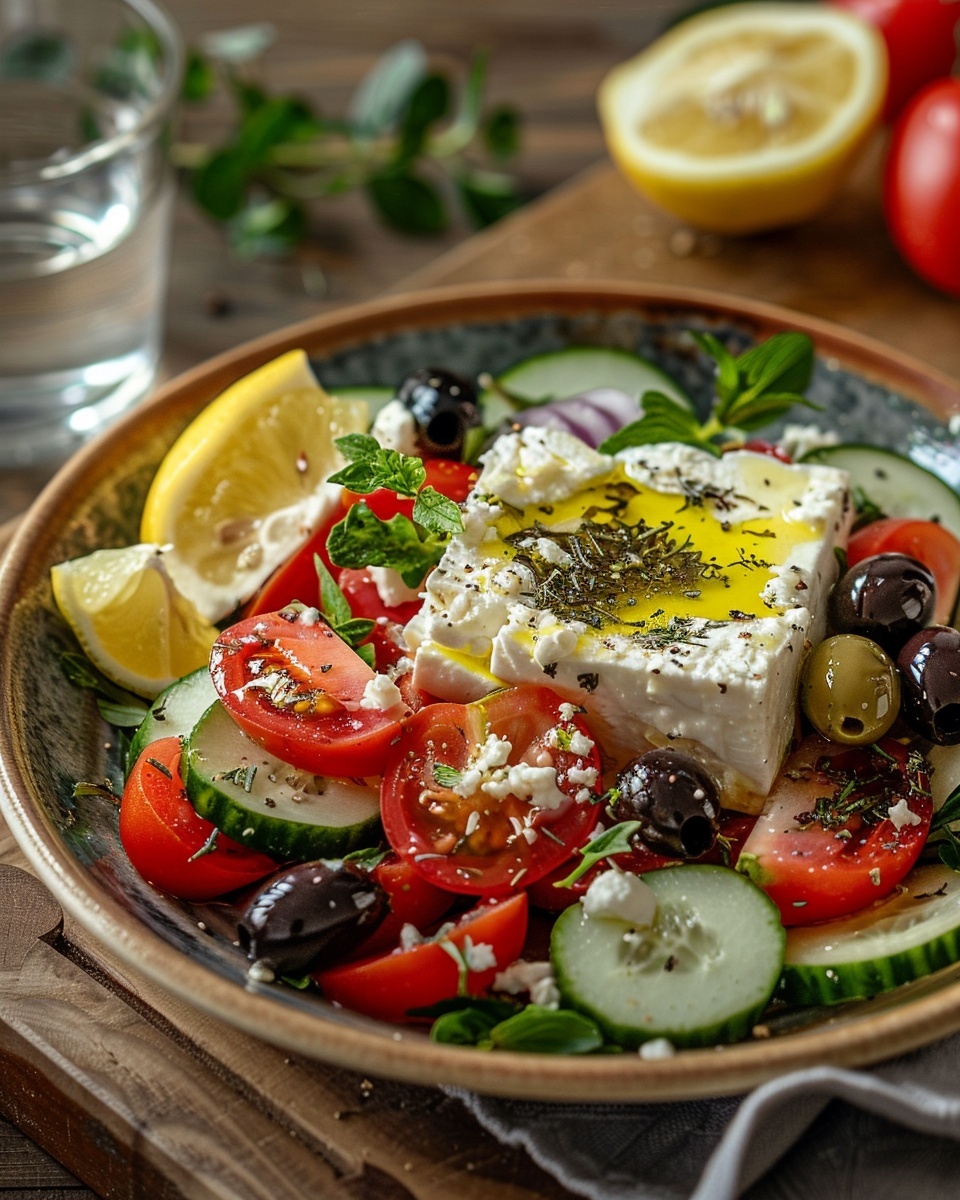
Introduction: Why I Love Greek Salad
I still remember my first real Greek salad. I was sitting at a tiny taverna on a Greek island, watching the sunset paint the sky orange and pink. The waiter brought out a simple plate piled high with chunky vegetables, creamy feta, and glossy olives. One bite changed everything I thought I knew about salads. This wasn’t some sad bowl of limp lettuce. This was bright, bold, and bursting with flavor.
That moment sparked my love affair with all things Greek, especially this classic dish. Over the years, I’ve made countless versions in my own kitchen. I’ve tried fancy variations and stuck-to-the-roots traditional recipes. I’ve served it at summer barbecues and quick weeknight dinners. And you know what? A truly great Greek salad never gets old.
This guide will help you make the best Greek salad recipe right in your own home. You don’t need a plane ticket to Greece or a fancy restaurant. You just need fresh ingredients, a good recipe, and about fifteen minutes. I’ll walk you through everything from the traditional Greek salad recipe that Greeks actually eat to easy Greek salad recipe variations that work for busy nights.
We’ll cover the essential ingredients, the simple dressing that makes everything shine, and helpful tips on what to serve with Greek salad. Whether you’re cooking for a crowd or just yourself, you’ll have all the knowledge you need to create this Mediterranean masterpiece.
Ingredients for the Traditional Greek Salad
Let me be clear about something important. A real Greek salad doesn’t have lettuce. I know this surprises people. Many restaurants add romaine or mixed greens, but that’s not how Greeks make it. The authentic version lets the vegetables speak for themselves without any leafy fillers.
Here’s what you actually need for a proper Greek salad:
- Fresh tomatoes – Ripe, juicy, and full of flavor
- Cucumbers – Crisp and refreshing
- Red onion – Sharp and pungent
- Green bell peppers – Crunchy and slightly sweet
- Kalamata olives – Briny and rich
- Feta cheese – Creamy, tangy, and essential
That’s it. Six simple ingredients. No fancy additions needed. The beauty of this salad lies in its simplicity.
What Are the Ingredients for a Greek Salad?
People often ask me this question, and I always stress that quality matters more than quantity. You can’t hide behind heavy dressings or extra toppings. Each ingredient needs to pull its weight.
Start with the tomatoes. I prefer ripe, in-season tomatoes that actually taste like something. Those pale, mealy supermarket tomatoes won’t cut it here. If you can find heirloom or vine-ripened varieties, grab them. Cut them into big wedges, not tiny pieces. You want substantial chunks that hold their shape.
For cucumbers, I like English cucumbers or Persian cucumbers. They have fewer seeds and stay crunchy longer. Regular cucumbers work fine too. Just peel them if the skin seems tough or waxy. Cut them into thick half-moons or chunks.
Red onion adds a sharp bite that balances the rich feta and sweet tomatoes. Some people find raw onion too strong. If that’s you, slice it thin and soak it in cold water for ten minutes. This mellows the flavor without losing that signature crunch.
Green bell peppers are traditional, though I know some modern versions use different colors. Stick with green if you want authentic flavor. The slightly bitter, vegetal taste is part of what makes this salad Greek. Cut them into strips or chunks about the same size as your other vegetables.
Kalamata olives are non-negotiable. These dark purple, almond-shaped olives come from Greece and have a distinct meaty texture and wine-like flavor. Don’t substitute canned black olives. They taste completely different. Buy Kalamata olives with the pits still in if possible. They have better flavor and texture.
Finally, the feta cheese. This is where many home cooks go wrong. Buy a block of real Greek feta packed in brine. Avoid pre-crumbled feta in bags. It’s dry, crumbly, and lacks that creamy texture you want. Real feta should be moist and slightly tangy. The best feta comes from Greece and is made from sheep’s milk or a sheep and goat milk blend.
Why Fresh, High-Quality Ingredients Matter
I can’t stress this enough. A Greek salad has so few components that each one really shows. There’s no heavy dressing to mask mediocre vegetables or bland cheese.
When I use peak-season tomatoes from my local farmer’s market, the salad tastes completely different than when I use winter supermarket tomatoes. The same goes for the feta. Quality Greek feta transforms this dish from decent to incredible.
Think of it this way. You’re not cooking anything. You’re not adding complex sauces or seasonings. The ingredients are the stars. Give them a chance to shine by choosing the best you can find and afford.
The Magic of Extra Virgin Olive Oil
Now let’s talk about the dressing. Greek salad dressing is beautifully simple. It’s basically just extra virgin olive oil, red wine vinegar, dried oregano, salt, and pepper. That’s all.
The olive oil is crucial. Use a good quality extra virgin olive oil with actual flavor. You’ll taste it in every bite. Greek olive oil is ideal if you can find it, but any high-quality extra virgin olive oil works great.
Some people make a separate dressing and toss everything together. I prefer the traditional Greek method. You arrange the vegetables on a platter, place a thick slab of feta on top, then drizzle everything with olive oil and sprinkle with oregano and salt. Simple and stunning.
Greek Salad Dressing Recipe Basics
If you do want to make a greek salad dressing recipe to toss with your salad, here’s what you need:
- About 1/4 cup extra virgin olive oil
- 2 tablespoons red wine vinegar
- 1 teaspoon dried oregano (Greek oregano if possible)
- Salt and black pepper to taste
- Optional: a small clove of minced garlic
Whisk these together or shake them in a jar. That’s your dressing. Some versions add lemon juice or Dijon mustard, but traditional Greek salad keeps it even simpler than that.
What Herbs Are in a Greek Salad?
This is another common question. The answer might surprise you. Traditional Greek salad uses only dried oregano. Not fresh oregano, not a blend of herbs. Just dried oregano.
Greek oregano has a stronger, more pungent flavor than Italian oregano. It’s slightly peppery and pairs perfectly with the other ingredients. You sprinkle it over the salad along with the olive oil. Don’t skip this step. That distinctive oregano flavor is part of what makes this salad taste authentically Greek.
Some modern versions add fresh herbs like parsley or dill. These taste good but aren’t traditional. If you want the real deal, stick with dried oregano only.


Preparing the Perfect Greek Salad
Now that you’ve got your ingredients sorted, let’s actually make this thing. I promise it’s easier than you think, and you’ll look like a total pro when you serve it.
The beauty of a simple greek salad recipe is that there’s no cooking involved. You’re literally just cutting vegetables and arranging them. But here’s the thing—how you cut and arrange those ingredients makes a real difference in the final result. I learned this the hard way after serving a Greek salad at a dinner party where everything was chopped too small. It looked like confetti and tasted fine, but it didn’t have that rustic, generous feel of a proper Greek salad.
Cutting the Vegetables Like a Pro
Start with your tomatoes. I cut mine into wedges, usually six to eight wedges per tomato depending on size. You want pieces big enough that they hold their shape and don’t turn mushy. When tomatoes are cut too small, they release all their juice and make everything soggy. Nobody wants a swimming pool at the bottom of their salad bowl.
Here’s something I do that my Greek friend taught me—after cutting the tomatoes, I sprinkle them lightly with salt and let them sit in a colander for about five minutes. This draws out some excess moisture and actually concentrates their flavor. Not everyone does this step, but I think it makes a difference, especially if your tomatoes are a bit watery.
For cucumbers, I like chunky half-moons about half an inch thick. Some people peel them completely, others leave the peel on. I split the difference and run a vegetable peeler down the length in stripes, removing some peel but not all. This gives you a nice contrast of color and texture without any tough, bitter skin.
The bell peppers should be cut into strips or rough chunks. Remove all the seeds and white membrane inside—that’s where the bitterness lives. I aim for pieces roughly the same size as my cucumber chunks. Consistency in size isn’t just about looks. It means every forkful has a balanced mix of ingredients.
Red onion needs a light touch. Slice it fairly thin, maybe an eighth of an inch. If you’re sensitive to raw onion burn, definitely do that cold water soak I mentioned earlier. Ten minutes in ice water mellows it right out. Just make sure to pat the onion dry before adding it to your salad.
The Best Greek Salad Recipe Assembly
Okay, so you’ve got all your vegetables cut. Now comes the fun part. There are actually two traditional ways to assemble this best greek salad recipe, and I use both depending on the occasion.
The first method is what I call the “platter style.” You arrange everything on a large serving platter in sections or in a beautiful jumbled pile. Place your tomato wedges, cucumber chunks, peppers, and onions across the platter. Scatter the Kalamata olives over everything. Then—and this is important—you place a thick slab of feta right in the center. Not crumbled, not broken up. A whole beautiful block of feta sitting proudly on top like a crown. Drizzle generous amounts of olive oil over the whole thing, sprinkle dried oregano everywhere, add salt and pepper, and you’re done. People break off pieces of feta as they serve themselves.
The second method is the “tossed style” which works better for easy greek salad recipe weeknight situations. You put all your vegetables in a large bowl, add the olives, break or cube the feta into smaller pieces, drizzle with oil and vinegar, sprinkle oregano and salt, then gently toss everything together. This method distributes the feta more evenly, so every serving gets some.
Honestly, both are delicious. The platter style looks more dramatic and feels more authentic. The tossed style is practical and makes sure everyone gets equal amounts of everything. I use the platter method when I’m entertaining and want to impress. I use the tossed method on Tuesday nights when I just want dinner ready.
Making It Your Own
While I love the traditional version, I also understand that sometimes you want to adapt things to your own taste or dietary needs. That’s completely okay. Food should work for you, not the other way around.
Some people add lettuce even though it’s not traditional. If you want a base of romaine or mixed greens underneath, go ahead. It makes the salad stretch further and adds volume. Just know you’re making a Greek-style salad rather than an authentic Greek salad. No judgment, just accuracy.
By the way, capers are a wonderful addition if you like them. They add another layer of briny flavor that complements the olives and feta beautifully. I sometimes toss in a tablespoon or two.
You can also play with the proportions. If you’re not a huge bell pepper fan, use less. If you’re obsessed with feta like I am, add more. The recipe police won’t come after you, I promise.
Greek Salad With Chicken and Other Proteins
Want to turn your salad into a complete meal? Adding protein is a smart move. Greek salad with chicken is probably the most popular variation, and it works really well.
I usually grill chicken breasts seasoned with olive oil, lemon, garlic, oregano, salt, and pepper. Once cooked, I slice them and arrange the pieces on top of the salad. You get all those classic Greek flavors in the chicken that tie perfectly into the salad below.
But chicken isn’t your only option. I’ve made this with grilled shrimp, which brings a lovely sweetness and pairs wonderfully with the tangy feta. In fact, if you enjoy seafood salads, you might want to try something like my creamy shrimp and cucumber salad, which shares that fresh Mediterranean vibe.
Lamb is another fantastic choice. Small grilled lamb kebabs or sliced lamb chops sitting on top of a Greek salad is an incredibly satisfying meal. The rich, slightly gamey flavor of lamb stands up beautifully to the strong flavors in the salad.
For a lighter seafood twist, you could even draw inspiration from dishes like this exotic avocado and shrimp combination and create your own fusion version.
Even canned tuna works in a pinch. Drain it well, flake it over the salad, and you’ve got a quick protein-packed lunch that requires zero cooking.
What Famous Chefs Say
I’m not the only one who loves Greek salad. Several famous chefs have shared their takes on this classic dish, and I find their perspectives interesting.
Ina Garten, the Barefoot Contessa, has a greek salad ina garten version that stays pretty traditional but adds a touch of lemon juice to the dressing alongside the red wine vinegar. She also emphasizes using really good quality olive oil and feta, which I completely agree with. Her method involves making a vinaigrette in a jar, which is practical for busy cooks who want to make the dressing ahead.
Jamie Oliver’s approach to greek salad jamie oliver style involves what he calls “smashing” the vegetables slightly to release their juices and help them absorb the dressing better. It’s a rustic technique that works especially well with the tomatoes. He also sometimes adds fresh mint alongside the oregano, which isn’t traditional but adds a lovely fresh note.
What I appreciate about both these chefs is that they respect the simplicity of the dish while adding small personal touches. They don’t overcomplicate it or add a dozen extra ingredients. They understand that the whole point is letting quality ingredients shine.
Greek Salad Versus Mediterranean Salad
People ask me all the time: what is the difference between Mediterranean and Greek salad? It’s a fair question since they sound similar.
Here’s the deal. “Mediterranean salad” is a much broader term that can include elements from various countries around the Mediterranean Sea—Greece, Italy, Spain, Turkey, Morocco, and others. These salads might include ingredients like chickpeas, artichokes, sundried tomatoes, different types of cheese, various herbs, or even couscous.
Greek salad, on the other hand, is specific. It comes from Greece and follows that traditional formula we’ve been discussing—tomatoes, cucumbers, peppers, onions, olives, and feta. That’s it. It’s one type of Mediterranean salad, but not all Mediterranean salads are Greek salads.
Think of it like squares and rectangles. All Greek salads are Mediterranean salads, but not all Mediterranean salads are Greek salads. A Caesar salad, for example, is completely different despite also being a popular choice.
Another difference you’ll notice is the dressing. Mediterranean salads might use various dressings—balsamic vinaigrette, lemon tahini, garlic and herb—while Greek salad traditionally sticks to that simple olive oil, red wine vinegar, and oregano combination.
Funny enough, when I’m at restaurants that label something as “Mediterranean salad,” I never quite know what I’m going to get. It could have grilled vegetables, different greens, various cheeses, nuts, or dried fruit. Greek salad, however, should be predictable in the best way. You know what you’re getting, and that consistency is part of its charm.
Understanding these distinctions helps you order confidently at restaurants and make informed choices when cooking at home. If you’re craving those specific Greek flavors, go for the Greek salad. If you want something with more variety and perhaps some cooked ingredients, a broader Mediterranean salad might be your pick. Or you might want to explore other seafood options entirely, like trying something inspired by dishes from Spain.


Serving and Pairing Suggestions for Your Greek Salad
So you’ve made this gorgeous Greek salad. Now the question becomes: what do you serve alongside it? This is where things get fun because Greek salad is incredibly versatile. It can play the role of refreshing side dish or step up as the main event, depending on how you approach it.
What to Serve With Greek Salad
One of my favorite summer memories involves a backyard barbecue where I served Greek salad alongside grilled lamb chops. The combination was absolutely perfect. The rich, fatty meat paired beautifully with the crisp vegetables and tangy feta. That contrast of temperatures and textures—hot grilled meat against cool, fresh salad—just works on every level.
Grilled meats are honestly your best friends when planning what to serve with greek salad. Think souvlaki, kebabs, grilled chicken thighs, or even a simple grilled steak. The salad’s acidity and freshness cut through the richness of the meat, cleansing your palate between bites. I’ve served it with everything from lamb burgers to pork chops, and it never disappoints.
Fish is another excellent pairing. Grilled or baked fish with lemon and herbs sits perfectly alongside this salad. I particularly love it with salmon, sea bass, or swordfish. The Mediterranean flavors tie everything together beautifully. Last month I made grilled branzino with just olive oil, lemon, and oregano, and served it with a big traditional greek salad recipe on the side. My dinner guests couldn’t stop talking about how well everything complemented each other.
Here’s something people don’t always think about—bread. Good, crusty bread is essential when serving Greek salad. You want something to soak up all those delicious juices that pool at the bottom of the platter. The combination of tomato juice, olive oil, and feta brine is liquid gold, and you absolutely don’t want to waste a drop. I usually serve warm pita bread or a rustic country loaf. Sometimes I’ll grill the bread and rub it with a cut garlic clove. That garlicky, toasted bread with the fresh salad is incredibly satisfying.
For a complete Greek feast, I often make spanakopita (spinach pie), dolmades (stuffed grape leaves), or a simple Greek lemon chicken. Add some tzatziki sauce, hummus, and warm pita, and you’ve got yourself a proper Greek spread that’ll transport everyone straight to the Aegean coast.
Greek Salad as a Main Course
Now, can Greek salad be a meal on its own? Absolutely. I eat it as a main course all the time, especially during hot summer months when I want something filling but not heavy.
The key to making it substantial enough for a main dish is being generous with the portions and the feta. I’ll use at least six to eight ounces of feta for a salad that serves two people as a main. That protein and fat from the cheese, combined with the fiber from all those vegetables, actually keeps you satisfied for hours.
Adding greek salad with chicken or another protein automatically transforms it into a complete meal. I’ve packed this for lunch countless times—Greek salad in a container with sliced grilled chicken on top. It travels well, doesn’t get soggy if you keep the dressing separate, and makes your coworkers jealous when you open it in the break room.
Another trick I use is serving the salad with a side of orzo pasta tossed with lemon and olive oil, or some warm quinoa. That addition of grains rounds out the meal and adds those satisfying carbohydrates that make it feel more complete. You’re still keeping things relatively light and healthy, but you’ve got staying power.
Planning a Complete Greek-Themed Meal
If you’re going all-in on a Greek dinner party, let me share my usual game plan. I’ve done this enough times that I’ve got it down to a science.
Start with appetizers. Set out some good olives, cubes of feta, cherry tomatoes, and toasted pita wedges with tzatziki and hummus. Maybe add some marinated artichoke hearts or roasted red peppers. People can snack on these while you’re finishing up the main courses. By the way, sourcing quality ingredients makes a huge difference—if you’re curious about where your food comes from, checking resources like USDA food sourcing guidelines can help you make informed decisions about ingredient quality and origins.
For the main course, I typically do one or two proteins. Grilled lamb is always a hit, or I’ll do a combination of grilled chicken and fish to give people options. The best greek salad recipe sits right in the center of the table as a shared dish. Everyone can help themselves.
For sides beyond the salad, roasted lemon potatoes are essential. Cut potatoes into wedges, toss them with olive oil, lemon juice, oregano, and garlic, then roast until crispy and golden. They’re addictive. I also often make Greek green beans—cooked with tomatoes, olive oil, and dill until they’re super tender.
Dessert should be something with honey and nuts. Baklava is the obvious choice, though it’s time-consuming to make. I often cheat and buy good quality baklava from a Greek bakery. Alternatively, Greek yogurt with honey and walnuts is simple, light, and still feels authentically Greek.
Drinks matter too. A crisp white wine like Assyrtiko or a light red like Agiorgitiko pairs wonderfully with Greek food. If wine isn’t your thing, sparkling water with lemon is refreshing and appropriate. For a special touch, I sometimes make a batch of homemade lemonade with fresh mint.
Finding Authentic Greek Salad Near You
Maybe you’re thinking, “This sounds great, but I want to try an authentic version before I make it myself.” Fair enough. Searching for greek salad near me can yield mixed results, honestly.
Here’s the thing about restaurant Greek salads in America—many of them are Americanized versions loaded with lettuce, croutons, and creamy dressing. These aren’t bad necessarily, but they’re not what you’d get in Greece.
Your best bet is finding an actual Greek restaurant, preferably one owned and run by Greek families. These places are more likely to serve the real deal. When you look at the menu, check if their Greek salad includes lettuce. If it does, that’s your first clue that it might not be authentic. Real Greek salads at authentic tavernas won’t have any lettuce whatsoever.
Another tip—look for restaurants in neighborhoods with Greek communities. Cities with large Greek populations usually have several authentic spots. Ask Greek friends or coworkers for recommendations. People are usually happy to share their favorite places.
When you order, pay attention to how they present it. The platter-style presentation with a big slab of feta on top is a good sign. If everything arrives pre-tossed with the feta crumbled throughout, it’s probably been adapted for American tastes.
Also check how they dress it. If it comes with a creamy dressing on the side, that’s definitely not traditional. The dressing should be simple olive oil and vinegar drizzled directly on the vegetables.
Honestly though, once you make it at home a few times following a proper recipe, you’ll probably find that your homemade version beats most restaurant versions anyway. You have complete control over ingredient quality, and you can adjust everything to your personal taste. Plus, it’s way more economical to make at home.
Adjusting for Seasons and Occasions
One thing I’ve learned over the years is that Greek salad works differently depending on the season and occasion. In the height of summer when tomatoes are bursting with flavor and cucumbers are crisp and abundant, I make it at least twice a week. It’s the perfect light dinner for those evenings when it’s too hot to cook.
In winter, I still make it, but I’m more selective about my tomatoes. Sometimes I’ll use cherry or grape tomatoes because they tend to have better flavor out of season than large tomatoes. The salad becomes more of a special treat rather than a weekly staple.
For casual weeknight dinners, I go with the tossed bowl method using my easy greek salad recipe approach. Everything in one bowl, quick and simple. For dinner parties or special occasions, I break out the big platter and do the dramatic whole-slab-of-feta presentation. People always photograph that version because it looks so impressive.
If I’m bringing it to a potluck, I transport everything separately and assemble on-site. The vegetables go in one container, the feta in another, and the dressing in a jar. This prevents everything from getting soggy during transport. I’ve made the mistake of assembling too early before, and by the time I arrived, I basically had vegetable soup.
Building Your Confidence
I remember feeling intimidated by Greek salad the first few times I made it at home. Would it taste as good as what I’d had in Greece? Would my guests like it? Was I doing it right?
Here’s what I discovered—there’s really no way to mess this up as long as you use decent ingredients and don’t overthink it. Greeks have been making this salad for generations, and it’s popular precisely because it’s simple and forgiving. You don’t need special skills or fancy equipment. Just a sharp knife, a cutting board, and a willingness to be generous with the olive oil.
The more you make it, the more you’ll develop your own preferences. Maybe you’ll discover you like extra onions or prefer less pepper. Maybe you’ll find your perfect olive oil brand or your favorite type of tomato. That’s all part of the journey.
Funny enough, my Greek salad looks different now than it did five years ago, not because the ingredients changed but because my technique improved. I cut more confidently, I season more boldly, and I trust my instincts about proportions. You’ll get there too.
Before you head off to the kitchen, you might want to browse through more salad recipes and ideas to expand your repertoire and discover other fresh, vibrant dishes that celebrate seasonal ingredients.
Start with a simple greek salad recipe this week. Use the best tomatoes you can find, don’t skimp on the olive oil, and trust the process. Whether you’re serving it as a side dish alongside grilled chicken or eating it straight from the bowl for a light lunch, you’re connecting with centuries of Mediterranean tradition. That’s pretty special when you think about it.
Frequently Asked Questions About Greek Salad
What herbs are in a Greek salad?
Traditional Greek salad uses only dried oregano, specifically Greek oregano if you can find it. This herb has a more pungent, slightly peppery flavor compared to Italian oregano. You sprinkle it over the salad along with the olive oil and salt. Fresh herbs like parsley or dill appear in some modern variations, but they’re not part of the authentic recipe. The dried oregano is what gives Greek salad its distinctive flavor.
What is Greek salad dressing made of?
Greek salad dressing is beautifully simple—just extra virgin olive oil, red wine vinegar, dried oregano, salt, and black pepper. The typical ratio is about three parts olive oil to one part vinegar, though you can adjust this to your taste. Some people add a small clove of minced garlic or a squeeze of lemon juice, but traditional versions keep it even simpler. There’s no mayonnaise, cream, or complicated ingredients involved.
Can I use different types of cheese in a Greek salad?
Technically yes, but it won’t taste authentically Greek. Feta cheese is what defines this salad, and its tangy, creamy, slightly salty flavor is irreplaceable. If you absolutely can’t have feta, you might try a mild goat cheese, though the taste will be noticeably different. Some people use halloumi, which is delicious but much firmer and less creamy than feta. For the real experience, stick with authentic Greek feta made from sheep’s milk or a sheep and goat milk blend.
How do I store leftover Greek salad?
Greek salad doesn’t store particularly well once assembled because the salt and acid in the dressing draw moisture from the vegetables, making everything soggy. If you have leftovers, store them in an airtight container in the refrigerator and eat within 24 hours. For better results, store the cut vegetables and dressing separately, then combine them just before eating. The vegetables alone will keep for two to three days in the fridge.
Can I make Greek salad ahead of time?
You can definitely prep the components ahead, but don’t assemble the salad until shortly before serving. Cut your vegetables and store them in separate containers in the refrigerator. Keep the feta in its brine until ready to use. Mix your dressing and store it in a jar. Then, about 15 to 20 minutes before serving, bring everything to room temperature and assemble the salad. This approach gives you the convenience of advance prep without sacrificing freshness.
Why doesn’t traditional Greek salad have lettuce?
In Greece, salads showcase whatever vegetables are in season, and lettuce simply isn’t part of the traditional Greek salad formula. The original version celebrates the robust flavors of tomatoes, cucumbers, peppers, onions, olives, and feta without any leafy fillers. Greeks call it “horiatiki,” which means village salad, and it represents simple, honest village cooking. Lettuce was added later by restaurants outside Greece to make the salad seem more substantial to customers who expected all salads to have greens.
What’s the difference between Greek feta and regular feta?
Authentic Greek feta is protected by PDO (Protected Designation of Origin) status, meaning it must be made in specific regions of Greece from sheep’s milk or a mixture of sheep’s and goat’s milk. It has a tangy, rich flavor and creamy yet crumbly texture. Regular feta, often made in other countries, might use cow’s milk and tends to be drier, crumblier, and less flavorful. Greek feta should be stored in brine to maintain its moisture and flavor.
Is Greek salad healthy?
Greek salad is very healthy, packed with vegetables that provide vitamins, minerals, and fiber. The olive oil offers heart-healthy monounsaturated fats, and the feta provides protein and calcium. The salad is naturally low in carbohydrates and fits well into Mediterranean-style eating patterns, which research consistently shows supports overall health. The only caution is the sodium content from the feta and olives, so if you’re watching salt intake, you might want to moderate those ingredients.
Can I use cherry tomatoes instead of regular tomatoes?
Absolutely, especially during winter months when large tomatoes lack flavor. Cherry or grape tomatoes often have better taste year-round because they’re bred for sweetness and picked riper. Just halve them or leave them whole if they’re small. They won’t have quite the same juicy, robust presence as ripe summer beefsteak tomatoes, but they’re definitely better than flavorless off-season large tomatoes. I use them all the time when good regular tomatoes aren’t available.
What’s the best olive oil to use for Greek salad?
Use a high-quality extra virgin olive oil with good flavor since you’ll really taste it in this simple salad. Greek olive oil is ideal and stays true to the dish’s origins—look for bottles labeled from regions like Kalamata, Crete, or the Peloponnese. However, any good extra virgin olive oil works well. Choose one that tastes fruity or peppery rather than bland. Don’t use “light” olive oil or pure olive oil, as these are refined and lack the flavor you need.
Greek Salad
Equipment
Nutrition
Notes
Adjust ingredients based on personal preference; for example, use less onion or more feta as desired.
If desired, you can add grilled proteins like chicken or shrimp to make it a complete meal.
The salad is best enjoyed fresh; if you have leftovers, store components separately to avoid sogginess.
Greek salad is versatile and can be paired with grilled meats, fish, and crusty bread for a delightful dining experience.