
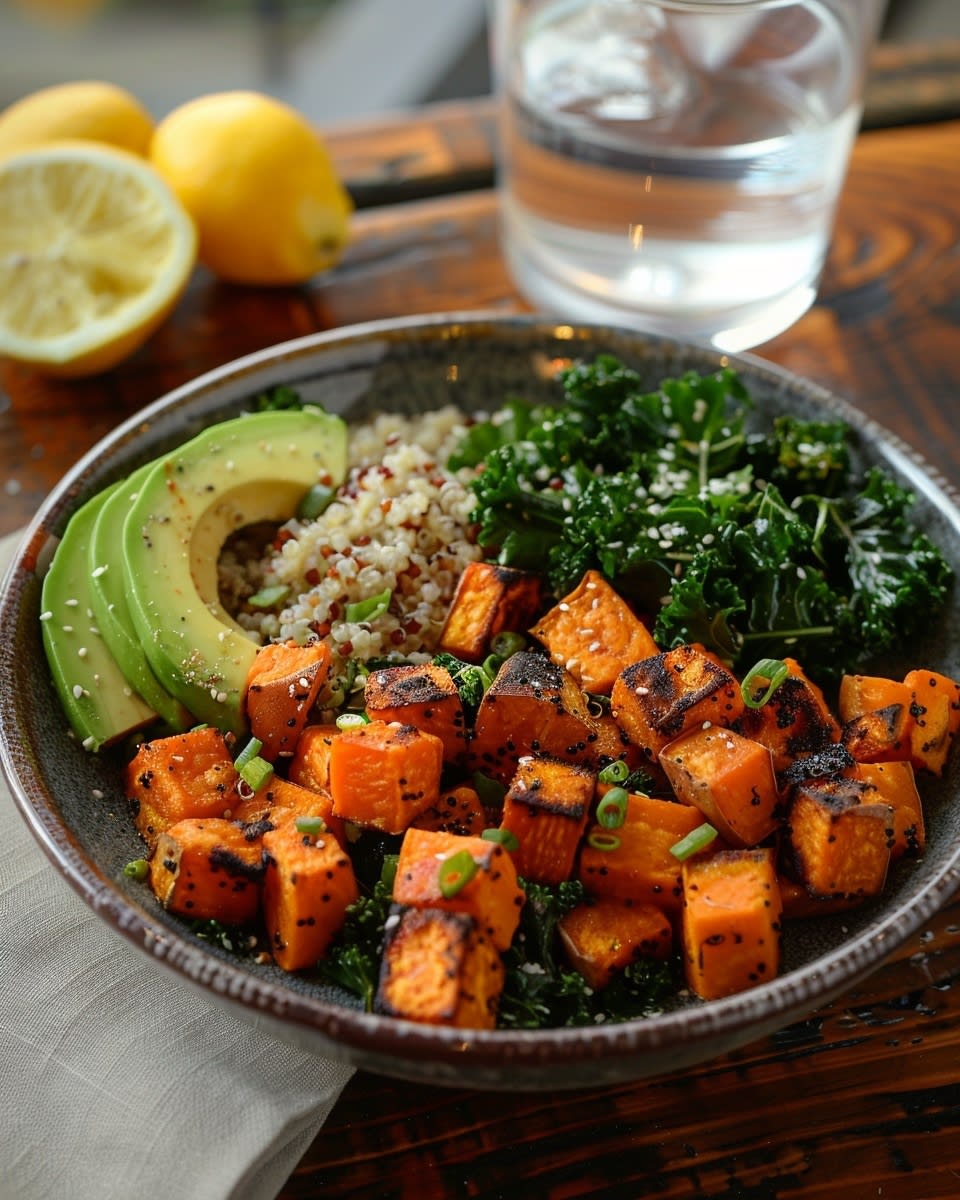
Why This Roasted Sweet Potato Kale Bowl Changed My Weeknight Dinners
Last Tuesday, I stood in my kitchen staring at a pile of kale and three sweet potatoes, wondering what to make for dinner. I was tired, hungry, and definitely not in the mood to spend an hour cooking. That’s when I threw everything on a sheet pan, roasted it, and created what’s now my go-to meal. This roasted sweet potato kale bowl has become my answer to those nights when I want something filling, healthy, and actually delicious.
The best part? This bowl comes together in about 30 minutes with minimal effort. You can prep ingredients while catching up on your favorite show. You can customize it based on what’s in your fridge. You can make it for meal prep or throw it together fresh. I’ve made this dish at least twice a week for the past month, and I’m still not tired of it.
This bowl packs serious nutrition without tasting like diet food. Sweet potatoes and kale work together to give you vitamins, fiber, and minerals your body needs. The roasting process brings out natural sweetness in the vegetables. The colors look amazing in the bowl. My kids actually eat their greens when I serve this.
I love how flexible this recipe is. Some nights I add chickpeas for extra protein. Other times I top it with a fried egg. When I’m feeling fancy, I drizzle tahini sauce over everything. The base stays the same, but the bowl never gets boring. That’s the kind of recipe I need in my life.
Why Choose a Roasted Sweet Potato Kale Bowl?
Let me tell you about the powerhouse ingredients in this bowl. Sweet potatoes aren’t just tasty. They’re loaded with vitamin A, which helps your eyes and immune system. One medium sweet potato gives you more than four times your daily vitamin A needs. They also contain vitamin C, potassium, and fiber that keeps you full for hours.
The fiber content in sweet potatoes is what really makes them special for busy people like us. Unlike regular potatoes, sweet potatoes have a lower glycemic index. This means they won’t spike your blood sugar and leave you hungry an hour later. I used to crash around 3 PM every day. Once I started eating more sweet potato bowls for lunch, that afternoon slump disappeared.
Kale deserves its reputation as a superfood. This leafy green contains vitamins K, A, and C. It has calcium for your bones. It provides antioxidants that fight inflammation in your body. One cup of kale has only about 30 calories but packs a serious nutritional punch. I used to think kale was just a trendy vegetable that tasted bitter. Roasting changed everything.
Here’s what makes kale and sweet potato such a perfect combination:
- The natural sweetness of roasted sweet potatoes balances kale’s earthy flavor
- Both vegetables hold up well to high heat roasting
- They have similar cooking times when cut properly
- The textures complement each other beautifully
- Together they provide a complete range of nutrients
Roasting vegetables transforms them completely. Raw kale can taste tough and bitter. Raw sweet potatoes are hard and starchy. But roast them at high heat? Magic happens. The roasted sweet potato edges get crispy and caramelized. The inside becomes creamy and sweet. Kale turns into crispy chips with tender centers.
The science behind roasting is simple but powerful. High heat causes the natural sugars in vegetables to caramelize. This process creates hundreds of new flavor compounds. Water evaporates from the surface, creating that crispy texture we all love. The vegetables concentrate in flavor as they shrink slightly. This is why roasted vegetables taste so much better than steamed or boiled ones.
I never liked vegetables much as a kid. My mom would boil broccoli until it turned gray and mushy. When I discovered roasting in my twenties, it changed how I ate. Suddenly vegetables had flavor, texture, and appeal. Roasting became my secret weapon for making healthy bowls that actually tasted good.
Temperature matters when you roast vegetables. I set my oven to 425°F for this bowl. Lower temperatures steam the vegetables instead of roasting them. Higher temperatures can burn the kale before the sweet potatoes cook through. That 425°F sweet spot gives you perfectly cooked vegetables every time.
The flavor combination in this bowl hits multiple taste preferences at once. You get sweetness from the caramelized sweet potatoes. You get a slight bitterness from the kale that adds depth. Add a tangy dressing and you’ve covered sweet, bitter, and sour. Throw in some nuts or seeds for crunch and fat. This variety keeps your taste buds interested bite after bite.
My husband isn’t a health food person. He grew up on meat and potatoes. But he requests this kale bowl at least once a week now. The flavors don’t taste “healthy” to him. They just taste good. That’s the sign of a successful recipe in my book.
This bowl works for different eating styles too. It’s naturally vegan and gluten-free as a base. You can add grilled chicken for meat eaters. You can top it with feta for vegetarians. You can bulk it up with quinoa or keep it light with just vegetables. I’ve served this to friends following keto, paleo, and Mediterranean diets. Everyone found a way to make it work.
The prep work is minimal compared to most healthy meals. You chop vegetables, toss them with oil and seasonings, and let the oven do the work. I use that hands-off cooking time to pack lunches, help with homework, or just sit down for a few minutes. This isn’t one of those recipes that chains you to the stove.
Budget-wise, this bowl makes sense too. Sweet potatoes cost about a dollar per pound at my grocery store. Kale runs about two dollars a bunch. The base of this meal costs less than five dollars and feeds my family of four. Compare that to takeout or even many other homemade meals. This roasted sweet potato kale bowl delivers nutrition and flavor without breaking the bank.


Getting Your Ingredients Together for the Perfect Bowl
Now that you know why this bowl is worth making, let’s talk about what you actually need to buy. I always start my grocery trips with a clear list, which saves me time and money wandering the aisles aimlessly.
For the base of your roasted sweet potato kale bowl, you’ll need two large sweet potatoes. I look for ones that are firm with no soft spots or sprouting eyes. The skin should be smooth and evenly colored. Some sweet potatoes are orange-fleshed, others are purple or white inside. I prefer the orange ones because they’re sweeter and have more beta-carotene, but honestly any variety works fine.
You’ll also need one large bunch of kale, which usually weighs about eight ounces. I go for curly kale most of the time because it gets crispier when roasted. Lacinato kale, also called dinosaur kale, works great too. It has a slightly milder flavor and flatter leaves. Whatever type you choose, make sure the leaves look vibrant and crisp, not wilted or yellowing. I learned this the hard way after bringing home sad-looking kale that turned bitter no matter how I cooked it.
Here’s what else goes into my standard version: three tablespoons of olive oil, one teaspoon of garlic powder, one teaspoon of smoked paprika, half a teaspoon of salt, and a quarter teaspoon of black pepper. Simple seasonings let the vegetables shine through. I keep these spices in my cabinet at all times since I use them constantly.
For toppings and extras, I rotate through different options depending on my mood. Chickpeas add protein and make the bowl more filling. Quinoa or brown rice turn this into a complete meal. Pumpkin seeds give you that satisfying crunch. Feta cheese adds tanginess. A soft-boiled egg makes everything more luxurious. The beauty of healthy bowl recipes is that you can mix and match based on what sounds good that day.
Let me share some substitution ideas because I know not everyone has the same ingredients on hand. If you don’t have olive oil, avocado oil works perfectly and has a higher smoke point. Coconut oil adds a subtle sweetness that complements the sweet potatoes. Even regular vegetable oil gets the job done, though you lose some of that rich flavor.
Don’t have smoked paprika? Regular paprika works, though you’ll miss that smoky depth. Cumin makes an excellent substitute and gives the bowl a warmer, earthier flavor. I’ve also used curry powder when I wanted something completely different. The sweet potato and kale combination is forgiving enough to handle various spice profiles.
Can’t find kale or just really don’t like it? Swiss chard roasts beautifully and has a milder taste. Spinach works too, though it cooks faster so you’ll need to add it halfway through roasting. Collard greens are another sturdy option. My sister swears by mustard greens, which add a peppery kick. Even broccoli florets can substitute in a pinch, creating a totally different but equally delicious vegetable bowl.
If sweet potatoes aren’t available, regular potatoes work fine nutritionally speaking. You lose some of that natural sweetness and the vitamin A content drops, but the bowl still tastes great. Butternut squash is probably my favorite alternative. It has a similar sweetness and roasts in about the same time. I’ve made this with acorn squash when that’s what I had, and nobody complained.
Funny enough, the produce section intimidates a lot of people. Here’s my quick guide to picking the best vegetables. For sweet potatoes, smaller ones cook faster and more evenly. I aim for ones that are about six to eight inches long and maybe two inches in diameter. Huge sweet potatoes take forever to cook and sometimes burn on the outside before the inside is done.
When selecting kale, younger leaves taste less bitter. The smaller the leaf, the more tender it’ll be. That said, larger leaves work fine if you remove the tough center stems. I always give my kale a good wash since dirt likes to hide in those curly leaves. Fill a bowl with cold water, swish the leaves around, and let any dirt settle to the bottom before lifting out the kale.
One trick I learned from a farmer’s market vendor: smell your produce. Good sweet potatoes shouldn’t smell like anything much. If they have a musty or fermented smell, they’re past their prime. Fresh kale smells green and slightly peppery. These small details make a difference in your final dish.
How to Make Your Sweet Potato Kale Bowl Step by Step
Alright, let’s get cooking. First things first, preheat your oven to 425°F. I always do this before anything else because waiting for the oven to heat up while your prepped vegetables sit there is annoying. Plus, a properly preheated oven gives you better roasting results.
While the oven heats, line a large baking sheet with parchment paper. You can skip this step, but cleanup becomes much easier with parchment. I used to think parchment paper was a waste of money until I realized how much time I saved scrubbing pans. Now I buy it in bulk.
Grab your sweet potatoes and scrub them clean under running water. I use a vegetable brush for this. You’re keeping the skin on because it contains fiber and nutrients, plus it tastes good when roasted. Pat them dry with a clean towel. Wet vegetables don’t roast well because the moisture creates steam instead of that crispy exterior we’re after.
Cut your sweet potatoes into bite-sized cubes, about three-quarters of an inch on each side. Try to make them relatively uniform so they cook at the same rate. I’m not obsessive about this – some variation is fine – but if you have pieces that are twice as big as others, the small ones will burn before the large ones finish cooking. Cut off any dark spots or eyes you see.
Next up is the kale preparation. Strip the leaves from the tough center stems by holding the stem with one hand and running your other hand down the stem, pulling the leafy parts away. Those stems are too fibrous to enjoy, so I compost them. Tear or roughly chop the leaves into pieces about two to three inches wide. They’ll shrink quite a bit during roasting.
Here’s where it all comes together. Put your sweet potato cubes in a large mixing bowl. Add two tablespoons of olive oil, the garlic powder, smoked paprika, salt, and pepper. Toss everything with your hands or a spoon until each piece is coated. I prefer using my hands because I can feel whether everything is evenly coated. Spread the seasoned sweet potatoes in a single layer on your prepared baking sheet. Don’t crowd them or they’ll steam instead of roast.
Pop the sweet potatoes in the oven and set a timer for fifteen minutes. This head start is important because sweet potatoes take longer to cook than kale. I used to put everything in at once and ended up with either burnt kale or undercooked potatoes. Learning to stagger the cooking times was a game-changer.
While the sweet potatoes are roasting, prepare your kale. Put the torn leaves in the same bowl you used for the sweet potatoes – no need to wash it. Add the remaining tablespoon of olive oil and a small pinch of salt. Massage the oil into the leaves with your hands for about thirty seconds. This breaks down the tough fibers and makes the kale more tender. Your hands will get oily, but that’s part of the process. Similar to how I prep ingredients for my spinach strawberry almond salad, taking time with the greens really matters.
When your timer goes off after fifteen minutes, pull out the baking sheet. Give the sweet potatoes a good stir with a spatula to flip them over. This ensures even browning on all sides. Add the prepared kale right on top of the sweet potatoes, spreading it out as much as possible. If you’re adding chickpeas, toss them in now too. They need about the same roasting time as the kale.
Return the pan to the oven for another ten to twelve minutes. You’re looking for the sweet potato edges to turn golden brown and crispy. The kale should be crispy around the edges but still have some tender bits near the centers. Keep an eye on things during the last few minutes because kale can go from perfectly crispy to burnt quickly.
By the way, every oven runs a bit differently. Mine runs hot, so I sometimes pull things out a minute or two early. If this is your first time making the recipe, check on everything at the ten-minute mark. You can always put it back for a couple more minutes if needed. Better to check early than to serve burnt vegetables.
Once everything looks done, remove the pan from the oven and let it cool for just a minute or two. The vegetables will be screaming hot straight from the oven. I’ve burned my tongue more times than I care to admit by diving in too quickly.
Now for the fun part – assembling your sweet potato bowl. I like to start with a base if I’m using one. Brown rice, quinoa, or even low carb cauliflower fried rice all work great. Divide it between your serving bowls. If you’re going grain-free, skip this step entirely.
Pile the roasted vegetables on top of your base or directly into the bowl. Add your chosen protein here. A fried egg with a runny yolk is incredible when it mixes with everything else. Leftover grilled chicken works perfectly. For plant-based protein, those roasted chickpeas I mentioned earlier are fantastic. Sometimes I’ll add some of the elements from my high protein tuna avocado bowl when I want something heartier.
Drizzle your favorite dressing over everything. Tahini sauce is my go-to because it’s creamy and nutty. Lemon juice mixed with olive oil keeps things light and fresh. Even a simple balsamic vinegar works. Ranch dressing makes my kids happier, so I keep some on hand for them. The bowl recipe adapts to whatever flavors you love.
Sprinkle on any final toppings like seeds, nuts, or fresh herbs. I love pumpkin seeds for crunch and cilantro for brightness. Sliced avocado makes everything more satisfying. A squeeze of lime juice right before eating brightens all the flavors. This final layer of texture and taste takes your bowl from good to amazing.
One last tip for perfect roasting every single time: don’t skip the parchment paper, don’t overcrowd your pan, and don’t open the oven door constantly to check on things. These three mistakes account for most roasting failures I see. Let the heat do its job. Trust the process. Much like when I make healthy egg roll in a bowl, the hands-off cooking time is actually a feature, not a bug.
The whole process from start to finish takes about thirty-five minutes, with only about ten minutes of active work. That’s less time than ordering takeout and waiting for delivery. Plus you end up with a healthy sweet potato bowl that’s customized exactly how you like it. That’s what I call a weeknight win.


Ways to Customize Your Roasted Sweet Potato Kale Bowl
The base recipe is delicious on its own, but the real fun starts when you make this bowl your own. I think of it like a blank canvas where you can add whatever sounds good on any particular day.
Let’s talk proteins first because they turn this side dish into a complete meal. Grilled chicken is probably the most popular addition in my house. I usually cook extra chicken breasts on Sunday and slice them up throughout the week. Season them with salt, pepper, and a bit of cumin before grilling. The smoky char flavor pairs beautifully with the sweetness of the roasted vegetables. Just slice the chicken and lay it right on top of your warm bowl.
For my vegetarian friends, tofu is a fantastic option. Press it first to remove excess water, then cube it and toss with soy sauce and a tiny bit of cornstarch. Pan-fry those cubes in a hot skillet with oil until they’re golden and crispy on all sides. That crispy exterior with the soft inside works perfectly with the other textures in the bowl. My daughter is vegetarian, and this is her preferred way to eat this bowl recipe.
Shrimp cooks quickly and adds a different dimension entirely. Season them with old bay or cajun spices, sauté for just two minutes per side, and you’ve got a protein that makes the bowl feel special enough for company. I’ve served this version at dinner parties, and people always ask for the recipe. The combination of sweet potatoes and seasoned shrimp reminds me of low country boils without all the work.
Tempeh is another plant-based protein worth trying. It has a nutty flavor that complements the earthiness of kale. Crumble it and sauté with a splash of tamari and maple syrup for a sweet-savory element. Black beans straight from the can, drained and rinsed, work when you’re really short on time. They don’t need cooking, just warming, and they add fiber along with protein.
Hard-boiled eggs might seem basic, but don’t underestimate them. I make a batch at the beginning of the week using my Instant Pot. Peel them, slice them in half, and place them yolk-side up on your bowl. Sprinkle with everything bagel seasoning, and suddenly you’ve elevated the whole dish. The creamy yolk mixes with the dressing and coats everything beautifully.
Here’s the thing about dressings – they can completely transform the flavor profile. Tahini dressing is my personal favorite because it’s creamy without dairy. Mix tahini paste with lemon juice, minced garlic, water to thin it out, and salt. The nutty richness balances the sweet and earthy vegetables perfectly. I make a big jar on Sunday and use it all week on various healthy bowls.
Lemon herb vinaigrette keeps things light and bright. Whisk together olive oil, fresh lemon juice, minced garlic, chopped fresh herbs like parsley and dill, salt, and pepper. This dressing won’t weigh down your bowl, which is nice if you’re eating this for lunch and don’t want to feel sluggish afterward. The acidity cuts through the richness of the roasted vegetables.
Green goddess dressing makes everything taste fancy. Blend together Greek yogurt, avocado, fresh herbs, lemon juice, and a splash of olive oil. It’s bright green, creamy, and packed with flavor. My kids call it “the green stuff” and actually request it, which is a miracle considering they used to avoid anything green.
Spicy peanut sauce brings Asian-inspired flavors to your bowl. Mix peanut butter with rice vinegar, soy sauce, sesame oil, honey, and sriracha. Thin it with warm water until it’s drizzleable. This turns your roasted sweet potato kale bowl into something that tastes like it came from a restaurant. Add some crushed peanuts on top and you’ve got incredible texture too.
Balsamic glaze is stupidly simple but effective. Buy it premade or reduce balsamic vinegar on the stove until it’s syrupy. Drizzle it over everything for a sweet-tart finish. Sometimes simplicity wins, especially on busy nights.
Toppings add the final layer of interest. Toasted nuts or seeds provide that satisfying crunch. I rotate between pumpkin seeds, sunflower seeds, sliced almonds, and chopped walnuts. Toast them in a dry pan for a few minutes until fragrant. This step makes a huge difference in flavor compared to using them straight from the bag.
Fresh herbs brighten everything up. Cilantro is my go-to, but parsley, basil, or green onions all work. Roughly chop them and sprinkle generously over the top. That pop of fresh flavor right before you eat makes the whole bowl taste more vibrant.
Dried cranberries or raisins add little bursts of sweetness. I know it sounds weird, but trust me on this. The chewy fruit pieces contrast nicely with the crispy vegetables. This works especially well if you’re using a tangy dressing.
Crumbled cheese transforms the bowl if you eat dairy. Feta adds salty tanginess. Goat cheese brings creaminess. Even shredded cheddar works if that’s what you have. I usually skip cheese to keep it lighter, but when I’m extra hungry or it’s been a particularly rough day, a handful of feta makes everything better.
Avocado slices make any bowl more luxurious. The creamy texture and healthy fats help you absorb the fat-soluble vitamins in the sweet potatoes and kale. Plus it just tastes good. I cut my avocado right before serving so it doesn’t brown.
Pickled red onions might be my secret weapon. Make them by soaking thinly sliced red onions in vinegar, sugar, and salt for at least thirty minutes. They add acidity and crunch. The pink color looks gorgeous too. I keep a jar in my fridge and add them to almost everything.
Now let’s talk meal prep because this bowl is perfect for making ahead. The roasted vegetables keep well in an airtight container in the fridge for up to four days. I usually roast double batches and store them separately from other components. This way I can mix and match throughout the week.
Store the sweet potatoes and kale together in one container. They’ve already been cooked together, so their flavors mesh nicely. Don’t add dressing or toppings to the stored vegetables. Those go on fresh when you’re ready to eat. Wet ingredients make everything soggy if they sit too long.
For reheating, the microwave works fine if you’re in a hurry. Transfer a portion to a microwave-safe bowl and heat for one to two minutes, stirring halfway through. The vegetables won’t be as crispy as fresh from the oven, but they’ll still taste good. I do this for quick work lunches all the time.
If you want to restore some crispiness, reheat in the oven or toaster oven. Spread the vegetables on a baking sheet and warm at 375°F for about eight to ten minutes. This brings back that roasted texture and makes them taste almost freshly made. Worth the extra time if you’re eating at home.
You can also eat these bowls cold, believe it or not. The flavors develop as they sit, and cold roasted sweet potatoes have their own appeal. Think of it like a composed salad. Add your dressing, toppings, and protein, and you’ve got a no-reheat-needed lunch. I do this often during hot summer months when turning on the oven or microwave sounds miserable.
Grains or bases should be stored separately from the vegetables. Cooked quinoa, rice, or other grains get mushy if they sit with the roasted vegetables. Keep them in their own container and combine when serving. They reheat quickly in the microwave with a splash of water to add moisture back.
Proteins also store separately for best results. Cooked chicken stays good for three to four days in the fridge. Tofu keeps for about five days. Eggs are best made fresh, though hard-boiled eggs will keep for up to a week. Having these components prepped separately gives you maximum flexibility.
Here’s a meal prep strategy that works for me: Dedicate an hour on Sunday to roasting multiple pans of vegetables. While those cook, prepare a grain, cook some protein, and make a big batch of dressing. Portion everything into separate containers. During the week, grab what you want and assemble a fresh bowl in three minutes. It’s like having a salad bar in your own fridge. If you’re looking for more ideas to fill your week, check out other options in our collection of healthy recipes that use similar prep-ahead techniques.
By the way, these bowls freeze surprisingly well too. Portion the roasted vegetables into freezer-safe containers or bags. They’ll keep for up to three months. Reheat from frozen in the oven, adding about five extra minutes to the cooking time. The texture isn’t quite as perfect as fresh, but it’s pretty close and super convenient for those nights when you forgot to defrost anything.
One variation I’ve been obsessed with lately involves adding maple-roasted pecans. Toss pecan halves with maple syrup and a pinch of salt, then roast them alongside your vegetables for the last five minutes. The sweet, crunchy nuts with the savory vegetables create this incredible sweet-and-savory situation that I can’t get enough of. My husband calls this the “fancy version” and requests it when we have people over.
The beauty of this roasted sweet potato kale bowl is that it works across seasons too. In fall, I add roasted Brussels sprouts and dried cranberries. Winter calls for pomegranate seeds and toasted walnuts. Spring brings fresh peas and mint. Summer means cherry tomatoes and fresh basil. The base stays the same while the toppings reflect what’s fresh and available.
I love knowing that with sweet potatoes providing vitamin A and kale offering vitamin K, among many other nutrients, I’m supporting my family’s immune system support with every colorful, delicious bowl we eat—especially during cold season when we need all the help we can get.
This bowl has become my answer to the eternal question of “what’s for dinner?” Because no matter how I’m feeling or what ingredients I have on hand, I can make some version of it work. That’s the kind of recipe that earns a permanent spot in my rotation.
Common Questions About Making This Sweet Potato Kale Bowl
How do I know when the sweet potatoes are perfectly roasted?
Look for golden brown edges with some darker caramelized spots. The potatoes should be tender when you poke them with a fork but not mushy or falling apart. They’ll have slightly crispy exteriors and creamy centers. If they’re still hard in the middle, give them another five minutes. If they’re turning black, you’ve gone too far and should lower your oven temperature next time.
Can I use other types of greens instead of kale?
Absolutely! Swiss chard, collard greens, and mustard greens all roast beautifully with similar timing to kale. Spinach works but add it during the last five minutes since it cooks faster. Arugula is too delicate for roasting but works great as a fresh base underneath the hot vegetables. Even hearty lettuce like romaine can be quickly charred for a different take on this kale sweet potato combination.
What are some good dressing options for this bowl?
Tahini-based dressings are my top choice because they’re creamy and complement the earthy flavors. Lemon vinaigrette keeps things light and adds brightness. Peanut sauce brings Asian-inspired flavors. Green goddess dressing adds creaminess and herb flavor. Even simple olive oil with balsamic vinegar works perfectly. Choose based on what other flavors you’re adding to your bowl.
Is this dish suitable for vegetarians and vegans?
Yes! The base recipe with roasted sweet potatoes and kale is completely vegan. Keep it that way by adding plant-based proteins like chickpeas, tofu, tempeh, or black beans. Use vegan dressings like tahini or oil-based vinaigrettes instead of dairy-based ones. Skip the cheese or use a vegan alternative. This sweet potato bowl recipe adapts easily to any dietary preference without sacrificing flavor.
How can I make this dish more filling?
Add a grain base like quinoa, brown rice, or farro underneath the vegetables. Include a substantial protein source such as grilled chicken, salmon, tofu, or hard-boiled eggs. Increase the portion size of sweet potatoes since they’re naturally filling. Add avocado for healthy fats that keep you satisfied longer. Include nuts or seeds for extra calories and protein. These additions transform a side dish into a complete meal.
Are there any common mistakes to avoid while making this bowl?
Don’t overcrowd your baking sheet or the vegetables will steam instead of roast. Avoid adding kale at the same time as sweet potatoes since they cook at different rates. Don’t forget to massage the kale with oil before roasting. Skip washing vegetables right before they go in the oven since moisture prevents browning. Make sure your oven is fully preheated to 425°F before starting. These small details make the difference between okay and amazing.
Can I make this bowl ahead for meal prep?
This bowl is perfect for meal prep! Roast the vegetables and store them in airtight containers for up to four days. Keep grains, proteins, dressings, and toppings in separate containers. Assemble individual portions when you’re ready to eat. You can reheat the vegetables or eat them cold depending on your preference. Having these components ready makes healthy eating during busy weeks so much easier.
What’s the best way to reheat leftover roasted vegetables?
The oven or toaster oven gives you the best results and restores crispiness. Spread vegetables on a baking sheet and heat at 375°F for eight to ten minutes. The microwave works for speed but makes them softer rather than crispy. Heat for one to two minutes, stirring halfway through. You can also eat them cold straight from the fridge, which I actually prefer sometimes for lunch.
How do I prevent my kale from burning?
Add the kale to the pan after the sweet potatoes have already roasted for fifteen minutes. Make sure to massage it with oil first so it has a protective coating. Spread it out as much as possible rather than piling it in clumps. Keep an eye on it during the last few minutes of cooking since it can go from crispy to burnt quickly. If your kale consistently burns, try lowering your oven temperature by 25°F.
What proteins work best with this sweet potato and kale combination?
Grilled chicken is the most popular choice and works with almost any dressing. Crispy tofu adds plant-based protein with great texture. Seasoned shrimp makes it feel restaurant-quality. Hard-boiled or fried eggs add richness. Chickpeas roasted right alongside the vegetables are convenient and delicious. Tempeh brings nutty flavor. Even leftover salmon or steak can be sliced and added. Choose based on your dietary needs and what sounds good that day.
The best thing about this roasted sweet potato kale bowl is that it grows with you. Start simple with just the roasted vegetables, then add layers as you get comfortable. Before long, you’ll be creating your own variations and wondering how you ever lived without this recipe in your regular rotation.