
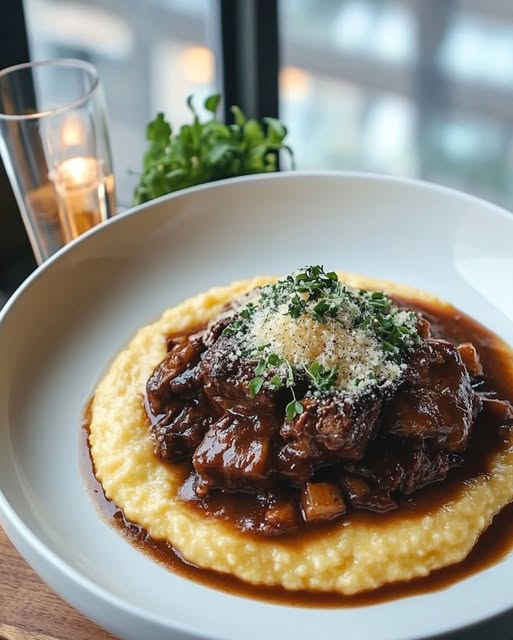
A Taste of Sunday Comfort: My Family’s Italian Braised Beef Story
There’s something magical about a dish that fills your home with the smell of garlic, herbs, and slow-cooked beef. This Italian Braised Beef with Parmesan Polenta is my ultimate Sunday supper hero. It’s the meal that has my kids peeking into the kitchen, asking “is it ready yet?” long before it’s time to eat. I learned this recipe from a dear friend in Tuscany, and tweaking it over the years has made it a beloved staple at our family table. It’s not just food; it’s a warm, delicious hug on a plate.
The Heartwarming Story Behind Italian Braised Beef
Braising isn’t just a cooking method; it’s a tradition. In Italy, this style of cooking, often called “stracotto,” was born from the beautiful need to turn tough, flavorful cuts of meat into something tender and extraordinary. Families would simmer the beef for hours with local wine and vegetables while attending church or Sunday chores. My modern twist? Adding that creamy, cheesy polenta. It’s the perfect pillow for that rich, soulful sauce. This dish connects us to generations of home cooks who knew the secret to a great meal was patience and love.
Why You Will Absolutely Love This Recipe
You will fall for this recipe for three big reasons. First, the flavor is deep and complex, thanks to the long, slow cook. Second, it’s incredibly forgiving. Once it’s simmering, you can relax. Third, it feels fancy but is made with simple ingredients. The beef becomes so tender you can cut it with a spoon, and the polenta is the ultimate creamy comfort food. It’s a one-pot wonder paired with a one-pan side, making your cleanup a dream. This dish promises leftovers that might be even better the next day!
Perfect Occasions for Serving This Hearty Meal
This dish is your secret weapon for making any gathering special. It’s perfect for a cozy family Sunday dinner, a rustic dinner party with friends, or a festive holiday meal like Christmas Eve. It’s also my go-to for potlucks because it travels well in its cocotte. Want to impress your in-laws? This is your answer. The beautiful presentation and incredible smell when you take off the lid are guaranteed to earn you compliments. It turns an ordinary evening into a memorable feast.
Gathering Your Ingredients for Italian Braised Beef
Great food starts with simple, quality ingredients. Here’s what you’ll need:
For the Italian Braised Beef:
- 1 kg (about 2.2 lbs) beef chuck or shoulder, cut into large chunks
- 2 tbsp olive oil
- 1 onion, chopped
- 2 carrots, sliced into rounds
- 2 celery stalks, diced
- 2 garlic cloves, minced
- 1 bottle (750 ml) dry red wine, like Chianti
- 1 cup vegetable or beef broth
- 2 sprigs fresh rosemary
- 2 bay leaves
- 1 tsp salt
- 1/2 tsp black pepper
- 1 tbsp tomato paste
For the Parmesan Polenta:
- 250 g (about 1 1/2 cups) coarse polenta or yellow cornmeal
- 1 liter (about 4 cups) water or vegetable broth
- 50 g (about 3 1/2 tbsp) butter
- 100 g (about 1 cup) grated Parmesan cheese
- Salt and pepper, to taste
Easy Swaps: Ingredient Substitutions
Don’t stress if you’re missing an item. Cooking is about creativity!
- Beef: Short ribs or brisket work wonderfully for braising.
- Red Wine: Use a full-bodied, dry wine you enjoy drinking. No wine? Use extra broth with a splash of balsamic vinegar for acidity.
- Fresh Herbs: No rosemary? Use a teaspoon of dried. Thyme also pairs beautifully.
- Polenta: Can’t find polenta? Use regular cornmeal; the cooking time may be slightly less.
- Parmesan: Pecorino Romano or Asiago cheese make great alternatives for a salty, nutty kick.
Step-by-Step Guide to the Perfect Italian Braised Beef
Step 1: Sear the Beef to Perfection
Heat the olive oil in a large Dutch oven or heavy pot over medium-high heat. Pat your beef chunks completely dry with a paper towel. This is crucial for a good sear. Add the beef in a single layer, without crowding the pot. Let it sear undisturbed for 5-7 minutes until a deep, brown crust forms on each side. Listen to that satisfying sizzle! This step locks in the juices and builds the foundation of flavor for your sauce. Remove the beef and set it aside on a plate.
Pro tip: Work in batches if needed. Crowding the pan steams the meat instead of searing it.
Step 2: Build Your Flavor Base with Vegetables
In the same pot, with all those delicious browned bits, add the chopped onion, carrots, celery, and garlic. The aromas will immediately start to bloom. Stir and cook for about 5 minutes until the onions become soft and translucent and the carrots just begin to soften. You’re not looking to fully cook them, just to sweeten and release their flavors. Next, stir in the tomato paste and cook for another 1-2 minutes. It will darken slightly and smell sweet, helping to remove any raw taste.
Step 3: Deglaze and Braise to Tenderness
Return all the seared beef and any accumulated juices back to the pot. Pour in the entire bottle of red wine. Bring it to a lively boil and let it cook for 5 minutes. This allows the alcohol to evaporate, leaving behind the rich, fruity essence of the wine. Now, add the broth, rosemary sprigs, bay leaves, salt, and pepper. The liquid should come about halfway up the sides of the beef. Cover the pot, reduce the heat to the lowest simmer, and let time work its magic. Let it cook gently for 2 to 3 hours. The beef is ready when it easily shreds with a fork.
Chef’s tip: For the most tender result, keep the simmer low and steady. A gentle bubble is what you want, not a rolling boil.
Step 4: Craft the Creamy Parmesan Polenta
While the beef is braising, make the polenta. Bring the water or broth to a boil in a large saucepan. Add a generous pinch of salt. Slowly whisk in the polenta in a steady stream to prevent lumps from forming. Immediately reduce the heat to low. Cook for 20-25 minutes, stirring frequently with a wooden spoon. The polenta will thicken and become tender. Once it’s creamy and pulls away from the sides of the pan, remove it from the heat. Stir in the butter and grated Parmesan until melted and perfectly smooth. Season with extra salt and pepper if needed.
Step 5: Serve and Savor Your Masterpiece
When the beef is fall-apart tender, carefully remove the large pieces to a serving platter. Fish out and discard the rosemary stems and bay leaves. If your sauce is too thin, you can simmer it uncovered for a few minutes to thicken. To serve, spoon a generous mound of the creamy polenta onto each plate. Top it with a few pieces of that luscious beef and ladle plenty of the chunky vegetable sauce over everything. Garnish with fresh parsley or an extra sprinkle of Parmesan for the perfect finish.
Your Cooking Timeline
Let’s break down the clock so you can plan your perfect meal.
- Prep Time: 25 minutes
- Cook Time: 2 hours 30 minutes (mostly hands-off braising)
- Total Time: Approximately 2 hours 55 minutes
- Resting Time: The beef benefits from resting in its sauce for 10-15 minutes before serving.
The Chef’s Secret for Unbeatable Flavor
My absolute secret? Make it a day ahead. Seriously. Braised dishes like this Italian Braised Beef taste infinitely better the next day. The flavors have time to marry and deepen overnight in the fridge. Simply cool the beef in its sauce, store it covered, and reheat it gently on the stovetop the next day. You’ll be amazed at the difference. It also makes hosting stress-free!
A Little Extra Food for Thought
Did you know the word “polenta” comes from the Latin for “peeled barley”? Before corn came from the Americas, polenta was made from other grains like spelt or rye. The creamy, corn-based version we love today became a staple in Northern Italy. It’s the ultimate frugal, filling food that pairs so brilliantly with rich, saucy dishes. It’s a beautiful example of how simple ingredients create extraordinary comfort.
Necessary Equipment for Success
You don’t need fancy tools, just a few good basics:
- A large, heavy-bottomed Dutch oven or cocotte with a tight-fitting lid (essential for even braising).
- A sturdy wooden spoon for stirring.
- A sharp chef’s knife and cutting board.
- A large saucepan for the polenta.
- A whisk (for starting the polenta).
Storing Your Delicious Leftovers
Let the braised beef and polenta cool completely before storing. I recommend storing them separately for the best texture when reheating.
Place the beef and its sauce in an airtight container. It will keep wonderfully in the refrigerator for up to 4 days. The flavors will continue to develop, making your leftovers a true treat.
For longer storage, you can freeze the braised beef for up to 3 months. Portion it into freezer-safe bags or containers. Thaw it overnight in the refrigerator before reheating. Polenta can be stored in the fridge for 2-3 days, but it thickens significantly. Reheat it gently with a splash of milk or water to bring back its creaminess.
Tips and Advice for Flawless Results
- Dry Your Beef: Always pat the beef dry before searing. Wet meat steams instead of browns.
- Low and Slow is Key: A gentle simmer is the heart of braising. If the liquid is boiling hard, your meat will toughen.
- Don’t Rush the Sear: Allow a proper crust to form. This is where a ton of flavor comes from.
- Taste Before Serving: Always taste your sauce at the end and adjust the seasoning with more salt or pepper if needed.
Presentation Tips to Wow Your Guests
- Serve in a shallow bowl for an elegant, rustic look.
- Use the back of a spoon to make a swirl or well in the polenta before topping with the beef.
- Garnish with a fresh rosemary sprig or a bright sprinkle of chopped parsley for color contrast.
- For a family-style feast, bring the whole Dutch oven to the table and let everyone serve themselves.
Healthier & Creative Recipe Variations
Love the idea but want to mix it up? Try one of these six delicious twists:
- Italian Braised Beef Ragu: Shred the cooked beef finely and toss it with the sauce. Serve over pappardelle pasta for a classic ragu.
- White Wine and Mushroom Braise: Swap the red wine for a dry white like Pinot Grigio and add a pound of sliced cremini mushrooms with the vegetables.
- Gluten-Free & Dairy-Free: Use cornstarch to thicken the sauce if needed and skip the butter and Parmesan in the polenta. Use olive oil and nutritional yeast for creaminess.
- Spicy ‘Arrabbiata’ Style: Add a teaspoon of red pepper flakes with the garlic for a nice kick of heat.
- Braising with Beer: Inspired by dishes like the classic Carbonade Flamande, try replacing half the wine with a dark beer for a malty, rich depth.
- Lighter Chicken Version: For a poultry twist, try Poulet Cacciatore. It uses chicken thighs with tomatoes and olives for a similarly hearty, Italian feel.
Common Mistakes to Avoid
Mistake 1: Underseasoning at the Start
Many home cooks are shy with salt, especially at the beginning. Seasoning your beef well before searing and adding salt to the braising liquid is vital. The seasoning permeates the meat and vegetables slowly over the long cook. If you only add salt at the end, the dish will taste seasoned on the surface but bland inside. Be generous but not excessive. You can always adjust at the end.
Mistake 2: Searing Cold, Wet Meat
Putting cold, damp beef straight from the fridge into the hot oil is a recipe for steaming. The moisture creates steam, preventing that beautiful, flavorful brown crust from forming. Always take your meat out of the fridge 20-30 minutes beforehand. Then, pat each piece thoroughly dry with paper towels. Your meat will sear perfectly, creating those essential fond (browned bits) at the bottom of the pot. Proper sautéing technique starts with dry ingredients for the best caramelization.
Mistake 3: Cooking at Too High a Heat
Braising is not a race. Once you’ve added your liquids and covered the pot, the heat must be reduced to the lowest possible simmer. A rapid boil will make the beef tough and chewy, as the high heat contracts the muscle fibers violently. You want to see just a few slow, gentle bubbles breaking the surface. This low, steady heat breaks down the tough connective tissue gradually, resulting in that coveted melt-in-your-mouth tenderness.
Mistake 4: Stirring the Polenta Incorrectly
There are two common polenta pitfalls: adding it to cold liquid and not stirring enough. Always whisk the polenta into already boiling liquid to prevent instant clumping. Once it’s incorporated, you must stir it frequently, especially in the first 10 minutes. This prevents it from sticking to the bottom and forming lumps. Think of it as a relaxing, meditative part of cooking. A wooden spoon is your best tool here.
Frequently Asked Questions
Can I make Italian Braised Beef in a slow cooker?
Absolutely! This recipe adapts beautifully to a slow cooker. After searing the beef and softening the vegetables on the stovetop, transfer everything to your slow cooker insert. Add the wine, broth, and herbs. Cook on LOW for 7-8 hours or on HIGH for 4-5 hours. The long, gentle heat is perfect for braising. Make the polenta fresh just before serving for the best texture. This method is fantastic for busy days when you want dinner ready when you walk in the door.
What is the best cut of beef for braising?
You want a cut with good marbling and connective tissue, like chuck roast, shoulder (paleron), or short ribs. These tougher cuts are less expensive but become incredibly tender and flavorful with long, slow cooking. The collagen breaks down into gelatin, enriching the sauce and making the meat succulent. Avoid lean cuts like sirloin or tenderloin, as they will dry out and become tough during the long braising process.
My sauce is too thin. How can I thicken it?
This is an easy fix. First, remove the cooked beef to a platter. Then, bring the sauce to a simmer over medium heat and let it cook uncovered for 10-15 minutes. Stir occasionally as it reduces and thickens. If you need it thicker faster, mix one tablespoon of cornstarch with two tablespoons of cold water to make a slurry. Whisk this into the simmering sauce and cook for another 1-2 minutes until it reaches your desired consistency.
Can I use a different alcohol besides red wine?
Yes, you can. A dry white wine will create a lighter but still flavorful sauce. As a non-alcoholic substitute, use all broth (about 3 cups total) plus one tablespoon of good balsamic vinegar or red wine vinegar. This adds the necessary acidity to balance the richness. You could also use a dark beer, as in a Belgian stew, for a malty, deep flavor profile.
How far in advance can I prepare this dish?
This dish is actually better made 1 to 2 days in advance. The flavors have time to meld and intensify. Cool the braised beef completely in its sauce, then store it covered in the refrigerator. Reheat it gently on the stovetop over low heat, adding a splash of water or broth if the sauce seems too thick. Prepare the polenta fresh just before serving for the best creamy texture.
What can I serve with Italian Braised Beef besides polenta?
While polenta is a classic pairing, you have many delicious options. Creamy mashed potatoes or roasted garlic mashed potatoes are fantastic. A simple bowl of egg noodles or pappardelle pasta soaks up the sauce beautifully. For a lighter side, try soft polenta cakes or a crusty loaf of Italian bread to mop up every last drop. A simple green salad with a sharp vinaigrette balances the meal perfectly.
Is it necessary to use fresh herbs?
Fresh rosemary and bay leaves provide the brightest, most authentic flavor. However, in a pinch, you can use dried. Use 1 teaspoon of dried rosemary (crush it between your fingers) and 1 dried bay leaf. Remember, dried herbs are more potent, so you use less. The flavor will be slightly different but still very good. I always recommend fresh if you can get it, especially for the rosemary.
My polenta is lumpy. Can I save it?
Most lumps can be fixed! If you catch them early, simply whisk the polenta vigorously. For persistent lumps, you can use an immersion blender directly in the pot to smooth it out. A regular blender works too, but be careful with hot food. To prevent lumps next time, always whisk constantly as you add the polenta to boiling liquid and continue to stir frequently during the first few minutes of cooking.
Can I freeze the leftovers?
Yes, the braised beef freezes exceptionally well. Let it cool completely, then portion it into airtight containers or heavy-duty freezer bags with the sauce. It will keep for up to 3 months. Thaw overnight in the refrigerator. Polenta can also be frozen, but its texture changes and can become grainy. It’s best to freeze the beef alone and make a fresh batch of polenta when you reheat.
What’s a good, affordable red wine to cook with?
A good rule is to cook with a wine you would enjoy drinking. You don’t need an expensive bottle, but avoid “cooking wine” from the grocery store, as it’s often salted. A dry, medium-bodied red like a Chianti, Merlot, Cabernet Sauvignon, or a Côtes du Rhône blend works perfectly. These wines have the body and flavor to stand up to the beef. If you have an open bottle, this is a great way to use it up!
This Italian Braised Beef is more than just a recipe; it’s a journey to a delicious, comforting destination. It’s one of those foundational main dish recipes that every home cook should have in their repertoire. Whether you’re feeding your family on a Tuesday or hosting a special dinner, it never fails to satisfy. For another fantastic beef recipe that comes together quickly, check out our popular Mongolian Beef. Now, go grab your Dutch oven, pour a little wine for the pot (and maybe a glass for yourself), and get ready for some serious compliments. Happy cooking!
Italian Braised Beef
Ingredients
Equipment
Method
- Heat the olive oil in a large Dutch oven over medium-high heat and pat the beef dry.
- Sear the beef in a single layer for 5-7 minutes until browned on all sides, then remove and set aside.
- In the same pot, add onion, carrots, celery, and garlic; cook for about 5 minutes.
- Stir in the tomato paste and cook for another 1-2 minutes.
- Return beef and accumulated juices to the pot; add red wine and bring to boil for 5 minutes.
- Add broth, rosemary, bay leaves, salt, and pepper; cover and reduce to a low simmer for 2-3 hours.
- In a separate saucepan, bring water or broth to a boil and add salt.
- Gradually whisk in polenta, reduce heat to low and cook for 20-25 minutes, stirring frequently.
- Stir in butter and grated Parmesan until smooth and creamy; season to taste.
- Once beef is tender, serve over creamy polenta, garnishing with parsley or Parmesan if desired.